















![[Over £1200 Tier Gift] Bluetooth Speaker with Phone Stand - shipped Separately](http://uk.jackery.com/cdn/shop/files/Portable_Bluetooth_Speaker_with_Phone_Stand_2.png?v=1781595581&width=170)














A personal emergency evacuation plan is crucial for protecting individuals who may struggle to leave independently during a fire or power outage. These plans are not only recommended in the UK, but are also commonly mandated by fire safety and equality legislation.
Good planning also takes into account practical demands, such as communication and access to electricity, as well as evacuation routes and assistance plans.
Portable solar generators like the Jackery Solar Generator 3000 v2 and 2000 v2 provide reliable backup power to keep essential devices operating during power outages. This guide explains what a PEEP is, who requires one, and how to develop an effective plan.
|
Key Takeaways: |
|
What Is a Personal Emergency Evacuation Plan?
A personal emergency evacuation plan (PEEP) is an escape plan for a specific individual who may require additional assistance during an emergency, such as a fire. Under UK fire safety regulations, all owners and managers of buildings and workplaces are legally responsible for ensuring that everyone can evacuate safely and swiftly in the event of a fire.
Some people may struggle to evacuate a building quickly or to comprehend fire evacuation instructions owing to a physical or mental disability, requiring additional assistance from others. These patients need a personalised PEEP, either permanent or temporary.
A permanent PEEP is intended for someone with a lifelong disability or impairment, such as challenges with vision, hearing, mobility, dexterity, or a mental health or neurodiverse condition that hinders risk awareness or understanding instructions.
A temporary PEEP is designed for someone with a short-term disability or impairment, such as a broken limb, recovery from surgery, or late-stage pregnancy. Temporary PEEPs should be reviewed and updated as the individual's condition changes.
|
Permanent PEEPs |
These are designed for those with long-term disabilities or impairments that make it difficult to leave a building alone. |
Mobility impairments |
|
Sight impairments |
||
|
Dexterity or strength |
||
|
Hearing impairments |
||
|
Cognitive impairments |
||
|
Temporary PEEPs |
These are designed for people who are temporarily disabled or impaired in a way that makes it difficult for them to leave the building alone. |
Short-term injuries such as a broken leg |
|
Temporary medical conditions, such as a recent surgery or illness |
||
|
Pregnancy, particularly in the later stages when mobility may be affected |
What Is The Primary Objective of PEEP?
A PEEP's objective is to ensure that everyone, regardless of mobility or other disabilities, can safely and quickly exit the building in an emergency.

Who Needs a Personal Emergency Evacuation Plan?
If a person cannot evacuate a building unaided during a fire, they require a PEEP. This typically applies to individuals who have:
- A visual impairment may result in the inability to read emergency signs and information, locate evacuation routes, or detect fire safety risks.
- A hearing impairment, making it difficult to hear smoke and fire alarms or to understand the fire warden's evacuation instructions.
- A mobility disability means that you are unable to utilise stairs, cannot move fast, cannot walk unassisted, or need specialised equipment to move.
- A dexterity disability that impacts strength or coordination may make it difficult to open fire doors, operate fire alarms, or open windows.
- A neurodiverse disorder, such as autism, might result in a lack of awareness of what alarms signify, an inability to follow escape instructions, trouble deciphering what is occurring, or a reduced capacity to detect threats.
- Certain mental health issues may make it difficult to recognise or comprehend evacuation instructions.
- An injury or medical condition, such as a broken leg or late-stage pregnancy, might make it difficult to move swiftly or utilise stairs.
The UK's Equality Act 2010 compels businesses to make ' reasonable adaptations' for any employees who may have trouble evacuating during a fire or other emergency. This involves developing a personalised PEEP for those who need one and addressing each individual's specific requirements.
Furthermore, the Regulatory Reform (Fire Safety) Order 2005 requires employers to conduct a fire risk assessment to identify and manage fire risks in the workplace, as well as to ensure that all workers can safely leave in the event of a fire. People who need additional assistance to escape must be included in the fire risk assessment, and PEEPs must be developed for these individuals if identified.
Does Everyone With a Disability Need One?
No. PEEPs are only necessary for those who cannot evacuate safely without support. A person with a disability does not always fall into this category. However, abilities can vary widely. If you have any doubts about a person's capacity to escape independently, you should address the issue jointly. Asking directly and discreetly respects people's autonomy and ensures that a PEEP is produced only when absolutely required.

Are Personal Emergency Evacuation Plans Required by Law?
Yes. Three sections of law establish the requirement for PEEPs:
The Health and Safety at Work Act, 1974 (HSWA)
Regulatory Reform (Fire Safety) Order 2005 (the FSO)
The Disability Discrimination Act of 1995 (DDA)
The HSWA forms the basis of UK health and safety regulation. Employers must take measures to protect the health and safety of workers and others in the workplace. This duty of care includes safe evacuation.
The FSO establishes the fire safety responsibilities that apply to all employers. These responsibilities include developing emergency evacuation plans for each of your staff.
The DDA bolsters your evacuation responsibilities. It clearly states the legal duty to ensure that individuals with disabilities can safely escape your building in the event of a fire.
Who Is Responsible for Creating a Personal Emergency Evacuation Plan?
It is the responsibility of the managing agent/responsible person/nominated representative to complete any PEEPs that are required to ensure that non-domestic properties comply with fire safety regulations. In the workplace, the employer or company owner is the accountable party. As an employer, you must:
Assess fire hazards.
Implement appropriate fire safety precautions.
Plan for the safe evacuation of all people at your company.
This last obligation involves creating PEEPs for employees who cannot safely leave on their own.
What Should a PEEP Contain?
The conditions that require PEEP are unique; hence, the specifics differ. Nonetheless, the PEEP must:
1. Establish secure escape routes.
2. Identify anybody assigned to assist with the evacuation.
3. Describe any required specialist equipment (this can include devices such as evacuation chairs, portable ramps, hearing aids, or communication devices needed to assist the person during evacuation).
4. Locate temporary shelter spaces (if the building has them).
5. The individual for whom the PEEP is written must agree on all points. You must consider their requests and collaborate to determine how they may safely depart while maintaining their autonomy and dignity.
It's also crucial to remember that your strategy must function without the participation of emergency services. Before each emergency, test the PEEP to confirm it will operate with the on-site workers and resources available.

How to Make a Personal Emergency Evacuation Plan?
The person in control of the premises, whether an owner or an employer, is ultimately responsible for ensuring that personal emergency evacuation plans are developed, although they may delegate this obligation to a nominated individual. This might be a manager, supervisor, or facilities officer who has been designated as the person responsible for developing and evaluating PEEPs.
To develop a personal emergency evacuation plan, the responsible person must complete a form that includes a series of standard questions about the person's health condition and/or handicap, any concerns the person has about leaving, and the assistance the person will need in the event of a fire. You may find a free PEEP template here.
The details recorded in the PEEP depend on the individual, the risks present, and the buildings involved. Each PEEP must be tailored with the person in mind and personalised to their needs; never use a generic approach.
Once a PEEP has been built, the safety procedures inside it must be physically tested to verify they perform properly. Carry out an evacuation rehearsal with the individual for whom the PEEP was designed to ensure that everything goes well and there are no unanticipated hazards or issues. Once verified, the PEEP may be declared as finished. Make sure to regularly review and update your PEEP—take charge of your emergency readiness today.
The contents of the PEEP should also be evaluated regularly, at least once a year, and whenever the person's health improves or deteriorates. If adjustments to the PEEP are required as a consequence of the evaluation, a new rehearsal of the plan should be performed to confirm that the changes are appropriate and safe.
Other Types of Emergency Evacuation Plans
One particular evacuation strategy is a PEEP. Additionally, there is a generic kind that you need to be aware of called a General Emergency Evacuation Plan (GEEP).
Any public facility or workplace that employs temporary workers must have a GEEP. Those unfamiliar with a building's layout—such as guests or employees who are not often on-site—may find it challenging to locate escape routes in an emergency.
Plans for general emergency evacuations help resolve this issue. A visitor needs to be able to scan a GEEP and understand quickly:
- The arrangement of the building
- Procedures for evacuation
- Locations of communication and emergency equipment
- Even if it's their first time on the scene, anyone with this crucial knowledge should be able to organise and carry out a speedy departure from the building.

A. Disability Evacuation Plans
When the alarm goes off, wheelchair users should go to a haven or stay put with their helper. The evacuation aide should then go to the building's exterior evacuation assembly point and report the disabled individual's location to the Public Safety/campus police Department or the City Fire Department.
Mobility-impaired wheelchair users should only be evacuated from staircases by qualified specialists. Untrained individuals should only attempt to remove wheelchair users in the most dire circumstances. It is never safe to roll a wheelchair down the stairs.
In an emergency, those with mobility disabilities who can walk alone might be able to climb stairs with minimal help. The person should hold off on trying the stairs until the heavy traffic has passed if there is an impending risk.
Hearing Impaired. While many campus buildings lack fire alarm strobe lights, some do. Individuals with hearing impairments must be made aware of emergency circumstances, as they might be unable to hear audio emergency alerts. One way to communicate emergency instructions is to write a brief, clear message requesting evacuation.
Modifying the building's fire alarm system can provide reasonable accommodations for residents with hearing impairments, especially those who spend most of their day in one place.
B. Hospital Evacuation Plans
The whole or partial hospital evacuation plans should consider pre-planning and the incident command and management structure for the hospital's operations area (community). Hospitals should be aware of the local procedures and preparations to facilitate evacuations before an incident occurs.
They should also create a Memorandum of Understanding (MOU) with other hospitals to facilitate mutual assistance and emergency transfers.
C. Pet-friendly Evacuation Plans
If you own large animals, you should take extra precautions. Examples are horses, cattle, sheep, goats, and pigs. Plan to have enough cars, trailers, and staff to assist and transfer any animal if you decide to evacuate. If you choose not to evacuate, consider relocating large animals to outdoor or sheltered areas.
Ensure you have all the resources and equipment necessary to care for your exotic pets. When relocating them—to a friend's house, an emergency shelter, etc.—ensure that skilled individuals handle, transport, and care for them.
Do Personal Emergency Evacuation Plans Need to be Rehearsed?
PEEPs should be practised just like any other evacuation plan. The minimum guideline is every six months. When practising the strategy, it is critical to include everyone specified, including those assigned to help.
Rehearsal may also tell if assigned aids need more teaching or training. Delaying your safe exit to assist someone else is an admirable dedication. It is critical that all volunteers be well-trained and prepared to perform this job in order to ensure everyone's safety throughout the evacuation.
Jackery Solar Generators for Emergencies
A good personal emergency evacuation plan should include safe ways to get out of a building and help arrangements, but it should also consider how to keep electricity running during and after an event.
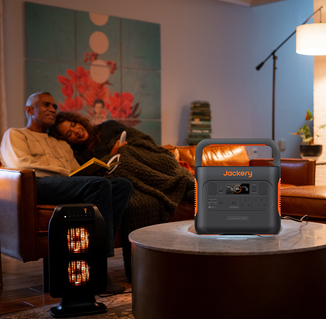
Power outages often occur during fires, severe weather, or building evacuations. Losing power may make it very hard to communicate, move about, use medical equipment, and be aware of your surroundings, particularly for those who need extra help.
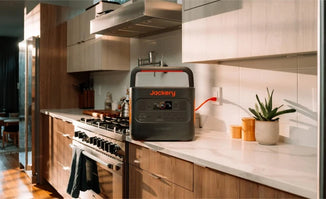
This is where having a portable backup power source, like a Jackery Solar Generator, may be quite helpful in an emergency evacuation strategy.
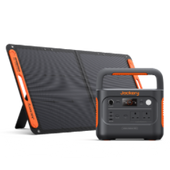
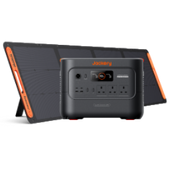
Jackery Solar Generator 3000 v2
When preparing for an SHTF scenario, reliability, longevity, and efficiency are the primary requirements. The Jackery Solar Generator 3000 v2 is a significant upgrade over the older version specifically because it addresses the "prepper" priorities of long-term survival and low maintenance.

Long-Term Reliability
The single most important upgrade in the v2 is the move to LiFePO4 (Lithium Iron Phosphate) batteries. It offers 4,000+ charge cycles before reaching 70% capacity. In a long-term SHTF situation, this means the unit could realistically last 10+ years of daily use.
LiFePO4 is chemically stable and significantly less prone to "thermal runaway" (fire) compared to the NMC batteries found in older Jackery models, making it safer to store and use inside a bunker or living space.
"ZeroDrain" Technology for Storage
For emergency preparation, you need gear that works even if it's been sitting in a closet for a year. The 3000 v2 features improved self-consumption management. It can retain 95% of its charge after 365 days of standby. You don't have to worry about the battery "bricking" or being empty when a sudden disaster strikes; it stays ready for use with minimal maintenance.
Massive Power for Critical Appliances
In a total grid-down scenario, you need to power more than just a phone. 3,600W continuous (7,200W surge) allows you to run high-draw survival equipment like well pumps, medical devices (CPAP/concentrators), full-sized refrigerators, and even electric stoves or power tools for repairs. With 3,072Wh, it can keep a standard refrigerator running for 1-2 days on a single charge without any solar input.
Portability and Speed
The v2 is marketed as the lightest 3kWh LFP generator on the market (approx. 59.5 lbs). It is roughly 40% smaller than many competitors, making it easier to load into a vehicle. It supports up to 1,000W of solar input, allowing you to fully recharge in about 3.5 hours in optimal sun. This fast turnaround is critical when you have limited daylight to harvest energy.
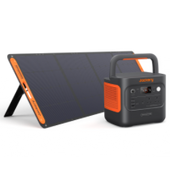
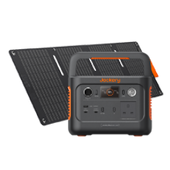
Jackery Solar Generator 2000 v2
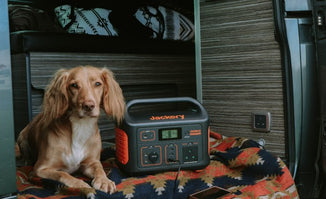
Choosing the Jackery Solar Generator 2000 v2 for an emergency setup is a strategic decision specifically because it balances high-capacity power with radical portability. Released in early 2025, the "v2" is a massive upgrade over older lithium-ion models, moving to LiFePO4 (Lithium Iron Phosphate) chemistry which is the gold standard for long-term survival.

Unmatched Power-to-Weight Ratio
The v2 uses CTB (Cell-to-Body) technology, which integrates battery cells directly into the chassis. It weighs only 39.5 lbs (17.9 kg). Most other 2kWh units (including Jackery's own 2000 Plus) weigh between 60 and 80 lbs. This makes the v2 much easier to move by yourself if you need to evacuate or change locations quickly.
Extreme Longevity (10+ Year Lifespan)
The 2000 v2 is rated for 4,000 charge cycles before it even drops to 70% capacity. If you used it every single day, it would last over 10 years. It features 95% charge retention over a full year in storage. You can tuck it away in your bunker or closet and know it will be nearly full when you need it.
"Emergency Super Charge"
If the grid is flickering or you have access to a temporary power source (like a running vehicle or a neighbor's generator), speed is vital. It can go from 0 to 100% in 1.7 hours via a wall outlet. With 400W of solar input, you can reliably replenish a significant portion of the 2,042Wh capacity in a single day of sunlight.
Silent & Stealthy
It operates at less than 30dB (whisper quiet). This is critical if you are trying to avoid drawing attention to your location at night. If you are running sensitive medical gear or a security system, it acts as an Uninterruptible Power Supply (≤20ms). If the grid drops, it switches to battery so fast your electronics won't even reboot.
FAQs
The following are frequently asked questions about the personal emergency evacuation plan.
1. What should be included in a personal emergency evacuation plan?
A personal emergency evacuation plan should explicitly outline how a person would safely evacuate a facility in an emergency, taking into account their specific needs and skills. It should list the best ways to get out, state what help is needed, and explain how that help will be provided.
The plan must also specify which equipment is required, such as evacuation chairs or communication aids, and where safe places to stay or interim safe locations are, if evacuation can't happen right away. For the plan to be implemented calmly and efficiently in a true emergency, there must be clear communication methods and agreed-upon directions.
2. Is a PEEP a legal requirement?
In the UK, a PEEP is required by law for anyone who can't safely leave a building on their own. Fire safety and equal rights laws require employers and building management to ensure that everyone can get out in an emergency, even if they are disabled or have other impairments.
If a fire risk assessment indicates that someone may have difficulty evacuating independently, a personal emergency evacuation plan must be developed. If you don't give someone a PEEP when they need one, you might face legal action and fines.
3. How do you write a personal emergency evacuation plan?
To write a personal emergency evacuation plan, you need to know what the person needs, what they can and can't do, and what worries them. After that, assess the building's layout, potential hazards, and accessible escape routes to determine the safest way out.
In case of an emergency, the plan should explicitly lay out the procedures to take, including who will help and what tools will be utilised. After writing the plan, it should be tested through evacuation drills to ensure it works in real life. It should also be reviewed regularly to ensure it stays correct if things change.
4. Who completes a personal emergency evacuation plan?
The individual in charge of the property, whether an employer, building owner, or managing agent, is responsible for making a personal emergency evacuation plan.
This responsible person is in charge of ensuring the plan is in place and up to date, but they should work closely with the person it affects to ensure it is correct. Including the person in the plan ensures it is practical, courteous, and successful, and it also helps them stay safe and independent in case of an emergency.
Final Thoughts
To be safe, maintain your dignity, and comply with UK fire safety legislation, you need a well-thought-out personal emergency evacuation plan. Organisations can greatly reduce the risk during crises by understanding what each person needs, assigning clear tasks, and regularly reviewing processes.
Modern evacuation planning should not only focus on exits, but also on how people will be helped once they leave. Backup power sources like the Jackery Solar Generator 3000 v2 and Jackery Solar Generator 2000 v2 can keep communication, medical equipment, and other important gadgets running during power outages or when you have to move.


