
















![[Over £1200 Tier Gift] Bluetooth Speaker with Phone Stand - shipped Separately](http://uk.jackery.com/cdn/shop/files/Portable_Bluetooth_Speaker_with_Phone_Stand_2.png?v=1781595581&width=170)
















It's more crucial than ever to be ready because the weather is unpredictable and safety rules are always changing. After the successful nationwide siren tests in 2023 and 2025, many people are now looking forward to finding out when UK officials will announce the next emergency alert test.
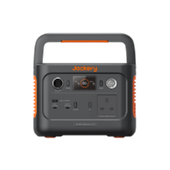
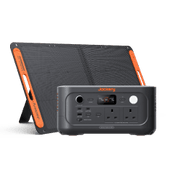
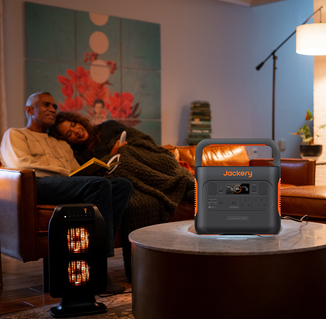
Being truly prepared means having a backup plan for your home that works, not just your phone. A Jackery Portable Power Station will keep your important medical and communication gadgets charged during a long crisis, so you can stay in touch with important news and emergency services.
|
Key Takeaways: |
|
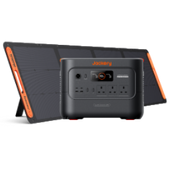
l A test message will be sent to mobile phones and tablets that are within range of a nearby tower. The message will come with a loud siren-like sound and a vibration that lasts about 10 seconds. l The alarm will go off even if your device is set to mute or quiet mode because the system is meant to make sure people receive alerts in real emergencies. l This anonymous and secure cell-broadcast technology does not collect, save, or share any personal information about your device or your location with the UK government or emergency services. l The first nationwide event was held on Sunday, April 23, 2023, with the most recent large-scale follow-up taking place on Sunday, September 7, 2025. l Based on the established pattern of biennial testing, many analysts anticipate the next trial will begin in 2027. l If you prepare for an emergency power source, like the Jackery Explorer 3000 v2 or 2000 v2, you can be sure that your important communication and medical gadgets will be powered throughout any long-term emergency, keeping you up to date on important news. |
When Is The Next Emergency Alert Test?
To stay prepared, review the history of these public safety trials. The first nationwide event was held on Sunday, April 23, 2023, with the most recent large-scale follow-up taking place on Sunday, September 7, 2025. These tests are intended to guarantee that the system can effectively reach millions of devices during an actual crisis.
Based on the established pattern of biennial testing, many analysts anticipate the next trial will begin in 2027. While no official date has been set for this year, studying the history of prior alerts will help you prepare for the next emergency alert test that UK officials decide to conduct.
Because these signals are exclusively used to protect the public from life-threatening circumstances, they remain an important component of national resilience. Future testing are anticipated to follow a similar style, with a distinct siren-like sound and a clear on-screen message. Keeping your gadget up to date is the best method to ensure you receive the next planned broadcast.
How Do Emergency Alerts Work?
In an emergency, local mobile phone towers will send out a particular signal to inhabitants. Every compatible smartphone or tablet within range of a mast will receive the notification, ensuring that crucial information reaches you right away. Because these technologies are critical to public safety, they are intended to work with all 4G and 5G networks across the country.
These notifications do not require your device to be connected to mobile data or WiFi. The system employs a unique broadcast approach that eliminates the requirement for an active internet connection or cellular data plan. Furthermore, these emergency notifications are absolutely free of charge, and you do not need to join up or download any third-party programs to keep protected.
As we look ahead to future safety drills, understanding these technical requirements will help you stay prepared for when UK officials may conduct the next emergency alert test. The system is intended to be as inclusive as possible, overriding silent modes to deliver a distinct siren-like sound that warns you of imminent danger. To remain compatible with this life-saving infrastructure, ensure that your device is up to date with the current software.

What Is the Emergency Alert Test?
The UK Government's national warning system needs to work properly, and the Emergency Alerts test is a very important way to check that it does. In the event of a life-threatening catastrophe, like catastrophic floods, fire, or bad weather, this system is meant to transmit a high-priority alarm to mobile phones and tablets. These drills also help people become used to how the alert looks and sounds. The system first came out in April 2023, although the most recent nationwide test was in 2025.
The government will test the Emergency Alert system across the country on the set day. Most mobile phones and tablets in the UK will get a test message, followed by a loud siren-like sound and a vibration that will continue for about 10 seconds.
The message you get will make it obvious that this is just a test and that you don't need to do anything. Even if your device is set to quiet mode, the alarm will still go off. This is an important part of the system that makes sure people hear notifications in real life.
The main goal of the test is to make sure the system is working right. If there is a real emergency, the system will be used to warn and teach the public. Only the government and emergency services will be able to send out alerts. It's important to know how this works because we want to know when the next emergency alert test will be for people in the UK. You may find out more about these planned notifications on the official government website.
Who Will Receive The Test Alert?
The next test will be like a true emergency alarm, making sure that as many people as possible hear it. You can get these alerts on any 4G or 5G phone network in the UK. Your phone or tablet doesn't need to be linked to mobile data or WiFi to get the warning.
The system uses cell-broadcast technology, which works even when you're not connected to the internet. However, there are specific instances where you will not receive the notification. You will not get the alert if your device is:
l Switched off or in airplane mode
l Connected to an older 2G or 3G network
l A WiFi-only tablet without cellular capabilities
l Running outdated software that is no longer compatible
It is important to know these limits in order to be ready for the next emergency alert test that UK residents will take part in. As of early 2026, this system is huge; new data shows that there are about 99 million active mobile connections in the UK, which is more than 140% of the population. Many people have both personal and professional smartphones, and eSIM technology is becoming more popular. This is why the figure is so high.
The system is meant to reach as many people as possible, therefore it wants to reach over 98% of adults who use a mobile device. The easiest method to make sure you are included in future safety trials is to make sure your phone is compatible and has the most recent software upgrades.

How Will the Test Look and Sound Like?
When the transmission starts, devices that can receive it will vibrate and make a loud, siren-like sound for around ten seconds. This sound signal is meant to be very unique so that it gets your attention even if your phone is in a bag or on silent mode. Along with this sound, a big test message will show up on your screen. You must acknowledge it before you may use any other capabilities on your device.
What Will the Message Say?
The official phrasing of the message is really well thought out so that it is clear and helpful. The most recent government rules say that the message will say: "This is a test of Emergency Alerts, a UK government service that will let you know if there is a life-threatening emergency nearby." You do not need to take any action. If there is a real emergency, do what the alert says to keep yourself and others safe.
Go to gov.uk/prepare for easy and useful tips on how to get ready for crises. To learn more or see this notification in Welsh, go to gov.uk/alerts.
Languages and Accessibility of Alerts
Emergency notifications are mostly issued in English to make sure that everyone can use the system. But for people who live in Wales, the notifications are also aired in Welsh so that people who speak both languages may understand them.
Also, the system is made to function with accessibility notifications for people who have trouble seeing or hearing. If these are turned on, the alarm can be read out loud, and the vibration patterns will give you a warning you can feel.
The easiest way to get ready for the next emergency alert test that UK officials arrange is to learn these things. You can stay cool and help others understand that the siren is only a routine check of our national safety infrastructure if you know exactly what to expect.
What You Need to Do During an Emergency Test?
When the siren goes off, the most important thing to remember is that you don't have to do anything. To check in, all you have to do is swipe the message away or click "OK."
The notification will show up and stop other phone functions for a short time until you ignore it. This is because it is meant to get your attention. Knowing these steps can help you get ready for the next emergency alert test that UK authorities do to keep the system running.

What should you do if you cannot receive emergency alerts?
If your device isn't working or is turned off, you don't have to worry about missing important information during a true emergency. The government makes sure that emergency warnings are only one part of a multi-channel approach.
In a real-life-threatening emergency, officials will also use local radio, TV news, and social media to get the information out. You should keep an eye on these traditional media sites for safety tips if you are in an area with no signal.
What if you are deaf, hard of hearing, blind, or partially sighted?
The system is meant to work for as many people as feasible. If you are blind or have trouble seeing, you can use your device's audio description or screen reader settings to have the notification read aloud.
The alarm has a very powerful and clear vibration pattern in addition to the loud siren for people who are deaf or hard of hearing. These accessibility measures are built-in to make sure that everyone, no matter what their physical needs are, gets warned properly during a national event.
How can victims of domestic violence turn off the alerts?
It is important for people who keep a secret phone for safety, including survivors of domestic abuse, to know that these notifications can be turned off. You can only be confident that a disguised phone won't make a sound if you turn it off fully or put it in aeroplane mode before the test starts.
The siren will override quiet mode. You can also turn off the "test alerts" and "emergency alerts" buttons by going into your phone's settings and searching for "emergency alerts." These steps are very important for staying safe while you wait for the next UK emergency alert test to be scheduled.
What should you do if you are driving during the alert?
Safety should always come first when you're driving. It is against the law and unsafe to pick up your phone or try to ignore the alert while driving. The alert will stay on your screen until you can safely pull over and respond to it. The map will stay alive if you're using your phone for navigation, but the alert will fill the screen until you dismiss it. Before checking your notifications, it's better to wait till you're parked legally.
Will Your Personal Information Stay Private?
Privacy is a key part of the national warning system, and the infrastructure is built to keep everyone's data safe. The UK Government and emergency services do not gather, keep, or share any private information on people, their devices, or their movements in real time. The system uses cell-broadcast technology, which means that the signal is sent to all devices linked to a nearby mast at the same time, just like a radio broadcast.
To send a warning to a certain area, the authorities don't need a personal phone number. This keeps the procedure completely private and safe because there is never a database of individual users that can be accessed. So, when a notification goes off, there is no tracking or monitoring, which keeps the public's data safe at a high level.
As the public waits for the next emergency alert test that UK officials will do, it's crucial to know how these privacy protections work. Residents may be guaranteed that their digital privacy is protected while the government makes sure that this life-saving communication tool works properly.

Reliable Power for Getting Ready for Emergencies with Jackery
Choosing a Jackery Portable Power Station for emergency preparedness in the UK is a practical move, especially given the rising concerns over grid reliability and unpredictable British weather.
Unlike traditional petrol generators, Jackery units are essentially high-capacity lithium (specifically LiFePO4 in newer models) batteries that can be safely used indoors to keep your essentials running when the lights go out.
Traditional petrol or diesel generators emit carbon monoxide and must be kept outside, which is often impractical during a British rainstorm or in urban terrace housing. You can keep a Jackery in your kitchen or living room to power a fridge or router without any noise or toxic exhaust. Models like the Explorer 1000 v2 operate at a whisper-quiet level (around 22dB), meaning they won't disturb your sleep during an overnight outage. Here, we will introduce the Jackery Explorer 3000 v2 and 2000 v2.
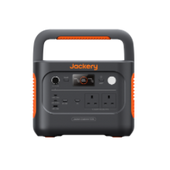
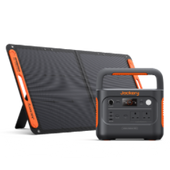
Jackery Explorer 3000 v2
Choosing the Jackery Explorer 3000 v2 for emergency preparedness in the UK is a strategic move, especially considering the country's recent focus on grid resilience. This model represents a significant generational leap over the older "Pro" series, specifically addressing the needs of home backup.

Massive Output for British Appliances
The Explorer 3000 v2 offers a 3,600W continuous AC output (with a 7,200W surge). In a UK context, this is a "magic number" because it can comfortably handle high-wattage appliances that smaller units struggle with. Unlike smaller power stations, it can run a standard 3kW UK kettle. It can power space heaters or portable induction hobs during winter power cuts.
"ZeroDrain" Technology for Long-Term Storage
The biggest risk with emergency gear is finding it dead when you actually need it. The 3000 v2 features ZeroDrain technology, which allows it to retain up to 95% of its charge even after sitting in a cupboard for a full year. This "set it and forget it" reliability is critical for an emergency kit.
Rapid UPS (Uninterruptible Power Supply)
During a "brownout" or sudden power cut, the unit features a sub-20ms UPS switchover. If you have your essentials (like a desktop PC, medical equipment like a CPAP, or your Wi-Fi router) plugged into it, they won't even flicker or reboot when the grid fails.
LiFePO4 Chemistry & 10-Year Lifespan
While older Jackery models used Lithium-ion, the v2 uses LiFePO4 (Lithium Iron Phosphate). This chemistry is significantly more stable and less prone to overheating, making it safer to keep inside a UK home. It is rated for 4,000+ charge cycles to 70% capacity. Even if used frequently, the battery is designed to last over a decade.
Compact "Cell-to-Body" (CTB) Design
UK homes are often tighter on space than US homes. The v2 is 47% smaller and 43% lighter (weighing about 59.5 lbs) than typical 3kWh competitors. It doesn't require a trolley or wheels to move between rooms, making it much easier to store in a utility cupboard or under a stairs.
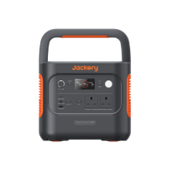
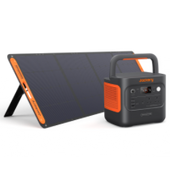
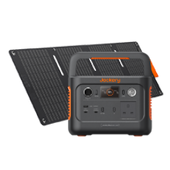
Jackery Explorer 2000 v2
The Jackery Explorer 2000 v2 is a powerhouse specifically designed for high-capacity home backup while being significantly more compact than its predecessors. Released as a refined version of their flagship line, it balances high wattage with a much more manageable size for the average UK home.
 High Output for "Heavy" UK Appliances
British households often rely on high-wattage appliances like kettles and microwaves which can trip smaller power stations. 2200W continuous and 4400W surge: This is high enough to power a standard kettle, toaster, microwave, or even a hair dryer—items that most portable batteries simply cannot handle. 2042Wh capacity: This large battery reservoir can keep a high-efficiency UK fridge-freezer running for up to 15-20 hours, ensuring your food doesn't spoil during an overnight blackout.
Industry-Leading Compactness
Space is often at a premium in UK homes compared to the US. The "v2" is a major upgrade in design. 40% Smaller & lighter: Despite having the same capacity as older 2kWh models, the v2 is roughly 41% smaller and weighs only 38.6 lbs. Stow-away handle: Its foldable, flat-top design means you can easily store it on a shelf in a utility room or under a kitchen bench without it becoming a bulky obstacle.
"Emergency Super Charge" Mode
One of the most critical features for emergencies is how fast you can "top up" when an emergency warning is issued. Using the Jackery app, you can activate the Emergency Super Charge mode, which pulls maximum power from your wall socket to go from 0% to 100% in just over an hour.
You can leave it plugged into your router or PC. If the grid fails, it switches to battery power in less than 20 milliseconds, preventing your internet or work from dropping.
Advanced LiFePO4 Safety & Longevity
Unlike older lithium-ion batteries that might degrade after 500 charges, the Explorer 2000 v2 uses LiFePO4 (Lithium Iron Phosphate) chemistry. It is rated for 4,000+ charge cycles, meaning if you used it every single day, it would still have 70% of its capacity after a decade. It produces no fumes, no carbon monoxide, and operates at a silent 30dB in quiet mode—essential for use in bedrooms or small flats during the night.
FAQs
The following are frequently asked questions about the next emergency alert test in the UK.
1. Is there going to be another emergency alert test?
Sure. The UK government has promised to a program of frequent testing to make sure that the national resilience infrastructure stays in top shape. After the successful nationwide events in April 2023 and September 2025, officials expect to hold these tests around every two years. This helps to confirm technical improvements and makes sure that people still know what the alert sounds and looks like.
2. What time is the emergency alert test in the UK?
In the past, national tests have been held on Sunday afternoons at 3:00 p.m. (15:00 BST). This timing was picked to reduce the impact on schools and businesses while making sure that a large number of people will have their devices close by. The Cabinet Office will clarify the specific dates of subsequent tests a few weeks before they happen, though.
3. Is there an emergency alert today in the UK?
There is no nationwide emergency alert test planned for today, January 3, 2026. The system is now in "active standby" mode, which means it will only go off if there is a real, immediate threat to life in a certain area, like extreme flooding or a large industrial accident. You can always check the official government website to see if there are any alerts in your area that are still active.
4. Will the emergency alert go off if the phone is on silent?
Yes. The system's ability to override silent and Do Not Disturb modes is one of its most important features. It is very important that the warning is received right away in a real-life emergency. So, even if your phone is on silent or vibrate, it will still make the loud, siren-like sound and vibration for 10 seconds. You can only stop the sound by turning off the device completely or putting it on aeroplane mode before the alert goes off.
Final Thoughts
The government takes care of the technological side of our national resilience, but individual preparation is the last piece of the equation. You can make sure your family knows how the system sounds and looks by keeping track of when the next emergency alert test is scheduled in the UK.
Adding a Jackery Portable Power Station to your emergency pack gives you an added layer of safety by giving you clean, portable power when you need it most. The best method to protect your home from the unexpected is to combine official government alerts with strong home backup options.


