
























































Housing solar is moving into the mainstream in the UK. That change is showing up in several ways. Plug-in solar is opening the door for more households to try solar in a simpler way. New-build rules are pushing developers to take on-site renewable electricity more seriously.
At the same time, buyers, landlords, and tenants are paying closer attention to long-term running costs, export payments, and overall energy performance.
This guide looks at why housing solar is growing in the UK, what kind of savings households can expect, how to judge if a property is suitable, and what grants or schemes may help with the cost.
|
Key Takeaways: |
|
Why Housing Solar Is Growing in the UK
Housing solar is growing in the UK because it now sits at the point where policy, energy security, and household economics all meet. For years, rooftop solar was mainly seen as a home improvement choice for early adopters. In 2026, it looks much more mainstream. The government is pushing harder for clean, homegrown electricity, builders are being steered toward solar-ready housing, and households have a clearer route to save money from both self-consumption and exported power.
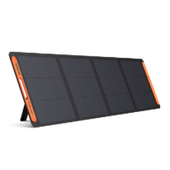
One major reason is the arrival of plug-in solar in 2026. In March 2026, the UK government said plug-in solar panels would be available in shops within months. These are smaller, lower-cost systems designed for places like balconies or outdoor spaces, which means solar is no longer only for detached houses with large roofs.
Another big driver is the government’s wider Clean Power 2030 agenda. The Clean Power 2030 Action Plan says the UK wants a clean power system by 2030, with a focus on energy security, affordability, investment, and cutting climate damage. In practice, that creates a stronger backdrop for housing solar. Solar on homes is no longer a niche add-on.
New-build regulation is also changing the picture. In March 2026, the government confirmed the Future Homes and Buildings Standards and laid the statutory instrument to implement them. The regulations come into force on 24 March 2027 for most non-higher-risk building work in England, with a 12-month transition period. Parliament’s written statement says the Future Homes Standard will see solar panels installed on the majority of new homes, alongside low-carbon heating and higher energy efficiency standards.
The Smart Export Guarantee adds another reason housing solar keeps growing. Ofgem explains that the SEG, launched on 1 January 2020, requires certain electricity suppliers to pay eligible small-scale generators for the low-carbon electricity they export to the grid.
All of this is happening at a time when energy security has become more visible in everyday life. Recent government statements have linked clean, homegrown power more directly to protection from global fossil fuel volatility. That message matters because it speaks to how households think about solar today.
The Benefits of Housing Solar in the UK
The benefits of housing solar in the UK go well beyond cheaper electricity. It can lower costs for households and tenants, reduce carbon emissions, support compliance with future building standards, unlock access to grants or export payments, and help spread the benefits of clean energy more fairly across different types of homes.
Lower Energy Bills for Households
Housing solar delivers its most immediate benefit where households notice it first: on monthly energy bills. When a home generates some of its own electricity during the day, it needs to buy less power from the grid, which can reduce running costs straight away.
Extra Value Through Export Payments
Housing solar is not only about using your own electricity more efficiently. There is also a longer-term income opportunity. Through the Smart Export Guarantee, eligible households can be paid for surplus low-carbon electricity exported to the grid. This means solar can provide value in two ways: by reducing the amount of electricity a home buys and by creating some return when generation exceeds demand.
Lower Carbon Emissions
The environmental benefit is another major reason housing solar continues to gain momentum. Solar electricity is a clean, renewable energy source, and Energy Saving Trust says a typical home solar system could save around one tonne of carbon per year, depending on where you live in the UK.
A More Important Part of Future Housing Standards
Housing solar is becoming more than a personal upgrade. It is increasingly linked to compliance and long-term housing standards. The government has said the Future Homes Standard will see solar panels installed on the majority of new homes, and that these homes should emit at least 75% less carbon on average than homes built to 2013 standards.
More Policy Support and Better Access
Government policy is also helping make housing solar more accessible. The Warm Homes Plan says the government will invest £15 billion to upgrade up to 5 million homes by 2030. This includes grants and loans to make it easier for homeowners to install solar panels and batteries, direct support for low-income households, and new rules aimed at ensuring landlords invest in upgrades that reduce bills for renters and social tenants.
Fairer Access to Clean Energy
This policy shift also connects closely to social equity. One long-standing criticism of residential solar has been that the biggest benefits often went to households that could already afford installation. Current policy is trying to change that.
Greater Energy Resilience
Housing solar also offers a resilience benefit that matters more now than it did a few years ago. Homes with solar, especially when paired with batteries, are better placed to manage price volatility and make smarter use of daytime generation.
Are Solar Panels on New Builds Compulsory in 2026?
Not yet in the simple sense of “every new-build home in the UK must have solar panels in 2026.” In 2026, the legal position is better described as a transition period. The UK government has confirmed that the Future Homes Standard will include solar panels, but the 2026 changes published in March are tied to implementation from 24 March 2027 for most non-higher-risk building work in England, with a 12-month transition period.
The government has also said it expects solar to be installed on the majority of new homes, not necessarily every single one in every circumstance.
In 2026, solar on new builds is clearly becoming the direction of travel, but it is not accurate to say that all new homes already have a blanket legal requirement this year. he policy announced in March 2026 amends the Building Regulations to introduce a new functional requirement for on-site renewable electricity generation for new dwellings, while still allowing flexibility where solar is not suitable or feasible.

What Is Happening in 2026 and 2027?
In policy terms, 2026 is the confirmation year, while 2027 is the main commencement year. The government published its response to the Future Homes and Buildings Standards consultation on 24 March 2026, laid the statutory instrument, and confirmed the new standards would come into force from 24 March 2027 for non-higher-risk building work. For Higher-Risk Buildings, the amended regulations take effect from 24 September 2027.
So, Will Solar Be Standard on New Homes?
In practice, yes, solar is becoming standard on new homes in England, even if the law still allows some exceptions. The parliamentary statement says the new approach is meant to ensure grid-connected new homes contribute to clean energy, but it also says the government has balanced that ambition with flexibility where solar is not suitable. That means the practical answer is not “100% of new homes, no exceptions,” but rather “solar will become the norm for most new homes.”
How Common Are Solar Panels on New Builds?
They are already much more common than they were a few years ago. Government sources say that more than 1.5 million homes across the UK already have solar installed, which shows how mainstream rooftop solar has become overall.
On new builds specifically, one widely cited industry estimate from Solar Energy UK said that at least 40% of new homes in England were already being built with solar by early 2025, and that the share was expected to rise further as building standards tightened.
What Is the Future Homes Standard?
The Future Homes Standard is the next major update to energy rules for new homes in England. It sits within the Building Regulations framework and is designed to deliver homes with much lower emissions, better efficiency, and lower running costs.
The government’s SAP guidance explains that SAP is used both to demonstrate compliance with Part L of the Building Regulations and to generate EPCs, so the Future Homes Standard is closely tied to how new homes are designed, assessed, and approved.
How Do Solar Panels Help a Property’s SAP Score?
Solar panels can help a property’s SAP score by improving the dwelling’s calculated energy performance and lowering its modelled running costs. SAP 10 says the SAP rating is based on the energy costs for space heating, water heating, ventilation, and lighting, less cost savings from energy generation technologies.
It also says the higher the SAP score, the lower the running costs, and that the rating can even go above 100 where renewable generation is used. SAP also measures environmental impact and the Dwelling CO2 Emission Rate, and both take account of emissions saved by energy generation technologies.
Thinking of Getting Solar Panels? Here’s What You Need to Know
The simplest way to think about housing solar is this: it tends to work best for households with a suitable roof, enough time in the property to benefit from the payback period, and a willingness to use more electricity during daylight hours. For those homes, solar can cut bills, earn export income, improve energy performance, and remain useful for decades.

1. Upfront Cost of Housing Solar in the UK
For most UK households, the first question is still the same: how much does housing solar cost upfront, and when does it start paying back? In 2026, a typical domestic solar PV system of around 3.5 kWp costs about £6,100 to install. Installation is currently supported by the temporary 0% VAT rate on qualifying energy-saving materials, which runs until 31 March 2027 before returning to 5%.
2. How Much Can Housing Solar Save?
The savings can be meaningful, but they are not the same for every home. The amount you save depends on how much of your solar electricity you use yourself, whether you sign up for export payments, and where you live in the UK.
The government’s own consumer campaign now says rooftop solar can save households on average more than £500 a year, while a 2025 government solar announcement said families could save around £500 annually from rooftop solar.
3. The Role of the Smart Export Guarantee
A major part of the financial picture is the Smart Export Guarantee, or SEG. Eligible small-scale generators in Great Britain can be paid for the electricity they export to the grid, but the rate, contract length, and other terms are set by each supplier.
Tariffs must remain above zero, and payments are based on export meter readings, so households should compare offers rather than assume every SEG deal works the same way.
4. How Long Does It Take to Break Even?
Break-even usually takes time. A typical home could take at least 10 years to recover installation costs, and that the actual figure varies by location, electricity use, and export behaviour.
|
Location |
Annual bill saving |
Annual SEG payments |
Total annual benefits |
Time to break even |
|
London |
£183–£319 |
£288–£370 |
£553–£607 |
11–12 years |
|
Cardiff |
£199–£332 |
£467–£547 |
£747–£800 |
11–12 years |
|
Edinburgh |
£188–£258 |
£172–£215 |
£402–£429 |
13–14 years |
These figures are based on typical electricity use of 2,700 kWh per year, regional price cap rates, and a 15p/kWh SEG rate. They are estimates rather than guarantees, but they show the overall pattern clearly: households further south, or homes that can use more of their daytime generation, tend to see stronger returns.
5. Does Adding a Solar Battery Make Financial Sense?
A solar battery can improve self-consumption, but it can also make the payback period longer. Battery storage usually costs about £5,000 to £8,000, while adding a battery can add years to break-even. That does not necessarily make a battery a poor choice.
It simply means the decision is often about flexibility, backup value, and greater self-use of solar electricity, rather than the fastest financial return alone.
6. Which Homes Are Best Suited to Solar?
Not every home is an equally strong match for solar. The best roofs are generally south-facing and free from shading, although east- and west-facing roofs can still perform well. Energy Saving Trust does not recommend north-facing roofs, and says east- or west-facing systems may generate around 15% to 20% less energy than a south-facing one. Roof size matters too, since a typical 3.5 kWp system uses roughly 10 to 20 square metres of roof space, and the roof should be in good condition before installation.
7. Planning Permission and Installation Rules
Planning is usually simpler than many people expect. Solar panels on houses are generally treated as permitted development, which means you do not usually need planning permission. However, there can be extra restrictions for listed buildings, conservation areas, and other protected settings.
Your installer should also register the system with the Distribution Network Operator, or DNO.
8. Can Solar Panels Increase Home Value?
Solar panels can often increase home value, but this point is best presented carefully rather than as a guaranteed uplift. The government’s solar campaign says solar can make a home more attractive through an improved EPC rating, and the Department for Energy Security and Net Zero has said rooftop solar can raise the financial value of a property, with the government working with RICS on valuation.
9. Lifespan of a Housing Solar System
In terms of lifespan, solar panels are a long-term investment. Panels should last 25 years or more, although the inverter may need replacing after around 12 years. That is one reason payback can still make sense even when it takes a decade or more: in most cases, the system keeps working for many years after it has recovered its upfront cost.
10. Maintenance Requirements
Maintenance is usually low. There is not much you need to do beyond trimming nearby trees to reduce shading, and that UK rain will generally clean the panels if they are tilted at 15 degrees or more. In other words, housing solar is not usually a high-effort upgrade once it has been installed properly.
Is Your House Suitable for Solar Panels?
A house is usually suitable for solar panels in the UK if it has a roof that gets decent daylight, enough usable space, and no major structural or planning obstacles. The strongest setup is still a south-facing roof with little or no shade, but that is not the only option.

- Roof Direction: Roof direction matters because it affects how much electricity the system can generate over the year. In simple terms, south-facing roofs usually produce the best results in the UK, while east- and west-facing roofs are still often viable for households that use electricity across the morning or late afternoon.
- Shading: Shade is another big test. Even a good roof can become a weaker solar candidate if it is blocked by tall trees, neighbouring buildings, chimneys, or other obstructions for long parts of the day. A bit of partial shade does not always rule solar out, but heavy shading will reduce output and stretch the payback period.
- Roof Space: Roof space is just as important as sunlight. A typical domestic system needs enough uninterrupted area to fit multiple panels safely and efficiently. A standard home system of around 3.5 kWp usually needs roughly 10 to 20 square metres of roof space, depending on the panel type and layout. If the roof is very small, broken up by dormers or skylights, or heavily interrupted by vents and other features, solar may still be possible, but the system size could be too limited to deliver strong savings.
- Roof Condition: The condition of the roof also matters. Solar panels are long-life products, so it makes little sense to install them on a roof that may soon need major repair or replacement. The mounting system and added load need to be suitable for the structure, and the installation must not compromise building regulation compliance.
- Using Electricity in Daytime: A house is also more suitable for solar if the household can actually use the electricity well. Homes where someone is around during the day, or where appliances like washing machines, dishwashers, immersion heaters, or EV charging can be shifted into daylight hours, usually get better value from solar.
- SEG Payment: If a homeowner wants SEG payments, certification and metering become part of the suitability picture as well. SEG payments are available only where certain criteria are met, and for installations up to 50 kW that usually means an MCS certificate or equivalent plus an export meter arrangement that can support payments.
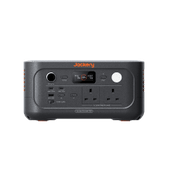
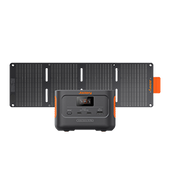
Try Solar First with Jackery SolarVault 3 Series
The Jackery SolarVault 3 Series is Jackery’s next-generation plug-in solar solution, designed to help households generate, store, and use solar energy more efficiently. The series offer flexible options for home battery storage systems, existing PV installations, and larger home energy setups. With an integrated inverter, LiFePO4 battery technology, smart energy management, and expandable storage, the SolarVault 3 Series brings solar storage into a compact, modular, all-in-one system.
The system works by collecting solar power from connected panels, storing surplus electricity in the battery, and automatically supplying that energy when the home needs it most, such as in the evening, during peak electricity prices, or during a power outage. The SolarVault 3 Series can optimise solar generation even when panels face different directions or experience partial shading. Its AI-driven energy management helps balance solar production, household demand, battery charging, and electricity tariffs for smarter daily use.
One of its biggest advantages is flexibility. Homeowners can start with a smaller battery capacity and expand later as their energy needs grow. The plug-and-play design also makes installation more straightforward, while key safety features such as LiFePO4 cells, terminal temperature monitoring, and integrated aerosol fire suppression support reliable long-term operation. For UK households looking to improve solar self-consumption, reduce reliance on the grid, and prepare for a more flexible energy future, the Jackery SolarVault 3 Series offers a practical bridge between everyday solar generation and intelligent home battery storage.
The Jackery SolarVault 3 Series is expected to go on sale in the UK in July, giving UK users a new way to store solar power, use more of their own clean energy, and make home electricity management smarter and more cost-effective.

How to Buy the Right Housing Solar System?
Buying the right housing solar system is not really about finding the “best” panels in the abstract. It is about choosing a setup that matches your roof, your electricity use, your budget, and your long-term plans.

Tip 1: Choose a System That Fits Your Home
Buying the right housing solar system is not about picking the “best” panels in general. It is about choosing a setup that matches your roof, electricity use, budget, and future plans. A system can look impressive on paper but still be the wrong fit if your roof is shaded or your household uses little electricity during the day.
Tip 2: Check Roof Suitability First
Your roof is one of the most important factors. In the UK, solar usually works best on a sloping, unshaded roof with good sun exposure. South-facing roofs tend to perform best, while east- and west-facing roofs can still work well. North-facing roofs are usually less suitable. Roof size also matters because you need enough clear space for the panels.
Tip 3: Pick the Right System Size
Bigger is not always better. The right system size depends on how much electricity your household uses and how much roof space you have. A well-sized system should suit your home and daily needs, rather than simply aiming for the highest possible output.
Tip 4: Think About Your Daily Electricity Use
Homes that use more electricity during the day often get better value from solar because they can use more of the power directly. If nobody is home for most of the day, solar can still work, but the value may depend more on export payments. That means solar is not only a hardware choice, but also a lifestyle fit.
Tip 5: Use a Certified Installer
Installer quality matters just as much as the equipment. In the UK, choosing an MCS-certified installer is important because it supports installation quality and is usually required if you want to access Smart Export Guarantee payments.
Tip 6: Compare the Whole System
Do not look only at the panels. A good solar quote should also include the inverter, mounting system, monitoring tools, warranties, and aftercare support. A lower price can sometimes mean weaker components or shorter protection.
Are There Solar Grants and Schemes?
Yes, but in the UK the picture is a bit more complicated than a simple national “solar grant” for everyone. There is not currently a single dedicated UK-wide solar panel grant for all households. Instead, support tends to come through wider home energy-efficiency and low-income retrofit schemes, local authority programmes, social housing funding, and newer Warm Homes policies.
SHDF: Social Housing Decarbonisation Fund
The Social Housing Decarbonisation Fund (SHDF) was created to improve the energy performance of social housing in England, especially homes below EPC band C. In the latest policy framework, it has effectively moved under the Warm Homes: Social Housing Fund branding. Social Housing Fund Wave 3 is designed to upgrade social homes in England below EPC C and support energy performance measures in social housing.
HUG: Home Upgrade Grant
The Home Upgrade Grant (HUG) was aimed at low-income households in England living in homes with poor energy efficiency, usually EPC bands D to G, especially off the gas grid. Official statistics describe HUG as a scheme supporting low-income households with low energy efficiency through home upgrades.
LAD: Local Authority Delivery
The Local Authority Delivery (LAD) scheme also sat within the earlier home-upgrade landscape. Official statistics group LAD and HUG together as schemes supporting low-income households and homes with EPC D or lower in England. LAD was designed to let local authorities deliver energy-efficiency improvements locally, which could include solar as part of a broader package where appropriate.
Does Solar Panel Funding Cover Battery Storage?
Increasingly, yes, but not in every scheme and not always as a standalone offer. This is where readers often get confused. There will be fully funded government support for battery storage for people on low incomes under the Warm Homes Plan, and its battery storage guidance also says low-income households will be able to get support to install battery storage.
FAQs
The following are frequently asked questions about the housing solar in the UK.
1. How much can new builds save with solar panels?
It depends on location, system size, and how much electricity the household uses during the day, but the UK government says rooftop solar can save households on average over £500 a year.
2. Do solar panels need planning permission?
Usually not. In the UK, solar panels on homes are often classed as permitted development, so planning permission is not normally required as long as the relevant limits and conditions are met.
3. Is the UK sunny enough for solar panels?
Yes. Solar works well in the UK, and even Energy Saving Trust notes that panels still generate electricity on cloudy days, while recent Met Office reporting highlighted solar providing over 6% of Britain’s annual energy needs in 2025.
4. How many solar panels do I need?
For a typical UK home, around six to 12 panels is common. Energy Saving Trust says an average domestic system is about 3.5 kWp, usually covering 10 to 20 m² of roof space with roughly that number of panels.
Final Thoughts
Housing solar in the UK is no longer just a niche idea for early adopters. It is becoming part of a broader shift in how homes are built, upgraded, and valued. With stronger policy support, growing pressure for low-carbon housing, and clearer long-term savings potential, solar is starting to feel like a normal part of modern home planning rather than a specialist extra.
That does not mean it is right for every property. Roof direction, shading, budget, and household energy habits still make a big difference. But for the right home, solar can bring lower running costs, better energy performance, and more resilience over time.

![5kW Solar Battery Price in the UK [2026 Update]](http://uk.jackery.com/cdn/shop/files/5kw_solar_battery_price.png?v=1776306774&width=90)
![Guide to 10kW Solar Battery Price in the UK [2026 Update]](http://uk.jackery.com/cdn/shop/files/10kw_solar_battery_price_guide.webp?v=1780026743&width=90)

