



















































Vanlife has moved well beyond a niche travel trend in the UK. For some people, it is a way to escape rising housing costs and live more simply. For others, it is about freedom, flexibility, and the chance to wake up somewhere different without giving up the essentials of daily life.
Is it legal to sleep in a van overnight? Can you actually live in one permanently? What does daily life look like, and how much does it really cost once you factor in fuel, insurance, parking, food, and power?
This guide explores the reality of vanlife in the UK, from the legal side and everyday routine to the steps for getting started. It also explores why a Jackery Solar Generator can be a useful power solution for staying charged and comfortable on the road.
|
Key Takeaways: |
|
Is It Legal to Live in a Van in the UK?
Living in a van in the UK is not automatically illegal, but it is not as simple as parking anywhere and treating it like a permanent home. There is no single national law that says you cannot live in a van full-time. In practice, legality depends on where you park, how long you stay, what local restrictions apply, and whether your vehicle is road-legal and properly insured.
One of the biggest points to understand is the difference between living in a van and parking or sleeping in a van in a specific place. You may be able to live this way overall, but that does not mean you can stay overnight wherever you like.
Your Van Must Be Legal to Drive and Keep on the Road
If you live in a van, the vehicle still needs to meet the normal legal requirements for any road vehicle. That usually means valid vehicle tax, MOT where required, and insurance. If your van has been converted, the changes must not compromise safety, and if you want the V5C body type changed to motor caravan, DVLA has its own rules about what qualifies and what exterior features must be visible.
Parking Rules Matter More Than the Idea of Vanlife Itself
A lot of legal issues come down to where the van is parked. On public roads, you must still follow normal parking restrictions such as yellow lines, permit zones, time limits, loading bans, and obstruction rules. In the UK, waiting restrictions are shown by signs and road markings, and they can apply to the whole highway, including verges and footways.
Overnight Sleeping Is Often Controlled Locally
This is where vanlife in the UK becomes more complicated. There is no clear nationwide ban on sleeping in a van on a public road, but many councils and landowners set their own restrictions through car park rules, bylaws, or local enforcement. In some areas, vehicles can be parked but not used for overnight sleeping, cooking, or camping behaviour.
Private Land Needs Permission
If you want to stay on private land, the safest approach is to have the landowner’s permission. Without it, you risk being asked to leave and, in some cases, facing enforcement. Campsites, approved stopovers, farms, and private pitches are usually much safer options than guessing whether a car park or unused bit of land is acceptable.

How Does Vanlife in the UK Really Look?
Vanlife in the UK can look appealing from the outside. There is freedom in it, and for some people it really is a simpler, cheaper, and more flexible way to live than renting or owning a house. But the day-to-day reality is usually much less polished than the photos suggest.
Van living can be simple, cheap and flexible. You have less space, fewer possessions, and usually lower fixed housing costs than a standard home. You can also change location more easily, which suits people who like travel, seasonal work, remote working, or a more independent routine.
Vanlife is not all Insta sunsets and open-road cruising. The attractive side of vanlife is real, but it is only part of the picture. Most people do not spend every evening parked beside a lake with no one around. A lot of vanlife in the UK happens in supermarket car parks, service areas, quiet side streets, campsites, lay-bys, industrial edges, or borrowed driveways.
Van dwelling life can be slow, messy and stressful. Daily life in a van often revolves around basic tasks that a house makes easy. Water needs topping up, waste needs emptying, batteries need charging, food storage is limited, and the van itself always needs to stay organised. If one part of the setup is off, such as poor ventilation, low battery, or limited storage, the whole day can feel awkward. That is why real vanlife is often slower and more practical than people expect.
You will not always feel welcome. Not every town, car park, or local area is relaxed about people staying in vehicles, especially where parking pressure or complaints already exist. Councils such as Bristol openly recognise that vehicle dwellers are part of the city, but they also describe enforcement, tensions, and the need to manage impacts on local communities.
Is Vanlife the Same as Life in a House?
Not really. Vanlife can still include work, cooking, cleaning, sleep, routines, hobbies, and quiet evenings, so in that sense it is still ordinary life. But the structure is very different. In a house, most basic systems are built in and invisible. In a van, you think about power, water, waste, storage, heating, parking, and security much more often because you are managing them yourself in a very limited space.
A house gives you more stability, privacy, storage, and comfort. Vanlife gives you more mobility and, for some people, more freedom. Neither one is automatically better. They simply ask for different trade-offs. In the UK, real vanlife usually works best for people who can handle uncertainty, stay organised, and accept that some days will feel far less romantic than the idea that first drew them in.

Can You Live in a Van Permanently?
Yes, you can live in a van permanently in the UK, but there is no single legal status that officially turns a van into a permanent home in the same way as a house or flat. Full-time vanlife is usually possible only if you keep the vehicle road-legal, follow parking and land-use rules, and keep your official records up to date.
The key rule: permanent vanlife is allowed, but specific places may not be.
Living in a van long-term is not automatically banned across the UK. The problem usually comes when someone tries to stay in one place as though it were a permanent pitch without the right permissions.
If you stay on private land long-term, planning rules become more important.
This is where permanent vanlife becomes more regulated. If a van, caravan, or similar setup is being used as someone’s sole or main residence on land, that can trigger planning and site licensing issues.
You still need a valid address for official records.
There is no UK “vanlife register” for people living full-time in vehicles. In practice, most vanlifers still need a reliable postal or correspondence address for official documents. DVLA says you must update both your driving licence and your V5C log book when your address changes, and you can be fined if your V5C details are not kept up to date.
How to register your van for full-time vanlife?
If you buy or convert a van for long-term living, the first registration step is making sure the vehicle is correctly recorded with DVLA. If you convert it, you may need to update the V5C, especially if the body type changes. DVLA also says that if you want it recorded as a motor caravan, the vehicle must meet its policy and have recognisable external motor caravan features, not just an internal bed and storage setup.
Do you need to pay council tax if you live in a van permanently?
Sometimes, yes. If a caravan or similar pitch is treated as your sole or main residence, councils may register it for council tax. But councils also point out that paying council tax does not override planning law. In other words, being billed does not automatically make the arrangement legal if the site itself is not approved for residential use.
How to Live in a Van in the UK?
Living in a van in the UK gets much easier once you stop thinking of it as one big lifestyle choice and start treating it as a set of daily systems. Parking, washing, cooking, internet, heating, waste, and paperwork all need a routine.

Tip 1: Choose Where to Park Carefully
One of the most important vanlife habits is choosing where to stop before it gets late. In the UK, that usually means checking signs, understanding local restrictions, and avoiding the assumption that any quiet car park is acceptable overnight. Some places allow daytime parking but restrict overnight stays or occupation, while motorway services are mainly short-stop facilities rather than long-term overnight solutions.
Tip 2: Keep Cooking Simple and Realistic
Most vanlifers cook in a very practical way. That usually means one-pot meals, easy breakfasts, simple lunches, and dinners that do not create lots of washing up. In UK vans, cooking is commonly done on a gas hob, portable stove, or built-in camper kitchen. The simpler the cooking setup, the easier daily life becomes, especially when water, storage, and washing-up space are limited.
Tip 3: Shower on the Road by Using the Places That Already Exist
Most full-time vanlifers in the UK do not rely on one fixed shower solution. Instead, they rotate between campsites, club stop-off points, leisure centres, gyms, swimming pools, and occasional paid facilities on the road. Club sites are one of the easiest options because many offer toilet blocks, showers, laundry, and service points in one place.
Gyms are another common answer, especially for people staying in towns or moving regularly. They give you a shower and sometimes a bit of routine too. If you are travelling through smaller places, campsites and holiday parks are often the most reliable choice.
Tip 4: Have a Proper Address for Official Life
Even if you live in a van full-time, you still need a reliable address for practical admin. DVLA says you must keep your V5C and driving licence address updated when your details change. For most vanlifers, that means using a trusted family address or another stable correspondence address where official post can be received.
Tip 5: Work Out Your Toilet Routine Before You Need It
Toilet planning is one of the least glamorous parts of vanlife, but it matters every day. Some vans have a built-in cassette toilet or portable toilet, while others rely mostly on public toilets, campsite facilities, and leisure centres.
If you do carry your own toilet, you need a legal and hygienic emptying routine. Campsites and motorhome service points are designed for this, and serviced pitches may include access to fresh water, grey waste disposal, and sometimes black waste disposal too.
Tip 6: Do Laundry Little and Often
Laundry in vanlife is usually done through campsite laundry rooms, launderettes, or occasionally while staying near friends or family. Club campsites commonly list laundry washing facilities as part of their standard setup, which is one reason regular site stays make practical sense even for people who prefer a lot of off-grid time.
Tip 7: Use Mobile Data, But Check the Signal Before You Rely on It
Internet on the road in the UK usually comes down to mobile data. Many vanlifers use a phone hotspot, a dedicated mobile router, or a SIM with a generous data plan. This works well in many places, but not everywhere.
Tip 8: Find LPG Before You Are Close to Empty
If your van uses LPG for cooking or heating, do not leave it until the bottle is nearly out. The Camping and Caravanning Club notes that finding suitable cylinders has become harder in recent years, and Calor also advises people to check local stockist availability before visiting.
Tip 9: Choose a Reliable Power Source
Staying warm in a van in the UK is partly about heating, but also about condensation, insulation, ventilation, bedding, and how you use the space. Gas remains a common heating fuel in motorhomes and campervans, and many people also rely on thermal layers, proper duvets, window covers, and dry clothing management to stay comfortable.
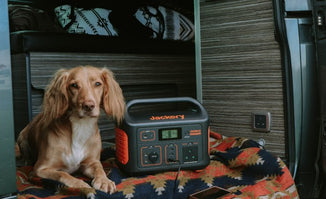
This is another area where a dependable power setup helps. A Jackery Solar Generator can support your day-to-day electrical basics, which makes it easier to keep lighting, charging, and small comforts running without depending entirely on campsite hook-up.

Tip 10: Find Other Vanlifers through Clubs, Meets, and Events
Vanlife can feel solitary if you only move from one overnight stop to the next, so it helps to plug into the wider community. In the UK, one of the easiest ways is through organised camping clubs, rallies, and meets.
There are also dedicated vanlife events in 2026, such as Vanlife Festival in Shrewsbury and Campervan Campout in West Sussex, both of which are built around community as much as vehicles.
Jackery Solar Generators for Vanlife in the UK
Power is one of the biggest practical challenges in vanlife in the UK. Even a simple setup usually needs to cover phones, lights, laptops, cameras, small kitchen devices, and other everyday essentials. In the UK, where many vanlifers mix campsites, short stopovers, and off-grid stays, a solar generator can make daily life far more flexible. That is where Jackery fits in naturally.
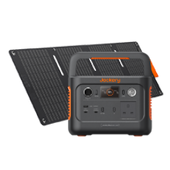
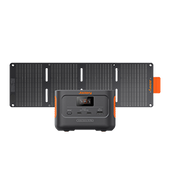
The Jackery Solar Generator is built around portable power, solar charging compatibility, and LiFePO4 battery technology, which makes it a practical match for life on the road. Jackery Solar Generators suit vanlife is that they help reduce reliance on fixed hook-up points. Instead of planning every stop around mains electricity, you have a more independent way to keep your essentials running.
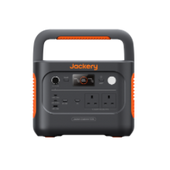
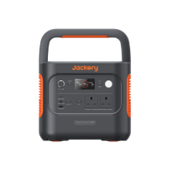
Jackery Solar Generator 2000 v2
The Jackery Solar Generator 2000 v2 is the stronger choice for people who want a more capable setup for longer stays, larger motorhomes, or trips where power demands are less modest. It at 2042Wh capacity with 2200W output, which puts it in a comfortable position for higher-demand travel use. It also includes 2 AC outlets, 1 USB-A 18W, and 2 USB-C ports.

Higher Capacity for Longer Vanlife Festival Stays
The Jackery Solar Generator 2000 v2 is a strong choice for a UK vanlife festival in 2026 because it is better suited to a full weekend away rather than a short day trip. In that kind of setting, the 2042Wh capacity gives you much more usable energy for a longer off-grid stay.
One of the main reasons to choose the 2000 v2 is its 2200W output, which makes it suitable not only for phones, laptops, and lights, but also for more demanding vanlife gear.
Portable for Its Class
Although it offers large capacity, the Jackery 2000 v2 is designed to stay travel-friendly. Jackery lists it at 17.5 kg, and also describes it as lighter and more compact than typical 2kWh LiFePO4 models, with a foldable handle for easier carrying. That balance matters for vanlife trips, because space is limited and festival packing can already be heavy.
Useful Port Selection for Modern Festival Gear
The 2000 v2 includes 2 AC outlets, 2 USB-C ports, 1 USB-A port, and a car port, which makes it practical for the mix of devices people actually bring to vanlife festivals. You can charge phones, laptops, tablets, cameras, lights, and smaller accessories from one unit, which is especially helpful for couples or groups travelling together.
Solar Charging Adds More Freedom on the Road
As a solar generator package, the 2000 v2 also gives you the option of recharging with SolarSaga 200W solar panels, which fits naturally with vanlife travel. That is useful for festival-goers who want to stay more self-sufficient, extend their time off-grid, and reduce dependence on hook-ups or site facilities.
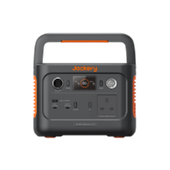
Jackery Solar Generator 1000 v2
The Jackery Solar Generator 1000 v2 is the more compact option, and for many people it will be the easier fit. it at 1070Wh capacity with 1500W output, and it is suitable for higher-demand essentials such as refrigerators, kettles and portable air conditioners. It also supports USB charging with up to 100W dual PD charging, which is useful for modern phones, tablets and laptops.

Enough Capacity for Everyday Festival Power
One of the main reasons to choose the 1000 v2 is its 1070Wh capacity, which gives you enough stored power for the kind of devices people actually use at vanlife festivals. It is well suited to charging phones, laptops, tablets, cameras, lights, and other daily essentials across a weekend, especially if you want one power source for both your van and your pitch.
Stronger Output for More Than Just Small Electronics
The 1500W output is another key advantage. It gives the 1000 v2 more flexibility than entry-level models, so it can handle not only personal electronics but also more demanding vanlife gear. A vanlife festival is not only about attending talks or walking around displays. It is also about living on-site for a few days and enjoying the social side of van travel.
Multiple Ports for Modern Vanlife Devices
The Jackery Explorer 1000 v2 includes USB-A and USB-C ports, with up to 100W dual PD charging, alongside AC outlets. That makes it practical for modern vanlife travel, where people often need to charge several devices at once, from phones and drones to laptops and camera batteries.
Ultra-Fast One-Hour Charging
The Emergency Charge Mode, enabled through the app, allows the Explorer 1000 v2 Portable Power Station to be fully charged in less than an hour, delivering crucial power backup when your battery runs low. Additionally, charging from 0% to 100% in just two hours using an AC wall outlet helps extend battery life.
How Much Does It Cost to Live in a Van in the UK?
The cost of vanlife in the UK can vary a lot depending on how often you drive, how often you pay for campsites, how simple your food routine is, and whether your van is already well set up. For most people, the biggest monthly costs are usually fuel, food, insurance, campsite stays, and repairs or maintenance.
Smaller costs such as laundry, LPG, phone data, and apps are easier to miss, but they still add up over time. Current UK reference points put unleaded at about 140.6p/litre and diesel at about 159.2p/litre in mid-March 2026, while common insurance benchmarks sit at roughly £434 a year for motorhome insurance and £631 a year for van insurance. Motorhome tax for many vehicles up to 3,500kg is currently £220 to £360 a year, depending on engine size.
Campsite costs are one of the biggest swing factors. Small Certificated Locations can be around £18 to £25 per night, while some examples run at £20 to £30 per night depending on season and stay length. Many sites also include basics such as drinking water, chemical emptying, rubbish disposal, showers, laundry access, and service points, which is why campsite nights often replace other living costs rather than just adding extra comfort.
Here is a practical monthly breakdown for one person living in a van in the UK with moderate travel. These are not fixed national averages.
|
Cost Item |
Typical Monthly Cost |
What This Usually Covers |
|
Food |
£180–£320 |
Groceries, simple cooked meals, occasional meal deals or takeaway coffee |
|
Fuel |
£180–£420 |
Moderate driving; this rises quickly if you move often |
|
Insurance |
£36–£53 |
Based on roughly £434/year motorhome insurance or about £631/year van insurance |
|
Road Tax |
£18–£30 |
Based on roughly £220–£360/year for many motorhomes up to 3,500kg |
|
Campsite Fees |
£80–£300 |
Around 4 to 12 nights a month at roughly £18–£25 a night, sometimes more |
|
Maintenance and Repairs Fund |
£50–£150 |
A monthly budget pot for servicing, tyres, brakes, repairs, MOT prep |
|
Laundry |
£18–£40 |
Usually 2 to 4 washes and dries a month, sometimes more in winter |
|
LPG / Cooking Gas |
£10–£35 |
Depends on cooking style, heating use, and bottle size |
|
Heating Extras |
£10–£60 |
Extra gas, thermal gear, occasional electric hook-up, winter comfort costs |
|
Water |
£0–£15 |
Often included at campsites and service points; sometimes small refill costs |
|
Waste Disposal |
£0–£15 |
Often included where you stay, but some paid stops may charge indirectly |
|
Phone and Wi-Fi |
£8–£30 |
SIM-only deal, hotspot use, or a higher-data plan |
|
Vanlife Apps |
£0–£2 |
Optional apps spread over the year, or free versions only |
|
Parking / Tolls / Odds and Ends |
£20–£80 |
Pay-and-display, city parking, occasional fees, public showers, bits you forgot |
For a fairly careful vanlife setup in the UK, a realistic total is often around:
- Budget-minded vanlife: £610-£900 per month
- More comfortable full-time vanlife: £900-£1,550 per month
The lower end usually means cooking most meals yourself, limiting campsite nights, moving less often, and keeping the van setup simple. The higher end usually reflects more driving, more paid stays, higher winter heating use, and a larger maintenance cushion.
FAQs
The following are frequently asked questions about the silent disco walking tours in the UK.
1. Can you sleep in a van anywhere in the UK?
No. You cannot assume you can sleep in a van anywhere in the UK. Overnight sleeping depends on local parking rules, landowner permission, and site-specific restrictions, and some councils or car parks ban overnight stays altogether.
2. How do you shower while living in a van
Most vanlifers use campsites, club sites, gyms, leisure centres, swimming pools, or paid stop-off facilities with shower access. In practice, many people mix these options depending on where they are and how long they are staying.
3. How to have an address when living in a van in the UK?
Most people use a trusted family or correspondence address for post and official documents. If you do not have a fixed home, you can still register to vote using the no-fixed-address process, and NHS guidance says you can register with a GP using a temporary address or the surgery’s address.
4. Do you need ventilation when sleeping in a van?
Yes. Ventilation is important when sleeping in a van because it helps reduce condensation, damp, and stale air. Even in winter, some airflow is usually needed to keep the space drier and more comfortable.
5. How do you make money living in a van?
Most people make money in the same ways they would elsewhere, such as remote work, freelance jobs, seasonal work, temporary contracts, delivery driving, content creation, or small mobile businesses. Vanlife changes where you live, not the need for a regular income.
6. Is living in a van safe?
It can be safe, but it depends on where you park, how discreet your setup is, and how well you manage security, ventilation, and daily routines. Choosing legal, well-used, or trusted places to stop usually makes a big difference.
Final Thoughts
Vanlife in the UK can offer freedom, flexibility, and a simpler way to live, but it works best when it is approached realistically. It is not just about scenic stops and spontaneous travel. It also involves understanding the legal side, managing everyday routines, budgeting carefully, and making peace with a smaller, more mobile version of home.
The key is to build a setup that matches the way you actually live. A Jackery Solar Generator can be a practical part of that, helping you stay charged and more self-sufficient on the road.


