< Jackery Stories/Beyond the Workshop: How Jackery Helps Wastesmiths Bring Recycling to the Community.

Dan

Beyond the Workshop: How Jackery Helps Wastesmiths Bring Recycling to the Community.

Hear from Dan, Operations Lead at Wastesmiths, on how the Jackery Explorer 2000 v2 powers outdoor recycling initiatives. 

At Wastesmiths, finding new uses for things that might otherwise be thrown away is part of everyday work. The team works with local communities on projects ranging from recycling plastic and reusing clothing to making arts and crafts with natural materials. Through these hands-on activities, they help people see the value in waste and explore more sustainable ways of doing things.

No two days are quite the same for Dan. As Operations Lead at Wastesmiths, he might be processing and shredding waste plastic for an upcoming project, working with local communities, or taking photos and videos to document what the team is doing.

Wastesmiths has always tried to help people see discarded materials differently. For Dan, the most meaningful part is not simply telling people that waste plastic still has value, but letting them see for themselves what it can become.

“I think the thing that really gets me excited is when we gather communities together,” Dan says. When people see plastic they might otherwise have thrown away being turned into something useful, it often changes the way they think about the material.

Breaking Free from the Workshop

Wastesmiths has its own workshop by the coast, but many of the projects the team wants to run make more sense elsewhere. Beaches, community gardens, schools and other public spaces are often where people already are, yet these places do not always have access to mains electricity.

In the past, that could determine how far an activity could go. The team might collect waste materials with a group on the beach, but if the next stage had to happen back at the workshop, participation could quickly drop off. Dan says that even if the workshop was only a ten-minute walk away, only a small number of people might actually continue on.

“If everyone is at the beach, we can bring the Jackery and the equipment and do something at the beach where they are.”

For Dan, that works much better than asking people to come back to the workshop.

Before using Jackery, he had already tried other portable power setups. His earlier system used a leisure battery, an inverter and separate cables. It could work, but without a background in electrical systems, Dan never felt completely comfortable using it.

He eventually started looking online for a simpler solution. That was when he realised portable power stations had moved far beyond the small power banks he knew from charging phones. They could now support equipment such as ovens and injection moulders — the kinds of machines Wastesmiths actually needed.

Jackery gave him a much simpler way to work. Equipment could be plugged in directly, without having to manage a separate battery, inverter and a tangle of cables.

“My focus can be on working with the people that are there,” he says, “rather than getting stressed about the electric or the power.”

Plastic in the Community Garden

Norwich has a number of community gardens, maintained by local residents and volunteers, but according to Dan, they do not have a fixed electricity supply. At the same time, many of the gardens are looking for ways to build more planters and create additional growing space.

Wastesmiths came up with a project that invited community members to collect waste plastic from their homes and bring it directly to the garden, where it could be turned into material for new planters.

Previously, even if residents had already collected the plastic in the garden, it was difficult to complete the processing there. HDPE plastic needs to be heated before it can be shaped, and the mini oven used for that stage requires a reliable power source. Without electricity in the garden, the process could not easily continue on site.

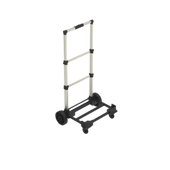
On the day of the project, the Wastesmiths team loaded the equipment onto a trolley and took it straight to the community garden.

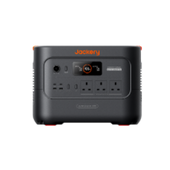
There, they connected a Jackery Explorer 2000 v2 to a mini oven to heat the HDPE plastic.

Each batch used around 1kg of plastic and took about an hour to heat until the material was soft enough to work with. Wearing gloves, the team then removed the softened plastic, roughly shaped it into a beam, and placed it into a mould. After around another half an hour, a finished recycled plastic beam could be removed and later used to build a planter for the garden.

The mini oven was the only piece of equipment that needed power during the process, but without it, the plastic could not be heated and the rest of the work could not continue on site.

With the Jackery Explorer 2000 v2, a process that would otherwise have been difficult to complete in the community garden could stay there from start to finish.

From Bottle Caps to Planters

What Dan particularly likes about the project is that community members can see the whole process for themselves.

They collect the plastic, bring it to the garden, and then watch as it is heated, shaped and turned into material that can be used to build a planter. The finished material then stays in the same community where it came from.

If Wastesmiths asked the volunteers to leave the garden and come to the workshop for the next stage, Dan does not think many of them would make the trip. But when the team brings everything to the garden, the response is very different.

“When we turn up at their community garden and say, ‘Here we are, let’s do this here where you are,’ everyone gets excited about it and everyone gets involved.”

The collecting did not stop after that first session. Dan says the community continued saving plastic bottle caps and had already collected hundreds more, ready to be turned into additional plastic beams for future planters.

For Wastesmiths, that makes the whole process feel more complete. The material comes from the community, is transformed within the community, and eventually returns to the same place in a new form.

The Jackery Explorer 2000 v2 means the team no longer has to split that process between the community garden and the workshop simply because electricity is unavailable on site.

Working in More Places

The same flexibility has also helped Wastesmiths in other settings.

During a recent heat wave, the team was running a school activity that would normally have taken place inside a classroom. Instead, they moved an injection moulder and mini oven outside to a shaded area on the school grounds. Although the space was far from any fixed power source, Jackery allowed the session to continue outdoors, where Dan felt the students were more comfortable and better able to focus.

At a 10-kilometre race in central Norwich, Wastesmiths also set up beside the course, collecting discarded paper cups and using Jackery to power paper shredders and food blenders. Passers-by could watch as the cups began to be turned into recycled paper right in front of them.

Dan says Wastesmiths can sometimes be difficult to explain in just a few sentences. But when people can stand nearby and actually watch the process happen, it becomes much easier to understand.

From “Can We Do It?” to “What Would Work Best?”

As projects like these have become easier to run, Dan has noticed that Jackery has changed more than where Wastesmiths can work. It has also changed how the team thinks about new ideas.

In the past, an idea often began with practical questions: Is there power on site? Can the equipment run there? Is the project even possible in that location?

Those questions no longer have to come first.

Instead, the team can start by thinking about where the project would work best, how it could be more engaging, and how more people could take part.

“We can think of the best, most inspiring way of doing something,” Dan says, “rather than just working out the most basic way of making it happen.”

In the end, he sums up what Jackery means to Wastesmiths in one simple sentence:

“Jackery gives us the power to take our projects to the places and people that will benefit from them.”

For Dan, that is what matters most.

Powering More Possibilities with Jackery

Dan’s story shows how the Jackery Explorer 2000 v2, plug-and-play design helps Wastesmiths take recycling projects beyond the workshop and into local communities. 

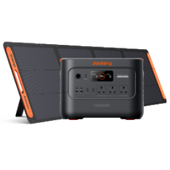
For projects that require higher power output or longer runtimes, the Jackery Explorer 2000 Plus v2 offers another option. With a similar 2kWh base capacity, higher power output and expandable battery capacity, it's designed to support more demanding equipment and extended off-grid activities.

From community workshops to more power-intensive outdoor projects, Jackery helps bring ideas to life beyond the limits of fixed power sources.

See More Stories