
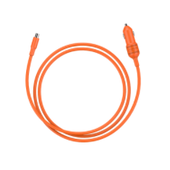

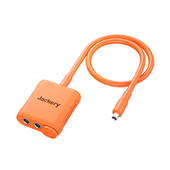


Image

What’s the Difference Between “Plug-in” and “Plug-in-Ready”?

“Plug-in” Solar helps you start generating solar energy with panels and a microinverter. “Plug-in-Ready” means SolarVault 3 is designed for future Plug & Play use, but in the UK today it must be professionally hardwired.

Image

UK Policy & Compliance Guide

(Must‑Read for Beginners)

Installing plug‑in solar in the UK is fully legal, but to ensure safety and regulatory compliance (under 2026 regulations), you need to keep two key points in mind

Image

Microinverter DIY Starter Guide

Start Generating Solar in 3 Simple Steps.

A microinverter turns solar energy from your panels into electricity your home can use. For beginners, it's a simple way to start with plug-in solar before adding battery storage later.

Image
Image
Image

Ready to Store Energy? Step Up to SolarVault 3 Solar Battery.

Solar panels help you generate energy during the day. SolarVault 3 Series Plug-in-Ready Solar Battery System helps you store that energy, use it later and manage home power more intelligently.

Poster
Poster

Why Choose the Jackery SolarVault 3 Series?

At the forefront of home energy management, we deliver a smarter, safer, and more powerful solution

Effectively Lower Electricity Costs

Tool-Free Expansion, More Stored Power

Safety Built Into Every Layer

High Output. Higher Solar Harvest.

Simple Setup, Smarter Energy Control

SolarVault 3 is designed for straightforward home energy use. In the UK, a qualified electrician hardwires the system to your consumer unit; once installed, it supports 800W to up to 2,500W output and guides you through six simple steps from setup to smart energy management.

Plug-in-Ready Design, UK-Compliant Installation

Flexible Output for Everyday Home Use

6 Guided Steps to Smart Energy Living

Built to Last. Designed to Keep Getting Smarter.

From continuous OTA updates and AI energy optimisation to IP65 protection, automatic battery heating and a 10-year official warranty, SolarVault 3 is designed to support safer, smarter and more reliable home energy use for years to come.

Always Up to Date with OTA Updates

10-Year Official Warranty

Built for Changing UK Weather

AI That Learns Your Energy Habits

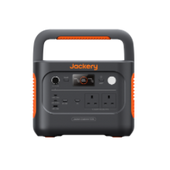
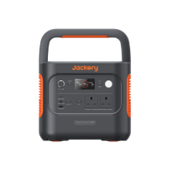
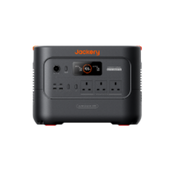
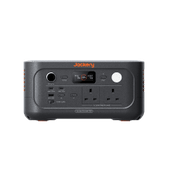
Which Model is Right for Your Home?

Image
Image
Image
Image

Why Choose Jackery?

Trusted Expertise. Reliable Products. Long-Term Support.
From professional engineering and controlled manufacturing to advanced safety and dependable service, Jackery gives you greater confidence at every stage of your home energy journey.

1
In-House Manufacturing
Our own manufacturing facilities enable greater control over quality from design to production.
2
Advanced Safety Protection
Multi-layer protection designed for safe, long-term use in your home.
3
Globally Certified
Backed by multiple global certifications, our commitment to quality, safety, and performance is officially recognized worldwide.
4
14 Years of Energy Expertise
Developing practical and reliable energy solutions since 2012.
5
Professional Support
Professional guidance and 7*24H ongoing support throughout your ownership journey.

FAQs

Microinverter Set Guide
SolarVault 3 Model Guide
Product Basics
Safety & Maintenance
Smart Control & Compatibility
Daily Usage & Operation
Installation & Setup
UK Rules & Compliance
  • Can I install the microinverter myself?

    The product is designed with DIY installation in mind (balconies and gardens are typical setups). However, you must follow local electrical regulations. In the UK, the BKW DIY cable used with the microinverter must be connected to the distribution board, and this work requires a professional installer or electrician.

  • Can I install the microinverter on the solar panel instead of on the wall?

    Yes. You can purchase PV clamp brackets and install the unit on rigid solar panels with a thickness of 30mm to 35mm.

  • How does the system continue to supply power during a power outage?

    It does not continue to supply power, and this is by design. For safety reasons (anti-islanding protection), the microinverter stops power output immediately upon detecting a grid outage. This is a standard safety feature on all grid-tied inverters, designed to protect engineers working on the power lines.

  • Does the microinverter require a separate ground connection?

    The AC cable comes with an equipment grounding conductor built in. If the socket you are using is properly installed and earthed in accordance with local wiring regulations, the device will be correctly grounded. If you are unsure about the earthing status of your socket, or if local regulations require additional measures, please contact a qualified electrician to carry out the grounding via the product's grounding terminal.

  • Will excess electricity generated by the microinverter (when PV generation exceeds household consumption) be fed into the grid?

    Yes. As a grid-tied unit, the microinverter prioritises powering your home, with any surplus exported to the grid automatically. It monitors grid voltage and frequency in real time and synchronises its output accordingly. When used with a CT (Current Transformer), the system can monitor household consumption and PV generation live, and will automatically adjust the microinverter's output to avoid exporting to the grid when not desired.

  • Can the AC output cable plug be connected to a power strip?

    We recommend plugging the power cord directly into a wall socket. For safety reasons (particularly current load considerations), connection via a power strip is not recommended. Please also observe any local regulations regarding power output limits for plug-in PV systems.

  • What are the differences between the SolarVault 3 Pro, Pro Max, and Pro Max AC?

    SolarVault 3 Pro accepts PV input and provides grid-tied output up to 1200W (default to 800W). It is ideal for standard household needs.

    SolarVault 3 Pro Max also accepts PV input, with output boosted to 2500W for higher energy demands.

    SolarVault 3 Pro Max AC does not accept PV input; it is a battery-only unit designed for adding storage to existing PV systems (such as SolarEdge, Huawei, etc.). All three models support battery expansion, but only the Pro Max AC is suitable for retrofit installations.

  • Can the battery capacity be expanded?

    Yes. The system is modular. The base unit provides 2.52kWh of capacity, which can be expanded up to 15.12kWh by adding BP2500 expansion battery packs (each 2.52kWh).

    With up to three base units in parallel, you can reach a total capacity of 45kWh. (Note: Parallel connection functionality is currently in development and will be available in the future.)

  • What is the maximum charging power of the SolarVault 3 battery? Does connecting battery packs increase it?

    The base unit has a charging power of 1800W. Adding BP2500 expansion packs increases the total charging power as follows.

    For the SolarVault 3 Pro and Pro Max, it is 3600W with one battery pack and 4500W with two or more. For the SolarVault 3 Pro Max AC, it is 2500W with one or more battery packs.

  • Which product do you recommend for my household size?

    For singles or couples, we recommend SolarVault 3 Pro with two 500W solar panels.

    For families of four or larger households, we recommend SolarVault 3 Pro Max with expansion battery pack(s) and four 500W solar panels.

    If you already have an existing PV system, we recommend SolarVault 3 Pro Max AC regardless of household size, and you can add capacity as needed.

    You can also refer to the real-time energy consumption data in the Jackery App for final configuration decisions.

  • Can I use solar panels from other brands?

    Yes, provided they meet the electrical specifications: Open-Circuit Voltage (Voc) of 16V to 60V; Short-Circuit Current (Isc) ≤ 28A; no more than 1000W per MPPT channel; and no more than 4000W total across all four MPPT channels. We do not recommend connecting solar panels rated over 400W in series, as the higher voltage may exceed the unit's limits. If you wish to connect two panels in parallel on the same channel, you will need to purchase a Y-branch parallel cable separately.

  • Can it connect to third-party microinverters?

    Yes, via the device's AC socket interface. With at least one battery pack installed, the maximum supported input power is as follows. SolarVault 3 Pro supports 2300W (grid-tied) and 1200W (off-grid). SolarVault 3 Pro Max and Pro Max AC both support 2500W (grid-tied) and 2500W (off-grid). The system is currently compatible with major microinverter brands including Enphase, Hoymiles, and APS.

  • How does the system work?

    During the day, solar power runs your home and charges the battery with any surplus. At night or on cloudy days, the battery takes over to keep your home powered. You can also enable AI Smart Mode via the App, which considers electricity tariffs, solar forecasts, and your usage patterns to determine the most cost-effective operating strategy.

  • How does the Jackery SolarVault Battery storage system help me save on electricity bills using solar energy?

    The Jackery SolarVault battery storage system combines solar generation with battery storage to help you use more of the solar energy you generate. During the day, solar power is used to run your home first, and any excess is automatically stored in the battery. At night or when sunlight is limited, the battery powers your home, reducing the amount of electricity you need to buy from the grid.

  • Can this system still help me save on electricity bills if I don't have solar panels?

    Yes. Even without solar panels, the system can charge during off-peak hours (such as overnight) and discharge during peak-rate periods (such as early evening) to reduce your electricity costs. Simply set up Tariff Mode or AI Smart Mode in the Jackery App, and the system will run automatically.

  • What operating modes are available, and how do I choose?

    The system offers 4 modes:
    1. Self-Consumption Mode (default) maximises solar energy use and requires a smart meter.
    2. Tariff Mode uses peak and off-peak price differences to save money and does not need a smart meter.
    3. Custom Mode allows you to set your own charge and discharge schedule and does not require a smart meter.
    4. AI Smart Mode enables the system to learn and optimise automatically, but this mode does require a smart meter. You can switch between modes at any time via the App.

  • What safety protection measures are included?

    The unit features a three-tier fire protection system: real-time temperature monitoring with automatic alerts; an automatic pressure relief valve that vents gases if needed; and an integrated aerosol fire extinguishing device that can activate within one second during a serious thermal event, providing comprehensive safety protection.

  • What are some daily energy-saving tips?

    Enable Standby Mode in the App to minimise the unit's own power consumption. Set up schedules to discharge during peak-rate periods and charge during off-peak periods. Clean your solar panels regularly (at least once every three months). Ensure good airflow around the unit and keep the vents clear.

  • How should the device be stored if not used for an extended period?

    Store the unit in a dry, clean, and well-ventilated location.

    Temperature and humidity guidelines are as follows:

    up to 1 month: -20°C to 45°C (0-70% relative humidity);

    up to 3 months: 0°C to 45°C (0-70% relative humidity);

    up to 12 months: 0°C to 25°C (0-70% relative humidity).

    For storage periods of 3 to 6 months, you will need to perform a maintenance routine: activate Custom Mode in the App, charge to 100% and leave it for 30 minutes, then discharge at 800W for approximately 75 minutes until the State of Charge (SOC) reaches around 60%, then power off for storage.

  • Why do identical solar panels show different power readings on different ports in the App?

    This is normal. The four MPPT channels operate independently, each optimising the output of its connected panel string. Differences in orientation, tilt, or shading can all result in different power outputs. If one channel consistently shows 0W, please check the wiring and shading for that panel group.

  • What is the purpose of a smart meter?

    The smart meter monitors your household's total electricity consumption in real time and transmits the data to the energy storage system (up to 50 metres away). The storage system then dynamically adjusts its charge and discharge power based on this data, creating a closed-loop self-consumption system that minimises both the power taken from and exported to the grid.

  • The Wi-Fi signal is poor at my installation site. Can I use a network cable?

    Yes. The unit is equipped with a standard RJ45 Ethernet port, allowing you to connect it directly to your router via a network cable. This is particularly useful in locations with weak Wi-Fi signals, such as basements or enclosed balconies.

  • Can I control the Jackery system using Home Assistant?

    Yes. The SolarVault 3 supports integration with Home Assistant. Please complete the initial configuration in the Jackery App first, then search for "Jackery" in the HACS (Home Assistant Community Store) interface to complete the installation. For setup instructions, please visit: 🔗 https://github.com/ht-it-lab/jackery

  • What happens to excess solar power after the battery is full?

    It powers your household appliances. By installing a smart meter or power monitor, you can enable the "Zero Export" function to minimise the amount of electricity sent back to the grid, thereby maximising self-consumption.

  • Can I set up the Jackery SolarVault 3 series without using the App? What features are available?

    Yes. In addition to the standard on/off functions, the unit allows you to control the AC output switch and reset Wi-Fi settings using physical buttons on the unit. The icons on the screen provide real-time status information without needing to open the App. For full details, please refer to the relevant section of the user manual.

  • How does AI Smart Mode work?

    The system predicts your household electricity demand by analysing the time-of-use tariffs you have entered, along with historical solar generation and consumption data. It then uses intelligent algorithms to automatically calculate and execute the optimal charging and discharging strategy, covering timing, power levels, and grid mode switching. The system continuously learns and improves over time without manual intervention.

  • Which App should I use?

    The SolarVault 3 series uses the Jackery App. Please search for "Jackery" on the App Store or Google Play. If you download the wrong app, such as "Jackery Home," the device will not be detected.

  • My dynamic tariff provider is not on Jackery's list. Can I still use Tariff Mode?

    No. This feature can only be activated when a supported operator is selected from the designated list in the App.

  • Which dynamic tariff operators are supported in various countries?

    The list of supported operators is updated periodically. For the most up-to-date information, please check the operator support list in the Jackery App. If you need to confirm before purchasing, please contact customer service at hello.eu@jackery.com.

  • Can the Jackery SolarVault 3 series be used during a power outage?

    Yes. The SolarVault supports fast EPS (Emergency Power Supply) switching. If the grid goes down, the system automatically switches from grid-tied to off-grid mode within 20 milliseconds, providing reliable backup power for your essential appliances. Please confirm that the model you are purchasing supports this feature.

  • How does the "Priority Socket" (Smart Plug Priority) function work?

    This function determines output power based on a priority hierarchy. When a smart meter or CT is connected, the meter takes the highest priority. The system charges and discharges strictly according to the real-time household consumption measured by the meter. In this scenario, the power levels set in Custom Mode and the current demand from the socket are not taken into account.

  • If the system is connected to one phase of a three-phase supply, can it power the other two phases?

    Not directly. The battery system only powers the single-phase circuit it is connected to. However, by installing a three-phase smart meter, any surplus energy you generate can be fed back into the grid, offsetting your consumption on the other two phases and reducing your overall electricity bill.

  • Does the SolarVault 3 series support three-phase 380V voltage?

    No. The unit itself is a single-phase 230V system and cannot be connected to or output a three-phase 380V supply.

  • What is the length of the AC power cable? Can a longer cable be purchased separately?

    The standard package includes a 3-metre pluggable AC cable and a 10-metre AC hardwiring cable. Once plug-and-play energy storage is permitted by regulations, a 10-metre pluggable AC cable will be available for purchase separately on the official website.

  • What is the maximum distance from the solar panel to the battery?

    5-metre and 10-metre PV extension cables are available for purchase separately.

  • What is the best orientation for solar panels in a plug-in solar system?

    In the UK, solar panels usually generate the most energy when they face south and are not shaded. If your space allows, a south-facing setup is the best starting point for maximum total output.

    If you use more electricity in the morning or evening, an east-west layout can help spread generation across the day. For example, east-facing panels generate more earlier in the day, while west-facing panels generate more later.

    For systems with multiple panels, the best layout depends on your available space, shading, panel angle and whether your microinverter supports independent MPPT inputs. For a more accurate estimate, we recommend checking your location and setup with the European Commission’s PVGIS tool.

  • Where are different types of solar panels best installed?

    Rigid solar panels are versatile and can be installed on the ground, on walls, or on roofs using mounts, or fixed to balcony railings using clamps or hooks without drilling. For best results, we recommend using Jackery's mounting brackets.

  • Can the battery be placed outdoors?

    Yes. The unit has an IP65 rating, making it dustproof and rainproof, and suitable for semi-outdoor locations such as balconies and patios.

  • Where can the device be installed?

    We recommend installing the unit in a well-ventilated, semi-indoor location protected from direct sunlight and rain. Balconies, garages, and storage rooms are all suitable. The unit has an IP65 rating, making it suitable for semi-outdoor conditions. Leave at least 2 cm of clearance behind the unit for proper airflow. Place it on a flat, stable surface with a tilt of no more than 5 degrees; a stone slab or similar stable platform works well. For optimal Wi-Fi signal, install it within 15 metres of your router. Avoid direct sunlight, rain, and proximity to flammable materials.

  • Is the SolarVault 3 Plug & Play? Does installation require an electrician?

    The unit is designed to be plug-and-play. However, under current UK regulations, it must still be hardwired to the distribution board by a registered electrician to comply with local requirements. If plug-and-play policies are introduced in the future, the unit may then be plugged directly into a wall socket.

  • Is Plug-in Solar legal in the UK? What certification is required?

    Yes, it is legal. However, under current UK regulations (as of 2026), the solar system with battery storage must be hardwired to the distribution board by a registered electrician; it cannot simply be plugged into a wall socket. The system must comply with G98 regulations (power ≤ 3.68kW), and you are required to notify your Distribution Network Operator (DNO) within 28 days of installation.

  • Do I need to notify the Distribution Network Operator (DNO)?

    Yes. Any generation system connected to the UK National Grid must comply with G98 or G99 regulations. For smaller balcony PV systems (typically under 800W), the simpler G98 "connect and notify" process applies. Once the system has been installed and commissioned by a registered electrician, a G98 notification must be submitted to your local DNO within 28 days.

  • What procedures are required if the system exceeds the power limit (800W On-Grid Output)?

    It is recommended to contact a locally qualified electrician to install the equipment. After installation and commissioning, a G98 notification must be submitted to the local DNO within 28 days.

  • Can I earn money by selling electricity from my home PV system?

    Possibly not; it depends on the installation method. To receive export payments, you need to participate in the UK's Smart Export Guarantee (SEG) scheme. A key requirement is that the system must be installed by an MCS or Flexi-Orb certified company. DIY or non-MCS certified installations are not currently eligible for SEG payments. Even without selling electricity, you can still achieve significant savings by using the solar power you generate yourself.