















![[Over £1200 Tier Gift] Bluetooth Speaker with Phone Stand - shipped Separately](http://uk.jackery.com/cdn/shop/files/Portable_Bluetooth_Speaker_with_Phone_Stand_2.png?v=1781595581&width=170)












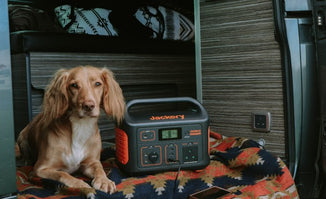


Choosing the best portable power station for campervan travel requires more than comparing battery capacities. Consider how many watt-hours your appliances consume each day, the highest wattage used at one time, trip length and access to campsite hook-ups.
Weight, storage dimensions, socket selection and charging options also matter in a compact van. Solar output can vary considerably with UK weather, season and shading, so a realistic recharging plan should include mains or vehicle charging where available.
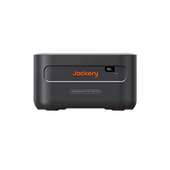
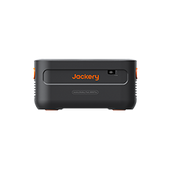
Jackery Portable Power Stations offer self-contained batteries, inverters and multiple outputs suitable for campervan equipment. The Jackery Explorer 2000 v2 combines a 2,042Wh capacity with 2,200W rated output, making it suitable for moderate touring needs. For longer off-grid stays or more demanding appliances, the Explorer 3000 v2 provides 3,072Wh capacity and 3,600W rated output. This guide explains how to select between them using actual energy requirements.
|
Key Takeaways: |
|
What Is the Best Portable Power Station for a Campervan?
The best portable power station for campervan use is one that can supply your daily appliances, handle the highest simultaneous load and recharge before its stored energy runs out. There is no universal choice because a weekend van used mainly for lighting and refrigeration has very different requirements from a full-time conversion with electric cooking and remote-working equipment.
Before choosing, consider:
- Trip length and availability of campsite electric hook-ups
- Whether cooking, water heating and space heating use gas or electricity
- The running and start-up wattage of the largest appliance
- Total daily consumption in watt-hours
- Available storage space and the campervan’s remaining payload
- Opportunities to recharge from mains, solar panels or the vehicle
For weekend trips and regular touring, the Jackery Explorer 2000 v2 is the more portable recommendation. Its 2,042Wh capacity and 2,200W rated output can support moderate appliance use while remaining easier to move than a larger unit.
The Jackery Explorer 3000 v2 is better suited to longer off-grid stays and more demanding setups. It provides 3,072Wh of capacity and 3,600W rated output, but its greater weight requires suitable storage and secure positioning.
Capacity, measured in watt-hours, broadly determines runtime. Rated output, measured in watts, determines which appliances—and how many simultaneously—the station can operate.
Best Portable Power Stations for Campervans: Quick Comparison
The following comparison shows which model may better match your campervan’s space, payload and electricity requirements.
|
Feature |
Jackery Explorer 2000 v2 |
Jackery Explorer 3000 v2 |
|
Battery capacity |
2,042Wh |
3,072Wh |
|
Rated AC output |
2,200W |
3,600W |
|
Surge output |
4,400W |
7,200W |
|
Battery type |
LiFePO₄ |
LiFePO₄ |
|
Weight |
Approx. 17.5kg |
Approx. 27kg |
|
Maximum solar input |
400W |
1,000W |
|
AC recharge time |
Approx. 1.7 hours |
Approx. 1.8 hours |
|
12V car recharge time |
Approx. 24 hours |
Approx. 36 hours |
|
Best suited to |
Weekends and regular touring |
Longer off-grid stays and heavier loads |
Specifications are based on the current UK product information for the Explorer 2000 v2 and Explorer 3000 v2. Charging times are manufacturer test figures; actual results vary with input power, temperature and solar conditions.
The Explorer 2000 v2 is approximately 9.5kg lighter, making it easier to lift into a smaller conversion or move between the van and home. Its 2,200W output is sufficient for many campervan appliances, provided their combined demand remains within the limit.
The Explorer 3000 v2 stores about 50% more energy and provides roughly 64% greater rated AC output. This creates more headroom for longer stays, simultaneous loads and high-wattage equipment, but requires additional payload and storage space. Surge ratings apply only to brief start-up demands and should not be treated as continuous output. Neither model is automatically better: the appropriate choice is the smallest one that meets the calculated load and runtime requirement.

Jackery Explorer 2000 v2 vs 3000 v2: Which Should You Choose?
The choice depends less on the size of the campervan than on how it is used. A compact van with electric cooking may require more power than a large motorhome where cooking and heating are supplied by gas.
Choose the Jackery Explorer 2000 v2 if you…
The Jackery Explorer 2000 v2 is likely to suit travellers who:
- Take weekend breaks or shorter touring holidays
- Mainly power a compressor fridge, lights, phones, cameras and laptops
- Occasionally use a coffee machine, microwave or lower-wattage cooking appliance
- Have limited storage space or need to carry the station between the campervan and home
- Regularly visit campsites with electric hook-up or return to mains power between off-grid stops

This model offers a useful middle ground for couples, weekend campers and remote workers whose essential loads are relatively modest. Short use of a higher-wattage appliance may be possible, but its rating plate and the demand from other connected equipment must be checked first. It is less suitable if electric cooking, water heating or space heating forms a large part of daily consumption.
Choose the Jackery Explorer 3000 v2 if you…
The Jackery Explorer 3000 v2 is more appropriate when you:
- Spend several days away from electric hook-up
- Travel or work from the campervan for extended periods
- Need to operate several appliances at the same time
- Use a kettle, induction hob, microwave, hairdryer or other high-wattage equipment
- Want additional energy in reserve during cloudy UK weather
- Need greater flexibility when the next reliable charging opportunity is uncertain

Its larger reserve can reduce the need to ration essential equipment after one overcast day. However, frequent electric heating or long cooking sessions can still drain it quickly. The additional weight also needs to be included in the van’s payload calculation.
When Neither Model Is the Right Answer
A smaller power station may be more economical if the van only needs phone charging, lighting and occasional laptop use. Conversely, a professionally designed leisure-battery system may suit a complex full-time conversion with fixed 12V circuits, alternator charging, roof-mounted solar and integrated monitoring. Before buying either Jackery model, calculate daily demand and decide whether portability or permanent integration matters more.
What Size Portable Power Station Does Your Campervan Need?
Choose capacity by calculating energy use between reliable recharging opportunities. Do not size a station from appliance wattage alone: a 1,000W coffee machine used briefly may consume less energy than a 50W appliance operating all day.
List Each Appliance
Start with a worksheet based on equipment labels or measurements from a plug-in energy monitor.
|
Appliance |
Running wattage |
Starting or surge wattage |
Hours used per day |
Daily consumption |
|
Example appliance |
___ W |
___ W |
___ hours |
___ Wh |
Running wattage and usage time determine energy consumption. Starting wattage helps confirm whether the power station can start equipment containing compressors, pumps or motors. Also calculate the combined wattage of appliances likely to operate simultaneously.
Calculate Daily Energy Use
Use this formula for each appliance:
Daily energy use (Wh) = appliance wattage × hours used
For equipment that cycles on and off, such as a compressor fridge, use a measured 24-hour figure where possible rather than multiplying its rated wattage by 24.
|
Appliance |
Typical use |
Estimated daily consumption |
|
12V compressor fridge |
Cycles throughout the day |
400–600Wh |
|
LED lighting |
20W for 5 hours |
100Wh |
|
Two phones |
One full charge each |
25–40Wh |
|
Laptop |
60W for 4 hours |
240Wh |
|
Water pump |
Short intermittent use |
20–40Wh |
|
Diesel-heater electronics |
Depends on temperature |
150–500Wh |
|
Coffee machine |
1,000W for 10 minutes |
Approx. 167Wh |
Using the middle of each range gives an illustrative total of approximately 1,367Wh per day. These figures are not universal: fridge efficiency, ambient temperature, heater settings, laptop workload and charging losses can all change the result.
Add a planning margin of around 15–25% for inverter and conversion losses, colder conditions, battery ageing and unexpected use. With a 20% margin, the example becomes approximately:
1,367Wh × 1.20 = 1,640Wh per day
Avoid assuming that every watt-hour printed on the power station will reach the appliance. Usable energy varies with the output type, load and operating conditions.
Match the Result to Trip Length
Multiply the adjusted daily requirement by the number of days between dependable charges:
Required capacity = adjusted daily use × days between recharging
For the example:
- One day: approximately 1.64kWh
- Two days: approximately 3.28kWh
- Three days: approximately 4.92kWh
The Explorer 2000 v2 could cover roughly one day under this conservative scenario. The Explorer 3000 v2 offers more reserve, but even it would require recharging during a two-day interval. Solar, vehicle or campsite charging should therefore be included in the plan rather than selecting capacity in isolation.

What Campervan Appliances Can a Portable Power Station Run?
An appliance is compatible when its running and start-up demand stays within the power station’s output limits. However, compatibility does not mean it is economical to operate for hours. Heating appliances convert electricity into heat and can consume a large battery rapidly.
Low-Consumption Essentials
Compressor fridges, LED lights, phones, routers, camera chargers and water pumps generally form the core campervan load. Their individual demand is modest, although a fridge compressor or water-pump motor may draw extra power when starting.
Medium-Demand Equipment
Laptops, televisions and small blenders usually have manageable running wattages. CPAP machines, electric blankets and diesel-heater electronics may operate for many hours, so their total overnight consumption matters more than their headline wattage. Heated CPAP humidifiers can increase demand considerably.
High-Wattage Appliances
Kettles, microwaves, air fryers, induction hobs, toasters and hairdryers may be usable for short periods if their ratings remain within the station’s continuous output. Fan heaters and prolonged electric cooking are far less energy-efficient choices for an off-grid battery.
|
Appliance |
Typical running power* |
Explorer 2000 v2 |
Explorer 3000 v2 |
Use consideration |
|
Compressor fridge |
40–80W when running |
Usually suitable |
Usually suitable |
Check start-up surge |
|
LED lights |
10–30W total |
Suitable |
Suitable |
Low daily demand |
|
Phones/tablets/router |
5–30W each |
Suitable |
Suitable |
Prefer direct USB output |
|
Water pump |
40–100W |
Usually suitable |
Usually suitable |
Motor has a start-up load |
|
Laptop or television |
40–120W |
Suitable |
Suitable |
Usage hours determine consumption |
|
CPAP machine |
30–100W+ |
Usually suitable |
Usually suitable |
Humidifier and heated tube increase use |
|
Electric blanket |
50–120W |
Usually suitable |
Usually suitable |
Calculate overnight energy |
|
Small blender |
200–500W |
Usually suitable |
Usually suitable |
Check motor surge |
|
Microwave |
1,000–1,600W input |
Usually suitable |
Usually suitable |
Input exceeds advertised cooking power |
|
Air fryer |
1,000–2,500W |
Model-dependent |
Usually suitable |
Check the rating plate |
|
Induction hob |
1,000–3,000W |
Limited by setting/model |
Usually suitable |
High energy use |
|
Electric kettle |
1,500–3,000W |
Model-dependent |
Usually suitable |
A 3kW kettle exceeds 2,200W |
|
Hairdryer |
1,000–2,200W |
Model-dependent |
Usually suitable |
Use briefly |
|
Fan heater |
1,000–2,000W |
Compatible but inefficient |
Compatible but inefficient |
Can drain the battery quickly |
*Indicative ranges only; use the appliance rating plate.
Estimate continuous runtime with:
Estimated runtime = usable battery energy ÷ appliance power
For example, 1,700Wh of usable energy divided by a constant 100W load gives about 17 hours. Real results vary with cycling, conversion losses and temperature. Always check combined continuous demand and start-up wattage before connecting fridges, pumps or other motor-driven equipment.
How Can You Recharge a Power Station While Travelling?
A dependable campervan setup needs both sufficient battery capacity and a realistic way to replace the energy used. UK travellers can recharge from mains electricity, solar panels or the vehicle, with each method offering different speeds and limitations.
|
Charging method |
Main advantage |
Main limitation |
|
Home or campsite mains |
Fast and predictable |
Requires access to an approved socket |
|
Portable solar panels |
Can be positioned towards the sun |
Must be set up, secured and stored |
|
Roof-mounted solar |
Generates without repeated setup |
Roof space, shading and fixed angle restrict output |
|
Standard 12V vehicle socket |
Available while travelling |
Very slow for large batteries |
|
Compatible alternator charger |
Faster on-road charging may be possible |
Requires compatible equipment and correct installation |
Mains Charging
Charging fully at home before departure provides the most predictable starting point. A campsite electric hook-up can replenish the station between off-grid stops, but availability, pitch amperage and rules vary. Confirm that power-station charging is permitted and keep the combined demand from the charger and other campervan appliances below the hook-up limit. Use suitable outdoor-rated hook-up equipment where required.
Solar-Panel Charging
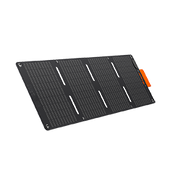
Portable panels can be moved and tilted towards the sun but require ground space and protection from wind, damage and theft. Roof-mounted panels need less daily handling, although vents, roof boxes and shadows may reduce usable area.
A panel’s advertised wattage is measured under standard test conditions, not guaranteed UK output. Cloud, heat, shading, panel angle and shorter winter days can lower generation substantially. Before connecting panels, check that their total open-circuit voltage, current, power and connector arrangement fall within the station’s input specification. Do not improvise series or parallel connections.
The Explorer 2000 v2 accepts up to 400W of solar input, while the Explorer 3000 v2 accepts up to 1,000W. These are input limits rather than expected continuous generation.
Charging While Driving
A standard 12V accessory socket is much slower than mains charging. Indicative full-charge times are approximately 24 hours for the Explorer 2000 v2 and 36 hours for the Explorer 3000 v2, so it is better treated as a top-up method. Use only compatible cables, observe the vehicle socket’s fuse and current limits, and follow both manufacturers’ instructions. A suitable alternator or DC-to-DC charging system may be faster, but compatibility and professional installation should be confirmed.
Combining Charging Methods
A resilient plan might begin with a mains charge, use solar while parked and top up during longer drives. Campsite charging can then restore the battery after several cloudy days. This mixed approach is more dependable than assuming solar alone will meet demand throughout the year.
Can a Portable Power Station Replace a Campervan Leisure Battery?
A portable power station can replace a simple leisure-battery setup for some campervan users, particularly when the main requirements are running a fridge, charging electronics and powering occasional 230V appliances. However, it is not automatically a direct replacement for an integrated electrical system serving permanent lights, pumps, heating controls and multiple 12V circuits.
|
Consideration |
Portable power station |
Installed leisure-battery system |
|
Installation |
Usually minimal |
Requires system design and wiring |
|
Portability |
Can be removed and used elsewhere |
Normally fixed in the vehicle |
|
AC inverter |
Integrated |
Often purchased separately |
|
Solar controller |
Usually integrated |
Separate or integrated component |
|
Display and controls |
Built into one unit |
Depend on selected components |
|
Customisation |
More limited |
Highly configurable |
|
Permanent 12V circuits |
May require careful integration |
Designed for fixed van circuits |
|
Vehicle charging |
Model-dependent |
Often uses a dedicated DC-to-DC charger |
|
Repairability |
Internal components form one product |
Individual components may be replaced |
|
Future expansion |
Depends on the model |
Battery, solar and inverter capacity can often be upgraded |
For occasional touring or an unconverted van, a portable station offers a straightforward solution without designing a complete electrical system. It can also be removed for charging at home or used for outdoor activities and household backup. The integrated battery, inverter, solar controller and outputs reduce the number of separate components required.
A leisure-battery system is usually better for a permanent conversion. It can be designed around the van’s fixed 12V distribution, roof-mounted solar, alternator charging, electric hook-up and expected future expansion. It may also avoid repeatedly running cables from one central portable unit.
Check the power station’s 12V socket current limit before connecting a fridge, pump or distribution panel. Suitable voltage alone does not mean the output can supply every load safely. Never connect a power station to the campervan’s hook-up inlet or fixed wiring through an improvised lead, as this can create electrical and earthing hazards.
Any permanent arrangement should include secure mounting, unobstructed ventilation, correctly rated cables, appropriate fuses near the power source and protection against moisture and physical damage. The unit must not become a projectile during sudden braking. Seek advice from a qualified campervan electrician before modifying fixed wiring, integrating several charging sources or using a portable station to supply existing vehicle circuits.
How to Choose the Best Portable Power Station for Campervan Use
The best portable power station for campervan UK travel should fit the van physically, support its appliances electrically and recharge under realistic touring conditions.
Battery Capacity
Estimate daily consumption in watt-hours and multiply it by the number of days between reliable charges. Include conversion losses and a reserve, rather than selecting a unit from its nominal capacity alone.
Continuous Output
Add the running wattage of appliances that may operate simultaneously. A fridge, laptop and induction hob could overlap, so the combined load—not only the largest appliance—must remain below the rated output.
Surge Capability
Compressors, pumps and blenders may draw extra power when starting. Confirm both the station’s surge rating and the appliance’s start-up demand, remembering that surge output is available only briefly.
12V Performance
Check the socket type, regulated voltage and maximum current. A 12V outlet may have enough voltage for a fridge but an insufficient current rating for several devices connected together.
UK AC Outlets
Choose a model supplying 230V at 50Hz through suitable UK three-pin sockets. Check the number and spacing of outlets, particularly when using bulky adaptors.
Charging Speed
Compare mains, solar and vehicle charging separately. Look beyond the fastest advertised time and ask how long recharging will take from the source you will actually use.
Battery Chemistry
LiFePO₄ batteries generally provide high cycle life and better thermal stability than many nickel-based lithium chemistries. They still require correct charging, ventilation and operation within the specified temperature range.
Weight and Dimensions
Measure the intended compartment, including space for plugs, cables and airflow. Check the van’s remaining payload and whether one person can lift the unit safely.
Operating Temperature
Review charging and discharging temperature limits if touring during a British winter. Lithium batteries may restrict or stop charging at low temperatures unless suitable protection is built in.
Noise
Cooling fans may activate during rapid charging or heavy appliance use. Check operating and charging noise if the station will be positioned near the bed.
Warranty and UK Support
Confirm the current UK warranty, registration requirements, exclusions and repair process. Also check whether return transport is provided, as shipping a large battery can be difficult.
Price per Usable Watt-Hour
Calculate:
- Purchase price ÷ estimated usable capacity = cost per usable Wh
Then assess output, charging speed, ports, weight and expected frequency of use. The cheapest capacity is poor value if the unit cannot start an essential appliance or fit safely inside the van.
Safe Use Inside a Campervan
A portable power station should be treated as heavy electrical equipment, not as loose camping luggage. Position it on a stable surface and secure it using a method that does not damage the casing. The restraint must prevent movement during sharp cornering, collisions or emergency braking, while still allowing the unit to be removed when necessary.
Keep all ventilation openings clear and maintain the separation distances stated in the manual. Do not place clothing, bedding or bags over the unit. Protect it from rain, sink splashes, condensation and damp floors, and avoid locations exposed to direct sunlight or extreme temperatures inside a parked van. It should also remain well away from hobs, heaters, naked flames and hot-air outlets.
Use cables and adaptors approved for the intended load. Overloaded multiway adaptors, loosely connected plugs and unsuitable extension leads can overheat. High-current 12V appliances require cables with the correct conductor size, connector and fuse protection; a cable that works for phone charging may be unsuitable for a fridge or pump.
Never feed power into the campervan’s electric hook-up inlet or fixed socket circuit using an improvised lead. Any permanent connection, changeover arrangement or integration with existing 12V wiring should be designed and installed by a suitably qualified campervan electrician.
Route solar and charging cables away from doorways and walking areas. Protect connectors from dirt, water and crushing, then store cables securely before driving. Keep the station visible and accessible so its display, plugs and condition can be checked and the outputs disconnected quickly.
Finally, a portable power station does not replace properly positioned and tested smoke and carbon-monoxide alarms. The battery itself produces no combustion fumes, but gas appliances, diesel heaters, cookers and nearby engines can still create fire or carbon-monoxide risks.
Is a Portable Power Station Worth It for a Campervan?
A portable power station can be worthwhile when it solves a recurring electricity problem rather than merely adding unused capacity. Its value depends on trip frequency, off-grid time, appliance demand and whether the unit will also be useful away from the campervan.
It is more likely to justify its cost if you:
- Regularly stay on campsites or stopovers without electric hook-up
- Need power for outdoor cooking, photography, tools or equipment outside the van
- Want a self-contained alternative to designing a complex leisure-battery system
- Work remotely and depend on laptops, routers or communications equipment
- Can use the same station for household backup during power cuts
- Move between different vans or do not want to modify a rented vehicle
It may offer less value if most trips include electric hook-up, the campervan already has capable solar and leisure-battery systems, or only phones and a few small devices need charging. A compact USB power bank or smaller power station could meet those requirements at lower cost and weight. Large models may also be unsuitable where payload and storage space are already restricted.
A simple cost-per-trip calculation provides a more useful measure than an uncertain payback claim:
Cost per powered trip = total system cost ÷ expected number of trips
For example, a £1,200 station and charging setup used on 60 trips would cost approximately £20 per trip, excluding charging electricity and any future repair or replacement costs. If the same unit also supports home backup or remote work, those additional uses increase its value.
Include solar panels, adaptors, cables, carrying equipment and installation work in the total cost. Then compare the result with campsite hook-up charges, alternative equipment and the convenience gained. The most valuable model is not necessarily the largest, but the one used often enough to justify its price, space and payload.
FAQs
The following are the frequently asked questions about the best portable power station for campervan:
What is the best portable power station for an RV?
The best option depends on daily energy consumption, appliance wattage and recharging opportunities. For a UK campervan or motorhome, confirm that the station supplies 230V at 50Hz through UK sockets.
The Jackery Explorer 2000 v2 suits moderate touring needs, while the Explorer 3000 v2 offers more capacity and output for longer off-grid stays. US RV recommendations may use incompatible 120V equipment.
What size power station do I need for a campervan?
Add the daily watt-hour consumption of every appliance, allow approximately 15–25% for losses and reserve, and multiply by the number of days between reliable charges. A campervan using 1,200Wh daily may need around 1,440Wh per day after adding a 20% margin. Also confirm that the station’s continuous output exceeds the highest combined appliance load.
Will a portable power station run a 12V campervan fridge?
Usually, provided the station has a compatible regulated 12V output with sufficient current. A compressor fridge may consume around 400–600Wh per day, although temperature, insulation and thermostat settings cause substantial variation. Check its start-up demand, connector type and the power station’s 12V current limit. Measure consumption over 24 hours for more accurate sizing.
Can I charge a portable power station while driving?
Yes, many models support charging from a vehicle’s 12V accessory socket, but this is generally slow. Use only a compatible cable and remain within the socket’s current and fuse ratings. Avoid draining the starter battery when the engine is off. Faster alternator or DC-to-DC charging requires compatible equipment and may need professional installation.
How much solar power do I need for a campervan power station?
Base the array on daily consumption, local sunlight and the station’s solar-input limit. An illustrative calculation is:
Required panel power = daily consumption ÷ peak-sun hours ÷ system efficiency
For 1,500Wh daily, three peak-sun hours and 80% overall efficiency, the result is approximately 625W. UK winter generation can be much lower, so maintain an alternative charging method.
Can a portable power station replace a leisure battery?
It can replace a simple arrangement for occasional touring, especially when powering portable appliances. It may not suit a conversion with permanent lights, pumps, heating controls, alternator charging and multiple fixed 12V circuits. Do not connect a station to existing van wiring through improvised leads; seek qualified advice for permanent integration.
Do I need a separate inverter?
Normally not. A portable power station includes an inverter that converts stored DC electricity into 230V AC. Check that its rated output can support the connected appliances. A separate inverter may be required for a conventional leisure-battery installation, but it should not be added to a power station unless the manufacturer specifically permits the arrangement.
Can I use a power station while it is charging?
Some models support pass-through operation, including the Explorer 2000 v2 and Explorer 3000 v2. However, input and output limits, charging speed and permitted operating modes vary. Heavy simultaneous charging and discharging can create additional heat, so maintain ventilation and follow the manual. Do not assume every model provides full UPS functionality.
Is a 2kWh or 3kWh power station better for full-time van life?
A 3kWh station provides more reserve for remote work, poor solar conditions and high-wattage appliances, but it is heavier and occupies more space. A 2kWh model may be sufficient where cooking and heating use gas and daily recharging is available. Full-time users with permanent circuits and expansion needs should also compare an installed leisure-battery system before deciding.
Final Thoughts
The best portable power station for campervan travel is the model that can meet daily energy consumption, start the most demanding appliance and recharge before its stored energy is exhausted. Before buying, calculate realistic daily use in watt-hours, identify the highest running and start-up wattage, and decide how many days the campervan will remain away from electric hook-up.
Then assess the mains, vehicle and solar charging available along the route, measure the intended storage position, check the van’s remaining payload and plan a secure, ventilated location that remains accessible.
Compare these completed requirements with both products. The Jackery Explorer 2000 v2 offers a useful balance of capacity and portability for many weekend breaks and touring setups. The Explorer 3000 v2 provides additional energy and output for longer stays, simultaneous loads and more demanding appliances.


