


































TL;DR: A car jump starter power bank needs to match your vehicle’s battery system, engine and operating conditions; the largest amp figure alone does not establish compatibility. Jackery portable power stations cannot directly jump-start a car, but can supply separate travel and camping equipment. For winter, check the pack’s operating and charging temperatures separately, then prepare it before the journey.
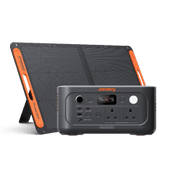
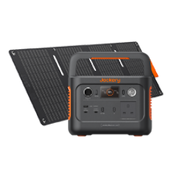
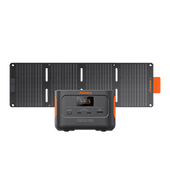
If you arrived looking for a Jackery jump starter, the distinction matters: a starter motor needs a brief, high-current supply that Jackery power stations are not designed to provide. Their AC and USB outputs serve a different job, such as charging a laptop or powering camp lighting. Jackery’s starting-capability guidance confirms this limitation.
Jump starter, battery charger or ordinary power bank?
A dedicated jump pack contains a battery and starting circuitry, with heavy cables and clamps connecting it to the vehicle’s approved jump-start points. It supplies starting assistance. That is different from replenishing the vehicle battery over a charging cycle.
|
Device |
Main job |
What to check |
|
Dedicated jump starter |
Brief starting assistance for a compatible vehicle |
Vehicle system, engine guidance and the pack’s starting instructions |
|
Car battery charger or maintainer |
Recharge or maintain a compatible vehicle battery over time |
Battery voltage and chemistry, charging mode and required power supply |
|
Ordinary USB power bank |
Recharge compatible USB devices |
Device charging requirements; USB capacity is not a vehicle-starting specification |
|
Portable power station |
Supply compatible appliances and electronics through its outputs |
Appliance power, connections and required energy; a Jackery power station is not a direct jump starter |
Can a power pack charge a car battery? Start with the exact product: the phrase covers several different devices. A dedicated battery charger converts its power supply into a controlled charging output for supported batteries. Do not infer a charging function from a jump pack’s clamps, a USB socket or a portable station’s capacity rating.
Choose by vehicle compatibility before comparing amps
Start with the vehicle handbook and the battery identification, then compare them with the exact jump starter’s documentation. Keep the vehicle’s nominal electrical system separate from a momentary voltage reading: a discharged 12V battery has not become a different system simply because its measured voltage is lower.
Four checks that can rule out a purchase
|
Check |
Find it here |
What changes the decision |
|
Battery voltage and chemistry |
Vehicle handbook, battery label and jump starter manual |
A 12V lead-acid-only pack is unsuitable for a 24V system or an unsupported battery chemistry |
|
Engine fuel and capacity |
Vehicle specification and the pack’s petrol/diesel limits |
Use the correct fuel category; the petrol limit does not establish diesel compatibility |
|
Approved connection points |
Vehicle handbook’s jump-start section |
Battery location alone may not identify the required connection points; resolve access before buying |
|
Temperature limits |
Pack manual’s operation, charging and storage sections |
A pack may operate at a temperature where charging it is prohibited |
For a hybrid or electric vehicle, identify the auxiliary battery and the manufacturer’s permitted assistance procedure. Do not treat a pack as a way to recharge the traction battery. The RAC’s jump-start guidance explains why the vehicle handbook matters for these systems.
A documented example: NOCO GB40
The NOCO GB40 specification sheet provides a useful example of the details to compare. Its published specifications include:
-
1,000A peak current.
-
Compatibility with 12V lead-acid batteries.
-
Engine guidance up to 6.0 litres for petrol and 3.0 litres for diesel.
-
A separate USB output for compatible devices.
Those limits are a screening tool, not a guarantee that any particular car will start. A 4.0-litre diesel is outside this model’s published engine guidance, even though a 4.0-litre petrol engine falls below its petrol limit. Battery condition and the remaining operating requirements still matter.
Read the label attached to an amp figure: GB40’s 1,000A is a peak rating. It is not a statement of how long that current can be supplied. Likewise, mAh describes charge capacity, not starting current. A large capacity figure on an ordinary phone power bank does not establish that it can crank an engine.
What changes when the weather turns cold?
Cold weather reduces a vehicle battery’s ability to deliver power, and a weakened battery may struggle first. Repeated short journeys can also leave too little opportunity to replenish charge. The RAC’s cold-weather advice makes battery condition and maintenance part of winter preparation, rather than treating a jump pack as the whole solution.
Operating temperature and charging temperature are different
GB40 is specified to operate from −20°C to 50°C, while its charging range is 0°C to 40°C. These are different activities with different limits. A pack being within its operating range does not make it suitable for charging at the same temperature.
Consider a hypothetical winter trip in a 2.0-litre diesel car with a confirmed 12V lead-acid battery and an overnight temperature of −5°C. These assumptions let you screen the GB40 specifications; they are not a cold-start test or a prediction of success.
|
Question in this example |
Comparison with GB40’s published limits |
Practical decision |
|
Does the engine fit? |
2.0-litre diesel is below the stated 3.0-litre diesel limit |
Continue checking the vehicle instructions and pack condition |
|
Is −5°C within its operating range? |
Yes, it lies between −20°C and 50°C |
Temperature alone does not rule out operation; it does not prove starting success |
|
Can it be recharged at −5°C? |
No, this is below the 0°C charging minimum |
Recharge only when the pack is within its specified charging conditions |
The useful preparation happens before departure: charge the pack under the correct conditions, rather than planning to top up a cold pack outdoors when the car is already stranded. For GB40, the user guide also specifies indoor storage when it is not in use and a dry storage location; permanent storage in the boot is not a universal recommendation.
Features worth checking after the pack fits your car
Once compatibility is established, consider what you will need to handle and recharge the pack. A useful feature should solve a real part of that task:
-
Clear status indicators: you need to distinguish the pack’s own charge level from a connection error or readiness indication.
-
Usable clamps and leads: check that they can reach the vehicle’s approved points without placing cables near moving parts.
-
Documented protection functions: identify which operating modes retain them, rather than treating a safety label as permission to ignore the procedure.
-
A practical recharging input: confirm the cable and charger requirements, including whether the charger is supplied.
-
Separate device-charging needs: using the jump pack to charge phones consumes its stored energy; plan whether a separate power bank would suit the trip better.
For GB40 specifically, manual override disables spark-proof and reverse-polarity protection. It is not a harmless shortcut when normal operation refuses to engage. Do not bypass a warning simply to make another attempt; use the troubleshooting instructions or seek assistance.
Prepare the kit before you need to use it
-
Save the exact vehicle and jump pack instructions where you can access them without mobile reception. Locate the approved connection points in daylight.
-
Charge the pack as directed, then confirm its readiness indicator. Include the correct leads and any charging accessories you will need.
-
Inspect the case, cables and clamps for damage. Replace or repair damaged equipment through the appropriate supplier instead of packing it for an emergency.
-
Check the storage instructions and charge level before a trip and after use. Follow the model’s maintenance interval rather than assuming one recharge schedule suits every pack.
The night before a winter journey is a useful checkpoint: you still have time to recharge indoors, find a missing lead or contact the manufacturer about an unclear battery type. A sealed box in the boot tells you little about whether the kit is ready.
How to use a jump starter power bank when the battery is flat
Use the vehicle and pack instructions together. The RAC’s portable-pack guidance provides background, but connection points, activation, waiting periods and permitted attempts must match your equipment. Work through the following checks:
-
Assess the situation first. If you cannot work safely around the vehicle, call for roadside assistance. Use the protective equipment required by the pack’s instructions; do not attempt to jump-start a damaged or frozen battery.
-
Switch off the vehicle and unnecessary electrical loads, then make the specified connections. Keep the clamps apart and the leads clear of moving components.
-
Check the pack’s status before attempting to start. If it reports a fault, follow its troubleshooting guidance rather than repeatedly cranking.
-
Observe the stated attempt and rest limits. Once the engine starts, disconnect in the instructed sequence and arrange the vehicle battery’s recharge or assessment.
There is no universal rule to leave every pack connected for several minutes to charge the car battery first. A successful jump-start also does not mean the battery is fully charged. The RAC recommends using an appropriate battery charger to replenish it; the time needed depends on the battery and charger.
If the car still will not start
Stop at the pack’s attempt limit and seek assistance if the cause is unclear. A charged pack cannot establish whether the vehicle battery, its connections or another starting-system component is faulty. If the car repeatedly needs a jump-start, arrange a battery and charging-system check rather than using a larger pack to postpone diagnosis.
For background on readings taken at rest, during cranking and while charging, see the car battery voltage guide. It addresses a different question from choosing a jump starter: understanding a reading does not by itself confirm that a battery can supply the required starting load.
Is a jump starter worth adding to your winter kit?
A suitable, charged pack can provide starting assistance without another vehicle, which may be useful for an early departure or a remote stop. The purchase also brings a responsibility to maintain it and learn the procedure. If you are uncomfortable making the connections, roadside assistance remains the more appropriate response to a flat battery.
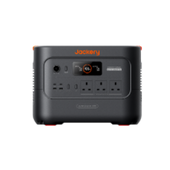
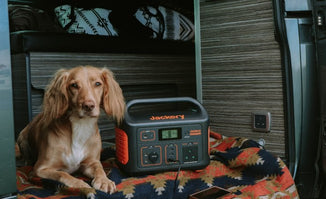
For trips that also require independent power for laptops, camera chargers or camp lighting, consider the UK Jackery Explorer 1000 Plus v2 Portable Power Station. Its standalone 1,024Wh capacity and 1,800W rated AC output, alongside USB connections, serve those separate equipment needs. Match your devices’ connections, total load and required energy before buying, and check the current UK options on the product page. Keep a dedicated compatible jump starter for engine-starting assistance.
Make the compatibility check before the journey
Choose a jump starter around your vehicle’s battery system, engine and winter conditions, then make sure you can store, charge and use it correctly. Before your next trip, write down those requirements, compare them with one exact model’s manual and check the kit’s charge. Repeated starting trouble needs investigation, even when a pack gets the engine running.


