

















![[Over £1200 Tier Gift] Bluetooth Speaker with Phone Stand - shipped Separately](http://uk.jackery.com/cdn/shop/files/Portable_Bluetooth_Speaker_with_Phone_Stand_2.png?v=1781595581&width=170)
















Keeping an eye on the weather in the UK is an important element of contemporary home safety since the weather is so unpredictable. Being ready for anything involves more than simply monitoring the weather.
Storm Babet brought tremendous rain, and there are also uncommon storm warnings. It means protecting your garden, making sure you can travel safely, and making sure you have a backup power source that works.
The Jackery Portable Power Stations are reliable ways to keep your important electronics working during a power outage caused by storms. In this post, we talk about how weather alerts function and what you can do to keep safe.
|
Key Takeaways: |
|
l A Britain storm warning serves as a critical alert for the public to prepare for potential disruption and stay safe during unsettling weather. l In the UK, weather warnings are colour-coded into red, amber, and yellow groups. These categories are based on both the possible effects of the weather and the statistical chance that those effects will happen. l Following a step-by-step strategy to be ready for severe weather, such securing outside goods and strengthening the perimeter of your house, will greatly lower the risks that come with it. l A high-quality portable power station from Jackery will keep your house connected and powered even during the worst storms and power outages. l You can see the route of a storm more clearly by looking at official tracking maps from the National Weather Service. This can help you prepare for your own safety. |
What Are Weather Warnings in the UK?
Weather warnings are issued by the Met Office to inform individuals when there is a significant possibility of experiencing hazardous weather conditions. In the event of precipitation, thunderstorms, wind, snow, lightning, ice, high heat, or fog, this may be the case.
When a Britain storm warning is in effect, it serves as a critical alert for the public to prepare for potential disruption. There is a rise in the occurrence of unsettling weather throughout the fall and winter months, which is accompanied by an increase in the likelihood that these official alerts will be issued.
How Do UK Weather Warnings Work?
In the UK, weather warnings are colour-coded into red, amber, and yellow groups. These categories are based on both the possible effects of the weather and the statistical chance that those effects will happen.
It is very important to review the impact matrix when a storm warning is issued in Britain. Yellow and amber warnings show different levels of impact and possibility. This means you should study the details of each warning to find out how bad the harm might be in your area and how likely it is to happen.
Warning in Yellow: Be Aware
When the weather is likely to have small effects, such stopping transit in a few places, yellow warnings are typically given. Some people may be immediately affected, while others may be able to go about their daily lives. It is very important to find out whether these local factors might influence your individual trip plans or property.
Amber Warning: Get Ready
An amber warning means that bad weather is significantly more likely to create major problems. This means that there is a greater chance of delays in travel, road and rail closures, and even the possibility of death. When this level of warning is on, people are told to be ready for power disruptions and damage to buildings.
Red Warning: Take Action
A red warning means that bad weather is on the way. You should act right now to safeguard yourself and others if you haven't already. At this level, there is a very high chance that lives will be lost and transport and energy supplies will be severely disrupted. You should stay home as much as possible and do what emergency services and local authorities tell you to do.

(Source: Met office)
Recent Extreme Weather and Live Tracking
The UK is currently experiencing a period of heightened atmospheric volatility. A Britain storm warning is no longer just about rain or wind; recent patterns have seen new flood warnings issued as storm babet pounds britain with record-breaking intensity.
Furthermore, the increasing frequency of "supercell" thunderstorms has led to rare alerts for uk weather: storm warning and severe storm expected in britain, requiring residents to be more proactive than ever.
Real-Time Monitoring Resources
To manage these evolving risks, it is vital to use tools that provide more than just static text. Visualising the path of a storm allows for better precision in your personal safety planning.
Official Forecast and Warning Hub
For the most reliable data on current risks, the Official UK Warning Service provides a breakdown of localized threats. This is the primary source for understanding how a Britain storm warning will specifically impact your postcode.
Interactive Storm Tracking Maps
To see exactly where a system is moving, use the Live UK Weather Chart. These interactive maps show the real-time progression of wind and rain across the country, allowing you to see the "gap" in a storm or the arrival of a secondary front.
Staying Prepared for Flash Flooding
As storm systems become more concentrated, the risk of flash flooding has risen. Even when a Britain storm warning is at a yellow level, the cumulative effect of saturated ground can lead to rapid water rises. By combining the official warning text with live radar maps, you can identify if your area is at immediate risk before the situation escalates.
Practical Steps to Take When a Britain Storm Warning Is Issued
Following a strategy may greatly lower the hazards that come with bad weather. Follow these measures to make sure your house and family are ready before the storm hits.

Step 1: Be Aware and Be Alert
You can keep an eye on the latest weather forecasts or download the Met Office Weather Forecast app, which lets you set alerts for your area. Listen to all the information given in any National Severe Weather Warnings that apply to your area. At this point, it's also important to know who your power company is and how to get in touch with them if the power goes out.
Step 2: Get Ready for Power and Communication
Charge your phones, portable power banks, and any spare batteries for medical equipment in case the power goes off. When there is a storm warning in Britain, it is very important to keep your lines of communication open. Also, check in on folks in your neighbourhood who may need more aid and, if you can, provide practical help like getting them food or medication.
Step 3: Make Sure Your Outside Space Is Safe
Make sure that any loose items, such ladders, trampolines, garden furniture, toys, or play equipment, are safe from strong winds. If you can, store your cars in garages to keep them safe. If not, keep them far away from buildings, trees, walls, and fences so that falling debris doesn't harm them.
Step 4: Make The Outside of Your Home Stronger
Close and lock doors and windows tightly, particularly those on the building's windward side and big garage doors. Make sure the storm shutters over the windows are closed and repaired if the house has them. You should also make sure that the loft trap doors are closed and locked, particularly if the roof slope is less than 30 degrees.
Step 5: Plan for Safety and Logistics
If your chimney stacks are tall and in terrible shape, don't put any beds right beneath them. If any schools or other places are going to close, make other plans for childcare if you need to. Lastly, try to keep your trip as short as feasible. If you have to go, allow yourself extra time and check with your travel operator ahead of time for the most up-to-date information. Follow any "Do Not Travel" warnings.
Should I Drive When There Is a Storm Warning?
You should try to avoid driving no matter what the warning level is. Driving in a yellow warning zone may not necessarily be dangerous right away, but it is likely to make the roads much more crowded and noisy. Driving while there are amber and red warning signals is far more dangerous, therefore people should only go out if they really have to.

Can I Drive if I'm Already on the Road?
If you are driving in a Britain storm warning, you should slow down and hold the steering wheel with both hands to keep it steady as the wind picks up. The Highway Code says that stopping lengths may at least double when it's rainy and 10 times when it's icy. If you can, stay on the major routes. These are less likely to be obstructed by fallen branches or other debris.
Should I Walk My Dog During a Storm?
It is usually better to not go for a stroll than to chance the dangers of a storm. If there is a storm warning in Britain, you may want to keep your pet indoors and do fun things with them instead. If you need to use the bathroom, do it quick and remain in your own yard or fairly near to your house. Always keep dogs on a leash because loud thunder or flying debris may make even the calmest pets run away in fear.
Can I Go Outside to Repair Property Damage?
No. You should never go outdoors to fix damage while a storm is going on. When there is a storm warning in Britain, falling tiles, crumbling fences, and flying garden furniture are all quite dangerous. Before you check on or address any structural problems, you should wait for the Met Office to formally say that the warning is over and the wind has died down.
Should I Visit Parks or Coastal Areas?
You shouldn't go to woods, rural parks, or seaside routes until the weather becomes better. When the wind is strong, trees may drop large branches without notice. Coastal places sometimes have deadly "sneaker waves" and sea spray that can knock people off their feet. If you can feel the sea spray, you are already too near to the danger zone.
Is It Okay To Use Electrical Appliances During a Storm?
If the storm warning for Britain says there is a chance of lightning, it's best to disconnect any electronics that aren't necessary. Lightning strikes may produce power spikes that can harm delicate devices. Also, don't use corded landline phones during the worst part of the storm since phone wires may carry electricity.

What If I'm in the Water When There Is a Storm Warning?
If you are in the water when a storm warning is issued or if you see a storm approaching, you need to act immediately. Water is an excellent conductor of electricity, and being in it during a lightning storm is extremely dangerous.
If You Are Swimming (Pool, Lake, or Sea)
Do not wait for the first drop of rain. If you hear thunder, you are already within striking distance of the lightning. If the time between seeing a lightning flash and hearing thunder is 30 seconds or less, you must be out of the water. Once out, stay out until 30 minutes after the last clap of thunder.
Once on land, don't just stand on the beach or poolside. Move to a safe, enclosed building or a hard-topped metal vehicle. If you are in an indoor pool, do not go into the showers. Lightning can travel through the building's plumbing.
If You Are on a Boat or Paddleboard
If you see "cauliflower-shaped" cumulus clouds growing tall, start heading back. Sit in the centre of the boat. If there is a cabin, stay inside and avoid touching any metal parts or the radio.
Drop Anchor: This prevents you from drifting into even more dangerous open water.
Take off any large metal items.
Small Craft (Paddleboards/Kayaks): These are extremely vulnerable to the sudden wind gusts that precede UK storms. Get to the nearest bank or shore immediately; do not try to paddle back to your original starting point if a closer safe exit exists.
Reliable Home Backup for a Britain Storm with Jackery
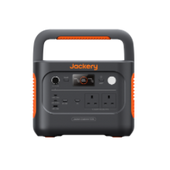
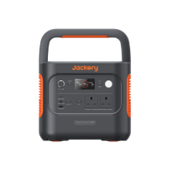
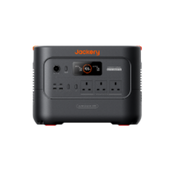
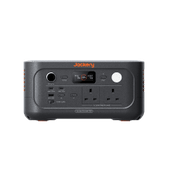
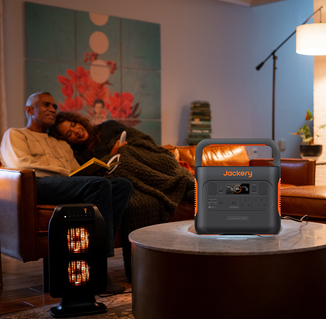
When a storm warning (Yellow, Amber, or Red) is issued by the Met Office in the UK, the primary concern for most households is a power cut. High winds and lightning can easily damage overhead lines or flood local substations. Choosing a Jackery Portable Power Station in these specific moments offers several strategic advantages over other backup methods.
Several Jackery models (like the Explorer 2000 v2) feature an Emergency Super Charge mode. You can recharge the unit from 0% to 100% in as little as 1 hour via a standard UK wall outlet. Even if you receive a last-minute Amber warning, you have enough time to fully prime your backup battery before the grid potentially fails.
With a UPS (Uninterruptible Power Supply) rating of <20ms, you can plug your router or PC into the Jackery now. If the power blinks or cuts entirely, your internet stays alive, and your work isn't lost. This is vital for those working from home during severe weather.
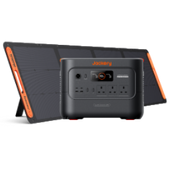
Jackery Explorer 2000 v2
The Jackery Explorer 2000 v2 is a powerhouse specifically designed for high-capacity home backup while being significantly more compact than its predecessors. Released as a refined version of their flagship line, it balances high wattage with a much more manageable size for the average UK home.

British households often rely on high-wattage appliances like kettles and microwaves which can trip smaller power stations. 2200W continuous and 4400W surge: This is high enough to power a standard kettle, toaster, microwave, or even a hair dryer—items that most portable batteries simply cannot handle. 2042Wh capacity: This large battery reservoir can keep a high-efficiency UK fridge-freezer running for up to 15-20 hours, ensuring your food doesn't spoil during an overnight blackout.
Industry-Leading Compactness
Space is often at a premium in UK homes compared to the US. The "v2" is a major upgrade in design. 40% Smaller & lighter: Despite having the same capacity as older 2kWh models, the v2 is roughly 41% smaller and weighs only 38.6 lbs. Stow-away handle: Its foldable, flat-top design means you can easily store it on a shelf in a utility room or under a kitchen bench without it becoming a bulky obstacle.
"Emergency Super Charge" Mode
One of the most critical features for emergencies is how fast you can "top up" when an emergency warning is issued. Using the Jackery app, you can activate the Emergency Super Charge mode, which pulls maximum power from your wall socket to go from 0% to 100% in just over an hour.
You can leave it plugged into your router or PC. If the grid fails, it switches to battery power in less than 20 milliseconds, preventing your internet or work from dropping.
Advanced LiFePO4 Safety & Longevity
Unlike older lithium-ion batteries that might degrade after 500 charges, the Explorer 2000 v2 uses LiFePO4 (Lithium Iron Phosphate) chemistry. It is rated for 4,000+ charge cycles, meaning if you used it every single day, it would still have 70% of its capacity after a decade. It produces no fumes, no carbon monoxide, and operates at a silent 30dB in quiet mode—essential for use in bedrooms or small flats during the night.
Jackery Explorer 3000 v2
Choosing the Jackery Explorer 3000 v2 for emergency preparedness in the UK is a strategic move, especially considering the country's recent focus on grid resilience. This model represents a significant generational leap over the older "Pro" series, specifically addressing the needs of home backup.

Massive Output for British Appliances
The Explorer 3000 v2 offers a 3,600W continuous AC output (with a 7,200W surge). In a UK context, this is a "magic number" because it can comfortably handle high-wattage appliances that smaller units struggle with. Unlike smaller power stations, it can run a standard 3kW UK kettle. It can power space heaters or portable induction hobs during winter power cuts.
"ZeroDrain" Technology for Long-Term Storage
The biggest risk with emergency gear is finding it dead when you actually need it. The 3000 v2 features ZeroDrain technology, which allows it to retain up to 95% of its charge even after sitting in a cupboard for a full year. This "set it and forget it" reliability is critical for an emergency kit.
Rapid UPS (Uninterruptible Power Supply)
During a "brownout" or sudden power cut, the unit features a sub-20ms UPS switchover. If you have your essentials (like a desktop PC, medical equipment like a CPAP, or your Wi-Fi router) plugged into it, they won't even flicker or reboot when the grid fails.
LiFePO4 Chemistry & 10-Year Lifespan
While older Jackery models used Lithium-ion, the v2 uses LiFePO4 (Lithium Iron Phosphate). This chemistry is significantly more stable and less prone to overheating, making it safer to keep inside a UK home. It is rated for 4,000+ charge cycles to 70% capacity. Even if used frequently, the battery is designed to last over a decade.
Compact "Cell-to-Body" (CTB) Design
UK homes are often tighter on space than US homes. The v2 is 47% smaller and 43% lighter (weighing about 59.5 lbs) than typical 3kWh competitors. It doesn't require a trolley or wheels to move between rooms, making it much easier to store in a utility cupboard or under a stairs.
FAQs
The following are frequently asked questions about the Britain storm warning.
1. Is there a UK emergency alert today?
There are no "Emergency Alerts" broadcast to mobile phones throughout the country as of today, December 31, 2025. The Met Office and NHS have sent out Cold Health Alerts to numerous areas, including the North East, that will last until the New Year. Always check the official Met Office website for the most up-to-date storm warnings and safety alerts for your region.
2. Where will Storm Lilian hit?
Storm Lilian was a big deal that mostly affected Northern England, Wales, and some portions of Southern Scotland. Even though Lilian is gone, the patterns it set up, such strong winds damaging the M6 and A1(M) corridors, are normal for storms in these areas. People in the North and Midlands should be especially careful whenever a fresh storm warning for wind or rain is issued in Britain.
3. Will Storm Ernesto hit the UK?
Hurricane Ernesto started in the Atlantic, but its leftovers (Ex-Hurricane Ernesto) usually turn into extratropical storms before they get to Western Europe. These systems typically cause strong winds and heavy rain in Scotland and the North West of the UK.
Not every hurricane that forms in the Atlantic makes it to our shores, but the "tail end" of these storms often causes a seasonal storm warning in Britain.
4. Where is Storm Claudia going to hit in the UK?
Storm Claudia recently hit South Wales and Central England with heavy rain and amber warnings. River floods caused major incidents to be declared in places like Monmouth. The system is now heading south, which is letting colder air settle over the UK. Check out the interactive radar maps from the national weather service to see where the next system could go.
5. What areas will be underwater in 2050 in the UK?
Climate models say that by 2050, increasing sea levels might put certain low-lying coastal and estuary regions at risk. Hull, Peterborough, Portsmouth, and portions of the Thames Estuary in East London are some of the places that are most at danger.
Areas of the Lincolnshire and Norfolk coastlines, as well as areas of the Somerset Levels, may also see frequent flooding. Staying up to date every time a storm warning is issued in Britain today is the first step in becoming ready for these long-term changes.
Final Thoughts
In the end, the best way to get through a Britain storm warning is to be aware of it early and have the correct gear. You can lower the stress and risk of bad weather a lot by learning how to read the Met Office's colour-coded warnings and following a set schedule for being ready.
A high-quality portable power station like the Jackery Portable Power Station will keep your house connected and energised even during the worst storms. Keep an eye on the official tracking maps and always put safety ahead of travel when the next big storm system is on its way to the British Isles.


