







































If your home already features a micro inverter system, adding battery storage is the single most effective way to maximize your energy independence. However, navigating the differences between AC-coupled and DC-coupled systems is crucial to avoid a costly installation mistake.
For UK homeowners with microinverters on their roofs, an AC-coupled battery is the only retrofit that makes financial sense. Stripping out fully functional panel-level inverters to install a DC-coupled hybrid system will never recover the extra capital and labor costs. The physical and economic numbers settle the debate before you even begin.
What Is a Micro Inverter System?
In traditional string solar systems, panels are wired together in a series "string," sending high-voltage DC electricity down to a single central inverter. The weakest link dictates the performance of a string system: if a single panel is shaded, the output of the entire string drops to match it. A micro inverter system works fundamentally differently. A small inverter is mounted directly underneath each individual panel, converting DC to AC at the panel level.
[Solar Panel] ──(DC)──> [Microinverter on Roof] ──(230V AC)──> [Home Consumer Unit]
This localized design enables panel-level Maximum Power Point Tracking
(MPPT). Because each module operates as an independent power generator, shading from chimneys or dirt only affects the covered panel. The rest of your system continues to produce power at peak capacity. However, because microinverters convert power to AC on the roof, existing owners must use AC-coupled storage to avoid the high cost of stripping their microinverters to run DC cables down to a hybrid inverter.
Key Pain Point: Many homeowners fear that adding a battery means scrapping or bypassing their microinverter investment. This is a myth. If you already have microinverters, an AC-coupled battery is the recommended, most cost-effective path forward.
DC-Coupled Systems: Efficiency and Integration
In a DC-coupled solar battery system, a single hybrid inverter serves as the central brain, managing both the solar array and the battery storage.
[Solar DC Strings] ──┐
▼
[Hybrid Inverter] <──(Bidirectional DC)──> [Battery Storage]
│
▼
[Home AC Bus]
This design means that DC electricity from your solar panels can flow straight into your battery with minimal conversion stages. This direct path keeps real-world round-trip efficiency (RTE) high, typically reaching 90% to 94%. Because there is no intermediate AC conversion loop, less energy is lost as heat.
Advantages and Constraints
For brand-new installations where solar and storage are planned together, DC coupling is often preferred. It offers lower upfront hardware costs because you only purchase one hybrid inverter instead of separate solar and battery inverters, saving between £800 and £1,500 on equipment. Additionally, hybrid inverters feature multiple MPPT channels to manage different roof orientations while maintaining compatible DC battery architectures (either standard low-voltage 48V or modern high-voltage 100V–500V+ systems). These integrated architectures reduce vendor lock-in and simplify future battery upgrades.
However, DC coupling has power rate limitations. While you can easily add modular battery packs to increase your physical storage capacity (kWh), the speed at which you can charge or discharge (kW) is permanently capped by your central hybrid inverter. If your household's peak power demands grow, scaling up your charging and discharging rate may require upgrading your entire central hybrid inverter.
Experienced Advice: For new builds, DC-coupled systems deliver a cleaner, more integrated solution with fewer boxes on the wall.
Future-proofing tip: Choose a hybrid inverter that supports both CAN bus and Modbus communication for wider battery compatibility.
AC-Coupled Systems: Retrofitting and Grid Flexibility
An AC-coupled battery storage system acts as an independent appliance on your home’s electrical network. It connects directly to the AC side of your household consumer unit and does not require any modification to your existing solar PV array.
For microinverter owners, this independence is incredibly valuable. The battery system monitors your home's connection to the grid using smart current clamps (CT clamps). When the clamps detect that your solar panels are exporting surplus electricity to the grid, the AC-coupled inverter automatically diverts that electricity, converting it back to DC to charge your battery bank.
Grid Charging and Tariff Optimization
Because an AC-coupled battery connects directly to the grid, it can import cheap off-peak electricity (such as Octopus Flux or dynamic overnight rates) and store it for use during expensive peak hours. It can perform these grid-charging cycles independently, without needing to wake up your solar inverter.

The primary trade-off is conversion efficiency. Because energy must go through a triple-conversion path (DC from panels → AC from microinverters → DC into the battery → AC back to the home), its round-trip efficiency generally sits between 85% and 90%. Additionally, providing backup power during a grid outage (Emergency Power Supply, or EPS) usually requires a separate physical automatic transfer gateway to safely isolate your property from the grid before discharging power.
Real-World Guidance: Keep your microinverter system AC-coupled. Ripping it out rarely recovers the extra cost. The extra conversion losses are small in absolute terms and are easily outweighed by a simplified, lower-cost installation.
Efficiency and Conversion Losses: Key Numbers
Let's look at how conversion losses translate to actual performance and your energy bill:
●DC-Coupled Round-Trip Losses: Average 7% to 10% per cycle.
●AC-Coupled Round-Trip Losses: Typically range from 12% to 17% due to the triple-conversion path (DC to AC to DC and back to AC).
●Double-Conversion Losses: AC-coupled losses can reach 10% to 15% per cycle because of conversions occurring at both the solar and battery inverters.
Let's Calculate the Real Financial Impact
On a standard UK household with a daily battery throughput of 5 kWh, let's compare a DC-coupled system with a 92% efficiency rate against an AC-coupled system with an 87% efficiency rate (a 5% overall efficiency gap):
●The 5% efficiency gap equates to a loss of exactly 0.25 kWh of electricity per day.
●Over a full year (365 days), this accumulates to 91.25 kWh of lost energy.
●At a higher import tariff of 35p/kWh, the annual loss rises to just £31.94 per year.
Even if you scale your storage to a heavy daily discharge of 10 kWh, the annual efficiency gap only amounts to roughly £60 to £100 per year. If an installer quotes you £3,000 to strip your roof and replace your microinverters with a DC hybrid system, your payback period on that conversion would be between 30 and 50 years.
Because microinverters are designed to last 20 to 25 years, a DC retrofit is financially unviable. Furthermore, this efficiency gap narrows even further if you primarily use your battery for overnight tariff time-shifting, as the battery is already charged and warmed from grid import, reducing cold-start cell losses.
Monitoring Tip: Track your real-world round-trip efficiency via your inverter’s online portal to understand the actual conversion losses occurring in your installation.
UK Regulations, VAT, and Installation Costs
Before installing residential battery storage in the UK, you must ensure your system complies with local electrical standards and grid regulations:
●0% VAT Incentive: Since February 1, 2024, a 0% VAT rate has applied to residential battery installations—covering both AC-coupled retrofits and new DC-coupled installations.
●Grid Compliance (G98 & G99): Any generating equipment connected to the UK grid must comply with strict limits. If you were installing a standalone battery with no solar, an inverter under 16A (3.68 kW) could connect via a simple post-installation 'G98 fit-and-inform' notification. However, because you are retrofitting to an existing solar system, the DNO evaluates your combined export capacity (panels + battery). Since this combined capacity will almost certainly exceed 3.68 kW, your installer must submit a G99 application for DNO approval prior to installation (often utilizing the streamlined G99 Fast Track Form A1-2 for integrated storage).
●MCS Certification: Your solar array must maintain its MCS certification to qualify for Smart Export Guarantee (SEG) payments. Adding an AC-coupled battery does not touch your solar wiring, ensuring your SEG export payments remain fully protected.
Typical Costs and Site Surveys
Typical UK installation costs range from £4,000 to £8,000, depending on battery capacity, inverter brand, and required electrical work. For entry-level options, consult our analysis of the 5 kW solar battery price UK market, or compare larger setups in our 10 kW solar battery price UK guide.
Common Mistake: Buying a battery online without checking inverter compatibility leads to expensive rework. A professional site survey is crucial to assess your existing micro inverter UK system. Your surveyor will check your consumer unit’s physical capacity, verify your main incoming service fuse rating (typically 60A, 80A, or 100A), and check your home's earthing arrangements. Ensure both your battery and inverter have at least a 10-year warranty and UK-based technical support.
Choosing Between AC and DC Coupling
|
Your Situation |
Recommended Topology |
Core Technical Reasoning |
|
Already have solar panels |
AC-Coupled |
No roof rewiring; simplest, least disruptive microinverter retrofit. |
|
Building a new system |
DC-Coupled |
Higher efficiency, lower hardware cost, cleaner single-box installation. |
|
Daily consumption above 10 kWh |
DC-Coupled |
Allows oversizing the PV array to charge a larger battery bank faster without grid clipping. |
|
Priority is grid tariff shifting |
AC-Coupled |
Efficient, direct night-time grid charging through its own inverter. |
|
Starting with battery only |
DC-Hybrid |
Install hybrid inverter and battery now, add solar panels later. |
|
Space-constrained |
DC-Coupled |
Occupies less wall space with a single hybrid inverter unit. |
|
Want reliable backup without roof rewiring |
AC-Coupled |
Delivers robust Emergency Power Supply (EPS) through an isolated backup gateway without touching existing solar hardware. |
Experienced Consensus: Retrofit = AC-coupled, New Build = DC-coupled. Always choose the topology that aligns with your existing hardware. Consider how your energy needs may grow (e.g., adding an EV charger or heat pump) and research vendor lock-in risks before buying.
Future-Proofing with Scalable Power Systems
Modular battery architectures let you add capacity in blocks, allowing you to start small and expand as your needs grow. AC-coupled setups excel here because they let you scale storage without touching existing solar wiring.
While hybrid inverters are evolving to accept both AC and DC inputs, standardizing on flexible architectures ensures your system remains adaptable. For instance, standard 48 V battery stacks simplify upgrades and protect your options. Exploring modular systems is vital for right-sizing your home storage, a trend reflected in the rising popularity of plug-in solar in the UK.
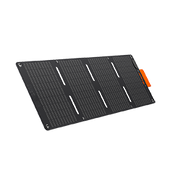
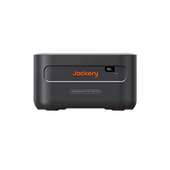
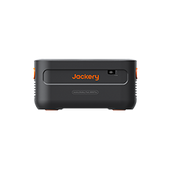
Jackery SolarVault 3 Series (Available Soon)
The upcoming Jackery SolarVault 3 Series (launching July 2026) is designed specifically for UK homes with existing microinverter systems. It integrates via seamless AC coupling, requiring no rooftop hardware replacement.
●Scalable Capacity: Easily stack multiple battery modules to reach 15+ kWh of storage, covering typical daily consumption and heavily reducing grid reliance. Read our comprehensive analysis of solar battery prices in the UK to see how scalable pricing benefits your budget.
●Essential Backup: Built-in EPS provides critical load backup during power outages.
Grid Note: UK grid regulations require a physical isolation gateway to safely disconnect your home from the grid before enabling full backup power.

Frequently Asked Questions
Do I need planning permission for a battery in the UK?
Battery storage alone is usually permitted development. However, check local conservation restrictions and proximity rules if the unit sits near your property boundaries.
Can I mix different battery brands in an AC-coupled system?
No. Different brands use incompatible communication protocols. Mixing them can void your warranties; always stick to the same brand ecosystem.
How long does a micro inverter last compared to a battery?
Microinverters typically last 20–25 years, whereas lithium batteries last 10–15 years. This makes AC coupling ideal, as you can replace the battery independently without touching the roof.
What happens to excess solar power when my battery is full?
Surplus energy is automatically exported to the grid via your Smart Export Guarantee (SEG) tariff, earning you credit from your energy provider.
Is AC or DC coupling better for future off-grid use?
DC-coupled systems are generally more efficient for off-grid setups due to fewer conversion losses at high continuous discharge rates.


![Guide to 10kW Solar Battery Price in the UK [2026 Update]](http://uk.jackery.com/cdn/shop/files/10kw_solar_battery_price_guide.webp?v=1780026743&width=90)
