








































DC-DC charging transfers electricity from one direct-current source to another while controlling voltage and current to suit the receiving battery. It is commonly used to charge a campervan leisure battery from a vehicle alternator, but the term also appears in solar, portable power and electric-vehicle discussions.
This can cause confusion: a 12V DC-DC charger is very different from the high-power DC rapid chargers found at UK motorway services. Power sources may include an alternator, solar panels or stored electricity.
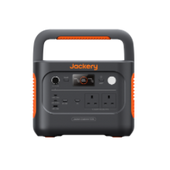
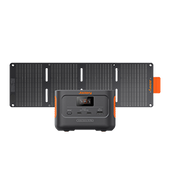
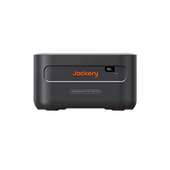
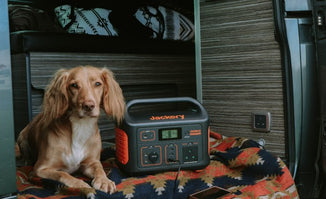
A Jackery Portable Power Station, for example, can supply compatible DC devices through its dedicated outputs, while the Jackery SolarVault 3 Pro Max stores solar or off-peak electricity for household energy use and compatible charging arrangements. This guide explains how DC-DC systems work, where they are useful, how quickly they charge and whether DC charging is available at home.
|
Key Takeaways: |
|
What Does “DC-DC Charging” Actually Mean?
Imagine setting off from Manchester for a weekend in a campervan. While the engine is running, you want the alternator to recharge the leisure battery that powers the fridge, lights and other equipment. Alternatively, you may want to recharge portable power equipment through the vehicle’s 12V outlet. These are familiar examples of DC DC charging.
The process takes electricity from one direct-current source and adjusts it before delivering it to another battery. A DC-DC charger can raise, reduce or stabilise the voltage, limit the current and apply a charging profile suited to the receiving battery. This is more controlled than simply connecting the starter and leisure batteries.
DC-DC battery charging should not be confused with plugging an electric car into a public DC rapid charger. Both involve direct current, but their voltage, power, equipment and purpose differ considerably.
The following sections explain how a DC-DC charger operates, why direct alternator charging may be unsuitable, how to estimate charging speed and charger size, and where vehicle, solar and home systems are used. They also cover battery compatibility, installation and essential safety checks.

What Is DC Charging? DC, DC-DC and EV Rapid Charging Compared
What is DC charging? It is the process of supplying direct current to a rechargeable battery. Because batteries store electricity as DC, the incoming power must already be direct current or be converted from alternating current before storage. The phrase is broad, however, and may refer to anything from a small solar battery charger to a public EV rapid charger.
The following comparison separates four related terms:
|
Term |
What it means |
Typical source |
Typical destination |
Common UK use |
|
DC charging |
Charging a battery using direct current |
Solar panel, vehicle system or converted mains supply |
Battery |
General umbrella term |
|
DC-DC charging |
Regulating one DC supply for another battery |
Alternator or starter battery |
Leisure battery or power station |
Campervans, motorhomes and boats |
|
DC rapid charging |
Sending high-power DC directly to an EV battery |
Public charging equipment |
Electric car |
Motorway and urban rapid charging |
|
AC charging |
Battery equipment converts incoming AC to DC |
UK mains supply |
EV or power station |
Home and workplace charging |
With domestic AC charging, electricity reaches the vehicle or storage equipment as AC. An onboard charger or internal charging circuit converts it to DC before it enters the battery. This arrangement is common for overnight EV charging and recharging portable power stations from a household socket.
At a public DC rapid charger, conversion happens inside the charging unit rather than the car. Regulated DC then travels directly to the EV’s traction battery, bypassing its onboard AC charger. Solar panels also generate DC, although their variable output normally requires a charge controller before it can charge a battery safely.

What Is a DC-DC Charger and How Does It Work?
A DC-DC charger is an electronic device installed between a direct-current source and the battery being charged. In a vehicle, it normally sits between the starter-battery circuit and the leisure battery. Rather than passing through whatever voltage is available, it controls the voltage and current according to the receiving battery’s requirements. This makes DC to DC charging suitable for batteries that need a defined charging profile.
The process works as follows:
- The alternator supplies electricity. While the engine is running, the alternator powers the vehicle’s electrical system and maintains the starter battery. The DC-DC charger draws from this circuit within its configured limits.
- The charger checks the input. It monitors the available voltage and may use an ignition or engine-running signal. Compatible models can respond to the varying output of a smart alternator.
- The voltage is adjusted. Depending on the source and destination, the charger may raise, lower or stabilise the input voltage. For example, a nominal 12V lithium battery may require a charging voltage above the resting voltage supplied by the source.
- The current is limited. A 30A charger, for example, controls the output so that it does not intentionally exceed its rated current. Actual current may be lower because of battery condition, temperature, input limits or active loads.
- The charging profile is applied. The output changes as the battery moves through its charging cycle.
- Charging is reduced or stopped. This may happen when the battery is full, the input voltage falls, the engine stops or a protection threshold is reached. Available protections vary by model.
Main charging stages
- Bulk: The charger supplies substantial current while battery voltage rises.
- Absorption: Voltage is held near a defined level while current gradually falls.
- Float: A lower voltage maintains a full lead-acid battery without continuous heavy charging.
- Lithium-specific control: A compatible setting uses limits suited to lithium chemistry and works alongside the battery management system. Many LiFePO₄ batteries do not require the same float treatment as lead-acid batteries.
A charger should not be confused with a basic DC-DC converter. A charger varies its output to meet the battery’s changing needs, whereas a fixed-voltage converter generally provides a stable output for equipment such as lights or a fridge. For battery charging, a dedicated charger is normally the appropriate device.
Why Use a DC-DC Charger Instead of Direct Alternator Charging?
Older vehicles with fixed-voltage alternators and similar lead-acid starter and leisure batteries may use a split-charge relay. However, directly linking the batteries has become less suitable for many newer vehicles.
A smart alternator adjusts its output according to engine load, emissions strategy and starter-battery condition. Its voltage may rise during deceleration and fall when the vehicle reduces alternator load. A basic relay cannot correct these changes, so the leisure battery may charge slowly, stop charging or never reach a full state of charge.
Cable length also matters. Campervan and motorhome installations can place the leisure battery several metres from the engine bay. Resistance along the cable creates voltage drop, leaving less charging voltage at the battery. Simply fitting a larger battery does not solve this problem.
Battery chemistry introduces another complication. Lead-acid and lithium batteries have different voltage limits and charging behaviour. A low-resistance lithium battery may attempt to draw substantial current through an unregulated connection, potentially placing stress on the alternator, cables and protection devices. A compatible DC-DC charger limits this current and applies the appropriate charging profile.
|
Factor |
Direct connection or basic split-charge relay |
DC-DC charger |
|
Voltage regulation |
Limited or none |
Controlled |
|
Smart alternator suitability |
Often problematic |
Model-dependent support |
|
Lithium profile |
Generally unsuitable |
Available on compatible units |
|
Current limiting |
Limited |
Yes |
|
Starter-battery protection |
Basic |
More comprehensive |
|
Installation cost |
Lower |
Higher |
A correctly selected charger can also stop drawing power when the input voltage is too low, helping preserve the starter battery. By controlling output, it can reduce excessive demand on the alternator and keep charging current within the capacity of the wiring.
Not every vehicle needs this equipment. The decision depends on the alternator type, battery chemistry, cable length, expected driving time and required charging performance. A basic relay may remain adequate for a correctly designed older lead-acid system, while modern or lithium installations are more likely to benefit from controlled charging.

Types of DC-DC Chargers and Their Main Uses
DC-DC chargers can be classified by voltage, electrical separation and the number of energy sources they accept. These features matter more than the brand name because they determine whether a charger matches the source, battery and installation.
Voltage Configurations
A 12V DC-DC charger is commonly used in UK campervans and work vans to transfer energy from a nominal 12V starter-battery circuit to a 12V leisure battery. Other systems may require voltage conversion.
|
Configuration |
Typical purpose |
|
12V-to-12V |
Charging a 12V leisure battery from a 12V vehicle |
|
24V-to-12V |
Supplying a 12V battery from a 24V lorry, boat or specialist vehicle |
|
12V-to-24V |
Charging a 24V battery bank from a 12V source |
|
Other step-up or step-down designs |
Matching specialist DC sources and battery banks |
“12V” and “24V” are nominal descriptions. The actual operating and charging voltages are higher and vary with battery chemistry and state of charge.
Isolated and Non-Isolated Designs
An isolated charger electrically separates the input and output sides, so they do not share the same negative connection. This can help control grounding paths and galvanic currents in narrowboats, marine systems, specialist vehicles or installations where the two circuits must remain separate.
A non-isolated charger uses a common negative connection. It is often smaller, simpler and less expensive, making it suitable for many road-vehicle installations. Isolation should be selected according to the electrical design rather than assumed to be universally better.
Charging Inputs
Alternator-only models use the vehicle electrical system as their sole source. Combined units can accept alternator and solar input, often giving priority to available solar energy. Single-input chargers handle one source, while multi-input systems manage several. Bidirectional models can move energy in either direction under defined conditions, although this capability, current limit and control method vary by unit.
Common UK applications include campervans, motorhomes, work vans, caravans with suitable towing circuits, narrowboats, off-grid cabins, expedition vehicles and portable power stations recharged while travelling. The source must still match the equipment’s permitted voltage, current and connector specification.
These low-voltage systems are separate from EV traction-battery charging. An ordinary 12V DC-DC charger cannot connect to an electric car’s CCS rapid-charging port or recharge its high-voltage traction battery.
How Fast Is DC-DC Charging and What Size Charger Do You Need?
There is no universal DC-DC charging speed. A charger’s amp rating is only the starting point: charging power also depends on system voltage, while the time required depends on how much energy the battery needs.
The basic calculations are:
Charging power (W) ≈ charging voltage (V) × current (A)
Ideal charging time (hours) ≈ energy to replace (Wh) ÷ charging power (W)
For example, a 30A charger operating at 14.4V has an approximate output of:
- 14.4V × 30A = 432W
If the battery needs 600Wh, the ideal calculation is:
- 600Wh ÷ 432W = 1.4 hours
The table shows how the charger rating changes this ideal result:
|
Charger rating |
Approximate charging power at 14.4V |
Ideal time to replace 600Wh* |
|
20A |
288W |
2.1 hours |
|
30A |
432W |
1.4 hours |
|
40A |
576W |
1.0 hour |
|
50A |
720W |
0.8 hour |
*Before charging taper, conversion losses and simultaneous loads.
Actual charging normally takes longer. Battery chemistry and state of charge affect how much current the battery accepts, and the charger may reduce output as the battery approaches full capacity.
Cable resistance creates losses, while a fridge, lights or inverter operating during the journey consumes some of the available power. Cold-temperature limits and the battery management system may also restrict lithium charging.
How to Choose the Right Charger Size?
Start with the battery manufacturer’s maximum permitted charging current. A battery bank rated for 30A charging should not be paired with a 50A charger unless the charger can be restricted to an approved level.
Next, estimate the energy used between journeys and the time normally spent driving. If 600Wh must be replaced during a two-hour drive, the ideal minimum is 300W, but a margin is needed for losses and onboard loads.
The alternator must also have enough spare capacity after powering the engine management, heating, lighting, demisters and other vehicle equipment. Its headline rating does not represent continuously available output for a leisure battery charger, especially at idle.
Finally, size the charger, cables and fuses as one electrical system. Cable length, installation method, allowable voltage drop and temperature rating all affect conductor size. Protection devices must follow the charger, battery and vehicle manufacturers’ requirements.

Battery Compatibility, Installation and Safety
A DC-DC charger must match both the supply system and the battery receiving the charge. Voltage alone is not enough: battery chemistry, maximum current, temperature limits, cable length and protection devices all affect whether the installation is safe and effective.
Can I Use a DC-DC Charger with Lithium Batteries?
Yes, provided the charger has a charging profile approved for the specific lithium battery. LiFePO4 leisure batteries commonly require different voltage limits and charging behaviour from lead-acid batteries. A lead-acid-only setting should not be assumed suitable.
Compatibility also varies across lead-acid types. Flooded batteries may require ventilation and have different maintenance needs, while AGM and gel batteries use sealed construction but can require different absorption and float voltages. Selecting the wrong profile may cause incomplete charging, overheating or accelerated battery ageing.
A lithium battery’s internal or external battery management system monitors conditions such as cell voltage, current and temperature. It can disconnect charging when a limit is exceeded, but it does not replace a correctly configured leisure battery charger. The charger and BMS must work within compatible limits.
Low-temperature charging needs particular attention. Many LiFePO₄ batteries should not be charged below 0°C unless the battery includes suitable heating or its manufacturer permits another limit.
Pre-Purchase Compatibility Checklist
|
Check |
What to confirm |
|
Input and output voltage |
Source and battery-bank nominal voltages |
|
Battery chemistry |
Flooded, AGM, gel or LiFePO₄ profile |
|
Maximum current |
Charger output does not exceed the battery’s permitted rate |
|
Alternator control |
Smart-alternator and ignition-detection compatibility |
|
Cable design |
Length, conductor size, routing and allowable voltage drop |
|
Circuit protection |
Correct fuse type and rating near both power sources |
|
Mounting |
Ventilation, orientation, clearances and temperature limits |
|
Environmental protection |
Suitable waterproof or IP rating for the location |
|
Temperature control |
Sensor support and low-temperature lithium protection |
|
Electrical isolation |
Isolated or non-isolated design as required |
|
Warranty |
Approved installation method, settings and accessories |
Protection Functions to Look For
Common features include overvoltage and undervoltage protection, overcurrent limitation, short-circuit protection, reverse-polarity protection and overtemperature shutdown. Starter-battery voltage protection can reduce or stop charging when the source voltage falls below a set threshold. These functions are model-specific and should be confirmed in the technical documentation rather than assumed from the product name.
A universal DIY diagram is unsuitable because cable size, fuse rating, earthing and isolation depend on the vehicle, charger current, conductor length and battery location. UK owners should follow the battery, charger and vehicle manufacturers’ instructions. Use a competent auto electrician for uncertain road-vehicle installations or a marine electrician where a boat’s earthing, corrosion protection or isolation arrangement is involved. Installation errors in a high-current DC circuit can cause overheating, damaged equipment or fire.
Can You Get DC Charging at Home?
Can you get DC charging at home? Yes, but the answer depends on whether you want to charge a small battery, a portable power station or an electric car. The equipment and power levels are very different.
Home Charging for Batteries and Portable Power Stations
Solar panels generate DC electricity, which can charge a compatible battery through a suitable solar charge controller. A dedicated bench charger can also supply controlled DC from a UK mains socket after converting the incoming AC.
A Jackery Portable Power Station can be recharged at home from mains electricity or compatible solar panels, depending on the model. Its internal electronics manage the electricity supplied to its battery. The DC ports can then power compatible low-voltage equipment, but their voltage, current and connector limits must be checked before connecting a device.
Home Charging for EVs
Most UK domestic EV charge points deliver AC rather than DC. A dedicated home charger commonly supplies about 7kW, while charging through a domestic three-pin socket is generally limited by vehicle manufacturers to around 2.3kW. The vehicle’s onboard charger converts this incoming AC into DC for its traction battery. A dedicated charge point is therefore typically around three times as powerful as a standard socket connection.
Domestic DC EV chargers do exist, including some bidirectional systems, but they are not the standard household choice. They cost more, require suitable electrical capacity and must be compatible with the car, connector standard and property installation.
A home battery such as the Jackery SolarVault 3 Pro Max can store electricity from compatible solar panels or off-peak grid charging for later household use. It may support a wider home-energy arrangement that includes EV charging, subject to system design and power limits, but it is not itself a DC rapid EV charger. In the UK, it requires professional hardwired installation.
Public DC Rapid Charging
A public rapid charger converts grid electricity externally and sends regulated DC directly to the EV’s high-voltage traction battery, bypassing the car’s onboard AC charger. This enables much higher charging power and shorter stops.
These ratings should not be compared directly with a 12V or 24V DC-DC leisure-battery charger. Public rapid charging is designed for journeys and short stops, whereas domestic AC charging normally suits overnight use.
DC Charging Portable Power Stations on the Road and at Home
A portable power station is a self-contained alternative to a permanently installed leisure-battery system. It combines a rechargeable battery, charge controller, inverter and multiple outputs in one unit, making it useful for camping, road trips, mobile work and temporary backup power.
Depending on the model, charging routes may include a 12V vehicle outlet while driving, a compatible solar-panel DC input and a UK mains socket at home.
Some products support combined charging, but only the combinations stated by the manufacturer should be used. Pass-through operation may allow appliances to run while the power station is charging, subject to the product’s load and operating limits.
Portable Charging with Jackery Portable Power Stations
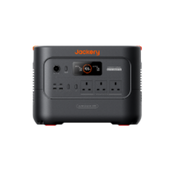
The Jackery Explorer 2000 v2 and Explorer 3000 v2 can both be recharged from a compatible 12V vehicle outlet, solar panels or a UK mains socket. Their built-in charging electronics regulate the incoming electricity rather than requiring the user to assemble a separate leisure-battery system.
Standard 12V car charging is convenient during a long journey but comparatively slow.
A full charge takes approximately 24 hours for the Explorer 2000 v2 and 36 hours for the Explorer 3000 v2. Mains charging is much faster, while solar charging time depends on connected panel capacity, weather, shading and panel position.
The Explorer 3000 v2 supports specified AC-plus-DC charging, but users should not assume that every input can operate simultaneously. For example, solar and 12V car charging cannot be used together on these models. Pass-through charging is available for running suitable connected equipment while the unit is being recharged.
Fixed Home Charging with the SolarVault 3 Pro Max
The Jackery SolarVault 3 Pro Max belongs to a different category. It is a fixed household energy-storage system that can receive DC electricity from compatible solar panels through four independent MPPT channels. Each channel accepts up to 1,000W, giving a maximum combined PV input of 4,000W.
Its base storage capacity is 2.52kWh and can be expanded to 15.12kWh using BP2500 expansion batteries. Stored daytime solar electricity can then be used during the evening, during a supported backup event or when grid electricity is more expensive.
|
Product |
Main setting |
Capacity |
Relevant charging options |
Best suited to |
|
Jackery Explorer 2000 v2 |
Portable |
2,042Wh |
12V car, solar and UK mains |
Camping, road trips and portable backup |
|
Jackery Explorer 3000 v2 |
Portable |
3,072Wh |
12V car, up to 1,000W solar and UK mains |
Larger loads and longer backup periods |
|
Jackery SolarVault 3 Pro Max |
Fixed home system |
2.52–15.12kWh |
Up to 4,000W direct PV input and grid charging |
Household solar storage and backup |
The Explorer models are not dedicated hardwired DC-DC leisure-battery chargers. The SolarVault 3 Pro Max is not a vehicle charger or DC rapid EV charger. In the UK, it must be hardwired to the consumer unit by a qualified electrician, with the applicable DNO process followed.
FAQs
The following are the frequently asked questions about the DC-DC charging:
What is DC to DC charging?
DC-to-DC charging transfers electricity from one DC source to another battery while regulating the voltage and current. A common example is using a vehicle’s alternator and starter-battery circuit to charge a leisure battery through a DC-DC charger. The charger applies a charging profile suited to the receiving battery.
How fast is DC to DC charging?
Speed depends on charger current, charging voltage, battery capacity, chemistry, state of charge and available alternator output. At 14.4V, a 30A charger provides approximately 432W. It would ideally replace 600Wh in about 1.4 hours, but losses, operating appliances and charging taper make the actual time longer.
Can you use two DC to DC chargers?
It may be possible, but they should not simply be connected in parallel without approval. The battery must accept the combined current, and the alternator, cables and fuses must support the total load. Chargers using separate sources may require coordination. Follow the manufacturers’ instructions or obtain an installer-designed system.
Can a DC to DC charger damage a battery?
A correctly selected and configured charger should control battery charging. Damage can occur if the voltage, battery profile, current limit, polarity or temperature setting is wrong. Poor cable connections may also overheat. Confirm compatibility with the battery manufacturer and do not rely solely on the battery management system for protection.
Do I need a DC-DC charger for a lithium leisure battery?
A compatible DC-DC charger is generally advisable when charging a lithium leisure battery from a vehicle alternator. Lithium batteries have different charging requirements and may draw high current from an uncontrolled connection. However, the final choice depends on the battery, BMS, alternator, vehicle design and manufacturer requirements.
Does a DC-DC charger drain the starter battery?
A correctly installed charger should stop or reduce charging when the engine is off or the starter-battery voltage becomes too low. This may be controlled by an ignition signal or voltage detection. Incorrect wiring, unsuitable thresholds, a failed relay or an always-active charger could still discharge the starter battery.
Can a DC-DC charger work with solar panels?
Some models combine alternator charging with an MPPT solar charge controller. They can manage both sources and may prioritise solar when it is available. Other chargers accept alternator input only and require a separate solar controller. Check the permitted PV voltage, current, power and connection arrangement before adding panels.
Is a DC-DC charger the same as an inverter?
No. A DC-DC charger regulates direct current to charge another battery. An inverter converts DC electricity from a battery into AC electricity for mains-powered equipment. Some complete power systems contain both components, but they perform separate functions.
Is a DC-DC charger the same as an EV rapid charger?
No. A leisure-battery DC-DC charger usually works with low-voltage 12V or 24V systems and output measured in amps or hundreds of watts. An EV rapid charger supplies regulated high-voltage DC directly to a traction battery, commonly at tens or hundreds of kilowatts.
Can I install a DC-DC charger myself?
A competent person may install some low-voltage systems by following the vehicle, battery and charger instructions. However, high DC current can overheat undersized cables or poor connections. Use an auto electrician or marine electrician if cable sizing, fuse selection, alternator capacity, earthing, isolation or safe routing is uncertain.
Final Thoughts
DC-DC charging is valuable because it controls how energy passes between two direct-current electrical systems. Its purpose is not simply to deliver the highest possible current, but to charge in a way that suits the source, battery and wiring.
For portable requirements, the Jackery Explorer 2000 v2 and Explorer 3000 v2 provide car, solar and mains charging options, but neither should be confused with dedicated leisure-battery equipment or EV rapid-charging infrastructure.
Choose a DC charging arrangement through a clear sequence:
- Identify whether the requirement concerns a leisure battery, portable power station or EV.
- Confirm the source and destination voltages.
- Check the battery chemistry and permitted charging current.
- Determine the alternator’s usable spare capacity after vehicle loads.
- Estimate the energy that must be replaced during a typical journey.
- Select the charger, cables and fuses as one system.
- Confirm smart-alternator, solar-input and low-temperature compatibility.
- Use a competent installer where the design or installation is uncertain.


![Guide to 10kW Solar Battery Price in the UK [2026 Update]](http://uk.jackery.com/cdn/shop/files/10kw_solar_battery_price_guide.webp?v=1780026743&width=90)


