






























When planning your RV or campervan trips, one of the most critical considerations is choosing the correct refrigerator. Your decision affects not just storage space and energy usage, but also the whole trip experience. Understanding the advantages and disadvantages of a small thermoelectric cooler, a strong compressor refrigerator, or a flexible 3-way absorption type can help you select the ideal match.
Considerations such as fridge size, power sources, cooling efficiency, and energy usage are critical to long-term pleasure. This detailed guide breaks down each kind of motorhome fridge, allowing you to make an educated decision based on your lifestyle and travel requirements.
|
Key Takeaways: |
|
Types of Motorhome Fridges
Choosing the motorhome refrigerator that best matches your requirements is one of the most crucial decisions to make, and it must be made as soon as possible in that:
- The refrigerator's size will most likely impact the style and size of the surrounding furnishings.
- It is crucial to know ahead of time the consumption of your refrigerator in order to design an electrical system. be able to power it 24 hours a day, or maybe a gas system.
Types of Motorhome Fridges: by Different Working Mechanism
One of the first things you’ll need to think about when shopping for a fridge for your camper is how you’ll power it. All refrigerators need energy to keep their interiors cold, and where this energy comes from is a crucial factor.
To choose the best refrigerator for your requirements, you will most likely have to decide whether to install a compressor, thermoelectric, or 3-way absorption fridge. In this section, we will look at the distinctions between the three.
The Thermoelectric Refrigerator
The Thermoelectric Camper Fridge is a kind of refrigerator/cooler that may operate on 12/24V DC or 110/220V AC power (depending on model).
A thermoelectric refrigerator operates on the Peltier effect, which states that when an electric current passes between two dissimilar metals, heat is transferred from one to the other.
The thermoelectric refrigerator is the lowest-performing refrigerator we'll encounter (it's sometimes referred to as a "cooler" rather than a genuine refrigerator), but it may still be useful in certain circumstances.
The Compressor Refrigerator
The Compressor Fridge is the most common kind of refrigerator seen in households. This kind of refrigerator employs a compressor motor to expand and compress a gas, therefore chilling the interior of the refrigerator.
12V RV compressor refrigerators can endure high outdoor temperatures, reach the coldest temperatures, and are the most energy-efficient, but they are also the most expensive.
3-Way Fridge
The Trivalent Fridge (also known as a "3-way fridge") is a kind of RV refrigerator that can be powered in three ways: using 12V DC electricity (when traveling), 220V AC power (when camping), or LPG gas (while idling with the motor turned off). Power supplies may be either automated or manual.
This kind of refrigerator operates by using a solution of water, ammonia, and other elements to remove heat from the refrigerator's interior by thermo-absorption.
Typically, trivalent refrigerators are fitted in manufactured RVs. Their key benefit is that they do not rely on the service batteries (gas, column, or alternator current in motion). The biggest drawback is that the cooling capacity varies depending on the power source (12V or gas).
|
|
Pro |
Con |
Recommended Use |
|
The Thermoelectric Refrigerator |
The cheapest types are thermoelectric refrigerators. Generally tiny (easy to fit in) Transportable, they retain their inside at a consistent temperature, much like a cooler. They may operate on 12 volts from the cigarette lighter |
They do not cool much when the ambient temperature is over 25°C. They have a maximum temperature of -15/20°C relative to the outdoors (so no ice cold drink in summer). They need steady energy (run all the time). |
For medium-short trips. For hiking, picnicking, and camping. For saving money. To fit a fridge between the two front seats. |
|
The Compressor Refrigerator |
Effective, Minimal Energy Use They may feature a freezer compartment and may achieve very cold temperatures. Even when the vehicle is not level, they function well in all seasons. Installing and connecting at 12V is simple. |
The expensive price in comparison with other refrigerator types |
For longer trips. For people who intend to live full-time in their camper van. For those who want their beer properly chilled year-round. For those wanting the greatest performance and most efficient refrigerator. |
|
3-Way Fridge |
Convenient if you mostly use gas (always accessible) and don't have solar installed. Reaches chilly temperatures (powered by gas) Even the least expensive versions don't make any noise. Additional power source possibilities |
When in absorption, it doesn't become extremely chilly (AC or DC powered). Gas can only be used while parked; it cannot be used on the road. Needs an on-board gas system (certification and testing are required for do-it-yourself camper vans). For the refrigerator to work, it must be level, with a maximum slope of two to three degrees. |
Efficient and low energy consumption. They can achieve very low temperatures (and may have a freezer!). They function effectively in all seasons, even when the car is not level. Easy to Install and Connect at 12V. |
Unpowered Coolboxes
We also have the regular coolbox. It's just a regular conventional cooler with no electricity or gas. These are not long-term solutions, but they will suffice for brief periods of time in your vehicle. Keep it in a cool, dark spot.
Types of Motorhome Fridges: Vertical or Horizontal
Another crucial decision to make immediately after selecting the kind of motorhome refrigerator, which will undoubtedly influence the architecture and composition of your camper van, is whether to install a horizontal (cockpit) or vertical (shelf-mounted, similar to the one at home) refrigerator. Let us discuss the advantages and disadvantages of each choice.
Horizontal Refrigerators
RV cockpit refrigerators allow you to access food and beverages by simply lifting the top lid.
Because of their shape and the tendency for cold to flow downward, when opened, they allow less cold to escape than a traditional upright refrigerator.
Upright (Shelf) Refrigerators
The upright fridge is the typical fridge seen in most houses, it is the one where you open the door, grab what you need (for example, a beer) and shut the door.
The biggest benefit of an upright refrigerator is that you can view all of its contents very instantly.
|
|
Horizontal Refrigerators |
Upright (Shelf) Refrigerators |
|
Pros |
Less frost escapes when it is opened. It may be accessed while driving and fits between the cockpit seats. Utilizing all available space (layering one item on top of another) is simpler. |
Fast and instant access to every piece of material An upright refrigerator is undoubtedly neater if you don't care about filling the whole refrigerator and making the most of every available space. Cleanup is simpler than with a sump refrigerator. |
|
Cons |
You must remove everything from it if you need anything on the bottom. It's a bit of a problem to store food in the refrigerator, and you have to take everything out to clean the bottom if anything spills. Plan for easy access to the refrigerator in the layout (possibly with a pull-out drawer if it's beneath a shelf). |
To open the refrigerator door, you must measure the available area. It loses temperature more quickly when open than a sump refrigerator, which is particularly important for "weaker" refrigerators without a compressor. The refrigerator's rear has to have room for ventilation. |
Types of Motorhome Fridges: Noise Level
Noise level is an important issue to consider when deciding between compressor and absorption fridges for your motorhome. Both systems use different working methods, resulting in diverse sound characteristics.
Compressor Fridge Noise Level
Compressor refrigerators, like household refrigerators, function by compressing and circulating refrigerants. The noise is caused by the compressor motor and fan.
Noise Levels: Typically between 35 and 45 decibels (similar to a calm conversation or a gentle hum).
Noise Characteristics: The sound is intermittent since the compressor only operates when cooling is required. When the required temperature is attained, it switches off.
Absorption Fridge Noise Level
Because there are no moving components, such as a compressor, absorption refrigerators are quiet when powered by gas. However, when powered by electricity (12V or 230V), they may produce some noise owing to heating elements, but this is generally minor.
Noise Level: Nearly 0 decibels while operating on gas, but 20-30 decibels when running on electricity (a very mild noise, softer than compressor refrigerators).
Noise Characteristics: A constant, but very low-level hum or none at all, particularly in LPG mode.

Types of Motorhome Fridges: Cooling Speed and Temperature Control
When choosing a fridge for your campervan, cooling speed and temperature control are two important considerations that influence both performance and energy economy. Let's look at how different kinds of refrigerators perform in these categories and what to anticipate in real-world scenarios.
Cooling Speed
Compressor refrigerators often have faster cooling speeds than other refrigerator kinds. They circulate refrigerant via a compressor, quickly reducing heat from the inside.
Most compressor refrigerators attain the appropriate temperature in 1-2 hours, even in warmer surroundings, thanks to their capacity to actively cool independent of external circumstances.
In contrast, absorption fridges (3-way fridges) cool much slowly.
These refrigerators depend on heat absorption via a chemical process, and when fueled by gas, they may take up to 4-6 hours to achieve the same temperature. Absorption refrigerators also struggle to cool down rapidly at high ambient temperatures since they rely on the environment to help in the cooling process.
Thermoelectric coolboxes, although convenient for short travels, are the slowest. They only drop to around 20°C below ambient temperature and may take many hours to reach their lowest point. They are ideal for moderate regions and short-term cooling requirements.
Temperature Control
Temperature management is essential to keeping food safe for ingestion. Modern 12V compressor refrigerators contain digital thermostats that allow for exact temperature adjustments, frequently in 1°C increments. This level of control makes compressor refrigerators perfect for maintaining stable temperatures, particularly under changing weather situations.
In contrast, absorption refrigerators provide less accurate temperature control. Many versions provide manual thermostats with basic temperature settings for 12V, gas, and mains power modes.
Types of Motorhome Fridges: Energy Consumption and Efficiency
Understanding energy usage is essential for selecting the best fridge for your campervan, particularly if you live off-grid. The efficiency of a refrigerator may have a big influence on how long your battery system lasts between charges.
12V Compressor Refrigerator
These refrigerators generally require 40-70Ah per day, depending on size, ambient temperature, and whether or not they include a freezer. A big, front-loading compressor fridge may draw 5-7A when turned on and off throughout the day.
Three-way Absorption Refrigerator
When operating at 12V, absorption refrigerators require much more electricity, up to 10-15A continually. While they are economical on gas, they may rapidly deplete a battery while running on 12V since they do not cycle on and off.
Thermoelectric Coolboxes
These coolers are less efficient, requiring around 4-5A continually. This may result in 96-120Ah per day, making them unsuitable for long-term off-grid usage unless often recharged.
Make sure your battery bank and solar system are properly sized to manage your refrigerator's power demand.
What Size of Fridge You Need for Your Motorhome?
Selecting the right fridge size for your motorhome is critical for balancing storage capacity, power usage, and available space. To make the best decision, consider your average food storage requirements, the length of your journeys, the number of passengers, and the energy available in your van's electrical system. Here's an approximate guide for fridge sizing:

Solo travelers or weekend excursions: A 30-40L fridge should be plenty to keep fresh food for a few days, particularly if you intend on taking short excursions or restocking often. Fridges in this size range are tiny and ideal for single van lifers or minimalists.
Couples or extended solitary trips: For extended excursions with two individuals, a 40-60L fridge works well. This size provides enough room for fresh food, drinks, and potentially a small freezer section, providing you more freedom while going off-grid.
Families: If you're traveling with a family, you'll probably need a bigger 60-100L refrigerator. These provide plenty of space for perishables, leftovers, beverages, and perhaps separate freezer sections.
Fridge size closely corresponds with electricity usage, therefore bigger refrigerators normally use more energy. However, depending on their efficiency, some tiny fridges might use a large amount of electricity. A small refrigerator may require 20-30 Ah/day, whilst bigger versions may take up to 90 Ah/day.
How Do You Choose The Best Motorhome Fridge?
In brief, it depends on how you camp and the electricity configuration of your motorhome.

Factor 1: Size
Smaller units are likely to have a larger selection of compact compressor fridges available since it is simpler to find a room for a fridge that does not need external ventilation.
Factor 2: Power Source
If you have a steady supply of gas in your standard RV and like spending time off-grid, an absorption fridge may be an excellent option for you. An 81-litre fridge will empty a 6kg gas cylinder every three weeks, whereas a 150-litre fridge/freezer would last roughly two weeks. An absorption fridge of any capacity that runs on gas will only need around 60mA or 1.44Ah of power per 24 hours for the control system.
Factor 3: Temperature
At 20˚C ambient temperature, an 85-litre compressor fridge consumes around 25Ah every 24 hours to operate the controls and compressor. The compressor's power usage rises in proportion to the ambient temperature. After three days, such a fridge would use 75Ah, which is the amount you would like to get out of a 150Ah lead acid battery, assuming there is no additional drain on the battery.
Factor 4: Batteries
However, if you have decent off-grid equipment and/or travel a lot, a compressor fridge may be appropriate. Remember, with a B2B charger and a lithium batteries, an hour or so of driving will provide a significant boost to the battery.
Lithium batteries may also be discharged to around 10% of their full capacity with no long-term damage. If you spend a lot of time in the south of France or Spain during the summer, you may choose a compressor fridge to deal with greater ambient temperatures, and a solar panel might provide most of the fridge's electricity.
Factor 5: Freezer Section
If you want the most efficient fridge, make sure the temperature in the freezer section is separately regulated. Freezers use more energy than equal fridge volume, hence the option to reduce the freezer temperature while not in use is beneficial.
Can You Put a Regular Fridge in a Campervan?
It is not difficult to fit a standard refrigerator into a campervan, and if you have a large motorhome with plenty of room and electricity, this may be a viable choice for you. For the majority of us with smaller campervans and less powerful electrical systems, having a standard freezer in a campervan is not a good decision.
Standard domestic fridges in the UK normally operate at 230V, necessitating a high power supply and, as a result, a big electrical system including components such as an inverter. Fridges designed for use in campervans often have a lower power demand, with some able to be fueled by gas rather than electricity.
How to Power a Fridge in Motorhome?
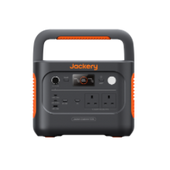
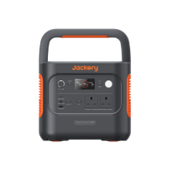
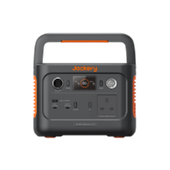
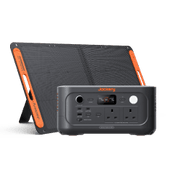
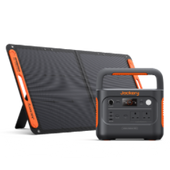
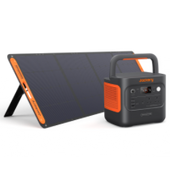
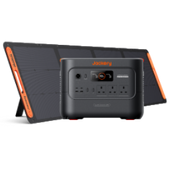
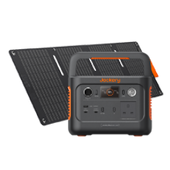
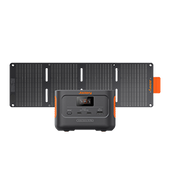
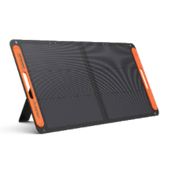
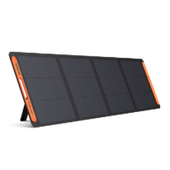
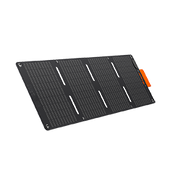
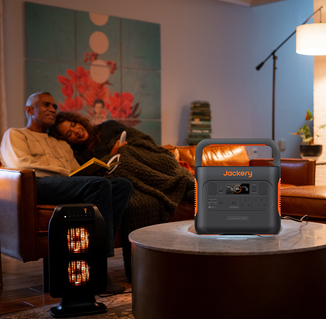
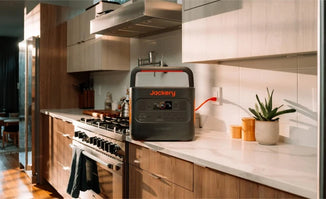
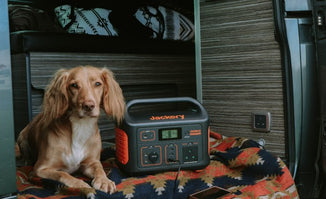
The decision to choose a Jackery Solar Generator (a combination of a Jackery Explorer Power Station and SolarSaga solar panels) to power a motorhome's fridge and other appliances is based on four key advantages: clean power, silent operation, ease of setup, and scalability.
Unlike gasoline generators, which are noisy and often prohibited in national parks and campgrounds, the Jackery system operates virtually silently. This is the single biggest advantage for maintaining a peaceful environment for yourself and your neighbors.
The most crucial draw in a motorhome is often the refrigerator. A generator system large enough (e.g., an Explorer 1000 v2 or 2000 v2) can efficiently power a low-energy-draw 12V compressor fridge for 1-3 days without any charging.
Jackery Solar Generator 1000 v2
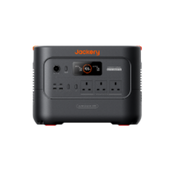
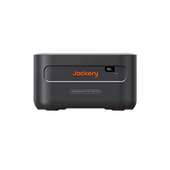
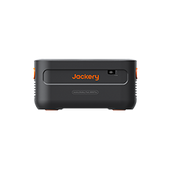
The Jackery Solar Generator 1000 v2 (which includes the Explorer 1000 v2 Portable Power Station and a SolarSaga 100W or 200W solar panel) is an excellent choice for powering a motorhome fridge and other appliances due to its combination of capacity, power output, safety features, and quiet, clean operation.

Sufficient Power for a Fridge: It has a 1500W continuous AC output (with a 3000W surge peak), which is more than enough to handle the initial startup (surge) and running watts of most RV or compact refrigerators.
With its 1070 Wh capacity, the unit can power a 200W fridge for approximately 4.1 hours or a 100W car fridge for about 7.6 hours of continuous use. For typical cycling-use RV fridges, this can translate to much longer backup time, potentially keeping your fridge running for up to a day.
Powers Multiple Appliances: Beyond the fridge, the 1500W output can easily run other small-to-midsize motorhome essentials like a coffee maker (600W), an electric kettle (900W), a Wi-Fi router, laptops, fans, and lights.
Whisper-Quiet: It operates at less than 30 dB (decibels), which is comparable to a soft whisper. This is crucial for maintaining a peaceful environment, especially at night or when camping in quiet locations. Gas generators are typically much louder (70-75 dB).
Portability: Weighing only about 23.8 lbs and featuring a compact, lighter design than industry standards for a 1kWh unit, it is easy to move in and out of your motorhome. When paired with Jackery's SolarSaga solar panels, you can recharge the unit using free, renewable energy. With 2x 200W solar panels, the unit can recharge in approximately 3.8 hours in ideal sunlight conditions.
Jackery Solar Generator 2000 v2
The Jackery Solar Generator 2000 v2 (Explorer 2000 v2 with SolarSaga 200W solar panel) is the premium choice for motorhome power, specifically because it offers the capacity, output, and longevity required to mimic a reliable home electrical system on the road.

Massive 2kWh Capacity: With approximately 2042Wh of storage, the battery can run a standard RV fridge/freezer for 2–4 days and still have reserve power for lights, charging, and entertainment. This is crucial for motorhome owners who often spend extended periods in remote, off-grid locations.
It provides 2,200W of continuous power and a 4,400W surge peak. This means it can handle the initial high power draw (surge) when a refrigerator compressor, microwave, or other high-wattage appliance first kicks on.
LiFePO4 Battery for Longevity and Safety: The 2000 v2 models typically feature Lithium Iron Phosphate (LiFePO4) chemistry, which is the gold standard for RV and off-grid power systems. The LFP chemistry provides an extended cycle life of 4,000 cycles to 70%+ capacity, meaning the unit is rated for more than 10 years of typical use.
Lightweight and Compact: It is one of the most portable 2kWh power stations on the market, weighing approximately 39.5 lbs (17.9 kg). Its smaller size makes it easier to store in an RV's limited compartments.
Ultra-Quiet: Unlike loud, traditional gas generators, the 2000 v2 operates at a whisper-quiet level, with a noise output as low as 30dB (equivalent to a quiet library). This is essential for a peaceful experience when camping or sleeping in your motorhome.
Practical Tips for Using a Motorhome Fridge
Motorhome refrigerators take care of themselves, but there are a few basic things you can do to improve their efficiency.

Tip 1: Before You Go for a Vacation, Pre-Cool Your Fridge Overnight
Instead of putting your food and beverages in a heated fridge, put them in once it has cooled. An RV fridge works best when chilling food and drink from room temperature, so help your fridge out by letting it cool down first.
Tip 2: Pre-Chill Your Meals and Beverages
Your fridge will also perform more effectively if you store cold foods rather than room temperature ones. Buy your beverages from the grocery chiller rather than off the shelf. You'll lighten the weight on your fridge and make it run more effectively when traveling. Most significantly, you'll have more confidence that your beer or wine will be cool on the first night of your road trip!
Tip 3: Empty and Clean Your Refrigerator on a Regular Basis
Cleaning out your fridge on a regular basis can keep it smelling fresh and running smoothly. Refer to the operation manual for instructions. If you can't locate it, a simple detergent and warm water solution applied to a soft cloth would suffice. Do not forget the fridge seals. If you have access to the back of your fridge, removing dust and grime from any cooling fins can help it function properly.
Tip 4: Maintain a Frequent Defrost Cycle in Your Refrigerator
Some refrigerator models include an auto defrost capability; however, if yours does not, you must ensure that the frost layer does not exceed 3mm thick. If it does accumulate, switch off your fridge, empty the contents, and defrost it. Frost buildup decreases airflow within your refrigerator, making it less efficient.
Tip 5: Fridge Seals (and Door Locks) Should Be Examined Regularly for Air Leakage
Cold air on a warm hand is often a signal. Otherwise, an easy nighttime test is to place a bright light inside the refrigerator and shut the door. If you can't see the light, you're OK. If possible, carefully examine the door locks and seals.
Tip 6: Clean Your Refrigerator Thoroughly Before Storing It
Before storing your RV or locking it up for the winter, give it a thorough cleaning. When the door is not in use, leave it ajar to allow air to flow within. This will keep mould and other bugs at bay while also preventing unpleasant odors. It is a good idea to operate your refrigerator once a month while it is in storage to keep everything greased and lubricated. Motorhomes with absorption refrigerators should be kept as level as possible.
Tip 7: Use an Anderson Plug Connection for Towables
An Anderson plug is a heavy-duty connector that provides a secure power connection between a caravan or camper and its towing vehicle. Use this connection to provide a steady supply between your caravan, camper trailer, or fifth wheeler and the tow vehicle. This reduces the voltage drop between the tow vehicle and the trailer, which is powered by 12V.
FAQs
The following are the frequently asked questions about the motorhome fridge:
1. How long will a 12V fridge last on a leisure battery?
A 12V fridge may run for a few hours to many days on a recreational battery, depending on the capacity, type (lithium vs. lead-acid), power usage, efficiency, and ambient temperature. A 100Ah lithium battery could run a medium-sized fridge for almost two days, but a 100Ah lead-acid battery might last around 50 hours.
To get an exact estimate, you must first determine your fridge's power demand in watts (W) or amps (A) and then compare it to the useful capacity of your particular leisure battery.
2. How long will a 12V fridge run on a 100Ah battery?
Approximately 3.3 days. To estimate how long the battery will power the fridge: Run Time = Battery Capacity / Fridge Amp-hours = 100Ah / 30Ah per day = 3.3 days. Thus, a 100Ah LiFePO4 lithium battery can power a 12V fridge for about 3.3 days.
3. Will a 200W solar panel run a 12V fridge?
Yes, a 200W solar panel can effectively power a 12V refrigerator. Remember, there are several aspects to consider when deciding which solar panel to utilize to power your refrigerator.
4. Will a 12V fridge drain my car battery overnight?
When connected to the 12V power connection, the fridge works on vehicle power while you drive. When you stop, the fridge continues to suck electricity from the vehicle battery, depleting its charge. When the power is turned off, a 12V fridge maintains its temperature better than an esky.
Final Thoughts
A motorhome fridge is more than simply an appliance; it's an essential component of relaxed, stress-free travel. From weekend getaways to full-time van living, the perfect fridge provides fresh food, cold beverages, and peace of mind.
When making a selection, always take into account your motorhome's layout, electrical configuration, and travel preferences. With appropriate usage and care, your refrigerator will last for years. Finally, the finest motorhome fridge is one that complements your camping style, budget, and adventure objectives.


