

























Electric kettles are indispensable in contemporary households, providing speed and convenience when heating water. They may, however, use a large amount of power, depending on their wattage and use. Kettles typically function at 1,200 to 3,000 watts, which affects how fast water boils and how much energy is used.
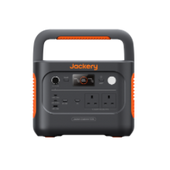
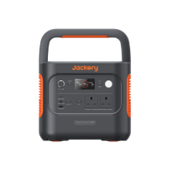
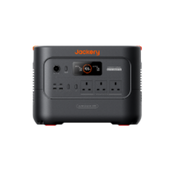
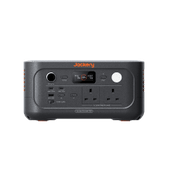
Understanding your kettle's power rating and efficiency helps you evaluate its energy use and cost per use. This article explains how kettle wattage affects performance, discusses ways to save on power costs, and explores sustainable options, such as Jackery Portable Power Stations, for more eco-friendly boiling.
|
Key Takeaways: |
|
How Many Watts Does an Electric Kettle Use?
A kettle is a fundamental household gadget that provides tremendous convenience. You can swiftly boil water and prepare coffee or tea in a few minutes. Boiling water in a pan or on the stove takes longer, and most people are impatient.
Additionally, boiling water on a stove wastes a lot of electricity. That is why most households benefit from having an electric kettle. Although the kettle is quick and easy to use, it comes at a hefty price in terms of power consumption.
The primary difference between an electric and a non-electric kettle is the source of electricity. Start by connecting an electric kettle to an electrical socket. Electric current heats the kettle's heating element, which in turn warms the kettle's conductor plate. Electric energy generates heat, which is then transported throughout the kettle by conduction.
Because water molecules are free, heat is transported more quickly by conduction than via conventional techniques. This makes boiling water in an electric kettle quicker than using a traditional kettle.
Most electric kettles run at 1200 to 1500 watts. The kettle's particular wattage is determined by its brand and model. Wattages and efficiency levels vary amongst kettle types. A kettle's wattage determines its energy consumption, boiling efficiency, and pace.
Wattage, use, and efficiency all determine an electric kettle's total energy consumption. Understanding wattage helps you make an informed choice when selecting the kettle that best suits your needs.
|
|
Power Ratings |
Targeted Group |
How Long Does it Take to Boil? |
|
Entry-level Kettles |
1000-1200 watts |
One to Two people |
4-5 minutes |
|
Standard Household Kettles |
1200-1500 Watts |
Three or four individuals |
It will not cause your power meter to spin too quickly or too slowly. |
|
High-Efficiency Fast-Boil Kettles |
1500-2000W |
Office workers |
It can boil a big kettle of water (1.5 litres) in about 6 minutes. |
What Is The Energy Consumption of a Kettle?
As previously stated, various factors affect a kettle's energy consumption. Some of these criteria are use frequency, efficiency, water consumption, and wattage. A typical kettle wattage is between 1,200 and 1,500 watts. Some kettles have wattages as high as 2000W.
Here is the method for estimating your kettle's overall energy usage when boiling water.
To calculate the electric kettle's power consumption in watts, you must first know its wattage and the length of use. Here's a step-by-step instruction for calculating power usage:
Determine the wattage of your electric kettle. This information is usually available on the product's label or in the user handbook. Estimate the use time in hours. For example, if you use your kettle for 30 minutes every day, the total use time is 0.5 hours.
To determine power consumption in watt-hours (Wh), multiply the wattage by the time spent using it:
Energy consumption = power in kilowatts x time (hours)
For example, if a kettle has a power rating of 1200 W, it will take around 125 seconds to boil water. Thus, the average energy usage is 0.04 kWh.
Checking the wattage helps you make more informed decisions when selecting the best kettle for your household.
|
Kettle Power Rating (Watts) |
Average Boiling Time (1L Water) |
Energy Used per Boil (kWh) |
|
1500W (1.5 kW) |
~5 minutes |
0.125 kWh |
|
2000W (2.0 kW) |
~4 minutes |
0.133 kWh |
|
2200W (2.2 kW) |
~3.5 minutes |
0.128 kWh |
|
2500W (2.5 kW) |
~3 minutes |
0.125 kWh |
|
3000W (3.0 kW) |
~2.5 minutes |
0.125 kWh |
How Much Electricity Does a Kettle Use?
Kettles are fast and easy, but they use a significant amount of power, particularly when used many times each day. Let's look at a sample case.
A typical domestic kettle operates at about 1.5 kW (1500 watts). If it takes 3 minutes (0.05 hours) to boil water, each usage will require approximately:
1.5 kW × 0.05 h = 0.075 kWh
With an electricity rate of R3.70 per kWh, one boil costs:
0.075 kWh multiplied by 3.70 is R0.28. If you boil water five times a day, it adds up to roughly R1.40 per day, R42 per month, or R511 annually.
So, although a single use is inexpensive, repeated use can accumulate over time, particularly in larger families. If you want to save money on electricity, using a kettle sparingly (just boiling what you need) may make a little but consistent impact.

How Much Does It Cost to Boil a Kettle?
To calculate how much it costs to boil a kettle, you'll need to know how much you spend per unit of energy (1kW), how many kilowatts your kettle is, and how long it takes to boil the appropriate amount of cups.
Under the November 2025 price cap, the average power price is 24.86p/kW. However, since you would not be boiling a kettle for an hour, it is best to calculate how much energy a kettle needs over a shorter period.
The majority of kettles have a 3kW element. An example 3kW kettle boils one cup of water (235ml) in around 45 seconds. This implies it takes less than a penny (0.0093p) to boil a cup of water in a kettle. The same kettle can boil 1.7 litres of water in roughly 4 minutes; therefore, it costs around 5p (0.0497p) to boil a whole kettle every time.
Some kettles include a 2.2kW element. This implies that they will use less electricity but take longer to boil. A 2.2kW kettle, for example, can boil a litre of water in 3 minutes and 10 seconds, which means that, although the cost per minute is less than 1p (a little more than 0.9p to be precise), boiling a litre costs 2.8p.
To calculate the cost of boiling your own kettle, first determine how much you spend per unit of energy (1kW), which should be mentioned on your energy bill. Check your kettle's power rating, then time how long it takes to boil 1 cup of water.
Multiply your kettle's kW by the price of electricity to calculate how much it costs to boil your kettle for an hour. Divide by 60 to estimate the cost per minute.
Cooking with more water becomes more costly. Fill the sample 3kW kettle up to its maximum capacity of 1.7 litres each time, and the boiling time for a full kettle increases to 4 minutes, for 5p every boil. That means if you often boil a whole kettle for just one cup, you're wasting almost 4p each time.
|
Scenario |
Kettle size/amount |
Cost to boil |
|
One cup of water |
~ (1 cup) |
~1.01 p |
|
Full kettle (~1.7 L) |
Full kettle |
~5.4 p |
|
One cup alternative |
(same 1 cup) |
~1.28 p |
|
Full kettle (2 L) |
2 L |
~74 p |
|
Full kettle (unspecified size) |
full kettle |
~7 p |
Why Do Kettles Use So Much Energy?
Why is your electric kettle so "power-hungry"? There are four primary explanations.

Large Specific Heat Capacity
Water has a very high specific heat capacity. Heating one litre of water from room temperature to boiling takes around 350 kilojoules of energy, which is governed by physical parameters.
Considerable Heat Loss
Kettles emit a significant amount of heat into the atmosphere during heating, primarily through the body, base, and steam. Typically, actual efficiency ranges from 70 to 80%.
High-Power Design
Modern electric kettles range in power from 1500 to 3000 watts. While this allows for faster heating, it also results in extraordinarily high immediate power consumption—especially compared to other needs, such as the watts required to operate household appliances, which may reach several kilowatts over time.
Standby Power Consumption
Even when not actively boiling, a kettle may draw electricity. Many contemporary kettles feature indicator lights, digital screens, and continuously operating keep-warm settings. These operations may use only about 30 watts per hour, but over time, that standby usage can add up significantly over the course of a year.
How to Reduce Kettle Energy Consumption?
Here are some intelligent strategies to lower the energy use of your kettle:

Tip 1: Select An Energy-Efficient Kettle
Be on the lookout for kettles equipped with energy-saving features, such as a range of temperature settings or an automatic shut-off mechanism. To increase heat transfer while minimising energy loss, energy-efficient designs are purposefully engineered.
Tip 2: Only Boil the Needed Quantity of Water
Always make sure the kettle is not filled with more water than necessary. When more water is boiled, more energy is wasted. Determine the required amount of water, then fill the kettle to the correct level.
Tip 3: Use the Appropriate Kettle Size
A smaller kettle is the best option if you often boil just small amounts of water. When compared to larger kettles, smaller kettles usually use less energy to heat up.
Tip 4: Match the Kettle with Your Hob
On your hob, check that the size of your kettle matches the size of the burner or heating element. By allowing heat to escape around the borders of the kettle, energy is lost when using a kettle that is too large for the hob.
Tip 5: Descale the Kettle
Mineral buildup in your kettle can reduce the heating element's efficiency; therefore, it is essential to descale it regularly. A clean kettle heats up more quickly and uses less energy than a dirty one.
Over time, limescale will gradually build up inside your kettle. Its performance may be impacted, and cleaning may become challenging. Describe your model regularly, ideally every 6 months, to make sure you get the most out of it.
Tip 6: Consider Other Heating Options
To conserve even more energy, consider using electric induction kettles or kettles placed on the hob. These options may be more energy efficient than conventional electric kettles.
Tip 7: Be Aware of Standby Power
When you are not using your kettle, be sure to unplug it to reduce standby power consumption. Although they are not actively boiling water, some kettles still use a small amount of power even when not in use.
Tip 8: Use an Alternative Way to Power the Kettle
With a ToU tariff, you pay a significantly lower rate (sometimes less than half the peak rate) for electricity used during the designated off-peak period (typically 7-9 hours overnight). You use the Jackery Portable Power Station as a portable energy storage device, "filling its tank" with this cheaper, off-peak energy.
When you then use the stored Jackery power to run a high-draw appliance (like a low-wattage kettle) during the expensive daytime peak hours, you avoid paying the high-peak tariff. This difference between the low rate paid to charge the unit and the high rate avoided during use is your saving.

Jackery Portable Power Stations for Kettles
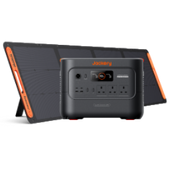
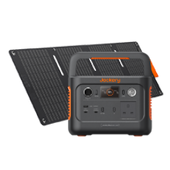
Choosing a Jackery unit—or a larger one like the 2000 Plus for standard kettles—becomes highly economical for saving on electric bills when adopting a time-of-use tariff strategy; by charging the power station overnight using the significantly cheaper off-peak grid electricity and then using that stored energy to power appliances (like low-wattage kettles) during the expensive peak daytime hours, you effectively buy cheap and use costly, making the Jackery an efficient, portable energy arbitrage device that offsets your utility costs.
Since the off-peak window is fixed, use a smart plug or a simple wall timer to automatically start charging your Jackery at the cheaper rate (e.g., 12:30 AM) and stop charging before the rate jumps back up (e.g., 7:30 AM). This prevents you from accidentally charging at the expensive peak rate. Here, we recommend the Jackery Explorer 3000 v2 and 2000 Plus to power the high-wattage appliances effectively.
Jackery Explorer 3000 v2
The Jackery Explorer 3000 v2 is well-equipped to handle a high-wattage appliance like a kettle and includes features that help you save on electric bills, especially if you have a Time-of-Use (TOU) rate plan.

High Power Output for Kettles: It has a 3600W continuous output (and a 7200W surge peak). This is more than enough to power standard electric kettles, which typically draw between 1000W and 2000W. Its massive 3072Wh capacity means it can boil water multiple times. For example, a search result estimates that an 850W electric kettle can run 16 times on a full charge.
Smart Charging for Time-of-Use (TOU) Rates: This is the core feature for saving money on your electricity bill. TOU plans charge different rates depending on the time of day (e.g., cheaper overnight/off-peak, more expensive in the evening/peak). Through the companion smart app, you can customise the charging times for the power station. You would set the unit to charge only during your utility's cheapest, off-peak hours (e.g., midnight to 6 AM).
By charging the Jackery during the cheapest hours and then running your high-wattage kettle (which only takes a few minutes but draws a lot of power) off the Jackery's battery during expensive peak hours, you avoid paying the high peak-hour rate for that energy.
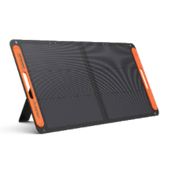
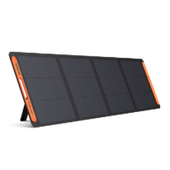
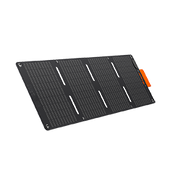
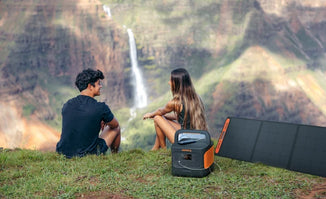
Solar Charging Capability: If paired with solar panels (like Jackery SolarSaga), you can generate the energy for your kettle completely off the grid, maximising your savings. The unit supports up to 1000W of solar input, allowing for a relatively fast recharge in as little as 3.5 hours with optimal conditions. The unit can prioritise stored solar energy to power your appliances, further reducing your reliance on expensive mains electricity.
Long-Lasting and Reliable Battery: To be a worthwhile long-term investment, the battery must last. The battery is rated for 4000+ charge cycles to 70% capacity, giving you years of dependable, daily use for things like your kettle.
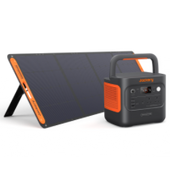
Jackery Explorer 2000 Plus
The Jackery Explorer 2000 Plus provides the power and features needed to execute an effective domestic bill-saving strategy. Here are the key reasons and features why the Jackery Explorer 2000 Plus is the ideal choice for powering a standard kettle to save on your UK electric bills:

The Power Required for the Kettle: Standard UK kettles draw between 2,000W and 3,000W. The Jackery 2000 Plus provides a massive 3,000W of rated power, ensuring it can easily handle any domestic kettle without tripping a breaker. 6000W Surge Peak: This allows the unit to manage the brief, high surge of power that occurs when the kettle element first switches on, ensuring a reliable start every time.
Features Designed for Bill Savings: The 2000 Plus is structured to maximise savings from a Time-of-Use (ToU) tariff (such as Economy 7). The 2042Wh base capacity means you can store enough cheap, off-peak electricity overnight to cover the high-wattage use of a kettle (multiple times) and other high-priority appliances (like a toaster or microwave) during peak-rate hours.
Ultra-Fast AC Charging (1.7 Hours): You can fully charge the large 2kWh battery quickly (about 1.7 hours) during a short UK off-peak window, maximising the low-tariff window and avoiding bleeding into the expensive peak time.
Durable LiFePO4 (LFP) Battery: Rated for 4,000 cycles at 70%+ capacity, the LFP chemistry lasts far longer than older battery chemistries. This durability guarantees that your significant upfront investment is amortised over a decade or more of daily use, making the bill-saving payoff excellent in the long term.
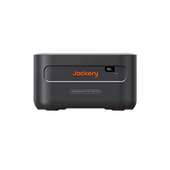
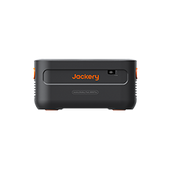
Expandable Capacity (Up to 12kWh): If you decide to expand your arbitrage strategy beyond the kettle—for example, to run a fridge or washing machine during peak hours—you can add up to five extra battery packs to reach 12kWh of storage.
FAQs
The following are the frequently asked questions about the power consumption of kettles:
1. Is 3000W a lot for a kettle?
Yes, 3000W is considered high-end for kettles. It indicates the kettle boils water rapidly, which is convenient if you're in a hurry. However, it consumes more power per minute than low-wattage devices.
2. How many kW to boil 1 litre of water?
One litre of water may be heated by a conventional kitchen kettle with a power rating of around 3,000 watts, which consumes approximately 0.11 kWh of electricity.
3. How much does it cost to run a kettle for 1 hour?
Most consumers will be charged per unit of power so that you may be charged 12p per kilowatt hour. So, if you had anything that required 1kW, it would have to be on for an entire hour to use 1kWh. The fee would be 12 pence. If you have a kettle that needs 2kW, it will use 2kWh in 1 hour.
4. How much electricity does a kettle use per month?
An electric kettle's monthly power consumption depends on its wattage and frequency of use, but a typical kettle requires around 0.1 to 0.15 kWh per litre of water boiled. For example, if you use your kettle once a day to boil one litre of water and it consumes 0.1 kWh per litre, your monthly usage would be around 3 kWh (0.1 kWh x 1 litre x 30 days), which is a low cost on your monthly power bill.
Final Thoughts
Electric kettles are convenient yet energy-intensive gadgets. By understanding how wattage, use, and efficiency impact power consumption, you can make better decisions that help both your pocketbook and the environment. Choosing energy-efficient models, boiling only what you need, and properly maintaining your kettle will significantly reduce power use.
Furthermore, incorporating the Jackery Portable Power Station offers a novel way to enjoy the convenience of boiling water while reducing carbon emissions. Whether at home or off-grid, properly regulating your kettle's electricity use helps create a more sustainable, cost-effective lifestyle.


