

















![[Over £1200 Tier Gift] Bluetooth Speaker with Phone Stand - shipped Separately](http://uk.jackery.com/cdn/shop/files/Portable_Bluetooth_Speaker_with_Phone_Stand_2.png?v=1781595581&width=170)













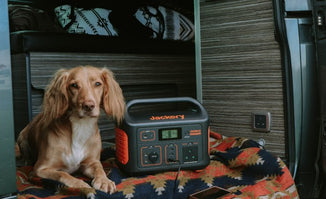


The Jackery Explorer 240 v2 marks the rebirth of a legend. Originally released in 2018, the "classic" Explorer 240 became the gold standard for portable, entry-level power stations worldwide. In late 2024, Jackery officially launched the v2 in the UK, transforming it from a simple battery bank into a high-speed, long-life power hub.
No matter you are a solo camper heading to the Peak District, a digital nomad needing a "desk in the woods," or simply looking for a reliable emergency backup for your Wi-Fi router, the 240 v2 is designed to be the ultimate "backpack" power station.
What Is The Jackery Explorer 240?
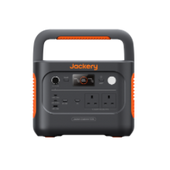
The Jackery Explorer 240 is an ultra-portable, entry-level solar generator that serves as the foundation of Jackery’s power lineup. Originally launched in 2018 as a lithium-ion classic and recently updated in late 2024 to the Explorer 240 v2, it is designed to be the "ultimate backpack power station" for solo adventurers, weekend campers, and digital nomads who need a lightweight energy source for small electronics.
Weighing just 7.94 Ibs, this compact unit provides a 256Wh capacity (on the v2 model) and a 300W AC output, making it ideal for charging laptops, smartphones, and cameras, or running small 12V appliances like camping fans and LED lights.
While the original was a beloved workhorse for years, the modern v2 version has been completely overhauled with long-lasting LiFePO4 battery chemistry (3,000+ cycles), 1-hour fast charging, and integrated smart app control, ensuring it remains the gold standard for portable, off-grid power in the UK.
What Is The Jackery Explorer 240 v2?
The Jackery Explorer 240 v2 is the 2024/2025 evolution of Jackery’s most famous entry-level power station. While the original Explorer 240 was a global best-seller, the v2 has been completely re-engineered with modern battery chemistry and faster charging standards, making it the new benchmark for portable, "grab-and-go" power in the UK.

Next-Generation Battery Technology (LiFePO4)
The most critical change is the shift from standard Lithium-ion (NMC) to Lithium Iron Phosphate (LiFePO4) cells. While the original 240 was rated for only 500 charge cycles, the v2 is rated for 3,000+ full cycles before its capacity even drops to 80%. This means if you used it every single day, it would take over 8 years to see any significant wear.
It features an ultra-low self-discharge rate of approximately 1% per month, making it the perfect "emergency" power source for UK homes prone to winter power cuts. LiFePO4 chemistry is chemically more stable and significantly more resistant to overheating, providing peace of mind when charging inside a van or tent.
50% More Power Output
Jackery has upgraded the internal inverter to handle more demanding electronics. The original was capped at 200W, which struggled with some high-performance laptops. The v2 comfortably handles 300W, allowing it to run small electric blankets, studio lights, or even a small Dremel tool.
600W surge peak: This allows the unit to handle the initial "spike" of energy required when starting up small motorized appliances, such as a 12V travel compressor or air pump.
Pure Sine Wave inverter: This is essential for UK users with sensitive tech like MacBooks or medical CPAP machines, as it provides the same smooth power quality found in a UK wall socket.
"Flash Charge" & USB-C Versatility
One of the main frustrations with the original 240 was its slow 6-hour recharge time. The v2 solves this entirely. Through the Jackery App, you can activate a high-speed AC charge mode that takes in just 60 minutes. A standard full charge from a UK wall outlet takes roughly 2 hours.
100W PD USB-C (Input/Output): This is a game-changer. You can now fast-charge your laptop directly from the Jackery without needing its bulky 3-pin power brick. Even better, you can recharge the Jackery itself through this same USB-C port using a standard high-speed laptop charger.
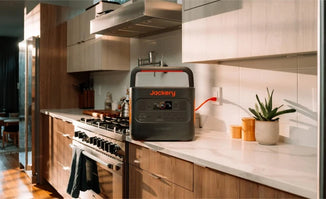
The unit features 5 total outputs: a standard UK 3-pin AC socket, a 100W USB-C (Bi-directional), a 15W USB-C, a 15W USB-A, and a 12V DC car port.
Intelligent Control & UPS Function
The v2 is "smarter" than almost any other unit in its weight class. Using Wi-Fi or Bluetooth, the Jackery App allows you to monitor exactly how much power is going in and out, set the screen timeout, and even toggle the ports remotely.
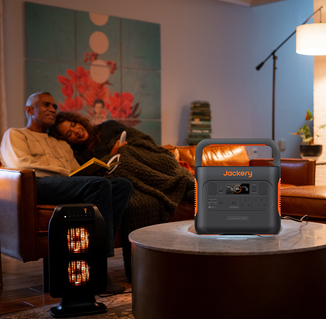
It can act as an Uninterruptible Power Supply (UPS). You can leave it plugged into the wall and your Wi-Fi router plugged into the Jackery; if the UK grid fails, the Jackery takes over so fast that your internet won't even flicker.
At maximum load, it produces only 42dB of noise—roughly the same as a quiet library—making it ideal for use in a bedroom or a quiet campsite.
Refined Portable Design
Jackery has moved away from the bulky fixed handle of the original. The handle now folds completely flat, which allows you to stack other gear on top of the unit in your car or storage cupboard. Despite the switch to the heavier LiFePO4 chemistry, Jackery managed to keep the weight at a manageable 7.94 lbs.
What Can a Jackery Explorer 240 v2 Run?
The Jackery Explorer 240 v2 is an ultra-portable power station designed for lightweight travel and essential backup. With a 256Wh capacity and a boosted 300W AC output (600W surge), it punches well above its 7.94 Ibs weight. Here are four common UK usage scenarios, including specific appliance wattages and estimated runtimes using the formula:
Runtime = Explorer Capacity*0.85 / Appliance Wattage
In the event that you are employing your Jackery Solar Generator to maintain the operation of a refrigerator during a power disruption, the Running Time Simulator/Calculator, which is accessible on the product page, can be employed to effortlessly determine the working hours. You can determine the estimated runtime by inputting the wattage of the refrigerator into the Running Time Simulator on theproduct page.

The "Peak District" Solo Camper
Ideal for a solo weekend hike or car-camping trip where the focus is on communication, navigation, and capturing memories.
|
Appliance |
Wattage |
Estimated Runtime / Charges |
|
Smartphone (iPhone/Android) |
12W |
18 – 20 Full Charges |
|
Mirrorless Camera Battery |
15W |
12 – 14 Full Charges |
|
LED Camping Lantern |
5W |
40 – 45 Hours |
|
GPS / Smartwatch |
3W |
60+ Full Charges |
Remote "Van-Office" Worker
For digital nomads working from a laptop in a scenic spot, the 240 v2 acts as a bridge to extend your workday by several hours.
|
Appliance |
Wattage |
Estimated Runtime / Charges |
|
Laptop (via 100W USB-C) |
60W |
3 – 4 Full Charges |
|
Tablet (iPad/Surface) |
30W |
7 – 8 Full Charges |
|
Portable Wi-Fi Router |
10W |
20 – 22 Hours |
|
USB Desk Fan |
5W |
40 – 45 Hours |
Outdoor Leisure & Hobbies
Perfect for short social events like a beach BBQ or a garden movie night where you need to power non-essential "fun" gear.
|
Appliance |
Wattage |
Estimated Runtime / Charges |
|
Portable Movie Projector |
60W – 100W |
2 – 3.5 Hours (one full movie) |
|
Bluetooth Party Speaker |
20W – 40W |
5 – 10 Hours |
|
Electric SUP Pump |
120W |
~1.5 Hours (inflates 10-15 boards) |
|
Drone Battery (DJI Air/Mini) |
40W |
5 – 6 Full Charges |
Emergency Medical & Home Backup
The v2 features a <20ms UPS (Uninterruptible Power Supply) mode, making it a reliable backup for critical low-wattage devices during a UK power cut.
|
Appliance |
Wattage |
Estimated Runtime / Charges |
|
CPAP Machine (No heat/hum) |
30W – 40W |
5 – 7 Hours (approx. one night) |
|
Openreach Broadband Router |
10W |
20 – 22 Hours |
|
Rechargeable Radio |
10W |
20 – 22 Hours |
|
Electric Blanket (Single/Low) |
60W |
3 – 3.5 Hours (good for pre-warming) |
The v2 recharges from a UK wall socket in just 2 hours (or 1 hour in Emergency Mode via the App). This is a massive improvement over the original 240, which took over 5.5 hours. If you are on the move, you can also use a SolarSaga 100W panel to fully recharge it in about 3.3 hours of direct UK sun.
Can Jackery Explorer 240 v2 Power a Heated Blanket?
Yes, the Jackery Explorer 240 v2 can power a heated blanket, but it is best suited for "pre-heating" or short-term use rather than running one all night. Because heating elements are energy-intensive, the limited 256Wh capacity of the 240 v2 will deplete relatively quickly.
The runtime depends entirely on the wattage of your blanket and its heat setting. We use a real-world efficiency factor of 0.8 to account for power lost during the conversion from DC to AC.
|
Blanket Type |
Average Wattage |
Estimated Runtime |
|
12V Travel Throw (DC) |
40W – 50W |
4 – 5 Hours |
|
Standard Single (Low setting) |
60W |
~3.5 Hours |
|
Standard Single (High setting) |
100W |
~2 Hours |
|
Luxury Double/King (High) |
150W+ |
~1.3 Hours |
nstead of leaving the blanket on, use the Jackery to heat your bed for 15-20 minutes before you get in. Once you are under the covers, your body heat and the residual warmth of the blanket should keep you comfortable.
Can Jackery Explorer 240 v2 Power a Coffee Maker?
In short: No, the Jackery Explorer 240 v2 cannot power a standard household coffee maker. While the v2 model is significantly more powerful than the original 240, it is still an entry-level unit designed for electronics, not high-heat appliances. In the UK, most coffee machines draw between 1,200W and 1,700W to heat water quickly, which far exceeds the 240 v2's limits.
How to Determine Whether a Jackery Portable Power Station Can Power an Appliance or Not?
To determine if a Jackery (or any portable power station) can handle an appliance, you need to compare the appliance's Wattage against the Jackery's Output and Capacity. Think of it this way: Output is the "speed" of power (can it run at all?), and Capacity is the "fuel tank" (how long will it last?).
Step 1: Check the Appliance Wattage (W)
Look for a sticker or label on the bottom or back of your appliance. It will list a number followed by a "W" (e.g., 60W, 1500W)
Step 2: Compare to Jackery "Continuous Output"
Check the "Rated Power" or "Continuous Output" of your Jackery model. The appliance wattage must be lower than the Jackery's continuous output. Appliances with motors (fridges, pumps, power tools) need a brief "burst" to start. This is usually 2x the running wattage. Jackery units have a "Peak Surge" rating specifically for this split-second spike.
Step 3: Calculate the Runtime
Once you know it can run, use this industry-standard formula to see for how long:
Runtime = Explorer Capacity*0.85 / Appliance Wattage
Note*: We multiply by 0.85 because about 15% of energy is naturally lost as heat during the conversion from DC to AC power.

How to Charge The Jackery Explorer 240 v2?
The Jackery Explorer 240 v2 features a modernised charging system that is significantly faster and more versatile than the original model. It utilizes ChargeShield 2.0 technology, allowing for high-speed wall charging and native USB-C input.
Wall Charging (Mains AC)
The most common method uses the included AC power cable (no bulky adapter "brick" required for the v2).
Time (0-100%): Approx. 2 Hours.
Emergency Mode: Using the Jackery App, you can activate an "Emergency Charge" mode that slashes the time to just 1 Hour.
UPS Mode: You can leave it plugged into the wall while your devices are connected. If the power fails, it switches to battery in under 20ms, keeping gadgets like Wi-Fi routers running.
Solar Charging
Unlike the classic 240, the v2 uses its 100W USB-C port as the primary solar input.
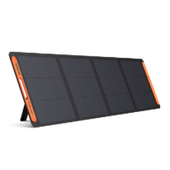
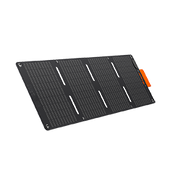
Best Match: Jackery SolarSaga 100W (or 80W).
Time (Full Sun): Approx. 3.3 Hours (with a 100W panel).
Car Charging (12V)
Perfect for long road trips through the Highlands or down to Cornwall.
Time (0-100%): Approx. 5 Hours.
Connection: Use the included 12V car charger cable. Always start your engine before plugging in the Jackery to prevent draining your car's starter battery.
How to Use The Jackery Explorer 240 v2?
Operating the Jackery Explorer 240 v2 in the UK is straightforward, but it features several modern "smart" upgrades over the original model—such as App control and an Emergency Charging mode—that require a specific setup.

Getting Started: Powering On
Before using the unit for the first time, it is recommended to charge it to 100%.
Main Power: Press and hold the "Main Power Button" (near the LCD screen) until the display illuminates.
LCD Display: This shows the battery percentage, current Input (charging) wattage, and Output (usage) wattage.
Always-On Display: By default, the screen turns off after 2 minutes to save power. To keep it on, double-click the Main Power Button after the screen is already lit.
Activating the Ports (Output)
Unlike a simple power bank, you must manually enable the different power sections:
AC Output (3-Pin Socket): Press the "AC Button" to activate the UK 3-pin socket. A light will appear to show it is live.
DC & USB Output: Press the "DC/USB Button" to power the USB-C, USB-A, and 12V car ports.
Turn these buttons OFF when not in use. If the AC or DC indicators are left on without a device plugged in, they will slowly drain the battery (though the v2 has an "Energy Saving Mode" that eventually shuts them down if the draw is too low).
How to Charge (3 UK Methods)
The 240 v2 is much faster than its predecessor, supporting three main ways to refuel:
Wall Charging (Mains): Plug the provided AC cable directly into a UK wall socket. It takes roughly 2 hours for a full charge.
Solar Charging: Connect a SolarSaga panel (up to 100W) to the DC input. In peak UK sun, it takes about 3.3 hours with a 100W panel.
Car Charging: Use the 12V car charger lead while the engine is running. This is the slowest method, taking roughly 5 hours.
Portable Power Stations vs. Traditional Generators
When comparing portable power stations (PPS) to traditional fuel-powered generators, the transition from petrol to battery—specifically with brands like Jackery—marks a shift from "industrial utility" to "refined lifestyle."
While fuel generators have historically won on raw power, modern portable power stations are increasingly being chosen as the superior option for UK camping, van life, and home backup.

Silence vs. "The Industrial Hum"
In the UK, noise is a major factor, especially at campsites or in residential neighborhoods. Typically, the traditional generators operate at 70-90 dB, which is comparable to a loud lawnmower or heavy traffic. This often leads to restrictions on "generator hours" at UK campsites.
Portable power stations are virtually silent. Even when the internal cooling fans kick in, they stay below 30-45 dB (quieter than a normal conversation). You can sleep right next to one in a tent without a sound.
Safety and Indoor Use
This is the most critical functional advantage. The traditional generators produce Carbon Monoxide (CO) and toxic fumes. They must be kept at least 20 feet away from any structure, meaning you have to run long, trailing cables through open windows or doors to get power inside your house or van.
Portable power stations produce zero emissions. They are perfectly safe to use inside your living room during a power cut, inside your campervan, or even inside a small 2-man tent.
Zero Maintenance vs. Ongoing "Mechanical Chores"
Traditional generators are combustion engines. They require oil changes, spark plug replacements, air filter cleanings, and careful fuel storage (petrol can "go off" if left too long). If you don't use them for six months, they often refuse to start.
Portable power stations are no moving parts to service. You simply plug it in to charge and it’s ready. Modern Jackery units (like the 1000 Plus) use LiFePO4 batteries, which are rated for 4,000+ cycles—meaning you can use it every day for 10 years without any mechanical maintenance.
Cost Efficiency: "Free Power" from the Sun
While a fuel generator might be cheaper to buy upfront, the running costs are significantly higher. Every watt of power costs you money in petrol or diesel, which is notoriously expensive in the UK. Once you own the unit and a SolarSaga panel, your energy is 100% free. You can harvest the sun during the day to power your lights and fridge at night, effectively paying off the unit over time through fuel savings.
Jackery Explorer 240 v2 vs. Explorer 240
The Jackery Explorer 240 v2 represents a massive leap in technology over the original "Classic" Explorer 240. While the physical size remains small, nearly every internal component—from the battery cells to the charging logic—has been upgraded for the 2024/2025 UK market.
The most critical change is the shift to LiFePO4 (LFP) battery chemistry, which extends the unit’s lifespan from a few years to over a decade. Additionally, the v2 increases the power output to 300W, making it far more capable of handling modern laptops and small travel appliances.
Longevity: The v2 uses LiFePO4 technology, which is chemically much more stable. In UK terms, this means you can use the v2 every single day for 10 years and still have 80% of your original battery capacity. The original model would likely reach that point in less than 2 years of daily use.
Charging Speed: The original Jackery Explorer 240 was notorious for its slow recharge (over 6 hours). The v2 can be "Flash Charged" via the Jackery App, in just 1 hour, which is vital for quick turnarounds between camping trips.
Connectivity: The addition of a 100W USB-C Power Delivery port on the v2 is a game-changer. It allows you to fast-charge high-end laptops (like a MacBook Pro) directly from the unit without using a bulky 3-pin UK plug adapter.
Smart Control: The v2 connects to your smartphone, allowing you to check the battery level from your tent or van without having to get up and look at the physical screen—a feature entirely missing from the older model.
|
Feature |
Explorer 240 (Classic) |
Explorer 240 v2 (New) |
|
Battery Capacity |
240Wh |
256Wh |
|
AC Output (Power) |
200W Continuous (400W Surge) |
300W Continuous (600W Surge) |
|
Battery Chemistry |
Lithium-ion (NMC) |
LiFePO4 (LFP) |
|
Lifespan (Cycles) |
500 Cycles to 80% |
3,000+ Cycles to 80% |
|
AC Charge Time |
~6.5 Hours |
~1 to 2 Hours |
|
Weight |
3.0 kg |
7.94 Ibs (3.6 kg) |
|
Handle Design |
Fixed (Hard plastic) |
Foldable (Space-saving) |
|
USB-C Port |
No |
2 Ports (1x 100W PD, 1x 15W) |
|
App Support |
No |
Yes (Wi-Fi & Bluetooth) |
|
UPS Function |
No |
Yes (20ms switchover) |
FAQs
The following are frequently asked questions about the Jackery Explorer 240 in the UK.
1. How long does Jackery Explorer 240 last?
When discussing how long the Jackery Explorer 240 and 240 v2 last, we have to look at two different timelines: daily runtime (how many hours it powers your gear today) and overall lifespan (how many years the unit will function).
The Classic 240: After about 500 charges, the battery will only hold 80% of its original charge. For an occasional camper, this lasts years, but for daily users, it degrades relatively quickly.
The 240 v2: Thanks to LiFePO4 technology, you can charge this unit every single day for nearly 10 years before the battery starts to noticeably "shrink." It is by far the better long-term investment.
2. Can the Jackery 240 power a fridge?
The answer is yes for a 12V portable fridge, but no for a standard household fridge. Because the Explorer 240 series has a smaller battery capacity (~240Wh to 256Wh), it is designed for short-term cooling rather than long-term food storage.
Explorer 240 (Classic): Runs a small 12V fridge for 15–19 hours.
Explorer 240 v2: Runs a small 12V fridge for 18–24 hours.
3. How long will a Jackery 240 run a fan?
How long your fan will run depends on the type of fan you are using (AC vs. DC) and its wattage. Because the Jackery Explorer 240 v2 has a slightly larger battery (256Wh) compared to the Classic 240 (240Wh), it will provide a small boost in runtime.
4. Can I use the Jackery 240 indoors?
Yes, you can absolutely use the Jackery Explorer 240 and 240 v2 indoors. In fact, they are significantly safer for indoor use than traditional petrol or diesel generators. Because they are battery-powered, they produce zero fumes, zero emissions, and no carbon monoxide, making them perfectly safe for a UK flat, house, or enclosed campervan.
Final Thoughts
The Jackery Explorer 240 v2 is far more than just a minor update; it is a comprehensive overhaul that addresses every limitation of the original model. For the UK consumer, the choice between the "Classic" Jackery Explorer 240 and the v2 is ultimately a choice between budget-driven simplicity and future-proof reliability.
The transition to LiFePO4 battery chemistry is the most significant factor, offering a decade of service life compared to the 2-3 years typically expected from the original's NMC cells. When you combine this with the 300W power boost and the inclusion of 100W USB-C fast charging, the v2 establishes itself as the clear winner for anyone needing to power modern laptops or small travel appliances.


