
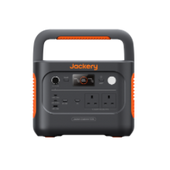

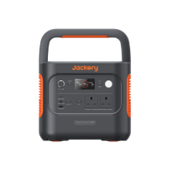

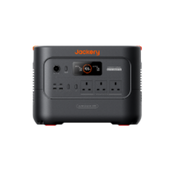

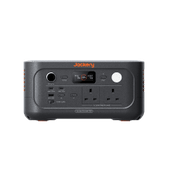
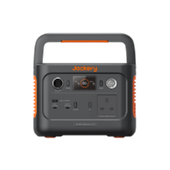


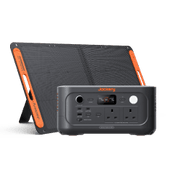
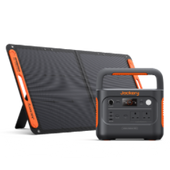
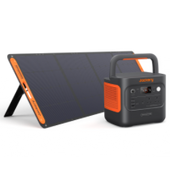
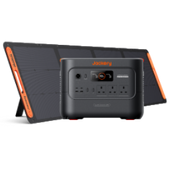
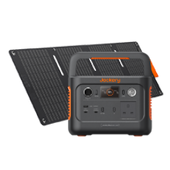


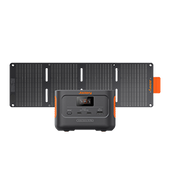



















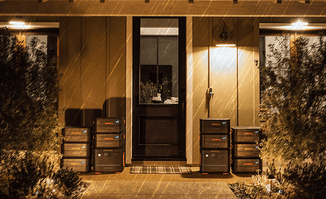
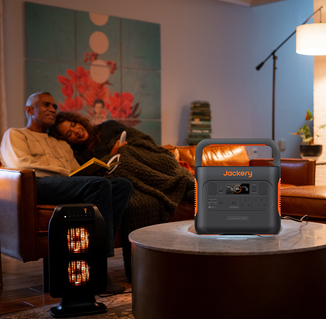




If you're a digital nomad working from a tent, a weekend camper wanting to keep the lights on, or someone prepping for the occasional power outage, having reliable energy on the move is no longer a luxury—it's a necessity. Enter the Jackery Portable Power Station, the modern, eco-friendly alternative to noisy, gas-guzzling generators.
Think of a Jackery not just as a "power bank," but as a portable solar generator. Unlike the small pocket chargers used for phones, a Jackery is a high-capacity lithium-ion or LiFePO4 (Lithium Iron Phosphate) battery system housed in a rugged, portable case.
|
Key Takeaways: |
|
What Is a Jackery Power Bank?
At its simplest, a power bank is a portable energy storage device. It consists of a specialised battery (usually Lithium-ion or LiFePO4) housed in a protective casing with circuitry that controls the flow of electricity. It acts as a "bridge" between a wall outlet and your mobile electronics, allowing you to recharge devices when you're away from the grid.
A Jackery power bank (formally known as a Portable Power Station) is a high-capacity, rechargeable battery system designed to provide mobile electricity for everything from smartphones to household appliances.
While a standard pocket power bank only charges USB devices, a Jackery is essentially a portable wall outlet. It combines a large battery, a power inverter, and multiple ports into one rugged, lunchbox-sized unit.
When shopping for a power bank, you'll see these abbreviations constantly. Here is what they actually mean for your gear:
mAh (Milliampere-hour)
This measures the charge capacity of a battery. It tells you how much electric charge a battery can deliver at a specific voltage over one hour. The mAh is often misleading because it doesn't account for voltage. For example, a "10,000mAh" phone power bank and a "10,000mAh" laptop power bank are not the same because they operate at different voltages.
Wh (Watt-hour)
This is the most accurate measurement of total energy capacity. Calculated as Wh = (mAh x V) / 1000. Airlines use Wh to determine if you can bring a battery on a plane. The Jackery Explorer 100 Plus is exactly 99Wh, which is the legal limit for most carry-ons.
PD (Power Delivery)
Found on the Explorer 100 Plus and 300D, USB-C PD is a fast-charging protocol. It allows the device to "negotiate" with your laptop or phone to deliver the maximum safe wattage (up to 100W or 140W), charging devices significantly faster than a standard USB port.
LiFePO4 (Lithium Iron Phosphate)
This refers to the battery chemistry. Jackery's newer models (like the Explorer 100 Plus or 300D) use LiFePO4 because it is safer, more heat-resistant, and lasts for 3,000+ charge cycles before losing significant capacity, compared to the ~500 cycles of traditional Lithium-ion.
Cycle Life
One "cycle" is a full discharge and a full recharge. If a power bank has a 3,000-cycle life, it means you can use it every single day for over 8 years before the battery health drops to about 80%.
Low-to-High Capacity of Power Banks
A power bank is a portable, rechargeable battery designed to store electrical energy so it can be used later to charge electronic devices. Think of it as a "mobile wall outlet" that allows you to power up your gear when you are away from a traditional electricity source. Power bank capacities are generally grouped by their portability and the specific devices they are meant to support.

It is important to note that no power bank is 100% efficient. Due to voltage conversion (moving power from the battery to the USB port) and heat loss, you usually only get about 60% to 70% of the rated mAh into your device.
Low Capacity: Ultra-Portable (2,500 – 5,000 mAh)
These are often called "emergency" power banks. They are lipstick-sized or slim enough to fit in a pocket. One partial to full charge for a standard smartphone.
Best for: A night out or as a backup when your phone hits 5%.
Weight: Extremely light (under 150g).
Medium Capacity: The Daily Driver (10,000 – 15,000 mAh)
This is the most popular consumer size. Most modern smartphones have batteries around 4,000–5,000 mAh, so these banks offer a bit of "overhead." 1.5 to 3 full phone charges.
Best for: Long days of travel, hiking, or commuting. A standard pocket power bank.
High Capacity: The Power User (20,000 – 30,000 mAh)
At this level, you start seeing higher Wattage (W) output, meaning they can charge tablets and even some small laptops. It can power 4 to 6 phone charges or 1 full laptop charge. 27,000 mAh (approx. 100Wh) is the maximum allowed in a carry-on bag without special airline permission.
The Jackery Explorer 100 Plus ($~31,000$ mAh / 99Wh) sits right at the top of this category.
Ultra-High Capacity: Portable Power Stations (40,000 – 80,000+ mAh)
Beyond 30,000 mAh, devices are usually too heavy for a pocket and are classified as "Power Stations." They often include AC outlets (wall plugs). Multiple laptop charges, CPAP machines, small fans, or camera setups. The Jackery Explorer 300D (~78,000 mAh / 288Wh) falls into this professional-grade category.
|
Capacity Tier |
mAh Range |
Best for |
|
Low |
2,500 – 5,000 mAh |
Emergency phone boost |
|
Medium |
10,000 – 15,000 mAh |
Daily commuting |
|
High |
20,000 – 30,000 mAh |
Airline travel |
|
Ultra-High |
40,000 – 80,000+ mAh |
Camping |
How Does a Jackery Power Bank Work?
The working principle of a power bank centers on the controlled transfer of electrical energy through a series of conversion stages. It begins with the charging phase, where the device is connected to an external power source like a wall outlet.
The internal charging circuit takes the incoming voltage—typically 5V, 9V, or 20V depending on the charging standard—and regulates it to match the specific requirements of the internal battery cells. This circuit ensures the battery is charged safely by monitoring temperature and preventing overcharging, which could otherwise lead to hardware failure.
The energy is stored within the power bank in chemical form, most commonly using Lithium-ion or Lithium Iron Phosphate (LiFePO4) cells. These cells act as a reservoir, holding the potential energy until a device is connected. Because the internal voltage of these battery cells (usually around 3.7V) often differs from the voltage required by the device you want to charge, the power bank cannot simply dump the raw energy out.

To understand how a Jackery power bank works, it helps to look at the three main systems inside the box:
The Battery (The Storage): Most modern Jackery units (like the "Plus" series) use LiFePO4 (Lithium Iron Phosphate) batteries. These are safer and last much longer—up to 10 years of use—compared to the older Lithium-ion (NCM) batteries found in cheaper electronics.
The Inverter (The Converter): Batteries store "DC" power, but your home appliances need "AC" power. Jackery uses a Pure Sine Wave Inverter, which produces "clean" electricity identical to what comes out of your home wall. This is crucial for sensitive electronics like laptops or CPAP machines, as "modified" sine waves can damage them.
The BMS (The Brain): The Battery Management System is a computer that constantly monitors the unit. It prevents the battery from overheating, short-circuiting, or overcharging, making it safe to use inside a tent or even a bedroom.
At its simplest, a Jackery Portable Power Station works by capturing and storing electricity in a high-density battery (usually Lithium Iron Phosphate) for later use. Think of it as a bridge between an energy source and your gear. You "fill" the station by plugging it into a wall outlet, a car's 12V socket, or Jackery's SolarSaga panels.
Once charged, the unit's internal Pure Sine Wave Inverter takes the stored Direct Current (DC) and converts it into the stable Alternating Current (AC) used by household appliances. This ensures that the energy flowing to your laptop or camera is as clean and safe as the power from your home's wall sockets.
What to Look for When Choosing a Power Bank?
When choosing a power bank in 2026, the market has evolved beyond simple "backup batteries" to high-speed energy hubs. To pick the right one, you need to balance three main pillars: capacity, speed, and portability.
Capacity
Capacity is measured in mAh (milliampere-hours) or Wh (watt-hours).
5,000 mAh: Best for emergencies. It fits in a pocket and gives a smartphone roughly one full charge.
10,000 mAh: The "Daily Driver." It strikes the best balance between weight and power, offering 1.5–2 full phone charges.
20,000 mAh+: The "Power User." Necessary for tablets, laptops, or multi-day trips.
If you plan to fly, ensure the capacity is below 100Wh (roughly 27,000 mAh). Anything higher usually requires airline approval and cannot be in checked luggage.
Output & Speed
A high-capacity battery is useless if it takes 8 hours to charge your phone.
Power Delivery (PD): This is the modern gold standard. A USB-C PD port can charge everything from iPhones to MacBooks. Aim for at least 20W for phones and 65W–100W if you intend to charge a laptop.
Number of Ports: If you carry a watch, earbuds, and a phone, look for a device with at least three ports. Note that charging multiple devices at once usually splits the total wattage, slowing down the speed for each.
Portability vs. Build Quality
Density matters. Generally, Lithium-polymer (Li-Po) banks are slimmer, while the newer LiFePO4 banks (often found in Jackery models) are slightly heavier but last 6x longer (up to 3,000+ charge cycles). For camping or travel, look for an IP rating (e.g., IP65) which indicates water and dust resistance.
In 2026, many premium banks feature digital screens showing the exact percentage and real-time "Time to Empty" or "Time to Full" countdowns.
Safety First
Never buy unbranded or generic power banks from unreliable sources. Ensure the device has:
Multi-Protection Systems: Guards against overcharging, short-circuits, and overheating.
Certifications: Look for UL, CE, FCC, or RoHS markings on the casing.
A useful feature that allows you to charge the power bank and your phone simultaneously from a single wall outlet.
Best Recommends: Jackery Power Banks
A Jackery Power Bank, which is previously referred to as a Portable Power Station, is a rechargeable battery system with a high capacity that is intended to supply mobile electricity to a variety of devices, including smartphones and domestic appliances.
A Jackery is essentially a portable electrical outlet, whereas a standard pocket power bank only charges USB devices. A power inverter, a large battery, and multiple connections are integrated into a single, rugged, lunchbox-sized unit.
Jackery Explorer 100 Plus
In the UK, the Jackery Explorer 100 Plus has redefined the traditional power bank by bridging the gap between a pocket charger and a professional power station. While most high-capacity power banks are just "bricks," the Explorer 100 Plus is marketed as a "Miniature Power Station" designed for the UK's outdoor enthusiasts, digital nomads, and frequent flyers.
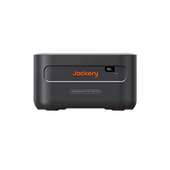
The Jackery Explorer 100 Plus is the smallest member of the Jackery "Plus" family. It is distinct from standard power banks due to its rugged, "taco-sized" build and its industrial-grade internal components.

Travel-Ready & Airline Approved
The standout feature for UK travelers is its 99.2Wh (31,000mAh) capacity. UK airlines (like British Airways, EasyJet, and Ryanair) strictly limit lithium batteries in carry-on luggage to 100Wh. The Explorer 100 Plus is specifically engineered to sit just under this limit, making it the most powerful battery you can legally take on a flight without prior airline approval.
Professional Performance
Unlike cheap alternatives, the 100 Plus uses LiFePO4 (Lithium Iron Phosphate) battery chemistry. It is rated for over 2,000 charge cycles before it drops to 80% health. If you used it every single day, it would last over 5 years.
It features dual 100W USB-C PD ports. This is enough to fast-charge a MacBook Pro, a drone, or a high-end camera at full speed—something standard phone power banks simply cannot do.
Solar Ready
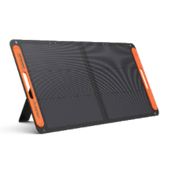
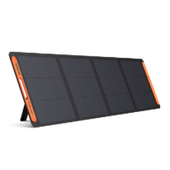
Explorer 100 Plus can be charged by the SolarSaga 100W and 40W Mini. Advanced IBC (Interdigitated Back Contact) technology with electrical contacts on the back of the solar panels ensures maximum light absorption and offers a refined and elegant look. With a high solar conversion efficiency up to 25%, they are perfectly suited for outdoor activities and for emergency power outages.
Outdoor Durability
Explorer 100 Plus is made of UL 94V-0 Rated flame-retardant material, with Class 9 impact resistance, in compliance with UL safety standards, and is protected against drops (3 drops, at 0.9m). This product is also UL Certified and equipped with high-temperature protection at 60°C. Additionally, it features intelligent dual chip protection - accompanied by 5 temperature probes for precise temperature control.
|
Features of Jackery Explorer 100 Plus |
|
|
Capacity |
99.2Wh |
|
Battery Cell |
LiFePO4 |
|
Life Cycle |
2000 Cycles to 80% + capacity |
|
Weight |
2.13 lbs (0.965 kg) |
|
Dimension |
4.96 x 3.41 x 3.43 in (12.6 x 8.65 x 8.7 cm) |
|
Output Ports |
USB-A Output: 1 Port, 18W Max, 5V⎓3A, 9V⎓2A, 12V⎓1.5A USB-C Output: 2 Ports, 100W Max, 4.5V⎓5A, 5V⎓3A, 5V⎓4.5A, 9V⎓3A, 12V⎓3A, 15V⎓3A, 20V⎓5A |
|
Recharging Methods |
USB-C PD: 4 Hrs SolarSaga 100W: 1 Pc: 2 Hrs Car Charging Time: 2.5 Hrs |
Jackery Explorer 300D
In the UK, the Jackery Explorer 300D is a specialized, "direct-current" (DC) version of the popular Explorer 300 series. Released recently (late 2025/early 2026), it is designed specifically for modern tech users who don't need a bulky AC wall-style socket and instead want maximum efficiency for USB-C and 12V devices.

The "Pure Quiet" Specialist
The most striking feature of the Explorer 300D for the UK market is its fanless design. Because it removes the traditional AC inverter (which converts battery power to wall-plug power), it generates almost zero heat and zero noise.
Quiet Campsites: Total silence in your tent or campervan.
Audio Professionals: Charging gear during field recordings without background hum.
Nightstands: Powering phones, watches, and tablets bedside without a fan kicking in.
288Wh Capacity, 300W Output
Delivering 288Wh of energy — equivalent to up to 9 power banks — with up to 300W max output, this lightweight 2.5 kg power station features 3× USB-C, 1× USB-A and a car socket, keeping laptops, drones and multiple devices powered at the same time for travel, camping and everyday backup.
Next-Gen Speed: PD 3.1 & 140W
While most power banks struggle to charge a laptop quickly, the 300D is one of the few portable units in the UK to support the PD 3.1 protocol. It features two USB-C ports capable of delivering 140W each. This can charge a high-end MacBook Pro or a gaming laptop at its maximum speed—just like a wall outlet.
By staying in DC mode, it avoids the "energy tax" of AC conversion. You get nearly 90% energy efficiency, meaning your devices stay powered significantly longer than they would on a standard 300Wh power station.
The "2-in-1" Innovation
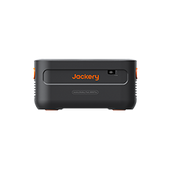
The design of the 300D is radically different from the standard "orange box" Jackery look. It features a vertical, speaker-like aesthetic and an integrated handle. The carrying handle is actually a heavy-duty, braided 140W USB-C cable. It snaps into the unit for transport (supporting up to 10kg) and detaches instantly when you need to charge your laptop.
Adventure Further, Charge Freely
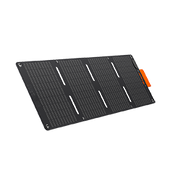
Pair the E300D power bank with the compact 40W foldable solar panel for effortless, smart replenishment wherever you go. Compact, rugged and easy to attach to a backpack or bike, it delivers steady solar energy wherever your adventure leads.
|
Features of Jackery Explorer 300D |
|
|
Capacity |
288Wh (15Ah / 19.2V DC) |
|
Battery Cell |
LiFePO4 |
|
Life Cycle |
4000 cycles ≥ 70% |
|
Weight |
2.5 kg |
|
Dimension |
11.86 x 12.02 x 18.3 cm |
|
Output Ports |
USB-A Output 15W Max, 5V⎓3A USB-C Output: C1: 140W Max, 5V⎓3A, 9V⎓3A, 12V⎓3A, 15V⎓3A, 20V⎓5A, 28V⎓5A C2: 140W Max, 5V⎓3A, 9V⎓3A, 12V⎓3A, 15V⎓3A, 20V⎓5A, 28V⎓5A C3: 65W Max, 5V⎓3A, 9V⎓3A, 12V⎓3A, 15V⎓3A, 20V⎓3.25A Car Port 12V⎓10A max |
|
Recharging Methods |
AC Charging: 2.3 Hrs SolarSaga 100W: 3.5 Hrs Car Charging Time: 4.1 Hrs |
What Can a Jackery Power Bank Power?
A Jackery power bank is designed to be a versatile energy source, but exactly what it can power depends on its Wattage (Output) and Watt-hours (Capacity). Because Jackery uses Pure Sine Wave technology, it can safely run everything from simple lights to sensitive medical equipment without the risk of electrical damage. Below is a breakdown of what you can power based on the two recommended models.
What Can a Jackery Explorer 100 Plus Can Power?
The Jackery Explorer 100 Plus is more than just a power bank; it is a miniature power station designed for high-performance devices. With a capacity of 99.2Wh (just under the 100Wh airline limit), it is specifically engineered to handle power-hungry gear that standard pocket chargers cannot support.

Business & Long-Haul Travel
This is the ultimate "flight companion." Because it is airline-approved, you can carry it in your hand luggage to power a mobile office from London to New York without relying on faulty seat-back USB ports.
Outdoor Photography & Content Creation
For creators in the UK highlands or coastal areas, the Explorer 100 Plus acts as a field-charging hub. Its rugged, impact-resistant shell (Class 9 rated) and LiFePO4 battery make it much safer for outdoor use than standard lithium-ion banks.
Off-Grid Hiking & Light Camping
When paired with the SolarSaga 40W Mini solar panel, the Explorer 100 Plus becomes an infinite power loop. It is light enough (965g) to hang on a backpack, charging the unit while you walk.
|
Appliance |
Estimated Wattage |
Total Charges / Runtime |
|
iPhone 15/16/17 |
20W |
~6.2 Full Charges |
|
iPad Pro (12.9") |
30W - 35W |
~2.2 Full Charges |
|
MacBook Air (M2/M3) |
30W - 65W |
~1 - 1.5 Full Charges |
|
Nintendo Switch |
7W - 15W |
~4.5 - 6 Hours |
|
Drone Battery (DJI Mini) |
25W - 30W |
~2.5 Full Charges |
|
LED Camping Light |
5W |
~18 - 20 Hours |
|
Mirrorless Camera |
10W - 15W |
~6 - 8 Full Charges |
What Can a Jackery Explorer 300D Can Power?
The Jackery Explorer 300D is a "DC-optimised" powerhouse. While it lacks a traditional AC wall plug, it is specifically designed for the modern user who relies on high-speed USB-C and 12V DC power. By removing the bulky AC inverter, it remains incredibly lightweight (2.5kg) and completely silent (fanless), making it a favorite for quiet environments.

The "Off-Grid" Starlink Office
The 300D has become the gold-standard companion for the Starlink Mini. Since the Starlink Mini can run directly off DC power, the 300D provides a much more efficient connection than traditional AC power stations, wasting less energy during the conversion process.
|
Appliance |
Estimated Wattage |
Total Charges / Runtime |
|
Starlink Mini |
25W – 40W |
~10 Hours of continuous internet |
|
Laptop (via 140W USB-C) |
60W |
~3.8 Full Charges |
|
Mobile Hotspot / Router |
10W |
~24 Hours |
|
Smartphone |
12W |
~22 to 25 Full Charges |
The Overlander's Silent Campsite
For those who sleep in their vehicles or small tents, the "fanless" design is a game-changer. There is no mechanical humming or clicking throughout the night. It is powerful enough to manage your food cooling and lighting without taking up the space of a full-sized generator.
|
Appliance |
Estimated Wattage |
Total Charges / Runtime |
|
12V Portable Fridge |
30W – 45W |
~9 to 12 Hours (Compressor-dependent) |
|
LED Camping Lights |
2W – 5W |
~50 to 110 Hours |
|
USB Rechargeable Fan |
5W |
~50 Hours |
|
Electric Air Pump |
60W |
~13–15 Full Inflations (Mattress/SUP) |
The Prepared Home & Emergency Kit
Because the 300D features an ultra-low standby drain (it retains 99% of its charge for a full year in storage), it is an excellent "grab-and-go" emergency battery for power outages or medical needs.
|
Appliance |
Estimated Wattage |
Total Charges / Runtime |
|
CPAP Machine (No Heater) |
30W – 40W |
~6 to 8 Hours (One full night) |
|
Tablet / iPad |
30W |
~8 to 9 Full Charges |
|
Rechargeable Flashlight |
10W |
~25+ Full Recharges |
|
Cochlear Battery Charger |
5W |
~50 Hours |
How to Determine Whether a Jackery Portable Power Station Can Power an Appliance or Not?
To determine if a Jackery (or any portable power station) can handle an appliance, you need to compare the appliance's Wattage against the Jackery's Output and Capacity. Think of it this way: Output is the "speed" of power (can it run at all?), and Capacity is the "fuel tank" (how long will it last?).
Step 1: Check the Appliance Wattage (W)
Look for a sticker or label on the bottom or back of your appliance. It will list a number followed by a "W" (e.g., 60W, 1500W)
Step 2: Compare to Jackery "Continuous Output"
Check the "Rated Power" or "Continuous Output" of your Jackery model. The appliance wattage must be lower than the Jackery's continuous output. Appliances with motors (fridges, pumps, power tools) need a brief "burst" to start. This is usually 2x the running wattage. Jackery units have a "Peak Surge" rating specifically for this split-second spike.
Step 3: Calculate the Runtime
Once you know it can run, use this industry-standard formula to see for how long:
Runtime = Explorer Capacity*0.85 / Appliance Wattage
Note*: We multiply by 0.85 because about 15% of energy is naturally lost as heat during the conversion from DC to AC power.

How to Extend My Jackery Power Bank Lifespan?
Extending the lifespan of your Jackery (especially the Explorer 100 Plus and 300D) is all about managing the "health" of its LiFePO4 battery cells. While these models are rated for over 3,000 cycles (lasting roughly 10 years), following these professional maintenance tips can ensure they remain at peak capacity for even longer.
The "20-80 Rule" for Daily Use: Lithium batteries are under the most physical stress when they are completely empty (0%) or completely full (100%). For daily use, try to keep the battery charge between 20% and 80%. This prevents "deep discharge" and reduces the heat generated during the final, high-pressure stage of charging to 100%.
Proper Long-Term Storage: If you aren't planning to use your Jackery for a few months (e.g., storing it for winter emergencies), do not store it at 100% or 0%. Store the unit at approximately 50% to 80% charge. Set a calendar reminder to check the device every 3 months. If it has dropped below 50%, top it back up to 80%. This prevents the battery from falling into a "deep sleep" state from which it might not wake up.
Use "Optimum Charging" via the App: For the Explorer 300D (and other smart models), use the Jackery App to enable "Battery Saving Mode" or "Optimum Charging." This feature allows you to cap the charge at 85% automatically. It's an easy "set it and forget it" way to add years to the battery's life.
FAQs
The following are frequently asked questions about the Jackery power bank in the UK.
1. How many times can Jackery power bank charge my phone?
When calculating how many times a power bank can charge your phone, the answer depends on your phone's battery size. In 2026, most flagship phones (like the iPhone 17 Pro Max or Samsung S26) have batteries between 5,000 mAh and 5,500 mAh. However, power banks are not 100% efficient due to heat loss and voltage conversion. A good rule of thumb is to assume 85% usable energy.
|
Jackery Explorer 100 Plus |
Charging Estimates: Standard Smartphone (5,000 mAh): Approximately 5 to 6 full charges. Small Smartphone (4,000 mAh): Approximately 7 to 8 full charges. Large Tablet (10,000 mAh): Approximately 2.5 to 3 full charges. |
|
Jackery Explorer 300D |
Charging Estimates: Standard Smartphone (5,000 mAh): Approximately 16 to 18 full charges. Small Smartphone (4,000 mAh): Approximately 20 to 22 full charges. Laptop (MacBook Air/Pro): Approximately 3 to 4 full charges. |
2. What is the lifespan of the Jackery?
The lifespan of a Jackery power bank is primarily measured in charge cycles. Because modern Jackery models (like the "Plus", "v2" and "D" series) use LiFePO4 (Lithium Iron Phosphate) battery chemistry, they last significantly longer than traditional power banks.
Jackery Explorer 100 Plus: 2,000 cycles to 80%+ capacity.
Jackery Explorer 300D: 4,000 cycles to 70%+ capacity.
3. Should I get 10000mAh or 20000mAh power bank?
When deciding between a 10,000mAh and a 20,000mAh power bank, the choice boils down to a trade-off between portability and stamina.
The 10,000mAh power bank: "the daily carry". This is the standard for most people. It is usually about the size of a deck of cards and fits comfortably in a pocket or small clutch. The 20,000mAh power bank: "the traveller". This is a "brick" style charger. It's significantly heavier and usually requires a backpack or laptop bag.
4. Can Jackery power bank charge a fridge?
Whether a Jackery can charge a fridge depends entirely on the size of the fridge and the specific model of the power bank. In the world of portable power, "Standard Power Banks" (like the 100 Plus) and "Portable Power Stations" (like the 300D) have very different capabilities.
The Explorer 100 Plus cannot run a refrigerator. The Explorer 300D can run a portable 12V travel fridge (cool box), but it is not designed for a full-sized household refrigerator.
Final Thoughts
While you are navigating a long-haul flight from Heathrow or setting up a basecamp in the Lake District, a Jackery power bank offers a level of reliability that standard chargers simply cannot match. By combining advanced LiFePO4 battery technology with high-speed charging protocols, Jackery has transformed portable power from a simple backup into a professional-grade tool for modern life.


