











![[Over £1200 Tier Gift] Bluetooth Speaker with Phone Stand - shipped Separately](http://uk.jackery.com/cdn/shop/files/Portable_Bluetooth_Speaker_with_Phone_Stand_2.png?v=1781595581&width=170)














When summer temperatures rise, UK residents often choose between air coolers and air conditioners. Each offers distinct advantages, but your decision depends on factors such as humidity, room size, and energy use.
Air coolers are affordable, portable, and energy-efficient, ideal for dry, open spaces. Air conditioners deliver steady cooling in humid environments, making them suitable for most UK homes.
This guide explores how each system works, its operating costs, and the benefits and drawbacks of each, helping you choose the most effective and efficient cooling option for your home.
|
Key Takeaways: |
|
What Is an Air Cooler?
While many people mix air coolers with air conditioners, the two are entirely separate kinds of equipment. Unlike air conditioners, air coolers do not use refrigerant gas or compressors. Instead, air coolers rely on a simple process with water and fans, so they are smaller and less expensive than air conditioning systems.
They operate by drawing in warm air from the room through a wet honeycomb filter inside the device. The honeycomb filter stays moist because of a cold-water tank. As the water in the filter evaporates, the air cools, and an internal fan then circulates this cooler air into the room. This process is called evaporative cooling.

What Is An Air Conditioner?
In many aspects, air conditioners are similar to refrigerators, except that instead of storing cold air, they circulate it around the space. Air conditioners use refrigerant gas to chill the heated air in a room, which is then circulated throughout the area by internal fans. They must exhaust the heated air outdoors (typically via a window, ventilation shaft, or designated channel) using an exhaust pipe.

Air Cooler vs Air Conditioner: What's the Difference?
When it comes to battling the heat, the debate between air coolers and air conditioners is heated! Both offer distinct advantages, but for those seeking an energy-efficient and environmentally friendly solution that adds moisture to indoor air, an air cooler can be a suitable option.
If you require strong, consistent cooling regardless of humidity, an air conditioner may be preferable. The following details clarify considerations for choosing the best option for your space.for your space!
|
Comparison |
Air Cooler |
Air Conditioner |
|
Working Principle |
Uses the natural evaporation of water. Warm air passes through wet cooling pads, losing heat as water evaporates. |
Uses a refrigerant cycle with a compressor to absorb heat from indoor air and release it outside. |
|
Initial Cost |
Low (£100-£400) |
High (£300-£1000) |
|
Power Consumption |
Very Low (80-150W) |
High (0.8 to 1.2 kWh) |
|
Cooling Efficiency |
Best in dry/arid climates. Effectiveness drops significantly in high humidity. |
Consistent cooling in all climates. Can lower temperatures to a precise, set degree. |
|
Noise Level |
Moderate |
Low |
|
Portability & Installation |
Plug-and-play |
Fixed |
|
Air Quality |
Brings in fresh outdoor air |
Recirculates indoor air |
|
Moisture Level |
Adds humidity |
Dehumidifies the air |
|
Health Considerations |
High |
Low |
|
Eco-Friendly |
High |
Low |
The following are the detailed comparisons between air coolers and air conditioners.
Air Cooler vs Air Conditioner: Working Principle
The following are the different working principles of air coolers and air conditioners:
How Do The Air Coolers Work?
These machines, sometimes called evaporative coolers, use the science of evaporation to cool the air. Air conditioners, by contrast, use a cooling coil filled with refrigerant—a chemical that can absorb and release heat—to lower the air temperature.
Hot air enters the evaporative cooler and travels to the evaporation pad. The evaporative pad is continually given water to keep it wet. As heated air flows through the pad, heat from the incoming air condenses when it comes in contact with moisture.
A fan disperses the cooled air. Evaporative coolers work like placing a damp towel on your forehead on a hot day. This also increases humidity, which is suited to arid areas.
How Are The Air Conditioners Working?
On the other end, air conditioners circulate heated air via a cooling coil containing refrigerant. As hot air flows through the cold coil, the cooling coils absorb the heat from the air. The resultant air is cooler and is blasted back into the atmosphere. They function well at any temperature, particularly in humid conditions.
Air Cooler vs Air Conditioner: Cost Comparison
When it comes to cooling options, pricing is a significant factor in picking between an air cooler and an air conditioner. Air coolers are often less expensive to buy and operate than air conditioners, which provide more powerful cooling at a greater cost. Understanding both the initial and long-term expenses will help you choose the most cost-effective solution for your requirements.
Air Coolers: £100-£400
They are initially inexpensive, but because of their limited cooling capacity and costly maintenance, they are best suited for dry periods rather than steamy summers.
Air coolers are the most cost-effective option. They use 80-150 watts, costing roughly 2-4p per hour to operate at the 25.73p/kWh power tariff from 2026. They're environmentally friendly, low-maintenance, and ideal for dry periods or occasional use.
Air Conditioners: £300-£1,000
They are a good option for renters, but loud operation and higher running costs reduce their long-term value. Air conditioners use more power. A typical 2.5kW portable air conditioner consumes:
High-efficiency (A+++) versions use 0.3-0.5 kWh per hour, which equates to 8-13p per hour.
1.0-1.5 kWh per hour for older or less efficient devices = 26-39p/hour. If you use a 2.5kW unit for 4 hours each day throughout a 60-day summer period, you'll spend:
£19-£31 (efficient unit)
£62-£94 (inefficient unit)
Air Cooler vs Air Conditioner: Power Consumption
AC vs air cooler power consumption is an important consideration when deciding between an air conditioner and an air cooler, especially for those concerned about energy costs. Energy use differs substantially: air coolers are more cost-effective, while air conditioners offer superior cooling at a higher cost.
Air Cooler Power Consumption
Air coolers are known for their energy efficiency, using substantially less electricity than air conditioners. Most air coolers in the UK have a wattage range of 80 to 150 watts, depending on size and capacity. Their cooling system uses fans and water evaporation, which requires less energy.
For example, operating an air cooler for 8 hours per day may cost about £3-£8 per month, making it affordable for budget-conscious customers. Air coolers are substantially more energy-efficient than ACs.
Air Conditioner Power Consumption
Air conditioners, although more efficient at providing quick cooling, require much more energy due to their compressors and refrigerants. The power consumption difference between an air conditioner and an air cooler is striking—air coolers use a quarter as much energy as air conditioners.
A 1-ton air conditioner uses around 0.8 to 1.2 kWh per hour, but a 1.5-ton (or 1.5 kW) unit may use 1.5 to 2 kWh per hour, depending on its efficiency rating and inverter technology. Continuous use of an air conditioner may considerably increase monthly power bills - often by £30 to £100 or more, depending on usage and energy tariff.
Power Consumption Comparison
There is a significant variation in power usage between air coolers and air conditioners. Air coolers often consume up to 10 times less power than air conditioners, resulting in significantly lower operating expenses.
Operating an air cooler for 8 hours daily costs £3-£8 monthly, while an AC (especially a 1.5 kW or 1.5-ton model) could add £30-£100 or more to your bill. Air coolers use much less power than air conditioners, making them better for mild UK climates.
Air Cooler vs Air Conditioner: Cooling Efficiency
Air conditioning is serious business. They may reduce interior temperatures by 10-15°C, even when it's humid outdoors. A SEER (Seasonal Energy Efficiency Ratio) of 7 or greater indicates good performance. Split systems, such as the Worcester Bosch Climate 3000i or 5000M, are ideal for larger rooms and humid heatwaves, providing strong, precise temperature control. Air coolers provide gentle cooling, reducing temperatures by 2-5°C in dry conditions. However, their performance during UK summers may be less effective, particularly in humid environments.inting whimper.
If you reside in a humid UK area such as London or Birmingham, air conditioners are typically the wiser, stronger option.

Air Cooler vs Air Conditioner: Levels of Noise
The air cooler and air conditioner have different noise levels:
Air Coolers
The noise level of air coolers is often lower than that of air conditioners. To function, they use a fan and a water pump, which produces a low, moaning sound. Because of this, they are an excellent choice for workplaces, bedrooms, and other locations where noise is a concern.
Air Conditioners
Because the compressor and fan work together to cool the air, portable air conditioners are often noisier. The Morris Air Conditioners, for example, are designed to be quieter than older models, with decibel levels below 65, making them ideal for most living rooms.
Air Cooler vs Air Conditioner: Portability & Installation
Air coolers and portable air conditioners are both portable; however, portable air conditioners may include exhaust tubes that need to be vented through a window, which restricts the available installation positions.
There is a big difference between air conditioners and coolers. While air coolers don't require professional installation, air conditioners need to be professionally installed and have the right fittings installed both inside and outside the room. Additionally, an air cooler is lightweight and easy to transport from one location to another. Additionally, some air coolers have castors, which make them easier to move from one area to another.
Air Cooler vs Air Conditioner: Air Quality
You may have wondered how air coolers and air conditioners operate, but have you ever considered how they can affect the air quality in your room? While an air cooler pulls in fresh air from the outside and cools it, an air conditioner continuously circulates the room's current air to cool it.
Moreover, an air cooler does not dry out the air in the space as an air conditioner does. Because air coolers improve air quality, your environment benefits. Unlike air conditioners, which function best with doors and windows closed, air coolers are ideal for both indoor and outdoor environments.
Air Cooler vs Air Conditioner: Moisture Levels
Because air coolers add moisture to the atmosphere, facilitating cooling through evaporation, they are ideal for use in hot, dry climates. Conversely, air conditioners often remove moisture from the air, which can be detrimental to your skin and eyes. Additionally, this dry air can exacerbate symptoms of allergies and asthma, especially in youngsters and the elderly.
Air Cooler vs Air Conditioner: Health Considerations
Comfort and health are both impacted by cooling devices, such as air conditioners vs coolers. When deciding between air conditioning and cooling, factors such as humidity, air quality, and breathing comfort are important considerations.
Health Benefits of Air Coolers
Using a natural cooling mechanism, air coolers maintain a comfortable humidity level, which is particularly useful in arid conditions. The extra moisture helps avoid respiratory problems, dry skin, and irritation—all of which are typical in arid environments.
Additionally, by circulating fresh air, air coolers lessen the accumulation of stale or contaminated indoor air, which can be an issue in enclosed environments. They are a better choice for people prone to discomfort from dryness because of their environmentally friendly, less artificial cooling mechanism.
Health Risks with Air Conditioners
Although air conditioners offer better cooling, if not utilized carefully, they can cause some health problems. Because air conditioners remove moisture from the air, prolonged exposure to artificially cooled air often leads to dry skin and dehydration. This effect can worsen respiratory diseases, especially in people with allergies or asthma. Furthermore, poorly maintained air conditioners can circulate dust, mold, and other allergens, which may lead to health issues.
Air Cooler vs Air Conditioner: Eco-Friendly
Cooling equipment's environmental impacts are important to consider, especially in a world where sustainability is becoming increasingly important. Refrigerants, water use, and energy consumption all affect the environment, but air coolers and air conditioners have different effects. An air cooler, which is superior to air conditioning in hot, dry regions, can efficiently cool a space while consuming less electricity.
Air Coolers
Most people agree that air coolers are the more environmentally friendly choice. Usually running at 80–150 watts, they use much less electricity than air conditioners, reducing their carbon footprint. Their use of water for evaporative cooling is effective since it is controlled and managed through appropriate refilling procedures.
Air Conditioners
Despite their great cooling efficiency, air conditioners have a much greater environmental impact. Their energy-intensive operations result in higher greenhouse gas emissions from electricity production, with consumption ranging from 0.8 kWh to 2 kWh per hour, depending on tonnage and efficiency.

Air Cooler vs Air Conditioner: Which One Should You Choose?
Air conditioners and air coolers both work to lower interior temperatures, but in very different ways. Air conditioners employ a refrigerant cycle to chill the air, similar to how a refrigerator works. They pull heated air from the room and run it over a cool evaporator coil containing refrigerant, which absorbs the heat.
The cooled air is then cycled back into the room, making it colder. The heat taken from the air is discharged outdoors via a vent hose (in portable units) or an outside condenser unit (in split systems).
In contrast, an air cooler cools the air by evaporating water rather than using refrigerant. They pull in warm, dry air and pass it over some water-soaked pads; when the water evaporates, it absorbs heat from the air, reducing its temperature. The cooled and humidified air is then blasted back into the room.
When To Choose An Air Cooler
Air coolers, also known as evaporative coolers, offer a simple, low-energy way to stay cool. However, it is critical to identify where they perform best and where they fall short.
An air cooler lowers room temperature by adding moisture to the air, increasing the area's relative humidity. Because Britain is a wet island with high relative humidity in the summer, an air cooler has been shown to be of little use in the UK and is better suited to considerably drier areas worldwide.
In other words, although air coolers are popular in dry areas where higher humidity is beneficial, they are significantly less effective in humid environments such as the United Kingdom. In fact, adding moisture to already wet air may make a place seem even more uncomfortable.
There are a few exceptions.
Air coolers may be useful in big, open-plan facilities with doors and windows left open, such as department shops, marquees, or warehouse-style spaces, but they are seldom appropriate for residential settings.
When To Choose An Air Conditioner
Air conditioners are best suited for big rooms or humid areas. They provide precise temperature control and can greatly reduce humidity, making them much more effective than air coolers in UK conditions.
Modern air conditioning systems have advanced significantly in recent years, and they are often multifunctional, delivering heating and cooling from a single unit. Air conditioners are no longer merely for cooling. They transfer energy from the outside air, allowing you to heat your house in winter and cool it in summer while remaining energy-efficient. Many versions filter out allergens, dust, and pollen, providing cleaner air.
While permanent air conditioning installation requires the services of a professional, the initial investment pays dividends in the long term, providing greater comfort and energy efficiency. Simply ensure that your property is sufficiently insulated so that the system can operate well, particularly in older homes.
Save Your Electric Bills with Jackery Portable Power Stations
Choosing a Jackery Portable Power Station, especially when paired with solar panels, is a strategic move for rate arbitrage—the practice of using stored "free" or "cheap" energy to avoid high utility prices.
Many utility companies use Time-of-Use (TOU) billing, where electricity prices skyrocket during "peak hours" (usually 4:00 PM to 9:00 PM). You charge your Jackery during "off-peak" hours (late at night or midday) when rates are lowest. When peak hours hit and AC rates are at their highest, you unplug your air cooler or window AC from the wall and plug it into the Jackery. This allows you to stay cool while drawing zero expensive power from the grid.
Jackery Explorer 3000 v2
The Jackery Explorer 3000 v2 is highly effective for powering air coolers and air conditioners, thanks to its large energy storage capacity and high power output. It can serve as a "peak shaver" or a solar-powered cooling station, significantly lowering your monthly electric bills.

Features of Explorer 3000 v2
Air conditioners are among the most power-hungry appliances, requiring a high "surge" of electricity to start the compressor and a steady stream of power to keep it running. The Explorer 3000 v2 is designed to handle these demands.
High Power Capacity: With a 3,600W continuous output and a 7,200W surge peak, it can start and run most window AC units (typically 500W–1,500W) and even some central or RV AC systems without tripping.
Long Runtime: Its 3,072Wh battery capacity can power a standard portable AC (700W) for about 3.6 hours or a smaller window unit (500W) for approximately 5 hours on a single charge.
Safe for Electronics: It uses a Pure Sine Wave inverter, which provides clean, stable electricity that prevents motors and compressors in air conditioners from overheating or making unusual noises.
|
Device |
Running Time |
|
Air Cooler (100-300W) |
8.5-26 Hrs |
|
Portable Air Conditioner (900-1500W) |
1.7-2.9 Hrs |
|
Window Air Conditioner (500-1000W) |
2.6-5.2 Hrs |
|
RV Air Conditioner (1350-1500W) |
1.7-1.9 Hrs |
(*The running time is only for reference)
How it Saves on Electric Bills
The primary way to save money with this unit is by using it to offset grid electricity during the most expensive times of the day. By pairing the unit with SolarSaga Solar Panels, you can charge the battery using free energy from the sun during the day and use that stored energy to run your AC for several hours, essentially cooling your home for free.
Many utility companies charge higher rates during "peak hours" (often 4 PM to 9 PM). You can charge your Jackery during "off-peak" hours when electricity is cheapest, and then run your air conditioner from the battery during the expensive peak window to avoid high utility charges.
Using the Jackery to power a portable air conditioner in the room you are currently using lets you raise your central AC thermostat. This "spot cooling" strategy can reduce your overall cooling bill by roughly 3% to 5% for every degree you raise the main thermostat.
Jackery Explorer 2000 v2
Choosing the Jackery Explorer 2000 v2 to power an air cooler or air conditioner is a smart move for reducing electric bills through energy shifting and solar independence. This model is specifically engineered to be 40% smaller and 34% lighter than typical 2kWh stations, making it easier to move between rooms to target specific cooling needs.

Features of Explorer 2000 v2
Here are the key features that make it a top choice for powering AC units:
Robust Output and Surge Capacity: Air conditioners require a massive burst of energy to start their compressors—often double or triple their running wattage. The Explorer 2000 v2 delivers a 2,200W continuous output and a massive 4,400W peak surge. This ensures it can handle the initial "kick" of most window and portable AC units (up to 8,000–10,000 BTU) without the system tripping or shutting down.
Industry-Leading Lifespan (LiFePO4): Running an AC is a "heavy-duty" task that can quickly wear out standard lithium batteries. It utilises high-grade LiFePO4 (Lithium Iron Phosphate) battery cells. It is rated for 4,000+ charge cycles before reaching 80% capacity. Even with daily use during hot summers, the battery is designed to last over 10 years, making it a long-term investment for reducing your grid dependency.
|
Device |
Running Time |
|
Air Cooler (100-300W) |
5.8-17.4 Hrs |
|
Portable Air Conditioner (900-1500W) |
1.7-3.5 Hrs |
|
Window Air Conditioner (500-1000W) |
1.1-1.9 Hrs |
|
RV Air Conditioner (1350-1500W) |
1.1-1.3 Hrs |
(*The running time is only for reference)
How it Saves on Electric Bills
Many electricity providers charge significantly higher rates during Peak Hours (typically late afternoon and evening). Use the 1.7-hour Emergency Super Charge feature to quickly fill the battery during "Off-Peak" hours when electricity is cheapest.
Unplug your AC from the wall and run it off the Jackery during those expensive peak windows. With a 2042Wh capacity, it can run a 500W window AC for roughly 3 to 4 hours, effectively "shaving" the most expensive part of your bill.
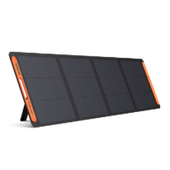
By pairing the unit with Jackery SolarSaga 200W Solar Panels, you can harness free energy from the sun to power your cooling devices. During the hottest part of the day, solar panels can feed power directly into the Jackery while it powers your air cooler.
FAQs
The following are frequently asked questions about air coolers and air conditioners.
1. Which is better, an air cooler or an air conditioner?
Although air coolers are appropriate for dry areas, air conditioners provide superior cooling performance, particularly when appropriately sized for the room. Understanding your space's cooling needs can help you select the solution that best suits your needs.
2. What are the disadvantages of air coolers?
If the air cooler is used in a place that is either closed off or has inadequate ventilation, it can cause the air to become too humid and stuffy, leading to mould and mildew growth and respiratory issues.
3. Can an air cooler cool a room?
In terms of cooling, they represent fantastic value. It is not only feasible to beat the heat without an air conditioner, but also environmentally beneficial and cost-conscious. You can keep your room comfortable throughout the summer with an air cooler.
4. Does an air cooler work like an air conditioner?
Compared to air conditioners, air coolers do not require outside ventilation, but air conditioners do. The most effective placement for air coolers is next to an open door or window. Compared to an air cooler, air conditioners can achieve a significantly greater reduction in temperature. Many air coolers can also function as humidifiers.
Final Thoughts
When comparing air coolers and air conditioners, the best option is primarily determined by your surroundings and comfort requirements. Air conditioners are a more powerful, multipurpose option for humid UK weather, providing both heating and cooling while improving air quality. Air coolers, although less expensive and environmentally benign, are best suited to dry, open areas or infrequent usage. Consider energy efficiency, operational expenses, and climatic compatibility to make an educated selection.


