












































A battery can arrive in one box, include preconfigured connectors and promise a quick setup, yet still require professional electrical work once it becomes part of a home’s fixed wiring. That distinction matters.
A renter powering a router and laptop from a self-contained battery faces very different requirements from a homeowner adding storage to rooftop solar, altering a consumer unit or creating backup circuits. The phrase “DIY battery” often describes product assembly rather than permission to redesign an electrical installation.
This guide explains when an electrician for solar battery work is necessary, which tasks homeowners can reasonably handle, how UK electrical and DNO requirements apply, and where modular systems such as the Jackery SolarVault 3 Pro Max fit.
|
Key Takeaways: |
|
Quick Answer: Do You Need an Electrician for a Solar Battery?
A conventional home battery connected to the consumer unit, a solar inverter or fixed household wiring normally requires a competent electrician for solar battery installation. Battery storage forms part of the electrical installation, and UK wiring requirements cover system design, bidirectional power flow, protective devices and isolation.
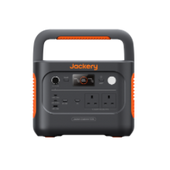
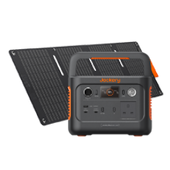
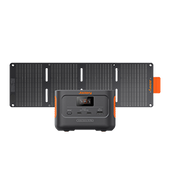
However, not every battery involves electrical installation work. A self-contained portable power station that powers appliances through its own sockets can usually be set up without altering the home’s wiring. The same may apply to a battery charged directly by portable solar panels, provided every component is connected according to the manufacturer’s UK instructions.
A purpose-designed plug-and-play or modular system can reduce the work required from a solar energy electrician. For example, some expansion batteries use user-connectable cables and automatic battery management. Even then, the homeowner must confirm the permitted connection method, circuit rating, location, ventilation, protection requirements and whether the system must be registered with the local Distribution Network Operator.
“DIY battery” therefore does not always mean “DIY electrical installation”. Adding backup circuits, changing the consumer unit or creating a fixed grid connection should be handled by a qualified solar electrician.
|
Battery Arrangement |
Electrician Usually Needed? |
Main Reason |
|
Portable power station with appliance sockets |
Usually no |
Does not alter household wiring |
|
Battery charged by portable solar panels |
Usually no |
Self-contained system |
|
Modular battery with user-connectable expansion modules |
Not always for expansion |
Depends on the approved product design |
|
AC-coupled battery on a dedicated circuit |
Yes |
Fixed electrical installation |
|
DC-coupled battery connected to rooftop solar |
Yes |
PV string and inverter work |
|
Battery with whole-home backup |
Yes |
Consumer-unit and isolation changes |
|
Unapproved battery connected through an ordinary socket |
Do not assume suitability |
Product, circuit and regulatory uncertainty |
Why “DIY Solar Battery” Can Mean Several Different Things?
The phrase “DIY solar battery” can describe anything from a portable power station to a grid-connected home storage system. These products may all store electricity, but their connection methods, intended uses and installation requirements differ considerably.
Before deciding whether a solar electrician is needed, identify which category the battery belongs to rather than relying on phrases such as “easy installation” or “plug and play”.

Portable Battery Storage
A solar generator or portable power station is a self-contained unit with built-in AC sockets, USB ports and sometimes 12V DC outputs. Appliances connect directly to the battery instead of receiving power through the property’s fixed wiring.
These systems are commonly used for camping, sheds, temporary garden offices and limited backup for items such as routers, lights or small refrigerators. Charging may come from the mains, a vehicle or compatible portable solar panels. Because the unit normally does not export electricity into household wiring, setup is different from installing a domestic battery system.
Modular Battery Assembly
Some storage systems allow homeowners to stack or connect manufacturer-approved expansion batteries. This can make additional capacity easier to add without redesigning the whole system.
However, the modules remain parts of a tested product configuration.
Users must observe the permitted number of batteries, approved cables, connector sequence, shutdown procedure and physical installation instructions. Expanding a battery tower may be user-manageable, while its original fixed connection may still require an electrician for solar battery work.
Plug-Connected Home Battery
A plug-connected home battery uses a socket or another preconfigured AC connection and may communicate with a smart meter or energy sensor to match household demand. It should not be confused with a portable power station merely because both products have plugs.
The Jackery SolarVault 3 Pro Max is an example of a modular household storage system rather than a conventional camping power station. Its exact setup depends on the selected version, approved UK connection route and supporting equipment.
Fixed Solar Battery Installation
A fixed battery connects to the consumer unit, solar inverter, rooftop PV array or dedicated backup circuits. The installation involves cable selection, protective devices, isolation, testing and commissioning under the relevant UK electrical requirements. BS 7671 is the national standard for low-voltage electrical installations, while grid-connected battery storage must also follow the applicable DNO registration process.
What Does an Electrician for a Solar Battery Actually Do?
An electrician for solar battery installation does more than connect a few cables. The job combines electrical assessment, system design, grid compliance and final commissioning. BS 7671 is the UK standard for low-voltage electrical installations, while grid-connected storage may also fall under G98 or G99 connection requirements.
Before Installation
A suitable solar electrician will:
- Inspect the consumer unit and determine whether there is enough circuit capacity.
- Check the property’s earthing and bonding arrangements.
- Review the age, condition and test results of the existing electrical installation.
- Identify whether AC coupling or DC coupling is more suitable.
- Consider the battery’s power rating, location, cable route and expected operating current.
- Confirm whether the proposed system requires DNO notification or approval before installation.
System Design and Connection
The electrician then selects:
- Appropriate cable sizes and circuit protection.
- Suitable isolators for the battery, inverter and solar supply.
- RCDs or RCBOs that can handle the electrical characteristics and bidirectional current of the chosen system.
- Metering equipment, energy sensors or current transformers needed to measure household import and export.
- Export-limitation settings where the DNO or system design requires them.
Fixed battery work may include installing a dedicated circuit, connecting the inverter, modifying the consumer unit and adding a separate backup supply. Whole-home backup often requires further switching and isolation so the property cannot energise the public network during a power cut.
Testing and Handover
Once connected, the solar energy electrician should test:
- Battery charging and discharging.
- Protective-device operation.
- Automatic shutdown and loss-of-mains behaviour.
- Meter readings and export controls.
- Backup changeover, where fitted.
The installer should also provide electrical certificates, test records, equipment instructions and clear guidance on normal operation and emergency isolation. For grid-connected storage, the homeowner remains responsible for ensuring that the relevant DNO has received the required notification or application, although the installer will usually complete or support this process.

Which Solar Battery Jobs Can a UK Homeowner Reasonably Do?
DIY involvement can reduce preparation time and help the system match the household’s needs. The safe boundary is straightforward: homeowners can usually handle research, positioning, app setup and explicitly approved modular assembly, while fixed electrical integration should remain with a competent installer.
Tasks Commonly Suitable for the Homeowner
Before and after installation, a homeowner can often:
l Compare battery capacities, continuous output ratings, backup limits and expansion options.
- Review electricity bills, smart-meter data and solar-export records to estimate how much storage may be useful.
- Identify a possible installation area for professional assessment, considering access, temperature, moisture and clearance requirements.
- Download the manufacturer’s app, create an account and connect the battery to the home network.
- Pair compatible smart plugs, meters or supported monitoring devices where no fixed wiring is involved.
- Connect approved communication leads using the ports and cables supplied for that purpose.
- Attach manufacturer-approved expansion modules where the manual clearly states that user installation is permitted.
- Set charging schedules, reserve levels and normal operating modes after the system has been commissioned.
- Keep cooling vents unobstructed and inspect the enclosure, connectors and cables for visible damage.
These tasks still require the product instructions to be followed. A modular connector should not be treated as interchangeable with a similar-looking cable from another battery range.
Tasks That Should Not Be Improvised
A homeowner should not treat online videos or generic wiring diagrams as a substitute for system-specific design. Specialist work includes:
- Opening or altering the consumer unit.
- Adding a new fixed circuit.
- Changing an MCB, RCD, RCBO or other protective device.
- Connecting an inverter or battery to household wiring.
- Reconfiguring rooftop PV strings.
- Producing homemade adapter or extension cables.
- Mixing connectors, batteries or cables from different manufacturers without documented compatibility.
- Creating a changeover arrangement for backup power.
- Working on energised equipment.
- Defeating export limits, anti-islanding functions or other safety controls.
A dedicated electrician for solar battery installation should deal with these tasks because cable sizing, protection, earthing, isolation and fault behaviour must work together. DIY can cover planning, positioning and approved modular assembly; the point where the system becomes part of the home’s fixed electrical installation is where specialist responsibility begins.
When Is a Solar Energy Electrician Essential?
Some battery projects involve little more than product setup. Others alter how electricity enters, leaves or remains available within the property. The following decision points show when a competent solar energy electrician becomes essential.

The Battery Connects to Your Consumer Unit
Professional installation is required when the battery needs a new fixed circuit, an isolator, additional protection or any alteration to the consumer unit. The electrician must assess cable capacity, fault protection, earthing and bidirectional power flow before testing and documenting the completed work.
This applies even when the battery itself arrives preassembled. A simplified product design does not remove the need to verify the fixed household connection.
You Are Adding a Battery to Existing Rooftop Solar
Retrofitting storage is not simply a matter of choosing the right number of kilowatt-hours. The electrician needs to check:
- Whether the existing inverter supports battery integration.
- Whether AC coupling or DC coupling is the better route.
- The output rating of the current solar inverter.
- Existing DNO and export-limitation arrangements.
- The generation meter and household metering configuration.
- Who owns the PV system, particularly where panels were installed under a lease or rent-a-roof agreement.
Older systems receiving Feed-in Tariff payments need additional care. Battery charging and metering arrangements can affect how eligible generation or export is measured, so the installer should review the system against current Ofgem co-location guidance before changes are made. The FIT scheme is closed to new applicants, but previously accredited systems can continue to receive payments.
You Want Backup Power During a Power Cut
A normal grid-connected solar array and battery do not automatically keep the house running when the network fails. Most systems disconnect from the grid for safety unless a suitable backup or island-mode arrangement has been installed.
Backup may require:
- A dedicated emergency-power output.
- Automatic or manual changeover equipment.
- Safe separation from the public network.
- A separate consumer unit for selected essential loads.
- Suitable neutral switching and earthing for island operation.
- Load limits that match the battery inverter’s backup rating.
Island operation requires particular attention to earthing because the property cannot simply rely on the distributor’s normal earthing arrangement after separation from the grid.
The Property Has Old or Uncertain Wiring
An electrician should inspect the installation before battery work begins when the property has:
- An older fuse box or obsolete protective devices.
- No recent inspection or test record.
- Damaged sockets, switches or cables.
- Unclear earthing and bonding.
- Shared or unusual supply arrangements.
- Limited consumer-unit space.
- Outbuildings supplied through long or undersized cables.
A battery can introduce sustained charging and discharging currents that expose weaknesses not obvious during ordinary household use.
The Battery Will Be Outdoors or in an Outbuilding
Outdoor and detached-building installations need assessment of weather exposure, cable routing, mechanical protection, local isolation and voltage drop. The electrician must also confirm that the existing outbuilding supply can support the proposed battery power without overloading the cable or protective device.
The Installation Requires DNO Approval
The connection route depends on inverter output, combined generation capacity, export behaviour and the proposed grid connection—not simply the battery’s storage capacity. Smaller, fully type-tested systems may follow the G98 notification route, while other installations require a G99 application and approval before connection. Export-limited designs may also involve G100 controls.
Do UK Rules Allow You to Install a Solar Battery Yourself?
UK law does not impose a simple rule stating that homeowners may never touch a battery system. The key distinction is between setting up a self-contained product and carrying out work on a fixed electrical installation. Once a battery is permanently connected to household wiring, the project must meet electrical, building-control and network-connection requirements.

BS 7671 and Fixed Electrical Installations
BS 7671 covers the design, erection and verification of electrical installations, including additions and alterations to existing wiring. Electrical Safety First confirms that these requirements apply when new equipment or circuits are added to a property.
A permanently connected battery is therefore not treated like an ordinary freestanding appliance. The installation includes more than the battery enclosure: cables, isolators, protective devices, earthing arrangements and the connection to the consumer unit must all operate safely together.
Inspection and testing are also part of the work. They establish whether protection will operate correctly during faults and whether the completed circuit is suitable for charging and discharging power. A product switching on successfully is not evidence that the electrical installation is compliant.
Building Regulations and Notifiable Work
Building-control requirements are not identical across the four UK nations. Part P applies to electrical safety in dwellings in England, while Wales has its own Building Regulations framework. Scotland uses the Scottish Building Standards system, and Northern Ireland has separate Building Regulations administered through local councils.
Depending on the location and scope, domestic electrical work may require notification, certification or building-control involvement. In England and Wales, adding a new circuit is typically notifiable work. A registered installer can normally complete the appropriate certification process on the homeowner’s behalf.
DNO Notification and Approval
Electrical certification and DNO compliance are separate matters. Some fully type-tested installations can be notified to the Distribution Network Operator after commissioning. Other designs require an application and permission before they are connected.
The route depends on factors such as:
- Inverter capacity per phase.
- Whether electricity can be exported.
- The use of an approved export-limitation scheme.
- Existing solar, battery, heat-pump or EV inverter equipment at the property.
- The combined behaviour of multiple generating technologies.
It is therefore inaccurate to say that every battery follows G98 or that every battery automatically requires G99 approval. The proposed connection must be assessed as a complete system.
MCS Certification
MCS is a recognised quality framework for small-scale renewable and storage installations. Its battery standard, MIS 3012:2025, covers the design and installation of electrical energy storage systems, while MCS also provides a search facility for certified battery-storage installers.
An MCS-certified installation is not the same as an individual holding an electrical qualification. A competent electrician for solar battery work may carry out the electrical elements while an MCS-certified installation business manages system design, documentation and handover.
What the 2026 Plug-In Solar Changes Do—and Do Not—Mean
The UK government consulted from 16 to 30 June 2026 on regulatory changes and an interim specification intended to enable compliant plug-in solar generation. At the time of writing, the consultation proposals should not be treated as blanket permission for every plug-connected energy product.
Most importantly, the proposed specification expressly excludes plug-in battery systems and plug-in solar products integrated with batteries.
Buyers should therefore follow the battery manufacturer’s approved UK connection instructions. Rules proposed for plug-in solar panels cannot simply be applied to plug-in home batteries by analogy.
DIY Battery Storage VS. Professionally Installed Storage
User-installable storage and professionally installed batteries solve different problems. One prioritises simplified setup, modular growth and limited disruption; the other allows deeper integration with rooftop solar, household circuits and backup power. Neither route is automatically better—the right choice depends on the property, expected loads and permitted connection method.
|
Factor |
User-installable or plug-and-play system |
Professionally installed fixed battery |
|
Initial work |
Lower where no fixed wiring is changed |
Includes system design, wiring, testing and commissioning |
|
Typical scale |
Small to medium |
Small systems through to whole-home storage |
|
Solar connection |
Depends on the product and approved inputs |
Can be designed around existing or new rooftop PV |
|
Backup power |
Often appliance-level or through a dedicated output |
Can support designed essential-load or wider backup circuits |
|
Portability |
Some systems can be moved or repositioned |
Normally installed permanently |
|
Consumer-unit work |
Usually avoided |
Frequently required |
|
Expandability |
Limited to approved modules and configurations |
Depends on the battery, inverter and system design |
|
Documentation |
Product records and, where relevant, circuit checks |
Electrical certificates, test results and full system handover |
|
DNO process |
Depends on whether and how the system interacts with the grid |
Commonly managed by the installer |
|
Best for |
Renters, simple storage and gradual adoption |
Deeper home integration, larger loads and designed backup |
The Jackery SolarVault 3 Pro Max illustrates the middle ground between a portable battery and a conventional bespoke installation. Its integrated, modular architecture is promoted as plug-and-play, with app monitoring and manufacturer-designed expansion intended to simplify setup. However, “plug-and-play” should refer only to the approved product connection and assembly process. Any fixed circuit, consumer-unit alteration or grid connection must still follow the applicable UK instructions and electrical requirements.

Which Route Fits Different Households?
A renter powering a laptop, router and small appliances: A self-contained battery or suitable user-installable system may be more practical because it avoids permanent changes and can move with the tenant. Landlord permission may still be needed for panels, external cabling or fixed mounting.
A homeowner with existing solar and high evening consumption: Professionally installed AC-coupled storage may offer better integration. The installer can measure export, assess the current inverter and configure the battery to absorb daytime surplus.
A household wanting fridge, lighting and broadband backup: The answer depends on the desired coverage. Direct appliance outlets may support a few items, while fixed essential-load circuits require safe grid separation and professional switching design.
A home with a heat pump or EV: These loads can be large and highly variable. A professional assessment is important to avoid choosing a battery based only on storage capacity while overlooking inverter output and circuit limits.
A property with an old consumer unit: Professional installation is the stronger route. The existing equipment may need testing, additional space or upgrading before a battery circuit can be added safely.
Does Hiring a Solar Electrician Cancel Out the Savings?
Not necessarily. Labour is only one part of the total installed cost, and removing professional installation does not make two battery systems financially equivalent. A lower-priced DIY product may offer less usable capacity, lower output or limited integration with rooftop solar and household circuits.
For a straightforward UK battery retrofit, installation, electrical work and commissioning may add roughly £1,000–£2,500, although difficult cable routes, consumer-unit upgrades or backup equipment can push the figure higher. Complete installed home-battery systems commonly span about £2,500–£10,000 or more, depending on capacity and design.
MCS reported an average battery-storage installation cost of just over £8,900 in 2025, but that figure covers complete installations rather than electrician labour alone.
Additional charges may include a dedicated circuit, isolators, metering hardware, scaffolding, DNO work and backup switching. Conversely, a professionally designed system may use more of the battery’s capability by matching its capacity, inverter output and charging schedule to the household.
Poor sizing can cost more over the system’s life than the electrician’s labour. Compare itemised quotations rather than battery prices alone.
|
Quotation item |
What should be stated |
Indicative UK cost |
|
Battery |
Model and usable capacity |
£2,000–£8,000+ |
|
Inverter |
Continuous and surge output |
£500–£2,000 |
|
Installation |
Labour, commissioning and cable route |
£1,000–£2,500 |
|
Consumer unit |
Required alterations |
£300–£1,200+ |
|
Backup |
Included or excluded |
£500–£2,500+ |
|
Metering |
Hardware and configuration |
£100–£500 |
|
DNO work |
Application or notification responsibility |
Included or separately quoted |
|
Certification |
Documents supplied |
Usually included |
|
Warranty |
Product and workmanship terms |
State duration and exclusions |
|
App setup |
Commissioning and tariff settings |
Usually included |
These ranges are budgeting guides, not fixed prices. Location, cable length, wall construction and existing wiring can materially change the quotation.
Adding a Battery to an Existing Solar System: What Must Be Checked?
Adding storage to existing panels can be simpler than replacing the whole solar installation, but the battery must work with the inverter, metering, export tariff and physical layout already in place.
AC Coupling VS. DC Coupling
An AC-coupled battery has its own inverter and connects on the AC side of the home’s electrical system. It can often be added without replacing the existing solar inverter, which makes it a common retrofit route.
DC-coupled storage connects more closely to the solar array through a compatible hybrid inverter or integrated battery system. This can reduce conversion stages, but it may require changes to the existing inverter or PV wiring.
Neither method is automatically better. The decision depends on compatibility, installation cost, backup requirements and whether the homeowner wants to retain the current solar equipment.
Existing Inverter and Warranty
Record the inverter’s:
- Brand and model.
- Installation date and remaining warranty.
- Maximum input and output ratings.
- Number and type of available connections.
- Communication compatibility with the battery or energy meter.
- Existing export-limitation settings.
Replacing, rewiring or connecting unsupported equipment could affect the inverter warranty. Written confirmation from the installer or manufacturer is useful before alterations begin.
Feed-in Tariff Systems
Older Feed-in Tariff installations need clear wiring and metering records. The battery arrangement must not allow imported grid electricity to be recorded as eligible renewable generation.
Ofgem guidance allows storage to be co-located with FIT installations, but the licensee may require a single-line diagram, installer details or a declaration explaining how the battery is charged and metered. Complications are more likely where the original installation uses deemed export, an older generation meter or unusual wiring.
Smart Export Guarantee and Tariffs
Before choosing a battery, check:
- Whether the solar installation remains eligible for the selected export tariff.
- Whether grid-charged battery electricity can be exported.
- Whether the supplier distinguishes renewable export from stored grid electricity.
- Whether time-of-use import rates are available.
- Whether the import and export meters support the required half-hourly readings.
SEG suppliers set their own tariff conditions, so battery-export rules can differ between providers. FIT customers must also avoid receiving both FIT export payments and SEG payments for the same exported electricity.
Space and Location
The proposed position should be checked for:
- Required clearances and ventilation.
- Flood or water-ingress risk.
- Direct sunlight and nearby heat sources.
- Obstruction of doors or escape routes.
- Vehicle impact in a garage.
- Cable distance from the consumer unit or solar equipment.
- Wi-Fi or Ethernet availability.
- The product’s permitted indoor or outdoor rating.

Jackery SolarVault 3 Pro Max for Existing and New Solar Systems
The Jackery SolarVault 3 Pro Max shows how newer storage products combine modular consumer assembly with home-energy functions. It uses LFP battery modules, starts at 2.52 kWh and can expand to 15.12 kWh within one supported tower.
The Pro Max configuration also offers four MPPT inputs for direct solar charging, AC-coupling capability, app monitoring, smart-meter-based energy management and a backup output for supported loads.
There are three relatively simple installation routes:
1. Existing solar retrofit: use the approved AC-coupled configuration so the battery responds to household import and export data.
2. New solar-and-storage system: connect compatible panels through the system’s MPPT inputs under the approved design.
3. Modular expansion: add manufacturer-approved battery modules using the specified shutdown and connection procedure.
These routes reduce equipment complexity, but they do not authorise homeowners to alter fixed wiring, redesign PV strings or create backup circuits themselves. Expansion is modular; electrical integration remains a separate responsibility.
How to Choose the Right Solar Electrician?
A battery installer should understand more than ordinary household wiring. The right solar electrician must be able to assess the property, configure the storage equipment and deal with the grid-connection process as one coordinated project.
Look Beyond a Standard Domestic Electrician
A qualified domestic electrician may be highly capable but still have limited experience with battery storage. Ask whether the installer has additional competence in:
- Electrical energy storage systems.
- Solar PV design and installation.
- Hybrid and battery-inverter configuration.
- DNO notification and application procedures.
- Export-limitation equipment.
- Backup power and island-mode arrangements.
- Smart meters, current transformers and energy-management controls.
- Commissioning the selected battery brand.
Battery-storage qualifications are generally designed as additional training for already-qualified, practising electricians. This reflects the extra knowledge required for bidirectional power flow, inverter-based systems and backup operation.
Questions to Ask Before Accepting a Quotation
Ask each prospective solar energy electrician:
- Have you installed this battery brand or connection type before?
- Are you trained and competent in electrical energy storage systems?
- Will the work comply with the current edition of BS 7671?
- Will the work be completed through an appropriate self-certification or competent-person route where applicable?
- Is MCS certification included, and is the business certified for battery storage?
- Who will submit the DNO notification or application?
- Will I receive electrical certificates, test results and commissioning records?
- Have you checked the compatibility of my existing solar inverter?
- Does the quotation include backup power, or only normal grid-connected operation?
- What happens if the consumer unit, earthing or bonding needs upgrading?
- Who handles faults, software issues and warranty claims after installation?
A competent-person scheme can allow registered installers to self-certify eligible building work, but scheme and notification arrangements vary across the UK.
Warning Signs
Be cautious when an installer:
- Offers a final price without carrying out a site survey.
- Shows no interest in the consumer unit, earthing or existing solar equipment.
- Promises whole-home backup without calculating peak and essential loads.
- Refuses to provide certificates or commissioning records.
- Cannot explain who is responsible for the DNO process.
- Pushes a large battery without reviewing consumption and export data.
- Claims that every battery can safely connect through any ordinary socket.
- Provides a quotation containing only one total figure.
- Cannot describe the proposed AC- or DC-coupled arrangement.
- Offers no clear workmanship warranty or after-sales contact.
The best quotation should explain the system design, installation scope, exclusions, paperwork and expected operating limits—not merely name a battery and state a price.
FAQs
The following are the frequently asked questions about the electrician for solar battery:
1. Do I need an electrician to install a solar battery in the UK?
Usually, yes, if the battery connects to the consumer unit, solar inverter, fixed wiring or backup circuits. A self-contained portable battery powering appliances through its own outlets normally does not require household electrical work. Fixed additions and alterations must be designed, installed and tested in accordance with BS 7671.
2. Can I connect a solar battery to a normal UK socket?
Only when the manufacturer explicitly approves that connection method for the UK and the product meets all relevant requirements. Do not assume that any home battery can be connected through an ordinary 13A socket. The government’s June 2026 plug-in solar proposals apply to qualifying solar-generation products and expressly exclude plug-in batteries and solar products incorporating battery storage.
3. Can a normal electrician install a solar battery?
A qualified electrician may install one if they also have suitable competence in electrical energy storage, inverter systems, bidirectional protection, commissioning and DNO procedures. General domestic experience alone does not guarantee the specialist knowledge needed for battery storage.
4. What is the difference between a solar installer and a solar electrician?
A solar electrician normally focuses on electrical design, wiring, protection, testing and commissioning. A solar installer may have a broader role covering panels, mounting, batteries, system design and handover. One person may perform both roles, but their qualifications, battery experience and certification should still be checked.
5. Can I add a battery to existing solar panels myself?
You may be able to attach manufacturer-approved expansion modules where the instructions expressly permit user installation. Connecting a new battery inverter, altering PV strings or changing fixed household wiring should be handled by a competent installer. Compatibility, export settings, warranties and existing metering must also be checked.
6. Does a solar battery need MCS certification?
MCS certification is not a universal legal requirement for owning a battery. However, it may be required by a finance scheme, warranty, tariff or consumer-protection arrangement. An MCS-certified installation follows the dedicated MIS 3012 battery installation standard and provides documented design, installation and handover procedures.
7. Does a solar battery need DNO approval?
A grid-connected battery must follow the relevant DNO connection process. Some systems can be notified after installation, while others require permission before connection. The route depends on inverter output, export behaviour, existing generation and whether approved export limitation is used—not simply the battery’s kilowatt-hour capacity.
8. Is a plug-and-play solar battery legal in the UK?
It can be legal when it is supplied for the UK market, uses an approved connection method and is installed according to its instructions and applicable electrical and network rules. The label “plug-and-play” does not itself prove compliance. As of July 2026, the government’s proposed interim framework for plug-in solar does not automatically authorise plug-in battery systems.
Final Thoughts
Hiring a solar energy electrician does not undermine the purpose of choosing a simpler or modular battery. It defines the boundary between safe homeowner setup and work that changes the electrical installation.
Portable equipment, app configuration and manufacturer-approved expansion may be suitable for the user, while consumer-unit connections, backup switching, export controls and PV alterations require specialist design and testing. The right route depends on the home, the battery and the intended level of integration.
A plug-and-play system may reduce labour and disruption, but it should still be installed through its approved UK connection method.


