



































A fish aquarium can make a room feel calmer, brighter and far more alive, but it also adds an ongoing cost that many people overlook at first. Ofgem’s price cap for 1 April to 30 June 2026 includes an average electricity unit rate of 24.67p per kWh for households on standard variable tariffs paying by Direct Debit, which gives useful context when working out what an aquarium really costs to run.
This guide shows the electricity costs for a fish aquarium in the UK in practical terms. It covers daily, monthly and yearly power consumption, compares different tank sizes, and breaks down the running cost of common equipment.
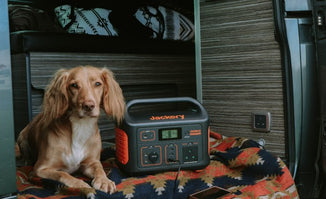
It also explores simple ways to reduce those costs without compromising your fish's health, including smarter equipment choices and a natural look at where a Jackery Portable Power Station fit into a cost-conscious setup.
|
Key Takeaways: |
|
Do Fish Aquariums Cost A Lot of Electricity?
They usually do not cost as much to run as big household appliances, but they are not insignificant either. In the UK, a fish tank can range from a fairly modest ongoing cost to a noticeable yearly expense, especially once you move into larger heated setups.
For most aquariums, the heater is what pushes the bill up, while filters and lights tend to be steadier and easier to predict. The estimates below use Ofgem’s average electricity unit rate of 24.67p per kWh for households on standard variable tariffs paying by Direct Debit from 1 April to 30 June 2026.
To keep the numbers practical, these examples assume a typical freshwater tropical aquarium with LED lighting running for around 8 to 10 hours a day, a filter running all the time, and a heater cycling on and off as needed. A coldwater tank may cost less, while a marine or reef setup can cost more.
Estimated Fish Aquarium Electricity Costs in the UK
|
Aquarium Size |
Estimated Power Use Per Day |
Cost per Day |
Cost per Week |
Cost per Month |
Cost per Year |
|
Small (10–20 Gallons) |
0.45–1.00 kWh |
£0.11–£0.25 |
£0.78–£1.73 |
£3.33–£7.40 |
£40.52–£90.05 |
|
Medium (30–55 Gallons) |
0.90–2.00 kWh |
£0.22–£0.49 |
£1.55–£3.45 |
£6.66–£14.80 |
£81.04–£180.09 |
|
Large (75+ Gallons) |
1.80–4.00 kWh |
£0.44–£0.99 |
£3.11–£6.91 |
£13.32–£29.60 |
£162.08–£360.18 |
*Cost estimates above are calculated using 24.67p per kWh. (Ofgem)
So, do fish aquariums use a lot of electricity? In general, small tanks are usually manageable, medium tanks become a more noticeable monthly cost, and large heated aquariums can add a meaningful amount to the yearly bill. The jump in cost is not just about more water. Bigger tanks often need larger heaters, stronger filters, longer lighting runs, and sometimes extra kit such as air pumps or wavemakers.

Small Fish Aquariums (10–20 Gallons)
Small aquariums are often seen as budget-friendly, and they can be, but they are not always the cheapest per litre to run. Because the water volume is lower, temperature can shift more quickly, which means the heater may switch on more often in a cool room. That is why a compact tank does not always equal tiny electricity use.
A typical small aquarium may include a low-watt filter, a 50W to 100W heater, a simple LED light, and sometimes a small air pump. Taken together, that usually works out at around 0.45 to 1.00 kWh per day, depending mostly on heater use.
Medium Fish Aquariums (30–55 Gallons)
Medium tanks are where running costs become easier to notice on a bill. They offer more stable water conditions than smaller tanks, which can help with fishkeeping, but they also need more power overall. The heater is usually larger, the filter is stronger, and the lighting system often covers a wider tank footprint.
For many homes, this size range is a balance point: large enough to require proper budgeting, but still far from the cost of running a very large display tank. A realistic daily power range is about 0.90 to 2.00 kWh.
Large Fish Aquariums (75+ Gallons)
Large aquariums can be beautiful centrepieces, but they are the most expensive group to run. The heater load climbs sharply with tank size, especially in winter, and larger tanks often use more than one filter or extra circulation equipment. If the setup includes stronger lighting, planted-tank gear, or specialist equipment, electricity use goes up again.
A typical large freshwater aquarium often lands around 1.80 to 4.00 kWh per day, and some setups can exceed that. At this size, the difference between efficient equipment and older, less efficient equipment becomes much more important.
Fish Aquarium Equipment Power Consumption Breakdown
Not every part of an aquarium uses electricity in the same way. Lighting usually runs for a set number of hours, filters and aeration equipment are more like steady background loads, and the heater is often the least predictable part because it cycles on and off rather than drawing full power every minute of the day.
|
Tank Size |
Filter |
Heater |
Lighting |
Air Pump / Extra Circulation |
Estimated Total per Day |
|
Small (10–20 Gallons) |
0.12–0.24 kWh |
0.20–0.60 kWh |
0.06–0.15 kWh |
0.05–0.10 kWh |
0.45–1.00 kWh |
|
Medium (30–55 Gallons) |
0.24–0.48 kWh |
0.40–1.20 kWh |
0.10–0.25 kWh |
0.07–0.14 kWh |
0.90–2.00 kWh |
|
Large (75+ Gallons) |
0.48–0.96 kWh |
0.90–2.40 kWh |
0.18–0.50 kWh |
0.10–0.19 kWh |
1.80–4.00 kWh |
For UK cost planning, the most useful way to look at aquarium equipment is not just by wattage, but by how long each item tends to operate. A 12W or 25W light may look modest on paper, but it still adds up over months. A 100W or 200W heater looks much larger, yet it may only run for part of the day. Filters, air pumps and circulation pumps tend to be lower wattage, but they are often treated as continuous loads when estimating running costs.

Aquarium Lighting
Modern LED aquarium lights are usually one of the easier parts of the setup to manage. Aquasky 3.0 range includes models from 12W to 33W, which shows how lighting demand rises with tank length and width. In day-to-day use, lighting is often one of the more controlled electricity costs because you can limit the photoperiod instead of running it all day.
Aquarium Heater
The heater is usually the biggest contributor to aquarium electricity use, especially in a heated tropical tank during colder months. T Series includes 50W, 100W, 150W and 200W models, and the company’s own running-cost tool notes that the heater cycles on and off rather than heating continuously. That is why two tanks of the same size can still have different electricity bills.
Aquarium Filter
Filters are usually less dramatic than heaters, but they are one of the most consistent parts of the bill because they are commonly budgeted as all-day equipment. U Series internal filters are listed at about 4.5W to 10W on 230–240V models, while 07 external canister range runs from 10W to 20W on 230–240V models, and Eheim’s ecco pro line includes examples at 5W and 8W.
Air Pump and Accessories
Air pumps are normally smaller electricity users, but they can still add a steady background cost because they may run for long periods. APS range lists power consumption from 2.0W to 4.5W, depending on model size. The accessories attached to them, such as air stones, airline tubing and check valves, do not meaningfully use electricity by themselves; the electrical draw comes from the pump that drives the airflow.
Other Equipment That Can Add to the Bill
Some aquariums use extra kit beyond the basic light, heater and filter. CP circulation pumps sit around 3.5W to 5W, so they are not huge power users individually, but they still add another continuous electrical load. Optional add-ons such as UV sterilisers and protein skimmers can also push the bill up, especially on marine or reef systems. A UK retailer listing for an aquarium UV steriliser shows 15W power draw
|
Equipment |
Example power draw |
Typical budgeting assumption |
Estimated power use per day |
|
LED Aquarium Light |
12W–33W |
8–10 hours per day |
0.10–0.33 kWh |
|
Aquarium Heater |
50W–200W |
Cycles on/off; roughly 3–12 equivalent hours per day depending on conditions |
0.15–2.40 kWh |
|
Internal Filter |
4.5W–10W |
Continuous load |
0.11–0.24 kWh |
|
External Filter / Canister Filter |
5W–20W |
Continuous load |
0.12–0.48 kWh |
|
Air Pump |
2W–4.5W |
Continuous load if used all day |
0.05–0.11 kWh |
|
Circulation Pump / Powerhead |
3.5W–5W |
Continuous load |
0.08–0.12 kWh |
|
UV Steriliser |
15W example |
Often long-hour or continuous use |
0.36 kWh |
|
Protein Skimmer |
4W–8W |
Commonly continuous on marine tanks |
0.10–0.19 kWh |
|
Air Stones, Tubing, Check Valves |
0W directly |
No direct draw; powered by the air pump |
0 kWh directly |
(Source: Fluval Aquatics)
How Much Does It Cost to Run a Fish Aquarium in the UK?
A fish aquarium is not usually one of the biggest electricity users in a home, but it is a steady one. The filter tends to run all day, the light runs for a set number of hours, and the heater quietly adds most of the variable cost in the background.
In the examples below, I have used that unit rate and left out the household standing charge, because that charge applies whether the aquarium is running or not.
Beginner Setup: Starter Tropical Aquarium
A beginner setup is usually a small tropical freshwater tank in the 10 to 20 gallon range. A practical example would be a 50W heater, a 4.5W internal filter, a 12W LED light, and a 2W air pump. If you assume the filter and air pump run all day, the light runs for 8 hours, and the heater cycles for the equivalent of 4 hours a day, the tank uses about 0.452 kWh per day. At the current UK unit rate, that works out at about £0.11 a day, £3.35 a month, or about £40.70 a year.
Intermediate Setup: Community Fish Tank
A mid-range setup often means a 30 to 55 gallon tropical community aquarium. A realistic example would be a 100W heater, a 10W canister filter, a 21W LED light, and a 3.1W air pump. If the filter and air pump run continuously, the light runs for 9 hours, and the heater cycles for the equivalent of 6 hours a day, total daily use comes to around 1.103 kWh. That is roughly £0.27 per day, £8.17 per month, or around £99.36 per year at the current Ofgem benchmark rate.
Advanced Setup: Larger Planted or Display Aquarium
An advanced setup might be a 75+ gallon planted or display aquarium with stronger equipment across the board. One sensible example is a 200W heater, a 10W canister filter, a 46W plant LED, a 4.5W air pump, a 6W UV clarifier, and a 5W circulation pump. If the filter, air pump, UV and circulation all run continuously, the light runs for 10 hours, and the heater cycles for the equivalent of 8 hours a day, daily electricity use reaches about 2.672 kWh. That comes out at about £0.66 per day, £19.78 per month, or about £240.60 per year.
|
Setup |
Equipment List |
Daily Operation Assumption |
Daily Electricity Use |
Monthly Running Cost |
|
Beginner |
50W heater, 4.5W internal filter, 12W LED light, 2W air pump |
Heater 4h equivalent, filter 24h, light 8h, air pump 24h |
0.452 kWh |
£3.35 |
|
Intermediate |
100W heater, 10W canister filter, 21W LED light, 3.1W air pump |
Heater 6h equivalent, filter 24h, light 9h, air pump 24h |
1.103 kWh |
£8.17 |
|
Advanced |
200W heater, 10W canister filter, 46W plant LED, 4.5W air pump, 6W UV clarifier, 5W circulation pump |
Heater 8h equivalent, filter 24h, light 10h, air pump 24h, UV 24h, circulation 24h |
2.672 kWh |
£19.78 |
(Source: Fluval Aquatics)
These examples are modelled from current product wattages and the April to June 2026 Ofgem benchmark unit rate. In real use, the heater can swing the final figure up or down quite a bit depending on room temperature, tank insulation, water temperature targets, and the season.
Factors Affect the Fish Aquarium Electricity Cost
The electricity cost of a fish tank is shaped by two simple things: how much power each piece of equipment draws and how long it runs for. It is usually the combined effect of the heater, filter, lighting and any extras working across the day. The heater tends to be the biggest swing factor because it cycles on and off, while filters and air pumps are more like steady background loads.

Tank Size and Water Volume
The bigger the tank, the more electricity it usually needs. Larger aquariums generally require larger heaters and stronger filtration, and both of those push up energy use over time. Fluval’s aquarium care guide pairs a 50W heater with around 60 litres, 100W with 120 litres, and 200W with 250 litres, which shows how heating demand rises with tank size.
Water Temperature and Tank Type
A tropical tank usually costs more to run than a coldwater setup because it needs active heating to keep the water stable. The further the tank temperature sits above the room temperature, the more often the heater has to switch on. That is why a warm tropical community tank, discus setup or similar heated aquarium will usually consume more electricity than an unheated or lightly heated coldwater tank of the same size.
Room Temperature and Season
Where the aquarium sits in the home makes a real difference. A tank in a warm, stable room is usually cheaper to heat than one placed near a cold wall, draughty window or poorly insulated space. Season matters too.
Heater Size and Heater Runtime
The heater is often the single biggest factor in aquarium electricity cost. A 50W heater and a 200W heater do not create the same running bill, even if both are technically “just one heater”. What matters is the wattage of the unit and how long it stays on each day. A larger heater draws more electricity while heating.
Lighting Type, Size and Daily Photoperiod
Lighting is one of the easier costs to control, but it still matters. Examples at 12W, 21W and 30W, so the electrical draw rises as the light gets larger and more powerful. Then runtime comes into play. A light used for 10 hours a day will naturally cost more than the same light used for 6 or 7 hours.
Filter Type and Filter Size
Filters are not usually the most dramatic power users, but they are among the most constant because they normally run all day and all night. That makes filter choice more important than many beginners expect.
Extra Equipment and More Advanced Setups
Basic tanks are usually cheaper to run because they use fewer powered components. As setups become more advanced, electricity use tends to rise. A larger display aquarium may have a bigger filter, stronger lighting, a larger heater and extra accessories all running together.
Daily Usage Habits
The final factor is how the tank is used day to day. Running lights longer than necessary, choosing more powerful equipment than the aquarium really needs, or adding several extras “just in case” can all raise electricity use. By contrast, a more restrained setup with sensible lighting hours and right-sized equipment is usually cheaper to run without changing the core fishkeeping experience.
How to Calculate Your Fish Aquarium Electricity Cost
Working out the electricity cost of a fish tank is much easier once you break it into separate pieces. In the UK, the part that matters most for this calculation is your electricity unit rate in pence per kWh.
Use this formula for each piece of equipment:
- Daily kWh = (Wattage × Hours used per day) ÷ 1000
Then:
- Daily running cost = Daily kWh × Electricity price per kWh
And from there:
- Monthly cost = Daily running cost × 30
- Yearly cost = Daily running cost × 365
If your electricity price is in pence, divide by 100 first to turn it into pounds.
Using the example above:
Heater: (100 × 6) ÷ 1000 = 0.60 kWh
Filter: (10 × 24) ÷ 1000 = 0.24 kWh
LED light: (21 × 9) ÷ 1000 = 0.189 kWh
Air pump: (3 × 24) ÷ 1000 = 0.072 kWh
Now total the daily electricity use:
0.60 + 0.24 + 0.189 + 0.072 = 1.101 kWh per day
That means this aquarium uses about 1.10 kWh per day.
Use the electricity rate in pounds:
£0.2467 per kWh
Then:
1.101 × £0.2467 = £0.2718 per day
Once you have the daily cost, extending it is simple:
Weekly cost = £0.27 × 7 = £1.90
Monthly cost = £0.27 × 30 = £8.16
Yearly cost = £0.2718 × 365 = £99.21
|
Equipment |
Wattage |
Hours per day |
Formula |
Daily use |
|
Heater |
100W |
6 |
(100 × 6) ÷ 1000 |
0.60 kWh |
|
Filter |
10W |
24 |
(10 × 24) ÷ 1000 |
0.24 kWh |
|
LED light |
21W |
9 |
(21 × 9) ÷ 1000 |
0.189 kWh |
|
Air pump |
3W |
24 |
(3 × 24) ÷ 1000 |
0.072 kWh |
|
Total |
1.101 kWh/day |
|||
How to Lower Your Electricity Cost for a Fish Aquarium?
The cheapest fish tank to run is usually not the one with the fewest features. It is the one where the equipment is sized properly, used sensibly and not left doing unnecessary work. In most UK setups, the heater is still the main cost driver, so the biggest savings usually come from reducing heat loss first, then tightening up lighting hours and choosing efficient filters and pumps.

Focus on the Heater First
If you want to cut aquarium electricity costs, start with heat. Some guide recommends matching heater size to tank volume, with examples such as 50W for 60 litres, 100W for 120 litres and 200W for 250 litres, and it also notes that tanks in a cold room may need more heating power.
A few simple habits help here. Keep the aquarium away from radiators and direct sunlight, but also away from cold spots and drafts. Use a lid if your setup allows it, and keep the room temperature reasonably stable in winter.
Keep Lighting on a Schedule, Not All Day
Lighting is usually the easiest part of an aquarium bill to control. It recommends 8 to 10 hours a day for tanks without natural plants and 10 to 12 hours for tanks with live plants, and it suggests using an electronic timer so the lights switch on and off at fixed times. That is one of the simplest ways to cut waste: if the light does not need to be on, do not leave it on.
Maintain Equipment So It Does Not Work Harder Than It Should
Good maintenance is not only about water quality. It can also help the tank run more cleanly and predictably. A sensible routine is to clean filter media as recommended, check impellers and tubing, remove obvious blockages, and make sure the heater and thermometer are still reading sensibly.
If a heater seems to be switching on far more than expected, or the tank temperature drifts despite constant operation, it is worth reassessing the heater size, placement and age rather than assuming the electricity bill is simply unavoidable.
Upgrade Old Equipment
The best time to upgrade is usually when old gear is already costing you in one of three ways: higher wattage, poor control, or regular replacement. A good example is old lighting. Older neon tubes should be changed roughly once a year because they continue working after that point but are no longer very effective.
The same principle applies to older pumps and filters: if they use more electricity than current efficient models and offer less control, replacement can make more sense than stretching them for another few years.
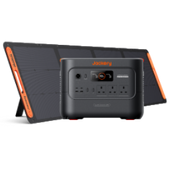
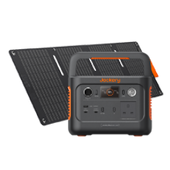
Use a Jackery Portable Power Station as a Backup or Alternative Power Source
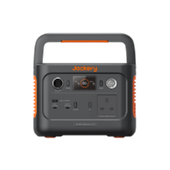
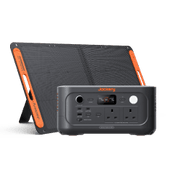
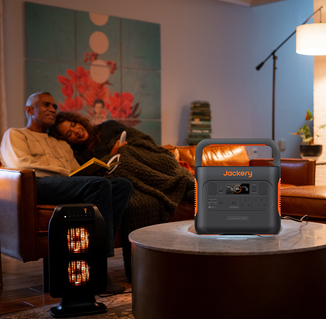
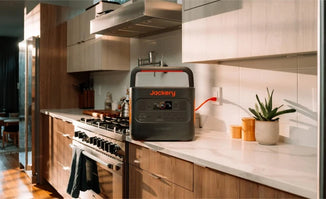
A Jackery Portable Power Station fits most naturally into this topic as a backup or supplementary power option rather than a magic fix for every running cost.
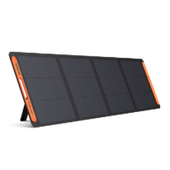
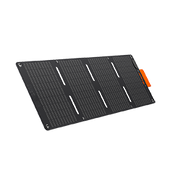
For an aquarium owner, that makes the most sense in two situations. The first is power cuts, when keeping essentials such as filtration and aeration running can matter more than powering every extra feature. The second is as a partial alternative source of electricity when paired with solar panels. After the upfront purchase, the sunlight used to recharge the unit does not come with a per-kWh fuel bill, although the real output still depends on panel size, season and UK weather.

How Long Can Fish Survive in an Aquarium without Electricity?
There is no single safe number for every tank. Some fish in a healthy, lightly stocked aquarium may cope with a short outage of a few hours, but the real risks rise as oxygen falls, filtration stops, and water temperature drifts.
If the tank is small, overstocked, warm, or heavily planted at night, the margin gets even smaller because warm water holds less oxygen and plants stop photosynthesising in the dark.
A reasonable rule of thumb for a home aquarium is this:
- 0 to 2 Hours: usually manageable for most established tanks if the fish were healthy to begin with. Avoid feeding and avoid overreacting.
- 2 to 6 Hours: still often survivable, but you should start thinking about backup aeration and temperature protection, especially for tropical or heavily stocked tanks. Fluval’s guidance treats outages beyond 6 hours as long-term.
- 6 to 8+ Hours: risk rises meaningfully. Oxygen and filtration become bigger concerns, and a heater-less tropical tank may begin to cool too far in a cold room. Aquarium Co-Op recommends running oxygen after 8 hours, or sooner for demanding setups.
- 24 Hours and Beyond: this should be treated as a serious situation unless you are actively supplying oxygen and protecting temperature. That is an inference from the sources above rather than a fixed universal deadline, but it is the sensible way to plan.
If you have limited backup power, the first priority is usually aeration or water movement. For that reason, a Jackery Portable Power Station can be a useful backup option for aquarium owners who want to protect fish during power cuts while keeping energy use focused on the essentials.
Jackery Portable Power Stations for Fish Aquariums
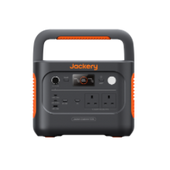
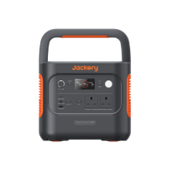
For a fish aquarium, backup power is really about keeping the essentials going when the mains drops out. That usually means filtration, aeration and, in some setups, heating. Jackery fits that role well because the current v2 models combine large battery capacity, quiet indoor operation, LiFePO4 battery chemistry, and UPS-style backup features rather than feeling like noisy fuel generators.
One of the main reasons to choose Jackery for fish tanks is safety and power stability. The Jackery Portable Power Station uses ChargeShield 2.0, a 12-layer BMS battery management system, constant-voltage pure sine wave output, and surge protection.
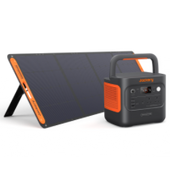
Jackery Explorer 3000 v2
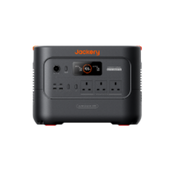
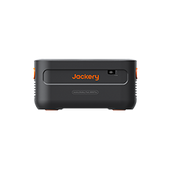
The Jackery Explorer 3000 v2 is the better fit for people who want more margin, longer runtime, or the flexibility to support a larger tank and a few household essentials at the same time. It has 3,072Wh capacity, 3,600W continuous output, and 7,200W surge power, with 3 UK AC sockets, 2 USB-C ports, 2 USB-A ports, and a 12V car port. It also supports UPS mode within 20ms, which makes it especially relevant for outage planning.

3072Wh Capacity, 3600W Output
Engineered for Off-grid & home power needs, this Explorer 3000 v2 delivers 3,072Wh capacity with 3,600W pure sine wave output (7,200W surge) – enough to run kettles, power tools and other outdoor electrical appliances. It features 3x 230V~13A UK sockets, 2x 100W USB-C (for laptops), 2x 18W USB-A, and a 12V Car Port to simultaneously charge fishing tank, filter, lighting and more.
47% Smaller – Power Uncompromise
Delivers a massive 3072Wh while being 47% more compact and 43% lighter than similar models—easy to store at home. Built with advanced CTB (Cell-to-Body) tech, also used in EVs, for a stronger, more compact design. With inverter and PV combined, and battery cells built into the base, it boosts space efficiency by 14% (vs. Explorer 3000 Pro) and enhances durability for safer use.
Long-Lasting LiFePO4 Battery
Enjoy up to 4,000 charge cycles with advanced LiFePO₄ cells — delivering 10 years of reliable power for everyday and emergency use. With patented low self-discharge tech, the unit retains up to 95% charge after a full year in storage, always ready when you need it. Stay powered during outages with built-in UPS support, switches in under 20ms to keep essentials like lights and fridges running. Combined with passthrough charging, it’s a dependable emergency power solution.
Smart & Remote Control via App
Take charge from anywhere with the smart app — monitor, manage, and customise your power station with ease for a seamless and tailored energy experience. Certified by IEC, UKCA, FCC, SGS, UL, and TÜV for exceptional reliability, safety, and performance you can trust.
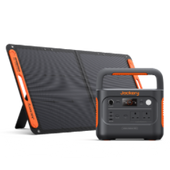
Jackery Explorer 2000 v2
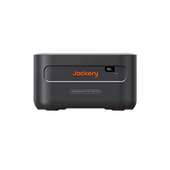
The Jackery Explorer 2000 v2 is the more compact option, but it is still a serious unit rather than a small emergency pack. It has 2,042Wh capacity and 2,200W output, built around a LiFePO4 battery, with 4,000 cycles, app control, and a 20ms UPS function compliant with UL1778 standards. That makes it a sensible match for a standard home aquarium where you want backup power without moving up to the larger 3kWh class.

2042Wh Capacity, 2200W Output
The Jackery Explorer 2000 v2 Portable Power Station delivers an impressive 2042Wh capacity and 2200W output, capable of powering most of your fish aquarium appliances. It also features 2 AC outlets, 1 USB-A 18W, and 2 USB-C ports ( 100W + 30W), allowing you to charge multiple devices like heater and filter simultaneously.
Easy-to-Take in Your Home
Introducing the world’s first 2kWh LiFePO4 power station with advanced EV-grade CTB (Cell to Body) Structure technology⁵, designed to be lighter and more compact at just 38.6 lbs — about the weight of a suitcase. With a foldable handle for easy carrying, it’s the perfect power solution for putting in your home.
Fast Charging in Less 1 Hour
With Emergency Super Charge Mode, easily activated via the Smart App, the power station charges from 0% to 80% in just 52 minutes—perfect for when you need power in a hurry. Even in regular AC charging mode, a full charge takes only 103 minutes.
Reliable Power for 10 Years
Its LiFePO4 battery cell supports up to 4000 charge cycles, along with a foldable solar panel designed for up to 4000 uses. 62 layers of all-encompassing protection, featuring 12 protective algorithms and 4 layers of physical safety, ensuring complete coverage both inside and out.
FAQs
The following are frequently asked questions about the fish aquarium electricity cost in the UK.
1. How much does it cost to run a 2000 watt heater for 24 hours?
At the current Ofgem average electricity rate of 24.67p per kWh, a 2000W heater running for 24 hours uses 48 kWh, so it would cost about £11.84 for one day of continuous use, excluding your household standing charge.
2. Can I leave my fish tank for 2 weeks?
Yes, but not fully unattended. A well-maintained tank can often cope with a week or two if the fish are healthy and the setup is stable, but for a mixed community tank it is better to use an auto-feeder or have someone check in and feed lightly once or twice a week.
3. How long can a 20 gallon fish tank go without power?
There is no exact fixed time, but a 20 gallon tank will usually cope with a short outage of a few hours. Once you get beyond about 6 to 8 hours, oxygen and temperature become much bigger concerns, especially in a stocked tropical tank, so backup aeration or power is a good idea.
4. Is running a fish tank expensive?
Usually not extremely expensive, but it is a steady ongoing cost. In the UK, the bill depends mainly on your electricity rate and how much the heater, filter and lights are running. Small simple tanks are usually manageable, while larger heated aquariums cost noticeably more over time.
Final Thoughts
Fish aquariums are not the most expensive things to run in a home, but they do create a steady electricity cost that is worth understanding before you set up a tank or upgrade to a larger one. The overall bill depends on the size of the aquarium, the type of fish you keep, the equipment you use, and, above all, how often the heater needs to work.
For most fishkeepers in the UK, keeping costs under control comes down to practical choices rather than cutting corners. Choosing efficient equipment, limiting unnecessary lighting hours, replacing old power-hungry models, and keeping the tank in a stable environment can all make a real difference over time.


