

















































If you've ever worked with circuits, you've probably seen the formulas for power. It's like a vital component in a recipe that ensures everything works.
In electrical engineering, mastering power calculations is essential. An appliance's power is commonly described as the product of the voltage (V) connected to it and the current (I) flowing through it. P = V * I is arguably the most well-known formula for electrical power.
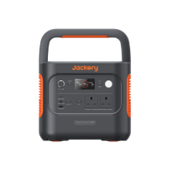
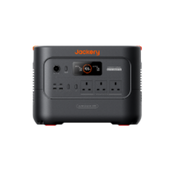
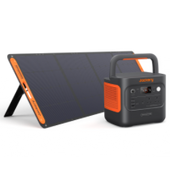
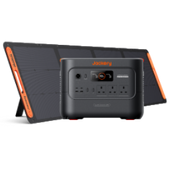
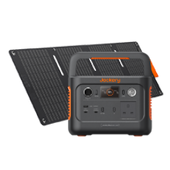
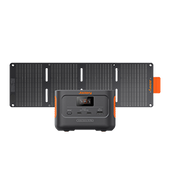
Do you know why understanding this formula matters for circuit design or energy management? Have you considered which Jackery Explorer model best meets your power needs? Each gadget—Jackery Explorer 3000 v2, 2000 v2, and 1000 v2—offers optimal solar-powered setups.
|
Key Takeaways: |
|
Basic Concepts: What Is Power?
Electrical power is the rate at which electrical energy is transported or converted within a circuit. Simply described, it calculates "how much work is done per unit of time" or "how much energy is consumed or generated."
For example, a light bulb with a power rating of 12W consumes that much energy in a given time. However, power does not indicate "how much work is done," but rather "how quickly it is done." For example, two cranes can raise a ton of cargo to the same height (doing the same task), but one takes 10 seconds, and the other takes 20.
The effort is the same, but the first crane has twice the power of the second, implying that it is "more efficient." As a result, higher power means faster energy conversion, and the equipment is "more powerful" or "more robust."
Application of Power in Daily Life
Here are some frequent uses of electricity in everyday life:
Household Appliance Labelling: All appliances are labelled with their rated power, such as "1500W." This allows consumers to understand their power consumption and arrange their electrical load accordingly.
Energy Efficiency Assessment: When choosing equipment such as air conditioners, heaters, and water heaters, power output is an important factor in determining heating or cooling speed.
Renewable Energy Systems: When configuring solar panels, wind turbines, or portable power supplies (such as Jackery), the required power generation and energy storage capacity must be estimated based on the load power.

What Units Are Involved in Power Calculation?
Besides power, power formulas typically include voltage and current. To use this formula effectively, you must master the common units: watts (W), volts (V), and amperes.
Power Unit: Watt (W)
The International System of Units (SI) uses the watt (W) as its standard unit of power. A watt is defined as the rate of work performed per second, which is equivalent to one joule per second. It is the standard unit for small household appliances. Because power ratings vary greatly in practical applications, ranging from tiny electronic components to enormous power plants, multiples of watts are widely used: kilowatt (kW), megawatt (MW), gigawatt (GW), and milliwatt (mW).
Voltage Unit: Volt (V)
Voltage, also known as potential difference, is the "driving force" that pushes the directional movement of electric charges, resulting in an electric current. Its unit is the volt. Other frequent voltage units are millivolts (mV) and kilovolts (kV).
Current Unit: Ampere (A)
Current is the amount of electric charge that passes across a conductor's cross-section per unit time, indicating the strength of charge flow. Its SI unit is ampere (A). Other frequent current units are milliampere (mA) and kiloampere (kA).
What Are the Formulas for Power?
Power is the primary physical quantity used to measure the efficiency of electrical energy conversion. It refers to the rate at which electrical energy is used, transmitted, or converted per unit time.
The method for calculating electrical power depends on the circuit type. Aside from the basic formula, direct current (DC) and alternating current (AC) have distinct power formulas according to their respective current properties.

General Basic Formula for Electric Power
People commonly characterise an appliance's power as the product of the voltage (V) to which it is attached and the current intensity (I) flowing through it, with P = V * I being the most well-known formula for electrical power. Where:
P: Electrical power, unit is watt (W);
V: Potential or voltage difference, unit is volt (V);
I: Current, unit is ampere (A).
DC Power Formula
Direct current (DC) is distinguished by a constant voltage and current direction, making power computation straightforward. It usually only concerns active power (that is, the power that is actively used). P = V * I is the most widely used power calculation formula for DC circuits, and it applies to a variety of devices including batteries, DC power sources, LED lights, and motors.
Furthermore, if considering resistive circuits, two commonly used formulas can be derived using Ohm's Law (V = I * R):
P = V²/R
P = I² * R
Where R represents resistance. These two formulas are used to compute the power created by resistive heating, which occurs in heating wires and resistors.
AC Power Formula
The voltage and current of alternating current (AC) change periodically with time and have a phase difference, making its power calculation more complex. It requires the introduction of concepts such as active power, reactive power, apparent power, and power factor.
Apparent Power (S): Represents the product of the effective values of voltage and current in a circuit, reflecting the total power supply capability. The unit is volt-ampere (VA). The formula is: S = V I.
Active Power (P): The power actually consumed by the load and converted into heat, light, or mechanical energy. The unit is watt (W). The formula is: P = VI * cos(θ), where θ is the phase angle between the voltage and current waveforms.
Reactive Power (Q): Represents the power that exchanges back and forth in inductors or capacitors without performing actual work. The unit is reactive voltage (VAR). The formula is: Q = VI * sin(θ).
Formulas for Power: Calculation Examples in Practical Applications
The electric power formula P = VI and its derivatives, such as P = I²R, are widely used in calculations and analyses in real life. The following examples demonstrate the specific applications and calculation processes of the power formula in different scenarios through several real-life examples.
Example 1: Power and Energy Consumption Calculation of a Household Electric Water Heater
A household uses an electric water heater with a rated voltage of 110V. The measured current during operation is 10A. Calculate its power and the electricity consumption for continuous operation for 1 hour. P = VI = 110V * 10A = 1100W = 1.1kW
Power consumption: 1.1kW * 1h = 1.1kWh
This electric water heater has a power of 1.1kW and consumes 1.1kWh in 1 hour.
Example 2: Determining If a Socket Is Overloaded
A socket in your home is labeled "110V/20A", meaning its maximum allowable power is 2200W. Is it safe to connect a 1500W air conditioner and an 800W electric iron simultaneously?
P = 1500W + 800W = 2300W > 2200W
I = P/V = 2300W/110V = 20.90A > 20A
This exceeds the socket's rated current and maximum allowable power, posing a risk of overheating and fire.
Example 3: Assessing the Power Generation Capacity of a Solar Charging Panel
A household solar panel outputs 30V and 8A when there is sufficient sunlight. Calculate its instantaneous power and estimate the amount of electricity generated under 5 hours of sunlight.
P = VI = 30V * 8A = 240W = 0.24kW
Daily power generation: 0.24kW * 5h = 1.2kWh
This solar panel can generate approximately 1.2kWh per day, suitable for charging small household appliances or batteries, supporting energy conservation in the home.
How to Obtain More Accurate Power?
Although the power formula can be used for theoretical estimation, can basic calculations fully capture the true power output in the dynamic, ever-changing environment of real-world use?
One of the most straightforward and effective ways to obtain high-precision power measurement is to employ a professional measuring tool, such as a power meter. Commonly used power meters are often divided into two categories:
Analogue Power Meters: Suitable for laboratory or teaching settings, they display power values via a pointer. They have a simple structure, but readings are easily affected by viewing angle and vibration, resulting in limited accuracy.
Digital Power Meters offer advantages such as high resolution, fast response, and strong anti-interference capabilities. They can display multiple parameters in real time, including voltage, current, power, power factor, and frequency, making them suitable for industrial sites and precision measurements.
Digital power meters should be prioritised for high-precision applications to enable accurate measurements even when the current is not sinusoidal or distorted. All measurement tools will accumulate inaccuracies with time.
To guarantee the power meter's long-term accuracy, keep it clean, protect it from moisture and shock, and avoid prolonged exposure to powerful electromagnetic fields. It should also be delivered to a metrology facility for expert calibration every 6 to 12 months.

What Aspects of Life Are Formulas for Power Applied to?
Power is not only a fundamental term in physics but is also profoundly embedded in all aspects of our daily lives. The power formula is used in a variety of contexts, including residential electricity, transportation, electronics, and energy management.
Power Labelling and Energy Management of Household Appliances
Most everyday equipment, such as lights, rice cookers, air conditioners, and televisions, has nameplates that indicate their rated voltage and power. These figures are calculated using the power formula.
For example, an electric water heater with a rated voltage of 220V and a working current of 5A has a power output of 1100W. This method enables consumers to properly understand appliance energy consumption and make informed purchasing decisions for energy-saving products.
Circuit Design and Electrical Safety
When designing a home or building circuit, engineers must apply the power formula to determine the load capacity of each branch.
If many high-power appliances, such as air conditioners and electric water heaters, are connected to the same circuit at the same time, the combined power may exceed the circuit's capability, resulting in excessive current, overheated wires, and even fires. Using the method enables people to foresee dangers, appropriately assign electrical loads, and ensure electrical safety.
Charging Technology and Quick Charging Principles
The basis of modern fast charging technology is to increase charging power. According to the power formula, manufacturers accomplish high-power charging by boosting either voltage or current.
For example, a fast charger that outputs 12V/2A delivers 24W, which is substantially greater than a standard 5V/1A (5W) charger, significantly reducing charging time.
New Energy and Sustainable Development
In green energy industries such as solar power production, wind power generation, and electric cars, the power formula is equally important. The output power of solar panels is determined by their operating voltage and output current; installers must check power-generating efficiency in real time using measurements.
How Are Formulas for Power Applied to the Solar Energy Industry?
Solar energy, a clean and sustainable energy source, is widely employed in power generation, heating, transportation, and a variety of other applications. Behind all of this is a seemingly simple but essential physical tool: the power formula. The power formula is frequently used in the following parts of the solar energy industry:

System Design
When constructing a solar power system, engineers must make sensible component choices based on the load's power requirements.
For example, for an off-grid system that consumes an average of 600 watt-hours per day, the required power of the solar panels must be determined. If the local average daily effective sunlight is 5 hours and the system efficiency is at 75%, the needed photovoltaic power is 600Wh/(5h*0.75) = 160W.
Photovoltaic Module Performance Evaluation
A solar panel's primary job is to convert light energy into electrical energy, and its output capacity is commonly denoted as "maximum output power. This parameter is determined with the power formula.
The output voltage and current of a solar panel at its maximum power point can be estimated under standard test conditions (STC) of 1000 W/m² illumination, 25°C temperature, and an AM1.5 spectrum.
Power Generation Forecast
A solar power system's return on investment is determined by its ability to generate electricity. Using a 10kW system as an example, in an area with an average of 1300 hours of effective sunshine per year, the theoretical yearly power generation is 13,000 kWh (10kW * 1300h). The annual return can be computed using local electricity pricing and subsidy schemes.
Solar System Operation Monitoring
To determine inverter efficiency (Poutput/Pinput * 100%) in a photovoltaic system, measure the DC-side input power (P = V * I) and AC-side output power (P = V * I * cosθ) in real time using a power meter. If efficiency is abnormally low, it may indicate component degradation, dust buildup, poor line contact, or other issues that maintenance professionals can quickly troubleshoot.
Jackery: Solar Equipment Configured with Optimal Power
Power is the rate at which work is done per unit time, expressed in electricity as the product of voltage and current. The power formula is simple yet profound, permeating power systems, industrial equipment, household appliances, and even the emerging renewable energy industry.
In solar systems, photovoltaic panels absorb sunlight to generate direct current, and their output characteristics are determined by open-circuit voltage, short-circuit current, and maximum power point.
The actual power generation capacity can be accurately calculated using the power formula. More importantly, based on a deep understanding of the power formula and engineering practice, Jackery has launched a series of efficient, intelligent, and portable solar power stations, including the Explorer 3000 v2, Explorer 2000 v2, and Explorer 1000 v2, each configured with optimal power output for heavy outdoor use, home emergency use, and light urban use scenarios, respectively.
Jackery Explorer 3000 v2 Portable Power Station
The Jackery Explorer 3000 v2 is an energy hub tailored for high-energy-consumption, long-duration outdoor scenarios, pushing high-power applications to the extreme.

Large Capacity and Ultra-High Power Output: The Jackery Explorer 3000 v2 is equipped with a 3072Wh high-capacity battery and supports up to 3600W (7200W peak power) sine wave inverter output, easily powering refrigerators, rice cookers, electric drills, and even small air conditioners, truly bringing the power of your home into nature.
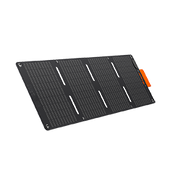
Rapid Solar Charging: The Jackery Explorer 3000 v2 supports up to 1000W of solar input. When paired with a solar panel (such as the SolarSaga 200W with a conversion efficiency of up to 25%), it can be fully charged in approximately 3.5 hours, significantly improving outdoor energy self-sufficiency.
Intelligent Power Management: The Jackery Explorer 3000 v2 features a built-in LCD screen that displays real-time parameters, including voltage, current, and power. Users can clearly monitor charging and discharging status, easily manage and customise their power station, and enjoy a tailored energy experience.
Multiple Safety Protections: The Jackery Explorer 3000 v2 features a 12-layer BMS, constant-voltage pure sine-wave output, and surge protection, providing stable power in any environment while protecting your appliances.
Jackery Explorer 2000 v2 Portable Power Station
The Jackery Explorer 2000 v2 strikes a perfect balance between power, capacity, and portability, making it a smart guardian of home energy security.

Optimal Capacity and Power: The Jackery Explorer 2000 v2 boasts a massive 2042Wh capacity and supports 2200W power output (peak power 4400W), sufficient to power critical home loads such as lighting, routers, and televisions for over 10 hours.
Efficient Charging: The Jackery Explorer 2000 v2 can be fully charged in 5.5 hours with a 400W solar input. Furthermore, it can be easily activated via a smart app in an emergency supercharging mode, charging from 0% to 80% in just 52 minutes.
Quiet Operation: The Jackery Explorer 2000 v2 maintains extremely low noise levels during use: 42dB AC and 30dB DC, comparable to a library environment, ensuring it won't disturb others at night.
Smart App Remote Monitoring: The Jackery Explorer 2000 v2 connects to the Jackery App via Bluetooth, allowing users to track the power station's status via their mobile devices. Real-time data on voltage, current, power, and remaining battery capacity can be viewed, enabling remote management and energy consumption analysis.
Jackery Explorer 1000 v2 Portable Power Station
The Jackery Explorer 1000 v2 is a smart energy companion designed for lightweight, high-frequency power consumption scenarios, making mobile power freedom easy for everyone.

Practical Capacity and Power: The Jackery Explorer 1000 v2 boasts an impressive 1070Wh capacity and 1500W output power (3000W peak power), a 50% improvement over its predecessor, easily powering high-power-consuming devices such as refrigerators, electric kettles, and portable air conditioners.
Ultra-Portable: Weighing only about 23.8 pounds (approximately 10.8 kg), the Jackery Explorer 1000 v2 is compact (18% smaller than its predecessor), easily carried with one hand and fitting into a car trunk, making it the ideal companion for light urban outdoor activities.
Fast Charging Technology: Featuring upgraded ChargeShield 2.0 technology, the Jackery Explorer 1000 v2 offers multiple charging modes, including fast charging, emergency super charging, and silent charging, ensuring you always have ample power.
Smart Control and Rapid Response: The Jackery Explorer 1000 v2 can be used with a smart app to easily monitor energy usage, including voltage. This UPS provides seamless power switching with a response time of less than 20 milliseconds, ensuring your equipment continues to operate even during power outages or voltage fluctuations.
FAQs
The following are frequently asked questions about the formula for power.
1. What is the commonly used formula for power?
The power of an appliance is typically calculated as the product of the voltage (V) connected to it and the current (I) flowing through it. P = V * I is unquestionably the most well-known equation for electrical power.
2. How to calculate electrical power in a circuit?
The formula for calculating electrical power is P = V*I, where P is power (unit: watt (W), V is voltage (unit: volt (V), and I is current (unit: ampere (A).
3. What are the commonly used units in the power formula?
Power is the rate of energy conversion per unit time. Its SI unit is watt (W). Other popular multiples are kilowatt (kW), megawatt (MW), and milliwatt (mW). In the power formula P = VI, the voltage unit is the volt (V) and the current unit is the ampere (A).
4. What is the DC power formula?
The formula for determining electrical power in a direct current circuit is also P = V * I. Using Ohm's Law (V = I * R), we can get the following two formulas for resistive circuits: P = V²/R and P = I²*R.
5. How to express power using Ohm's Law?
Using Ohm's Law, the power formula can be rewritten as P = I²R or P = V²/R, where V is the potential difference, I is the current, R is the resistance, and P is the power.
Final Thoughts
Electrical power is the rate at which electrical energy flows across a circuit per unit of time. Its unit is the watt (W), and the equation is P = VI, where P is power (watts), V is voltage (volts), and I is current (amperes). Understanding formulas for power is essential for understanding energy use, creating electrical systems, and powering everyday electronics and appliances.
For example, in the solar energy business, understanding the power formula is critical for determining a solar system's output and input power. The Jackery Explorer 3000 v2, Explorer 2000 v2, and Explorer 1000 v2 are all solar devices with ideal power combinations.


