










































With energy bills fluctuating across the UK, many homeowners are turning to renewable energy to secure long-term financial relief. But before making the switch, the most critical question you need to answer is: how much electricity does solar power produce in a climate known for being overcast?
The honest answer is that modern photovoltaic systems are far more resilient and efficient than most people anticipate. UK solar systems generate 850–1,000 kWh/kWp annually, varying heavily by season and location. Optimise UK solar by adjusting panel angles, reducing shading, cleaning, using microinverters, and adding modular batteries like the Jackery SolarVault 3 Series.
|
Key Takeaways: |
|
How Much Electricity Can Solar Power Generate in the UK?
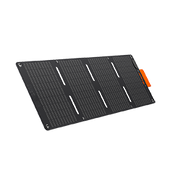
Solar panels are one of the most reliable ways to lower your energy bills, but how much electricity do they produce in the UK? The honest answer is: more than most people anticipate. The majority of household solar panels in the United Kingdom range from 250W to 400W.
Taking the mean, a conventional 350W solar PV panel is around 1.9m long and 1m wide. Most household solar panels in the UK have a capacity ranging from 300W to 450W. A 350W panel may produce an average of 260-270 kWh per year, or around 0.7 kWh per day, depending on location and conditions.
What is the Solar Power Generation of Systems of Different Sizes?
A domestic solar system's capacity is commonly measured in kilowatt peak (kWp), which represents the greatest output power under optimal sunlight circumstances.
In the UK, a reasonable rule of thumb is that 1 kW of installed solar panels generates approximately 850-1,000 kWh of electricity each year. Most UK households install between 3 and 5 kWp. The following table shows what each system size generates annually:
|
System size |
Typical annual output |
|
3 kW |
2,400–3,000 kWh |
|
4 kW |
3,400–4,200 kWh |
|
5 kW |
4,000–5,000 kWh |
The data in this table is for reference only.
What is the Solar Power Generation of Systems in Different Seasons?
The UK's high latitude causes large changes in daylight hours and solar radiation intensity between summer and winter. Between April and September, you generate approximately 60-70% of your overall annual revenue.
A terrific June day can be six to eight times more productive than a December day. The seasonal swing is greater than most people anticipate, so knowing your monthly output will help you plan. The table displays the expected daily production for a 4 kWp south-facing system in London.
|
Month |
Irradiance (kWh/m²/day) |
Est. Daily Output (4 kWp, London) |
|
January |
0.7–1.0 |
0.9–1.3 kWh |
|
February |
1.6–2.0 |
2.0–2.5 kWh |
|
March |
2.5–3.0 |
3.2–3.8 kWh |
|
April |
3.4–4.0 |
4.3–5.1 kWh |
|
May |
4.0–4.5 |
5.1–5.7 kWh |
|
June |
4.2–4.8 |
5.3–6.1 kWh |
|
July |
4.2–4.7 |
5.3–6.0 kWh |
|
August |
3.7–4.3 |
4.7–5.5 kWh |
|
September |
2.7–3.2 |
3.4–4.1 kWh |
|
October |
1.7–2.2 |
2.2–2.8 kWh |
|
November |
0.8–1.2 |
1.0–1.5 kWh |
|
December |
0.5–0.8 |
0.6–1.0 kWh |
(Source: Switchtogether)
The data in this table is for reference only.
What is the Solar Power Generation of Systems in Different Geographical Locations?
Solar radiation levels in the UK follow a distinct "higher in the south, lower in the north" trend. Sunlight conditions are substantially better along the southern coast than in the north and Scotland. The table below compares them based on the Kk value, which is the yearly solar resource in kWh per kWp before applying the performance ratio.
|
Location |
Kk (kWh/kWp) |
4 kWp Output (at 0.8 PR) |
|
Brighton |
938 |
3,002 kWh |
|
Plymouth |
907 |
2,902 kWh |
|
Southampton |
857 |
2,742 kWh |
|
London |
828 |
2,650 kWh |
|
Bristol |
820 |
2,624 kWh |
|
Norwich |
805 |
2,576 kWh |
|
Cardiff |
803 |
2,570 kWh |
|
Birmingham |
789 |
2,525 kWh |
|
Aberystwyth |
789 |
2,525 kWh |
|
Sheffield |
750 |
2,400 kWh |
|
Middlesbrough |
750 |
2,400 kWh |
|
Newcastle |
742 |
2,374 kWh |
|
Edinburgh |
738 |
2,362 kWh |
|
Manchester |
735 |
2,352 kWh |
|
Carlisle |
731 |
2,339 kWh |
|
Dumfries |
722 |
2,310 kWh |
|
Aberdeen |
712 |
2,278 kWh |
|
Belfas |
711 |
2,275 kWh |
|
Glasgow |
701 |
2,243 kWh |
|
Inverness |
691 |
2,211 kWh |
|
Stornoway |
678 |
2,170 kWh |
|
Kirkwall |
649 |
2,077 kWh |
|
Lerwick |
630 |
2,016 kWh |
(Source: Switchtogether)
The data in this table is for reference only.
The difference between the best and poorest mainland UK zones is nearly 30%: a 4 kWp system generates around 3,000 kWh in Brighton and 2,243 kWh in Glasgow with identical equipment configured equally.

How to Estimate Solar Power Generation?
In the UK, solar power production is crucial for assessing return on investment (ROI) and optimizing household energy use. The following will analyse pre-installation planning forecasts and post-installation real-time monitoring:
How to Estimate Solar Power Generation?
To estimate the annual energy production, you can use the following formula:
Annual energy production (kWh) = System size (kW) × Average annual solar radiation (kWh/kWp) × System efficiency factor
- Determine System Capacity (kWp): Calculate based on roof area and panel power. For example, installing 10 400W (0.4 kW) panels results in a total system capacity of 4kWp.
- Find Local Annual Solar Radiation: Sunlight intensity varies significantly across the UK (i.e., how many kilowatt-hours of electricity are generated per kWp per year). For example, London is approximately 828 kWh/kWp.
- Introduce Correction Factors: Standard data is based on a perfect south-facing roof with a 35° slope. For east/west facing roofs, or flat roofs, a correction factor (usually between 0.80 and 0.95) needs to be applied.
- Excluding System Losses: Any solar system incurs approximately 10% - 15% inverter losses and line losses (approximately 0.85) during the DC-AC conversion.
Example: Suppose you install a 4 kWp system in London with an east-facing, unobstructed roof:
4kWp × 828kWh / kWp × 0.9 × 0.85 ≈ 2534kWh
How to Measure and Monitor Solar Power Generation?
Once the system is installed, simple estimations are insufficient. To accurately track actual daily and hourly power generation, digital measurement tools are required.
- Smart Meters: When you have your solar panels installed, a meter will be installed in an easily accessible location within your home. This meter records how much electricity the solar system generates and how much electricity it exports to the National Grid.
- Smart Applications: Solar panel manufacturers are also developing web apps for smartphones that allow you to monitor the functioning of your solar panel. This can be done using the app or online from your computer.

What Factors Affect the Energy Output of Solar Power?
In the United Kingdom, numerous factors determine how much electricity solar power generates. Let's take a closer look at each one now.
Panel Type
Different types of panels perform very differently in low-light or overcast environments. Because the weather in the United Kingdom is more overcast, monocrystalline panels typically outperform polycrystalline panels.
|
Panel Type |
More Details |
|
Monocrystalline solar panels typically achieve efficiencies of 18–23%. They generate more power per square metre and tend to last longer. |
|
|
Polycrystalline (or multi-crystalline) solar panels |
Polycrystalline panels typically achieve efficiencies of 15–18% and are generally lower cost but slightly less efficient than monocrystalline panels. |
|
Amorphous/thin film solar panels |
These thin-film solar panels are typically 7–12% efficient. They do not meaningfully generate power from moonlight, but they can perform slightly better than crystalline panels in low-light or diffuse conditions. |
The system's total installed capacity directly determines the potential maximum power generation. The higher the power generation capacity, the more electricity produced. A 4kW system generates approximately twice as much as a 2kW system.
Roof Orientation
The roof direction impacts how much direct sunshine the panels receive during the day. South-facing roofs often create the most power in the UK, but east-west roofs perform well and often produce more consistently throughout the day, and north-facing roofs produce substantially less.
Roof Angle (pitch)
Solar panels generate the greatest electricity when placed at an angle that absorbs sunlight efficiently. For most UK installations, the optimal tilt is between 30 and 40 degrees, which is consistent with the pitch of many residential roofs.
Obstruction and Shading
Trees, nearby buildings, chimneys, and dormers all obscure sunlight, reducing panel output. Even partial shading can have an impact on generation if multiple panels are linked to the same electrical string.
Sunlight Hours
The southern portions of the UK receive more sunlight than the north, which influences total output. Cornwall or Kent may receive up to 1,200kWh per kWp yearly, compared to 850-900kWh in northern Scotland.
Temperature
A minor but significant factor. Panels lose some efficiency at high temperatures, which is why a chilly, bright spring day might beat a hot summer one — and why the UK's cloudy environment has a smaller impact on output than most people believe.
Panel Ageing and Maintenance
Solar panels decay slowly (usually 0.5-1% annually). Even 25 years later, high-quality panels can retain more than 80% of their initial performance. Dirt and debris, such as falling leaves, might obstruct your cells and cause your system to malfunction.

How to Optimise the Solar Power Production?
While solar panels produce electricity automatically anytime sunlight is available, there are various practical techniques to increase system performance and maximise long-term solar power generation. The following are useful tips for reference:
Tip 1: Optimise Panel Orientation
In the United Kingdom, facing south maximises daily power generation. If a south-facing orientation is not feasible, an east- or west-facing orientation is an excellent alternative, extending the time of day for electricity generation while perfectly meeting peak electricity consumption during commuting hours.
Tip 2: Adjust to the Correct Tilt Angle
If the roof orientation is not ideal, a tilt bracket system (for flat or low-sloping roofs) can be utilised to shift the panels to the optimal angle of 30 to 40 degrees, maximising sunshine exposure during different seasons.
Tip 3: Reduce Shading and Maintain Module Spacing
When installing photovoltaic panels, leave enough space between them to prevent shade from adjacent panels or nearby trees and structures. This directly minimises power generation loss from shading.
Tip 4: Keep Panels Clean and Unobstructed
While rainwater can remove some dust, professional cleaning and system inspections should be performed 1-2 times per year to address any potential issues and maintain peak PV conversion efficiency.
Tip 5: Using Microinverters
To handle frequent localised shading concerns (such as chimneys and trees), microinverters provide independent control of each panel's power generation efficiency, considerably lowering overall power generation loss due to partial shadowing.
Tip 6: Integrate with Smart Home Systems
When connected to a smart home system, smart plugs can automatically activate non-emergency appliances (such as water heaters) when solar power generation peaks, maximising the use of free green electricity.
Tip 7: Monitor System Performance
Most current systems offer monitoring apps or dashboards that display how much electricity your panels generate. Monitoring allows homeowners to spot possible difficulties early on and alter their energy consumption to make better use of solar power.
Tip 8: Add Battery Storage
Excess electricity generated during bright days can be stored for later use at night or on overcast days. For apartment or lightweight users, plug-and-play systems like the Jackery SolarVault 3 Series, with their modular design and high integration, effectively improve solar energy self-consumption rates.

The Jackery SolarVault 3 Series is Jackery’s next-generation home solar storage solution, designed to help households generate, store, and use solar energy more efficiently. The series includes the SolarVault 3 Pro, SolarVault 3 Pro Max, and SolarVault 3 Pro Max AC, offering flexible options for balcony solar systems, existing PV installations, and larger home energy setups. With an integrated inverter, LiFePO4 battery technology, smart energy management, and expandable storage from 2.52 kWh to 15.12 kWh, the SolarVault 3 Series brings solar storage into a compact, modular, all-in-one system.
The system works by collecting solar power from connected panels, storing surplus electricity in the battery, and automatically supplying that energy when the home needs it most, such as in the evening, during peak electricity prices, or during a power outage. The SolarVault 3 Series can optimise solar generation even when panels face different directions or experience partial shading. Its AI-driven energy management helps balance solar production, household demand, battery charging, and electricity tariffs for smarter daily use.
One of its biggest advantages is flexibility. Homeowners can start with a smaller battery capacity and expand later as their energy needs grow. The plug-and-play design also makes installation more straightforward, while key safety features such as LiFePO4 cells, terminal temperature monitoring, and integrated aerosol fire suppression support reliable long-term operation.
The Jackery SolarVault 3 Series is expected to go on sale in the UK in July, giving UK users a new way to store solar power, use more of their own clean energy, and make home electricity management smarter and more cost-effective.
Can Solar Power Power an Entire House?
For most UK homeowners, solar does not imply moving entirely off-grid. It's about taking control of a significant portion of your electricity usage. Typical daily energy use comprises all major domestic appliances such as lighting, refrigeration, washing machines, dishwashers, cooking equipment, electronics, and small electric heating or EV charging (where applicable).
The sweet spot for UK households is 50-70% self-sufficiency via solar and battery. That's a sizable portion of your annual usage—and a significant step toward reduced expenses and greener energy.
Here's how that affects daily appliances:
|
Electrical Appliance Type |
Annual Electricity Consumption |
Percentage of Annual System Electricity Generation |
|
Fridge / Freezer |
300–500 kWh/year |
Around 11–19% |
|
Lighting |
200–400 kWh/year |
Around 7–15% |
|
Washing Machine |
150–250 kWh/year |
Around 6–9% |
|
Dishwasher |
120–200 kWh/year |
Around 4–7% |
|
Oven / Hob |
400–700 kWh/year |
Around 15–27% |
|
Heat Pump |
2,500–4,000 kWh/year |
93–154% |
|
EV Charging |
1,500–2,000 kWh/year |
Around 56–77% |
|
Miscellaneous Appliances |
500–1,000 kWh/year |
Around 19–38% |
The data in this table is for reference only.
What Size Solar System Is Needed to Power All Appliances in a Typical UK Home?
System size recommendations ensure that you can easily power your essential appliances solely with solar energy, maximising savings.
The average UK household consumes between 8 and 12 kWh per day, which includes all basic equipment such as lighting, refrigeration, washing machines, kitchen appliances, and electronics. To meet this need, a solar system of between 3.5 kW and 5 kW is usually required, which translates to around 9 to 13 solar panels rated at 400W each.
|
House Size (Bedrooms) |
Typical Daily Energy Use (kWh) |
Recommended Solar System Size (kW) |
Approximate Number of 400W Panels |
Notes |
|
1-2 Bedrooms |
6 – 8 kWh |
3.0 – 3.5 kW |
8 – 9 |
Ideal for small flats or starter homes |
|
3 Bedrooms |
8 – 10 kWh |
3.5 – 4.0 kW |
9 – 10 |
Typical family home |
|
4 Bedrooms |
10 – 12 kWh |
4.5 – 5.0 kW |
11 – 13 |
Larger family homes with higher usage |
|
5+ Bedrooms |
12+ kWh |
5.5 – 6.0 kW |
14 – 15 |
Large homes or homes with EV charging |
The data in this table is for reference only.

Is Solar Power a Worthwhile Investment in the UK?
Investing in solar energy in the UK is typically advantageous, although the specific returns vary greatly depending on your home characteristics, electricity consumption patterns, location, and budget. The following will help you objectively analyse the benefits and drawbacks of investing in solar energy in the UK:
Advantages of Investing in Solar Energy
- Significantly Reduced power Bills and Additional Income: With grid power rates always rising, self-generated solar energy is incredibly valuable. Using your own generated energy can save you up to 70% on your energy bills; if you add batteries, you can also store energy for later use.
- Increased Property Value: Installing solar panels has the potential to boost home values. Energy-efficient retrofits and higher Energy Performance Certificate (EPC) ratings can also boost property values. Approximately 14% of households have increased their energy performance rating from G to A.
- Policy Benefits and Tax Incentives: The UK government heavily supports renewable energy development, including the promotion of plug-and-play systems like the Jackery SolarVault 3 Series. Small residential PV systems currently benefit from a 0% VAT exemption (this policy will remain in effect until 2027), which greatly decreases initial installation costs and accelerates the ROI.
Challenges to Consider When Investing in Solar Power
- High Initial Installation Costs: Despite falling hardware costs, solar systems remain a considerable investment. In the UK, a normal 4kW solar PV system costs between £5,500 and £8,000, or more in 2026.
- Storage Batteries Extend Payback Period: Adding battery storage for nighttime solar use typically costs around £5,000. While batteries can greatly boost self-consumption (by 20% to 50%), they also significantly increase the whole system's payback period.
- Not All Homes Are Suitable for Solar Installation: If your roof faces due north, is significantly shaded by nearby buildings or tall trees, or is a listed property, the cost-effectiveness of installing solar PV will be reduced, and it may even be unsuitable.
In summary, if you have a south-facing, unobstructed roof, high daytime electricity demand, and a sufficient budget, investing in solar power is a sound long-term investment. It is recommended that you have your home thoroughly assessed by a professional agency before installation.
FAQs
The following are the frequently asked questions about the solar power production in the UK:
1. What types of solar panels produce the most electricity?
Monocrystalline solar panels typically have efficiency of 18-23%. They produce more power per square metre and typically last longer. Most manufacturers guarantee performance for 25-30 years, and panels frequently last longer than that.
2. How Much Energy Does A Solar Panel Generate?
A typical solar panel in the UK generates between 250 and 400 watts per hour during high sunlight. If you're wondering how much electricity a solar panel can generate per day, it typically ranges between 1.5 and 2.4 kilowatt-hours (kWh), depending on your location and the weather.
3. How much electricity does a solar panel produce per year in the UK?
A 400W panel typically generates 350-600 kWh per year, depending on roof pitch, shade, and environment.
4. What factors affect solar panel efficiency the most?
Roof direction and pitch, shading, weather, panel age, and maintenance are the primary considerations. High-quality installation and regular cleaning are also beneficial.
5. Why is my output lower than my original estimate?
The most typical causes are shade that was not adequately accounted for during the survey, a roof orientation that does not face south, unclean panels, an inverter problem, or natural panel degradation over time. Most quality panels lose roughly 0.5% efficiency per year, which is normal and covered by performance warranties.
6. Can solar panels power an entire home?
In some instances, yes. If a system is adequately designed for the household's electricity consumption, it can meet a significant portion of the home's annual energy requirements. Adding battery storage enhances the amount of solar electricity used in the home by storing excess energy for nighttime consumption.
7. How many solar panels do I need to power my home?
Divide your annual usage (e.g. 2,700 kWh) by the output per panel (e.g. 425W × 4.5 hrs/day × 365 = about 1,800 kWh/year). You'll probably need 8-12 panels for complete covering.
8. How to maximise your solar electricity generation?
To get the most from your system:
Keep the panels clean and free from debris.
Install a solar battery to store excess energy for future use.
Utilise smart meters and monitoring apps to track output.
Conclusion
While the UK’s seasonal shifts and regional weather patterns introduce natural variations in output, proper planning—such as optimizing panel angles, mitigating shade, and tracking data via smart apps—ensures your system operates at peak performance.
Maximising the financial return on how much power does a solar panel produce relies heavily on boosting your self-consumption. By pairing your array with smart appliances or an intelligent, modular battery system like the Jackery SolarVault 3 Series, you can effectively bypass high grid tariffs and secure a cleaner, more energy-independent future.


