










































The maximum number of solar panels allowed UK homeowners can install is not set by a single nationwide numerical cap. Instead, the workable limit depends on planning rules, roof space and strength, inverter capacity, and approval from the local Distribution Network Operator (DNO). Going solar in 2026 may help households reduce electricity bought from the grid, prepare for higher demand from an EV or heat pump, and earn income from eligible exported electricity. However, fitting the largest possible array is not always the most economical choice; generation should be matched to household consumption and usable roof area.
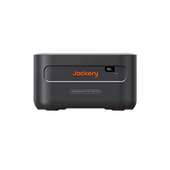
For households considering storage, the Jackery SolarVault 3 Pro Max can integrate with solar-panel systems through a suitable AC-coupled design. Its expandable battery capacity can store surplus daytime generation for later use, subject to system compatibility, electrical design and DNO requirements.
|
Key Takeaways: |
|
Maximum Number of Solar Panels Allowed in the UK: The Short Answer
There is generally no single UK-wide law setting a numerical maximum for rooftop solar panels. A home could have 10, 20 or more panels, provided the complete installation satisfies the applicable planning, structural, electrical and grid-connection requirements. The answer therefore depends on the property and system design rather than a fixed panel count.
Four separate limits must be considered:
- Planning rules control the array’s location, projection, height and visual effect. Requirements vary across England, Scotland, Wales and Northern Ireland, with additional restrictions potentially applying to listed buildings and designated areas.
- Building Regulations address structural loading, weather resistance, fire considerations and electrical safety.
- DNO requirements govern how the system connects to and exports electricity through the local distribution network.
- Practical limits include usable roof dimensions, panel size, shading, orientation, household demand and budget.
The frequently quoted 3.68 kW limit is not a ban on systems above 4 kWp, nor does it restrict a home to a particular number of panels. It relates to the G98 threshold of 16 A per phase—approximately 3.68 kW on a typical single-phase supply.
Larger generation systems may be connected through the G99 application process, sometimes with an agreed export limit and G100-compliant export-limitation equipment. Approval depends on the proposed design and local network capacity.
|
Question |
Short answer |
|
Is there a statutory panel-count limit? |
Generally no |
|
Can a home have more than 4 kWp of panels? |
Yes |
|
Does a larger system need DNO approval? |
Often, depending on generation and inverter capacity |
|
Is planning permission always required? |
No, but conditions and exceptions apply |
|
Does every panel need to face south? |
No |
What Actually Limits the Number of Solar Panels?
“How many panels am I allowed?” has no universal numerical answer because a solar installation is limited by the property, electrical design and intended use of the electricity. Two homes with identical roof areas may support different system sizes because of their roof structures, shading, grid connections or consumption profiles.
Usable Roof Area
The total roof area is not the usable panel area. Installers must account for roof edges, ridges, valleys, chimneys, dormers, roof windows, vents and safe access zones. Panel dimensions and mounting gaps also affect how many modules fit.
Structural Capacity
Panels, rails and fixings add permanent weight and expose the roof to wind and snow loads. Rafters, battens, roof coverings and mounting points must safely support the proposed layout. An older or damaged roof may require repairs or structural assessment first.
Orientation and Shading
A roof section may have enough physical space but receive insufficient sunlight. Persistent shading from trees, chimneys or nearby buildings can reduce output. North-facing areas may also produce less than better-oriented sections, although suitability depends on pitch and location.
Planning Status
Listed buildings, scheduled monuments, conservation areas and other designated locations can face additional controls. Flats, leasehold properties and shared roofs may also require permission from a landlord, freeholder or other owners.
Grid Connection
G98, G99 and any agreed export limit influence the system’s electrical capacity. The relevant threshold normally concerns aggregate generation and inverter output per phase—not simply the number or combined wattage of the panels.
Consumer Unit and Electricity Supply
Available cable routes, protective devices, earthing arrangements, consumer-unit condition and service capacity all matter. A single-phase or three-phase supply can also affect the connection options for a larger system.
Inverter Capacity
The inverter must accept the array’s voltage, current and DC capacity. Moderate DC oversizing may be permitted by the manufacturer, but excessive oversizing can cause clipping, compatibility problems or warranty issues.
Household Consumption
Extra generation is not automatically equally valuable. Electricity used directly can avoid the retail import price, while exported electricity earns the applicable export tariff. Consumption timing therefore affects the economical system size.
Budget and Future Plans
A larger array may be justified when an EV, heat pump, electric water heating or battery is planned. However, future demand should be estimated rather than assumed, and expansion costs should be compared with installing additional capacity initially.
Ultimately, the maximum physical panel count, maximum grid-connected capacity and financially sensible system size are three different numbers.
Planning Permission and Permitted Development Rules
Planning law is devolved, so the detailed rules differ across England, Wales, Scotland and Northern Ireland. Homeowners should check the guidance for their nation and ask the relevant local planning authority about any property-specific restrictions. Meeting planning requirements does not remove the need for Building Regulations compliance, DNO notification or other consents.
When Rooftop Solar Is Usually Permitted Development
Domestic rooftop solar panels often qualify as permitted development, meaning a full planning application is not normally required. This generally depends on the panels meeting applicable limits and being positioned to minimise their effect on the building’s appearance and the surrounding area.
The conditions can address how far panels project from a roof or wall, whether they extend above or beyond parts of the roof, and where equipment may be placed. Flat-roof, wall-mounted and stand-alone installations can follow different rules. National and local requirements should therefore be confirmed before the design is finalised rather than assumed from another UK region.
Situations Requiring Closer Checks
Additional investigation may be necessary for:
- Listed buildings: Planning permission and listed-building consent may be required where panels affect the building or its historic character. Controls can also extend to structures within its curtilage.
- Scheduled monuments: Specialist consent and heritage assessment may be needed where work could affect a protected monument.
- Conservation areas and designated land: Restrictions may apply to visible elevations or installations facing a road. Rules differ by nation and designation.
- Flats, maisonettes and shared roofs: Permitted development rights, roof ownership and responsibility for communal areas must all be confirmed.
- Flat roofs: Raised frames can exceed permitted projection or height limits and may be visible from surrounding properties.
- Pitched roofs: Panels that project too far from the roof plane or extend beyond its highest part may require permission.
- Ground-mounted arrays: Their area, height, location and distance from boundaries can determine whether permitted development applies.
- Article 4 directions: A local authority can remove specific permitted development rights in England; comparable local restrictions may apply elsewhere.
- Leasehold homes: Landlord, freeholder or management-company consent may be required even where planning permission is unnecessary.
Planning rules normally control an installation’s dimensions, position and visual impact, not a simple panel count. Twelve compact panels and twelve large-format panels can occupy substantially different areas.
Where the position is uncertain, obtain written confirmation from the planning authority before installation. In England and Wales, a lawful development certificate may provide formal confirmation where appropriate. Useful starting points include the Planning Portal guidance for England, Welsh Government guidance, Scottish Government guidance and nidirect guidance for Northern Ireland.

G98, G99 and the 3.68 kW Grid-Connection Threshold
The 3.68 kW figure is often described as the maximum domestic solar-system size. This is incorrect. It is primarily a grid-connection threshold based on AC generation capacity per phase, not a legal restriction on the number or combined DC wattage of rooftop panels.
G98: Up to 16 A per Phase
Engineering Recommendation G98 provides a simplified connection route for compliant microgeneration rated at no more than 16 A per phase. At the UK nominal voltage of 230 V, this is approximately:
- 3.68 kW on a single-phase connection
- 11.04 kW in aggregate on a balanced three-phase connection
Most homes have single-phase supplies, although larger properties and some newer buildings may have three-phase connections.
For an eligible G98 installation, a competent installer can normally install and commission the approved equipment without waiting for individual advance permission. The DNO must then be notified using the required documentation, generally within 28 days of commissioning. The system and its protection equipment must comply with G98; the route is not an exemption from grid-connection rules.
G99: Systems Above the G98 Threshold
A system above 16 A per phase is not prohibited. It normally follows Engineering Recommendation G99, with an application submitted before the installation is connected or commissioned. The DNO assesses the proposed generation against local network conditions, including voltage rise, thermal capacity and protection arrangements.
The application should describe the complete electrical design, including the inverter, solar array, battery equipment and any export-limitation scheme. The DNO may respond with:
- Approval of the proposed capacity
- Approval subject to a lower export limit
- A request for protection studies or additional technical details
- A requirement for network reinforcement, potentially at the applicant’s expense
- A request for a revised inverter or phase arrangement
- Refusal of the original proposal, accompanied by an alternative connection offer
The outcome depends on the local network, so approval granted to a similar property elsewhere does not guarantee the same result.
Panel Capacity Is Not the Same as Export Capacity
Consider this example:
|
System component |
Capacity |
|
Solar array |
12 × 450 W = 5.4 kWp DC |
|
Inverter output |
3.68 kW AC |
|
Maximum grid export |
3.68 kW |
The 5.4 kWp figure describes the panels’ combined rated DC output under standard test conditions. The inverter’s 3.68 kW rating describes the maximum AC power it can convert, while the export figure describes how much may pass through the connection point to the grid.
A DC array may be larger than the inverter’s nominal AC rating when the voltage, current and overall DC-to-AC ratio remain within the manufacturer’s limits. This can help the inverter reach useful output during weaker sunlight, although some generation may be clipped during high-output periods. The yield model should quantify that loss.
|
Issue |
G98 route |
G99 route |
|
Typical capacity |
Up to 16 A per phase |
Above 16 A per phase |
|
Timing |
Usually notify after commissioning |
Apply before connection |
|
DNO assessment |
Simplified |
Site-specific |
|
Guaranteed approval? |
Only when all conditions are met |
No |
|
Sets a panel-count limit? |
No |
No |
Further technical guidance is available from the Energy Networks Association.
Can Export Limitation, Three-Phase Power or an Off-Grid System Allow More Panels?
A roof may have space for more solar panels than the local grid can accept at full output. Export limitation, a three-phase connection or a genuinely off-grid design may support a larger DC array, but none provides an automatic route around technical or regulatory requirements. The complete system must still be designed around the property, inverter and network connection.
Export Limitation Under G100
An export-limitation scheme monitors electricity at the grid connection point and controls the generating equipment so export does not exceed an agreed value. Equipment meeting Engineering Recommendation G100 may, for example, allow a home to operate a larger solar array while limiting export to 3.68 kW or another capacity approved by the DNO.
However, an export limit does not automatically place the installation under G98 or remove the need for advance assessment. The DNO may still consider the total generation capacity, inverter arrangement, battery system, fail-safe controls and effect on the local network. The proposed limit and G100 equipment should therefore be included in the connection application.
Moving from Single Phase to Three Phase
A three-phase supply can accommodate more balanced generation than a typical single-phase connection. Under G98, up to 16 A per phase equates to approximately 11.04 kW across three properly balanced phases, although the proposed equipment and connection must meet all applicable conditions.
Changing the supply may require:
- Coordination between the DNO, electricity supplier and installer
- Replacement of the electricity meter
- Consumer-unit or distribution-board alterations
- New service, meter and internal cabling
- Building work or changes to cable routes
- Meaningful connection and installation costs
Three phase can be valuable where the property also has high electrical demand, such as an EV fleet, heat pump or substantial workshop equipment. It should not be recommended solely to increase panel count without comparing the upgrade cost with the additional generation’s value.
Off-Grid and Non-Export Arrangements
A true off-grid solar system is electrically segregated from the public network and cannot energise it. Correct changeover equipment, earthing, protection and circuit design remain essential. Planning rules, structural checks, electrical safety and Building Regulations duties also continue to apply.
A grid-connected inverter set to “zero export” through an app is not automatically a formally accepted non-export installation. The DNO may require an approved fail-safe export-limitation scheme and supporting documentation.
Battery storage can also affect the connection assessment. A separate AC-coupled battery inverter may add to aggregate generation capacity, whereas an appropriately controlled hybrid arrangement may be assessed differently. The installer should declare the complete solar, inverter and storage configuration rather than treating the battery as an unrelated appliance.

How Many Solar Panels Can Fit on Your Roof?
House type alone is a poor guide to panel capacity. Two three-bedroom homes may have very different roof shapes, obstructions and orientations. A scaled layout based on the usable parts of each roof plane provides a more reliable answer.
Calculate the Usable Roof Area
Use the following sequence for an initial estimate:
Step 1: Measure each suitable roof plane. Measure the sloping surface rather than relying only on the building’s ground-level footprint. Satellite imagery can provide an initial estimate, but an on-site survey is needed before installation.
Step 2: Remove permanent obstructions. Deduct chimneys, dormers, roof lights, vents, aerials and other equipment. Allow extra space where these objects cast persistent shadows.
Step 3: Allow for edges and access. The layout may require distances from ridges, eaves, verges and valleys, together with safe access or firefighter routes. These allowances depend on the roof and applicable design guidance rather than one universal measurement.
Step 4: Use the proposed panel dimensions. Include the frame, clamps, mounting rails and gaps between modules. The same number of panels may fit in one orientation but not another.
Step 5: Exclude unsuitable positions. Remove areas affected by heavy shading, weak roof zones or an orientation that produces insufficient output to justify installation.
Step 6: Survey the structure and fixing locations. Panel positions must correspond with suitable mounting zones. A roof may have enough surface area while lacking an acceptable structural or fixing arrangement.
A useful first estimate is:
Potential panel count = usable roof area ÷ installed area per panel
For example, if a roof offers 27 m² of usable area and each module requires approximately 2.2 m² after spacing, the numerical estimate is 12 panels. However, the roof’s actual width, height and obstructions may reduce the workable layout to 10 or 11.
Dividing the total roof area by the bare module area usually overestimates capacity. Panels cannot normally cover every square metre, and a fractional result must not simply be rounded up.
Roof-Space Table
|
Modern panel size |
Approximate module area |
Approximate roof area for 8 panels* |
Approximate roof area for 12 panels* |
|
400–450 W residential panel |
1.8–2.1 m² |
16–19 m² |
24–29 m² |
|
500 W large-format panel |
Around 2.2 m² |
Around 19–21 m² |
Around 29–32 m² |
*Allowances are illustrative and include installation spacing, but not large setbacks or obstructions.
A portrait layout may suit a tall, narrow roof, while landscape mounting can use space beneath roof windows or on shallow roof sections. Mixed orientations should only be used with a mounting and electrical design that supports them.
Panels can also be divided across east-, south- and west-facing roof sections. Each plane should be modelled separately because its generation profile will differ. On flat roofs, tilted rows need separation to limit self-shading, so the panel count may be lower than a simple area calculation suggests. Larger arrays also require site-specific structural, wind-uplift, ballast and roof-edge checks before the final layout is approved.
How Many Solar Panels Should You Have?
The best system is not necessarily the maximum number of panels that can be placed on the roof. A useful recommendation should balance annual electricity use, consumption timing, predicted solar yield, roof condition, grid requirements and the value of each additional panel.
Estimate by Household and Property Size
Bedroom count provides a starting point because larger homes often use more electricity, but it cannot identify the correct system by itself. The following ranges use modern 430–450 W panels:
|
Typical home |
Illustrative annual electricity use |
Possible system range |
Approximate number of 430–450 W panels |
|
One- or two-bedroom home |
1,800–2,500 kWh |
2–3 kWp |
5–7 |
|
Three-bedroom home |
2,700–3,500 kWh |
3.5–4.5 kWp |
8–11 |
|
Four-bedroom home |
3,800–5,000 kWh |
4.5–6 kWp |
10–14 |
|
Large home or high electricity use |
5,000+ kWh |
6 kWp+ |
14+ |
These are illustrative starting ranges, not official limits or guaranteed recommendations. They cover household electricity rather than gas use and may not include a future EV or heat pump.
Review at least 12 months of electricity bills or smart-meter data. Monthly information is particularly useful because it reveals seasonal changes hidden by one annual figure. Panel count can then be converted into array capacity:
System capacity in kWp = panel number × panel wattage ÷ 1,000
For example, ten 440 W panels create a 4.4 kWp array. This does not mean they will generate 4,400 kWh every year; location, orientation, shading and system losses determine the annual yield.
Adjust the Number for Roof Space and Solar Yield
A south-facing roof is not essential, but direction and pitch influence how much electricity each panel produces and when it produces it. East-facing panels favour morning generation, while west-facing panels extend output later into the day. A split east–west design may suit household demand even if its peak output is lower than a comparable south-facing array.
The installer’s generation model should consider:
- Regional solar irradiation
- Roof direction and pitch
- Shadows from chimneys, trees and nearby buildings
- Different roof planes and generation periods
- Partial and seasonal shading
- Panel efficiency and watts per square metre
- Inverter, cabling, temperature and shading losses
- Expected monthly and annual electricity generation
Panel wattage should not be considered alone. A physically larger 500 W module may deliver fewer watts per square metre than a smaller high-efficiency panel or may fit an irregular roof less effectively. Compare complete layouts rather than assuming that the highest-wattage module creates the largest array.
Roof quality also matters. If the covering is approaching replacement, reroofing before installation may avoid removing and reinstalling the panels later.
Adjust for How and When Electricity Is Used
A home occupied during the day may use a greater share of solar generation directly. Home working, daytime appliance use and scheduled electric water heating can increase self-consumption.
The recommended array may be larger where credible future demand includes:
- Regular home charging for an EV
- A correctly sized heat pump
- Electric water heating
- A planned extension or additional occupants
- Battery storage with sufficient repeatable surplus
However, annual demand alone is insufficient. A heat pump raises winter electricity use when solar output is lower, while an EV may be absent during sunny hours. These timing differences should appear in the financial model.
Low daytime demand is not automatically a reason to choose a small array. A battery may shift surplus into the evening, and an export tariff may give additional generation value. Compare the saving from each extra panel with its installed cost, expected export income and any inverter or DNO costs.
Compare Three System Sizes
Ask installers to quote three clearly defined options:
- A demand-matched system based on current consumption and self-consumption.
- The largest sensible G98-compatible design, using compliant inverter output and an appropriate DC array.
- The largest viable roof design, including G99 approval or G100 export limitation where relevant.
Can You Have Too Many Solar Panels?
A solar array can satisfy planning, structural and DNO requirements while still being larger than the household can use economically. The important question is not only whether extra panels are permitted, but what happens to their additional electricity throughout the year.
Oversizing can create several disadvantages:
- Low-value surplus export: Exported electricity may be worth less per kWh than electricity used directly to avoid grid imports.
- More inverter clipping: A large DC array connected to a smaller inverter may lose some peak output when generation exceeds the inverter’s AC capacity.
- Higher initial expenditure: Additional panels require modules, rails, fixings, cabling and labour.
- Weak roof positions: The final panels may occupy shaded or poorly oriented areas that generate less than the main array.
- Greater roof complexity: More modules increase loading and may require additional mounting zones or structural work.
- Grid-connection costs: A larger inverter can trigger G99 assessment, export-limitation equipment or network-related expenditure.
- More complicated replacement work: Arrays spread across several roof sections can make roofing repairs and future module matching harder.
- Insufficient demand: Electricity produced when the home, battery and flexible loads cannot use it will be exported, curtailed or clipped.
However, a larger array can be justified where additional generation has a clear use. Future EV charging, a heat pump or electric water heating may substantially raise demand. Installing more panels initially may also be economical when scaffolding and roof access would make later expansion expensive.
East–west arrays can provide a broader generation period that better matches morning and evening consumption. Homes with high daytime loads may use substantial solar output directly, while a correctly sized battery can store repeatable surplus for later use. A competitive export tariff can further improve the value of generation that the household cannot consume.
A simple way to assess the result is:
Useful annual solar generation = direct self-consumption + battery-supplied consumption + economically valuable export
Battery-supplied consumption should account for charging and discharge losses. The calculation should also separate exported electricity from generation lost through inverter clipping, export limitation or curtailment.
Evaluate the marginal panels separately. Ask how much panels 11 and 12 add to the quotation, how many kWh they are expected to generate, and how that electricity will be valued. If their additional lifetime benefit does not reasonably exceed their cost and associated system upgrades, stopping at ten panels may be the stronger choice—even when twelve physically fit.
Matching a Larger Solar Array with Battery Storage
Battery storage does not increase the legal number of solar panels or remove planning, Building Regulations and grid-connection duties. It can, however, improve the value of a larger array by storing electricity that would otherwise be exported or curtailed for use after sunset.
Before selecting capacity, measure or model the home’s midday solar surplus across the year. One sunny-day estimate is insufficient: a battery sized around exceptional summer output may remain partly empty during much of the year. Compare repeatable daily surplus with evening and overnight consumption, allowing for charging, standby and discharge losses.
Keep four different ratings separate:
|
Rating |
What it describes |
|
PV capacity in kWp |
Combined rated DC output of the panels |
|
Solar inverter output in kW |
Maximum AC conversion power |
|
Battery power in kW |
How quickly the battery can charge or supply loads |
|
Battery energy in kWh |
How much electricity the battery can store |
A 10 kWh battery does not necessarily accept or deliver 10 kW. Both its power and energy ratings must suit the household load profile.
The DNO application should show the complete solar-and-storage arrangement. A separate AC-coupled battery inverter may contribute to aggregate generation capacity, while a hybrid inverter may be assessed according to its declared operating modes and maximum output. Where G100 export limitation is proposed, confirm that its measurement and control scheme covers every solar and battery inverter capable of exporting.

The Jackery SolarVault 3 Pro Max is one modular LFP storage option for a suitably designed installation. Capacity can be expanded from 2.52 to 15.12 kWh per tower, allowing it to be compared with measured evening demand rather than purchased at one fixed size. Its four MPPT inputs, each supporting up to 1,000 W, can accommodate properly matched panel strings with different orientations. All voltage, current and string-design limits must still be followed.
Backup operation also requires a separate assessment. Normal grid-connected storage does not automatically power the whole home during a cut. The installer must define the backup circuits, maximum load, changeover arrangement, earthing and expected runtime.
Use this decision sequence:
Size the panels from roof potential and annual consumption.
Model monthly surplus rather than relying on annual totals alone.
Size storage from repeatable surplus and evening demand.
Confirm the complete solar-and-battery design with the DNO.
Checks to Complete Before Accepting a Solar Quote
A useful quotation should explain why the proposed panel number suits the property, electricity demand and grid connection. Before signing a contract or paying a deposit, complete the following checks.
Consumption and Future Demand
- Obtain at least 12 months of electricity bills or smart-meter data.
- Separate daytime consumption from evening and overnight use where possible.
- Identify planned loads such as an EV, heat pump, electric water heating, home extension or additional occupants.
- Ask how these future loads have been reflected in the recommended array and battery sizes.
Panels, Roof and Expected Output
- Confirm the number, model, dimensions and wattage of every panel.
- Check the total DC capacity in kWp rather than relying on panel count alone.
- Request a scaled roof layout showing roof edges, chimneys, dormers, roof lights, vents, shaded areas and access margins.
- Obtain a structural assessment where the roof condition, span, loading or fixing arrangement requires one.
- Ask for annual and monthly generation forecasts showing the assumed orientation, pitch, shading and system losses.
- Check whether roof repairs or replacement are advisable before installation.
Inverter and Grid Connection
- Confirm the inverter’s AC output, MPPT arrangement and permitted DC voltage, current and array capacity.
- Check whether the property has a single-phase or three-phase electricity supply.
- Ask the installer to state whether G98, G99 or G100 applies and why.
- Require written evidence of any DNO approval, export limit or required network work.
- Confirm that solar and battery inverters are both included in the connection assessment.
- Clarify whether adding panels or storage later would require a replacement inverter, revised export controls or another DNO application.
Permissions, Compliance and Financial Assumptions
- Check planning status with the appropriate authority for England, Wales, Scotland or Northern Ireland.
- Confirm how Building Regulations or building standards, structural safety and electrical compliance will be documented.
- Ask who is responsible for notifications, certificates and warranty registration.
- Check MCS certification, or other evidence accepted by the chosen supplier, where Smart Export Guarantee eligibility is required.
- Compare assumptions for direct self-consumption, battery charging, grid imports and exported electricity.
- Confirm the import and export tariffs used in the savings estimate and whether they are fixed or assumed.
- Ensure panels, battery storage and backup equipment are priced separately.
Avoid quotations that describe 3.68 kW as an absolute legal generation limit. Also reject any claimed maximum panel count that has been produced without measuring the roof, identifying obstructions and checking the electrical connection.
FAQs
The following are the frequently asked questions about the maximum number of solar panels allowed:
Is there a limit on how many solar panels I can have in the UK?
There is generally no nationwide numerical limit for domestic rooftop panels. The maximum number depends on usable roof space, structural capacity, planning conditions and electrical design. The DNO assesses generation and inverter capacity rather than simply counting panels. A home may therefore have 10, 20 or more panels if the complete installation satisfies the relevant requirements.
Can four solar panels power a house?
Four modern 430–450 W panels provide approximately 1.72–1.8 kWp of rated capacity. They can supply part of a household’s electricity and may cover low daytime loads during favourable conditions. However, they are unlikely to power a typical home continuously because output changes with daylight, weather and season. The grid or a battery would still be needed when solar generation is insufficient.
What is the 20% rule for solar panels?
There is no recognised UK legal or DNO “20% rule” governing panel numbers. The phrase is used inconsistently: some sources describe sizing solar to cover 80% of annual demand, while others recommend targeting 120% of consumption as a buffer. These approaches produce opposite results and neither is a universal design standard. Use a site-specific yield model instead of a percentage shortcut. Examples of these conflicting interpretations appear in Solar Simplicity’s 80% approach and EcoFlow’s 120% approach.
What is the 33% rule for solar panels?
The “33% rule” is also not one UK regulation. It can refer to sizing a DC panel array above inverter capacity, an informal self-consumption benchmark or a roof-coverage rule derived from non-UK fire codes. Britain has no general national rule limiting domestic solar panels to 33% of the roof. Any DC oversizing must follow the inverter manufacturer’s voltage, current and capacity limits and account for clipping. These differing meanings are summarised by Upvolt Energy.
How many solar panels do I need for a three-bedroom house in the UK?
A three-bedroom home might begin with approximately 8–11 modern 430–450 W panels, providing around 3.4–5.0 kWp. The correct number depends on at least 12 months of electricity use, roof orientation, shading, regional yield and planned loads such as an EV or heat pump. Bedroom count alone cannot provide a final system size.
Is it better to have one large solar panel or several small ones?
Domestic systems normally use several panels because one module cannot provide enough electricity for a typical home. Higher-wattage panels may reduce the number required, while smaller modules may fit an irregular roof more effectively. Compare total kWp, watts per square metre, module dimensions, shading behaviour, mounting costs and inverter compatibility rather than panel count alone.
Can I install panels on different roof sections?
Yes. Panels can be divided across south-, east- and west-facing roof planes if each section is structurally and electrically suitable. Roof sections with different directions or shading conditions may need separate MPPT inputs, microinverters or compatible power optimisers. The generation forecast should model each roof plane separately rather than treating the entire array as having one orientation.
Can I add more solar panels later?
Usually, but expansion is not always straightforward. The installer must check remaining roof space, mounting compatibility, existing module specifications, inverter DC limits, string voltage and warranty conditions. A larger system may also require a new inverter, revised export limitation or a G99 application. Planning for future expansion during the original design can reduce later scaffolding and equipment-replacement costs.
Final Thoughts
The maximum number of solar panels allowed in the UK is not defined by a universal panel-count cap. The workable figure depends on the roof survey, planning status, structural design, inverter output and connection route agreed with the DNO. A larger array is worthwhile only when its additional generation has sufficient value.
The Jackery SolarVault 3 Pro Max can store surplus electricity from an appropriately designed array for later household use. However, storage should support the selected panel number—not determine it—and must be included correctly in the electrical and DNO assessment.


