
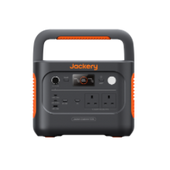



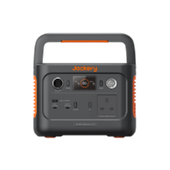


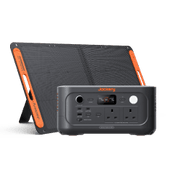
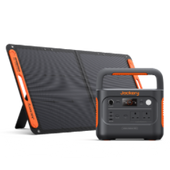
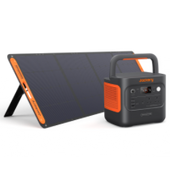
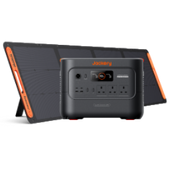
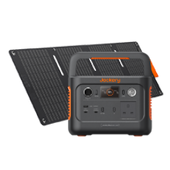

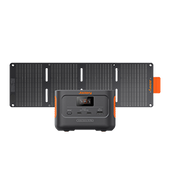

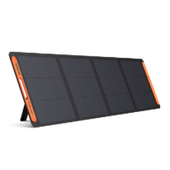
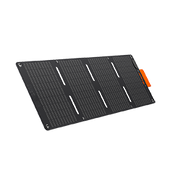
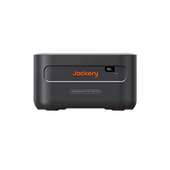
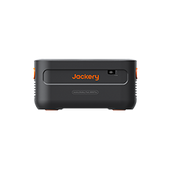










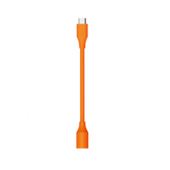





















With fluctuating energy prices and the green transition, more and more households are seeking independent power solutions. Solar panel kits with batteries and inverters have become a core tool for achieving energy self-sufficiency. They not only capture sunlight and convert it into household AC power, but also store excess energy in batteries, ensuring you still have power at night or on cloudy days.
This article will take you through a deep dive into the working principles, selection recommendations, and installation safety standards of solar panel kits with batteries and inverters. We will also highlight easy-to-install solutions such as the Jackery SolarVault 3 Series.
|
Key Takeaways: |
|
What Is a Solar Panel Kit with Battery and Inverter?
A solar panel kit normally consists of a solar panel, inverter, battery pack, charge controller, mounting hardware, and wiring. Let us take a deeper look at these components.
- Solar Panels: They are made up of photovoltaic cells, which convert sunlight into electricity. The panels use sunlight to generate direct current (DC) electricity.
- Inverter: The inverter converts the direct current (DC) electricity generated by the solar panels or stored in the battery bank into alternating current (AC) electricity, which is often utilised in homes and businesses.
- Storage Battery: Used to store extra electricity generated by solar panels. This stored energy can be used during periods when sunlight is scarce, such as at night or on cloudy days.
- Charge Controller: It controls the flow of electricity between the solar panels and the battery bank. It avoids overcharging by monitoring and regulating voltage and current.
- Wiring: These cables connect the solar panel, charge controller, and inverter, transferring power. The Jackery SolarVault 3 Series eliminates the need for complicated wiring by connecting the solar panel and battery using a specific interface.
- Mounting Hardware: Solar panel kits frequently contain mounting gear such as brackets, rails, and screws. These components are used to firmly mount solar panels on roofs or other buildings.
How Do Solar Panel Kits With Batteries and Inverters Work?
A solar panel kit with battery and inverter works on the following principle: photovoltaic cells capture sunlight and convert it to direct current. This current travels through the wire to the charge controller, which stores the controlled power in the battery.
The stored energy in the battery can then be used by your household appliances via an inverter, which transforms DC current to AC power. This energy can also be returned to the grid or saved for later use when sunshine is limited.

How to Choose a Suitable Solar Panel Kit with Battery and Inverter UK?
When selecting the best solar panel kit with battery and inverter in the UK, the most important factor is to examine your electricity requirements. To maintain proper system operation, you must match the power input (kW) and energy storage capacity (kWh). Below is a complete selection guide for reference only:
How to Choose the Right Solar Panel Power (kW)?
A solar panel's power unit is kilowatt (kW), which specifies how much power your system can generate during the daytime. Choosing the correct solar installation capacity is primarily dependent on the following three steps:
Step 1: Analyse Your Annual Electricity Consumption
To calculate your total annual electricity consumption in kilowatt-hours (kWh), analyse your electricity bill for the previous year. The average UK household's annual electricity consumption is as follows:
|
Energy Use |
Example – home type and number of residents |
Typical annual electricity use (kWh) |
|
Low |
Flat or 1-bedroom house; 1 to 2 people |
1,800 |
|
Medium |
2-3 bedroom house; 2 to 3 people |
2,700 |
|
High |
4+ bedroom home; 4 to 5 people |
4,100 |
(Source: www.ofgem.gov.uk)
Step 2: Understand the Power Generation Capacity of a Single Solar Panel
In the UK, the mainstream power output of residential solar panels is currently between 250 watts and 400 watts.
Considering UK weather and sunlight conditions, a 400W solar panel can generate approximately 340-380 kWh of electricity per year. This figure will vary depending on the roof's orientation , tilt angle, geographical location, and whether there are obstructions (such as trees or chimneys).
Step 3: Calculate the Required Number of Solar Panels and Total Power
To calculate the required number of solar panels and total power, you can use the following simple estimation formula:
Required number of solar panels ≈ Annual electricity consumption (kWh) ÷ Annual power generation per panel (kWh)
Example 1: Assuming your household's annual electricity consumption is 3,600 kWh, and each solar panel generates approximately 360 kWh per year, you would need approximately 10 solar panels (4000 ÷ 360 = 10). The total power of the system would then be 4 kW (10 panels × 400W/panel = 4000 W = 4000 kW).
Of course, you also need to consider whether the available roof area is sufficient (approximately 1.7 square meters per panel). Therefore, the solar panels in Example 1 would require 17 square meters of roof area.
How to Determine the Energy Storage Battery Capacity (kWh)?
The capacity of an energy storage battery is measured in kilowatt-hours (kWh), which defines how much excess electricity may be stored during the day for later use at night or on overcast days. There are several key steps to determining battery capacity:
Step 1: Define Your Electricity Usage Trends and Goals
If you want to use as much of your own generated electricity as possible and limit your reliance on the grid, your battery capacity should be equal to the excess electricity you produce during the day. A typical UK family consumes 8-10 kWh of electricity per day; a 5-10 kWh battery might adequately cover peak evening demand.
Step 2: Evaluate the Battery's Depth of Drain (DoD)
The depth of discharge (DoD) indicates the percentage of useable battery capacity. Lithium-ion batteries usually have a DoD of 80%-90%.
Required battery rated capacity (kWh) ≈ Target available capacity (kWh) ÷ Depth of discharge (DoD)
Example 2: If you need to utilise 8 kWh of electricity per night and choose a lithium battery with a DoD of 90%, the required battery capacity is 8 ÷ 0.9 = 8.9 kWh. As a result, a 9-10 kWh battery is the better choice.
If you find the preceding setting and installation process too hard, or if you simply want to experiment with solar energy on a modest scale, products such as the Jackery SolarVault 3 Series are an ideal option. They are essentially solar power generation kits that combine high-performance solar panels, a portable power supply with an integrated smart inverter and battery management system.
Installing the Solar Panel Kit with Battery and Inverter UK: Key Safety Standards to Comply with
In order to install a DIY solar panel kit with battery and inverter in the UK, severe safety regulations must be met.
Roof Load Bearing Capacity and Structural Integrity
Before installing the panels, make sure the roof can withstand the additional load, taking into account wind and snow loading. A structural report should be undertaken by an expert (such as an MCS-certified installation). If your roof is old, the installation brackets may harm the tiles or cause leaks, which can invalidate your house insurance.
Mounting Brackets
Attach brackets to roof rafters or ground frames, making sure they're strong and weatherproof. It is also advisable to keep a safety buffer of at least 300-500mm between the edge of the panel and the edge of the roof to prevent it from being blown off by heavy winds. If your property is a Listed Building or in a Conservation Area, you must first acquire planning clearance.
Electrical Safety and Wiring Standards
Your electrical wiring must meet the IET Wiring Regulations (BS 7671). This provides proper earthing (grounding), electric shock protection, and the installation of the appropriate DC/AC isolation switch. If you are unsure about electrical work, please hire a professional.
Report to the Distribution Network Operator (DNO)
You must notify your local Distribution Network Operator (DNO) about the installation of a new generator (solar) or battery on the grid. However, if you are just connecting appliances to the Jackery SolarVault 3 Series, no DNO notification is required.
Jackery SolarVault 3 Series: Easy Solar Panel Kit with Battery and Inverter (Only Simple Installation Required)
The Jackery SolarVault 3 Series is Jackery’s next-generation plug-in solar solution, designed to help households generate, store, and use solar energy more efficiently. The series offer flexible options for home battery storage systems, existing PV installations, and larger home energy setups. With an integrated inverter, LiFePO4 battery technology, smart energy management, and expandable storage, the SolarVault 3 Series brings solar storage into a compact, modular, all-in-one system.
The system works by collecting solar power from connected panels, storing surplus electricity in the battery, and automatically supplying that energy when the home needs it most, such as in the evening, during peak electricity prices, or during a power outage. The SolarVault 3 Series can optimise solar generation even when panels face different directions or experience partial shading. Its AI-driven energy management helps balance solar production, household demand, battery charging, and electricity tariffs for smarter daily use.
One of its biggest advantages is flexibility. Homeowners can start with a smaller battery capacity and expand later as their energy needs grow. The plug-and-play design also makes installation more straightforward, while key safety features such as LiFePO4 cells, terminal temperature monitoring, and integrated aerosol fire suppression support reliable long-term operation. For UK households looking to improve solar self-consumption, reduce reliance on the grid, and prepare for a more flexible energy future, the Jackery SolarVault 3 Series offers a practical bridge between everyday solar generation and intelligent home battery storage.
The Jackery SolarVault 3 Series is expected to go on sale in the UK in July, giving UK users a new way to store solar power, use more of their own clean energy, and make home electricity management smarter and more cost-effective.

How Much Does a Solar Panel Kit with Battery and Inverter UK Cost?
In the United Kingdom, a complete solar panel kit including a battery and inverter typically costs between £1,800 and £5,000+ for DIY kits. Costs vary greatly depending on system size, battery capacity (5-10 kWh+), and installation expenses.
Installation Costs
The solar panel kit with battery and inverter UK is normally installed by following the manufacturer's instructions. However, if this is not feasible, a professional installer will be required. The most typical method for calculating the work costs of a solar panel installation is to charge 20p per watt.
So, for a 4kW system, you'd pay 20p every 4000 watts, totalling £800. If you're concerned about complicated installation and upkeep, the Jackery SolarVault 3 Series is an extremely cost-effective option. These devices have no installation costs; simply purchase them and you're ready to go.
Maintenance and Hidden Costs
Aside from the initial expenditure, you need consider long-term keeping costs. The good news is that solar systems are rather simple to maintain. Photovoltaic panels have no moving parts and a lifespan of more than 25 years.
The main maintenance activities are cleaning (removing bird droppings and moss) and inspecting the wiring. Inverters normally have a 10- to 12-year guarantee, but batteries last 10-15 years. This means you may need to set aside approximately £6,000 to replace the inverter and storage batteries before the photovoltaic panels retire.
What Is the Return on Investment for a Solar Panel Kit with Battery and Inverter UK?
In the UK, a solar panel kit with a battery and inverter typically delivers an annual return on investment (ROI) of 8-12%, with payback times of 6-10 years. It varies according to the location, energy usage, and system size. Such systems typically have a 25-year panel lifespan, a 12-year inverter duration, and a 10-15-year battery lifespan, which could result in a net profit of more than £10,000.
If you want to significantly reduce the payback period of a solar panel kit with battery and inverter UK, you can use the following proactive tactics to maximise the system's economic benefits:
Maximise Self-Consumption
Make the most of each kilowatt-hour of electricity you create. Adjust your lifestyle by scheduling high-energy-consuming appliances like washing machines, dishwashers, and dryers to operate during the midday sun, or use timers to start them automatically during peak solar power generating times.
Utilise a Smart Energy Management System
Modern energy storage batteries include smart apps that allow you to set smart charging and discharging modes. For example, on overcast winter days, the system can be set to prioritise battery charging during low daylight hours, reserving it for peak evening use.
Consider Portable Options to Lower the Barrier to Entry
If you don't want to install a fixed rooftop system, have a restricted budget, or have a roof in poor condition, consider using the Jackery SolarVault 3 Series. Their cheap initial investment of £2,000-£3,000 results in a possibly shorter return period and no sunk installation costs.
Why Choose a Solar Panel Kit with Battery and Inverter UK?
Choosing a solar panel kit with battery and inverter in the UK means selecting a highly efficient and adaptable energy option. Here are the primary advantages and benefits of using this type of kit:

Simple Installation
Modern solar panel kits with batteries and inverters in the UK are typically pre-assembled or highly integrated modular designs. For example, the hybrid inverter and battery management system (BMS) are factory-pre-configured with communication protocols, so installers only need to make simple physical connections and electrical cabling, eliminating the need for sophisticated on-site programming.
Cost Savings
Choosing a solar panel kit with battery and inverter UK not only lowers daily expenditures but also maximises initial investment. Traditional PV system installation in the UK can cost thousands of pounds in terms of labour and materials. An integrated kit eliminates all of these fees, ensuring that every penny you spend goes directly to the equipment's performance.
Superior Compatibility
Assembling multiple brands of equipment often results in new batteries that are incompatible with old solar panels or inverters that are incompatible with various battery brands. Solar panel kits with battery and inverter UK address these issues from the start. This extensive integration assures seamless compatibility, eliminates typical issues, and maximises energy harvesting efficiency.
Simplified Maintenance
Choosing a solar panel kit with battery and inverter UK typically means dealing with only one supplier. Whether it's a 10-year battery warranty or a 25-year panel performance warranty, there's a unified after-sales service channel. You will not be trapped in a situation where different manufacturers pass the buck.
FAQs
The following are the frequently asked questions about the solar panel kit with battery and inverter:
1. Why are people getting rid of their solar panels?
While panels can endure for 25-30 years, they are typically removed when older, less efficient systems (10+ years old) are replaced with modern, higher-output technology, or when homeowners face costly inverter upgrades.
2. Will a 200W solar panel run a 12V fridge?
Yes, a 200W solar panel can power a 12V fridge, but it requires a sufficiently large battery bank (usually 100Ah+ lithium or AGM) to handle overnight and cloudy days.
3. Is it worth installing a battery with solar panels in the UK?
Installing a solar battery in the UK is generally worthwhile if your primary goals are energy independence, maximising green energy usage, and lowering high electricity costs, with payback times of 6-10 years for new systems.
4. Does a 400W solar panel produce 400W?
In practice, a 400W solar panel rarely generates exactly 400W. It is rated to produce 400W of direct current (DC) power only under severe Standard Test Conditions (STC), such as 25°C raised to the composed with power 25°C (77°F raised to the composed with power 77°F) cell temperature and direct, intensive sunshine. In actuality, output normally ranges from 300W to 350W, depending on the conditions.
Final Thoughts
Investing in a solar panel kit with battery and inverter UK is not only a long-term guarantee of home energy security, but also an important step towards a sustainable lifestyle. For users seeking ultimate convenience and flexibility, the Jackery SolarVault 3 Series, with their plug-and-play features, excellent lithium iron phosphate battery life, and zero installation cost, are ideal choices for modern families investing in green energy.
No matter you choose a fixed roof system or a portable integrated solution, as long as you properly match the power and capacity and follow safe installation guidelines, you can enjoy free, clean electricity from the sun for decades to come.


![Guide to 10kW Solar Battery Price in the UK [2026 Update]](http://uk.jackery.com/cdn/shop/files/10kw_solar_battery_price_guide.webp?v=1780026743&width=90)
