













![[Over £1200 Tier Gift] Bluetooth Speaker with Phone Stand - shipped Separately](http://uk.jackery.com/cdn/shop/files/Portable_Bluetooth_Speaker_with_Phone_Stand_2.png?v=1781595581&width=170)












Living in a motorhome has a certain appeal in the UK. For some people, it is about lowering living costs. For others, it is about flexibility, simpler routines, or the freedom to change location without the usual weight of fixed housing.
There are legal questions to think through first, from council tax and site rules to insurance, road tax, and where you can actually stay overnight. Then there is the practical side: choosing the right motorhome, managing water and waste, staying powered, cooking in a small space, and keeping comfortable through British weather.
This tutorial examines what living in a motorhome in the UK really involves. It also explains why a reliable portable power solution such as a Jackery Solar Generator can be a useful part of a motorhome setup, especially for people who want more flexibility away from mains hook-up.
|
Key Takeaways: |
|
Is It Legal to Live in a Motorhome Permanently in the UK?
Yes, it can be legal to live in a motorhome in the UK, but not in a simple, unrestricted way. There is no general UK-wide law that says you cannot live in a motorhome full time. The real issue is where you keep it, whether the land or site allows residential use, and whether you continue meeting the normal legal requirements for the vehicle itself.
You cannot simply treat every campsite, holiday park, lay-by, or car park as a legal permanent home. Many caravan and motorhome sites need planning permission and a caravan site licence, and some sites are licensed only for holiday use, not permanent residential occupation.
There is no single UK-wide time limit that says you may only live in a motorhome for a set number of days or months. In theory, you can do it long term. In reality, the limit usually comes from where you stay. You can live in a motorhome for as long as you can keep moving between lawful places or secure a site that permits residential use.
Council Tax and Your Main Residence
Council tax depends less on the vehicle itself and more on whether it is being used as your sole or main residence. Caravans used as a sole or main residence are generally treated as domestic property and assessed for Council Tax rather than business rates.
Council tax treatment is often tied to the pitch or site arrangement, so the practical outcome can vary depending on where the motorhome is based. If you are on a residential park or authorised site and it is effectively your main home, council tax can apply.
Parking and Overnight Stays
This is where full-time motorhome living becomes much harder. There is no universal right to sleep overnight in a motorhome wherever you park. Councils can set restrictions for their own car parks, and some clearly ban overnight sleeping. For example, North Norfolk says overnight sleeping is not allowed in all council car parks, while other authorities only allow it in designated places or for limited stopovers.
MOT, Road Tax, and Roadworthiness
If your motorhome is on the road, it must meet the same core legal standards as other vehicles. Most motor caravans require an MOT after three years, and motor caravans within the normal testing framework for many vehicles.
You also need to keep it properly taxed, unless it qualifies for an exemption, and if you take it off the road you normally need to make a SORN to stop paying tax.
Insurance
Insurance is non-negotiable. You normally need at least third-party motor insurance if you drive a vehicle, and in many cases you also need insurance if it is simply kept parked. The main exception is when the vehicle is legally off-road under a valid SORN.
For people living in a motorhome full time, the tricky part is not just having insurance, but having the right kind of insurance and being honest about how the vehicle is used.
Do You Need a Fixed Address?
There is not a simple rule saying you must own or rent a conventional house to live legally in a motorhome, but in practice a fixed correspondence address is often important. DVLA requires you to keep the address on your V5C log book up to date, and you can be fined if you fail to notify a change of address.
Can I Still Claim My Benefits If I Live in a Motorhome?
Yes, you may still be able to claim benefits if you live in a motorhome in the UK. Living in a motorhome does not automatically stop a benefits claim. What matters more is which benefit you receive, whether you still meet the eligibility rules, and how your living arrangement is treated for housing-cost purposes.
For Universal Credit, the key point is that you do not need a fixed address to claim. GOV.UK says people with no permanent address can still apply, using a “care of” address such as a friend or family member’s address, a hostel, a day centre, or in some cases a local Jobcentre. So if you are living in a motorhome and do not have a standard residential address, you can often still keep or make a claim.
The bigger question is usually housing support. If your motorhome is on a lawful site and you pay pitch fees, site charges, or rent, you may be able to get help with those costs through Universal Credit or Housing Benefit, depending on your circumstances.
If you are simply parking informally, moving around, or staying somewhere without regular housing charges, you might still qualify for the main benefit itself, but you may NOT get a housing element for the vehicle in the same way as someone paying for a residential pitch or rented accommodation.
Top Considerations for Living in a Motorhome in the UK
Before moving into a motorhome full time, it helps to think beyond the romantic side of the lifestyle. In the UK, the biggest challenges are usually not the vehicle itself, but where you can legally stay, how you manage day-to-day services, and how well prepared you are for safety, weather, and paperwork.

Planning Permission and Legal Use of Land
This is one of the first things to check. If you want to keep a motorhome on land and use it for accommodation on a regular basis, planning rules may apply. You must have planning permission before applying for a caravan site licence, and several councils make clear that using land for caravan or motorhome accommodation often needs both the right planning status and a site licence.
Utilities and Basic Services
A motorhome can give you independence, but it also means taking responsibility for all the things a fixed home normally hides in the background. Fresh water, wastewater disposal, toilet emptying, electricity top-ups, heating, laundry, and rubbish disposal all need a realistic plan.
Post and administration are part of this too. Even if you live on the road, you still need a reliable way to receive letters, renew documents, and deal with official services. Royal Mail offers Redirection services and a PO Box option, which can help if you are moving around or do not want to rely entirely on one physical location.
Healthcare is another practical point. In England, NHS guidance says you do not need ID, proof of address, or even a permanent address to register with a GP surgery, and a surgery can use a temporary address or its own address in some cases.
Overnight Sops and Where You Can Actually Stay
Many people focus on the freedom of stopping anywhere, but the UK is not especially open when it comes to informal overnight motorhome living. Overnight sleeping is often restricted in council-run car parks, and the rules differ sharply from one area to another.
Do not assume day parking and overnight sleeping are treated the same way. Always check local signs, traffic orders, car park terms, and council guidance before treating a location as a stopover.
Safety Inside the Motorhome
Safety matters more when your vehicle is also your home. Gas appliances, portable heaters, generators, cooking equipment, and enclosed sleeping space can create real risks if they are poorly maintained or badly ventilated.
Living in a motorhome also changes how you think about personal security. A good overnight spot is not just legal; it should also feel safe, well judged, and low risk.
Vehicle Condition, Paperwork, and Staying Road-Legal
If the motorhome is your main home, a breakdown or paperwork problem becomes more disruptive than it would be for a weekend vehicle. That makes routine maintenance, MOT compliance, insurance, and tax even more important. A motorhome that is not road-legal can leave you without both transport and accommodation at the same time.
Weather and Seasonal Reality
The UK climate is another serious consideration. Living in a motorhome through a British winter is very different from using one for summer touring. Damp, condensation, cold nights, and shorter daylight hours all affect comfort and running costs. While that is partly a lifestyle question rather than a legal one, it has practical knock-on effects for heating, battery use, ventilation, laundry, and how often you need serviced stopovers.
How to Choose the Proper Motorhome for Living on the Road?
Choosing a motorhome for full-time living is very different from choosing one for weekends away. A layout that feels fine for two nights can start to feel cramped after two months, especially in the UK where rain, cold weather, and shorter winter days mean you may spend more time indoors than expected.
Select the Vehicle Type
Your choice—from compact van conversions to large A-class motorhomes—dictates your lifestyle. Smaller vans offer easier driving and parking on narrow UK roads, while larger coachbuilt models provide the insulation, storage, and separate living zones necessary for winter residency and remote work.
Prioritise Layout over Length
A large motorhome can feel cramped if the floorplan is poor.
- Daily Flow: Ensure two people can move past each other and that the kitchen has enough worktop space.
- Fixed vs. Converted Beds: While lounge conversions save space, fixed beds remove the daily chore of setting up and packing away your sleeping area—a major factor in long-term "calm."
Check Payload and Weight Limits
Full-time living involves carrying more than just holiday gear. You must account for the weight of all your clothes, tools, water, and accessories. Ensure the vehicle’s legal payload is high enough to carry your entire life without exceeding axle limits.
Insulation and Heating
For the UK climate, look for NCC Grade 3 insulation, which guarantees the interior can maintain 20°C even when it is -15°C outside. Essential winter features include:
- Insulated and heated water tanks.
- Thermal cab blinds and proper ventilation to manage condensation.
Kitchen and Washroom Usability
On holiday, a cramped shower is a minor inconvenience; in a full-time home, it is a daily frustration. Prioritize a kitchen with a decent fridge capacity and a washroom that feels functional for year-round use.
Security and Storage
Since the motorhome contains all your belongings, prioritize models with secure locking systems and discreet internal storage to keep valuables out of sight.
New vs. Used
New: Offers the latest winter packs, updated heating systems, and warranties.
Used: Provides better value and higher-spec layouts for a lower budget. However, you must check rigorously for damp and wear on the heating/water systems.
Top Tips about Living in a Motorhome
Living in a motorhome in the UK can feel wonderfully simple on good days and surprisingly fiddly on ordinary ones. The daily reality is less about scenic sunsets and more about routines that keep life comfortable: where to refill water, how to charge devices, what to cook when the weather turns, how to stay connected, and how to make a small space feel calm rather than cramped.

Tip 1: Get into a Water and Waste Routine Early
One of the quickest ways to make motorhome living feel stressful is to treat water and waste as an afterthought. In practice, they shape your week. Fresh water refills, grey-water disposal, and toilet emptying are part of normal life, and UK campsite guidance repeatedly points to these as basic on-site requirements.
Many long-term van and motorhome users end up checking levels almost automatically in the evening, not in the morning. That way, you are less likely to wake up with no water for tea, washing up, or the toilet. It is a small habit, but it makes the whole setup feel more stable.
Tip 2: Be Realistic about Power and Electricity
Power management is one of the biggest quality-of-life issues in motorhome living. It is easy to imagine that a leisure battery will cover everything, but the daily load adds up quickly once you include lighting, charging, laptops, routers, cooking gadgets, fans, and colder-weather heating support. This is exactly why many people living or travelling off-grid start building a more deliberate power setup instead of relying on ad hoc charging.
This is where a Jackery Solar Generator can fit naturally into motorhome life. People who are comfortable on the road usually top up opportunistically. They charge when driving, when on hook-up, when the weather is bright, and when they stop for long enough to do it properly.
Tip 3: Keep Cooking Simple, Repeatable, and Low-Mess
Cooking in a motorhome works best when you stop trying to cook as if you were in a full kitchen. The easiest meals are usually the ones with minimal washing up, short ingredient lists, and flexible leftovers. In a UK climate, that often means warm one-pan meals, easy breakfasts, and a few reliable cupboard staples for days when shopping or weather does not go to plan.
Tip 4: Sort Your Internet Setup Before You Need It
Internet is no longer a luxury for many people living on the road. It handles maps, banking, work, entertainment, bookings, and everyday communication. The practical tip is to avoid depending on one single connection. A common real-world experience is that a signal which looks fine outside can become poor once you are parked in a valley, on a crowded campsite, or behind thick weatherproof bodywork.
Tip 5: Build Some Community into the Lifestyle
Motorhome life can feel peaceful, but it can also become isolating if you keep entirely to yourself. The Camping and Caravanning Club’s Social Camping programme is built around meets and temporary holiday sites that bring like-minded members together throughout the year, which shows there is a real community side to touring in the UK rather than just a solo, park-and-hide model.
Tip 6: Living in a Motorhome with a Pet Takes More Planning
Pets can make motorhome life feel warmer and more grounded, but they also add routines you cannot postpone. Dogs should never be left alone in a car, recommends a cool and comfortable spot when travelling, regular stops, access to water, and avoiding the hottest times of day. A dog should travel behind a dog guard, secured with a harness, or ideally in a crate or fixed car cage.
If you live in a motorhome with a pet, keep one area clearly designated as their space. In a small vehicle, that matters. It gives them somewhere familiar to settle and helps the motorhome feel less chaotic.
Another practical tip is to think about heat before it becomes a problem. In warm weather, even a motorhome in the UK can heat up fast. Dogs should not be left in vehicles in hot conditions, even with windows open, and dogs are vulnerable to heatstroke and should only travel if they can be kept cool and safe.
Checklist for Motorhome Accessories & Equipment
A good motorhome checklist is less about buying everything at once and more about covering the essentials that make daily life easier, safer, and more reliable.
For full-time or long-term living in the UK, the most useful equipment usually falls into a few clear categories: water and waste, power, cooking, sleeping and comfort, safety, maintenance, security, connectivity, and pet gear if you travel with an animal.

1. Water and Waste Equipment
This category covers the items that keep your motorhome usable day to day. Proper fresh-water handling, drain-down, and correct waste disposal are treated as basic parts of motorhome ownership, especially for winter care and on-site use.
- Fresh water hose
- Food-grade hose connector set
- Spare hose washers
- Water container or jerry can
- Grey-water waste container
- Toilet chemicals
- Disposable gloves
- Collapsible bucket
- Small cleaning brush
- Drain-down key or drain accessories
2. Cooking and Food-Prep Equipment
Cooking gear should make small-space meals easier, not more complicated. In practice, the best motorhome kitchen kit is the set of items you use often, can store easily, and can wash up quickly. The broader touring advice around compact living and on-site routines supports keeping this category practical and low-fuss.
- Saucepan set
- Frying pan
- Chopping board
- Sharp kitchen knife
- Can opener
- Cutlery, plates, bowls, mugs, cups
- Food storage containers
- Washing-up liquid & sponge
- Tea towels
- Reusable food bags
- Lighter or gas igniter
3. Sleeping and Comfort Equipment
Comfort gear is what makes a motorhome feel liveable rather than temporary. UK winter-care guidance puts real emphasis on cold-weather preparation, water-system protection, and general readiness for damp and lower temperatures, which shows how important comfort equipment becomes in the British climate.
- Bedding, duvet, blanket
- Fitted shetts
- Mattress
- Thermal blinds
- Window insulation mats
- Quick-dry towels
- Laundry bag
- Coat hooks
- Storage boxes
- Compact heater
4. Power and Electricity Equipment
Power equipment is what keeps modern motorhome life running smoothly. Phones, laptops, lights, routers, small appliances, and charging gear quickly become part of everyday demand, so it helps to build a setup that is more robust than a single leisure battery alone. It makes a Jackery Solar Generator a natural fit as a portable power supply for motorhome living.
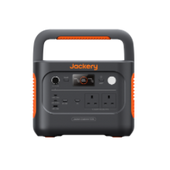
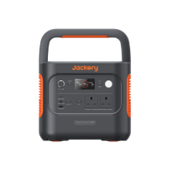
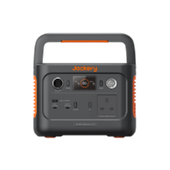
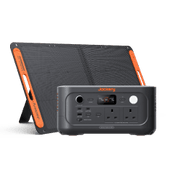
- Jackery Solar Generator: Portable Power Station with Jackery Solar Panels
- Mains hook-up cable
- Cable adapter leads if needed
- Cable storage bag
- Extension lead
- Surge-protected power strip
- 12V charging cables
- Headtorch

5. Safety & Security Equipment
Safety kit is non-negotiable when your vehicle is also your home. The importance of having the right protective equipment on board, and UK club advice also stresses staying safe and legal on the road.
Security matters more when the motorhome carries your valuables and acts as your home base. A layered approach includeD visible deterrents and tracking, steering wheel locks, wheel clamps, and tracking systems as useful theft-prevention tools.
- Fire extinguisher or fire blanket
- Smoke alarm
- Carbon monoxide alarm
- First-aid kit
- High-visibility vest
- Warning triangle
- Emergency torch
- Basic emergency contact list
- Steering wheel lock, wheel lamp
- Additional door locks, window alarms
- OBD port protector
- Motion-sensor light
6. Maintenance and Road-Use Equipment
Maintenance gear helps you stay road-legal and deal with small problems before they become trip-ending ones. Owners to safe loading, weight checks, and vehicle readiness, all of which matter even more when the motorhome is used for daily living.
- Try pressure gauge
- Tyre inflator
- Levelling wedges
- Toolkit
- Screwdrivers
- Spanners
- Adjustable wrench
- Pliers
- Duct tape, electrical tape
- Spare fuses and spare bulbs
- Jump leads
- Screen wash
- Engine oil, coolant, spare wiper blades
7. Internet and Work-on-the-Road Equipment
For many people, internet gear is now essential rather than optional. Motorhome life often depends on phones, hotspots, routers, charging equipment, and backup connectivity for maps, bookings, work, and everyday admin, so this category deserves its own place in the checklist.
- Mobile hotspot device
- 5G router
- Spare SIM card
- Charging dock
- Personal electronics
- Offline maps
- Notebook, pen and document folder
8. Outdoor Setup Equipment
Outdoor gear helps expand your living space, which matters a lot in a motorhome. It also makes short stopovers and longer site stays more comfortable without overloading the interior.
- Outdoor table & folding chairs
- Groundsheet
- Awning accessories
- Entrance mat
- Outdoor light
- Clothes airer, pegs
- Storage box for wet gear
- Boot brush
9. Pet Equipment for Motorhome Living
If you travel with a pet, it helps to treat their gear as a separate category rather than squeezing it into everything else. A dedicated pet setup makes the motorhome safer, cleaner, and easier to manage on the road.
- Pet bed
- Travel crate or harness
- Food & water bowls
- Travel water bottle
- Spare lead or collar
- ID tag
- Poo bags
- Pet towel & blanket
- Grooming brush
- Pet-safe cleaning spary
- Food container
- Treats, medication, vaccination record
- Favourite toy
Jackery Solar Generators for Motorhomes
For motorhome living, a power setup needs to be practical, quiet, and easy to work into everyday routines. That is where Jackery Solar Generators fit naturally. One of the main advantages is flexibility. In a motorhome, your power needs can shift from basic phone charging one day to running a fridge, laptop, lights, or small kitchen appliances the next.
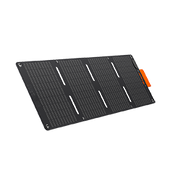
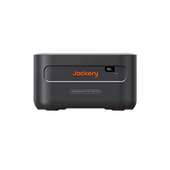
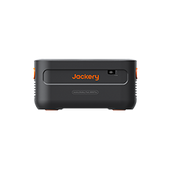
Another reason Jackery suits motorhome living is that the system is built around portable solar charging rather than fixed, complicated installation. The solar generator setup as a combination of a Portable Power Station and Jackery Solar Panels, with the panels capturing sunlight and the power station storing that energy for later use. In a motorhome context, that is appealing because it gives you an off-grid charging option without making the setup feel overly technical.
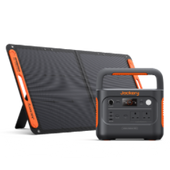
Jackery Solar Generator 3000 v2
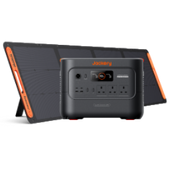
For motorhome living in the UK, the Jackery Solar Generator 3000 v2 serves as a comprehensive "off-grid power hub." It effectively replaces the need for complex, permanent electrical installations while providing enough capacity to handle the specific demands of a British climate.

Massive Output for "High-Draw" UK Appliances
The 3000 v2 features a 3600W continuous AC output (with a 7200W surge). In the UK, most electric kettles draw 2500W to 3000W. Unlike smaller power stations, the 3000 v2 can run a full-sized kettle, a hair dryer, or even a compact motorhome air conditioner without tripping the inverter.
It includes 3 AC outlets, 2 USB-C (100W), and 2 USB-A ports, allowing you to charge your laptop, run the fridge, and use a microwave simultaneously.
Space-Saving "Cell-to-Body" (CTB) Design
Space is the most valuable commodity in a motorhome. The 3000 v2 uses integrated CTB technology to maximize power-to-size ratio.
47% Smaller: Compared to the previous 3000 Pro or 2000 Plus models, it is significantly more compact. Despite its 3072Wh capacity, it weighs approximately 59.5 lbs. This makes it manageable to move from your "living zone" to the "charging zone" (like a garage or under-bed storage) without straining your back.
All-Weather Charging Reliability
The UK isn't known for constant sunshine, so charging speed and efficiency are critical.
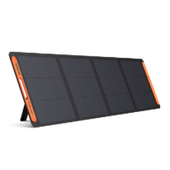
1000W Max Solar Input: You can pair it with up to five SolarSaga 200W panels. In ideal conditions, it recharges in 3.5 hours. Even on typical grey UK days, the high-efficiency IBC panels can still harvest enough "diffuse" light to maintain your battery levels.
Emergency AC Fast-Charge: If you stop at a campsite with a hookup for just a short window, you can charge from 0% to 100% in 1.8 hours using a standard wall socket or in 1.4 hours using AC and DC (54V) charging.
Built for a 10-Year Lifespan (LiFePO4)
For full-time or frequent motorhome living, you need a battery that won't degrade after a few seasons. The LiFePO4 chemistry ensures the battery maintains 70% capacity even after 4,000 full charges. If you cycle the battery every other day, it will last over 10 years.
It is designed to discharge safely down to -15°C, which is essential for winter touring in the Scottish Highlands or the Peak District.
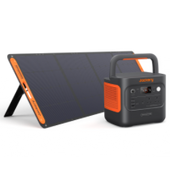
Jackery Solar Generator 2000 v2
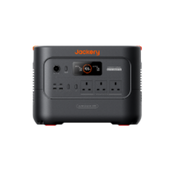
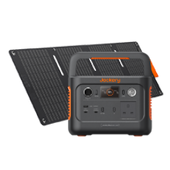
The Jackery Solar Generator 2000 v2 sits in a "sweet spot" for motorhome owners who need high performance but are conscious of weight limits and storage space. While the 3000 v2 is a powerhouse for full-time off-grid living, the 2000 v2 is often the more practical choice for weekend trips or mid-sized motorhomes.

Extreme Portability & Space Saving
Jackery reduced the volume of this unit by approximately 50% compared to previous 2kWh models. In a caravan where every centimeter of locker or under-seat space counts, this is a major advantage. At roughly 17.9 kg, it is nearly 10 kg lighter than the 3000 v2. This makes it much easier to lift in and out of the van or carry to a picnic spot without straining your back.
Balanced Power for "High-Draw" Appliances
2200W AC Output (4400W Surge): It still packs enough punch to run 95% of caravan appliances. You can easily power a low-wattage electric kettle, a hairdryer, or a microwave (though perhaps not all at once like the 3000 v2).
2042Wh Capacity: This provides enough energy to run a typical 60W 12V caravan fridge for about 30–35 hours on a single charge, or charge a laptop 25+ times.
Enhanced Safety & Longevity
Like its larger sibling, the 2000 v2 uses LFP cells rated for 4000+ charge cycles. Even with heavy use, the battery should maintain 70% of its original capacity for over a decade.
CTB (Cell-to-Body) Technology: This integrated structure makes the unit more rugged and shock-resistant—essential for the vibrations and bumps experienced while towing a caravan or driving a motorhome.
Fast Charging in the UK Climate
It can be fully charged via a standard UK wall outlet in about 1.7 hours. It also supports up to 400W solar input. In the UK, pairing this with two SolarSaga 200W foldable panels can typically refill the unit in 5.5 hours of decent daylight, making it very sustainable for "wild camping" without hookups.
Is It Cheaper to Live in a Motorhome Than a House?
My honest answer would be: it can be cheaper, but it is not automatically cheap. If I were writing this from my own experience, I would say the surprise is not the big headline costs. It is the way the small running costs keep appearing.
Some months, motorhome living feels far lighter than paying rent on a flat. Other months, once I add site fees, fuel, insurance, washing, gas, and the odd repair, the gap gets much smaller. In the UK right now, the answer usually depends on how often I drive, where I stay, and whether I compare it with renting or with owning a house outright. Average UK private rent was £1,367 a month in January 2026
If I compare it with renting a house or flat, motorhome living often comes out cheaper on paper. That is because rent alone is already high in the UK, before adding council tax, gas, electricity, water, broadband, and furniture. Ofgem says the energy price cap for a typical household is £1,641 a year between 1 April and 30 June 2026, which is about £137 a month, and that is before council tax or rent.
But if I write this in a more real, lived-in way, I would put it like this: a motorhome saves me most when I keep moving sensibly and keep my setup simple.
|
Cost item |
Motorhome living (monthly estimate) |
House/flat living (monthly estimate) |
|
Accommodation / pitch |
£300–£900 |
£1,367 average UK private rent |
|
Council tax |
Often £0 directly if moving around, but can apply on some residential arrangements |
~£199 average Band D England |
|
Fuel / travel |
~£175 at 600 miles/month in a diesel motorhome |
Often £0 extra in housing budget table |
|
Insurance |
£22–£60 |
Usually contents/buildings separate, not included here |
|
Road tax |
~£14–£30 |
n/a |
|
MOT |
~£5 |
n/a |
|
Energy / power |
£20–£120 for gas, hook-up, charging, or portable power top-ups |
~£137 typical gas + electricity |
|
Laundry / site extras |
£15–£60 |
Often included in normal household routine, but varies |
|
Internet / mobile data |
£20–£50 |
£20–£50 |
|
Maintenance / repairs reserve |
£50–£150 |
£30–£100+ depending on home and tenancy |
|
Estimated total |
about £621–£1,550 |
about £1,723–£1,853+ |
FAQs
The following are frequently asked questions about living in a motorhome in the UK.
1. What is the 3 3 3 rule for motorhomes?
It is a popular travel rule, not a law. It usually means drive no more than 3 hours, stay at least 3 days, and if the weather turns bad on day 3, rethink your plan or move on.
2. Do I pay council tax if I live in a motorhome?
Usually, yes, if the motorhome or caravan is treated as your sole or main residence. That does not automatically make the site lawful for residential use, but council tax can still apply.
3. Do I need a TV licence if I live in a motorhome?
Usually, yes, if the motorhome is your main residence and you watch live TV or use BBC iPlayer. If it is not your main home, the answer depends on how you watch and whether you already have a licence for your main address.
4. Is it worth buying a 20 year old motorhome?
It can be worth it if the condition is good and you check it very carefully for damp, wear, and maintenance history. The lower purchase price can be attractive, but older motorhomes need more caution and inspection before buying.
Final Thoughts
Living in a motorhome in the UK can be rewarding, flexible, and in some cases cheaper than conventional housing, but it is not a shortcut around rules or costs. The legal side needs attention, the practical side needs preparation, and the day-to-day reality depends heavily on how well your setup matches your routine.
The people who enjoy motorhome living most are usually the ones who treat it as a lifestyle that needs structure, not just spontaneity. For those who want more freedom on the road without relying entirely on campsite hook-ups, a portable solution such as a Jackery Solar Generator can also make motorhome life more comfortable and dependable.


