

































Living in a caravan in the UK appeals to more people than ever, especially those looking for a simpler lifestyle, lower housing costs, or greater freedom. For some, it is a practical way to cut expenses and live with less. For others, it is about flexibility, travel, and spending more time in places that feel calmer than a typical town or city setting.
Still, caravan living is not as straightforward as buying a caravan and moving in. In the UK, the reality depends on planning rules, site licences, parking laws, running costs, and the type of caravan you choose.
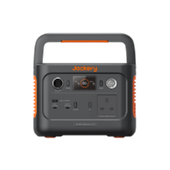
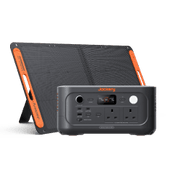
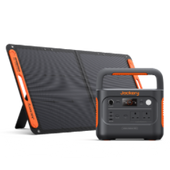
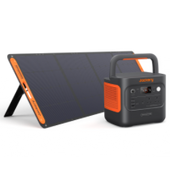
This guide looks at the full picture of living in a caravan in the UK, from the legal side and cost breakdowns to practical setup tips and lifestyle pros and cons. And why a reliable portable power source such as a Jackery Solar Generator can make caravan living more flexible and convenient.
|
Key Takeaways: |
|
Can You Permanently Live in a Caravan?
Yes, you can live in a caravan full-time in the UK, but only in the right setting. In practice, permanent caravan living is usually lawful only on land or sites that have the correct planning permission and, where required, a site licence for residential use.
If a caravan becomes someone’s main home, is placed on land for more than a short temporary period, or is used as a separate dwelling, permission is often needed.
Local authorities regulate caravan sites under the Caravan Sites and Control of Development Act 1960, and Planning Portal guidance makes clear that using a caravan as a new home on a property is a different matter from simply parking one there.
What Is Living in a Caravan Really Like in the UK?
Living in a caravan in the UK can feel surprisingly freeing at first. Your costs are often lower than in a traditional house, your space is simpler to manage, and daily life becomes much more intentional. You notice quickly what you actually use, what you can live without, and how much difference a tidy, well-planned space makes. For some people, that lighter lifestyle is exactly the appeal.
At the same time, it is not a permanent holiday. British weather changes the experience in a big way. Winter can feel damp, cold, and cramped if your caravan is not well insulated, while long rainy spells mean mud at the door, condensation on windows, and a constant need to keep ventilation right. In summer, things feel easier, but storage, laundry, water, heating, and power still need more thought than they do in a standard home.
There is also the social side. Some people love the slower pace and the closer connection to outdoor life, especially on quiet residential or countryside sites. Others find that caravan living demands patience. You may have less privacy, fewer possessions, and more day-to-day maintenance than expected.

Is It Legal to Live in a Caravan in the UK?
Yes, it can be legal to live in a caravan in the UK, but only under the right planning and site conditions. The key point is that the caravan itself is not the whole legal question. What matters is where it is sited, how the land is authorised to be used, whether the site has the right licence, and whether the caravan is being used as a holiday unit or as someone’s main home.
Under the UK licensing system, land used as a caravan site generally needs planning permission first and then a caravan site licence from the local authority, unless an exemption applies.
Planning Permission and Site Licence
In most cases, permanent caravan living is only lawful where the land has the correct planning status and the site has the right licence. GOV.UK’s caravan site licence guidance states that planning permission must be in place before a licence is issued, and local councils can fine operators who run sites without the proper licence or who breach licence conditions.
Even if the caravan is physically suitable for year-round living, that does not automatically mean the land can legally be used that way.
Residential Site vs Holiday Park
This is one of the most important rules to understand. A residential site is intended for people to live on as their home. A holiday park is not. Residential parks and mixed-use parks can fall within the protected-site regime, while sites restricted to holiday use are exempt from permanent residential treatment.
So, even if a holiday park is open for much of the year, that does not necessarily mean you can legally treat your caravan there as your sole or main residence.
Can You Live in a Caravan on Your Own Land?
Sometimes, but not automatically. Keeping a caravan on private land is different from using it as a home. Permission is often needed if the caravan becomes a new home, is rented out, or remains in place beyond a short period.
Fixed Address and Official Records
Living in a caravan does not remove the need for an address for official purposes. In practice, people still need a lawful address for records such as HMRC, banking, benefits, or electoral registration.
GOV.UK specifically provides a route to register to vote even if you do not have a fixed or permanent address, which shows that the system recognises non-standard living arrangements, but it still requires formal registration through the proper process.
Council Tax and Other Charges
Council Tax is another area people often misunderstand. If a caravan is occupied as a person’s sole or main residence, it is generally assessed for Council Tax rather than being treated only as part of the wider commercial site.
That said, paying Council Tax does NOT by itself make the occupation lawful. A local council page explains that a caravan can be charged Council Tax as someone’s main home, but that does not mean planning permission has been granted or that any breach of planning control or site licence conditions has disappeared.
Parking and Where a Caravan Can Be Kept
Parking rules depend on where the caravan is being kept. On a licensed residential or mixed-use site, the site’s own licence conditions and park rules will matter. On public roads, general road-traffic rules apply. The trailers and other vehicles left on a road at night must not be left without lights where the law requires them, and local parking restrictions can still apply.
Your Agreement With the Site Owner
If you live on a residential park or protected site, your relationship with the site owner matters legally. GOV.UK says park-home residents have rights and obligations that should be set out in a written agreement, including their right to keep the home on its pitch, the rules, the charges, and the services provided.

Static Caravan or Touring Caravan: Which Caravan Should I Choose?
The better choice depends on how you want to use it. A static caravan usually suits people who want a more settled base, more indoor comfort, and a holiday-home feel on one site. A touring caravan suits people who want flexibility, road trips, and the freedom to change location whenever they like.
In simple terms, static is better for staying put, while touring is better for moving around. Holiday parks commonly have large numbers of static caravans, while touring caravans are part of the wider towing and touring market in the UK.
Space and Layout: This is usually where static caravans win comfortably. Because they are designed to stay on site, they can offer a wider layout, a more residential feel, and better separation between sleeping and living areas. They are much easier to settle into for longer stays.
- Travel Style and Freedom: If your ideal caravan life means staying in one coastal or countryside park and returning whenever you want a break, a static caravan makes more sense. If your ideal caravan life means Cornwall one month, the Lake District the next, and perhaps France or the Netherlands later on, a touring caravan is clearly the better fit.
- Costs and Ongoing Commitments: A static caravan often comes with higher site-related commitment. The caravan itself may be larger and more comfortable, but owners also need to think about pitch fees, installation, servicing, repairs, and site agreements. A touring caravan usually avoids permanent pitch fees, but it creates a different cost pattern. You may need a suitable towing vehicle, campsite fees for each trip, storage when the caravan is not in use
- Ease of Use: Static caravans are easier once everything is set up. You arrive, unlock the door, and start your stay. There is no towing, no reversing onto a pitch, and no need to think about the car-and-caravan match every time. Touring caravans ask more of you.
|
Aspect |
Static Caravan |
Touring Caravan |
|
Main purpose |
A fixed holiday base or park-based accommodation |
Travel, touring, and multi-stop trips |
|
Mobility |
Stays on one pitch and is not meant for regular towing by the owner |
Designed to be towed behind a car |
|
Living space |
Larger, more spacious, more home-like |
Smaller, more compact, more efficient |
|
Comfort level |
Better for longer, settled stays |
Better for shorter, flexible trips |
|
Setup |
Usually already sited and connected to services |
Needs towing, pitching, levelling, and setup on arrival |
|
Costs |
Often includes pitch fees, installation, site charges, maintenance |
Often includes campsite fees, towing costs, storage, and road-related expenses |
|
Freedom to change location |
Very limited |
High |
|
Best for |
Families or couples wanting a regular base in one place |
Travellers who want variety and mobility |
|
Legal context in the UK |
Often tied to site rules, planning permission, and holiday or residential status |
Tied more to towing law, campsite use, and travel practicality |
|
Typical drawback |
Less flexibility |
Less space and more towing effort |
Choose a Static Caravan if You Want More Space and Comfort
A static caravan feels closer to a compact holiday home. It is normally sited on a pitch and connected to services, which makes day-to-day living much easier. You usually get more generous lounge space, a more practical kitchen, better storage, and a layout that feels less temporary. For buyers who want weekend breaks in one familiar place, that extra comfort is often the biggest advantage.
Choose a Touring Caravan if You Want Freedom and Variety
A touring caravan is built for movement. It is the better option if you like the idea of changing scenery, travelling through different parts of the UK or Europe, and planning breaks more spontaneously. Instead of returning to one holiday park every time, you can tow your caravan to different campsites and shape each trip differently.
Where Can You Park Your Caravan?
In the UK, the legal answer is narrower than many people expect. You can only park a caravan for living in where the land is authorised for that use. In practice, that usually means a licensed residential caravan or park-home site, or private land that has the correct planning permission and site licence for residential caravan use.

1. Licensed Residential Caravan Sites
The clearest legal option is a residential caravan site or park-home site with planning permission for year-round residential occupation. Local councils describe these as protected or relevant protected sites, meaning they are authorised for people to live there all year round.
2. Private Land With the Right Permission
You may also be able to park and live in a caravan on your own land, but only if the legal permissions are in place. If the caravan becomes a new home on the property, is rented out, or stays in place for more than 28 days, permission is often needed. A garden, driveway, paddock, or field is not automatically a lawful place to live in a caravan.
3. Family or Single-Caravan Residential Sites
Some councils also deal specifically with single or family residential caravan sites. These are not always large parks; they can include smaller arrangements, but they still usually require the proper planning permission and a site licence before residential occupation is lawful.
4. Holiday Parks and Seasonal Sites
A holiday park is usually not a legal place to park a caravan as your permanent home, even if you can stay there for long periods. Councils distinguish between protected residential sites and unprotected holiday-use sites. Holiday parks may allow leisure stays, and some people may spend much of the year there, but that does not make them lawful main residences.
5. Temporary or Exempt Sites
There are also limited exemptions in caravan-site law for certain temporary or special uses. GOV.UK notes that some land can be used without a site licence in specific cases, and local authorities mention narrow exceptions for small numbers of caravans, short periods, or land covered by certificates from approved organisations.
6. Places That Are Usually Not Legal for Full-Time Caravan Living
For most people, the places that seem easiest are actually the riskiest legally. A roadside lay-by, supermarket car park, ordinary driveway, garden, farm field, or random piece of land is not normally a lawful place to live in a caravan full-time unless the planning and site rules specifically allow it.
|
Location |
Can you legally live in a caravan there? |
Notes |
|
Licensed residential caravan site / park-home site |
Yes, generally |
Must have the correct planning permission and site licence for residential use |
|
Private land with residential planning permission and site licence |
Yes, sometimes |
Usually requires formal approval before full-time living is lawful |
|
Small family or single-caravan residential site |
Yes, sometimes |
Still usually needs planning permission and licensing |
|
Holiday park / seasonal caravan park |
Usually no for permanent living |
Holiday use is not the same as lawful main residence |
|
Certified or exempt temporary site |
Usually no for full-time living |
May allow short-term or limited-use stays only |
|
Driveway, garden, field, lay-by, public car park |
Usually no |
Not normally lawful for residential caravan occupation without permissions |
You can legally park a caravan for living only on land that is approved for residential caravan use. The most reliable option is a licensed residential site. Private land may work, but only with the right permissions. Holiday parks, roadside spots, and ordinary private plots are not safe assumptions for lawful full-time caravan living.
How to Get Started for Living in a Caravan?
Getting started with caravan living in the UK is less about buying the caravan first and more about setting up the right foundation. The practical side matters, but so do the legal details.

STEP 1: Start with the legal setup, not the lifestyle dream
Before you think about layouts, storage, or interior comfort, check whether the place where you want to stay is actually lawful for residential use. In the UK, the safest route is a licensed residential caravan or park-home site.
STEP 2: Decide whether static or touring life actually fits your routine
The next step is being honest about how you want to live. If you want a settled base, easier setup, and more comfort, a static caravan on a lawful residential site is usually the more practical option. If you want movement, flexible travel, and the ability to change locations, a touring caravan may suit you better, but it brings extra towing, storage, and road-safety responsibilities.
STEP 3: Work out your true living costs before you move
Caravan living can be cheaper than conventional housing in some cases, but it is not automatically cheap. You need to budget for the pitch or site fees, utilities, maintenance, insurance, heating, and any repair work that comes with a compact, weather-exposed home.
STEP 4: Choose a caravan built for British weather
UK caravan living is much easier when the caravan is suitable for cold, damp, windy conditions. Even if you are not buying the largest model, insulation, heating performance, ventilation, and moisture control should be high priorities.
STEP 5: Learn the basics of power, water, and waste before day one
Caravan living becomes much smoother when you already understand your power supply, fresh water access, waste water handling, toilet arrangements, and heating setup. On a formal residential site, some of these services may already be provided or easier to manage through the pitch and site agreement.
STEP 6: Keep your official records organised
Living in a caravan does not remove the need for proper paperwork. You still need to keep your address details up to date for official purposes, and your living arrangement can affect billing, tax, and day-to-day administration.
STEP 7: Prepare properly for towing and road safety if you choose a touring caravan
If you go with a touring caravan, take the road side seriously from the beginning. The equipment used with a trailer or caravan must meet safety standards and be used correctly, and drivers can be fined up to £2,500, banned from driving, and given 3 penalty points for using a vehicle in a dangerous condition.
STEP 8: Build a compact setup that works every day
The best caravan setups are usually simple. Prioritise storage that keeps essentials easy to reach, use lightweight items where possible, and avoid overfilling the space in the early weeks. Daily caravan life becomes much more comfortable when cooking, clothing, bedding, and work essentials all have a clear place.
STEP 9: Add a reliable backup power option
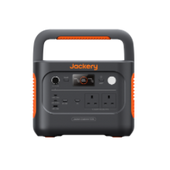
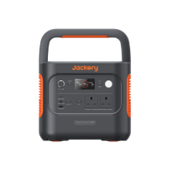
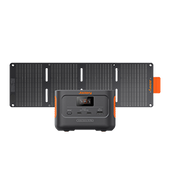
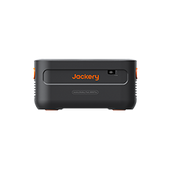
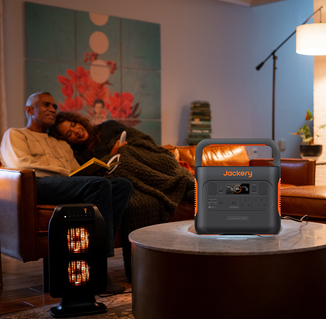
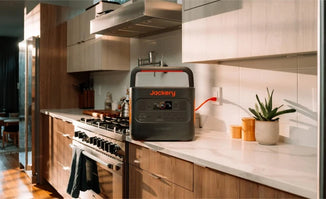
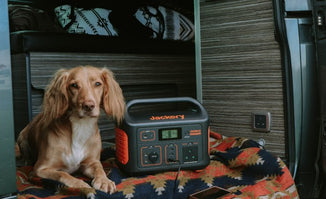
A dependable portable power supply makes caravan living much easier, especially if you spend time off-grid, want backup electricity during outages, or simply prefer more flexibility outdoors. A Jackery Solar Generator for caravan living can fit naturally into that setup as a portable power source for charging phones, laptops, lights, cameras, or small everyday devices without relying entirely on fixed hook-up points.
STEP 10: Start small and test the lifestyle first
One of the smartest practical tips is to try caravan living before committing fully. Spend time in a caravan through different weather conditions, not just in mild summer weeks. A short real-world test usually reveals far more than online research does.
Jackery Solar Generators for Caravan Living
A reliable power source can make caravan living far easier in the UK, especially when you want more flexibility than a fixed hook-up alone can offer. That is where a Jackery Solar Generator fits naturally. It gives caravan users portable electricity for everyday devices, off-grid stops, and backup use, while also allowing recharging through solar panels rather than relying only on mains access.
One of the biggest advantages for caravan use is quieter operation. In a campsite or caravan setting, noisy power equipment can quickly become annoying for both you and the people parked nearby.
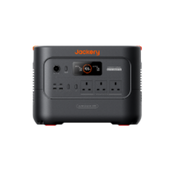
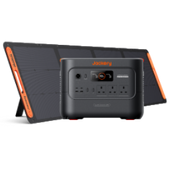
Jackery Solar Generator 3000 v2
The Jackery Solar Generator 3000 v2 is a substantial upgrade over previous models, specifically re-engineered for high-demand off-grid scenarios like caravan living. For a caravan setup in the UK, it offers a distinct balance of high output and a surprisingly compact footprint.

Massive 3600W Continuous Output
With a 7200W surge peak, the 3000 v2 can handle almost any caravan appliance—including power-hungry devices like electric kettles (approx. 16 boils), coffee makers, hair dryers, and even portable air conditioners or heaters.
3072Wh LiFePO4 Battery
The move to Lithium Iron Phosphate (LiFePO4) is a game-changer for longevity. It offers 4000+ life cycles (to 70% capacity), meaning if you use it daily, it can last over 10 years.
UPS Function (<20ms)
It acts as a seamless Uninterruptible Power Supply. If you are hooked up to a pitch with unreliable power, it will take over in less than 20 milliseconds, protecting sensitive electronics like laptops or CPAP machines.
Compact & Lightweight Design
Despite the large capacity, Jackery reduced the size by roughly 47% compared to industry standards for 3kWh units. At 27 kg, it is significantly easier to maneuver into tight caravan cupboards or under-seat storage.
Fast & Versatile Charging
Mains: Can charge from 0 to 100% in roughly 1.8 hours via a standard UK plug—ideal for a quick top-up before heading off-grid. Solar: Supports up to 1000W solar input, which can fully recharge the unit in about 3.5 hours in optimal conditions (or roughly 22 hours with a single SolarSaga 200W panel during typical overcast UK days).
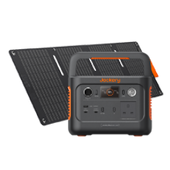
Jackery Solar Generator 2000 v2
The Jackery Solar Generator 2000 v2 sits in a "sweet spot" for caravan owners who need high performance but are conscious of weight limits and storage space. While the 3000 v2 is a powerhouse for full-time off-grid living, the 2000 v2 is often the more practical choice for weekend trips or mid-sized caravans.

Extreme Portability & Space Saving
Jackery reduced the volume of this unit by approximately 50% compared to previous 2kWh models. In a caravan where every centimeter of locker or under-seat space counts, this is a major advantage. At roughly 17.9 kg, it is nearly 10 kg lighter than the 3000 v2. This makes it much easier to lift in and out of the van or carry to a picnic spot without straining your back.
Balanced Power for "High-Draw" Appliances
2200W AC Output (4400W Surge): It still packs enough punch to run 95% of caravan appliances. You can easily power a low-wattage electric kettle, a hairdryer, or a microwave (though perhaps not all at once like the 3000 v2).
2042Wh Capacity: This provides enough energy to run a typical 60W 12V caravan fridge for about 30–35 hours on a single charge, or charge a laptop 25+ times.
Enhanced Safety & Longevity
Like its larger sibling, the 2000 v2 uses LFP cells rated for 4000+ charge cycles. Even with heavy use, the battery should maintain 70% of its original capacity for over a decade.
CTB (Cell-to-Body) Technology
This integrated structure makes the unit more rugged and shock-resistant—essential for the vibrations and bumps experienced while towing a caravan or driving a motorhome.
Fast Charging in the UK Climate
It can be fully charged via a standard UK wall outlet in about 1.7 hours. It also supports up to 400W solar input. In the UK, pairing this with two SolarSaga 200W foldable panels can typically refill the unit in 5.5 hours of decent daylight, making it very sustainable for "wild camping" without hookups.
Is It Cheap to Live in a Caravan in the UK?
It can be cheaper than living in a conventional house or flat in the UK, but it is not always as cheap as people expect. A caravan may reduce some housing costs, yet full-time living still comes with regular expenses such as pitch fees, utilities, insurance.
For residential park homes, pitch fees alone commonly fall around £150 to £500 per month. For static caravans on holiday-style sites, annual site fees are often higher, with many 2025–2026 examples landing around £4,500 to £6,000+ per year, though premium parks can be much more expensive.
Pitch or Site Fees
The typical residential park-home site fees at roughly £1,800 to £6,000 per year, while static caravan holiday-park style fees often sit around £4,500 to £6,000 per year, with some major operators listing ranges from £3,250 to £12,495 per year depending on the park and caravan.
Utilities: Electricity, Gas, and Water
Utilities vary a lot depending on the site, the season, and how well insulated the caravan is. The typical annual utilities at around £500 to £1,500 per year, while another 2026 static-caravan breakdown estimated electricity at £150 to £250, gas at £150 to £250, and water at £80 to £150 per year on some parks.
Council Tax
Council Tax is often overlooked. If a caravan is occupied as your sole or main residence, it can be assessed for Council Tax.
Insurance
Insurance is another regular cost. Recent UK insurance guides put average annual caravan insurance around £150 to £300 for many static caravans, while one 2025 insurer figure gave a more specific average of £152.28 per year for static caravan insurance.
Maintenance and Repairs
A caravan is a smaller home, but it still needs upkeep. Insurance and caravan cost guides regularly budget £300 to £1,000 per year for maintenance and repairs, with extra allowances sometimes needed for winterisation, servicing, or safety checks.
Storage or Travel-related Costs for Touring Caravans
If you mean a touring caravan rather than a static or residential setup, the cost pattern changes. Storage may be needed when the caravan is not in use. The all-year storage from £450 per year, while some private storage sites list ranges around £390 to £525 per year.
|
Cost Item |
Typical Cost |
Notes |
|
Pitch / site fees (residential park home) |
£1,800–£6,000/year |
Often around £150–£500/month; varies by region, site, and services |
|
Pitch / site fees (static caravan on park) |
£4,500–£6,000+/year |
Some operators list £3,250–£12,495/year depending on the park |
|
Electricity, gas, water |
£500–£1,500/year |
Some park examples break this into separate electricity, gas, and water charges |
|
Council Tax |
Varies by council/band |
Can apply if the caravan is your sole or main residence |
|
Insurance |
£150–£300/year |
Average ranges vary by caravan type and cover level |
|
Maintenance and repairs |
£300–£1,000/year |
Extra checks and winter prep can add to this |
|
Winterisation / safety checks |
£170–£300/year |
Example park guide range for drain-down and safety checks ( |
|
Touring caravan storage |
from £390–£525/year |
Club storage starts from £450/year in some locations |
|
Touring caravan pitch fees |
£22–£32/night |
Basic touring pitch example range |
FAQs
The following are frequently asked questions about living in a caravan in the UK.
1. Is it healthy to live in a caravan?
It can be healthy if the caravan is warm, dry, well ventilated, and properly maintained. The main risk in UK caravan living is not the lifestyle itself but poor conditions, especially damp, mould, cold, and condensation.
2. Do I have to pay council tax if I live in a touring caravan?
Usually, yes, if the touring caravan is your sole or main residence. The Valuation Office Agency says caravans occupied as a sole or main residence are assessed for Council Tax, and GOV.UK guidance says the same principle applies to caravans used as someone’s main home.
3. Is it cheaper to live in a static caravan than a house?
Often yes, but not always. A static caravan is usually much cheaper to buy than a house, but the running costs still matter. Site fees, utilities, insurance, maintenance, and possible Council Tax can reduce the savings.
4. What will happen to motorhomes after 2030?
In the UK, existing motorhomes will not suddenly become illegal after 2030. You will still be able to drive, buy, and sell used petrol or diesel motorhomes. The 2030 date mainly targets new petrol and diesel cars, while the government’s current pathway says all new cars and vans must be 100% zero emission by 2035.
Final Thoughts
Living in a caravan in the UK can work well, but it suits people who go into it with realistic expectations. It offers freedom, a simpler lifestyle, and in some cases lower living costs, yet it also comes with legal limits, practical responsibilities, and a level of day-to-day planning that traditional housing often hides in the background.
The most important part is getting the basics right from the start. That means choosing the right type of caravan, understanding where full-time living is actually lawful, budgeting for the real ongoing costs, and preparing for the realities of British weather.


