







































Finding the best home battery storage system means cutting through glossy marketing claims and matching a system to your actual, half-hourly electricity usage—not your neighbor’s summer solar peaks. UK households utilizing dynamic time-of-use tariffs can achieve 15% to 25% higher annual savings compared to flat-rate tariff properties when pairing a home battery with smart charging schedules.
The right battery completely transforms how you pay for electricity. The wrong one sits half-empty for months, dragging your system's payback window past a decade. In this guide, we will analyze the technical factors, compare coupling options, break down real-world financial payback, and explore the best storage options for UK properties.
Why UK Homes Need Battery Storage Now
Pairing a standard solar panel array with a high-quality 10.4 kWh Lithium Iron Phosphate (LiFePO4) battery can lift your household self-consumption rate from 30% to between 70% and 80% (and potentially over 90% when paired with advanced smart-charging schedules). This adds £400 to £700 a year in real savings by allowing you to avoid expensive evening peak import rates and sell your midday surplus at premium export prices. Without storage, you export your daytime generation for as little as 4p/kWh and buy it back that evening for around 25p to 26p/kWh on a standard tariff—leaving a substantial 21p spread on your roof (which can widen to over 30p during peak hours on dynamic smart tariffs).
A standard 10–13.5 kWh home battery system costs between £3,000 and £6,000 fully installed, benefiting from the UK's 0% VAT relief (currently set to run until March 31, 2027). While real-world payback ranges from 7 to 10 years when factoring in natural cell degradation and shifting tariffs, sizing your battery correctly is critical to keeping these numbers favorable.
Your winter overnight baseload is the most important metric for sizing. A typical UK home has a continuous overnight baseload of 0.3 kW to 0.5 kW (consuming 0.3 to 0.5 kWh of electricity per hour after dark), meaning a 5 kWh to 10 kWh battery will comfortably cover your baseline needs overnight. Oversizing beyond this threshold means you are paying for expensive capacity that rarely cycles fully, driving up your cost per stored kWh. Rather than guessing, consult Good Energy’s guide to solar batteries to see how capacity profiles behave under real UK weather conditions.
AC vs. DC Coupling: The Structural Choice
When selecting the best battery system, you must choose between an AC-coupled and a DC-coupled architecture:
- AC-Coupled Systems: Typically deliver an 83% to 88% round-trip efficiency. They are the default choice for retrofitting onto existing solar arrays because they operate independently of your solar inverter.
- DC-Coupled Systems: Deliver a superior 90% to 93% round-trip efficiency, minimizing conversion losses. They are ideal for brand-new, unified solar-plus-storage installations.
|
Technical Feature |
AC-Coupled Systems |
DC-Coupled Systems |
|
Round-Trip Efficiency |
83% – 88% |
90% – 93% |
|
Best Application |
Retrofitting onto existing solar inverters |
Brand-new solar arrays planned together |
|
Key Benefit |
Simplified installation, flexible inverter matching |
Fewer conversion stages, lower energy losses |
|
DNO Connection |
Requires G99 pre-approval if battery inverter is >16A (3.68 kW); G98 "fit-and-inform" notification if ≤16A |
Requires G99 pre-approval if total combined system inverter capacity is >16A; G98 notification if ≤16A |
Key Questions Answered
Do I actually need a battery if I already have solar?
Without storage, a typical household only self-consumes around 30% of its rooftop solar generation; the remaining 70% is exported to the grid at low SEG rates. Adding a battery shifts this midday surplus to cover your peak evening consumption, saving an extra £400 to £700 annually. Shifting your stored solar to avoid expensive peak-rate grid imports always delivers superior financial returns compared to exporting it.
How big should the battery be?
Sizing your battery requires evaluating your half-hourly smart meter consumption data, not glossy brochures. You should size your system to cover your winter overnight baseload, rather than trying to store your peak summer generation. For larger properties, review our cost and capacity breakdowns on the 10-kW solar battery price in the UK market to align your budget with your expected evening loads.
Will a battery keep my house powered during a blackout?
Only if your system includes dedicated backup hardware. Many built-in Emergency Power Supply (EPS) systems only power a single, physical socket. For whole-home backup during a power cut, you must install a dedicated gateway, an automatic transfer switch, and select an inverter with sufficient continuous kW output to handle heavy appliance start-up surges. Alternatively, essential-load backup isolates critical circuits (lights, refrigerator, Wi-Fi), safely running them for 50 to 100 hours on a single charge.
Is DIY battery storage realistic in the UK?
No. Safe installation and commissioning require compliance with Part P building regulations, G98/G99 grid standards, and certified commissioning. Attempting a DIY installation with high-voltage DC runs carries extreme risk and will instantly void your product warranties. Under Energy Networks Association (ENA) rules, written DNO pre-approval is legally mandatory (under G99 regulations) only for systems exceeding 16A per phase (3.68 kW) before installation begins. For smaller systems under 16A, a post-installation G98 notification must still be submitted within 28 days of commissioning. Therefore, professional, accredited installation is highly recommended.

How to Choose: Key Factors for UK Home Batteries
- Usable Capacity: Always evaluate usable capacity rather than nameplate totals. Modern LiFePO4 cells support a highly efficient 90% to 95% usable Depth of Discharge (DoD).
- Continuous Power Output (kW): Determines what appliances your battery can run simultaneously. A continuous rating of 5 kW or higher allows you to run a kettle, oven, and EV charger together without grid imports.
- Smart Tariff Compatibility: Ensure your battery inverter supports automated dynamic charging schedules to integrate with time-of-use tariffs like Octopus Agile or Intelligent Flux, allowing you to charge cheap overnight and export at a premium during peak hours.
- Warranty Wording: Thoroughly inspect the manufacturer's warranty terms. Pay close attention to throughput caps (total kWh cycled), cycle counts, and capacity retention clauses (guaranteeing at least 70% capacity after 10 years of intensive daily cycling).
If your home does not have a suitable roof for solar panels, you can still generate robust utility savings by performing grid arbitrage on a time-of-use tariff. Read our complete guide on home battery storage without solar in the UK market to evaluate your standalone options. You can also review Octopus Energy’s battery-only installation guide for detailed dynamic tariff rates.
Battery Runtime and Temperature Sensitivity
A fully charged 10 kWh battery provides roughly 5 to 10 hours of baseline household power (excluding electric heating loads). However, heavy simultaneous draws from appliances like tumble dryers and induction hobs will slash that runtime to 2 to 5 hours. To plan for winter solar drops, ensure your battery is sized correctly; a system that feels oversupplied in July may be too small to shift sufficient energy during December.
Additionally, note that ambient temperatures below 5°C can temporarily reduce your battery’s effective capacity by 10% to 15%. To protect your cells, locate your system inside a garage or insulated utility room, ensuring the installation complies with strict PAS 63100:2024 fire safety regulations. Over time, battery aging will naturally reduce capacity: LFP cells typically retain 70% to 80% capacity after 10 years of use. For details on chemical degradation profiles, check out the Renewable Energy Hub’s battery reference data.
Cost vs. Value: Payback Periods with UK Tariffs
To help you structure your project budget, let’s look at the average cost and payback profiles across typical UK home configurations:
|
System Configuration |
Installed Cost (0% VAT) |
Estimated Annual Savings |
Typical Payback |
|
10 kWh Battery + Existing Solar |
£3,500 – £5,500 |
£400 – £700 |
7 – 10 Years |
|
13.5 kWh Battery + New Solar Build |
£5,500 – £8,500 |
£500 – £800 |
9 – 11 Years |
|
Battery Only (No Solar) - Economy 7 Arbitrage |
£3,000 – £5,000 |
£300 – £450 |
8 – 12 Years |
|
Battery + Whole-Home Backup Gateway |
Add £1,200 – £2,000 |
Same operational savings |
Extends by 2 – 3 years |
Using automated, smart dynamic charging to shift your loads overnight and export peak afternoon solar can easily compress your system's payback period. For detailed entry-level costing, consult our breakdown on 5kw solar battery price UK options to plan your project budget accurately.
Modular Solar Storage: The Jackery SolarVault 3 Series
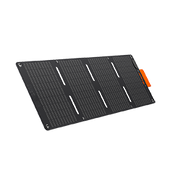
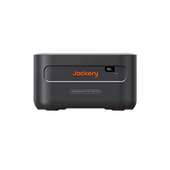
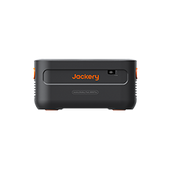
The upcoming Jackery SolarVault 3 Series (launching July 2026) represents a major step forward for the UK home storage market. Featuring a modular plug-in design, the system combines an integrated inverter, durable LiFePO4 chemistry, and scalable storage in a sleek, floor-standing unit.
If you are exploring plug-in home energy architectures, learn more on our dedicated plug-in solar system pages.
One of its biggest advantages is flexibility, allowing homeowners to start with a smaller battery capacity and expand later as their energy needs grow. The plug-and-play design also makes installation more straightforward, while key safety features such as LiFePO4 cells, terminal temperature monitoring, and an integrated aerosol fire suppression system support reliable, long-term operation. To evaluate further pricing metrics, read our comprehensive guide on the overall Solar Battery Price in the UK market.

Frequently Asked Questions
How does Octopus Flux tariff actually work with a battery?
The Octopus Flux tariff charges a low import rate overnight (typically 2:00 AM to 5:00 AM) and pays a premium export rate during the 4:00 PM to 7:00 PM peak window. A smart battery automatically imports cheap overnight electricity to charge, runs your home on stored power during the day, and exports any excess midday solar generation to the grid during the expensive peak evening hours to maximize your export revenue.
Can I add a battery without replacing my existing solar inverter?
Yes. Choosing an AC-coupled battery system allows the battery to operate via its own dedicated inverter alongside your existing solar inverter, requiring no modification to your roof. You only need to replace your inverter with a hybrid unit if you are installing a DC-coupled system or if your original inverter is old and needs replacing anyway.
What warranty clauses should I watch for before buying?
Always check the fine print for throughput limits (the total lifetime kWh the manufacturer allows you to cycle under warranty), cycle count limits, and capacity retention guarantees (ideally guaranteeing at least 70% capacity after 10 years of use). Be aware that installing a battery in uninsulated areas that experience ambient temperature extremes can void your coverage.
How long does a typical home battery installation take?
A straightforward AC-coupled retrofit typically takes a single day to install and commission. A more complex whole-home backup setup requiring a dedicated gateway, automatic transfer switch, and critical-load subpanels can take 2 to 3 days. Prior to this, expect 2 to 4 weeks for your installer to complete the site survey and secure DNO grid approval.
Will a battery work efficiently with my heat pump or EV charger?
Yes, provided your battery’s continuous power output rating (measured in kW) can handle the starting surge loads of your heat pump and the overnight charging demands of your EV. A battery inverter with a 5 kW continuous output can easily manage both, though you will still need sufficient battery capacity to avoid drawing from the grid during cold winter periods.
Sources: Reference data and installation guidelines are sourced from independent industry studies published by Good Energy, Octopus Energy, and the Renewable Energy Hub.


