











![[Over £1200 Tier Gift] Bluetooth Speaker with Phone Stand - shipped Separately](http://uk.jackery.com/cdn/shop/files/Portable_Bluetooth_Speaker_with_Phone_Stand_2.png?v=1781595581&width=170)














Your solar panels are a liability in a blackout—unless you have specifically designed your system to handle it. Most UK homeowners who install grid-tied solar PV batteries discover a frustrating truth only after the power goes out: their premium energy system shuts down completely during an outage.
This automatic shutdown is a non-negotiable safety requirement. Standard grid-tied inverters must cease operation during a blackout to prevent backfeeding electricity onto the local network. This anti-islanding protection ensures that electricity is not fed back onto local power lines where utility engineers might be working to resolve the issue. However, it leaves you with zero backup capability precisely when you need it most.
To survive an outage, you must configure your system for island operation. This requires a hybrid inverter with Emergency Power Supply (EPS) output capability and a compliant automatic changeover mechanism—either integrated within the inverter's internal relays or supplied via an external Automatic Transfer Switch (ATS) or contactor—to safely isolate your home from the grid.
UK Grid Vulnerabilities and Outage Preparedness
According to the Energy Networks Association (ENA), wind-driven debris and falling trees hitting overhead lines account for the vast majority of prolonged, multi-day blackouts during severe winter weather. This is the reality of an island grid exposed to intense Atlantic weather systems. Furthermore, aging electrical infrastructure and rising grid demand from heat pumps and electric vehicles are shrinking the margin for network error. If you are experiencing unexpected blackouts, explore our detailed analysis of the primary what is the reason the power is out to understand grid vulnerabilities.
The Met Office now provides highly accurate severe weather warnings, often giving households 24 to 48 hours of advance notice before a major storm hits. While preparing a standard emergency kit with torches, a portable radio, and a first-aid kit is standard practice, securing a verified backup power source represents the real difference between minor inconvenience and severe risk during a prolonged outage.
How Solar PV Batteries Provide Emergency Backup Power (Islanding)
An Emergency Power Supply (EPS) is the technical system that keeps your household appliances running when the grid fails. During a blackout, the battery inverter physically disconnects your home from the wider network and establishes an intentional "power island." This islanding process satisfies strict anti-islanding utility safety regulations while restoring power to your critical home circuits.
System switchover speed is vital. Standard EPS systems can take between 0.5 and 5 seconds to transfer power—a delay long enough to crash desktop computers, reset internet routers, and interrupt sensitive home medical devices. That is why uninterruptible (UPS-level) EPS is highly recommended. A UPS-level system switches power within 10 to 15 milliseconds, so seamless that computers keep running, Wi-Fi stays connected, and medical devices operate without interruption.
The Role of the Automatic Transfer Switch (ATS)
The Automatic Transfer Switch (ATS) is the physical hardware that manages this rapid transition. It continuously monitors grid voltage and frequency. The moment grid supply drops, the ATS isolates the home from the grid and commands the inverter to power your designated backup circuit. Once grid power is fully restored and stabilized, the ATS automatically reconnects your home to the network.
During a prolonged blackout, the system recharges your batteries from your solar panel array during the day. While a battery alone is a finite energy reservoir, daytime solar regeneration turns your system into a potentially indefinite power source. However, this relies on your inverter and islanding configuration being set up correctly. Always verify with your installer that your system is designed to support daytime solar recharging during an outage.

Critical Load Planning vs. Whole-Home Backup
Attempting to back up your entire home is incredibly expensive. It demands a larger hybrid inverter (typically 8 kW or higher) and massive battery storage (often 20 kWh or more), pushing total system costs past £15,000. Fortunately, most UK households do not require this level of coverage.
Instead, Essential Home Backup focuses solely on powering selected critical circuits via a dedicated consumer unit. Before installation, identify your essential appliances to map your load requirements:
- Refrigerator / Freezer: Consumes roughly 150W of continuous power.
- LED Lighting Circuits: Consumes roughly 50W.
- Internet Router: Consumes roughly 10W.
- Heating Pump: Consumes 50W to 80W (standard boiler pumps) or up to 500W for a modern heat pump.

The heating pump requirement is critical. If your home relies on a heat pump, you will need a battery bank of at least 10 kWh or larger to support its heavy electrical draws overnight during a winter blackout. Always verify backup circuit support with your installer before purchasing hardware, ensuring your inverter's EPS output can handle your peak simultaneous backup load and start-up surges without tripping.
|
Backup Feature |
Whole-Home Backup |
Essential Home Backup |
|
Inverter Sizing |
8 kW or higher |
2 kW – 3 kW (typical EPS limit) |
|
Battery Capacity |
20 kWh or more |
5 kWh – 10 kWh usable |
|
Installed Cost |
£15,000+ |
£8,000 – £12,000 |
|
Circuits Powered |
All household circuits and appliances |
Fridge, LED lighting, router, and boiler pumps |
Understanding the 33% Rule for System Design
When designing system capacity, UK solar installers frequently apply the "33% rule"—an optimization benchmark (or DC-to-AC ratio of 1.33:1) where the solar panel array's DC peak capacity is sized up to 33% higher than the inverter’s maximum AC output. Rather than a regulatory restriction, this is a standard design threshold to balance cost, clipping losses, and performance. Modern hybrid inverters often allow you to oversize the DC array up to 150% or more, depending on manufacturer specifications.
Utilizing an optimized DC-to-AC ratio typically boosts annual electricity generation by 10% to 20% under typical UK weather. This provides a massive benefit on overcast autumn and winter days, generating extra solar energy that can be stored in your emergency backup power with solar pv batteries or exported back to the grid.
In DC-coupled setups, you can relax this rule even further, oversizing your array up to 200% because the solar panels feed DC power directly into the battery without passing through the inverter's AC limitations first.
Additionally, UK Permitted Development guidelines dictate that rooftop solar panels must be positioned at least 200mm (0.2m) away from the external edges of your roof. This requirement is a structural wind-loading safety measure, protecting the system from edge-zone wind uplift and preserving local aesthetics, though it does naturally restrict your maximum usable installation area.
UK Regulations and Compliance (G98/G99/G100)
To legally connect your energy storage system to the grid, you must adhere to strict regulatory compliance guidelines:
- G98 Connection: Applies to smaller systems with generating capacities under 16A per phase (inverters under 3.68 kW). Your installer can connect the system and notify the DNO within 28 days of completion, requiring no pre-approval.
- G99 Connection: Required for larger systems over 16A, which includes most hybrid backup inverters. You must secure formal, written DNO approval before any installation begins.
- G100 Export Limitation: Mandates active export limiting. If your DNO restricts your export capacity to prevent grid overloading, a G100-compliant inverter must actively cap grid feed-in at that limit, redirecting excess solar generation to the battery.
Additionally, MCS (Microgeneration Certification Scheme) certification is the standard and most widely accepted pathway to qualify for Smart Export Guarantee (SEG) payments. While SEG regulations technically permit equivalent ISO/IEC 17065-certified installations, choosing a fully MCS-registered installer ensures seamless approval with almost all UK energy suppliers.
Financial Benefits and Payback Periods
A typical UK solar-plus-storage system equipped with dedicated emergency backup capabilities costs between £8,000 and £12,000. When paired with a smart time-of-use tariff, the system delivers average annual bill savings of £190 to £800, resulting in a realistic payback period of 6 to 10 years.
To explore how these installation budgets scale across different capacities, consult our comprehensive guides on the overall Solar Battery Price in the UK: A Current Breakdown and 10-kW Solar Battery Price UK.
Managing Full Batteries and Excess Solar
Once your battery is 100% charged and your home’s immediate loads are met, your inverter will manage the excess solar energy in a few ways: it can export the surplus to the grid under your SEG contract, automatically divert the power to an immersion water heater or heat pump, or use its built-in Battery Management System (BMS) to dynamically throttle solar generation (minor "clipping" losses) to prevent battery overcharging.
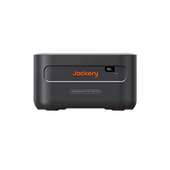
Jackery SolarVault 3 Series: Scalable Home Backup
The upcoming Jackery SolarVault 3 Series (launching July 2026) offers a premium, modular solution for home backup. Featuring an innovative plug-in solar design, the SolarVault 3 combines an integrated inverter, LiFePO4 battery chemistry, and scalable storage in a sleek, floor-standing unit.
The SolarVault 3 features a highly responsive, EPS-ready design that switches to battery backup in **under 20 milliseconds**—providing UPS-level transfer speed to keep your refrigerator, lights, and router running without interruption.
If you are exploring simplified solar options, check out our dedicated pages on plug-in solar and our comprehensive guide on the growth of plug-in solar in the UK market.

Frequently Asked Questions
What size solar PV battery do I need?
A 5 kWh battery can run essential low-load devices (such as your refrigerator, LED lights, and router) for 12 to 24 hours during an outage. If you want to run heavy loads like a heating pump during a blackout, you will need to upgrade to a 10 kWh+ battery bank.
Can existing solar panels work with a battery during an outage?
Yes, but only if your system has EPS/islanding capability and is paired with a hybrid inverter. Standard grid-tied inverters are designed to shut down completely during a power cut for safety, meaning they cannot provide backup power.
Is an ATS required for backup power?
An automatic isolation and changeover mechanism is mandatory under BS 7671 standards to isolate your home from the grid during a blackout, protecting utility workers. However, a standalone, external ATS box is not always required; many modern hybrid inverters feature this changeover functionality built directly into their internal EPS relays.
Will my battery recharge from solar during a blackout?
Yes, but only if your inverter and islanding configuration are specifically set up to allow daytime solar recharging during an outage. Always verify this critical feature with your installer before completing your system design.
Off-grid vs. hybrid systems?
Off-grid solar systems are designed to operate independently and inherently provide full backup power. Grid-tied or hybrid systems require purpose-built EPS hardware and a compatible battery inverter to function during a blackout.
Is my battery installation covered by permitted development?
Yes. Installing a domestic energy storage battery is typically covered under UK Permitted Development rights. However, for maximum fire safety, your installer must adhere to the British Standards Institution's (BSI) PAS 63100:2024 safety specification. Key recommendations under PAS 63100:2024 prohibit installing batteries in lofts, voids, or roof spaces, and mandate that outdoor units are positioned at least 1 meter away from windows, doors, or designated escape routes.
Do I need to notify my DNO?
Yes. For smaller systems under 16A (G98 compliance), your installer must notify the DNO within 28 days of completion. However, larger systems over 16A (G99 compliance) require written DNO approval before any installation work can begin.
Sources: Compliance codes and grid isolation safety guidelines are based on independent installer resource guides published by Switch Together UK.


