








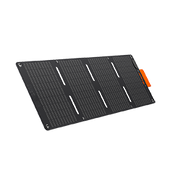
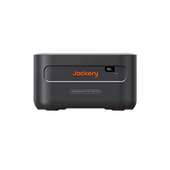
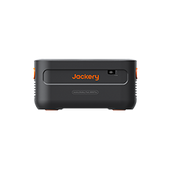






























Today, installing residential solar power (solar power for home) has become a smart financial strategy for families to reduce bills and move towards energy self-sufficiency.
By combining rooftop solar PV with smart batteries, it not only converts abundant sunlight during the day into free electricity for appliances, but also absorbs cheap electricity during off-peak hours at night, and even sells surplus electricity back to the grid at a higher price through the SEG program.
Thanks to 0% VAT (Value Added Tax Exemption) and new modular plug-and-play energy storage options such as the upcoming Jackery SolarVault 3 Series in July, low-cost electricity living can be easily achieved whether it's a traditional rooftop or an apartment balcony.
|
Key Takeaways: |
|
What Is Solar Power for Your Home?
In the UK, "solar power for your home" refers to the technology of installing a solar photovoltaic (PV) system in a residence (usually on the roof) to convert sunlight into electricity for daily household use.
More and more ordinary British families are choosing this clean, renewable energy source. A complete home solar system typically consists of solar panels, an inverter, and a battery. The process of solar power generation can be simply divided into the following four steps:
Capturing Sunlight: Solar panels capture sunlight and convert it into electricity through the photovoltaic effect. Solar panels are made of semiconductor materials and generate direct current (DC) when exposed to sunlight.
Energy Conversion: The electricity generated by the solar panels is DC. The inverter instantly converts this electricity into standard alternating current (AC) to power your home or business.
Prioritising Self-Use and Energy Storage: If your washing machine, refrigerator, or television is running, the system will directly power them using solar energy. If a home battery is included, excess electricity generated during the day will be automatically stored for use during peak evening hours.
Solar Power for Your Home: How to Cut Bills with Solar Energy?
In the context of a volatile energy market, installing solar power is no longer just about environmental protection, but also an excellent strategy for saving on household energy costs. Here are some ways solar power for your home can help you cut your energy bills:

Method 1: Generate Your Own Electricity
Solar panels transform sunshine into electricity that your home may utilise immediately. Every unit you generate and use yourself is a unit you don't buy from the grid at 24.67p/kWh — the current 2026 price cap rate. During sunny days, when your solar panels generate plenty of electricity, you may find yourself needing little or no power from the grid. This reduction in electricity use results in cheaper energy costs because you rely less on utility-provided electricity.
Method 2: Store Cheap Off-Peak Electricity with a Battery
A home battery does two jobs: it stores surplus solar energy for use at night, and it stores cheap off-peak grid electricity when your panels aren't generating enough. In the United Kingdom, solar electricity generation is insufficient during rainy weather. At this time, you can set priority to use the low-priced electricity stored in your batteries, and the cost recovery is much faster than most people expect.
Method 3: Sell Surplus Electricity Back to the Grid
The Smart Export Guarantee allows you to export excess power to the grid. When your battery is full and your home's demand is met, surplus electricity exports to the grid. The Smart Export Guarantee (SEG) compensates you for each unit you ship.
Typically, 5-15p/kWh in 2026, depending on the supplier. Octopus Outgoing Fixed pays around 15p; Outgoing Agile pays variable rates that can hit 25p in peak windows. Choose your SEG supplier carefully — the difference between 5p and 24p/kWh adds up significantly over 25 years. This only applies to England, Scotland and Wales.
Method 4: Use Surplus Solar for Hot Water
Most solar panel installations send 10-20% of their output back to the grid. In addition to storing electricity in batteries, transforming extra solar energy into "heat" and storing it in your home's hot water cylinder is a popular and low-cost energy storage method in the UK.
If you have a hot water tank and solar panels, a diverter is one of the most inexpensive additions you can do. A solar diverter diverts excess energy to your hot water cylinder. This means you don't need to consume expensive natural gas (Gas) or buy grid electricity to boil water, and in summer you can even completely shut off the boiler for free hot water.
Method 5: Charge Your Electric Car on Solar Power
The average UK driver covers around 8,100 miles a year. At standard grid rates, home EV charging costs 9–14p per mile depending on the car — adding £730 to £1,134 to your annual energy bill. If you directly inject solar energy into your electric vehicle, the charging cost is almost zero. Best for Smart Charging Stations: When a charging station detects excess solar power, it changes the charging power to charge your vehicle.
Solar Power for Your Home: How Big of a System Do You Need?
A properly sized solar power system for your home can save a UK household hundreds or even thousands of pounds in energy expenses each year. Adding batteries will further increase the savings. There is no conventional solution for selecting the appropriate size solar system; it is mostly determined by your household's electricity requirements. Here's some suggestions:
How Many Solar Panels Do You Need?
Before deciding how many solar panels to power your house, it helps to look at your annual electricity use. You can find this information on your energy bills or smart meter. The average household consumes 2,700-3,500 kWh of electricity annually. Typically, the goal is to create nearly the same amount of electricity as you need each year. That way, you’ll rely less on the grid and save money on bills.
Most UK homeowners install 3-4 kW solar systems, which typically include 8-12 panels. Keep in mind that the panel counts are averages. Your property may require more or fewer panels, so a tailored estimate is the only way to be sure. High-power-consuming homes with electric vehicle charging stations, heat pumps, or home offices may need more solar panels.
|
Household Usage |
System Size |
Panels Needed |
|
2,000 kWh |
3kW |
6-8 |
|
2,700 kWh |
4kW |
8-12 |
|
4,000 kWh |
5kW |
12-14 |
The data in this table is for reference only. Many other factors affect the number of solar panels needed, such as orientation, tilt angle, location, and shading.
How Much Capacity of Storage Battery Do You Need?
Establishing your baseline consumption is the foundation of any sizing calculation. An average UK household uses between eight and ten kilowatt hours per day, but this figure varies greatly depending on the residence and the individuals who live in it.
A tiny family (1-2 persons) may consume less than 10 kWh of electricity on average per day. Some high-energy homes may use more than 20 kWh each day.
Down below in the following table, you will see how different household sizes link to daily use, evening demand, and the battery sizes that usually make sense.
|
Household Size |
Typical Daily Consumption |
Evening / Night Usage (60–70% of total) |
Recommended Battery Size (Usable) |
|
1–2 people |
5–8 kWh |
3–5.6 kWh |
5–8 kWh |
|
2–3 people |
8–12 kWh |
4.8–8.4 kWh |
8–10 kWh |
|
3–4 people |
12–16 kWh |
7.2–11.2 kWh |
10–13 kWh |
|
4–5 people |
16–22 kWh |
9.6–15.4 kWh |
13–18 kWh |
(Source: Sheffieldrenewables)
Note*: If you are renting, living in a flat without a roof title, or don't want to invest thousands of pounds in large-scale construction, Jackery's plug-in energy storage solutions offer an attractive option.

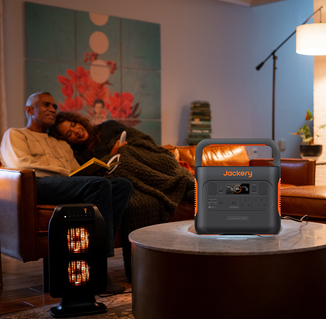
The Jackery SolarVault 3 Series is Jackery’s next-generation home solar storage solution, designed to help households generate, store, and use solar energy more efficiently. The series includes the SolarVault 3 Pro, SolarVault 3 Pro Max, and SolarVault 3 Pro Max AC, offering flexible options for balcony solar systems, existing PV installations, and larger home energy setups. With an integrated inverter, LiFePO4 battery technology, smart energy management, and expandable storage from 2.52 kWh to 15.12 kWh, the SolarVault 3 Series brings solar storage into a compact, modular, all-in-one system.
The system works by collecting solar power from connected panels, storing surplus electricity in the battery, and automatically supplying that energy when the home needs it most, such as in the evening, during peak electricity prices, or during a power outage.
The SolarVault 3 Series can optimise solar generation even when panels face different directions or experience partial shading. Its AI-driven energy management helps balance solar production, household demand, battery charging, and electricity tariffs for smarter daily use.
One of its biggest advantages is flexibility. Homeowners can start with a smaller battery capacity and expand later as their energy needs grow. The plug-and-play design also makes installation more straightforward, while key safety features such as LiFePO4 cells, terminal temperature monitoring, and integrated aerosol fire suppression support reliable long-term operation.
The Jackery SolarVault 3 Series is expected to go on sale in the UK in July, giving UK users a new way to store solar power, use more of their own clean energy, and make home electricity management smarter and more cost-effective.
Solar Power for Your Home: How Much Money Can Be Saved?
Installing a solar photovoltaic system can result in significant savings on your utility bills over the system's lifetime. In the UK, a typical three-bedroom house can save around £700 per year after installing solar panels.
Savings can be substantially greater if batteries are included and smart export pricing is used to optimise electricity use. Add a battery and move usage to daylight, and the figure jumps to 75-85%, potentially reaching £1,000.
|
System |
Annual generation |
Self-consumption |
Annual savings |
|
4kWp panels only |
3,400–3,800 kWh |
30–40% |
£800–1,000 |
|
4kWp + 5kWh battery |
3,400–3,800 kWh |
60–70% |
£1,100–1,400 |
|
6kWp + 10kWh battery |
5,000–5,700 kWh |
65–75% |
£1,500–1,900 |
(Source: Spectrumenergysystems)
This table contains actual data from Spectrum's installation projects in the East Midlands region and is for reference only.
Factors Affecting the Savings of Solar Power for Your Home
The amount you can save depends on various factors, including the size and efficiency of your solar panels, your electricity consumption, local electricity rates, and the amount of sunlight your location receives.
Local Electricity Rates: The cost of electricity in your location has a direct impact on the potential savings. Higher electricity costs mean higher savings from generating your own electricity using solar panels.
System Size and Efficiency: The size and efficiency of your solar panel system influence how much electricity it can produce. Larger systems with higher efficiency panels can generate more electricity, resulting in greater potential savings.
Electricity Consumption: Your current electricity consumption plays a significant role in determining your potential savings. A higher electrical usage equals more energy generated by your solar panels, which results in larger savings on your electricity bills.
Roof Orientation: South-facing gets the headline numbers. East/west splits lose 10–15%. Pure north isn’t economic at 2026 panel prices.
Shading: A chimney, aerial, or tree shading even one cell on a string can reduce output by 20-30%. We almost always recommend optimisers or microinverters on partially-shaded roofs.

What Is the Payback Period for Solar Power for Your Home?
The payback for a 2026 UK domestic install lands somewhere in 6–10 years. The specific duration depends on the system configuration. Installing only solar panels results in a limited self-consumption rate (around 30%), leading to relatively slow cost savings. However, adding batteries can boost a household's self-consumption rate to over 70%, resulting in a much faster return on investment.
|
Payback Period |
Details |
|
5–7 years |
South-facing roof, full battery, smart tariff, high consumption (EV or heat pump). Often on bigger 6–8kWp systems. |
|
7–9 years |
South or south-west roof, 4–5kWp, 5–10kWh battery, standard tariff. |
|
9–10 years |
East/west split, no battery, low-consumption household, basic SEG tariff. |
|
10+ years |
Heavy shading, north-facing roof, or an undersized system. |
These figures are for reference only and may differ from actual figures.
How to Calculate the Payback Period for Solar Power for Your Home?
Excluding the revenue from selling excess electricity back to the grid, and focusing solely on savings through self-consumption, a conservative estimate can be made using the following steps:
Step 1: Confirm the Initial Investment Cost of the System
The cost of installing a standard residential 3-4 kW solar system is £4,000-£7,000. Battery storage costs an additional £2,000-£4,000, depending on capacity.
Step 2: Calculate Annual Savings from Self-Consumption
A 4kW system in southern or central England generates approximately 3,600 kWh - 4,000 kWh annually (for reference only). If you have batteries, assume you're using 75% of the generated electricity.
Calculate self-consumption: Annual electricity generation × self-consumption rate = 4,000 kWh * 75% = 3,000 kWh
Calculate electricity cost savings: Self-consumption × your current grid rate = 3,000 kWh * 24.67p/kWh = £740
Step 3: Calculate the Payback Period
Finally, divide the initial total cost (£4000 + £2000 = £6000) by the annual electricity savings to obtain the most conservative payback period.
Payback Period = Initial Investment Cost ÷ Annual Electricity Savings = £6000 ÷ £740 ≈ 8
This estimate is the most conservative result. In reality, if the arbitrage opportunity of charging at night using time-of-use pricing is taken into account, the actual payback period will be shorter.
Solar Power for Your Home: Tips for Maximising Savings
To maximise your home's solar power and save on energy costs, consider implementing the following strategies:
 Investing in High-Efficiency Solar Panels
Choose monocrystalline panels, ensuring that you get current modules with efficiencies of 21%-23% or higher. Even in the early morning and late afternoon, as well as on overcast and wet days in the UK, high-efficiency panels provide exceptional low-light performance.
Choosing the Right Installation Location and Orientation
To create the most solar power, your solar panels must be positioned in a way that ensures maximum direct sunlight. Ideally, this will be on a south-facing roof, but if your house is north-facing, the panels can be orientated to generate more power.
Time Your Energy Use
Changing your laundry, dishwashing, and drying routines is the most efficient strategy to reduce your expenditures instantly. Use the Delay Start function on your appliances to schedule them to run alternately between 11:00 AM and 2:00 PM, when solar power is at its peak.
Choose Energy-Efficient Appliances
Efficient appliances and LED lighting have the potential to significantly reduce your energy use. Furthermore, the Eco mode of modern energy-efficient appliances typically reduces energy consumption by extending operating hours and reducing power consumption per cycle.
Make the Most of Smart Export Tariffs
Tariffs such as Octopus Flux and Smart Export Guarantee (SEG) enable you to export unused energy back to the grid at affordable prices. This means that your panels can create revenue in addition to savings.
Monitor Your Energy Production and Usage
Many systems (for example, plug-in energy storage systems like the Jackery SolarVault 3) have apps or monitoring tools that show you how much electricity you're producing, using, and exporting. This helps you adjust usage habits to increase your savings.
Maintain Your System
Cleaning your solar panels on a regular basis removes dirt, debris, and snow, which can affect energy production. Additionally, schedule routine maintenance checks with a professional to identify and address any issues promptly.
Are Solar Power for Your Home Savings Worth the Cost?
Many people may wonder, "Is installing solar power really worth it?" The answer is: Yes. Modern residential solar systems have converted into a profitable, low-risk long-term investment for families. Here's some analysis:
Achieving Energy Self-Sufficiency
Installing a solar power system with battery storage ensures that, even if grid electricity rates climb to 30p or 40p per kilowatt-hour in the future, the cost of electricity generated on your roof will remain zero.
Combined with a high-performance home energy storage system like the Jackery SolarVault 3 Series, even in the event of localized power outages due to extreme weather, the system can ensure that your refrigerator, Wi-Fi, and basic lighting continue to operate normally.
Significantly Reducing Dependence on Grid Electricity
Peak domestic electricity demand frequently coincides with the highest grid electricity rates. You can attain zero grid dependence during these hours by generating solar power during the day and storing it in your own batteries. Even when there is little sunlight, smart batteries can collect extremely inexpensive grid electricity during off-peak hours at night (such as 2 AM to 5 AM) and release it during the day.
Superior Environmental Benefits
Solar energy is a renewable resource that emits no greenhouse gases. When compared to grid electricity, which still uses natural gas, every kilowatt-hour generated on your roof is 100% clean, pollution-free, green, and renewable energy. Using solar panels reduces your carbon footprint and helps combat climate change.
Attractive Government Incentives
The UK government charges 0% VAT on the installation of solar panels and smart batteries (including standalone battery installations) in residential homes. This saves households up to 20% on the initial hardware and labour expenditures. The government is also actively promoting "plug-and-play solar power" (such as the Jackery SolarVault 3 series), which is expected to be available in stores within a few months, thus helping people save on electricity bills.
FAQs
The following are the frequently asked questions about the solar power for your home:
1. Would I save money with solar panels?
You can definitely save money with solar panels, as long as you choose a certified installer. Your system will then lower your energy expenses for as long as it generates electricity, which should be about 20-25 years with a modern system. You can further increase your savings by continuously selecting the greatest export tariff accessible to your home.
2. Is my electricity free if I have solar panels?
You can consume or sell the electricity generated by your solar panels for free, but you will most likely have to pay the grid for some of it. This is due to the fact that solar panels produce less electricity in the winter, necessitating the use of grid power to compensate.
3. What’s the payback period for solar panels in the UK in 2026?
A household installation in 2026 is likely to last 6-10 years. Faster paybacks (5–7 years) happen on south-facing roofs with high daytime use and a battery on a smart export tariff. East/west splits or low-consumption dwellings without a battery have slower paybacks (9-10 years or more).
4. Is it worth getting solar panels in UK?
Yes, installing solar panels in the UK can be worthwhile due to potential long-term savings on energy bills, a lower carbon footprint, and potential government incentives or subsidies for renewable energy projects. However, before making a decision, you should examine your location, roof orientation, shade, and upfront expenditures.
5. How much solar power is needed to run a home?
|
Home Size |
Estimated Annual Electricity Needed |
Number of Solar Panels Needed |
|
1,000 sq. feet |
4,710 kWh |
8 |
|
2,000 sq. feet |
9,420 kWh |
15 |
|
2,500 sq. feet |
11,775 kWh |
19 |
|
3,000 sq. feet |
14,130 kWh |
22 |
6. What is the 20 rule for solar panels?
In the solar industry, the "20% rule" is a design guideline recommending that you size your solar system to produce 20% more energy than your home typically consumes. It creates a reliable energy buffer.
7. Are solar panels a good idea for my home?
The benefits of solar include reducing your monthly electricity bill, increasing your energy independence, and reducing your impact on the environment by taking advantage of renewable energy.
8. Is 10 kW enough to run a house?
Yes, a 10 kW (kilowatt) power output is generally enough to run a standard house. However, whether it fully covers your needs depends on whether you are asking about power (kW) or energy storage/consumption (kWh).
Conclusion
Investing in solar power for your home is a low-risk, high-return long-term choice for most families. A well-planned system can not only save you up to four figures on your electricity bills each year, but also maintain and increase the value of your property assets by improving your home's EPC rating. From 100% pure and pollution-free environmental carbon reduction to power outage protection during extreme weather, solar power for your home is comprehensively reshaping the energy experience of modern families.
With the increasing popularity of innovative plug-and-play energy storage solutions such as the Jackery SolarVault 3 Series, energy independence is no longer an unattainable ideal.


