< Jackery Stories/Wired for Freedom: Paul’s Journey to Off-Grid Adventures

Paul Trinick

Wired for Freedom: Paul’s Journey to Off-Grid Adventures

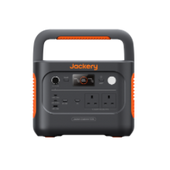
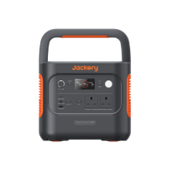
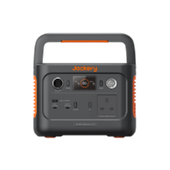
On a quiet evening in Derbyshire, where rolling hills whisper tales of ancient landscapes, Paul and his wife find peace in their caravan, powered by an army of Jackery power stations. His Jackery Explorer 2000 Plus units run sections of their home, and the Jackery Explorer 1000 v2 keeps the caravan fully charged and portable for day trips. The soft glow of LED lights, the steady hum of a fridge, and the warmth of a microwaved meal, all made possible by their Jackerys, help cement their off-grid haven. For Paul, an engineering professional whose life has been shaped by circuits, systems, and sustainability, this setup is more than convenience; it is a testament to a career built on precision and a passion for freedom.

From Factory Floors to Global Systems

Paul’s journey began far from the tranquil fields of Derbyshire, on the noisy shop floor of a shoe factory in the UK. “I started working life on the shop floor of a shoe factory,” he recalls. “I decided after a couple of years that probably wasn’t what I wanted to do.” Seeking a path that matched his curiosity, he pursued a degree in electronics, followed by a higher degree in business, eventually becoming a chartered programme manager. His career took him across the globe, managing complex projects for industrial giants such as Caterpillar and Alstom, from the bustling factories of China to the innovation hubs of America.

One of his proudest contributions was with the Energy Technologies Institute (ETI) in the UK, where he helped shape the future of sustainable energy. “We advised the government on environmental policy with regard to the electricity system,” Paul explains. “We built a model that represented different generating sets such as gas, coal, nuclear, and renewables.” In Japan, after the tsunami, the ETI’s work helped model safer, more resilient systems, a legacy that still fuels his fascination with sustainable solutions. “That’s where my environmental interest came from,” he says, a spark of pride in his voice.

This technical foundation informs every aspect of Paul’s life, from his meticulous research habits — “It takes me three weeks to buy a spoon, but I buy the right spoon” — to his love for optimising systems, whether they are industrial power grids or his own caravan’s energy setup.

The Call of the Caravan

Since marrying in 1986, Paul and his wife have woven adventure into their lives. With their two children now grown, the couple, accompanied by their dog Tilly, embrace the freedom of the open road. Their travels have taken them across the UK, from the rugged coasts of Cornwall to the serene Lake District, and abroad to France, Spain, and Germany. Spain, some 1,300 kilometres from their home, marks their furthest caravan journey.

“We love going exploring in the caravan,” Paul says. “We go to a place like the Dune du Pilat in France, plonk ourselves there, and investigate the area, the vineyards, the taverns, and the walks over the hills.”

Their current site in Derbyshire, nestled just below a hilltop for wind protection, offers no electrical hookup. “We moved to the second site, which didn’t have a hookup, because we knew the wardens; we got on very well with them,” Paul explains. The site’s lack of mains power spurred his quest for autonomy, leading him to research portable power solutions.

A Technical Love Affair

Paul’s decision to choose Jackery was not impulsive; it was the result of careful research and comparison. “I looked at lots of brands, watched unboxing videos, and compared specifications,” he recalls. “Jackery stood out for its build quality and flexibility.”

What won him over were three things: expandability, usability, and dependability. “I like the app and the fact that it’s plug and play, as well as the ability to charge while using the battery,” he says. Unlike one-piece systems from other brands, Jackery’s modular design appealed to his engineer’s mind. Starting with two Jackery Explorer 2000 Plus units, Paul gradually expanded to a scalable multi-unit system with seven expansion batteries that could grow with his energy needs.

Ease of use was equally important. “You don’t need any technical knowledge to use it,” he explains. The plug-and-play design and the app’s intuitive interface make monitoring energy usage simple, while through-charging allows simultaneous input and output, an uncommon technical advantage he notes. Dependability sealed the deal. The LiFePO₄ battery chemistry offers better heat tolerance and longer cycle life, while built-in protections guard against overloads and short circuits. “The phosphate bit gives it advantages,” he notes. “It’s stable, efficient, and safe.”

Freedom on the Road

Friends at the caravan site are always intrigued. “They see it and go, ‘Oh, wow, what’s this?’” Paul laughs. “Most of them say, ‘Maybe I should think about getting one.’” Conversations about wattages and setups have become part of their evening barbecues, comparing which Jackery model fits which need and how each setup simplifies off-grid living.

A standout memory came during Paul and his wife’s wedding anniversary trip. From their Derbyshire campsite, they took a ten-mile walk with their dog Tilly to a nearby brewery in the valley. “You walk up over the hill, down through the next valley, partway up the next hill,” Paul recalls. “The dog can have a rest, we can have a drink, and walk back.” When they returned, their caravan was still fully powered and warm, lights glowing, heaters on, and everything running smoothly.

Engineering a Quiet Revolution

Paul’s engineer’s curiosity soon took over. Starting with a Jackery Explorer 2000 Plus, he began testing its performance during a sunny weekend in Derbyshire. “I was lucky the weekend I tried it had a lot of sun, so the solar panels charged up nicely,” he says.

He calculated his energy needs with precision, accounting for the UK’s inconsistent sunshine. “I’m an engineer, I'd better work out just how long I can do this for,” he laughs. His conclusion? Four batteries were enough for a long weekend; seven could support indefinite off-grid living with ample sun.

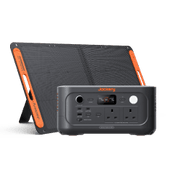
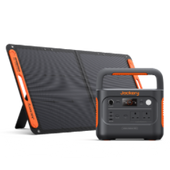
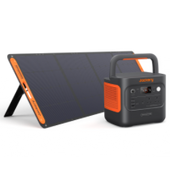
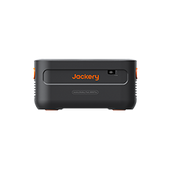
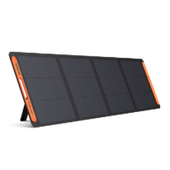
Today, Paul owns one of the most extensive personal Jackery systems we’ve seen — a total of ten power units made up of two Jackery Explorer 2000 Plus main stations, seven independent Battery Pack 2000 Plus expansions, and one Explorer 1000 V2, which he configures flexibly depending on whether he’s at home or in Derbyshire. Supported by eight SolarSaga 200W panels split between both locations, this modular network delivers an impressive 19.5 kWh of stored energy. It powers their caravan’s full-size fridge and freezer, supports the caravan’s lead-acid battery, and easily handles high-demand appliances such as their coffee machine, electric heater, kettle, hairdryer, and induction cooktop, ensuring comfort and convenience wherever they travel.

After running the fridge and lead-acid battery overnight, the system dropped to just 46%. By mid-afternoon the next day, solar input had already restored the charge to 77.3%. Within roughly 7.5 hours, all batteries were back at 100%, even while maintaining a constant output of around 140W and higher loads throughout the recharge period.

From keeping food cold to maintaining a warm, comfortable home environment and running his work setup, Paul’s Jackery system ensures both his caravan and household operate smoothly, whether off-grid or connected to the mains.

“We can run the shower without worrying about running out halfway through,” Paul says, noting how electric power outperforms gas for reliability. These tests laid the groundwork for Paul’s next ambition, building a sustainable home system. For him, Jackery represents “freedom, comfort, flexibility, and more fun.”

Sustainability and the Future

“I hope to live off-grid completely,” Paul says, driven by rising UK energy costs and a desire for independence. His next project is a sun-tracking solar array to improve efficiency by 30%. “I’m looking at a controller from Eco-Worthy, two actuators, two axes, and an anemometer to measure wind speed,” he explains, ensuring safety in strong winds.

But Paul’s vision goes beyond the caravan. “In the UK, I see a big market for less mobile systems — solar panels on the roof, batteries in the garage and a smart switch to run your home,” he says. His goal is to turn his garage into a hybrid energy hub, where all his Jackery batteries are stored and power is distributed to different zones of the house.

In summer, rooftop Jackery SolarSaga 200W panels would recharge the system, while in winter, it could store cheaper night-rate grid energy for daytime use. Paul now owns eight SolarSaga 200W panels — four dedicated to his Derbyshire caravan setup and four positioned at home to support his expanding backup-power system. This split arrangement allows him to generate solar energy consistently across both locations, maximising efficiency no matter where he and his wife are staying.

Looking ahead, Paul hopes for a UK-compatible smart switch that can automatically and safely alternate between household circuits and stored power. “That’s where I think the future lies,” he says. “A seamless system that lets people take more control of their home energy.”

His setup currently powers fridges, freezers, and his upstairs office, where he spends time surrounded by monitors and memories. To support his long-term vision, Paul has even sketched a simple but effective plan showing how his Jackery batteries could feed different zones of the house — a diagram that reflects both his engineering mindset and the practical possibilities of a modular Jackery-powered home. While originally drawn for personal clarity, the sketch also highlights how straightforward it can be to integrate portable power into modern household circuits.

Furthermore, Paul hopes to one day explore the use of wind turbines to help power his Jackery system, combining the forces of sun and wind for even greater off-grid independence.

For Paul, Jackery is more than power; it is a bridge between career and lifestyle. “It’s added to my perspective on green energy,” he says. “Filling my Jackery Explorer 2000 Plus units and their expansion (LiFePO₄) batteries overnight with off-peak electricity and using them throughout the day — that’s more cost-effective and smarter.” To him, Jackery connects his past, present, and future, a circuit of exploration, innovation, and sustainability.

Shop products form this article