

























![[Over £1200 Tier Gift] Bluetooth Speaker with Phone Stand - shipped Separately](http://uk.jackery.com/cdn/shop/files/Portable_Bluetooth_Speaker_with_Phone_Stand_2.png?v=1781595581&width=170)





















A 6.5p/kWh overnight rate may look like the cheapest EV tariff, but that figure covers only part of the household’s electricity bill. The same tariff could carry an expensive daytime rate, a higher standing charge or an off-peak window too short to complete the required charge. Some plans also work only with compatible cars or chargers, while others add a monthly EV-charging fee. An electricity-only switch may even affect the value of an existing dual-fuel deal.
Consider two households charging identical EVs at the same overnight rate. Both use 2,000 kWh a year for driving, but one family also buys 4,000 kWh of daytime electricity because someone works from home. The other uses only 1,500 kWh during peak hours. Despite paying the same amount per EV kilowatt-hour, their total annual costs could differ substantially—especially if the tariff’s day rate is high.
Finding the cheapest EV tariff UK households can access therefore requires more than ranking night rates.
|
Key Takeaways: |
|
What Is an EV Tariff, and How Is It Different from a Standard Electricity Tariff?
An EV tariff is an electricity plan designed for drivers who charge an electric vehicle at home. Instead of charging one unit rate throughout the day, it offers cheaper electricity during selected off-peak periods or when the supplier controls the charging schedule.
A standard single-rate tariff charges approximately the same price per kWh regardless of when electricity is used. An EV tariff can reduce charging costs substantially, but its peak rate may be higher. The cheapest EV charging tariff therefore depends on both the car and the rest of the home’s electricity use.
Three main tariff models are available:
|
Tariff model |
How the cheap rate works |
Who benefits |
|
Fixed off-peak window |
All household electricity is cheaper during set night hours, such as midnight to 5am |
Homes that can move EV charging and appliance use overnight |
|
Intelligent smart charging |
The supplier schedules an eligible EV or charger when electricity demand is lower |
Drivers with compatible equipment and flexible departure times |
|
EV-only add-on or subscription |
A discount, charging allowance or separate price applies to controlled EV charging rather than all household use |
Drivers who want to retain their underlying home tariff |
Most specialist tariffs require a smart meter that communicates reliably and records consumption in half-hour periods. An intelligent product may also need a compatible EV or charger, the supplier’s app, an internet connection and a successful test charge. Using a boost function or charging outside an approved period can result in electricity being billed at the normal peak rate.
Consumers should also distinguish specialist EV deals from Ofgem-capped default tariffs. The energy price cap limits the unit rates and standing charges suppliers can apply to default tariffs for a typical payment method and region. It does not cap a household’s total bill, and specialist fixed or time-of-use products may operate under different pricing arrangements. Always compare the tariff terms, peak rate and standing charge before switching.

Cheapest EV Tariffs in the UK Compared
The cheapest advertised rate is not automatically the cheapest tariff for the whole property. Some low rates require intelligent charging, a specific charger or a two-year equipment package. Others raise the price of daytime electricity. The comparison must therefore include the charging window, peak rate, standing charge and eligibility conditions.
Prices checked on August 2026. Rates and product terms can change. Day rates and standing charges vary by region, payment method and tariff version, so obtain a postcode-specific quote before switching. The figures below include VAT where suppliers advertise them as consumer rates.
|
Supplier and tariff |
Advertised cheap rate |
Cheap-rate hours |
Whole home or EV only? |
Indicative day rate |
Standing charge |
Fixed/variable |
Smart charging required? |
|
EDF GoElectric |
6.99p/kWh |
23:00–06:00 |
Whole home |
Quote by postcode |
Quote by postcode |
One-year fixed |
No; optional smart-charging bolt-on |
|
EDF Pod Point Plug & Power |
6.49p/kWh |
23:00–06:00 |
Whole home |
Quote by postcode |
Quote by postcode |
Two-year fixed package |
No, but purchase of a Pod Point Solo 3S is required |
|
E.ON Next Drive Smart |
8p/kWh |
00:00–06:00, plus qualifying scheduled slots |
Whole home during the fixed window and eligible smart slots |
Around 30.4p/kWh nationally; regional quote required |
Quote by postcode |
Fixed version |
Yes; eligible EV, charger and app required |
|
E.ON Next Drive |
9p/kWh |
00:00–06:00 |
Whole home |
Quote by postcode |
Quote by postcode |
One-year fixed |
No intelligent dispatch |
|
Intelligent Octopus Go |
From 8p/kWh |
23:30–05:30, plus qualifying scheduled slots |
Whole home in the core window and additional smart slots |
Quote by postcode |
Quote by postcode |
Fixed rates currently offered |
Yes; compatible EV or charger required |
|
British Gas EV Power |
9p/kWh |
00:00–05:00 |
Whole home |
Quote by postcode |
Quote by postcode |
Check quoted version |
No intelligent dispatch |
|
ScottishPower EV Saver |
8.5p/kWh |
00:00–05:00 |
Whole home |
Quote by postcode |
Quote by postcode |
Fixed |
No |
|
Good Energy EV Charge |
8p/kWh |
00:00–05:00 |
Whole home |
Quote by postcode |
Quote by postcode |
Check current version |
No |
|
OVO Charge Anytime |
From £27.50 per month |
Supplier-scheduled charging |
EV only; household use stays on the underlying tariff |
Underlying OVO rate |
Underlying OVO tariff |
Monthly add-on |
Yes |
|
So Energy So EV |
7.5p/kWh |
00:00–05:00 |
Whole home |
Quote by postcode |
Quote by postcode |
12-month fixed |
No; half-hourly smart readings required |
EDF advertises seven off-peak hours at 6.99p/kWh for GoElectric. Its lower 6.49p/kWh Plug & Power rate is attached to a Pod Point Solo 3S package, priced from £499 upfront with the remaining charger cost spread across the tariff. It should not be treated as a free-standing energy deal.
Lowest standalone night rate: Among the tariffs compared, EDF GoElectric has the lowest rate available without a compulsory charger purchase, at 6.99p/kWh. So EV follows at 7.5p/kWh and works with any UK-registered EV and any charger.
Lowest package-linked rate: EDF Pod Point Plug & Power offers 6.49p/kWh, but the complete comparison must include the charger payments, two-year commitment and applicable exit fees.
Longest guaranteed window: EDF provides seven hours from 11pm to 6am. E.ON Next Drive and Intelligent Octopus Go provide six-hour core windows, while British Gas, ScottishPower, Good Energy and So Energy provide five.
Best for high daytime consumption: No supplier can be selected from the night rate alone. A household using substantial electricity for cooking, electric heating or home working should compare postcode-specific annual quotes, as a higher peak rate can cancel the EV savings.
Best intelligent tariff: E.ON Next Drive Smart and Intelligent Octopus Go both offer automated charging and six cheap whole-home hours. The better choice depends on the supported car or charger, day rate and how each supplier bills additional scheduled periods.
Best simple tariff: EDF GoElectric combines the lowest standalone rate in this table with the longest fixed window and accepts any EV or charger. It still requires a communicating smart meter and carries a £75 exit fee.
Best for shifting household use overnight: Prioritise a whole-home tariff with a long guaranteed window. Dishwashers, immersion heaters and home batteries can then use the same low rate, subject to safe scheduling.
Best for retaining the underlying tariff: OVO Charge Anytime keeps household electricity on an OVO home tariff and prices controlled EV charging through a monthly plan. Its allowances, mileage caps and public-charging voucher must be valued separately.
Promotional credits, referral rewards and charger discounts should be shown separately from recurring tariff costs. A one-off bonus can improve the first-year result but does not permanently reduce the unit rate.
How to Calculate the True Cheapest EV Tariff for Your Household
Supplier savings estimates usually rely on assumed mileage, vehicle efficiency and charging behaviour. Your result may be different, particularly if you drive more miles, charge during peak hours or use substantial household electricity during the day. The following method allows every tariff to be compared using the same figures.

Step 1: Calculate Annual EV Electricity Demand
Begin with the electricity that reaches the vehicle battery:
- Annual EV electricity = annual mileage ÷ real-world miles per kWh
For example:
- Annual mileage: 8,000 miles
- Real-world efficiency: 3.5 miles/kWh
- Electricity delivered to the battery: 8,000 ÷ 3.5 = approximately 2,286 kWh
Use a realistic efficiency figure from the car’s trip computer or charging records. Winter temperatures, motorway speeds and cabin heating can all reduce miles per kWh.
Electricity measured at the household meter will be higher because energy is lost through the charger, cable, battery-conditioning equipment and power conversion. If charging losses are assumed to be 10%:
- Metered electricity = 2,286 ÷ 0.90 = approximately 2,540 kWh
An allowance of around 8–15% can be used when measured data are unavailable, although the actual loss depends on the car, charger, temperature and charging power.
Step 2: Divide Consumption Between Tariff Periods
Do not place all electricity in one category. Estimate four separate amounts:
- EV electricity charged at the cheap rate
- EV electricity charged at the daytime rate
- Household electricity used during off-peak hours
- Household electricity used during peak hours
Half-hourly smart-meter data provide the strongest basis for this calculation. Also consider whether the car will be connected for the entire cheap window. Shift workers, drivers without reliable overnight parking and households sharing one charger may buy more peak-rate electricity than expected.
Step 3: Add Every Bill Component
Use the complete annual-cost formula:
- Annual electricity cost = (off-peak kWh × off-peak rate) + (peak kWh × peak rate) + (365 × daily standing charge) + subscription or equipment costs − guaranteed credits
Include charger finance, tariff subscriptions and exit fees where relevant. Keep temporary rewards separate so they do not make a poor long-term tariff look permanently cheaper.
Worked Comparison: Low Night Rate Versus Lower Day Rate
Assume the standing charges are identical to isolate the effect of unit rates:
|
Household profile |
Tariff A: 6.5p night, 33p day |
Tariff B: 8p night, 26p day |
Cheaper option |
|
High-mileage driver: 4,000 off-peak kWh and 700 peak kWh |
£491 |
£502 |
Tariff A by £11 |
|
Home-working family: 2,500 off-peak kWh and 4,000 peak kWh |
£1,482.50 |
£1,240 |
Tariff B by £242.50 |
Tariff A suits the first household because most electricity is bought overnight. Tariff B is markedly cheaper for the home-working family because its lower day rate applies to 4,000 kWh.
For a fair comparison, enter the same annual consumption, postcode and payment method into every supplier quote.
How Much Does It Cost to Charge an EV at Home?
Most drivers top up their EV rather than charging from 0% to 100%. The cost of a session therefore depends on the electricity added, not simply the battery’s advertised capacity. A driver may add 20 kWh after several local journeys, while a longer motorway trip could require a 40–60 kWh top-up.
The following figures show the theoretical cost of energy delivered to the battery before charging losses:
|
Electricity added |
At 6.5p/kWh |
At 8p/kWh |
At 9p/kWh |
At 26.11p/kWh |
|
20 kWh |
£1.30 |
£1.60 |
£1.80 |
£5.22 |
|
40 kWh |
£2.60 |
£3.20 |
£3.60 |
£10.44 |
|
60 kWh |
£3.90 |
£4.80 |
£5.40 |
£15.67 |
|
80 kWh |
£5.20 |
£6.40 |
£7.20 |
£20.89 |
A “60 kWh battery” does not require 60 kWh every time it is plugged in. For example, increasing its state of charge from 30% to 80% adds about 30 kWh, assuming the quoted capacity is usable.
The table also excludes charging losses. If 20 kWh must reach the battery and losses are 10%, approximately 22.2 kWh must be purchased from the grid. At 8p/kWh, the metered cost would therefore be around £1.78 rather than £1.60.
Home-Charging Cost per Mile
Vehicle efficiency has a major effect on cost. Lower figures may occur during cold weather or fast motorway driving, while an efficient EV on a mild urban journey may exceed 4 miles/kWh.
|
EV efficiency |
At 6.5p/kWh |
At 8p/kWh |
At 9p/kWh |
At 26.11p/kWh |
|
3 miles/kWh |
2.17p/mile |
2.67p/mile |
3.00p/mile |
8.70p/mile |
|
3.5 miles/kWh |
1.86p/mile |
2.29p/mile |
2.57p/mile |
7.46p/mile |
|
4 miles/kWh |
1.63p/mile |
2.00p/mile |
2.25p/mile |
6.53p/mile |
These per-mile figures also exclude charging losses. The 26.11p/kWh benchmark is the average capped electricity unit rate for Direct Debit customers in England, Scotland and Wales from July to September 2026; actual regional rates differ.

Which Tariff Type Fits Your Charging Pattern?
The best tariff depends on when the car is connected, how much energy it needs and how much electricity the household uses outside the cheap period. Start with your normal weekly routine rather than the lowest advertised rate.
|
Your situation |
Features to prioritise |
|
Car is home every night |
A long, fixed overnight window that is easy to schedule |
|
Arrival time changes frequently |
Intelligent scheduling with additional smart-charging slots |
|
High annual mileage |
The lowest reliable EV rate and enough cheap hours to supply the required energy |
|
Work from home |
A competitive daytime rate, as peak household use may outweigh charging savings |
|
Battery is too large to refill in five hours |
A seven-hour window, additional intelligent slots or a faster suitable charger |
|
Two EVs |
Window length, combined energy demand, charger load management and the property’s electrical capacity |
|
Solar panels or a home battery |
Import rate, export-tariff compatibility, charging priorities and control settings |
|
Cannot install a home charger |
Smart control through a compatible car, workplace charging or a suitable standard tariff |
|
Gas and electricity are currently bundled |
The combined cost after moving electricity to a separate supplier or tariff |
|
Renting or living in a flat |
Parking access, landlord or freeholder permission, cable routing and grant eligibility |
Check Whether the Cheap Window Is Long Enough
Estimate the required connection time using:
- Required charging hours = energy needed ÷ charger power
Adding 42 kWh with a 7 kW charger takes approximately:
- 42 kWh ÷ 7 kW = 6 hours
This is a nominal calculation. Charging losses, load balancing, a reduced onboard-charger limit and slower charging near a high state of charge can extend the session. A five-hour tariff window would provide no more than 35 kWh at a continuous 7 kW, before allowing for these factors. It may be sufficient for an ordinary daily top-up but not after a long journey.
Homes with two EVs should calculate the combined requirement. Two cars needing 25 kWh each require 50 kWh in total. A single 7 kW charge point would need more than seven hours, while two chargers may require dynamic load management to avoid exceeding the property’s available electrical capacity.
Check How the Tariff Handles Clock Changes
The UK changes between Greenwich Mean Time and British Summer Time. Do not assume every smart meter, charger and supplier app will display or interpret the off-peak period identically when the clocks change.
Confirm whether the advertised window follows local clock time and check the supplier’s guidance before the March and October changes. After either change, review the charger schedule, supplier app and first bill to ensure charging has not moved into the peak-rate period.

Smart Meters, Chargers and Vehicle Compatibility
Check the complete technical setup before switching to an intelligent EV tariff. A low rate is of little value if the supplier cannot receive meter readings or communicate with the car.
Most specialist tariffs require:
- A compatible smart meter that sends readings reliably
- Consent for the supplier to collect half-hourly consumption data
- An EV or smart charger supported by the intelligent tariff
- Home internet, Wi-Fi or mobile connectivity where required
- The supplier’s app and a successful connection or test charge
- A charging schedule showing the required battery level and departure time
- A suitable home charge point installed by a competent installer
A smart meter and a smart charger perform different jobs. The smart meter records when the property imports electricity so the supplier can apply peak and off-peak prices correctly. A smart charger controls or schedules electricity flowing into the vehicle. Some tariffs communicate directly with the car instead, using its connected services.
A fixed-window tariff may accept almost any EV and home charger because the user can schedule charging between set hours. An intelligent tariff has stricter requirements: the supplier must be able to control or verify the session through a supported vehicle or charger. Compatibility lists can change when manufacturers update software or connected-service systems, so check the precise car model, model year and charger version.
Before joining, ask how the tariff handles:
- A temporary loss of Wi-Fi, mobile data or smart-meter communication
- An expired vehicle-app subscription
- Replacing the car or charger
- Selecting immediate, manual or boost charging
- A failed supplier-app connection
- Charging that continues beyond the discounted period
Manual or boost charging outside an approved slot may be billed at the full daytime rate. Review the first bill against charger records to confirm that discounted periods were applied correctly.
For routine home charging, an appropriately installed charge point is generally faster and safer than relying on a domestic socket.
A typical 7 kW unit can add energy much faster than a three-pin supply and provides dedicated protection, controlled cable loading and smart scheduling. A domestic socket may not have been designed for repeated high loads over many hours. If it must be used temporarily, the socket and circuit should first be assessed by a competent electrician, and extension leads should not be used.
Can Solar Panels and a Home Battery Make EV Charging Cheaper?
Solar panels and storage can reduce grid imports, but the cheapest energy route depends on when the car is at home, the tariff rates and the value of exported solar electricity. There are three principal ways to supply an EV:
Solar sent directly to the EV: Surplus generation charges the car during daylight. This avoids home-battery cycling losses, but it requires the EV to be connected when sufficient solar power is available. A compatible charger can vary its output to follow the surplus.
Cheap overnight grid electricity sent directly to the EV: This is often the simplest route for commuters. The car charges within the tariff’s discounted window without first passing electricity through a home battery.
Solar or off-peak electricity stored for later: A home battery captures daytime surplus or cheap grid electricity and releases it when household demand or import prices are higher.
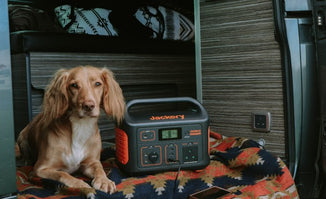
The Jackery SolarVault 3 Pro Max is an AC-coupled home-energy storage option that can help manage solar generation and time-of-use electricity. Its modular LFP storage can be configured from 2.52 kWh to 15.12 kWh per tower, while the energy-management system uses metering data to coordinate charging and household supply.

AC coupling can also make storage easier to integrate with an existing solar installation because it operates on the property’s AC side. Installation design, tariff control and UK grid compatibility must still be confirmed.
Storage does not automatically make every EV charge cheaper. Compare:
- Charge and discharge losses
- Usable battery capacity
- Maximum continuous output
- EV charger power
- Smart-meter and energy-management compatibility
- Import and export tariff conditions
- Competition between the home battery and EV for the same cheap window
- Installed battery cost against realistic annual savings
- Backup power and tariff shifting as separate benefits
Export value matters. Storing 1 kWh of solar sacrifices the payment that could have been earned by exporting it. After conversion losses, using stored solar may cost more than charging the EV directly overnight if the export payment is higher than the cheap import rate.
Power is another limitation. The SolarVault 3 Pro Max provides up to 2.5 kW of AC output, while a typical home EV charger may draw 7 kW. The battery could contribute to household demand or supply part of the charger load, but it cannot independently run a 7 kW charger at full power. The grid would need to provide the balance unless the charging rate were reduced.
Home Charging Versus Supermarket and Public Charging
Charging at home on an EV tariff is usually the least expensive option for regular use. Supermarket and public chargers remain valuable for drivers without private parking, longer journeys and unplanned top-ups, but their prices can be several times higher.
There is no permanently cheapest supermarket for EV charging. The operator, charger speed, payment method and individual store determine the price. App rates may also be lower than contactless or roaming rates.
Indicative prices checked on 24 August 2026:
|
Charging location |
Indicative price range |
Typical speed |
Main advantage |
Main limitation |
|
Home EV tariff |
About 6.5–14p/kWh |
Commonly 7 kW |
Usually the lowest routine cost |
Requires suitable parking and installation |
|
Tesco |
Commonly 44–69p/kWh |
7–75 kW |
Wide supermarket coverage |
Price changes with charger speed |
|
Lidl |
40–74p/kWh |
From 7 kW to rapid DC |
Lower prices through Lidl Plus |
App, website and contactless rates differ |
|
Aldi |
Around 40p fast and 62p rapid at participating sites |
Fast and rapid |
Competitive at some locations |
Operators and prices vary between stores |
|
Sainsbury’s |
Up to 49p for slower units and 72p for ultra-rapid |
7–150 kW |
Rapid top-ups and contactless payment |
Far more expensive than overnight home charging |
|
Motorway ultra-rapid charger |
Often substantially higher than supermarket charging |
150–350 kW |
Fastest option on long journeys |
High unit price and possible membership differences |
Lidl currently charges 40p/kWh for fast charging and 62p/kWh for rapid charging through Lidl Plus. Paying through its third-party website raises these prices to 55p and 74p respectively. This illustrates why the payment route matters as much as the retailer.
Sainsbury’s Smart Charge lists a maximum of 72p/kWh for its 150 kW ultra-rapid service and up to 49p/kWh at slower 7 or 22 kW locations. Smart Charge Tesco’s commonly reported prices range from 44p/kWh for 7 kW charging to 69p/kWh for 75 kW units, although the individual charger should be checked before connecting.
Lidl or Aldi may therefore provide some of the lowest widely available supermarket rates, but neither is cheapest at every site. Some Aldi locations use different operators and can have different prices. Tesco may be competitive when a slower charger suits the length of the shopping trip.
Public charging costs more partly because public electricity generally carries 20% VAT, compared with 5% on domestic energy. Faster chargers also require more expensive equipment and grid connections. Before starting a session, check the displayed pence-per-kWh rate, app discount, parking limit, possible overstay fee and charger availability.

How to Get Cheaper EV Charging
Finding the cheapest EV charging tariff requires more than switching to the supplier advertising the lowest night rate. Use the following sequence to reduce charging costs without increasing the rest of the household bill.
Download 12 months of electricity data. Use bills or half-hourly smart-meter records to identify annual consumption and the times when the household uses most electricity.
Estimate the EV’s annual demand. Divide expected mileage by real-world miles per kWh, then allow for charging losses. Use winter or motorway efficiency if those conditions represent much of your driving.
Check when the car is available. Record normal arrival and departure times for a week. A low five-hour rate provides little benefit if the EV is rarely connected for the complete window.
Request postcode-specific quotes. Compare the day rate, night rate, standing charge, tariff duration, exit fee and payment method. Regional differences mean national headline rates are insufficient.
Confirm technical compatibility. Check that the supplier can communicate with the smart meter and, for intelligent charging, the precise vehicle or charger model.
Calculate the complete annual bill. Include EV charging, daytime household electricity, standing charges, subscriptions, charger payments and guaranteed credits.
Move suitable demand into the cheap window. Whole-home tariffs can also reduce the cost of water heating, home-battery charging and safely scheduled appliances. Follow manufacturer instructions and avoid operating unsuitable or damaged appliances unattended.
Limit peak-rate boost charging. Use it when the car is genuinely needed, not as the default setting. Check whether an intelligent tariff offers another discounted slot before overriding the schedule.
Protect valuable solar arrangements. Before changing electricity supplier, compare the new import tariff with the existing Smart Export Guarantee or other export payment. A lower charging rate may not compensate for lost export income.
Review the deal before it expires. Recalculate the annual cost when a fixed term, charging credit, referral reward or discounted charger package ends.
Eligible households may also receive help with installing a charge point. From April 2026, qualifying renters and flat owners can receive 75% of eligible purchase and installation costs, up to £500. A separate grant supports qualifying households using an approved cross-pavement solution for on-street parking. Property, parking, installer and equipment conditions apply, so check eligibility before ordering or beginning work.
FAQs
The following are the frequently asked questions about the cheapest EV tariffs in the UK:
1. Is it worth moving to an EV tariff?
It can be worthwhile if you charge regularly at home and can move most charging into the discounted period. However, compare the complete annual household bill. A low EV rate can be outweighed by a high daytime rate, standing charge or subscription. Homes with little annual mileage or frequent daytime charging may save less. Use 12 months of consumption and include charging losses.
2. Am I eligible for an EV tariff?
Eligibility varies by supplier. You will usually need an electric or plug-in hybrid vehicle charged at home, a communicating smart meter and consent to half-hourly readings. Intelligent tariffs also require a compatible car or smart charger, an app and reliable connectivity. Some suppliers require Direct Debit, proof of EV ownership or an existing electricity account before allowing the tariff change.
3. How do I switch to an EV tariff?
First obtain a postcode-specific quote and check the day rate, night rate, standing charge, term and exit fee. Confirm that your meter, EV and charger are compatible. New customers may initially switch their electricity supply to the supplier’s standard tariff and move to the EV product after the smart meter connects. Complete any required test charge before assuming the discounted rate is active.
4. What is the cheapest way to charge an EV?
Direct use of surplus solar can be cheapest where the alternative export payment is low. For most drivers with access to private parking, scheduled home charging on a low overnight tariff offers the lowest repeatable cost. Avoid unnecessary rapid charging, minimise peak-rate boost sessions and compare the whole household bill. Free workplace or destination charging may help, but availability, parking fees and access conditions matter.
5. Is it cheaper to charge an electric car at night?
Usually, if the household is on an EV or time-of-use tariff. Current specialist tariffs can offer overnight electricity at a fraction of a standard daytime rate. The discount applies only during specified hours or approved smart-charging slots. Charging that begins early, continues beyond the window or uses a manual boost may be billed at the higher day rate.
6. What does it cost to install a charge point at home?
A standard 7 kW smart charger commonly costs around £800–£1,200 fully installed, although long cable runs, consumer-unit work, groundworks or load-management equipment can increase the price. Eligible renters, flat owners and households installing an approved cross-pavement solution may receive 75% of qualifying costs up to £500. Obtain an itemised survey and quotation before ordering.
7. Is it better to charge an EV to 80% or 100%?
For many EVs, around 80% is a suitable everyday limit because it provides useful range while reducing the time spent at a very high state of charge. Charging to 100% is reasonable before a long journey. Battery chemistry matters: some manufacturers recommend periodically charging an LFP battery to 100% for calibration. Follow the vehicle handbook rather than applying one percentage to every model.
8. Is Octopus EV a good deal?
Intelligent Octopus Go can be competitive for drivers with a supported EV or charger. It currently advertises smart charging from 8p/kWh, six guaranteed cheap whole-home hours from 11:30pm to 5:30am and additional scheduled slots. Its value still depends on the postcode-specific day rate, standing charge and device reliability. Immediate “bump” charging is billed at the day rate.
9. Which supermarket is cheapest for EV charging?
There is no universal winner because retailers use different operators and charger types. Lidl currently lists 40p/kWh for fast charging and 62p/kWh for rapid charging through Lidl Plus, while some Aldi locations can also be competitive. Tesco’s slower chargers may suit longer shopping visits. Check the individual charger’s live price, payment route, parking limit and availability before travelling.
10. Are EV tariffs covered by the energy price cap?
Not necessarily. Ofgem’s price cap protects customers on standard variable default tariffs by limiting unit rates and standing charges, not the total bill. Many EV tariffs are specialist fixed or time-of-use products and are not protected in the same way. An EV add-on may sit alongside an underlying capped tariff, but the add-on has separate terms.
Final Thoughts
The cheapest EV tariff in the UK drivers see in a headline may not produce their lowest total cost. A low overnight rate is most valuable when the window is long enough and the household avoids an excessive daytime rate. Recheck all prices and terms immediately before applying.
Start by estimating the EV’s annual metered electricity use, including charging losses, and identify when the car can reliably remain connected. Obtain postcode-specific quotes and compare the night rate, daytime rate and standing charge using the same annual consumption.
Check whether discounted electricity applies only to controlled EV charging or to the whole home. Confirm that the smart meter communicates correctly and that the exact car or charger is supported. Add any subscription, charger-finance and exit costs, while separating temporary credits from recurring savings. Homes with solar panels should also protect a valuable export arrangement before changing supplier.
Finally, calculate the complete annual household bill rather than ranking tariffs by one pence-per-kWh figure.


