
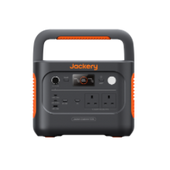

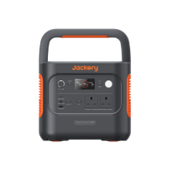


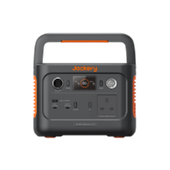


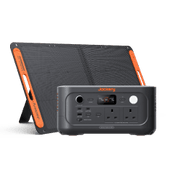
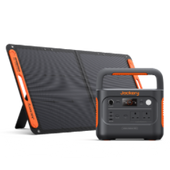
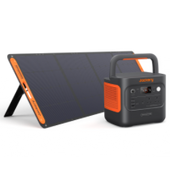
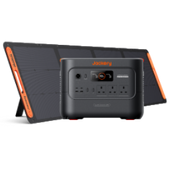
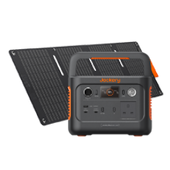


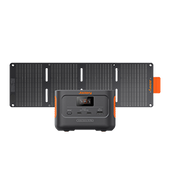

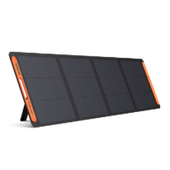
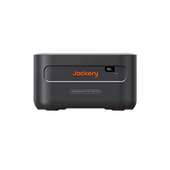
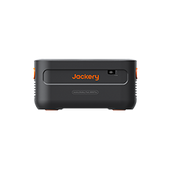






















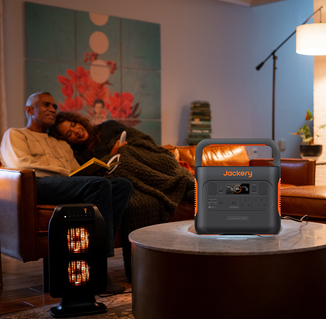


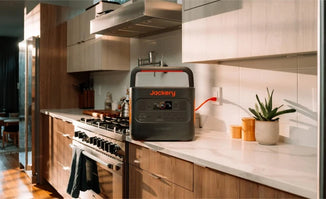
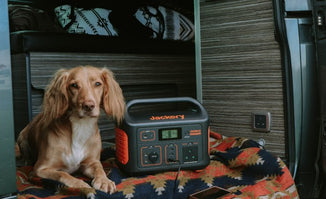


The Jackery Explorer 500 has long been a familiar name in the UK camping and van-life market, valued for its practical size, dependable 500W output, and easy portability.
Now, the Jackery Explorer 500 v2 builds on that foundation with a full redesign that brings the series up to modern expectations. While both models are compact power stations made for essential electronics and light off-grid use, the newer version improves the areas that matter most in everyday use, including battery lifespan, charging speed, portability, port selection, and backup performance at home.
This article takes a detailed look at both models, from their battery technology and charging methods to the appliances they can run in real UK scenarios. It also explains how to charge and use each unit, and shows why the Jackery Explorer 500 v2 stands out as the more future-ready choice for camping trips, van travel, remote work, and emergency backup.
What Is The Jackery Explorer 500 v2?
The Jackery Explorer 500 v2 (released in the UK in late 2025) is a ground-up redesign of the classic Explorer 500. While the original was a "legend" in the camping world, the v2 brings the technical specs into the modern era, specifically addressing battery longevity and charging speed.

Battery Technology & Longevity
The most significant upgrade is the move from NMC (Nickel Manganese Cobalt) to LiFePO4 (Lithium Iron Phosphate) chemistry. The v2 is rated for 6,000 cycles to 70% capacity. This is nearly 8x the lifespan of the original model (which was rated for 800 cycles).
With daily use, the battery is designed to last roughly a decade, making it a much better long-term investment for UK van lifers. 512Wh (effectively the same "juice" as the original 518Wh, but in a more stable battery format).
Output and Ports (UK Specs)
The UK version is tailored for domestic appliances and modern gadgets.
AC Output: 500W continuous (1000W surge). Note: This is ideal for laptops and fans, but will not run high-wattage UK kettles or hair dryers.
Dual AC Sockets: Unlike the original’s single outlet, the v2 features 2x UK 3-pin AC sockets.
USB-C Fast Charging: Includes a 100W USB-C port (perfect for charging MacBooks and high-end laptops without a brick) and a 30W USB-C port.
Other Ports: 1x 18W USB-A port and 1x 12V DC car port.
Industry-Leading Charging Speeds
The original 500 was notoriously slow to charge (7.5 hours). The v2 slashes this time using ChargeShield 2.0. 0% to 100% in approx. 1.3 hours. It supports up to 200W solar input (doubled from the original). With a SolarSaga 200W panel, it can recharge in roughly 2.8 hours in optimal UK sun. It also can hit a full charge in 1 hour when activated via the app for last-minute trips (AC + SolarSaga 100W: 1 hour).
Physical Design & Portability
29% Smaller: The v2 has been shrunken down significantly, now roughly the size of a large lunchbox (31.1×20.5×15.7 cm). It weighs 12.57 lbs/5.7kg, compared to the 14.1 lbs of the original. One of the most requested features; the handle now folds flush with the top, allowing you to stack gear on top of it in a cramped car boot.
Smart Features
UPS Mode (<10ms): It functions as an Uninterruptible Power Supply. If your UK home suffers a power cut, it switches over fast enough to keep a Wi-Fi router or desktop PC running without a reset. It operates at under 28dB (whisper quiet), making it ideal for use inside a small tent or next to a bed.
What Is The Jackery Explorer 500?
The Jackery Explorer 500 (Classic) has been a staple in the UK camping and van-life scene for years. It is widely regarded as the "Goldilocks" of power stations—large enough to power essential electronics for a weekend, yet small enough to carry with one hand.
While it has recently been succeeded by the v2 model, the Classic remains a popular choice for those looking for a proven, rugged workhorse at a potentially lower price point.

Battery Capacity and Output Performance
The core of the Explorer 500 is its 518Wh Lithium-ion (NMC) battery. In practical UK terms, this "tank" of energy is sufficient to charge a standard smartphone over 40 times or a laptop 4–6 times. Its 500W continuous AC output (with a 1000W surge capability) is managed by a Pure Sine Wave inverter.
UK-Specific Port Configuration
The interface is designed for simplicity, with all inputs and outputs located on the front panel for easy access in a dark tent or van. The UK version features:
1x Standard 3-Pin AC Socket: Delivering 230V/50Hz power for any appliance under 500W.
3x USB-A Ports: Providing 5V/2.4A each. While these are reliable for phones and tablets, they do not support modern "Fast Charging" or USB-C Power Delivery (a feature added in the newer v2).
1x 12V Car Port: A standard cigarette-lighter style socket (12V/10A) which is the go-to for UK-standard portable compressor fridges and tire inflators.
2x 6.5mm DC Outputs: These 12V/7A ports are less commonly used in the UK but can power specific DC-run LED light strips or DIY electrical projects.
Charging Versatility and "British Weather" Realities
Charging the Explorer 500 is straightforward but requires some patience compared to newer models. Using the included UK mains adapter, a full charge takes approximately 7.5 hours. If you are on the road, the 12V car charger will take a similar amount of time, though some users report it can take up to 12–16 hours depending on the vehicle's output.
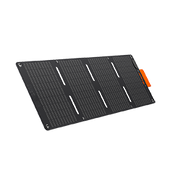
For off-grid use, it supports up to 100W of solar input via the SolarSaga 100W panel. In the height of a British summer, you can expect a full charge in about 9.5 hours, though in the overcast autumn or winter months, this will significantly increase.
Build Quality and Practical Design
Weighing in at 14.1 lbs, the Explorer 500 is light enough for most adults to carry for short distances. The build is famously durable, featuring an impact-resistant shell and a sturdy, fixed carry handle that feels secure even when wearing gloves.
It also includes a built-in LED flashlight on the side with an SOS mode, which is incredibly useful for emergency tyre changes on a dark A-road or navigating a campsite at night. The backlit LCD screen provides clear, real-time data on exactly how many watts are being pulled and how much "juice" is left in the tank, taking the guesswork out of power management.
Portable Power Stations vs. Traditional Generators
When comparing portable power stations (PPS) to traditional fuel-powered generators, the transition from petrol to battery—specifically with brands like Jackery—marks a shift from "industrial utility" to "refined lifestyle."
While fuel generators have historically won on raw power, modern portable power stations are increasingly being chosen as the superior option for UK camping, van life, and home backup.

Silence vs. "The Industrial Hum"
In the UK, noise is a major factor, especially at campsites or in residential neighborhoods. Typically, the traditional generators operate at 70-90 dB, which is comparable to a loud lawnmower or heavy traffic. This often leads to restrictions on "generator hours" at UK campsites.
Portable power stations are virtually silent. Even when the internal cooling fans kick in, they stay below 30-45 dB (quieter than a normal conversation). You can sleep right next to one in a tent without a sound.
Safety and Indoor Use
This is the most critical functional advantage. The traditional generators produce Carbon Monoxide (CO) and toxic fumes. They must be kept at least 20 feet away from any structure, meaning you have to run long, trailing cables through open windows or doors to get power inside your house or van.
Portable power stations produce zero emissions. They are perfectly safe to use inside your living room during a power cut, inside your campervan, or even inside a small 2-man tent.
Zero Maintenance vs. Ongoing "Mechanical Chores"
Traditional generators are combustion engines. They require oil changes, spark plug replacements, air filter cleanings, and careful fuel storage (petrol can "go off" if left too long). If you don't use them for six months, they often refuse to start.
Portable power stations are no moving parts to service. You simply plug it in to charge and it’s ready. Modern Jackery units (like the 1000 Plus) use LiFePO4 batteries, which are rated for 4,000+ cycles—meaning you can use it every day for 10 years without any mechanical maintenance.
Cost Efficiency: "Free Power" from the Sun
While a fuel generator might be cheaper to buy upfront, the running costs are significantly higher. Every watt of power costs you money in petrol or diesel, which is notoriously expensive in the UK. Once you own the unit and a SolarSaga panel, your energy is 100% free. You can harvest the sun during the day to power your lights and fridge at night, effectively paying off the unit over time through fuel savings.
What Can a Jackery Explorer 500 v2 Run?
The Jackery Explorer 500 v2 is a mid-range power station that bridges the gap between small pocket chargers and heavy-duty backup units. With a 512Wh capacity and a 500W continuous AC output (1000W surge), it is designed to power "essential" electronics rather than high-heat appliances.

The Weekend "Tech-Camp"
This is the most common use for the 500 v2 in the UK. It allows a couple or a small family to keep all their primary communication and navigation devices running for a 48-hour trip without needing to start the car engine.
|
Appliance |
Average Wattage |
Estimated Runtime / Charges |
|
Smartphone (iPhone/Android) |
10W - 12W |
~35-40 Full Charges |
|
Laptop (MacBook Air/Pro) |
50W - 65W |
~6-8 Full Charges |
|
Tablet (iPad) |
15W - 30W |
~15-18 Full Charges |
|
Drone (DJI Mavic Series) |
40W (per battery) |
~10 Full Charges |
The Off-Grid "Micro-Kitchen"
While the 500 v2 cannot run a full-sized home kettle (which draws 2000W+), it is perfect for low-wattage travel appliances. This setup is ideal for campervan owners who want to avoid installing a complex dual-battery system.
|
Appliance |
Average Wattage |
Estimated Runtime / Charges |
|
Portable Compressor Fridge |
40W - 60W |
~15-20 Hours (actual usage varies) |
|
Travel Coffee Maker/Pod Machine |
300W - 450W |
~1 hour (approx. 10-15 cups) |
|
Electric Coolbox (Thermoelectric) |
50W |
~8-9 Hours (continuous) |
|
Electric Blanket (Single) |
60W |
~7-8 Hours |
Emergency Home Office (UK Power Cut)
The 500 v2 features a built-in UPS (Uninterruptible Power Supply) with a <20ms switch time. In the event of a regional power cut, it can keep your home office or essential medical equipment running until the grid returns.
|
Appliance |
Average Wattage |
Estimated Runtime / Charges |
|
Wi-Fi Router |
10W - 15W |
~30-35 Hours |
|
Desktop Monitor (27-inch) |
30W - 40W |
~11-13 Hours |
|
CPAP Machine (Medical) |
40W - 60W |
~7-9 Hours (one full night) |
|
LED Table Lamp |
8W - 10W |
~50+ Hours |
If you are deciding between the classic 500 and the newer 500 v2, remember that the v2 recharges in just 1.3 hours from the wall, whereas the classic 500 takes about 7.5 hours.
What Can a Jackery Explorer 500 Run?
The Jackery Explorer 500 is a mid-sized portable power station with a 518Wh capacity and a 500W continuous output (1000W surge). In the UK, it is highly popular for "weekend warriors" and car campers because it strikes a balance between portability (6kg) and enough power to run electronics for several days.
Here is the formula that you can calculate the running time.
Runtime = Explorer Capacity*0.85 / Appliance Wattage
In the event that you are employing your Jackery Solar Generator to maintain the operation of a refrigerator during a power disruption, the Running Time Simulator/Calculator, which is accessible on the product page, can be employed to effortlessly determine the working hours. You can determine the estimated runtime by inputting the wattage of the refrigerator into the Running Time Simulator on theproduct page.

The "Digital Nomad" Lake District Trip
This scenario is for someone working remotely from a campervan or tent. The Explorer 500 is the perfect "office hub" for keeping professional gear charged without needing a fixed leisure battery system.
|
Appliance |
Average Wattage |
Estimated Runtime / Charges |
|
Laptop (MacBook/Dell XPS) |
60W |
5 – 7 Full Charges |
|
Starlink Mini / Wi-Fi Router |
25W – 40W |
12 – 16 Hours |
|
Smartphone (iPhone/Samsung) |
10W – 15W |
40 – 50 Full Charges |
|
Mirrorless Camera Battery |
15W |
25 – 30 Full Charges |
Weekend Family Camping (Summer)
For a family camping trip in the New Forest or Cornwall, the Explorer 500 focuses on "comfort" items—keeping food fresh and providing light after the sun sets.
|
Appliance |
Average Wattage |
Estimated Runtime / Charges |
|
12V Compressor Fridge |
15W – 20W (avg) |
20 – 25 Hours (approx. 1 full day) |
|
LED String Lights (5m) |
5W |
85 – 90 Hours |
|
Electric Air Pump (for beds) |
100W |
4 – 4.5 Hours (Total run time) |
|
Tablet (for kids' movies) |
20W |
20 – 25 Full Charges |
Emergency Home Backup (The Power Cut)
During a winter power cut in the UK, the Explorer 500 can keep essential communications and medical devices running. Its Pure Sine Wave inverter ensures sensitive electronics are safe.
|
Appliance |
Average Wattage |
Estimated Runtime / Charges |
|
CPAP Machine |
30W – 60W |
7 – 13 Hours (approx. 1–2 nights) |
|
55" LED TV |
100W |
4 – 4.5 Hours |
|
Broadband Router (Openreach) |
10W |
40 – 45 Hours |
|
Rechargeable Torch / Lantern |
5W |
90+ Hours |
Because the AC outlet is capped at 500W, you cannot use most standard UK kitchen appliances.
How to Charge & Use The Jackery Explorer 500 v2?
The Jackery Explorer 500 v2 is a significant technical upgrade from the original model. To use it correctly in the UK, you need to understand its new interface, which includes upgraded USB-C ports and significantly faster charging capabilities. The v2 model supports ChargeShield 2.0, which allows for much faster top-ups than the "Classic" 500.
|
Method |
UK Hardware |
Estimated Time (0-100%) |
|
Wall Outlet |
Included UK AC Adapter |
1.3 Hours |
|
Solar Panels |
Jackery SolarSaga 200W |
2.8 Hours (Full Sun) |
|
Car Port |
Included 12V Car Cable |
6 Hours |
|
AC + SolarSaga 100W |
Fast Wall Charging |
1 Hour |
How to Use Jackery Explorer 500 v2:
The Explorer 500 uses a "Three-Zone" layout. Each zone has its own power button that must be pressed to
Using the 500 v2 is simple, but there are a few "smart" features unique to this version:
Step 1: Power On: Press the main Power Button for a few seconds until the LCD display lights up.
Step 2: Activate Outputs: Unlike a power bank, you must manually turn on the specific section you want to use:
AC Button: For the two UK 3-pin sockets.
DC/USB Button: For the USB-A, USB-C, and 12V car port.
Step 3: Monitor the Display: The screen shows your Input wattage (how fast it's charging) and Output wattage (how much your devices are pulling). It also provides a "Time to Empty" calculation based on current usage.
Step 4: Smart App Control: Download the Jackery App (available on iOS/Android). Connect via Bluetooth or Wi-Fi to remotely turn off ports, check battery health, or set the "Energy Saving" timer to prevent the unit from staying on indefinitely.

How to Charge & Use The Jackery Explorer 500?
Operating the Jackery Explorer 500 is straightforward, but knowing the specific charging times and "best practices" for its battery type is key to making it last. The Explorer 500 has a single DC Input port on the front. You can charge it in four ways:
|
Method |
UK Hardware |
Estimated Time (0-100%) |
|
Wall Outlet |
Included UK AC Adapter |
7.5 Hours |
|
Solar Panels |
Jackery SolarSaga 100W |
9.5 Hours (Full Sun) |
|
Car Port |
Included 12V Car Cable |
7.5 – 12 Hours |
|
Generator |
Standard Pure Sine Generator |
7.5 Hours |
You can charge the Jackery while simultaneously powering devices. However, to preserve battery health, avoid doing this with high-wattage appliances. In the UK, a 100W panel often outputs 40W–70W due to clouds. Expect a full charge to take closer to 1.5–2 days if the weather is overcast.
How to Use Jackery Explorer 500:
The Explorer 500 uses a "Three-Zone" layout. Each zone has its own power button that must be pressed to activate the ports.
Zone 1: USB (Blue) * Press the "USB" button. Connect phones, tablets, or headlamps to the 3x USB-A ports.
Zone 2: DC (Yellow) * Press the "DC" button. This activates the 12V "cigarette lighter" style port and the two 6.5mm DC barrel ports. Best for 12V travel fridges.
Zone 3: AC (Green) * Press the "AC" button. Plug in your 230V UK 3-pin devices.
Jackery Explorer 500 vs 500 v2: Why 500 v2 Wins?
Choosing between the Jackery Explorer 500 v2 and the Explorer 500 in 2026 is essentially a choice between a "future-proof technology" and "proven budget workhorse." While the original model has been a staple of UK camping for years, the v2 represents a massive leap forward in battery chemistry and convenience.
Here are the main reasons why Jackery Explorer 500 v2 is a better choice than the older Explorer 500 in the UK, across several aspects.
Much Longer Battery Lifespan
The biggest upgrade is battery durability. Explorer 500 v2 uses a LiFePO4 battery rated for 6,000 life cycles, while the older Explorer 500 is rated for about 800 cycles to 80% capacity. That means the v2 is far better for long-term use, whether for regular camping, van trips, garden use, or home backup.
Faster Charging for UK Users
Charging speed is another major advantage. The Explorer 500 v2 supports super-fast charging, with full charging in about 1 hour in AC + solar mode and around 80 minutes from the grid. By comparison, the older Explorer 500 takes around 7.5 hours from a wall outlet and 9.5 hours by solar. For UK weather and short daylight windows, faster recharging is a clear practical benefit.
More Modern and Practical Ports
The v2 has a more up-to-date port setup for modern devices. It offers 2*AC outlets, 2*USB-C ports, 1*USB-A port, and a 12V car socket. The old Explorer 500 has 1*AC outlet, 3*USB-A ports, 2*DC ports, and 1* car port. In real use, the v2 is more convenient for UK users charging newer phones, tablets, and laptops directly through USB-C, especially for travel and remote work.
Better Portability
Although both are portable, the Explorer 500 v2 is notably easier to carry. It weighs 5.7 kg, while the old Explorer 500 is around 13.32 lbs (about 6.0 kg), and the v2 also has a slimmer, more compact body. Jackery presents it as the lightest and smallest unit in its 0.5 kWh class, which makes it more practical for UK camping, car trips, festivals, and moving around the house during outages.
Better for Backup Power at Home
Explorer 500 v2 adds UPS switching under 10 ms, which helps keep essential devices running during sudden blackouts. That makes it more suitable than the older Explorer 500 for light home backup in the UK, especially for routers, communication devices, and small work equipment.
Better Performance in Harsh Weather
The v2 is designed to work in -20°C to 45°C, and Jackery specifically highlights its reliability in frost, heat, and rainy conditions. That is useful in the UK, where outdoor conditions can be damp, cold, and changeable. The old Explorer 500 mentions protection and temperature sensors, but the v2 is presented more clearly as a product built for wider-condition use.
Smarter and Quieter Daily Use
The Explorer 500 v2 includes a one-touch energy-saving mode and operates at under 28 dB at a 200W load, making it more efficient and quieter in practical use. That is helpful for tents, campervans, bedrooms, and quiet home settings.
Better Solar Usability
The Explorer 500 v2 supports up to 200W solar input, and Jackery says it recharges far faster by solar than the original Explorer 500. For UK users trying to make the most of limited sunshine, that makes the v2 a more flexible solar companion.
|
Feature |
Jackery Explorer 500 v2 |
Jackery Explorer 500 |
|
Capacity |
20Ah/25.6V DC (512 Wh) |
518.4Wh |
|
Power (W) |
500W Rated 1000W Surge |
500W Rated 1000W Surge |
|
Battery Cell |
LiFePO4 6000 cycles to 70%+ capacity |
Lithium-ion 800 cycles to 80%+ capacity |
|
Output |
AC Output: 230V~50Hz, 2.18A, 500W USB-A Output: 18W Max, 5-6V⎓3A, 6-9V⎓2A, 9-12V⎓1.5A USB-C Output: USB-C1 Output=100W Max, 5V⎓3A, 9V⎓3A, 12V⎓3A, 15V⎓3A, 20V⎓5A USB-C2 Output=30W Max, 5V⎓3A, 9V⎓3A, 12V⎓2.5A, 15V⎓2A, 20V⎓1.5A Cigarette Lighter Port: 12V⎓10A Max |
AC Output: 1 Port, 230V~ 50Hz, 2.17A, 500W Rated, 1000W Surge peak DC Output: 2 Ports, 12V⎓7A USB-A Output: 3 Ports, 5V⎓2.4A Cigarette Lighter Port: 12V⎓10A Max |
|
Weight |
About 12.57 lbs/5.7kg |
14.1 lbs (6.4 kg) |
|
Dimension |
31.1×20.5×15.7 cm |
11.8 × 7.6 × 9.5 in (30 × 19.3 × 24.2 cm) |
|
Solar Input |
200W Max |
100W Max |
|
Operating Usage Temperature |
Charge Temperature=-20°C to 45°C Discharge Temperature=-20°C to 45°C |
Operating: 14°F~104°F (-10~40°C) Recharging: 32°F~104°F (0~40°C) |
For most buyers the newer battery chemistry, faster charging, better ports, and smarter features make the v2 the stronger overall option.
FAQs
The following are frequently asked questions about the Jackery Explorer 500 v2 in the UK.
1. How long will a Jackery 500 v2 run a fridge?
A Jackery Explorer 500 v2 can usually run a small fridge for about 6 to 14 hours, and in some low-draw cases longer, but it depends on the fridge’s running wattage and startup surge. The Explorer 500 v2 has 512Wh capacity and 500W rated output, and it can power a small fridge.
A practical way to estimate it is:
Runtime ≈ usable battery watt-hours ÷ fridge running watts
With AC appliances, a rough real-world usable figure is often around 430–460Wh after inverter losses. Using that range:
- 40W mini fridge → about 10–11.5 hours of continuous compressor run
- 60W compact fridge → about 7–7.5 hours continuous
- 80W fridge → about 5.5–5.75 hours continuous
- 100W fridge → about 4.3–4.6 hours continuous
2. How long does the Jackery Portable Power Station Explorer 500 v2 last?
The Jackery Explorer 500 v2 is rated for 6,000 charge cycles to 70% capacity, and Jackery says that works out to an estimated lifespan of up to 30 years if you charge it about every other day.
3. Can a Jackery 500 v2 boil a kettle?
The Jackery Explorer 500 v2 has a 500W AC output, so it can only run appliances that stay within that limit. Most kettles used in the UK draw far more power: Jackery’s own UK guide says a typical kettle is 1,200–1,500W, with some models reaching 2,000W, and other UK appliance guides commonly put kettles in the 1–3kW range. That means a normal UK electric kettle is well above what the Explorer 500 v2 can supply.
4. Can a Jackery 500 v2 run a coffee maker?
Yes, it can run some coffee makers, but not most standard UK ones. The key limit is the Explorer 500 v2’s 500W output. Jackery’s UK product page says it can power a small coffee maker, which means low-wattage models are within scope.
The problem is that many coffee makers exceed that. Jackery’s own coffee-maker guide uses 550W as an example coffee machine load, which is already above the 500 v2’s output limit, and a recent Jackery UK guide says most coffee machines in the UK draw 1,200W to 1,700W. Those would not run on a 500 v2.
Final Thoughts
Choosing between the Jackery Explorer 500 v2 and the Jackery Explorer 500 in 2026 is essentially a choice between a "proven budget workhorse" and "future-proof technology." While the original model has been a staple of UK camping for years, the v2 represents a massive leap forward in battery chemistry and convenience.
In 2026, the Explorer 500 v2 is the clear winner for most UK users. The 1-hour emergency charging and the 10-year battery lifespan justify the higher price tag. Only opt for the original if your budget is extremely tight and you find a "too good to pass up" clearance deal.


