
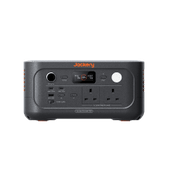

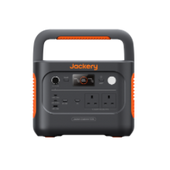

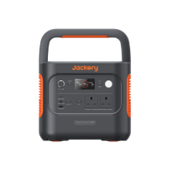

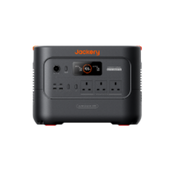
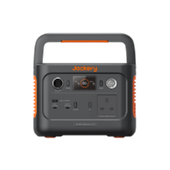
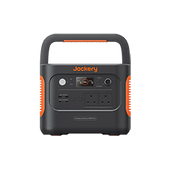
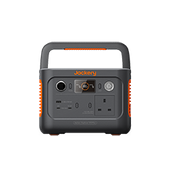

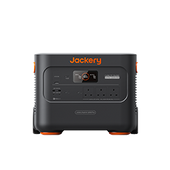


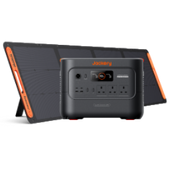
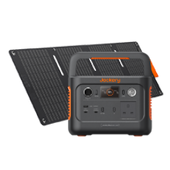
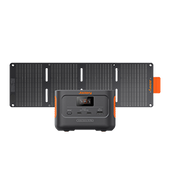
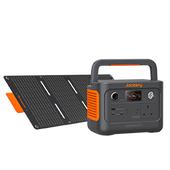
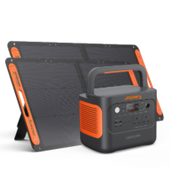
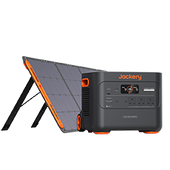

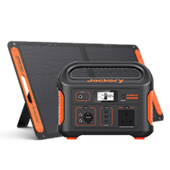

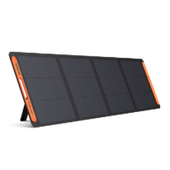
















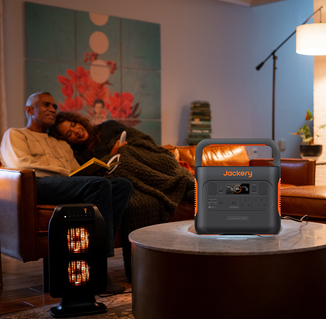











A pellet stove is an efficient and convenient way to heat your home. However, it still relies on electricity to power essential components such as the auger, fans, ignition system, and control board. In some cases, a sudden outage can also disrupt proper ventilation and cause shutdowns, making backup power even more important.
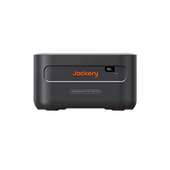
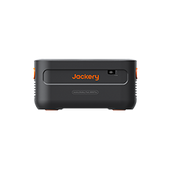
That is where a pellet stove battery backup comes in. A reliable backup system helps your stove continue running during an outage, supports a safer shutdown, and keeps your home warmer for longer in freezing weather. Among the available options, Jackery Portable Power Stations stand out as a practical solution because they offer clean, stable power, different battery sizes, and portable designs suited to both emergency home use and flexible everyday backup.
|
Key Takeaways: |
|
What Is a Pellet Stove Battery Backup?
Winters bring extreme weather conditions ranging from heavy snowfall, hurricane-force winds, freezing rains, and unexpectedly low temperatures. A sudden fluctuation in temperature is often accompanied by long-term power outages, leaving homes uncomfortably cold and inconveniently powerless.
Luckily, there is a solution to keep your heating devices, like pellet stoves, operational: a battery backup system. With the inevitability of winter power outages, an emergency pellet stove battery backup system proves to be an invaluable resource.
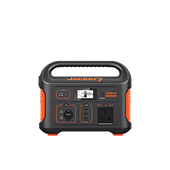
One feature-rich battery backup system is Jackery Portable Power Station. It is designed to supply clean, eco-friendly electricity to all power appliances, including pellet stoves. In this article, we will reveal what these battery backup systems are and how to choose the one that aligns with your budget and needs.

Why Does the Pellet Stove Battery Backup Matter?
A pellet stove battery backup is more than a convenience; it is a critical safety component for your home. While pellet stoves are prized for their efficiency and automated heating, their reliance on electricity creates a unique vulnerability during power outages.
Safety: Preventing Smoke Inhalation
Unlike a traditional wood stove, a pellet stove uses an electric combustion fan to pull air into the fire and push smoke out the exhaust vent.
If the power cuts while a fire is roaring, the fans stop instantly. However, the pellets in the burn pot will continue to smolder.
Without the fan to guide the smoke outside, it can back-draft into your living room, leading to smoke damage and carbon monoxide risks. A backup like a Jackery Portable Power Station ensures the fans keep running long enough to safely exhaust the smoke.
Preventing Equipment Damage
A sudden loss of power can cause heat to build up inside the stove’s internal components because the convection fans (which cool the unit) have stopped. This "heat soak" can warp metal parts or damage sensitive circuit boards. A battery backup allows for a controlled shutdown, protecting your investment.
Sustained Heat During Winter Storms
In many UK regions, a power cut during a winter storm can last for hours or even days. Since a pellet stove cannot operate without electricity to run the auger (which feeds the fuel) and the blowers, your primary heat source becomes useless exactly when you need it most.
Jackery Portable Power Stations are particularly well-suited for pellet stoves because they provide Pure Sine Wave power, which is necessary for the sensitive motors and circuit boards found in modern stoves.
How Does Jackery Work as a Pellet Stove Battery Backup?
Pellet stoves are one of the most efficient and cost-effective space heaters that keep your space warm. They work on electricity, which means these heating solutions will not operate in the event of a power outage. This is why it's better to equip yourself with a power source, like a battery backup system, to fuel your appliances.
The term "battery backup for pellet stoves" refers to an external power solution that supplies stable electricity to the appliances. Lithium-ion batteries are the most popular battery types for emergency power supply. Not only do these batteries charge pellet stoves for hours, but they can also power refrigerators, CPAP machines, computers, and other home equipment.
Jackery is a renowned manufacturer of high-quality portable power stations, solar panels, and solar generators. Jackery Portable Power Stations feature an in-built lithium-ion battery (LiFePO4) for efficient charging. Compared to other market options, power stations from Jackery are light in weight and more durable. Thus, they are convenient to carry during camping, hiking, and other outdoor adventures.
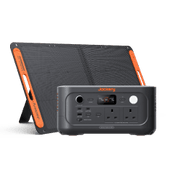
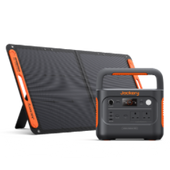
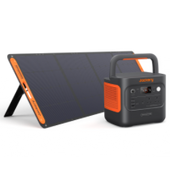
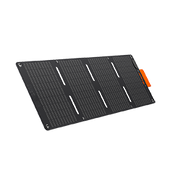
Jackery Portable Power Stations connect with Jackery Solar Panels to charge pellet stoves. The solar charging cable links the power station and solar panels to keep home appliances running during power outages. Some of the main benefits of using portable power stations include the following:
- They are light in weight with a foldable handle, making them ideal for outdoor activities like fishing, hiking, etc.
- The high battery capacity of portable power stations helps you charge multiple other home appliances in addition to pellet stoves.
- As battery-powered power stations do not emit fumes, they are ideal for residential uses.

Best Battery Backups for Pellet Stoves with Jackery
Investing in a pellet stove battery backup system alleviates the stress of unexpected power outages, blackouts, or brownouts. However, not all battery backup systems are the same. To help you choose the best battery backup for pellet stoves and other appliances, we have curated a list of important factors to consider.
How Many Watts Does a Pellet Stove Use?
The choice of the ideal battery backup depends on how many watts a pellet stove uses. Generally, a pellet stove consumes between 100-150 watts of energy. If the pellet stove is used for about eight hours a day, it will use nearly 800-1200Wh power per day.
A pellet stove’s wattage usually comes in two parts: a short startup/ignition draw and a lower running draw after the fire is established. Across current guides and manuals, a typical pellet stove uses about 300–500W during ignition for a few minutes, then about 60–150W while running, though some models can run higher and broader manufacturer-style ranges of 100–300W continuous are also commonly cited.
Therefore, it's ideal to choose a battery backup system that supplies more than 1kWh of energy per day. Below we reveal the top picks by Jackery to charge pellet stoves and other appliances. You can pick the one depending on your budget and electricity needs.
|
Pellet Stove Stage |
Typical Watts |
|
Ignition / Startup |
300–500W |
|
Normal Running |
60–150W |
|
Continuous Operation (Broader Estimate) |
100–300W |
|
Example Manual Figure |
45–100W average |
|
Example Startup Figure from Manual |
~350W |
|
High-end Example |
up to 500W max |
The following are the 5 best pellet stove battery backup generators from Jackery for use during power outages, emergencies or outdoors.
Best for Power Outages & Emergencies: Jackery Explorer 3000 v2
When looking at emergency home heating during a power outage, the Jackery Explorer 3000 v2 acts as a specialized bridge between a small portable battery and a full home standby generator. For a pellet stove, which relies on electricity to move fuel and exhaust air, this model offers several mechanical advantages.

Handling the "Ignition Spike"
Most people don't realize that a pellet stove acts like two different appliances. During the first 5–15 minutes, the electric igniter glows white-hot to light the pellets, pulling between 400W and 800W.
Once lit, the stove only pulls 80W to 150W for the fans and the auger motor. With a 3600W continuous output and a 7200W surge peak, the 3000 v2 handles the ignition phase without breaking a sweat. Smaller units often "trip" or overload the moment the igniter kicks in.
True "Full-Day" Security
In an emergency, the goal is to survive the night without the battery dying. It holds 3072Wh of energy. If your stove averages 120W, you can expect roughly 22–25 hours of continuous heat. In a survival scenario where you cycle the stove on and off, this single unit can easily provide 2 to 3 days of managed heating.
Protecting the Control Board (UPS Mode)
Pellet stoves are essentially computers that burn wood. They have sensitive circuit boards that can be fried by "dirty" power or sudden brownouts.
Pure Sine Wave: The 3000 v2 provides "clean" electricity identical to your wall outlet, ensuring the stove's sensors and motors don't hum or overheat.
Seamless UPS: It has a ≤20ms switchover time. If the grid fails while you are sleeping, the Jackery takes over so fast that the stove's internal computer won't reset, preventing a "smoke-back" situation where the exhaust fan stops while the fire is still active.
Rapid Emergency Recharging
A backup battery is only useful if you can get power back into it quickly once the sun comes up or a neighbor’s generator is available. It supports up to 1000W of solar. In ideal conditions, you can fully recharge this massive 3kWh battery in about 3.5 hours.
If the power comes back on briefly, it can charge from 0% to 100% in roughly 1.7 hours via a standard wall outlet.
|
Features of Jackery Explorer 3000 v2 |
|
|
Capacity |
3072Wh |
|
Cell Chemistry |
LiFePO4 4000 cycles to 70%+ capacity |
|
Weight |
About 59.5 lbs (27 kg) |
|
Dimension |
16.4 x 12.8 x 12 in (41.6 x 32.5 x 30.5 cm) |
|
Output Ports |
AC Output: 3 Ports, 230V~ 50Hz, 13A Max, 3600W Total, 7200W Surge peak USB-A Output: 2 Ports, 18W Max, 5-6V⎓3A, 6-9V⎓2A, 9-12V⎓1.5A USB-C Output: 2 Ports, 100W Max, 5V⎓3A, 9V⎓3A, 12V⎓3A, 15V⎓3A, 20V⎓5A Car Port: 12V⎓10A |
|
Recharging Methods |
AC+DC (54V) Charging: 1.4 Hrs AC Charging: 1.8 Hrs Solar Input 1000W Max: 3.5 Hrs 1 x SolarSaga 200W: 22 Hrs Car Charging 12V: 36 Hrs |
|
Working Hours |
Normal Running (60-150W): 17.4-43.52 Hrs Standard Pellet Stove (45-100W): 26.1-58 Hrs High-end Pellet Stove (500W): 5.2 Hrs |
Customer Review:
"My stove’s igniter pulls about 650W for the first ten minutes. The 3000 v2 didn’t even ramp up its fans. With 3600W of continuous power, it handled the startup "spike" like it was charging a phone. It’s surprisingly compact for having 3kWh of capacity. I don't have a massive living room, so the fact that it's nearly 50% smaller than older models means it doesn't look like an industrial generator sitting next to my sofa."
Best for Ultimate Power: Jackery Explorer 2000 Plus
While the Explorer 3000 v2 is a compact powerhouse, the Jackery Explorer 2000 Plus is the choice for "ultimate power" because of its unique expandability and heavy-duty output capabilities. If your goal is to move beyond simple backup and into long-term energy independence, the 2000 Plus offers a modular approach that the fixed-capacity models do not.

Modular "Ultimate" Capacity
The standout feature of the 2000 Plus is its ability to grow. While a single unit starts at 2042Wh, it is designed to be a building block. You can connect up to five add-on Battery Pack 2000 units to a single Explorer 2000 Plus, reaching a massive 12kWh.
While a 3kWh battery might last 24 hours, a fully expanded 12kWh system could power your pellet stove for nearly a full week without needing a single recharge. This is the definition of "ultimate" resilience during extended winter grid failures.
Massive Power Ceiling (Parallel Capability)
If you need to power more than just the stove—such as a well pump, space heaters, or a refrigerator simultaneously—the 2000 Plus can be linked in parallel.
By connecting two 2000 Plus units together, you boost the AC output to 6000W. This ensures that even if the stove’s igniter kicks in while other high-draw appliances are running, the system will never overload.
Superior Charging for Survival Scenarios
In an "ultimate power" scenario, you need to harvest as much energy as possible during the short daylight hours of winter.
The 2000 Plus supports up to 1200W of solar input. Because it uses advanced IBC (Interdigitated Back Contact) technology with Jackery SolarSaga panels, it can charge even in low-light or slightly overcast winter conditions better than older solar tech.
You can fully charge the base unit in about 2 hours via a wall outlet or roughly 2.4 hours via solar (with 6 x SolarSaga 200W panels).
Sustainability & Longevity (LiFePO4)
For a long-term investment, the 2000 Plus uses LiFePO4 (Lithium Iron Phosphate) battery chemistry. 4000+ Cycle Life: This unit is rated to last for over 10 years of daily use. LiFePO4 is more thermally stable than standard Lithium-ion, providing peace of mind when the unit is running for 24+ hours straight inside your home.
|
Features of Jackery Explorer 2000 Plus |
|
|
Capacity |
2042.8Wh (Up to 12kWh expandable) |
|
Cell Chemistry |
LiFePO4 4000 cycles to 70%+ capacity |
|
Weight |
61.5 lbs (27.9 kg) |
|
Dimension |
18.6 x 14.1 x 14.7 in (47.3 x 35.94 x 37.36 cm) |
|
Output Ports |
AC Output: 3 Ports, 230V~ 50Hz, 13A Max, 3000W Max, 6000W surge peak USB-A Output: 2 Ports, 18W Max, 5-6V⎓3A, 6-9V⎓2A, 9-12V⎓1.5A USB-C Output: 2 Ports, 100W Max, 5V⎓3A, 9V⎓3A, 12V⎓3A, 15V⎓3A, 20V⎓5A Car Port: 12V⎓10A DC Expansion Port Output: 32.2V-50.4V⎓97A Max |
|
Recharging Methods |
Solar Charging: 2.4 H Wall Charging: 2 H Car Charging: 25 H |
|
Working Hours |
Normal Running (150W): 11.6-68 Hrs Standard Pellet Stove (100W): 17.4-102 Hrs High-end Pellet Stove (500W): 3.5-20.4 Hrs |
Customer Review:
"I tested linking two 2000 Plus units. It gave me 6000W of output—enough to run the pellet stove, my full-sized fridge, and a microwave at the same time. If you’re trying to run a "survival hub" and not just a heater, this is the way to go."
Best for Normal Running: Jackery Explorer 2000 v2
While the Explorer 3000 v2 and 2000 Plus are often highlighted for their massive capacity or expandability, the Jackery Explorer 2000 v2 is a strategic "sweet spot" choice specifically for the daily, normal running of a pellet stove.

Optimised Weight-to-Power Ratio
For "normal running," you often need a balance between capacity and the ability to move the unit between rooms. The 2000 v2 is significantly lighter than the 3000 series, making it manageable to carry or roll to the stove area without needing a dedicated cart.
It packs 2042Wh of capacity, which is the "Goldilocks" amount for a standard winter day. It’s enough to handle the high-draw startup and then settle into a very efficient discharge rate for the low-wattage fans.
Efficiency During "Low-Draw" Operation
Pellet stoves are unique because they pull very little power (often 80W–120W) once the fire is established. Larger power stations sometimes have higher "idle draws" (the power the unit uses just to keep its inverter on). The 2000 v2 is highly optimised for efficiency at these lower loads, ensuring that more of the battery goes toward your stove's fans rather than just keeping the battery itself running.
Pure Sine Wave Stability: Like the higher-end models, it provides clean power that prevents the "humming" or overheating often seen in the auger motors when using cheaper, modified sine wave backups.
Rapid Daily Turnover (Charging Speed)
If you are using the unit for daily "normal running"—perhaps to save on peak electricity costs or for off-grid living—you need to be able to "flip" the battery quickly. The 2000 v2 can be fully recharged in approximately 1.7 hours from a wall outlet.
You can run your stove all evening, plug the Jackery in before bed, and have it fully topped up and ready to go again by the time you've finished your first cup of coffee the next morning.
Advanced LiFePO4 Safety
For a unit that will be running for 10–15 hours straight in your living space, the battery chemistry matters. The 2000 v2 uses LiFePO4 (Lithium Iron Phosphate) cells, which are much more resistant to heat and "thermal runaway" than older lithium-ion batteries. Rated for 4,000+ charge cycles, you can run your stove off this battery every single day for over a decade before seeing significant capacity drop.
|
Features of Jackery Explorer 2000 v2 |
|
|
Capacity |
2042Wh |
|
Cell Chemistry |
LiFePO4 4000 cycles to 70%+ capacity |
|
Weight |
38.6 lbs (17.5 kg) |
|
Dimension |
13.2 × 10.4 × 11.5 in (33.5 × 26.4 × 29.2 cm) |
|
Output Ports |
AC Output: 2 Ports, 230V ~ 50Hz, 10A Max, 2200W Rated, 4400W Surge peak USB-A Output: 1 Port, 18W Max, 5-6V⎓3A, 6-9V⎓2A, 9-12V⎓1.5A USB-C Output: 2 Ports, USB-C1: 30W Max, 5V⎓3A, 9V⎓3A, 12V⎓2.5A, 15V⎓2A, 20V⎓1.5A; USB-C2: 100W Max, 5V⎓3A, 9V⎓3A, 12V⎓3A, 15V⎓3A, 20V⎓5A Car Port: 12V⎓10A |
|
Recharging Methods |
Emergency Charging (AC) via App : 1.33 Hrs Wall Charging: 1.7 Hrs 400W Solar Input: 5.5 Hrs Car Charging: 24 Hrs |
|
Working Hours |
Normal Running (60-150W): 11.6-29 Hrs Standard Pellet Stove (45-100W): 17.4-38.6 Hrs High-end Pellet Stove (500W): 3.5 Hrs |
Customer Review:
"Once the fire is going, my stove drops to a steady 80W–110W. The v2 is incredibly efficient at these lower draws. I’m getting about 16 to 19 hours of runtime on a single charge—more than enough to get through a brutal winter night and well into the next morning."
Best for Outdoor Activities: Jackery Explorer 1000 Plus
The Jackery Explorer 1000 Plus is the "versatility specialist" in the lineup. While the larger 2000 and 3000 series are better suited as semi-permanent home backups, the 1000 Plus is designed for someone who needs to keep their pellet stove running at home but also wants a unit light enough to take camping, caravanning, or on a weekend DIY project.

The "Sweet Spot" for Portability
At roughly 32 lbs, the 1000 Plus is light enough for a single person to carry comfortably. It is easy to hoist into a car boot or a caravan. Unlike the 3000 v2, which stays mostly stationary, the 1000 Plus is built to be a "traveling power hub" for electric coolboxes, laptops, and outdoor lights.
If your pellet stove is on a different floor or in a tight space, moving this unit from its charging spot to the stove is effortless.
High Power Output in a Small Frame
Despite its smaller size, the 1000 Plus punch way above its weight class in terms of electrical performance. It offers 2000W of continuous power and a 4000W surge. Most 1kWh batteries struggle with the high-wattage electric igniters on pellet stoves (which can pull up to 800W), but the 1000 Plus handles it as easily as the larger units.
Just like the premium models, it provides clean energy that won't damage the sensitive control boards of your stove or your high-end outdoor camera gear.
Industry-Leading Scalability
The "Plus" in the name refers to its modular design. You can start with the base 1264Wh unit for camping trips. If you find you need more runtime for your pellet stove during a major winter storm, you can add up to three expansion packs to reach a total of 5kWh. It allows you to buy a portable unit today and turn it into a high-capacity home backup system later without replacing the core unit.
Rapid-Recovery Charging
When you're outdoors or in an emergency, you don't have all day to wait for a recharge. It can go from 0% to 100% in about 1.7 hours via a standard outlet. It supports up to 800W of solar input, meaning you can fully recharge it in about 2 hours with the right panels—perfect for "topping off" while you're at a campsite.
|
Features of Jackery Explorer 1000 Plus |
|
|
Capacity |
1264Wh (Up to 5kWh expandable) |
|
Cell Chemistry |
LiFePO4 4000 cycles to 70%+ capacity |
|
Weight |
32 lbs (14.5 kg) |
|
Dimension |
14 x 10.24 x 11.14 in (35.6 x 26 x 28.3 cm) |
|
Output Ports |
AC Output: 2 Ports, 230V~ 50Hz, 8.7A, 2000W Rated, 4000W Surge peak USB-A Output: 2 Ports, 18W Max, 5-6V⎓3A, 6-9V⎓2A, 9-12V⎓1.5A USB-C Output: 2 Ports, 100W Max, 5V⎓3A, 9V⎓3A, 12V⎓3A, 15V⎓3A, 20V⎓5A Car Port: 12V⎓10A DC Expansion Port Output: 32.5V-46.8V⎓68A Max |
|
Recharging Methods |
Fast Solar Charging (200W x4): 2 H Ultra Fast Wall Charging: 100 Mins Car Charging: 14.5 H |
|
Working Hours |
Normal Running (150W): 7.2-28.3 Hrs Standard Pellet Stove (100W): 10.6-42.5 Hrs High-end Pellet Stove (500W): 2.1-8.5 Hrs |
Customer Review:
"With the base 1.2kWh capacity, I get about 8 to 10 hours of runtime on "normal" mode. It’s perfect for getting through a workday or a full night’s sleep during an outage. If I lived somewhere with week-long blackouts, I’d buy the expansion packs, but for standard UK or European winter storms, it’s exactly what I need."
Best for Fast Charging: Jackery Explorer 1000 v2
The Jackery Explorer 1000 v2 is a unique "emergency-first" unit. While the 1000 Plus focuses on expansion and high-capacity modularity, the 1000 v2 is engineered for speed and silence, making it an ideal choice for a pellet stove during sudden, short-term outages.

Ultra-Fast "Emergency" Charging
The standout feature of the 1000 v2 is its Emergency Charge Mode (activated via the Jackery App).
The 1-Hour Flip: In this mode, the 1000 v2 can go from 0% to 100% in just 1 hour.
Strategic Benefit: If you hear a storm warning or your power is flickering, you can top off your entire backup supply in the time it takes to have dinner. Even in standard mode, it recharges in about 1.7 hours, ensuring it’s ready for the next round of heating quickly.
Upgraded Power Ceiling (1500W)
Despite being a "1000" series unit, the v2 has been upgraded to a 1500W continuous output (with a 3000W surge). Older 1000W models could occasionally struggle with the 800W+ igniter spikes of certain pellet stoves. The v2’s 1500W threshold provides a much safer buffer, ensuring the stove starts reliably every time without tripping the power station's circuit breaker.
Whisper-Quiet Operation (22dB)
Pellet stoves are often located in the main living area. The 1000 v2 operates at under 22dB, which is significantly quieter than almost any other power station in its class. This means you can keep it right next to your stove and still hold a conversation or sleep nearby without the "drone" of cooling fans.
Compact "Grab-and-Go" Design
The 1000 v2 is roughly 10% lighter and 20% smaller than its predecessors and many competitors. At about 23.8 lbs (10.8 kg), it is effortless to move. If you need to relocate your heating source or move the battery to a different room to charge, it doesn't require a trolley or heavy lifting.
|
Features of Jackery Explorer 1000 v2 |
|
|
Capacity |
1070Wh |
|
Cell Chemistry |
LiFePO4 4000 cycles to 70%+ capacity |
|
Weight |
23.8 lbs (10.8 kg) |
|
Dimension |
12.87 × 8.82 × 9.72 in (32.7 × 22.4 × 24.7 cm) |
|
Output Ports |
AC Output: 2 Ports, 230V~ 50Hz, 1500W Rated, 3000W Surge peak USB-A Output: 1 Port, 18W Max, 5-6V⎓3A, 6-9V⎓2A, 9-12V⎓1.5A USB-C Output: 2 Ports, USB-C1: 30W Max, 5V⎓3A, 9V⎓3A, 12V⎓2.5A, 15V⎓2A, 20V⎓1.5A, USB-C2: 100W Max, 5V⎓3A, 9V⎓3A, 12V⎓3A, 15V⎓3A, 20V⎓5A Car Port: 12V⎓10A |
|
Recharging Methods |
Emergency Charging (via App): 1 Hr Wall Charging: 1.7 Hrs Solar Charging(100W*2): 7.5 Hrs Car Charging: 12 Hrs |
|
Working Hours |
Normal Running (60-150W): 6.1-15.2 Hrs Standard Pellet Stove (45-100W): 9.1-20.2 Hrs High-end Pellet Stove (500W): 1.8 Hrs |
Customer Review:
"I tested the Emergency Charge mode via the app, and it actually went from nearly empty to 100% in exactly an hour. During a recent storm where the power was cutting in and out, this was a lifesaver. I could top it off during the 60-minute windows when the grid was back up, ensuring I had a full "tank" for the stove when the lights went out again."
How Long Can a Jackery Run a Pellet Stove?
Most pellet stoves draw a brief startup load and then settle into a much lower running load. A common real-world planning range is about 100–200 W while running, while the ignition phase is often higher for a short period. All five Jackery models you listed have output ratings well above typical pellet-stove startup demand, so the key question is usually runtime, not whether they can start the stove.
Using a simple planning assumption of about 85% usable energy after inverter/conversion losses, the estimated runtimes look like this:
|
Jackery model |
Battery capacity |
Approx. runtime at 100W |
Approx. runtime at 150W |
Approx. runtime at 200W |
|
Explorer 3000 v2 |
3072Wh |
26.1 hrs |
17.4 hrs |
13.1 hrs |
|
Explorer 2000 Plus |
2042.8Wh |
17.4 hrs |
11.6 hrs |
8.7 hrs |
|
Explorer 2000 v2 |
2042Wh |
17.4 hrs |
11.6 hrs |
8.7 hrs |
|
Explorer 1000 Plus |
1264.64Wh |
10.7 hrs |
7.2 hrs |
5.4 hrs |
|
Explorer 1000 v2 |
1070Wh |
9.1 hrs |
6.1 hrs |
4.5 hrs |
A pellet stove consumes nearly 100 to 130 watts of power per hour. Understanding the battery capacity of the power station will help you estimate how long your appliance will run when electricity is unavailable.
Here is a simple example to understand it better:
Suppose you use a Jackery Explorer 2000 v2 Portable Power Station to charge 100 watts of the pellet stove.
Working Time = Capacity in Wh × 0.85 / Operating Wattage of the Device = 2042Wh × 0.85 / 100 = 17.4 hours.
This home battery backup solution can also power other low and high-power-consuming appliances like refrigerators, sump pumps, computers, etc., for long hours. As it has a pass-through charging feature, you can charge your devices while keeping the power station plugged in for recharging.
- Explorer 3000 v2: best for longer outages; often enough for roughly half a day to a full day of pellet-stove operation depending on load.
- Explorer 2000 Plus / 2000 v2: strong mid-to-large backup choice; often around 9 to 17 hours. The 2000 Plus is especially flexible because it can be expanded with extra batteries.
- Explorer 1000 Plus: good for shorter outages or lower-power pellet stoves; about 5 to 11 hours.
- Explorer 1000 v2: compact option; about 4.5 to 9 hours.
A Jackery Portable Power Station can run a pellet stove for several hours to more than a full day, depending on the model and the stove’s actual wattage. Among these options, the Jackery Explorer 3000 v2 offers the longest runtime, while the Explorer 2000 Plus adds the advantage of expandable battery capacity for extended backup.
How to Choose the Best Pellet Stove Battery Backup?
If you are buying a battery backup for pellet stoves for the first time, here are a few essential things to consider.
Backup Battery Capacity
One important thing to consider while investing in a battery backup is its size. If you experience frequent power outages, choose a power station with a large battery capacity.
On the other hand, if you only require a modest amount of backup power, a smaller battery will suffice. Jackery offers a diverse selection of batteries, ranging from 99Wh to 12 kWh, allowing you to choose the one that aligns with your specific usage requirements.
Safety
While choosing the battery backup system, you'll need to ensure it is safe for indoor use. Jackery Portable Power Stations offer all-around safety, making them one of the safest and most robust charging solutions for home or outdoor use.
They feature 12 layers of protection, top shock-resistant level 9, the best 94V-0 fire rating, and nine temperature sensors to safely charge home or outdoor appliances. In addition, they do not emit fumes or noise, making them a great power source for residential space.
Weight
The heaviness of the battery backup system defines whether you can carry it during outdoor adventures like camping. Portable power stations from Jackery are designed with exploration in mind. They are 30% lighter compared to other same-size alternatives available. Furthermore, they feature an ergonomic handle design, making them easy to carry anywhere.
Input and Output Ports
The more input and output ports available on the power station, the higher the appliances you can charge. Whether you're planning an off-grid adventure or investing in a home backup power solution, a battery-powered solar generator with multiple ports is your ideal bet. Not only it allows you to charge pellet stoves during power outages, but it also keeps appliances like phones, TV, etc., powered.
FAQs
The following are frequently asked questions about the best pellet stove battery backup.
1. How long will a battery backup run a pellet stove?
With an average current draw of 1.5A, you can expect your pellet stove battery backup to operate for to 8 hours with a 120 Amp Hour battery, and up to 24 hours with a 360 A-hr expanded battery bank.
2. How can I power my pellet stove without electricity?
A battery backup system is one of the most reliable options to power your pellet stove without electricity. When the electrical grid is down, the battery backup system will power your stove without interruption.
If you are unsure which power station will fit your needs, consider exploring Jackery power stations. These feature-rich battery backup systems are designed to supply stable power to pellet stoves and other devices during unexpected and unplanned power stations.
3. Can you power a pellet stove with a battery?
Yes. A battery is an efficient charging solution for different pellet stove types. Directly connect the pellet stove with a power battery, and rest assured that it will keep your room warm amidst freezing outdoor temperatures.
4. How long will a Jackery 1000 v2 run a pellet stove?
A Jackery Explorer 1000 v2 will usually run a pellet stove for about 6 to 9 hours in normal operation, depending on how much power the stove draws. That estimate is based on the Explorer 1000 v2’s official 1070Wh capacity and common pellet-stove running loads.
Final Thoughts
Power outages can happen anytime and anywhere, causing frustration and confusion as you find yourself without electricity. When it comes to ensuring your house remains warm and comfortable during chilly winters, investing in a pellet stove battery backup becomes an ideal solution. The Jackery Portable Power Station is an exceptional companion that works in tandem with SolarSaga Solar Panels, allowing you to charge nearly 99% of your appliances with solar energy.


