































A storm cuts the electricity just as you start dinner. A burst water main leaves the taps dry, or the supermarket’s payment system stops working when you need groceries. Disruptions like these can make ordinary tasks difficult, especially when you have children, pets or relatives depending on you.
The UK Be Ready campaign encourages households to prepare for three days of disrupted essential services, building readiness gradually. The aim is to help people manage while support reaches those most in need, not to encourage panic buying or cupboards packed with supplies you will never use.
This guide explains how to check what you already have, fill practical gaps and make a household emergency plan. It also helps you decide whether additional equipment would be useful, based on your everyday needs, available space and budget.
|
Key Takeaways: |
|
What Is the Be Ready Campaign, and Why Is the UK Preparing?
The UK Be Ready campaign is a public information initiative that helps households prepare for interruptions to everyday services. Its practical focus is on what you would need if electricity, water or communications became unavailable, and how a little planning could make that disruption easier to manage.
What the Government Announced
The Cabinet Office launched the updated campaign on 22 October 2026, marking the first stage of a three-year initiative. It encourages households to take manageable steps, including actions that cost nothing, such as checking eligibility for additional support during utility outages.
This builds on existing advice. The government has published household preparedness guidance since May 2024, and the Be Ready website updates the earlier Prepare website with new branding and messaging. Much of the underlying advice remains unchanged: understand your needs, make arrangements and gather useful essentials over time.

Why Prepare for Three Days?
Having enough essentials for three days gives households a practical buffer when services are interrupted. If people who can prepare are able to manage their immediate needs, emergency responders can concentrate on those requiring urgent assistance or additional support. questions-statements.
The 72-hour target provides a manageable starting point for planning. It is not a guarantee that supplies will be restored or help will arrive within three days. The duration and consequences of an incident will vary, so households should continue following local instructions and seek help when needed.
|
Note* |
|
Three days describes the household preparedness target. Three years describes the campaign’s planned duration. |
Does the Campaign Mean an Emergency Is Imminent?
The campaign’s launch does not, by itself, establish that a particular emergency is about to happen. Its published purpose is to improve readiness for disruptions such as severe weather affecting essential services. Treat it as an opportunity to make everyday preparations. Any warning about an actual incident should be assessed through current information from the relevant authorities.
What Emergencies Can Household Preparedness Help With?
Household preparedness helps when familiar services stop working and ordinary routines become difficult. The UK Be Ready campaign covers a range of hazards, but a useful starting point is to consider their effects: whether you could get drinking water, eat, stay informed and contact someone for help.
- Severe weather
- Flooding
- Power cuts
- Water outages
- Food shortages
- Transport disruption
- Communication outages
- Access and additional needs
- British nationals abroad

Severe Weather, Flooding and Power Cuts
A winter storm might interrupt electricity, while snow or flooded roads could prevent you reaching the shops. At home, a power cut can mean losing lighting, refrigeration and heating controls, even where the heating itself uses gas.
Accessible torches, warm clothing and food that needs no cooking can make these interruptions easier to manage. If travel becomes difficult, having everyday essentials already at home also reduces the need to make an unnecessary journey. Preparation should reflect your location, particularly if nearby roads or your property are vulnerable to flooding.
Water, Communications and Payment Disruption
A burst main could leave you without tap water for drinking, washing or preparing meals. Stored drinking water provides an immediate buffer while you follow your water company’s updates.
A broadband outage or disrupted mobile network can make finding information and contacting relatives harder. Paper contact details, an agreed household plan and a battery-powered radio provide alternatives. Keeping a phone charged helps, although it cannot restore an unavailable network.
Cyber incidents can also interrupt services such as electronic payments. Some cash may help where shops remain open and accept it, alongside supplies that reduce the need for immediate purchases.
When Supplies at Home Are Not Enough
Home supplies are useful only while it is safe to remain there. If a building is on fire, becomes unsafe or authorities instruct you to evacuate, leave promptly and follow emergency-service guidance. Do not delay to collect equipment or protect possessions. A stocked cupboard cannot replace getting to safety.
UK Be Ready Campaign Stockpiling Advice: How Much Is Enough?
The UK Be Ready campaign stockpiling advice is best understood as building a modest household reserve. Aim for enough everyday essentials to manage three days of disruption, taking account of how many people live with you and what they actually need.

A Small Household Reserve vs Panic Buying
A planned reserve has a purpose and a limit. You know what you need, buy manageable quantities and use those supplies before replacing them. Panic buying is driven by urgency, often leading to purchases that exceed your needs or leave less available for others.
The campaign does not require a sudden shopping spree. Early Guardian reporting described a calm public response rather than evidence of mass panic buying.
Start with Your Cupboards and Normal Shopping
Check what you already own before making a shopping list. You may have much of what you need, with only a few practical gaps to fill.
Prioritise those gaps and add an extra item or two during normal shopping trips when affordable. Choose food and household products you regularly use, then rotate older supplies into everyday use. This spreads the cost and helps prevent waste. The official guidance explicitly encourages households to build readiness gradually.
Prepare Within Your Budget and Available Space
Renters and people in smaller homes may have limited cupboard space, while a tight budget can make additional purchases difficult. Start with achievable steps; expensive equipment and a dedicated storage room are not prerequisites.
Checking existing supplies and writing down important contacts cost nothing. Use the emergency checklist below to identify your household’s priorities, rather than treating every item as something to buy immediately.
Your Three-Day Emergency Checklist for a UK Household
A useful emergency kit should reflect the people who live in your home. Start by checking existing supplies, then record what is missing and the quantities you need. Keep essentials somewhere accessible, and make sure everyone knows where to find them.

The table below adapts the official UK Be Ready campaign checklist, with practical household planning notes. Use the final column to record what you already own and anything still needed.
|
Category |
Essentials to cover |
Household planning detail |
Already own / still need |
|
Drinking water |
Three days of bottled water |
Allow 3 litres per person daily for drinking; other uses require more |
__________ |
|
Food |
Familiar, shelf-stable, ready-to-eat meals |
Consider dietary needs and a manual tin opener |
__________ |
|
Lighting and warmth |
Torch, spare batteries, blankets and warm clothes |
Keep essentials easy to locate in the dark |
__________ |
|
Information and charging |
Battery or wind-up FM radio; charged power bank |
Include compatible cables and written radio frequencies |
__________ |
|
Hygiene |
Bathroom supplies, wipes and hand sanitiser |
Account for everyone in the household |
__________ |
|
Health |
First aid items, regular medicines and necessary supplies |
Plan around individual requirements and prescription arrangements |
__________ |
|
Money and records |
Some cash, important documents and paper contacts |
Keep them accessible, protected and secure |
__________ |
|
Babies and pets |
Feeding supplies, nappies, pet food and extra water |
Adjust quantities to actual needs; consider ready-to-feed baby formula |
__________ |
(Data Source: Be Ready Campaign Official)
How Much Drinking Water Does Your Household Need?
The campaign recommends 3 litres per person per day for drinking. Multiply that allowance by the number of people in your household and the three-day preparation period.
For a household of four:
- 4 people × 3 litres × 3 days = 36 litres of drinking water.
This is a drinking-water calculation, not your household’s total water requirement. Cooking, washing and pets need additional water. Your food choices matter too: meals that require boiling or rehydrating will increase the amount needed.
Thirty-six litres takes up considerable space and weighs approximately 36 kg before packaging. Smaller bottles may be easier to carry and arrange across suitable storage spaces. Build your reserve gradually within your circumstances, following the storage instructions on the packaging.

Choose Food You Can Actually Eat During an Outage
A cupboard full of rice, pasta and frozen ingredients may offer fewer immediate meal options if electricity or water is unavailable. Include familiar foods that can be eaten without cooking or refrigeration, such as suitable tinned foods, crackers and dried fruit.
Plan three days of simple meals rather than buying unrelated emergency items. Check portions, allergies and dietary requirements, and choose pack sizes your household can finish without needing to refrigerate leftovers. Remember a manual tin opener where required.
Use older supplies in everyday meals and replace them as you shop. That keeps your reserve useful and reduces waste.
*For a printable version with space for household notes, download the Jackery checklist below. It includes the drinking-water calculation, a review-date field and the UK website footer.
Download the Be Ready Checklist PDF>>
Make a Household Emergency Plan Before You Need It
Supplies are easier to use when everyone knows what to do. A household emergency plan records the decisions you might otherwise have to make under pressure, including how to reconnect, where to go and who may need assistance.
Decide How You Will Contact and Find Each Other
Write down household phone numbers, an emergency contact outside your home and an agreed meeting place. Choose somewhere familiar and accessible, with an alternative if the area becomes unsafe. Discuss what happens if calls, messages or internet access are unavailable.
For example, two adults working at different locations could agree which person normally collects the children and name an authorised backup collector. Confirm these arrangements with the school and follow its emergency procedures. If the adults cannot reach each other, each knows their agreed responsibility without relying on a last-minute message.
Plan for Staying Home and Leaving Quickly
Your home reserve supports you during disruption when remaining indoors is safe. A grab bag serves a different purpose: keeping essential personal items together if you need to leave quickly.
Decide where to keep keys, copies of important documents and items needed for daily care. Consider who can carry the bag and whether anyone needs help leaving. Keep access routes clear, and avoid storing everything somewhere a household member cannot reach.
If there is immediate danger, leave without delaying to collect belongings. Your plan should support evacuation, not slow it down.
Give Everyone a Simple Role
Match responsibilities to people’s abilities. One person might locate the torch, another check official updates, and another contact a relative. Children can learn where to meet and which trusted adult to follow, without being given responsibility for someone else’s safety.
Try to keep it to one or two pages. Print it and place copies somewhere easy to find. Here is a PDF Household Emergency Plan you can download.
Download the Household Emergency Plan PDF>>

Stay Informed and Know Where to Get Help
Knowing where to find reliable information helps you respond to the disruption affecting your household. Save useful websites and contact details beforehand, so you can check local instructions without searching through rumours or outdated social media posts.
Use Weather Warnings and Local Emergency Information
Check Met Office weather warnings for your area, paying attention to expected impacts and advice. Your local council can provide information about affected services and community support, while electricity and water providers publish updates about their networks.
The Be Ready website provides preparation guidance, not live incident updates. During an emergency, use information from the authorities and providers managing the situation. Check when an update was published and which location it covers before acting on it or sharing it.
Check the Services for Your Part of the UK
Flood information comes from different organisations across the UK: the Environment Agency in England, Natural Resources Wales, the Scottish Environment Protection Agency in Scotland, and nidirect for Northern Ireland. Check the relevant service before severe weather arrives to understand your local risk.
In England, Scotland and Wales, eligible households can join the Priority Services Register for additional support from utility providers. In Northern Ireland, check the relevant provider’s Customer Care Register arrangements. Registration helps providers understand needs such as accessibility requirements or reliance on powered equipment; it does not guarantee uninterrupted electricity.
Keep Essential Numbers Available Offline
Keep a paper copy of important numbers with your household plan. Include your water provider, emergency contacts and any care services you rely on, alongside these numbers:
- Immediate danger: 999
- Power cuts in England, Scotland and Wales: 105
- Power cuts in Northern Ireland: 03457 643643.
|
Service |
Number |
When to Use It |
|
Emergency services |
999 |
Immediate danger, serious injury, fire, crime in progress, or any life-threatening emergency. |
|
Emergency services |
112 |
Same emergency service access as 999 in the UK. Useful alternative if needed. |
|
NHS urgent medical help |
111 |
Urgent medical advice when it is not a life-threatening emergency. Also available online in many cases. |
|
Police non-emergency |
101 |
Report non-urgent crime, give information, make police enquiries, or seek advice. |
|
Power cut |
105 |
Report or get help with a power cut through your local network operator in England, Scotland and Wales. |
|
Power cut |
03457 643643 |
Report or get help with a power cut through your local network operator in Northern Ireland. |
|
Gas emergency |
0800 111 999 |
Smell gas, suspect a leak, carbon monoxide emergency, or a struck gas pipeline. |
Having these details written down avoids relying entirely on a charged phone or working internet connection.

Talk to Children About What to Do
Children cope better in emergencies when they have heard the plan before. Keep the explanation calm and practical. Show them how to recognise smoke alarms, who to go to, where to meet, and when to dial 999. Younger children do not need lots of detail. They mainly need clear instructions, familiar routines, and reassurance.
Plan Emergency Power Around the Devices You Actually Need
Backup power is most useful when it supports a clear household plan. Before choosing equipment, decide which devices you need during an outage and how long they must operate. This helps you choose suitable capacity without spending money on capabilities you are unlikely to use.
Start with Essential Loads
A charged power bank may be sufficient if your main requirement is keeping a phone working. A portable power station becomes relevant when you also need to supply selected appliances, such as a fridge, plug-in lighting or a laptop.
List each essential device, its consumption and the hours you expect to use it. Watts (W) describe power demand; watt-hours (Wh) describe energy stored or consumed. Check simultaneous demand and appliance starting requirements as well as daily energy use.
For appliances that cycle on and off, such as fridges, measured daily consumption is more useful than assuming their rated wattage applies continuously.
|
Essential device |
Assumed power consumption |
Daily use |
Daily energy |
Energy for three days |
|
Fridge |
40 W while compressor runs |
8 hours of compressor operation* |
320 Wh |
960 Wh |
|
LED lighting |
10 W combined |
5 hours |
50 Wh |
150 Wh |
|
Router |
10 W |
8 hours |
80 Wh |
240 Wh |
|
Phone charging |
10 W average |
2 hours |
20 Wh |
60 Wh |
|
Battery-powered radio, rechargeable via USB |
5 W during charging |
1 hour |
5 Wh |
15 Wh |
|
Total |
— |
— |
475 Wh |
1,425 Wh |
These are illustrative assumptions, not measured appliance figures. The fridge remains connected throughout the day; eight hours represents assumed cumulative compressor operation.
Actual consumption varies with the model, room temperature and door openings. Use measured daily fridge consumption where possible, and check its starting-power requirement separately.
Estimate Energy Before Choosing Capacity
For a device drawing a steady load:
- Daily energy use (Wh) = device power (W) × operating hours.
Add the individual results to estimate your daily total. As an illustrative scenario, suppose your selected devices require 500 Wh per day:
- 500 Wh per day × 3 days = 1,500 Wh delivered to devices.
The required battery capacity will be higher because conversion losses and the power station’s own consumption also use energy. Include a reserve for unexpected demand. Actual performance depends on the devices, operating conditions and how you use the outputs.
This example is an energy budget, not a promise that either model below will power an entire home for 72 hours.
Jackery Explorer 2000 Plus v2: Expandable Capacity for Selected Essentials
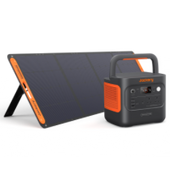
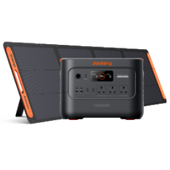
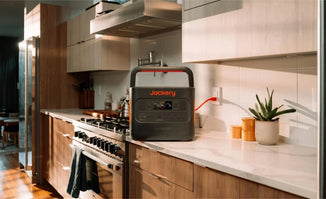
The Jackery Explorer 2000 Plus v2 is a rechargeable portable power station with 2,048 Wh of battery capacity and 2,400 W rated output. It stores electricity for use when mains power is unavailable, supplying compatible appliances through its outlets.

Capacity can expand to approximately 12 kWh with compatible battery packs, making it useful for households that want to start with selected essentials and add storage as their requirements grow.
Before an emergency, charge the station, keep suitable cables nearby and check the operating and starting requirements of your chosen appliances. During a power cut, connect those devices directly to the appropriate outlets. You might prioritise a fridge, a small LED light and phone charging, adding a router if the external network remains available. Keep the combined load within the station’s limits and monitor the remaining charge as you use it.
For the illustrative 475 Wh daily emergency budget above, three days requires 1,425 Wh delivered to devices. The Explorer 2000 Plus v2 provides a starting point for this level of demand, but conversion losses, inverter standby consumption and a reserve must also fit within its capacity.
Jackery Explorer 3000 v2: More Built-In Capacity and Higher Output
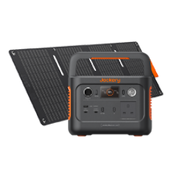
The Jackery Explorer 3000 v2 is a portable power station with 3,072 Wh of battery capacity and 3,600 W output. Its greater built-in storage provides more energy for selected essentials, while the higher output accommodates greater simultaneous demand within its operating limits. It suits households whose measured requirements justify a larger reserve in the main unit.

Prepare it by charging the battery and testing your intended appliance connections before you need them. During an outage, position the station in a dry, ventilated location according to its instructions, then connect priority appliances directly.
Start with essential refrigeration, lighting and communications, and use the display to monitor consumption and remaining battery capacity. The larger reserve offers more flexibility for occasional laptop charging or other necessary tasks.
Higher output does not make energy-intensive appliances economical to run from a battery. For example, a 2,000 W heater operating continuously for one hour consumes 2,000 Wh before conversion losses, a substantial share of the stored energy. Prioritising lower-consumption essentials will generally extend useful backup time.
|
Comparison Point |
Explorer 2000 Plus v2 |
Explorer 3000 v2 |
|
Battery Capacity |
2,048 Wh |
3,072 Wh |
|
Rated Output |
2,400 W |
3,600 W |
|
Main Distinction |
Expandable capacity |
Greater built-in capacity and output |
|
Recharging Ways |
AC Charging: 1.3 Hrs Emergency Charging: 72 Min Solar Charging (800W): 3.5 Hrs Car Charging 12V: 24 Hrs DC-DC Alternator Charging (600W): 4 Hrs |
AC+DC (54V) Charging: 1.4 Hrs AC Charging: 1.8 Hrs Solar Input 1000W Max: 3.5 Hrs 1 x SolarSaga 200W: 22 Hrs Car Charging 12V: 36 Hrs |
|
Output Ports |
AC Output: 3 Ports, 230 V~ 50 Hz, 10 A max., 2400 W rated total, 4800 W Surge Peak USB-A Output: 1Port, 18W Max, 5-6V⎓3A, 6-9V⎓2A, 9-12V⎓1.5A USB-C Output: 2 Ports, USB-C1: 30W Max, 5V⎓3A, 9V⎓3A, 12V⎓2.5A, 15V⎓2A, 20V⎓1.5A USB-C2: 140W Max, 5V⎓3A, 9V⎓3A, 12V⎓3A, 15V⎓3A, 20V⎓5A, 28V⎓5A Car Port: 12V⎓10A Max |
AC Output: 3 Ports, 230V~ 50Hz, 13A Max, 3600W Total, 7200W Surge peak USB-A Output: 2 Ports, 18W Max, 5-6V⎓3A, 6-9V⎓2A, 9-12V⎓1.5A USB-C Output: 2 Ports, 100W Max, 5V⎓3A, 9V⎓3A, 12V⎓3A, 15V⎓3A, 20V⎓5A Car Port: 12V⎓10A Max |
|
Main Distinction |
Expandable capacity |
Greater built-in capacity and output |
|
Selection Question |
Will your storage needs grow? |
Do your essential loads justify the larger base unit? |
Choose according to your energy budget and appliance requirements. High-consumption appliances, particularly electric heaters, can shorten runtime considerably.
Connect compatible appliances directly to the station’s appropriate outlets, following its instructions. Never feed its output into a household wall socket. Supplying fixed home circuits requires a suitable, professionally designed installation.
Besides, powering a router cannot restore an unavailable external network, and UK winter solar charging varies with daylight, weather and placement. Treat solar replenishment as conditional when planning your reserve.
Adapt the Plan for Children, Medical Needs, Pets and Neighbours
An emergency plan should reflect how your household lives. Someone may need accessible equipment, a particular diet or regular help from a carer. These details determine whether your preparations will be useful when everyday services are interrupted.
Make Preparation Work for Your Household
Store essentials where the people using them can reach them. Check that emergency meals meet dietary requirements, and include suitable batteries or charging arrangements for hearing aids, alongside their usual maintenance supplies.
Agree what happens if a carer cannot travel or make contact. If someone relies on powered medical equipment, ask their care team or equipment provider to establish a suitable backup plan, including what to do if power cannot be restored.
The Reddit discussion includes an account of difficulty obtaining a repeat prescription. That highlights a useful planning question for your pharmacist or care team, but one person’s experience does not demonstrate a nationwide shortage.
Practise Calmly with Children
Keep practice short and reassuring. Show children where the torches are, try a familiar shelf-stable meal together and choose books, puzzles or games for time without screens.
These ideas reflect suggestions in the Reddit thread about helping children become comfortable with changes to their routine. There is no need to create a frightening scenario, disconnect essential equipment or interrupt care. Explain simply what they can do and which trusted adult will help.
Arrange Support Before Communications Fail
Agree check-ins with neighbours, relatives and anyone living alone. Decide who will make contact and what to do if calls fail, with visits only when conditions are safe.
Include pets in arrangements for leaving home: consider transport, carriers or leads, and whether your intended temporary accommodation accepts animals. Confirm these practical details before an emergency makes alternatives harder to arrange.
Check more details from the Be Ready Campaign Reddit discussion.

Put Your Preparation into Practice and Keep It Useful
A plan becomes useful when people can follow it without guesswork. Once your arrangements are in place, a short walkthrough can reveal small problems, such as an unreadable contact number or a charging cable that does not fit.
Check Whether Your Plan Works
Choose a convenient moment to walk through the arrangements together. Can everyone find the supplies, read the paper contacts and connect the devices they would need? Check that torches work and that anyone expected to use a power bank understands its controls.
Keep essential equipment running throughout. You can test these arrangements without switching off household services or staging an emergency. Note anything that needs adjusting, whether that means moving supplies within reach, replacing a cable or printing contacts in larger text.
Respond to the Incident in Front of You
If disruption occurs, first assess whether your immediate surroundings are safe. Check official instructions for the incident and your location, using the information sources you identified beforehand.
Preparing for three days does not mean staying at home regardless of conditions. Follow evacuation advice promptly, and do not delay leaving a dangerous building to gather belongings. Call 999 if someone is in immediate danger. Your supplies support your response; the situation determines what action is needed.
Review Supplies and Household Changes
Review your kit every six months, checking expiry dates and replacing items you have used. Rotate suitable food into normal meals so your reserve remains useful.
Revisit the plan sooner if medication, household members or care needs change. Update contact details and responsibilities at the same time. A brief, regular check is easier to maintain than rebuilding an outdated plan when disruption has already started.
FAQs
The following are the frequently asked questions about the Be Ready Campaign in the UK:
1. Why Is the UK Government Telling Us to Stockpile?
The government recommends keeping enough everyday essentials for three days of disrupted services. This gives households a buffer if power, water or access to shops is interrupted, helping emergency responders prioritise people needing urgent assistance. The advice is to build supplies gradually within your means, rather than make large purchases or start panic buying.
2. Are Other Countries Telling Citizens to Stockpile?
Yes. Other countries also encourage households to keep emergency supplies. The Cabinet Office identifies France, Ireland and the Netherlands as European counterparts using a three-day preparedness message. However, national recommendations can differ in their scope and details. For a UK household, follow UK guidance and tailor preparations to your local circumstances.
3. Why Is the UK Preparing for an Emergency?
4. Emergencies such as severe storms can interrupt the services people depend on, including electricity, water and communications. The UK Be Ready campaign aims to make household preparation more familiar and achievable. Its existence does not, by itself, indicate that a specific emergency is imminent; it builds on household preparedness advice published since May 2024. Do I Need to Stockpile in the UK?
You are encouraged to keep a modest reserve suited to your household, rather than accumulate large quantities. Start by checking existing supplies and identifying practical gaps. Three days of essentials is the campaign’s planning target, but the guidance recognises that not everyone can take every step. Useful preparation also includes free actions, such as writing down emergency contacts.
5. What Food Shortages Are Coming in 2026?
The Be Ready campaign does not provide a confirmed list of foods that will become unavailable in 2026. Its recommendation to keep emergency food should not be read as a prediction of particular shortages. Specific claims need current, reliable evidence. Choose familiar, shelf-stable foods for temporary disruption rather than buying excessive quantities based on rumours.
6. Does Being Ready for 72 Hours Mean Help Will Arrive After Three Days?
No. Seventy-two hours is a preparation target, not a guaranteed deadline for assistance or service restoration. Help may be needed sooner, and some disruption may last longer. Follow updates from emergency services and utility providers, and seek assistance when necessary. Do not wait three days to report an urgent problem or call 999 if someone is in immediate danger.
Final Thoughts
Responding to the UK Be Ready campaign starts with understanding what your household would need if everyday services were interrupted. A modest reserve, clear arrangements and reliable information can make disruption easier to manage without panic buying or spending beyond your means.
Backup power can form part of that preparation, but its role depends on the devices you need and the energy they use. Give it the same consideration as food, water, communication and individual care requirements.
Start today by checking your existing supplies, writing down essential contacts and identifying the most important gap to address next. Discuss the plan with everyone at home, and agree how you could support neighbours or relatives if communications fail. Preparation is most useful when the arrangements are familiar, achievable and supported by people you can turn to.
Resources
These websites provide official guidance, practical checklists and support for preparing your household. During an emergency, follow current instructions from local authorities, emergency services and your utility providers.
Official Be Ready Guidance and Checklists
- UK Government Be Ready: Campaign information and household preparedness guidance. This website does not provide live incident updates.
- Be Ready Emergency Checklist: Three-day supplies, household planning and links to additional support.
- Printable Household Emergency Plan: A downloadable template for contacts, meeting points, medication details and essential information.
- Be Informed About Hazards: Guidance on severe weather, flooding, power cuts, cyber incidents and other disruptions.
- Government Campaign Announcement: Background on the campaign’s purpose and gradual approach to preparation.
Weather Warnings, Flood Information and Local Updates
- Met Office Weather Warnings: Current UK weather warnings and expected impacts.
- England: Check for Flooding: Flood warnings, alerts and water-level information for England.
- Wales: Natural Resources Wales: Flood information and preparedness advice for Wales.
- Scotland: Scottish Environment Protection Agency: Access to Scottish flood forecasting and warning services.
- Northern Ireland: nidirect: Flooding advice, emergency information and public services.
- Find Your Local Council: Find local service updates and community information.
- UK Emergency Alerts: How emergency alerts work and which mobile devices can receive them.
Power Cuts and Additional Support
- Power Cut 105: Find your electricity network operator and power-cut information in Great Britain.
- NIE Networks: Electricity network and power-cut information for Northern Ireland.
- Priority Services Register: Check eligibility for additional utility support in England, Scotland and Wales.
- Northern Ireland Customer Care Registers: Search “Customer Care Register” for provider-specific support arrangements.
- Your water company’s website: Check supply interruptions, incident instructions and additional-support registration. Save its contact details before an outage.
- Essential telephone numbers: Call 999 for immediate danger. Report power cuts on 105 in England, Scotland and Wales, or 03457 643643 in Northern Ireland.
Practical Help and Further Reading
- British Red Cross: Prepare for Emergencies: Practical household preparedness and emergency advice.
- St John Ambulance: First aid advice and training opportunities.
- Prepare Now UK: Independent preparedness guides covering household needs and different disruptions. It is not a government website.
- UK Preppers: Be Ready Discussion: Personal experiences and practical questions. Treat comments as individual perspectives, not verified emergency instructions.


