
































Heat pumps have evolved from a specialised improvement to a mainstream home renovation solution, and the most frequently asked questions remain: Are heat pumps worth it? Are they energy intensive? A heat pump uses roughly 4,000 kWh of electricity each year, which costs around £1,108.
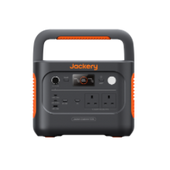
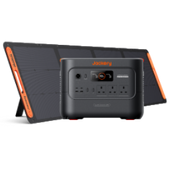
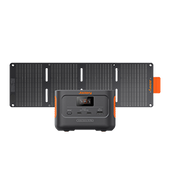
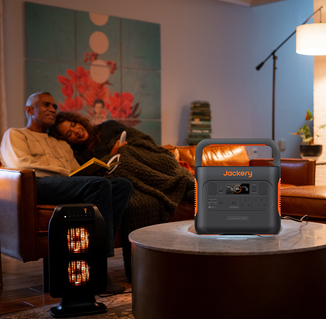
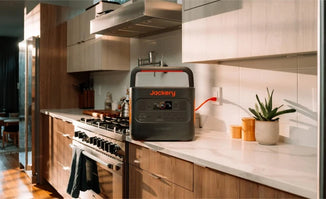
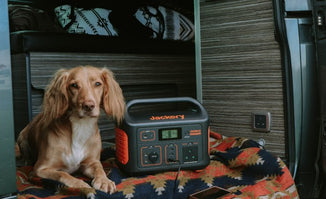
Heat pumps are environmentally friendly, have excellent efficiency, and provide long-term economic benefits, proving that investing in them is justified. Furthermore, the Jackery Solar Generator 3000 v2 and 2000 v2 can optimise energy consumption and reduce operating costs by using green electricity.
|
Key Takeaways: |
|
l Heat pumps use heat that is naturally present in the air, soil, or water to provide heating. l The environmental friendliness, high efficiency, and long-term economic benefits of heat pumps prove that investing in them is worthwhile. l The installation cost for an air source heat pump is approximately £7,000 to £15,000, while that for a ground source heat pump can be as high as £19,000 to over £30,000. l On average, a heat pump consumes about 4,000 kWh of electricity per year, with an electricity cost of about £1,108. l The Jackery Solar Generator 3000 v2 and 2000 v2 optimise heat pump energy consumption and reduce operating costs. l Heat pumps are more suitable for houses with good insulation and enough space to install the outdoor unit. l Electric boilers combined with solar power systems are an excellent alternative to heat pumps. |
Basics about Heat Pumps: Types and Working Principles
Heat pumps take heat from the air, soil, or water to provide heating. In short, these systems move heat from one location to another, thereby heating your home. Heat pumps typically use significantly less electricity than standard electrical energy conversion systems.
Furthermore, depending on the model, a heat pump can be operated in reverse as an air conditioner in the summer, allowing it to serve several purposes. All heat pumps operate on roughly the same principle: they extract heat from the environment, compress it to a higher temperature, and then distribute it indoors.

This example uses the working principle diagram of an air source heat pump.
Heat pumps are classified into three types based on the heat sources they use:
Air Source Heat Pumps: Air source heat pumps extract heat from outside air. They absorb heat from the outside air to offer inside heating or hot water. Their advantages include flexible installation, broad applicability, and the absence of wells or underground pipes, making them the most used form in residences.
Ground Source Heat Pumps: Ground source heat pumps transmit heat from the soil around the house to the interior, heating radiators or underfloor heating systems. Their key advantages include constant soil temperature throughout the year, unaffected by weather, extremely high system efficiency, and a long lifespan.
Water Source Heat Pumps: Air source heat pumps extract heat from groundwater, lakes, rivers, and ponds. A closed-loop system consists of closed pipes in the water body that circulate a mixture of water and antifreeze. This mixture absorbs heat from the water and returns it to the heat exchanger without depleting water resources.
Are Heat Pumps Worth It?
Heat pumps, as a clean and effective alternative heating system, are becoming popular among families. However, many consumers remain sceptical: are heat pumps worth purchasing in the UK? We shall present a thorough overview of the benefits and drawbacks of heat pumps:
Advantages of Heat Pumps
Heat pumps are gaining popularity, and their benefits are obvious:
Energy Efficiency: The most major advantage of heat pumps is their considerably increased efficiency, which can reach up to 400%, far exceeding the 100% of modern electric boilers and around 98% of gas boilers, resulting in huge yearly energy savings.
Reliability and Safety: They are more safer than combustion boilers since they do not use flammable fuels and do not generate hazardous fumes, eliminating the risk of carbon monoxide poisoning.
Long Lifespan: Heat pumps are more robust than traditional heating equipment such as gas boilers, lasting 20 years or more with adequate maintenance.
Cut Carbon Emissions: Heat pumps have a very high electricity conversion efficiency, which can cut carbon emissions by up to 80 percent.
Dual-Purpose: In some circumstances, particularly for air source systems, you can run the system in reverse during the summer, circulating cooled water and using it as an alternative to air conditioning.

Disadvantages of Heat Pumps
While heat pumps have many benefits, there are certain drawbacks that must be carefully considered:
Reliance on Power: Heat pumps require electricity to operate, and electricity rates in the UK are currently three to four times those of gas. Heat pumps have higher operating expenses than modern gas boilers.
May Require Special Planning Permission: If your property is a protected building or is located in a conservation area, you may need special planning authorisation; thus, check your local council or planning department.
High Installation Costs: Unfortunately, installing a heat pump is currently rather expensive. Installing an air source heat pump will cost between £7,000 and £15,000.
In summary, heat pumps have substantial installation costs and are affected by climate and building characteristics. However, in the UK, their environmental friendliness, efficiency, and long-term economic sustainability have established an irreversible trend. As a result, for the majority of households, investing in a heat pump makes sense.
What Are the Power Consumption and Operating Costs of a Heat Pump?
To calculate the daily electricity consumption of a heat pump in the UK, first determine the average electricity consumption (kWh) for heating in a typical UK household.
For a family that requires 11,500 kWh of heating per year (the UK average), or 32 kWh of heating per day (including hot water and heating), the heat pump is projected to consume 10 kWh of energy. Why?
This is because a properly installed air source heat pump should have an efficiency of at least 320%. That example, for every 1 kWh of power consumed, the heat pump may provide 3.2 kWh of useful heat. Here's how much electricity an air source heat pump will need in different sized homes:
|
House Type |
Existing annual heat demand (kWh) |
Average annual heat demand using heat pump (approx. kWh) |
Average daily heat demand using heat pump (approx. kWh) |
|
2/3 bed mid terraced |
~12,000 |
~4,000 |
~8-10 |
|
3 bed semi detached |
~13,000 |
~4,000 |
~10-11 |
|
4 bed detached |
~18,000 |
~6,000 |
~14-16 |
(Source: www.thermly.co.uk)
The data presented above is solely for reference. A heat pump's real electricity usage varies based on a variety of parameters, including house size, system manufacturer, needed inside temperature, and so on.
What Are the Running Costs of A Heat Pump?
In general, calculating a heat pump's running cost is as simple as multiplying its power usage by the electricity price per kilowatt-hour. As a result, with a heat pump with an annual power usage of around 4000 to 6000 kWh, the electricity cost would be between £1108 and £1662.
Furthermore, the topic of whether heat pumps or gas boilers have higher operational expenses is frequently ambiguous. Modern gas boilers are typically 85% to 92% efficient when in use.
A well-designed heat pump typically has a seasonal energy efficiency ratio (EER) of 2.5 to 3.5. The average household requires around 12,000 kWh of heat per year for home heating.
If the boiler efficiency is 90%, you would need to purchase around 13,300 kWh of natural gas, which would cost around £785 (13,300 kWh 5.9 pence = £785). If the heat pump had an EER of 3.0, it would require around 4,000 kWh of electricity, which would cost around £1,108 (4,000 kWh × 27.7 cents = £1,108).
The above calculations are based on the Ofgem price cap from January 1 to March 31, 2026. For customers using standard variable rates and paying via direct debit, the typical unit rate for electricity is approximately 27.7 pence per kilowatt-hour, and the typical unit rate for natural gas is approximately 5.9 pence per kilowatt-hour.

What Is the Installation Cost of a Heat Pump?
The cost of a heat pump varies according to the size of your home, your heating and hot water requirements, and the amount of work required to convert your current heating system to a heat pump.
An air source heat pump typically costs between £7,000 and £15,000 to install, whereas a ground source heat pump might cost anywhere from £19,000 to over £30,000. This is primarily because air source heat pumps often do not necessitate considerable groundwork during installation.
Furthermore, local labour prices and construction conditions may influence the cost of a heat pump, but the most important aspect is the complexity of your home. The following are the installation prices for air source heat pumps in various cities:
|
City |
Cost |
|
Manchester |
£8,000 to £14,000 |
|
Cardiff |
£7,500 to £14,500 |
|
Edinburgh |
£8,500 to £15,000 |
(Source: www.thefloorheatingwarehouse.co.uk)
The heat pump installation costs shown above are for reference only. Calculating the cost of a heat pump is difficult, and you should always consult a professional installer for the most accurate estimate.
Are There Any Subsidies for Installing a Heat Pump in 2026?
Yes. For householders in England and Wales, the Boiler Upgrade Scheme (BUS) continues to be the most important subsidy for heat pump installation. Until January 2026, BUS offers £7,500 for the purchase and installation of an air-source or ground-source heat pump.
If the installation cost of an air-source heat pump system is £11,500, the £7,500 BUS subsidy can cut the net cost to £4,000. If a ground source heat pump system costs £26,000, the grant will lower the cost to £18,500. To apply for the Boiler Upgrade Scheme (BUS), you must meet the following key qualifying requirements:
|
Eligibility 1 |
The property must be located in England or Wales. |
|
Eligibility 2 |
You need a valid Energy Performance Certificate (EPC) for your property. |
|
Eligibility 3 |
You must be replacing a fossil fuel system, such as gas, oil, or LPG, or an electric heating system that is not a heat pump. |
|
Eligibility 4 |
The installation must be carried out by an MCS-certified heat pump installer under the scheme, who will then apply for the grant on your behalf. |
Most importantly: the rules for the Boiler Upgrade Scheme (BUS) are subject to change, so please confirm the latest conditions with your installer before implementation.
Jackery Solar Generators for Heat Pumps
A heat pump is worthwhile depends not only on the purchase cost and equipment efficiency, but also on whether you have the initiative to reduce operating costs. Although heat pumps excel in energy efficiency and environmental protection, their complete reliance on electricity makes many users worry about long-term electricity bills.
How can you truly realise the energy-saving potential of heat pumps while effectively controlling operating costs? The answer lies in combining heat pumps with clean, intelligent Jackery Solar Generators.
By introducing solar power generation and energy storage systems, households can achieve self-sufficiency, significantly reducing dependence on the grid and truly turning energy saving into cost savings.
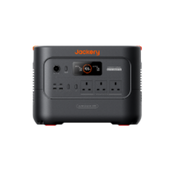
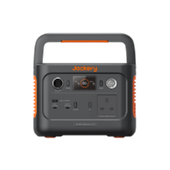
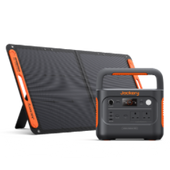
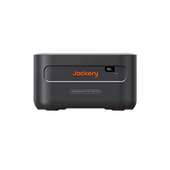
Jackery Solar Generator 3000 v2
The core advantages of using the Jackery Solar Generator 3000 v2 in conjunction with a heat pump are as follows:

Large Energy Storage Capacity, Uninterrupted Power Supply: The Jackery Solar Generator 3000 v2 has a large 3072Wh battery capacity, supporting continuous operation of the heat pump control system and circulation pump on cloudy days or at night, effectively reducing dependence on the power grid.
Powerful Output Capability to Handle Peak Startup: The Jackery Solar Generator 3000 v2 features a 3600W high-power pure sine wave inverter, easily handling the instantaneous high power demand (typically above 2000W) during heat pump startup, ensuring more stable operation and no downtime.
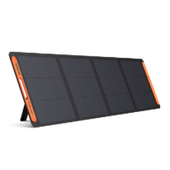
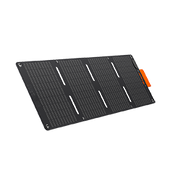
Fast Solar Charging for Efficient Use of Sunlight: The Jackery Solar Generator 3000 v2 supports up to 1000W of solar input. Paired with 25% high-efficiency Jackery Solar Saga solar panels, it can be fully charged in just 3.5 hours, maximizing the use of the UK's limited sunshine hours.
Customize Charging Times for Smart Energy Management: For users with time-of-use pricing or smart meters, the Jackery Solar Generator 3000 v2 can be set to charge during off-peak hours (e.g., nighttime) when electricity prices are lower, avoiding peak hours and saving up to 15% on electricity bills annually.
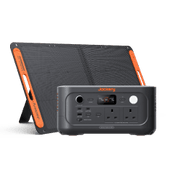
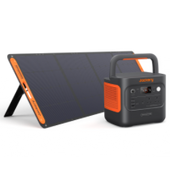
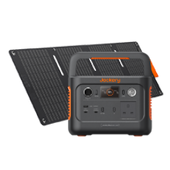
Jackery Solar Generator 2000 v2
The main advantages of using the Jackery Solar Generator 2000 v2 with a heat pump are as follows:

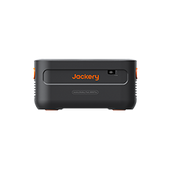
High Energy Density, Smaller Size: The Jackery Solar Generator 2000 v2 boasts a large capacity of 2042Wh and an output of 2200W, but its size (13.2 × 10.4 × 11.5 in) is 41% smaller than the industry standard, making it easier to store on balconies, in storage cabinets, or near windows, ideal for urban residences with limited space.
Lightweight and Portable with Flexible Installation: The Jackery Explorer 2000 v2 Portable Power Station weighs only 38.6 lbs (the SolarSaga 100W solar panel weighs only 7.9 lbs), allowing for easy movement to optimal sunlight locations. The solar panel can be installed on balconies, rooftops, or in courtyards without professional installation.
Fast Charging for Adaptable Wweather: The Jackery Solar Generator 2000 v2 supports 400W solar input and can be fully charged in just 5.5 hours. In addition, it can easily activate the emergency supercharging mode through a smart app, charging the battery from 0% to 80% in just 52 minutes, and fully charging in just 103 minutes.
Intelligent Energy Management with Visual Monitoring: The Jackery Solar Generator 2000 v2 supports Bluetooth and app-based remote monitoring, helping users optimize energy scheduling and increase heat pump runtime during periods of abundant sunshine.
It maximizes solar energy utilisation and reduces reliance on the grid by prioritising the use of stored free solar power over grid electricity.
Is a Heat Pump Suitable for My House?
Heat pumps are not ideal for every home. When contemplating installing a heat pump, consider the following additional variables to determine whether it is best for you.

House Insulation
Heat pumps rely on long-term stability to keep rooms at a consistent temperature. If the house is poorly insulated, heat loss is quick, forcing the heat pump to function at full load all the time, resulting in greater energy consumption and decreased comfort. To get the best results, you may need to boost your insulation (by installing double glazing, wall insulation, and attic insulation).
Installation Space and Location
While air-source heat pumps (air-source air conditioners) require less room, you must still leave enough outdoor space on the sides or rear of the home to allow air circulation around the equipment. Furthermore, the installation position should minimise noise nuisance to others. Ground-source air conditioners, on the other hand, require a significant amount of land or drilling.
Budget Planning
The initial cost of a more economical air source heat pump remains between £7,000 and £15,000, depending on the type of home. While the UK Boiler Upgrade Scheme provides a subsidy of up to £7,500 to cover certain costs, a few thousand pounds is a large sum for most households.
Energy Self-Reliance
If you want to live a low-carbon lifestyle, minimise your reliance on fossil fuels, or even attain energy self-sufficiency with solar panels, a heat pump is an excellent alternative. Households that have already installed or plan to install solar power are more likely to be able to meet the heat pump's electricity needs at a low cost, if not free.
In short, a heat pump is an excellent choice for households who prioritise energy economy, environmental friendliness, long-term comfort, and energy independence. In most circumstances, installing a disguised outside unit requires only sufficient insulation and enough space.
What Are Some Alternatives to Heat Pumps?
If a heat pump isn't right for your home or the initial investment is prohibitively pricey, here are some tried-and-true, practical, and ecological options to consider.
Biomass Boilers
Biomass boilers use wood pellets or chips made from compressed wood waste to heat water systems, providing heat for radiators, underfloor heating, and residential hot water. Although fuel is provided mechanically, ash is cleaned up on a regular basis. This is ideal for rural families with detached homes and garden space.
High-Efficiency Gas-Fired Condensing Boilers
High-efficiency gas-fired condensing boilers boost traditional boilers' thermal efficiency from 70% to over 90% by recovering latent heat in flue gas, greatly lowering gas consumption and carbon emissions.
They function steadily, unaffected by temperature or weather, and provide dependable heating in winter. Furthermore, they are compatible with nearly all current heating systems. This is better suited for urban families and those with a limited budget.
Electric Boilers
Electric boilers use electricity to heat water and run radiators or underfloor heating systems. Furthermore, they are less expensive and easier to install than heat pumps. If you install an electric boiler, you will most likely not need to replace your water tanks or radiators.
While electricity is more expensive, it can be utilised in conjunction with a solar power system to meet 30-50% of your home's heating electrical requirements.
|
Heating System Types |
Advantages |
Disadvantages |
|
Biomass Boilers |
Compatible with existing systems High energy independence Low operating costs |
Large space requirements Frequency of maintenance Smoke and noise issues |
|
High-Efficiency Gas-Fired Condensing Boilers |
Low cost Quick installation Strong compatibility Stable operation |
Dependent on fossil fuels Affected by policy |
|
Electric Boilers |
Zero emissions Extremely simple installation Low cost Can be integrated with solar power systems |
High electricity costs Unsuitable for long-term heating in large homes |
FAQs
The following are frequently asked questions about the heat pumps.
1. What are the disadvantages of heat pumps?
Heat pumps often have the following major drawbacks:
Reliance on electricity
Potential noise levels
High installation costs.
Complex installation (ground-source heat pumps)
Efficiency falls below 0°C.
2. Why is my electric bill so high with an air source heat pump?
This could be due to inadequate insulation, an abnormally high water temperature, or poor maintenance. Often, it's a combination of variables, but examining your setup and insulation can save you a lot of money.
3. Can you run out of hot water with a heat pump?
Yes, heat pumps can run out of hot water. Hot water can run out if demand is high since they heat water slower and more inefficiently than boilers do. However, this is uncommon if the system is properly sized and configured.
4. Why is my house so cold with a heat pump?
Why is my house still cold despite utilising a heat pump? It's most likely the result of a clogged or dirty filter, or an inaccurate thermostat setting. It could also be caused by snow, ice, or debris on the exterior unit. Professional assistance is typically necessary for more significant concerns such as insufficient refrigerant or a defective reversing valve.
Final Thoughts
Most households benefit from investing in a heat pump, particularly in the United Kingdom. It not only lowers heating expenses and increases efficiency, but it also cuts pollutants. While the initial installation cost of a heat pump is very substantial, there are several subsidies available to help offset this expense.
For example, the BUS plan allows you to save up to £7,500 on installation fees. Alternatively, you might use the Jackery Solar Generator 3000 v2 and 2000 v2, which generate free green electricity, to optimise your heat pump's energy consumption and lower operating costs.


