






























A plug-in air freshener is often placed in a hallway or living room and left operating day and night. Once installed, however, few people look again at its warning label or check whether the refill is leaking. So, are plug in air fresheners safe? Occasional exposure during normal use does not automatically amount to poisoning, but these products are not entirely risk-free.
A plug-in continuously releases fragrance compounds into the surrounding air. Most people may notice no immediate effects when the product is used as directed in a ventilated room, while others can develop headaches, dizziness, nausea, irritated eyes or throat, or worsening respiratory symptoms. The concentrated refill liquid creates a more immediate concern if it is swallowed, spilled onto skin or reached by a child or animal.
There is also an electrical consideration. The correct refill must be fitted, and the unit should remain upright, uncovered and free from leakage, overheating or visible damage.
|
Key Takeaways: |
|
What Type of Air Freshener Are You Using?
Air fresheners disperse fragrance in different ways, so their exposure patterns and household risks are not identical.
Is an electrical plug-in the same as an essential-oil diffuser?
No. A conventional plug-in warms or evaporates a prepared fragrance refill continuously or at an adjustable rate. Essential-oil diffusers may use heat, airflow or ultrasonic mist. An oil being described as “natural” does not automatically make it harmless to people or pets.
Are automatic sprays the same as plug-ins?
No. Automatic dispensers release aerosol bursts at timed intervals, creating a higher short-term concentration of airborne droplets. They should not spray towards faces, beds, food, worktops or pet areas.
Are reed diffusers safer?
Reed diffusers require no socket or flame, removing those particular risks. However, their concentrated liquid can spill, irritate the skin or be swallowed by children and animals. They still release fragrance continuously.
Are scented candles and wax melts healthier?
Not necessarily. Scented candles produce fragrance alongside smoke, particles and other combustion products. Candles introduce an open flame, while wax melts involve hot wax and, depending on the model, either a flame or an electrical heater.
What about gels, beads and solid fresheners?
These products generally release fragrance through passive evaporation. Although they require no electricity, accessible contents can leak or be swallowed, especially if colourful beads or gels attract children or pets.
Do odour neutralisers and air purifiers do the same job?
No. Many air fresheners mask an odour without removing its source. A purifier with activated carbon may capture some gases and smells, while ventilation replaces polluted indoor air. Neither approach should delay repairs or cleaning where the cause is mould, damp, smoke, waste or a faulty drain.
|
Type |
How it works |
Main exposure concern |
Household accident concern |
Best suited to |
|
Electrical plug-in |
Warmed evaporation |
Continuous fragrance |
Refill contact, heat or incorrect installation |
Controlled scent in a ventilated room |
|
Automatic aerosol |
Timed spray |
Concentrated droplets |
Eye exposure or pressurised container |
Intermittent fragrance |
|
Reed diffuser |
Passive evaporation |
Continuous VOC release |
Spillage or ingestion |
Inaccessible locations |
|
Candle |
Burning scented wax |
Smoke, particles and fragrance |
Open flame |
Brief, supervised use |
|
Gel or beads |
Passive evaporation |
Fragrance vapour |
Leakage or swallowing |
Secure locations |
|
Air purifier |
Filters circulating air |
Depends on its technology |
Maintenance and electrical safety |
Particle reduction; carbon may reduce some odours |
How Do Plug-In Air Fresheners Work, and What Is in Them?
A plug-in air freshener contains a small electrical heating or evaporation element. Once connected to a socket, it gradually disperses fragrance from a liquid refill. Some models release scent continuously, while others allow the intensity to be adjusted. The precise mechanism and formulation vary, so the plug-in air freshener health risks cannot be assessed from the product type alone.
Refills may contain fragrance mixtures, solvents, stabilisers and other ingredients that evaporate into the room. Their emissions can include volatile organic compounds, or VOCs. VOC is a broad scientific category describing carbon-based substances that evaporate readily; it is not another word for “poison”. The potential effect depends on the particular compound, concentration, exposure time, room size, ventilation and the sensitivity of the person or animal exposed.
Fragrance ingredients may be synthetic, plant-derived or a mixture of both. Labels such as “natural”, “green” and “made with essential oils” do not guarantee a non-toxic plug-in air freshener. Plant-derived substances can still release VOCs, irritate the skin or airways, or trigger fragrance sensitivities.
It is also important to distinguish diluted airborne exposure from direct contact with the concentrated refill. Swallowing the liquid or getting it in the eyes may require urgent advice, even when normal room use causes no noticeable reaction.
Before use, check:
- The packaging and warning label
- The manufacturer’s operating instructions
- Any listed fragrance allergens
- The safety data sheet, if available
- The UK Product Safety Alerts, Reports and Recalls service
- That the diffuser and refill are designed for each other
|
Common Misconception |
|
Air fresheners normally add fragrance or mask an unwanted smell. They do not disinfect a room, clean polluted air or correct an underlying problem such as damp, mould, smoke or a faulty drain. |
Can Plug-In Air Fresheners Be Bad for People?
The answer depends on how someone is exposed, the product formulation, the amount released and their individual sensitivity. For most users, normal exposure is different from spilling or swallowing the concentrated refill.
Breathing the Fragrance
Plug-ins release fragrance compounds into the air for as long as they operate. Possible short-term reactions include:
- Headache
- Irritated eyes, nose or throat
- Coughing
- Nausea or dizziness
- Worsening asthma or migraine symptoms in susceptible people
UK public-health guidance takes a measured position. VOCs from consumer products are not generally considered a major public-health concern when products are used according to their instructions and the home is adequately ventilated. However, sensitive people may still experience irritation, headaches or dizziness.
A simple way to assess a suspected reaction is to unplug the product, ventilate the room and avoid fragranced products temporarily. If symptoms ease and return after the product is reintroduced, stop using it and seek medical advice where necessary. Breathing difficulty requires more urgent attention.
Touching or Swallowing the Liquid
The concentrated refill presents a different level of exposure from the small amount dispersed through the air. Direct skin contact may cause irritation, while liquid entering the eyes can produce pain, redness or watering. Swallowing the contents may be harmful and requires prompt advice.
Children should never install, remove or play with a refill. Store unused bottles securely, keep the product packaging and wash hands after handling a leaking unit. Do not induce vomiting if the liquid is swallowed; follow the label and contact NHS 111.
What Is Known About Long-Term Exposure?
Plug-ins add to the mixture of VOCs released indoors by furniture, decorating products, cleaners, cosmetics and other household sources. The resulting exposure varies with:
- The refill formulation and intensity setting
- The number of devices operating
- Room size and ventilation
- Frequency and duration of use
- Other indoor pollutant sources
Evidence does not justify claiming that ordinary use of every plug-in has been proven to cause cancer. Broad chemical findings, animal studies and high-dose exposure cannot automatically establish the risk from a particular household product used correctly.
Households containing people with asthma, eczema, migraines or fragrance sensitivity may prefer fragrance-free products or shorter use periods. Extra caution is also sensible around babies, older residents and anyone with respiratory illness. Reducing unnecessary exposure is reasonable without assuming that every plug-in will cause serious harm.

Are Plug-In Air Fresheners Safe for Dogs and Other Pets?
Are plug in air fresheners safe for dogs? A correctly used product may cause no obvious reaction in some dogs, but this does not prove that every plug-in is suitable for every animal. Risk depends on the formulation, concentration, ventilation, duration of exposure and whether the dog can reach the device or refill.
Dogs can be exposed through three principal routes:
- Breathing the fragrance: Vapours may accumulate in a small or poorly ventilated room, particularly when several fragranced products are used together.
- Swallowing the refill: A dog may lick leaked liquid or bite the diffuser, creating a more concentrated exposure than breathing the room air.
- Skin or eye contact: Spilled liquid can reach the paws, fur, skin or eyes. A dog may then swallow more while grooming.
A product tolerated by one dog should not automatically be considered safe for another. Very young animals, dogs with respiratory disease and pets confined to a crate or small room deserve additional caution. The same applies when an animal cannot move away from a scent it finds uncomfortable.
Possible signs of a reaction or accidental exposure include:
- Coughing, wheezing or difficult breathing
- Drooling
- Vomiting
- Watery or irritated eyes
- Red or irritated skin
- Lethargy, wobbliness or unusual behaviour
These signs can have many causes, so do not assume that the plug-in is responsible—or dismiss a possible connection. If symptoms begin during use, unplug the diffuser safely, move the animal into fresh air and ventilate the room. Contact a vet promptly after ingestion, significant skin or eye exposure, persistent symptoms or any breathing difficulty.
To reduce risk:
- Keep the diffuser and spare refills completely inaccessible.
- Do not position it beside beds, bowls, crates, litter trays or aquariums.
- Give the animal a fragrance-free space and allow it to leave the scented room.
- Clean spills promptly while preventing contact.
- Retain the packaging or photograph the ingredient label for the vet.
Cats metabolise some substances differently from dogs, while birds can be particularly sensitive to airborne contaminants. Advice about dogs should therefore not be applied automatically to cats, birds, rabbits, fish or other pets; seek species-specific veterinary guidance.

Is It Safe to Leave a Plug-In Air Freshener on All the Time?
Follow the instructions supplied with the individual product. Some plug-ins are designed for continuous operation, but leaving one switched on continuously is not essential and extends both fragrance exposure and the time for which an electrical appliance remains energised. If a scent is only wanted occasionally, unplugging the unit when it is not needed is the lower-exposure option.
To reduce the plug-in air freshener fire risk and prevent refill leaks:
- Use only a genuine refill designed for that diffuser.
- Insert the appliance upright into a fixed wall socket.
- Never install it sideways or in a loose, cracked, discoloured or heat-damaged socket.
- Keep curtains, furniture, clothing and bedding clear of the unit.
- Position it away from splashing water, radiators, cookers and other hot surfaces.
- Avoid installing it directly below another socket, as rising vapour or leaked liquid could reach the electrical fitting above.
- Consider whether a leak could stain or damage the wall, floor or furniture beneath it.
- Never touch the plug-in with wet hands.
- Unplug it and allow it to cool before replacing the refill.
- Check regularly for excessive heat, discolouration, melting, leakage, unusual noises or a burning smell.
- Stop using the product immediately if the casing, plug, refill or socket appears damaged.
A plug-in may feel warm because it uses heat to disperse fragrance, but visible deformation, scorching or a persistent burning smell is not normal. Check the UK Product Safety Alerts, Reports and Recalls service for verified warnings rather than relying solely on viral images or unconfirmed fire stories.
|
Location |
Main consideration |
Better approach |
|
Bedroom |
Prolonged exposure while sleeping |
Use briefly beforehand or avoid |
|
Child’s room |
Access and ingestion |
Keep fragranced products out |
|
Pet area |
Close, unavoidable exposure |
Provide an unscented space |
|
Bathroom |
Moisture and unsuitable socket positioning |
Improve extraction and address damp |
|
Hallway |
Curtains, furniture and passing contact |
Maintain clear space around the unit |
|
Kitchen |
Smells may come from waste, drains or cooking |
Remove the source and ventilate |
How to Use Plug-In Air Fresheners More Safely
If you are asking “are air freshener plug ins safe?”, the answer depends partly on how they are installed, handled and used. Following the product instructions, limiting unnecessary exposure and keeping the concentrated refill inaccessible can reduce avoidable risks.
Plug-In Air Freshener Safety Checklist
- Read the label before first use. Check the warnings, installation position, recommended room size and any surfaces the refill could damage.
- Confirm compatibility. Use only a refill designed for the specific plug-in rather than mixing products from different systems.
- Start at the lowest setting. Increase the intensity only if necessary instead of beginning with the maximum fragrance output.
- Avoid using several devices in a small room. Multiple plug-ins can increase the combined fragrance concentration without improving the underlying air quality.
- Maintain background ventilation. Use available trickle vents and extractor fans, or open windows when outdoor conditions allow.
- Keep the unit upright and unobstructed. Leave clear space around it and keep it away from curtains, furniture and bedding.
- Prevent access by children and pets. Choose an appropriate fixed wall socket, but never improvise with an unsafe adaptor, extension lead or unstable elevated arrangement.
- Handle leaks carefully. Unplug the appliance if it is safe to do so, avoid eye contact and wash your hands after cleaning or touching the refill.
- Store refills securely. Keep them closed, upright and separate from food, medicines, cleaning products and pet supplies.
- Respond to recurring symptoms. Stop using the product if someone repeatedly develops irritation, headaches, coughing or other symptoms during operation.
- Inspect it during every refill change. Check the plug, casing and wall socket for leakage, cracking, discolouration, melting or unusual heat.
- Recycle the electrical unit correctly. A plug-in diffuser is waste electrical and electronic equipment, or WEEE. Do not put it in general household rubbish; use an appropriate retailer collection point or local recycling service.
|
Decision Rule |
|
If an unwanted smell returns as soon as the fragrance is removed, investigate its source instead of adding another plug-in. Persistent odours may point to damp, mould, spoiled food, drains, smoke or another problem requiring direct attention. |
What Should You Do After a Spill, Ingestion or Suspected Reaction?
The appropriate response depends on how exposure occurred and the symptoms present. Keep the packaging nearby because the product name, ingredients and warning instructions can help medical or veterinary professionals assess possible air freshener poisoning.

If Someone Breathes It In and Feels Unwell
Unplug the product if you can do so without touching leaked liquid or a damaged electrical fitting. Move the affected person into fresh air and ventilate the room by opening windows and doors.
Seek medical advice if coughing, dizziness, nausea or irritation persists. Breathing difficulty, wheezing or rapidly worsening symptoms require urgent assessment. Do not reintroduce the product to test whether symptoms return.
If Refill Liquid Enters an Eye
Rinse the affected eye carefully with plenty of clean water, following any instructions on the label. Remove contact lenses if this is easy and does not delay rinsing. Avoid rubbing the eye or applying drops, oils or other substances unless advised by a healthcare professional.
Obtain medical advice if pain, redness, blurred vision or irritation continues.
If It Touches the Skin
Remove clothing contaminated by the refill and wash the affected skin thoroughly with soap and water. Do not apply solvents, bleach, alcohol or other household chemicals, as these may worsen irritation.
Seek advice if redness, pain, blistering or another reaction develops or persists.
If Someone Swallows It
Do not induce vomiting. Rinse the mouth gently and retain the container, refill bottle or a clear photograph of its label.
Call NHS 111 for urgent advice where the service is available. In Northern Ireland, contact an appropriate local urgent-care service or GP out-of-hours service. Call 999 immediately if the person collapses, has a seizure, develops severe breathing difficulty or cannot be awakened.
If a Pet Is Exposed
Contact a veterinary practice or emergency vet promptly after ingestion, significant contact or concerning symptoms. Provide:
- The product and manufacturer’s name
- The ingredient label, if available
- The estimated amount involved
- The route and time of exposure
- The animal’s species, weight and symptoms
Do not induce vomiting or give milk, oils, food or other home remedies unless a vet specifically instructs you to do so.
What Is the Healthiest Way to Scent or Freshen Your Home?
The healthiest way to scent your house begins by deciding whether it needs fragrance at all. Removing an odour means dealing with its source; adding fragrance may only make the original smell less noticeable. The most useful air freshener alternatives therefore focus first on cleaning, ventilation and moisture control.
Remove the Source, Ventilate, Then Consider Fragrance
Follow this order:
Locate the cause, such as bins, drains, damp, mould, smoke, cooking, pets, upholstery or poor ventilation.
- Remove or clean the source.
- Repair leaks and control excess humidity.
- Use extractor fans and trickle vents correctly.
- Open windows when outdoor air quality and weather permit.
- Wash curtains, bedding, carpets and other odour-holding textiles.
- Consider activated carbon for persistent gaseous odours.
- Add a mild fragrance only if it is still wanted.
No option can be described as completely non-toxic for every person and pet.
|
Alternative |
What it can do |
Important limitation |
|
Windows and extractor fans |
Replace or dilute polluted air |
Outdoor pollution and heat loss matter |
|
Activated-carbon purifier |
Reduce some gases and odours |
Carbon needs replacement; HEPA mainly captures particles |
|
Dehumidifier |
Control moisture and musty conditions |
Does not repair leaks or remove mould |
|
Baking soda or charcoal absorber |
Help with localised smells |
Limited whole-room effect |
|
Washed herbs or flowers |
Provide a mild natural scent |
Allergies and pet safety still matter |
|
Fragrance-free cleaning |
Remove smells without adding scent |
Requires identifying the source |
|
Essential-oil diffuser |
Add fragrance without a standard refill |
“Natural” does not mean harmless or pet-safe |
Keeping Ventilation and Odour-Control Equipment Running During a Power Cut
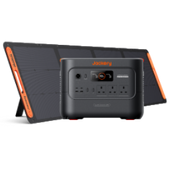
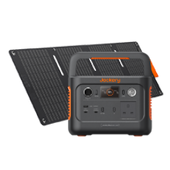
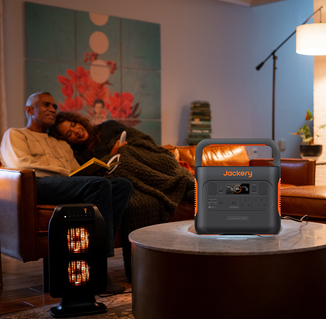
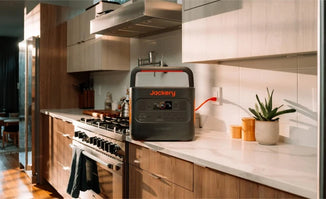
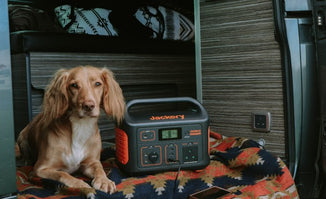
A solar generator does not scent a room, filter pollutants or make plug-in air fresheners safer. Its relevant role is powering compatible equipment during an outage, including portable air purifiers, fans, dehumidifiers, refrigerators, small ventilation devices and lighting used while locating a leak or drain problem.

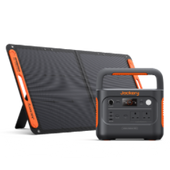
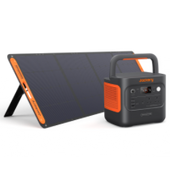
The Jackery Solar Generator 2000 v2 provides approximately 2,042Wh of capacity and 2,200W of continuous output. The Solar Generator 3000 v2 increases this to 3,072Wh and 3,600W, which may suit higher demand or longer operation. Selection should be based on running wattage, starting surge and required operating time.
Estimated runtime = usable battery energy in Wh ÷ appliance power in W
Actual runtime will be shorter because of conversion losses, standby consumption, appliance cycling and operating conditions.
|
Equipment |
Illustrative demand |
Backup benefit |
Limitation |
|
Air purifier |
30–100W |
Maintains filtration and carbon airflow |
HEPA alone does not remove all gases |
|
Portable fan |
20–80W |
Circulates air |
Does not replace indoor air |
|
Dehumidifier |
200–700W |
Controls excess humidity |
Cannot repair leaks |
|
Refrigerator |
100–300W running |
Limits food spoilage |
Starting power may be higher |
|
Small ventilation device |
Model-dependent |
Moves stale air |
Fixed systems may not connect directly |
How to Decide Whether to Keep, Reduce or Remove Your Plug-In
There is no single answer to “are plug in air fresheners safe?” for every household. The decision should reflect symptoms, ventilation, product condition, placement and whether children or animals can reach the refill.
|
Situation |
Recommended decision |
|
No symptoms, ventilated room, undamaged unit and correct refill |
Continue only as directed, preferably at a low setting |
|
Headaches or irritation repeatedly occur during use |
Unplug, ventilate and try a fragrance-free period |
|
Asthma or strong fragrance sensitivity in the household |
Avoid the product or seek individual medical advice |
|
Dog cannot leave the scented room |
Remove or relocate the device and provide a fragrance-free area |
|
Child or pet can reach the unit or refill |
Remove it until safe, inaccessible positioning is possible |
|
Leakage, melting, discolouration or a burning smell |
Unplug if safe and stop using it immediately |
|
Persistent damp or musty smell |
Investigate moisture, leaks and mould instead of masking the smell |
|
Several plug-ins operate throughout a small home |
Reduce the number and reassess ventilation |
|
Product has been recalled |
Stop using it and follow the official recall instructions |
|
Manufacturer, warnings or refill compatibility are unclear |
Choose a traceable product with complete instructions |
When buying a new plug-in, do not rely only on fragrance names or claims such as “natural”. Ask:
What ingredients, allergens and warnings are provided?
Can the fragrance intensity be adjusted?
Is the refill designed for this exact unit?
Can the diffuser remain upright, unobstructed and inaccessible?
Does anyone in the household already react to fragranced products?
If one of these questions cannot be answered satisfactorily, a fragrance-free approach may be the more suitable choice.
FAQs
The following are the frequently asked questions about the plug-in air fresheners:
Is it safe to leave plug-in air fresheners on all the time?
Some products are designed for continuous operation, but always follow the individual instructions. Continuous use increases the duration of fragrance and electrical exposure. Keep the unit upright and unobstructed, use the correct refill, inspect it regularly and unplug it if you notice leakage, melting, discolouration or a burning smell.
Can plug-in air fresheners be bad for you?
They may cause headaches, coughing, dizziness or eye, nose and throat irritation in sensitive people. Asthma, migraines and fragrance sensitivity can also be aggravated. Normal, label-compliant use does not automatically mean poisoning, but swallowing or touching the concentrated refill presents a more immediate concern than ordinary airborne exposure.
Is there a non-toxic plug-in air freshener?
“Non-toxic” is too absolute because safety depends on the ingredients, dose, exposure route and individual user. Products described as natural or made with essential oils can still release VOCs, irritate sensitive people or harm pets if swallowed. Compare warnings and ingredients instead of relying on front-label claims.
What is the healthiest way to scent your house?
First remove the cause of the smell by cleaning bins, drains, pet areas and textiles, repairing leaks and controlling damp. Ventilate with windows, trickle vents or extractor fans when appropriate. If fragrance is still wanted, use the smallest effective amount and stop if anyone develops symptoms.
Are plug-in air fresheners safe for dogs?
Some dogs may show no reaction, but no product should be assumed suitable for every animal. Keep the unit and refills inaccessible, provide a fragrance-free area and allow the dog to leave. Contact a vet after ingestion, significant liquid contact, breathing difficulty, vomiting, drooling or unusual behaviour.
Are plug-ins safe around babies?
Extra caution is sensible because babies cannot move away from an irritating scent and may later reach a low socket or refill. Avoid plug-ins beside cots, changing areas or play spaces. Maintain ventilation and store refills securely. Seek medical advice if a baby develops breathing problems or accesses the liquid.
Can a plug-in air freshener cause a fire?
A compliant, undamaged product used correctly is not automatically a fire hazard. Risk can increase with incompatible refills, counterfeit products, damaged sockets, leakage, obstruction or incorrect positioning. Stop using a unit that melts, discolours, leaks or smells burnt, and check official UK product-recall notices.
Do plug-in air fresheners eliminate odours?
Most plug-ins add fragrance or mask an unwanted smell rather than removing its source. They do not repair damp, remove mould, clean a drain or ventilate a smoky room. If the smell returns after the plug-in is removed, locate and correct the underlying cause instead of increasing the fragrance setting.
Final Thoughts
Ultimately, the answer to “are plug in air fresheners safe?” depends on the formulation, user, room size, ventilation, placement and handling. Correct use can reduce immediate risks, but fragrance should never replace finding and correcting the underlying cause of an odour.
Begin by identifying what is causing the unwanted smell. Ventilate the room and address damp, mould, waste, drains, smoke or cleaning problems before adding fragrance. If you continue using a plug-in, read its label, fit only a compatible refill and keep the unit upright, unobstructed and inaccessible to children and animals.
Choose the lowest effective setting and avoid continuous operation when fragrance is not needed. Stop using the product if a person or pet develops recurring symptoms. Seek NHS or veterinary advice promptly after ingestion, significant liquid contact or a serious reaction. Any unit that leaks, overheats, melts, discolours or appears damaged should be unplugged if safe and removed from use.


