





















































Households across the UK face a structural shift in energy pricing scheduled for April 1, 2026. The government’s strategy involves removing policy costs from electricity bills to incentivize electrification, rather than issuing a direct rebate cheque. While headlines promise a £150 average saving, the actual impact depends entirely on your consumption habits, specifically whether you use high-load electric devices like heat pumps or EVs.
How Will the New Budget Energy Tariff Structures Work in 2026?
What Do the Headline Numbers Actually Mean?
The reported £150 saving is an average annual reduction delivered through a cut to the unit price per kilowatt-hour (kWh), not a lump sum payment. You will not see a credit on your bank statement; instead, the price you pay for every unit of electricity will decrease.
This mechanism involves funding legacy green levies through general taxation rather than consumer bills. Current estimates project a reduction of approximately 3.5p per kWh for electricity and roughly 0.35p per kWh for gas. You must monitor your bills starting April 1, 2026, as the updated unit rates should appear automatically for variable tariffs, though the exact pence-per-kWh figure will vary by region.
How Do Savings Apply to Different Household Types?
High-consumption households save the most because the relief is applied per unit of energy used. Since the saving is a rate cut (3.5p/kWh), homes that consume more electricity will see a larger total reduction in their annual costs compared to low-usage homes.
|
Household Type |
Usage Profile |
Potential Impact |
|
High-Consumption Homes |
Households with electric vehicles (EVs) or heat pumps. |
Highest Gain: These homes have high electricity demand. A 3.5p/kWh reduction results in savings significantly larger than the £150 average. |
|
Low-Consumption Homes |
Smaller households or those with high energy efficiency. |
Modest/Low Gain: The standing charge remains a large portion of the bill. If standing charges rise, they could erode the benefits of the unit rate cut. |
|
Fixed Tariff Users |
Households on contracts extending past April 2026. |
Delayed Gain: Rates are locked in. You likely won't see reductions until renewal. Check supplier terms immediately. |
What Potential Offsets Should You Watch For?
External market factors like wholesale gas volatility can negate these policy-driven price cuts. The energy market remains globally connected, meaning the "saving" is calculated against what the price would have been, not necessarily a drop from today's actual prices.
- Wholesale Volatility: Global gas prices still dictate the baseline cost of energy in the UK. If wholesale gas prices spike during the winter of 2025-2026, the Ofgem Price Cap will rise, potentially swallowing the 3.5p/kWh policy cut.
- Grid Costs: Network upgrades required for net-zero targets are often recovered through standing charges. If these grid costs increase significantly in 2026, the fixed portion of your bill will rise, offsetting the savings made on the variable unit rate.
- Net Calculation: Your financial position is determined by the total equation: Your Result = (Unit Rate Change × Usage) + Standing Charge Adjustments.
Market Dynamics: Why Does Timing Matter?
The interaction between government policy implementation and Ofgem's quarterly price cap reviews determines the final rates on your bill. Timing is critical because the policy cut may coincide with seasonal wholesale price shifts.
How Does the Price Cap Affect Timing?
The Ofgem price cap updates quarterly, meaning your April 2026 rates will depend on wholesale purchasing costs from late 2025. The January cap reflects winter purchasing, while the April cap will incorporate the government's levy removal.
It is essential to understand that the "saving" is relative to the baseline market price. Establishing a baseline using the average electric bill in the UK helps you track whether your household costs are tracking below or above the national performance before the changes take effect.
Which Market Signals Should You Monitor?
Smart consumers should watch for wholesale gas trends and supplier alerts in early 2026. These indicators often precede official announcements and provide a warning if the base cost of energy is rising.
- Wholesale Trends: Monitor wholesale gas trends, as gas generation sets the marginal price for electricity. Instability here directly impacts tracker tariffs and Time-of-Use (ToU) rates.
- Supplier Alerts: Suppliers must notify you of rate changes. Look for email notifications in March 2026 containing the precise new unit rates and standing charges for your region.
- Scheme Endings: Energy efficiency schemes often align with the financial year. Ensure insulation grant applications are submitted well before March deadlines to avoid administrative delays.
Actions for Consumers: How to Manage Your Energy Bills
Proactive management of usage and tariff selection yields better financial results than waiting for government intervention. You must calculate your personal impact rather than relying on national averages.
How Can You Calculate Your Personalised Impact?
Calculate your specific savings by multiplying your annual electricity usage in kWh by £0.035. Do not rely on the "£150" figure, as it applies to a medium-usage dual-fuel home, not your specific situation.
The Formula Take your annual electricity usage in kWh and multiply it by the estimated reduction (£0.035). Do the same for gas (£0.0035).
- Example 1 (Heat Pump User): A household using 4,000 kWh annually for heating.
- Calculation: 4,000 kWh × £0.035 = £140 saving (on top of standard appliance savings).
- Example 2 (High Usage - EV + Electric Heat): A fully electrified home consuming 12,500 kWh per year.
- Calculation: 12,500 kWh × £0.035 = £437.50 potential saving.
Action Step: Log in to your energy account and download your annual statement. Comparing your usage against the average electricity bill per month in the UK can highlight if your consumption is higher than necessary before you apply the new rates.

What Should Be Your Tariff and Switching Strategy?
Switching strategies should focus on total cost rather than just the headline unit rate. Once new rates are published in April, the market may become more active, but the lowest unit rate often comes with a higher standing charge.
- Do the Maths: Calculate the impact on your specific usage profile. If a fixed deal offers a lower unit rate but a higher standing charge, low-usage households will lose money.
- Time-of-Use (ToU) Users: Verify how cuts apply to smart tariffs like Economy 7. Ask your supplier if the 3.5p reduction applies to the off-peak rate, the peak rate, or is averaged across both.
- Fixed Deals: Contact your supplier if you are on a fixed tariff. Ask explicitly if the levy removal will be passed through to your existing contract immediately or if you must wait for renewal.
How Do Efficiency and Load Shifting Create Long-Term Savings?
Battery storage leverages the new budget energy tariff structure by allowing you to store cheap power and avoid peak rates. The reduction in electricity unit rates improves the "spark gap," making electrification and storage more financially viable.
Heat Pumps and Insulation: Lower electricity rates decrease the running costs of heat pumps relative to gas boilers. However, reducing demand through insulation remains the most effective way to lower bills permanently. Every kWh of heat kept inside is a saving immune to market volatility.
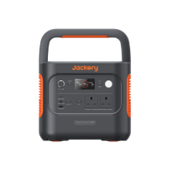
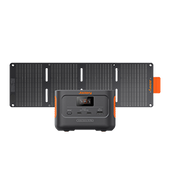
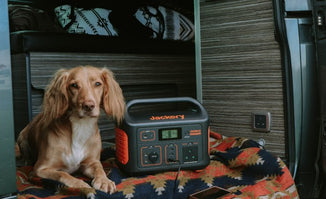
Jackery Explorer 1000 v2: The Jackery Explorer 1000 v2 provides a flexible entry point into energy resilience with a 1070Wh capacity. This portable power station features LiFePO4 (Lithium Iron Phosphate) battery chemistry, ensuring a lifespan of 4,000+ charge cycles, or approximately 10 years of daily use.
- Capacity: 1070Wh
- Battery Chemistry: LiFePO4 (Lithium Iron Phosphate)
- Lifespan: 4,000 charge cycles (approx. 10 years of use)
- Charging: Fully charges in 1 hour (Emergency Super Charging)
Jackery Explorer 1000 v2 allows households to run essential appliances during peak pricing windows without drawing from the grid. The unit charges 0-100% in just 1 hour, enabling rapid top-ups during off-peak windows to hedge against rate fluctuations.
How Do You Verify the Pass-Through?
Verify that savings have been passed on by auditing your April 2026 bill against your March statement. If the unit rate reduction does not appear, or if the standing charge has risen disproportionately, you must query it.
Contact your supplier immediately if you suspect an error. Finding the cheapest electricity supplier in the UK often requires this level of vigilance, and you have the right to escalate unresolved complaints to the Energy Ombudsman after eight weeks.
What Government Support Is Available for Winter 2025–2026?
Financial assistance schemes exist to bridge the gap before the April rate cuts arrive. While the structural changes occur in spring, the preceding winter remains a financial challenge for many households.
Who Is Eligible for Financial Assistance?
- Warm Home Discount: A one-off rebate on electricity bills for eligible households. Check GOV.UK for updated Winter 2025/26 criteria.
- Winter Fuel Payments: Pensioners should verify qualifying dates and amounts on official government portals.
- Local Support: Contact your local council regarding the Household Support Fund if facing immediate hardship.
- Priority Services Register: Register with your supplier if you have medical needs, mobility issues, or are of pensionable age.
How Are Efficiency Schemes Transitioning?
Insulation schemes often operate on financial year cycles ending in March, so applications should be submitted before March 2026. This prevents applications from stalling during the transition to new budget periods.
For smaller homes, understanding the average electric bill for a 2-person household in the UK can help determine if your current costs justify urgent efficiency upgrades before the new rates kick in.
Conclusion: Making Better Choices in 2026
To maximise your benefit, calculate your specific savings using your annual kWh figures rather than relying on headlines. Wait for confirmed supplier rates in March or April before locking into long-term contracts. Finally, invest in efficiency measures or storage solutions like the Jackery Explorer 1000 v2 to reduce reliance on grid pricing entirely.
Stay vigilant, verify your bills, and use official channels to ensure you receive the full benefit of the new budget energy tariff landscape.
Appendix: Practical Tools
Savings Calculator Template
Use this simple method to estimate your April 2026 impact:
- Step 1: Locate "Annual Usage" (in kWh) on your electricity and gas bills.
- Step 2: Electricity Saving = Electricity kWh × £0.035.
- Step 3: Gas Saving = Gas kWh × £0.0035.
- Step 4: Total Estimated Saving = Electricity Saving + Gas Saving.
Questions for Your Supplier
When speaking to customer service, ask these specific questions:
- "Will the April 1st unit rate reduction apply immediately to my current fixed tariff?"
- "What are the specific new pence-per-kWh rates and standing charges for my region?"
- "Does the rate cut apply equally to peak and off-peak periods on my Time-of-Use plan?"
Frequently Asked Questions
1. Will my smart meter show the new rates instantly?
Smart meters display usage in near real-time, but cost information depends on your supplier updating tariff data remotely. This update usually happens automatically on April 1st, but you should check your bill to confirm the new rates are active.
2. What if my supplier doesn't pass on the savings?
Contact your supplier immediately to query the rates if they do not match the expected reduction. If the supplier cannot resolve the issue within eight weeks, you can escalate the complaint to the Energy Ombudsman.
3. Are there any regional differences in savings?
Yes, standing charges and baseline unit rates vary by region due to different network costs. While the policy cut to unit rates is national, the final cash saving will differ slightly depending on your location in the UK.


