







































Two solar quotations land in your inbox. Both offer similar panels, but one includes a string inverter while the other specifies micro inverters at a higher price. Is the extra cost worthwhile?
A micro inverter can be a useful choice for roofs with partial shading or panels spread across several awkward roof sections. However, micro inverters are not automatically the best-value option for every UK home. Your roof layout, complete installation cost and plans for battery storage all matter.
This guide explains how micro inverters work, compares them with string inverters and helps you assess which suits your home. It also explains how to add battery storage to an existing micro inverter system and what to check before proceeding.
|
Key Takeaways: |
|
What Is a Micro Inverter, and How Does It Work?
A micro inverter is a small electronic device that converts a solar panel’s direct current (DC) into alternating current (AC) for household use. It usually sits beneath or close to the panels, so conversion happens on the roof rather than at a central inverter.
From Solar Panel DC to Household AC Electricity
Solar panels generate DC electricity, while household appliances use AC. A grid-connected micro inverter converts the panel’s output and synchronises it with the electricity supply, allowing solar generation to feed your home’s circuits.
Some micro inverters serve one panel; others accept two, four or more, depending on the model. The number of physical units therefore depends on the equipment and system design—not simply the number of panels.
How Maximum Power Point Tracking Works
A panel’s most productive combination of voltage and current changes with sunlight and temperature. Maximum power point tracking (MPPT) continually adjusts its operating point to extract the electrical power available under those conditions.
Imagine a chimney casting a shadow over one panel while neighbouring panels remain in sunshine. Independently controlled MPPT channels let the affected panel operate at a different point from the unshaded panels. This can reduce mismatch losses, but it cannot recover the sunlight blocked by the chimney.
Check the number of independent MPPT channels as well as panel inputs: several connectors do not necessarily mean each panel receives independent tracking.
Where the Electricity Goes After Conversion
The AC electricity supplies appliances operating at the time, reducing the electricity needed from the grid. Surplus can be exported or, with suitable battery storage and controls, stored for later. When solar generation falls below demand, the grid or battery supplies the shortfall.
These components have distinct jobs.
- The micro inverter converts solar electricity.
- A monitoring gateway collects equipment data and supports communications.
- A battery inverter, sometimes integrated into the storage unit, manages conversion between the battery’s DC electricity and the home’s AC supply.

What Are the Advantages and Disadvantages of Micro Inverters?
Micro inverters offer more control over individual panels, but that flexibility comes with additional equipment and potential maintenance costs. Their value depends on whether those capabilities solve a particular problem on your roof.
Panel-Level Control and Performance Monitoring
Independent panel management can reduce the effect of differences in shading, orientation or panel performance. Where conditions vary across an array, this can help capture energy that a less suitable system design might miss.
Panel-level monitoring also makes it easier to spot an underperforming module. Instead of seeing only a drop in total generation, you may be able to identify which panel needs investigation. However, the detail available depends on the micro inverters, gateway and communications package. An unusually low reading is a starting point for diagnosis, rather than proof that the panel itself has failed.
Flexible Layouts and More Localised Equipment Failures
Micro inverters can accommodate panels across small or awkward roof areas without having to form conventional strings of sufficient length. That can be useful around dormers or where the available space is split between several roof faces.
If one micro inverter fails, the loss may be limited to the panel or panels it serves, while others continue generating. However, the installation still relies on shared AC circuits and protective devices: a fault that trips a common circuit can affect multiple units. Communications equipment can also be a shared dependency for monitoring and control, although losing internet access does not necessarily stop generation.
Higher Upfront Costs and Roof-Access Repairs
The quotation must cover multiple electronic units, compatible cabling, connectors and any required gateway. Together, these can make a micro inverter installation more expensive than a comparable string-inverter system.
Maintenance access matters too. Replacing a unit beneath a panel may involve lifting the panel and arranging scaffolding or other suitable access equipment. A long product warranty does not automatically cover these expenses. Check separately whether labour, call-outs, removal, refitting and roof access are included.
Why Cloudy Weather Does Not Automatically Make Them Better
Uneven shading and an overcast sky are different conditions. Panel-level control can help when individual panels experience different conditions, but widespread cloud reduces the sunlight available across the array.
A properly designed string-inverter system also generates electricity in cloudy weather. UK weather alone is therefore not a sufficient reason to pay more for microinverters. The useful comparison is expected annual generation from competing designs on your particular roof.
Micro Inverter vs String Inverter: What Is the Difference?
The main difference is where electricity is converted and how panels and batteries connect. Comparing complete systems helps explain why similar panels can produce quite different installation quotations.

How the Two System Layouts Compare
The table uses an illustrative 4.5 kWp array of ten 450 W panels. Equipment counts and string arrangements are examples, not installation specifications; actual designs must meet the chosen equipment’s electrical limits.
|
Feature |
Micro inverter system |
Conventional string inverter |
Hybrid string inverter |
|
Example inverter arrangement |
10 single-panel micro inverters; multi-panel alternatives exist |
1 central solar inverter |
1 central inverter managing solar and compatible storage |
|
Conversion location |
Beneath or near the panels |
At the central inverter |
At the central hybrid inverter |
|
Example MPPT arrangement |
10 independent channels with suitable single-panel units |
2 MPPT channels, each serving 5 panels, if voltage limits permit |
2 solar MPPT channels, each serving 5 panels, if voltage limits permit |
|
Monitoring |
Panel-level data with supporting equipment |
Usually system-level; string or MPPT detail varies |
Solar, battery and household-flow data with appropriate metering |
|
Maintenance access |
Roof access normally needed for inverter replacement |
Access to the central inverter |
Access to the central inverter and battery |
|
Expansion constraints |
Branch-circuit capacity, equipment compatibility and grid connection |
String voltage/current limits and inverter capacity |
Solar-input limits, supported batteries and grid connection |
|
Battery integration |
Usually separate AC-coupled storage |
Usually separate AC-coupled storage, or inverter replacement |
Compatible battery connects to the inverter’s DC battery interface |
The example’s 4.5 kWp describes panel capacity, not guaranteed generation or inverter AC output. Those ratings must be assessed separately.
Where Power Optimisers Fit
Power optimisers adjust electricity on the DC side of individual panels. They normally work with a compatible central inverter, which performs the DC-to-AC conversion. Micro inverters perform that conversion near the panels themselves.
Optimisers can provide panel-level control within a central-inverter architecture, but compatibility and monitoring capabilities vary. They cannot simply replace micro inverters without redesigning the connections.
Neither comparison should assume that one shaded panel forces every panel in a string to produce exactly the same power. Bypass diodes, shading patterns and inverter tracking all influence the result.
How Hybrid Inverters Change the Battery Decision
For a new solar-and-battery installation, a hybrid inverter can manage both the array and compatible DC-connected storage. This can simplify the equipment arrangement and avoid converting solar electricity to AC before storing it.
However, “hybrid” does not mean compatibility with every battery or automatic whole-house backup. Both require checking.
For an existing micro inverter installation, AC-coupled storage is usually the practical retrofit route, allowing the rooftop equipment to remain. Its operation and compatibility checks are covered in the battery-storage section.
Are Micro Inverters Better for Solar Panels on Your UK Roof?
Are micro inverters better for solar panels? They can be, where individual panel control solves a specific roof-layout problem. The deciding factor is whether the expected benefit justifies the complete installed cost.

When Partial Shading Makes Them Worth Considering
Chimneys, dormers, trees and neighbouring buildings can cast shadows over different panels throughout the day. Micro inverters are worth comparing where this creates uneven conditions across the array.
Ask for site-specific annual generation estimates using the same panel layout and shading assumptions for each inverter option. A universal percentage improvement tells you little about your roof: a brief morning shadow differs considerably from shade covering several panels through the afternoon.
Where shading is severe, moving or omitting poorly positioned panels may be more worthwhile than changing inverter technology. No inverter can compensate for sunlight that never reaches the modules.
When Multiple Roof Faces or Small Arrays Favour Micro Inverters
Roofs with several orientations or only room for small groups of panels can make conventional string design difficult. Micro inverters may accommodate these areas without requiring each group to reach a central inverter’s minimum operating voltage.
They can also suit staged installations, although future additions still depend on circuit capacity, equipment compatibility and connection requirements.
However, an east–west roof does not automatically require micro inverters. A suitable string inverter with separate MPPT channels can manage the two orientations effectively when each string meets its electrical requirements.
When a String or Hybrid Inverter May Offer Better Value
For an uncomplicated, largely unshaded roof, a string inverter may meet the generation requirement at a lower installed cost. If batteries are planned from the outset, compare a hybrid inverter with compatible storage against the complete micro inverter-and-battery package.
|
Roof or household situation |
Option worth comparing |
Question to ask the installer |
|
Moving shadows across panels |
Micro inverters or optimisers |
What additional annual generation is predicted? |
|
Several small roof faces |
Micro inverters |
Can each proposed string meet voltage requirements? |
|
Straightforward east–west roof |
Multi-MPPT string inverter |
Can each orientation use separate tracking? |
|
Unshaded roof with battery planned |
Hybrid inverter and compatible storage |
How do complete installed costs compare? |
How Much Does a Micro Inverter System Cost in the UK?
The inverter’s shelf price is only part of the bill. Your panel count, equipment package and installation requirements determine the total and whether any premium is worthwhile.
Compare Complete Installed Prices, Not Individual Inverters
For a ten-panel installation, the following example shows selected hardware costs using City Plumbing’s listed prices, including VAT. These are retail component prices, not an installed quotation.
|
Selected equipment |
Quantity |
Unit price, including VAT |
Subtotal |
|
Enphase IQ8AC microinverter |
10 |
£141.49 |
£1,414.90 |
|
Enphase IQ Gateway Metered UK |
1 |
£328.80 |
£328.80 |
|
Selected hardware total |
|
|
£1,743.70 |
(Data Source: City Plumbing)
This excludes panels, mounting equipment, AC cabling, connectors, protection, installation labour, roof access, delivery and commissioning. Ask for an itemised quotation stating the applicable VAT treatment; a component-shopping total is not directly comparable with a supplied-and-installed package.
Calculate Whether Additional Generation Justifies the Premium
Extra electricity is worth the import price when used at home, but only the export rate when sold.
- Annual additional value = extra self-consumed kWh × import price + extra exported kWh × export rate.
For illustration, assume the micro inverter design produces an estimated 200 additional kWh annually: 120kWh used at home and 80kWh exported. Using assumed rates of 25p/kWh and 10p/kWh:
- (120 × £0.25) + (80 × £0.10) = £38 per year.
These are illustrative assumptions, not current tariff quotations or a guaranteed generation improvement.
Include Maintenance and Future Battery Costs
Compare ownership costs over the same period, allowing for possible repairs, roof access and monitoring charges. If storage is planned, include the battery inverter, metering and installation in both options.
A long warranty is not a guaranteed operating life. Check its exclusions rather than assuming either system will need replacement in a particular year.
Are Enphase Micro Inverters Any Good?
Enphase micro inverters can be a good choice where panel-level control and monitoring suit the roof. However, their value depends on the exact equipment, installation quality and complete package price.
Assess the Exact Model and Panel Compatibility
Start with the model number on your quotation. Different Enphase generations and regional versions have different electrical limits and system requirements.
The installer should check the panel’s voltage and current against the micro inverter’s permitted inputs, including temperature effects. Rated AC output matters too: when available panel power exceeds the inverter’s output capability, production can be limited, known as clipping. Some clipping may be acceptable, but its estimated annual effect should inform the design.
Ask what monitoring is included and whether the installer regularly commissions and supports that particular Enphase system.
Read the UK Warranty and System Requirements
Enphase’s UK IQ8 documentation links its 25-year limited warranty to an internet-connected IQ Gateway. The UK warranty also specifies covered models and separate cover periods for components such as gateways. Check the document applicable to your quoted equipment and activation date.
Before accepting the quotation, establish who diagnoses faults, submits warranty claims and arranges replacements. Ask which labour and roof-access costs are covered, and what happens if your original installer stops trading. Keep the equipment serial numbers, commissioning records and warranty documents.
Compare the Complete Package with Alternatives
Compare Enphase with other appropriately documented UK options using the same panels, roof layout, shading assumptions and battery requirements. Include gateways, metering, installation and after-sales support in the price comparison.
Manufacturer specifications describe capabilities under stated conditions; they are not independent evidence of long-term failure rates. Likewise, warranty length alone does not establish reliability. Choose the package whose documented performance, support and total cost best match your installation.

How Are Micro Inverters Installed in the UK?
A fixed rooftop micro inverter installation involves roof work, electrical design and grid-connection checks. Understanding the installer’s process helps you assess the quotation and know what a complete handover should include.
Survey the Roof and Design the Electrical System
The survey should assess roof condition, mounting suitability and shading before confirming panel positions. The installer then checks panel-to-inverter compatibility, AC circuit capacity, cable routes and the existing consumer unit.
Monitoring also needs planning. The gateway must communicate reliably with the micro inverters and have the appropriate network connection. Discuss future battery storage at this stage so the design can accommodate suitable metering and equipment locations.
Mount, Connect and Commission the Equipment
Micro inverters are normally mounted beneath the panels, following the manufacturer’s requirements for fixing, clearance and environmental protection. The installer uses approved connectors and cabling, provides the required electrical protection, and tests the completed installation before commissioning.
Commissioning includes applying the correct grid settings, checking generation and verifying any export controls. A panel map linking each unit’s serial number to its roof position makes future fault-finding easier. During handover, ask the installer to demonstrate the monitoring app, explain normal readings and show how faults are reported.
Confirm Grid Connection and Export Requirements
In Great Britain, the installer must determine the appropriate G98 or G99 connection route, considering the complete installation, existing generation and any proposed battery inverter. G98 covers qualifying smaller installations; G99 applies where its requirements are triggered. Export limitation, commonly associated with G100, may form part of the design but does not automatically remove approval requirements. Government guidance covers registration of both solar PV and battery storage.
Northern Ireland uses G98/NI and G99/NI arrangements through NIE Networks, so Great Britain’s process should not be assumed to apply unchanged.
Fixed rooftop systems also differ from qualifying plug-in solar products. The government’s interim plug-in specification has a defined scope and excludes plug-in batteries and solar devices with integrated batteries; fitting a plug does not make an ordinary rooftop system compliant.
Check the Documents You Receive
Keep the electrical installation certificate, applicable building-regulations and installation certification, DNO notification or approval records, equipment warranties and operating instructions. Obtain the system diagram, panel map and commissioning results too.
Before choosing an export tariff, confirm the supplier’s evidence requirements, including accepted installation certification and export-metering arrangements. These documents should be part of the planned handover.
How Do You Add a Battery to a Photovoltaic System with Micro Inverters?
An appropriately designed AC-coupled battery system usually allows your existing panels and micro inverters to remain in place. Storage connects to the home’s AC electrical system through a battery inverter, with metering and controls managing when it charges and discharges.

Add Storage on the AC Side of the Existing System
Your panels generate DC electricity, which the microinverters convert into AC. When surplus solar is available, the battery inverter converts that AC back into DC for storage. Later, it converts stored energy into AC to supply household appliances.
The battery inverter may be built into the storage unit or installed separately. A bare DC battery cannot simply connect to a microinverter’s AC output: it needs compatible power-conversion equipment, battery management and protection.
Each conversion involves losses, alongside the energy used by the storage system itself. Efficiency varies with equipment, operating power, temperature and standby consumption, so use the proposed system’s documented figures rather than a universal percentage.
Use Metering to Detect Surplus Solar
Compatible meters or current-transformer (CT) sensors measure electricity flow, allowing the controller to identify export and adjust battery charging. When household demand exceeds solar generation, the controller can discharge the battery within its limits and settings.
Sensor position, orientation and phase assignment matter. Incorrect measurements can cause unwanted charging or discharging. The installer should also coordinate the battery with existing export controls, EV charging or solar-diversion equipment so their responses do not conflict.
Electrical compatibility does not necessarily mean shared apps. A battery may operate alongside microinverters using its own metering without direct communication between the brands. Integrated monitoring and coordinated backup require separate confirmation.
Size the Battery Around Surplus and Evening Demand
Battery capacity, measured in kilowatt-hours (kWh), describes stored energy. Charging and discharging power, measured in kilowatts (kW), describes how quickly energy can enter or leave.
For example, a battery with 5kWh of usable capacity and a 2kW discharge limit cannot supply a sustained 3kW household load by itself. While grid-connected, the grid normally supplies the remaining demand.
Review actual solar-export and consumption data across different seasons. Compare daytime surplus with evening and overnight demand, allowing for losses and any backup reserve. Off-peak charging may help when solar is insufficient, but its value depends on tariff differences and operating costs. The array’s peak rating alone cannot tell you how much storage you will regularly use.
Check Connection Approval, Export Settings and Financial Value
Adding a battery inverter changes the installation’s potential electrical flows. Your installer should reassess the DNO connection route, combined generation capability and export settings before proceeding; the original solar paperwork does not automatically cover new storage.
For surplus solar, estimate the value of electricity delivered from storage against the export income forgone:
- Net energy value = avoided electricity purchases − forgone export income.
Use the energy actually returned to household loads after losses. Then assess that benefit against installation costs, standby consumption, maintenance and battery ageing. Grid-charged electricity also has a purchase cost.
If you receive Feed-in Tariff or other generation-related payments, confirm the proposed wiring and metering arrangements with the scheme administrator before changes. Storage must not cause electricity from another source to be incorrectly counted as eligible generation.
Understand What Happens During a Power Cut
Ordinary grid-connected storage may stop supplying the home when the grid fails. A dedicated backup output can supply suitable connected appliances, while backup circuits require an installation designed to isolate them safely from the grid.
Keeping rooftop microinverters generating during an outage requires an explicitly compatible grid-forming and control arrangement. The system must regulate solar output when generation exceeds household demand and battery charging capability. Manufacturer guidance treats this as a specific system-design requirement.
Ask for written confirmation of which loads remain powered, whether solar charging continues, and how the system restarts after the battery reaches its minimum charge.
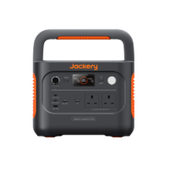
Where Does the Jackery SolarVault 3 Pro Max Fit?
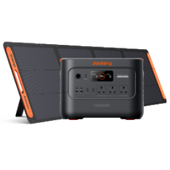
The Jackery SolarVault 3 Pro Max is a modular home solar-storage system that accepts electricity directly from compatible PV panels and stores energy for later use. When choosing storage for a micro inverter installation, however, it is important to distinguish this model from the similarly named Pro Max AC.

Distinguish the SolarVault 3 Pro Max from the Pro Max AC
The SolarVault 3 Pro Max accepts direct PV input, making it relevant when planning a system with panels connected to the storage unit’s solar inputs.
The SolarVault 3 Pro Max AC has no direct PV input and is the model identified in the UK range for adding storage to an existing PV installation. These are different configurations, so check the complete model name on your quotation rather than assuming their connections are interchangeable.
Apply the AC-Coupled Example to Existing Microinverters
With a suitable Pro Max AC installation, rooftop micro inverters continue converting solar electricity as before. The battery connects on the home’s AC side, where compatible metering helps its controller capture surplus generation and release stored energy when needed.
Its advertised storage capacity starts at 2.52kWh, expandable to 15.12kWh with additional battery packs. This modular arrangement allows capacity to be selected around household demand, although these figures should not be treated as energy guaranteed at the sockets.
Confirm compatibility with the exact micro inverters, electrical layout and existing controls before ordering.
Check the Configuration Against Your Household’s Needs
Ask the installer to specify usable storage after operating reserves, charging and discharge limits for the selected configuration, supported metering and the required electrical work. Compare these with your measured surplus solar and evening consumption.
For backup, request a clear description of which outlets or circuits remain powered. A dedicated backup socket does not automatically supply every household circuit, and continued rooftop generation during an outage needs separate confirmation. Choose the configuration around documented operation and complete installed cost.
FAQs
The following are the frequently asked questions about the micro inverters:
1. Do You Need One Micro Inverter for Every Solar Panel?
No. Some models serve one panel, while others accept two, four or more. Check both the number of panel inputs and independent MPPT channels, as these determine how the connected panels are managed.
2. Can You Add More Panels to a Micro Inverter System Later?
Often, yes, provided there is suitable roof space and sufficient electrical capacity. Your installer must check circuit limits, compatibility with existing equipment and any changes needed to the grid connection. Expansion may also require additional cabling or monitoring equipment.
3. Can Different Solar Panel Wattages Be Used in the Same System?
Yes, where each panel is compatible with its connected micro inverter input. Independent MPPT channels can accommodate panels with different outputs, but voltage, current and connector requirements still apply. Matching wattage alone is not enough to establish compatibility.
4. What Happens If a Micro Inverter Fails?
The panel or panels connected to that unit may stop supplying electricity, while the rest can continue operating. However, a fault that trips shared circuit protection can affect a larger part of the array. An installer should diagnose the problem before arranging replacement.
5. Will the Solar Panels Still Generate If the Internet Goes Down?
Normally, yes, provided the electricity grid remains available and the system is otherwise operating correctly. You may temporarily lose remote monitoring, alerts or cloud-dependent controls. Internet loss is different from gateway failure, and prolonged disconnection may affect warranty conditions for some equipment.
6. Can You Add a Battery from a Different Manufacturer?
Often, yes, through a suitable AC-coupled battery system. The battery can use its own metering to manage charging without sharing the micro inverters’ app. However, electrical compatibility, export controls and any backup integration must be confirmed for the exact equipment.
7. Will Micro Inverters Keep Working During a Power Cut?
Ordinary grid-connected micro inverters stop exporting electricity when the grid fails. Continued generation requires a specifically compatible backup system that isolates the home from the grid and provides the electrical reference and controls the micro inverters need. Adding a battery alone does not guarantee this capability.
Final Thoughts
A micro inverter can be a useful choice when panel-level control helps accommodate partial shading, small panel groups or a complicated roof. However, micro inverters are not automatically better for every UK home.
A well-designed string or hybrid system may offer better value on a straightforward roof, particularly when battery storage is planned from the outset.
If you already have micro inverters, suitable AC-coupled storage can often be added while retaining the existing rooftop equipment. Backup capability needs a separate compatibility check.
Before deciding, obtain comparable quotations using the same panel layout, annual generation assumptions and storage requirements. Then confirm the complete installed cost and exactly which appliances or circuits, if any, will receive power during an outage.


