
























![[Over £1200 Tier Gift] Bluetooth Speaker with Phone Stand - shipped Separately](http://uk.jackery.com/cdn/shop/files/Portable_Bluetooth_Speaker_with_Phone_Stand_2.png?v=1781595581&width=170)
















Quick Answer: No — 2,000 kWh a year is exceptionally low, sitting roughly 26% below Ofgem’s medium benchmark of 2,700 kWh and over 40% below the UK average of 3,449 kWh. It’s perfectly normal for a single person in a small gas-heated flat, but impossibly thin for a family in an all‑electric home. The figure only becomes a problem if you have electric heating, an immersion heater, or a tumble dryer and the meter is still showing just 2,000 kWh.
Key Takeaways:
-
2,000 kWh a year typically means about 5.5 kWh daily — enough for lighting, fridge, TV, laptop, and some cooking in a gas-heated home.
-
The average UK household uses 3,449 kWh a year; flats and single‑person homes often fall between 1,800 and 2,200 kWh.
-
Ofgem classifies low usage at 1,800 kWh, medium at 2,700 kWh, and high at 4,100 kWh — 2,000 kWh is solidly low.
-
If your home has gas heating and hot water, a 2,000 kWh electricity figure is unremarkable; in an all‑electric property, it would point to a fault.
-
You can verify the number with a simple main‑breaker test and by cross‑checking against Ofgem’s typical consumption bands.
Understanding UK Electricity Consumption Benchmarks
The UK’s average domestic electricity consumption stood at 3,449 kWh per year as of December 2024, roughly 9.45 kWh a day. That average masks a huge spread: a one‑bedroom flat can sip 1,800 kWh while a large detached home with an EV charger pulls 7,000 kWh or more.
Ofgem’s Typical Domestic Consumption Values (TDCVs) give a clearer yardstick. For a standard single‑rate meter, the regulator defines three bands:
|
Ofgem TDCV Tier |
Annual Electricity Use |
Who It Typically Matches |
|
Low |
1,800 kWh |
Single adult in a flat, gas heating |
|
Medium |
2,700 kWh |
2–3 occupants in a semi‑detached home |
|
High |
4,100 kWh |
Family of 4+ in a detached house |
At 2,000 kWh, you’re 700 kWh below medium and only 200 kWh above the low band. That’s comfortably inside low‑use territory. In its 2026 TDCV review, Ofgem lowered the medium electricity figure to 2,500 kWh for standard meters, making 2,000 kWh even less of an outlier.
UK households have been shrinking their consumption for years. Between 2007 and 2023, average usage fell 26% — from 4,662 kWh to 3,449 kWh — thanks to better appliances, LED lighting, and tighter energy habits. A 2,000 kWh year would have looked impossible in 2007; in 2026, it’s merely lower than the pack.
Is 2,000 kWh a Year a Lot for Your Household Type?
Whether 2,000 kWh is a lot depends entirely on your household size and heating fuel — it’s normal for a single person in a gas-heated flat but impossibly low for a family in an all‑electric home. Household size and heating fuel are the two levers that move consumption the most.
-
Single‑person flat (gas heating): 1,800–2,200 kWh is typical. A 2,000 kWh year is unremarkable — maybe a few extra cycles of the washing machine or a games console left on standby.
-
Couple in a 2‑bed flat (gas heating): Expect 2,000–2,500 kWh. Hitting exactly 2,000 kWh means the household is energy‑conscious but not extreme.
-
Family of three in a semi‑detached house (gas heating): Usually burns 3,000–4,300 kWh. A 2,000 kWh reading is suspiciously low unless the family is rarely home or exceptionally frugal.
-
Family of four, all‑electric home: Consumes 6,000–12,000+ kWh. If the meter shows 2,000 kWh, the meter or billing is almost certainly wrong.
The rule of thumb: each extra person adds roughly 600–900 kWh a year — laundry, screen time, more meals, more lights. Property size amplifies that: a four‑bedroom house needs more lighting, pumps more hot water through longer pipe runs, and is more likely to have an extra fridge or freezer.
To make the comparison concrete:
|
Household Setup |
Expected Annual Electricity Use (Gas Heating) |
Where 2,000 kWh Falls |
|
1 adult, 1‑bed flat |
1,800–2,200 kWh |
Normal |
|
2 adults, 2‑bed flat |
2,000–2,500 kWh |
Lower end of normal |
|
3‑4 people, 3‑bed semi |
3,000–4,300 kWh |
Exceptionally low |
|
4+ people, all‑electric home |
6,000–12,000+ kWh |
Impossible without a fault |
Key Factors That Determine Whether Your Usage Is High or Low
Heating fuel, appliance efficiency, lifestyle, EV charging, and seasonal swing are the five factors that decide whether 2,000 kWh is good, bad, or worrying.
-
Heating and hot water fuel. A home heated by gas usually sips electricity: the boiler’s pump and controls draw a few hundred watts, and cooking on gas barely registers. Switch to electric heating — storage heaters, a heat pump, or an immersion heater — and consumption often triples. A heat pump alone can add 2,500–4,000 kWh annually; an immersion heater left on constantly can pull 3,000 kWh by itself. If your gas‑heated home uses 2,000 kWh, that’s fine. If an all‑electric property shows the same figure, the reading is almost certainly wrong.
-
Appliance efficiency. An A‑rated fridge‑freezer costs roughly £50 a year to run; a G‑rated one, £250. Washing machines in eco mode cut electricity by 30–50%. LED bulbs use 80% less than halogens. Small upgrades stack up fast.
-
Lifestyle and home occupancy. Working from home typically adds 200–400 kWh a year — monitors, laptops, extra lighting, and a little top‑up heating. Standby power from older TVs, games consoles, and chargers can bleed 100–200 kWh annually without you noticing.
-
Electric vehicle charging. An EV adds 2,500–4,800 kWh a year — often more than the entire household’s non‑transport electricity consumption. If you charge a car and still log 2,000 kWh total, the meter isn’t capturing that load.
-
Seasonal swing. UK winter electricity use is about 27% higher than summer. Most of that comes from lighting and longer pump run‑times. A flat‑profile 2,000 kWh year without a winter bump would be unusual but not impossible in a well‑insulated gas‑heated flat.
Practical Steps to Verify Your 2,000 kWh Figure
You can verify your 2,000 kWh figure with a main‑breaker test, daily average check, plug‑in monitor, and cross‑checking your heating fuel — here’s how.

-
Main‑breaker test. Turn off the main switch in your consumer unit for one to two hours. When you switch back on, check the meter — if the reading hasn’t moved, the meter is almost certainly working. A creeping meter with everything off is the real red flag.
-
Daily average. 2,000 kWh ÷ 365 days = roughly 5.5 kWh/day. Compare that against your smart meter’s In‑Home Display (IHD). If you see a steady 0.23 kW load round the clock, that’s 5.5 kWh daily — spot on.
-
Plug‑in energy monitor. Stick a monitor on the fridge, washing machine, and any suspect appliance. A fridge should run at 0.8–1.2 kWh a day; a 2 kW heater at full blast would burn through your daily budget in under three hours.
-
Cross‑check your heating fuel. If you have a gas boiler and a gas hob, a 2,000 kWh electricity bill is entirely plausible. No gas? Then the figure is too low unless the home is exceptionally small and efficient.
If the numbers still don’t add up, contact your supplier and request a meter accuracy test. Ofgem requires suppliers to investigate disputed readings; the test costs nothing if the meter is found faulty.
Limitations: When 2,000 kWh Isn’t Low Enough
A low electricity bill can mask real problems:
-
It’s easy to celebrate a 2,000 kWh year while ignoring that your home is heated by an ancient, expensive-to-run gas boiler.
-
You might be relying on a damp, inefficient electric system that should be pulling far more power.
-
An abnormally low all‑electric consumption often signals a faulty meter, a broken storage heater, or a billing error that will eventually be corrected — sometimes with a back‑bill.
Think in total energy, not just electricity. A household that burns 2,000 kWh of electricity but 18,000 kWh of gas is not “low‑energy” — it’s just shifting the spend. The most useful metric is total kilowatt‑hours across all fuels per square metre.
Also, don’t assume a tiny electricity number means you’re a good candidate for skipping solar panels. A 2,000 kWh consumption profile still benefits from battery storage that captures cheap off‑peak power and avoids high daytime rates. The conversation is about what you pay, not just what you use.
Future Trends Reshaping UK Electricity Demand
UK electricity demand is projected to double by 2050, pushed by two unavoidable shifts:
-
Heat pumps: Heat pump installations, accelerating under government targets, typically add 2,500–4,000 kWh annually compared with a gas boiler.
-
Electric vehicles: A single EV adds 3,600–4,800 kWh a year, enough to more than double a 2,000 kWh household’s current consumption.
Domestic consumption already ticked up 3.8% between 2023 and 2024 as energy prices eased and people relaxed stringency. Winter still sees a 27% uplift, peaking between December and February. The days of sub‑2,000 kWh being effortless may be numbered for many households as electrification creeps in.
Reducing Grid Dependency with Solar and Battery Storage
Solar panels paired with battery storage can slash grid dependency even for a 2,000 kWh household, with self‑consumption rising from 30% to over 70%. The answer turns on self‑consumption, not gross generation.
|
Configuration |
Self‑Consumption |
Financial Outcome |
|
Solar only (no battery) |
~30% of generated solar used on‑site |
Surplus exported at SEG rate of 3–15p/kWh |
|
Solar + battery storage |
>70% self‑consumption |
Each kWh offsets import rate of 24p/kWh |
Key incentives in 2026:
-
0% VAT on solar panels and battery storage for residential installations runs until 31 March 2027. After that, it rises to 5%.
-
Smart Export Guarantee (SEG) pays for surplus generation. Not a grant — it’s an ongoing export payment that requires an MCS‑certified install and a smart meter.
-
ECO4 scheme can fully fund solar for eligible low‑income households with EPC D‑G homes, but it closes on 31 December 2026.
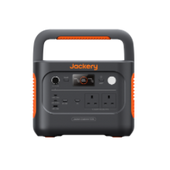
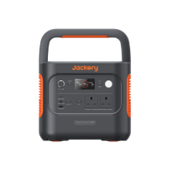
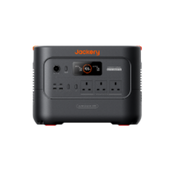
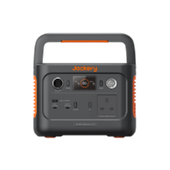
A typical solar array (3–5 kW) costs £5,000–£11,000 installed. Payback periods land between 8 and 12 years; panels last 25–30 years. Even a modest 2,000 kWh consumption reaps the benefit of decades of near‑free electricity, especially when paired with storage that matches your daily load profile. For those considering portable backup rather than full home storage, portable power stations can cover smaller essentials, but they don’t replace a fixed home battery for daily cycling.
Solar generators in the UK are increasingly viable as prices fall, though the strongest return always comes from using every generated kilowatt‑hour on‑site — exactly what a stationary battery system enables.
Jackery SolarVault 3 Series for Managing Household Electricity Usage
Jackery’s forthcoming SolarVault 3 Series is designed to help UK households store surplus solar energy and draw from it during peak‑rate evening hours. With the self‑consumption benefits described above, it aims to turn a 2,000 kWh annual consumption profile into a largely grid‑independent one when paired with an appropriately sized solar array. Details including capacity, pricing, and availability are not yet confirmed; expect more information closer to launch.

Frequently Asked Questions (FAQ)
How much will 2,000 kWh of electricity cost me per year?
At the current average unit rate of roughly 24.5p per kWh, 2,000 kWh costs about £490, plus the daily standing charge — typically around £200 extra, bringing the total to roughly £690.
Is it normal to use only 2,000 kWh in a gas‑heated home?
Yes, it is completely normal for a single person in a small gas‑heated flat; gas covers heating and hot water, leaving electricity for lights, appliances, and cooking.
Can I get solar panels if I only use 2,000 kWh per year?
Yes, though the payback period stretches because you offset fewer kilowatt‑hours directly; SEG export payments still provide a return, and battery storage improves the economics by keeping more solar energy on‑site.
What does a daily usage of 5.5 kWh actually power in a home?
It typically powers a fridge (1 kWh), LED lighting (0.5 kWh), a laptop and TV (0.5 kWh), occasional cooking (2 kWh), and leaves about 1.5 kWh for other small appliances — phones, a router, or a short washing‑machine cycle.
How does 2,000 kWh compare to the UK average electricity use?
It is roughly 42% below the average of 3,449 kWh, sitting firmly in Ofgem’s low‑usage band and typical for a single occupant in a flat without electric heating.


