













![[Over £1200 Tier Gift] Bluetooth Speaker with Phone Stand - shipped Separately](http://uk.jackery.com/cdn/shop/files/Portable_Bluetooth_Speaker_with_Phone_Stand_2.png?v=1781595581&width=170)














Distinguishing between surge protectors and standard power strips is a vital modern safety skill. This guide outlines the technical disparities to help you build a layered protection strategy.
What Is a Regular Power Strip?
Often termed an extension lead or multi-plug adapter, a regular power strip has one specific function: to increase socket availability. It acts strictly as a bridge, extending mains electricity to reach distant or insufficient wall outlets.
Crucially, these devices lack surge suppression hardware. Functioning solely as electrical conduits, they allow voltage spikes to travel through your home wiring and pass directly into any attached equipment.
You can often identify these basic units by their physical build. They tend to be lightweight with thinner plastic shells, and they notably lack reset buttons or Protected indicator lights. If a strip feels hollow and inexpensive, it is likely just a standard extension lead.
When Should You Use Regular Strips?
Regular strips have a valid role in the home, but they should be reserved for non-sensitive items that lack complex microprocessors. Suitable examples include desk fans, simple incandescent lamps, or basic kitchen tools like hand mixers.
Conversely, avoid connecting valuable electronics—such as PCs, OLED TVs, and gaming consoles—that demand active protection. Furthermore, never plug high-wattage appliances like kettles or heaters into these strips, as the high current draw can melt the casing or blow a fuse.
Safety Warning: Never daisy-chain strips (plugging one extension lead into another). This practice increases resistance and heat, creating a significant fire hazard within UK ring circuits.
How Does a Power Surge strip (Surge Protector) Work?
What Is the Mechanism Behind Surge Protection?
A surge protector acts as an active gatekeeper between the mains supply and your devices by utilizing internal components, primarily Metal Oxide Varistors (MOVs), to monitor electricity flow. Under normal conditions, the MOV allows current to flow to your devices.
When the voltage exceeds a specific threshold, the MOV activates instantly. It diverts the excess voltage away from the live wire and directs it safely to the earth wire in a process known as "clamping."
It is vital to understand the sacrificial nature of these devices. The internal components degrade every time they absorb a surge. A protector that stops a massive lightning strike—a key concern when learning how to stay safe during thunderstorms—may burn out completely to save your equipment. Even without catastrophic events, small daily fluctuations wear down the MOVs over time.
How Can You Identify a Real Surge Protector?
Identifying a real surge protector requires checking the labelling for explicit terms like "Surge Protection" or "Transient Voltage Surge Suppressor" on the casing. Do not rely on marketing terms like "power conditioner" unless the surge specs are listed.
Status LEDs are the most reliable visual indicators. Look for lights labelled "Protected" (often green) and "Grounded" or "Earthed." If the "Protected" light is illuminated, the internal MOVs are functional.
The Joule rating is another key identifier found on power surge strips. This numerical value indicates the energy absorption capacity. A rating of 1000 Joules (1000J) or 3000 Joules (3000J) tells you exactly how much energy the unit can handle before failing.
Comparison: Power Surge Strips vs. Standard Leads
What Is the Joule Difference?
The Joule rating is the definitive metric for protection capability, with standard power strips offering 0 Joules of resistance to voltage spikes.
Power surge strips are always rated in Joules. Higher ratings generally equate to a longer lifespan and better absorption capacity.
- Under 1000 Joules: Basic protection for lamps or alarm clocks.
- 1000–2000 Joules: Suitable for office equipment and standard laptops.
- 2000+ Joules: Required for home theatre systems, gaming consoles, and desktop computers.
What Is Let-Through Voltage?
The "let-through" voltage, or clamping voltage, is the amount of excess voltage the protector allows to pass through to the device before the safety mechanism engages. In the UK, mains voltage is 230V.
A lower clamping voltage is superior. You want the device to trigger as soon as the voltage rises slightly above normal levels. Look for ratings below 400V (often listed as <330V or <400V). This ensures that sensitive microchips are not exposed to damaging spikes before the diverter activates.
Which Safety Certifications Matter?
UK safety standards are rigorous. Always check the back of the unit for specific certifications.
- BS 1363: This standard applies to the physical plugs and sockets, ensuring they fit UK wall outlets safely and have shielded pins.
- BS EN 61643: This is the specific standard for surge protective devices.
- CE / UKCA Marks: These are mandatory conformity markings indicating the device meets health, safety, and environmental protection standards for products sold within Great Britain and the EEA.
|
Feature |
Regular Power Strip |
Surge Protector Strip |
|
Primary Function |
Extension of outlets |
Voltage suppression & extension |
|
Joule Rating |
None (0 Joules) |
1000J - 4000J+ |
|
Internal Components |
Copper wiring only |
MOVs, thermal fuses, gas discharge tubes |
|
Indicator Lights |
Usually none (sometimes power on/off) |
Protected and Earthed LEDs |
|
Lifespan |
Indefinite (until physical damage) |
Finite (degrades with surges) |
Beyond the Strip: UPS and Portable Power Solutions
What Are the Limitations of Surge Strips?
While power surge strips are essential, they function like a fuse; they cut power or divert it to save hardware but cannot keep a device running. If a storm knocks out the local grid, a surge strip will not prevent data loss on a desktop computer.
Furthermore, surge strips offer no protection against "brownouts" or voltage sags. These drops in power can be just as damaging to power supply units (PSUs) as spikes, causing strain on capacitors and eventual hardware failure.
How Does a UPS Help?
An Uninterruptible Power Supply (UPS) bridges the gap between mains power and total failure by combining surge protection circuitry with a battery backup. When the mains power cuts or fluctuates outside safe levels, the UPS instantly switches to battery power.
This is essential for home servers, desktop computers, and Network Attached Storage (NAS) drives. This protection prevents data corruption similar to the Uninterruptible Power Supply Google Cloud Outage that affected major services. It provides the necessary minutes to save work and shut down the system safely, preserving data integrity.

Why Choose Portable Power Stations for Advanced Backup?
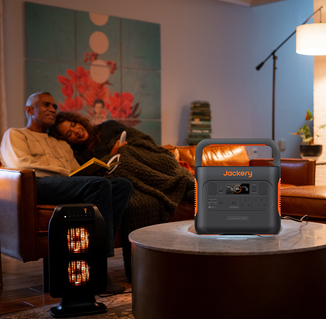
Modern portable power stations have evolved to offer robust UPS functionality alongside massive off-grid capacity. Unlike standard computer UPS units which use lead-acid batteries that degrade quickly, these stations utilize advanced lithium chemistry.
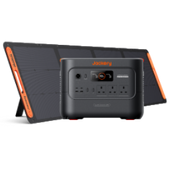
Jackery Solar Generator 3000 v2
- Capacity: The Jackery Solar Generator 3000 v2 features a massive 3072Wh capacity.
- Output: This unit supports high-wattage appliances with 3600W output (7200W surge).
- UPS Function: It switches to battery power in <20ms during mains failure.
- Longevity: LiFePO4 battery chemistry provides 4,000 charge cycles (approx. 10 years of use).
- Use Case: Keeps an entire home office, including internet routers and high-end PCs, running for hours or days during extended blackouts.
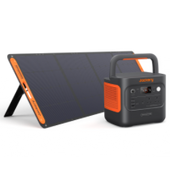
Jackery Solar Generator 2000 v2
- Capacity: The Jackery Solar Generator 2000 v2 offers 2042Wh capacity.
- Output: This generator delivers 2200W continuous output (4400W surge).
- UPS Function: Reliable <20ms switchover speed ensures seamless operation.
- Portability: It is the lightest and smallest 2kWh LFP power station on the market (17.5 kg).
- Use Case: Ideal for backing up entertainment centers or critical medical equipment like CPAP machines.
These units provide a comprehensive safety net. They handle the surge protection via the UPS pass-through mode and solve the issue of power continuity during long interruptions, such as those detailed in our London Power Outage Guide.
Maintenance and Silent Failure
How Long Does Protection Last?
Surge protection is not permanent; the MOVs inside the strip wear out with every spike they absorb. A 10-year-old surge strip likely functions only as a power strip today because its protective capacity has long since evaporated.
Adhere to a strict replacement rule. Replace your surge protectors every 3 to 5 years. If your home experiences a known major lightning event or a severe grid malfunction, replace the connected strips immediately, even if they appear to be working.
How Do You Interpret Indicator Lights?
Regularly check the status LEDs on your strips to ensure ongoing safety.
- Protected Light Off: The surge components have failed. The strip is still conducting electricity to your devices, but it offers zero protection against future spikes. Replace the unit immediately.
- "Earthed" / "Grounded" Light Off: This indicates a wiring fault in your wall socket or the building's electrical system. The surge protector cannot divert excess voltage without a functional earth path. Consult a qualified electrician immediately.
Practical Scenarios and Recommendations
|
Scenario |
Devices & Context |
Requirement |
Recommended Strategy |
Important Notes |
|
Home Theatre & Gaming |
OLED TVs, PS5/Xbox Series X, AV receivers. Sensitive to voltage irregularities. |
High Joule rating (2000J+). |
Use a dedicated surge strip for these devices. |
Do not plug vacuums or heaters into the same circuit; their motors cause internal surges that degrade protection. |
|
Home Office & Remote Work |
PC/Mac, NAS drives, printers. Data preservation is the priority over hardware. |
Data protection and preventing hard drive corruption. |
Use a UPS for the computer and NAS. Use a standard surge protector for non-critical peripherals (printers/monitors). |
A Jackery Solar Generator 2000 v2 can power an office for a full workday. Compact solutions are preferred for smaller setups. |
|
Kitchen & Utility Appliances |
Washing machines, dishwashers, fridge-freezers. High power demands and startup currents. |
Handling high startup currents (Amps). |
Plug major appliances directly into wall sockets. |
Warning: Most standard surge strips cannot handle these appliances. If protection is needed, use a specialized heavy-duty single-socket protector. |
Quick Decision Checklist
Before purchasing or plugging in, run through this five-point check to ensure you are protected.
- Label Check: Does the packaging or casing explicitly say "Surge Protective Device" or just "Extension Lead"?
- Rating Check: Is the Joule rating listed on the box or the back of the unit? If you can't find a number, don't trust it.
- Light Check: Are the "Protected" and "Earth" LEDs illuminated green?
- Condition Check: Is the unit older than 5 years? If yes, replace it.
- Usage Check: Are you plugging in a heater or air conditioner? If yes, plug it directly into the wall, not a strip.
Frequently Asked Questions
Can whole-house surge protectors replace individual strips?
No, whole-house protectors installed at the consumer unit (fuse box) handle large external surges but let smaller residual voltage through. Point-of-use surge strips are still required to catch this "let-through" voltage and protect against internal surges generated by appliances inside the home.
Do smart plugs offer surge protection features?
Most standard smart plugs are designed for remote control and energy monitoring, not surge protection. Unless the product explicitly lists a Joule rating and surge suppression specs, you must plug the smart plug into a surge protector to ensure safety.
Are there surge protectors specifically for outdoor use?
Yes, outdoor surge protectors exist and feature weather-resistant casings (IP ratings) to withstand moisture and dust. Never use a standard indoor surge strip outside, as rain or dampness can cause immediate short circuits and electrocution hazards.
How does a surge protector handle continuous overvoltage, not just spikes?
Standard surge protectors are designed for brief, millisecond spikes and will overheat or fail if subjected to sustained high voltage. For continuous overvoltage issues, you need a voltage stabiliser or a double-conversion UPS to regulate the incoming power flow.


