





















![[Over £1200 Tier Gift] Bluetooth Speaker with Phone Stand - shipped Separately](http://uk.jackery.com/cdn/shop/files/Portable_Bluetooth_Speaker_with_Phone_Stand_2.png?v=1781595581&width=170)















Installing solar panels in a UK conservation area is a smart way to slash energy bills and cut your carbon footprint, but the designation does introduce extra regulatory layers. While these protected zones are far from solar exclusion zones, local authorities hold a higher bar for visual impact to preserve historical aesthetics.
This guide breaks down exactly how the planning framework operates, when you can proceed under Permitted Development rights, and how innovative alternatives—including subtle in-roof designs and smart storage systems like the Jackery SolarVault 3 series—can help you transition to clean energy smoothly.
|
Key Takeaways: |
|
Can You Install Solar Panels in a Conservation Area?
A conservation area is a zone designated for "special architectural or historic interest" that a local government seeks to conserve. There are more than 10,000 in England. Being in one gives you more control over things like demolition, tree removal, cladding, and the placement of solar panels on prominent elevations.
Let's make it clear: a conservation area is not a solar exclusion zone. The classification requires future development to maintain the area's character; it raises the bar for visual impact, but it is not an outright prohibition. The rules have gradually been relaxed to boost solar adoption. Solar power is installed in thousands of homes in conservation areas across the United Kingdom.
Key Regulations for Installing Solar Panels in Conservation Areas
Roof-mounted solar development is permissible even in conservation areas, as long as the prerequisites are met. The headline limit:
- Regulations 1: Panels must not be installed on a wall or roof slope that fronts a highway (which includes public footpaths and bridleways, not just roads)
- Regulations 2: Panels must not project more than 200mm beyond the roof plane
- Regulations 3: Panels must not sit above the highest part of the roof (excluding the chimney)
- Regulations 4: Equipment should be removed when no longer needed
- Regulations 5: Installers should site panels to minimise visual impact "so far as practicable"
Conservation Area Rules by Nation
Solar panel planning requirements varied greatly in England, Scotland, and Wales. Each country has its own approved development framework, and conservation area designations interact with those frameworks in unique ways.
Conservation Area Rules in England: England follows the 2015 General Permitted Development Order. Conservation area properties retain approved solar development rights, subject to the criteria outlined above.
The "not visible from a highway" regulation is the primary restraint, affecting front-facing and side-facing panels on corner properties the most severely.
Conservation Area Rules in Scotland: Scotland applies Class 6HA of the Town and Country Planning (General Permitted Development) (Scotland) Amendment Order 2012. Conservation areas in Scotland apply similar limits as in England, but there are extra rules for World Heritage Sites – both Edinburgh Old and New Town, as well as New Lanark, require full planning permission for any solar installation, regardless of location. Microgeneration is otherwise promoted by Scottish planning legislation, and rear-facing installations in regular conservation areas are typically approved.
Conservation Area Rulesin Wales: Wales operates under the Town and Country Planning (General Permitted Development) Order 1995, amended in 2013. Welsh conservation areas follow similar rules to those in England: rear-facing solar panels are permitted without permission, whereas front-facing panels facing a roadway require consent.
The Welsh government has actively encouraged solar use, and applications in conservation areas are generally seen favourably, especially for modest domestic installations.

Key Requirements for Solar Panel Installations on Listed Buildings
Listed buildings are treated very differently than conservation area properties. If your home is on the National Heritage List for England, whether Grade I, Grade II*, or the more common Grade II, you must obtain Listed Building Consent (LBC) for any solar installation, regardless of where the panels will be located. There are around 380,000 listed buildings in England.
Grade II is the most common, accounting for around 92% of all listings. Grade II* and Grade I are becoming increasingly scarce and stringent.
Grade II: Listed Building Consent applications for solar are usually allowed if (a) the systems are reversible (no irreversible damage to historic fabric), (b) they are put on subordinate or non-principal elevations, and (c) heritage-grade aesthetic materials are used.
Grade II\* and Grade I: Significantly harder. Consents typically require ground-mounted alternatives, outbuilding installations, or the extremely unusual in-roof rear-elevation plans with complete reversibility paperwork.
Curtilage-Listed Buildings: Any structure constructed within the curtilage of a listed building prior to July 1, 1948, is considered listed. Frequently catches barns, sheds, and walls. LBC is necessary.
Local conservation inspectors have a severe stance to listed structures. If you own a listed building and wish to install solar, you should speak with a specialised conservation architect or planning consultant before submitting any applications.
How to Check Whether Your Property Is in a Conservation Area?
There are about 10,000 conservation areas in the UK, spread throughout all local council districts. They include historical landmarks, country estates, long-established metropolitan suburbs, and more.If you wish to install solar panels, first determine whether your home is in a conservation area. Here are some practical approaches:
Contact the Local Planning Authority Directly
If you feel your home is in a conservation area, the most reliable approach to confirm this is to contact your local planning department. They will have access to all relevant data and will be able to determine whether your property is inside the borders of a conservation area.
Use the Planning Portal (planningportal.co.uk)
Enter your postcode to find out if your property is in a designated conservation area, Article 4 Direction, or other planning constraint. The program obtains data directly from local authority sources and is generally accurate in England and Wales.
Use the Scottish Historic Environment Agency Website (historicenvironment.scot)
For Scotland, visit the Historic Environment Scotland webpage at historicenvironment.scot, which hosts the Designations database of conservation areas, scheduled monuments, and listed buildings.
Check the Property's Title Deeds
Refer to the "Property Searches / Local Authority Search" document issued by your lawyer when you purchased the property. If your property is in a protected area, it will be clearly stated in the report. However, if the protected area was created after your purchase, it will not be listed on the previous title deed.
Ask an MCS-Certified Installer
Find a solar installer in your neighbourhood who has extensive installation expertise and holds MCS (Microgeneration accreditation Scheme) accreditation. They are quite familiar with the local planning and ecology. They frequently know which streets in the region are protected areas.

Do You Need Planning Permission for Solar Panels in a Conservation Area?
Solar panel installation in a conservation area typically requires planning authorisation. Below are some typical scenarios:
Solar Panels on a Roof Slope / Wall that FACES a Highway (Visible from the Road)
In both England and Scotland, the core principle of protected area policies is maintaining the public landscape. If solar panels are installed on a roof slope or wall directly facing a highway, and are visible from public roads, a full planning application process is required.
Any Panels that Protrude More than 200mm
The vertical distance between the surface of the solar panel and the roof tile surface cannot exceed 20 centimeters. If, due to the use of thickened supports or special roof structures, the system protrudes more than 20 centimeters, it is no longer a permitted development and a planning permit is required.
Stand-Alone (Ground-Mounted) Arrays above PD Size Limits
If you prefer ground-mounted solar panels in your garden, there are extremely strict area and location restrictions within protected areas. If your design exceeds the area limits, the height exceeds 4 meters, or the distance from the property boundary is less than 5 meters, the development permit will be invalidated, and a full planning permit must be applied for.
Where an Article 4 Direction Has Removed PD Rights (Some Conservation Areas Have These)
If a local council deems a protected area's historical character exceptionally valuable and inviolable (such as Bath, Edinburgh New Town, or the heart of certain historic towns), they will issue Article 4 Directive.
Within such areas, even if you install solar panels on a completely unseen rear roof, fully complying with the 200mm limit, you must still apply for planning permission.

How to Get Planning Permission for Solar Panels in a Conservation Area?
Each local planning authority may have its own guidelines for managing conservation areas. So, before requesting for planning permission for solar panels, you should be aware of the precise restrictions that govern your conservation area.
The following is a general procedure:
Step 1: Pre-Application Enquiry (Optional)
Make an informal enquiry to your local planning authority. This is a paid process that costs between £50 and £100. They inform you on the possibility of approval before you submit a full application. This will assist you avoid being turned down outright due to noncompliance with design standards.
Step 2: Full Planning Application
To obtain permission to install solar panels in a conservation area, submit a planning application using your local council's web portal, including site drawings, elevations demonstrating little visual impact, and a heritage statement supporting the advantages, such as lower carbon emissions. For householder applications, fees start at £258.
Step 3: Consultation Period (21 Days)
Following the submission of your planning application, a public consultation process may occur. This enables neighbours and other interested parties (conservation officer, parish council) to read and comment on your application. If an objection is founded on valid planning issues, the planning authority will consider it.
Step 4: Decision (Typically 8 Weeks)
Planning applications typically take approximately eight weeks to be decided. The planning officer examines the visual impact on the conservation area's character. Your application may be approved, rejected, or subject to revisions by the planning authority.
Step 5: Appealing a Refusal (If Needed)
If denied, file an appeal with the Planning Inspectorate within 6 months, arguing for sustainability and little effect, since many appeals are successful when designs are sympathetic to the conservation area's characteristics.
|
Success Rate* |
|
The majority of conservation area solar applications are granted. Climate commitments have led to an increase in council support. Refusals are more prevalent for large, visible installations in front of historically significant structures. |
How To Increase Your Chances Of Planning Approval For Solar Panels In A Conservation Area?
Conservation area planning applications for solar panels have a good success rate when the installation is built with visual impact in mind.
Most refusals are due to front-facing panels on conspicuous elevations, panels that protrude excessively, or installations proposed without prior consultation with the local planning official. To improve your chances of getting your solar panel installation approved in a conservation area, we recommend:

Choose the Most Discreet Installation Location
Prioritise rear roof slopes, inner courtyard recesses, or locations least visible from public streets, sidewalks, or nearby landmarks. Include a "sight analysis" in the submitted drawings to demonstrate its invisibility from public view.
Choose Panels that Harmonize with the Building Design
Traditional solar panels with silver frames and blue wafers can look out of place on historic buildings. All-black solar panels, including black frames, black backsheets, and concealed wiring, are recommended.
Choose a Smaller Solar Panel Array
Adopt a "good enough" approach, designing a moderately sized array that only meets basic household electricity needs. This strikes a rational balance between green energy requirements and historic preservation.
Partner with Experienced Planning Consultants
Working with experienced planning consultants who understand local regulations and can advise on the most appropriate design and positioning. For complex cases — listed buildings, front-facing installations, or World Heritage Sites — a planning consultant with experience in heritage applications will significantly improve your chances.
Communicate Your Plans with Your Neighbors
During the public notice period (usually 21 days), neighbor objections are a common cause of project cancellations or delays. Before formally submitting your application, visit your neighbors with your design drawings. Discuss your plans with them and address their concerns.
What Alternatives Exist for Solar Panels in Restricted Conservation Areas?
Traditional rooftop solar panels are difficult to acquire planning approval for in the UK if your property is located in a highly restricted conservation area because of their large visual influence on the historical environment. To acquire renewable energy without losing historical aesthetics, the following options can be considered:
In-Roof (Integrated) Systems
In-roof mounting integrates the panels into the roof plane, flush with the tiles rather than sitting on standoff rails above. The end effect is a sleeker, lower-profile finish, which conservation officers frequently like. It replaces a portion of tile with a panel array and a waterproof tray. Slightly more expensive than on-roof, but can be the difference between approval and refusal on a prominent elevation.
Solar Tiles
Solar tiles (integrated PV roof tiles) mix in nearly seamlessly with the roof, making them the most unobtrusive alternative for sensitive heritage situations. The drawbacks include reduced efficiency (15-18% vs 22-25% for normal panels), higher cost, and a lengthier installation. We'd save these for situations where standard or in-roof panels won't pass the conservation officer.
Ground-Mounted Arrays
Where the roof is truly unsuitable—a fully street-facing pitch on a listed terrace, for example—a modest ground-mounted array in the garden can be the solution. It preserves the building's elevations intact. Ground-mount has its own PD constraints (size and location), so approval may still be required, but it eliminates the roofline-character objection completely.
Portable Solutions
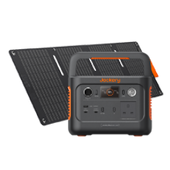
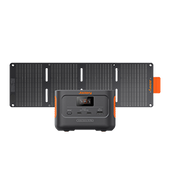
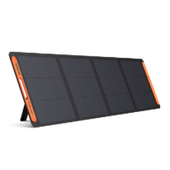
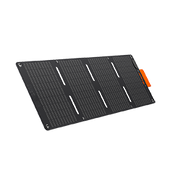
Lightweight, flexible solar panels that do not require drilling and can be hung or temporarily mounted on the ground on a terrace or backyard.
Since this does not involve permanent alterations to the building structure and can be easily disassembled and moved, it has minimal impact on the overall landscape of the conservation area. It can also be combined with energy storage batteries (such as the Jackery SolarVault 3 Series) to enhance solar energy utilization.

The Jackery SolarVault 3 Series is Jackery’s next-generation home solar storage solution, designed to help households generate, store, and use solar energy more efficiently. The series includes the SolarVault 3 Pro, SolarVault 3 Pro Max, and SolarVault 3 Pro Max AC, offering flexible options for balcony solar systems, existing PV installations, and larger home energy setups. With an integrated inverter, LiFePO4 battery technology, smart energy management, and expandable storage from 2.52 kWh to 15.12 kWh, the SolarVault 3 Series brings solar storage into a compact, modular, all-in-one system.
The system works by collecting solar power from connected panels, storing surplus electricity in the battery, and automatically supplying that energy when the home needs it most, such as in the evening, during peak electricity prices, or during a power outage. The SolarVault 3 Series can optimise solar generation even when panels face different directions or experience partial shading. Its AI-driven energy management helps balance solar production, household demand, battery charging, and electricity tariffs for smarter daily use.
One of its biggest advantages is flexibility. Homeowners can start with a smaller battery capacity and expand later as their energy needs grow. The plug-and-play design also makes installation more straightforward, while key safety features such as LiFePO4 cells, terminal temperature monitoring, and integrated aerosol fire suppression support reliable long-term operation.
The Jackery SolarVault 3 Series is expected to go on sale in the UK in July, giving UK users a new way to store solar power, use more of their own clean energy, and make home electricity management smarter and more cost-effective.
FAQ
The following are the frequently asked questions about solar panels in conservation area in the UK:
1. Can you put solar panels on a house in a conservation area?
Usually, yeah. Being in a conservation area does not immediately prohibit solar installations; rather, it adds limitations. Panels on a back or side roof slope that do not face a highway are often considered allowed development. Panels on a front (highway-facing) roof slope in a conservation district usually require planning clearance.
2. Do you need planning permission for solar panels in a conservation area?
Only for panels on roof slopes or walls facing a highway (visible from the street). Panels on rear or side slopes facing away from the highway are typically permitted development. If you are unsure, send a pre-application enquiry (£50-£100) to your council.
3. What solar options work best in conservation areas?
In-roof (integrated) mounting positions panels flush with the roofline rather than on standoff rails, which designers frequently favour in sensitive regions.
4. Is a conservation area the same as a listed building?
No. A conservation area preserves the character of a neighbourhood; external changes visible from the highway require clearance. A listed building safeguards a specific building; any outward change (even solar panels, even at the rear) requires listed building consent. The standards for listed buildings are tighter.
5. How Do Solar Panel Designs Affect Approval Chances in Conservation Areas?
Solar panel designs influence approval prospects by favouring low-visibility choices such as all-black modules or recessed installation, which councils prefer for blending in with historic roofs and providing a subtle aesthetic not covered by core regulations.
6. Can I put solar panels in my garden without planning permission?
To put solar panels in your garden, you normally need to apply for planning approval.
A ground-mounted installation, also known as a standalone system, requires planning permission if it includes more than one panel, is located within five metres of your property's boundary, or has an overall area of more than nine square metres. You'll also require authorisation if any section of the system is taller than four metres or if the installation is wider or deeper than three metres at any time.
7. Can neighbours object to solar panels?
If you are in one of the rare cases where you need planning permission to go solar, your neighbours may object to your proposed solar panel installation during the public consultation phase of the planning approval procedure. However, for their objections to be taken seriously, they must be founded on legitimate planning concerns rather than personal judgements.
Conclusion
Navigating solar panel installation in a UK conservation area requires a careful balance between historic preservation and sustainable energy. By focusing on discreet positioning—such as rear roof slopes—and choosing low-profile, all-black aesthetics, homeowners can significantly increase their approval chances.
For properties with severe restrictions, innovative alternatives like in-roof integrated systems, solar tiles, or portable setups offer viable pathways to clean energy. Pairing these with next-generation smart storage solutions, such as the Jackery SolarVault 3 Series, allows you to maximise self-consumptio even when rooftop space is limited.


