























































Current energy price cap predictions confirm a rise in January 2026, followed by potential decreases later in the year. Despite headlines suggesting relief, the final amount deducted from your bank account depends heavily on market volatility and policy shifts.
This guide breaks down the latest Ofgem data, how the cap actually works, and the strategic steps you can take to insulate your budget.
Understanding Energy Price Cap Predictions and Mechanics
Short-term forecasts confirm a price hike on January 1st, 2026, though households may see relief by April. To understand where prices are heading, you must first understand the mechanism that controls them.
Does the Price Cap Limit Total Bills?
The Ofgem price cap does not limit your total bill; the mechanism restricts the maximum amount suppliers can charge for each unit of gas and electricity (kWh) and the daily standing charge. A common misunderstanding is that the cap sets a ceiling on monthly costs, but if you use more energy, you will pay more.
Why Do Energy Price Changes Lag Behind Wholesale Costs?
Consumer bill adjustments lag behind wholesale costs because Ofgem calculates the cap using a historical observation window. Consequently, if global gas prices plummet today, you will not see that reduction in your unit rate for several months. This lag protects consumers from daily volatility but also delays relief when the market crashes.
Do Energy Suppliers Pass Savings Immediately?
Suppliers do not pass savings immediately to fixed tariffs because they purchase power months or years in advance to hedge against risk. Just because the spot price of gas falls does not mean your supplier has purchased their energy at that lower rate. This hedging strategy prevents immediate price drops but also prevents immediate spikes.
How Can You Track Energy Price Cap Predictions?
Monitor quarterly Ofgem updates to track future costs, as these materially affect energy price cap predictions. The regulator reviews the cap every three months (January, April, July, October). Trusted forecasters like Cornwall Insight provide data to verify if analyst predictions are materializing. For context on how these rates impact the average electric bill in the UK, understanding your specific usage is key to timing tariff switches effectively.
Price Outlook 2025–2026: Forecasts vs. Reality
Will Energy Bills Go Down in 2026?
Ofgem has confirmed that energy standing charges and some unit prices will increase from 1st January 2026, though predictions suggest a drop may follow in Q2.
Future Energy Price Predictions:
|
Period |
Start Date |
Price Cap Prediction |
Confidence Level |
|
Q4 2025 |
1 October |
£1,755 |
Confirmed |
|
Q1 2026 |
1 January |
£1,758 |
Confirmed |
|
Q2 2026 |
1 April |
£1,645 |
Low |
|
Q3 2026 |
1 July |
£1,625 |
Very Low |
|
Q4 2026 |
1 October |
£1,630 |
Very Low |
Source: OFGEM
What Factors Cause Energy Prices to Fluctuate?
Global politics and wholesale gas demand drive price fluctuations. If conflicts in Ukraine or the Middle East worsen, wholesale gas prices could rise, leading to higher bills. Conversely, recent budget announcements have reduced the forecast for the 2026 price cap, suggesting policy changes may help lower costs.
Will Daily Standing Charges Increase in 2026?
Network maintenance costs will likely raise standing charges, offsetting unit rate reductions. This is the "sting in the tail" of current forecasts. The costs to maintain the National Grid and local distribution networks are recovered through the daily standing charge. As infrastructure upgrades are required for the net-zero transition, these fixed daily costs are projected to increase.
Why Does Gas Price Affect Electricity Rates?
Electricity prices track expensive gas generation because the UK market design allows the most expensive generator needed to meet demand to set the price. Therefore, even as the grid adds more cheap wind and solar, the price you pay is frequently dictated by the price of natural gas.
What Is the Final Verdict on 2026 Energy Costs?
Headline rates will rise slightly in January before a predicted fall in April. Total household bills depend heavily on usage and fixed charge changes. While the Q2 drop looks promising, confidence levels for late 2026 remain low.
Strategic Tariff Choices: Fix, Float, or Flex?
With the energy price cap fluctuating, choosing the right tariff is a strategic financial decision.
Is Fixing Your Energy Tariff Cheaper Now?
Fixed price tariffs are currently often cheaper than the January 2026 price cap. By fixing now, you can lock in a lower rate and avoid the confirmed price rise in the New Year. This provides insurance against potential future hikes if variable rates increase more than predicted later in 2026.
How Do Variable Tariffs Work on Prepayment Meters?
The Standard Variable Tariff (SVT) offers flexibility but exposes you to quarterly volatility. If you are on a prepayment meter, timing matters:
- Key Meters: To get new prices, you must top up on or after the price change date (e.g., 1st April).
- Smart Meters: These should update automatically, though delays can occur.
Are Agile Energy Tariffs Worth It?
Agile tariffs are best for households with solar/storage capable of shifting usage away from peak times. These tariffs track wholesale prices every half-hour. If you can avoid using power between 4 PM and 7 PM and shift consumption to cheaper periods, you can achieve rates far lower than the price cap.
Do Fixed Tariffs Have Exit Fees?
Most fixed tariffs include exit fees ranging from £50 to £100 per fuel, so always calculate these against potential savings. If the energy price cap predictions prove accurate and rates drop significantly in Q2 2026, you might find yourself trapped in an expensive fix.
Should You Choose Fixed or Variable Rates?
Choose fixed rates if your budget cannot absorb sudden price spikes. If a sudden increase in your monthly bill would cause financial distress, the certainty of a fixed tariff may be worth a slightly higher premium. To estimate costs, knowing how much one kWh of electricity currently costs helps calculate potential savings accurately.
Policy Factors Impacting Your Bill
Government policy plays a massive role in the final figure on your bill.
How Do Green Levies Impact Energy Bills?
Green levies currently add to bills, but moving these to taxation could lower direct energy costs. These levies fund schemes like the Energy Company Obligation (ECO) and the Warm Home Discount. Proposals to fund these through general taxation would immediately lower the unit rate for electricity.
Will Grid Upgrades Increase Standing Charges?
Investments in nuclear and grid upgrades (RAB model) will increase standing charges long-term. The Regulated Asset Base (RAB) model allows developers of new nuclear projects to add a small charge to consumer bills during construction. This adds upward pressure on standing charges years before the plant generates any power.
Are Government Efficiency Schemes Delayed?
Policy delivery often lags behind intent; users report delays in government-backed insulation schemes. While funding is announced, the availability of qualified installers and administrative bottlenecks often delay the rollout of efficiency measures.
Practical Actions to Lower Bills and Build Resilience
How Can You Lower Energy Bills Immediately?
- Submit Meter Readings: If you don't have a smart meter, submit readings monthly to avoid estimated bills that may be higher than necessary.
- Lower Flow Temperatures: Reduce combi-boiler flow temperature to 60°C or lower to help the boiler run as designed.
- PeakSave Schemes: Participate in supplier schemes that pay you to reduce usage during peak times or shift usage to off-peak hours.
Which Home Efficiency Upgrades Save the Most Money?
- Insulation: Prioritize loft and cavity wall insulation for the best return on investment.
- Lighting: Switch all remaining bulbs to LEDs immediately for a fast, low-cost upgrade.
- Verification: Ensure installers for government schemes are MCS certified to guarantee quality.
Reviewing the average electric bill for a 2-person household in UK highlights the impact efficiency upgrades can have on monthly outgoings.
Generating and Storing Power (Energy Independence)
The most effective way to insulate yourself from market volatility is to reduce your reliance on the grid.
How Does Solar Battery Storage Reduce Bills?
Combining solar generation with storage reduces grid reliance during peak-rate hours. By generating your own power, you effectively fix your energy price at the cost of the equipment, removing the uncertainty of the Ofgem cap.
What Is Peak Shaving with Battery Storage?
Peak shaving involves charging batteries during cheap off-peak windows and discharging them when rates are high. Even without solar panels, a battery storage system can save money on an Agile or Economy 7 tariff. You fill the battery when electricity is cheap (e.g., 4p/kWh at 2 AM) and run your home from the battery when rates peak.
Why Is Home Backup Power Important?
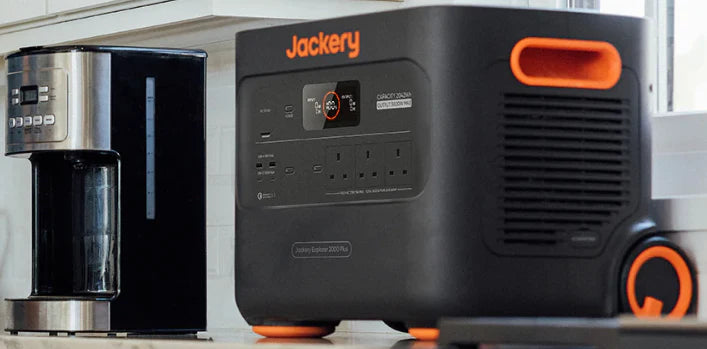
Portable power stations provide security against grid instability and extreme weather events. Beyond financial savings, having stored energy ensures your essential appliances—internet, fridge, medical devices—stay running during storms or blackouts.

Which Generator Is Best for Full-Home Backup?
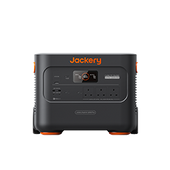
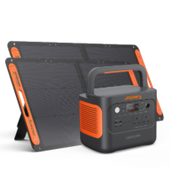
Jackery Solar Generator 3000 v2
- Capacity: 3072Wh for extended home backup.
- Output: The Jackery Solar Generator 3000 v2 delivers 3600W output, suitable for high-demand tools or heaters.
- UPS Function: This unit features a <20ms switchover speed.
- Use Case: Ideal for full-home backup, keeping heavy-duty appliances running seamlessly during outages.
Which Generator Is Best for Portable Power?
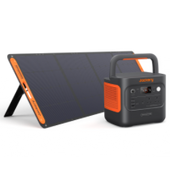
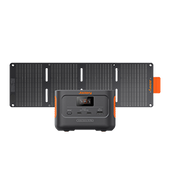
Jackery Solar Generator 2000 v2
- Capacity: 2042Wh, balancing power and portability.
- Battery Tech: The Jackery Solar Generator 2000 v2 uses LiFePO4 battery chemistry for a 10-year lifespan (4,000 charge cycles).
- Operation: The device operates quietly (<30dB).
- Use Case: Perfect for indoor use during grid stress events or for portable power in the garden.
Real-World Decision Checklist
Use this checklist to navigate the market changes and energy price cap predictions.
|
Step |
Action |
|
Step 1 |
Check your current tariff against the Oct 2025 cap (Elec: ~25.7p/kWh, Gas: ~6.3p/kWh). |
|
Step 2 |
Submit a meter reading immediately to ensure accurate billing before the Jan 1st rise. |
|
Step 3 |
Compare fixed tariffs; if one is cheaper than the Jan 2026 cap (£1,758), consider locking in. |
|
Step 4 |
If you have storage (like a Solar Generator), investigate "Agile" tariffs to exploit price dips. |
|
Step 5 |
Check eligibility for the Warm Home Discount or supplier hardship funds if struggling. |
Comparing your usage against the average electricity bill per month in the UK provides a broader view of costs to help you budget effectively.
Frequently Asked Questions
How do geopolitical events affect UK energy prices?
Global conflicts, such as those in Ukraine or the Middle East, increase wholesale gas prices. These spikes are eventually passed to consumers through the price cap mechanism after a delay.
When will my prepayment meter update with new prices?
Key meters require a top-up on or after the price change date (e.g., 1st April) to update. Smart prepayment meters should update automatically, though delays can occur.
What if I can't afford efficiency upgrades like insulation?
The UK government offers grants like the Great British Insulation Scheme and ECO4 for eligible households. Contact your energy supplier or local council to check your eligibility for free or subsidized upgrades.
Are there specific tariffs for electric vehicle owners?
Yes, many suppliers offer dedicated EV tariffs with very low overnight unit rates. These can be integrated with home energy management systems to charge your vehicle and home battery when electricity is cheapest.