








































Quick Answer: The “33 Voltage Rule” is not a recognised industry standard, and no traceable discussions exist under this exact name. The confusion likely stems from two real design principles: the 30% safety margin for inverter voltage limits and the 33% DC/AC oversizing ratio that maximises annual yield. The definitive rule governing solar string design is the Cold-Corrected Voc Limit (NEC 690.7) — a hard mathematical constraint that prevents destructive overvoltage damage to your inverter when temperatures drop.
Key Takeaways:
-
Cold-weather overvoltage is the primary system failure point — strings designed at standard test conditions (25°C) can dangerously exceed inverter limits when temperatures drop to -5°C or below
-
The 33% inverter oversizing ratio (1.33 DC/AC) means installing up to 33% more panel capacity than the inverter’s AC rating, boosting annual yield by capturing more energy in low-light conditions
-
Hot-weather undervoltage causes thermal clipping — strings too short for high heat drop below the inverter’s minimum MPPT start voltage, halting production entirely
-
A minimum 20% safety buffer between cold-corrected Voc and inverter maximum input voltage is non-negotiable for UK installations
-
The 0% VAT relief on residential solar and battery storage runs until 31 March 2027, after which it reverts to 5%
Understanding the 33% Rule: Two Distinct Meanings in Solar Design
The term “33 rule” in solar panels describes two separate concepts, neither of which is a codified voltage calculation rule. The first is the inverter oversizing ratio — installing roughly 33% more DC panel capacity than the inverter’s AC output rating. The second is roof coverage limits, where fire codes typically restrict panels to roughly 33% of a roof plane.
Inverter oversizing at a 1.33 DC/AC ratio means a 5 kW inverter could be paired with up to 6.65 kW of solar panels. This isn’t a voltage rule. It’s an energy harvest strategy. The 33% roof coverage rule preserves firefighter access paths and ventilation zones — again, not a voltage calculation.
Jurisdictional variability is significant. The 33% roof coverage rule is not a national mandate.
It’s governed by the local Authority Having Jurisdiction (AHJ). What applies in Manchester may differ from Cornwall. Both interpretations share a common goal: balancing optimised system performance with mandatory safety and structural compliance.
The real voltage rule — the one that determines whether your inverter survives the first frost — is the cold-corrected open-circuit voltage calculation. That’s what we’ll unpack next.
The 33% Inverter Oversizing Rule: Maximising Energy Harvest
Oversizing the array by up to 33% above the inverter’s AC rating boosts energy capture during morning, evening, and cloudy low-light conditions. Panels rarely hit their STC-rated wattage. A 400W panel might produce 320W at 10am in April. By 2pm in July, it might briefly touch 400W — then drop again.
Real-world gains are significant in winter. UK irradiance in December averages 0.5–1.0 kWh/m²/day, compared to 4.5–5.5 kWh/m²/day in June. Panels almost never reach their rated capacity during these months. The extra 33% capacity becomes highly valuable.
Inverter clipping occurs briefly at peak sun. The inverter caps output at its AC rating, discarding the surplus. This sounds wasteful.
But the annual yield increase from the oversized array dwarfs this short-term energy loss. A 6.6 kW array on a 5 kW inverter might clip for 30–50 hours per year. The remaining 4,300+ hours of generation more than compensate.
The UK’s variable climate is ideally suited for oversizing. Frequent cloud cover prevents panels from simultaneously hitting peak output.
An oversized array also integrates better with battery storage. More panel capacity charges batteries more effectively during marginal conditions, improving self-consumption and grid independence. For more on choosing the right batteries for solar charging, the chemistry and sizing decisions matter as much as the panel array itself.
String Voltage Design: The Technical Foundation
String voltage calculation sets the absolute maximum number of panels per series string. The formula uses the inverter’s maximum input voltage and the panel’s temperature-adjusted open-circuit voltage (Voc).
The temperature coefficient directly increases panel voltage in the cold. A panel with a Voc of 40V at 25°C might hit 44V at -5°C.
That’s a 10% increase. If you designed the string at STC and pushed close to the inverter’s 600V limit, you’ve just exceeded it. Always verify the temperature-corrected voltages and panel specifications against the manufacturer’s datasheet for your specific module — leading module brands publish detailed temperature coefficient data for each model.
Maximum string size prevents catastrophic overvoltage. The calculation combines Module Voc_max, inverter Vmax, and site-specific low temperatures per NEC 690.7(A). The formula:
Voc_cold = Voc_STC × [1 + (Tmin – 25°C) × β_Voc]
Example: A panel with Voc_STC = 40V, β_Voc = -0.28%/°C, and a site minimum of -8°C gives: 40 × [1 + (-8 – 25) × (-0.0028)] = 40 × [1 + (-33 × -0.0028)] = 40 × 1.0924 = 43.7V per panel.
For a 600V inverter with a 20% safety buffer (480V target): 480 ÷ 43.7 = 10.98 panels. Round down to 10 panels maximum per string.
Minimum string size ensures combined voltage stays above the inverter’s MPPT startup window, even during the highest expected operating temperatures. On a 35°C rooftop, panel voltage drops. If the string voltage falls below the inverter’s minimum MPPT range, production stops entirely.
Manufacturer design tools like SMA Sunny Design and Fronius Solar.configurator automate these complex temperature-adjusted calculations. Manual estimation is dangerous. Use them.

The Real Voltage Rule: Cold-Corrected Voc and NEC 690.7 Compliance
The Cold-Corrected Voc is the system’s hard limit. It’s calculated using the site’s lowest recorded temperature — not an average, not a guess. ASHRAE 99.6% design temperature provides the definitive low-temperature metric for professional calculations.
-
Cold-Corrected Voc (Hard Limit): Based on the site’s lowest recorded temperature using ASHRAE 99.6% design temperature, not an average. This is the number that determines inverter survival.
-
Hot-Corrected Vmp (Soft Operational Limit): The string must generate enough voltage at peak heat to stay above the MPPT’s minimum operating range. A string that works perfectly at 20°C might fail to start on a 33°C afternoon.
-
Operational Safety Margin: Best practice keeps cold-corrected Voc at 80–90% of the inverter’s maximum input. The common 30% safety buffer heuristic translates to keeping calculated voltage under 70% of the absolute maximum — handling tolerance errors, manufacturing variance, and unusually cold mornings.
-
Temperature Coefficient of Voc (β_Voc): This is the most critical datasheet value, typically ranging from -0.22%/°C to -0.30%/°C for standard silicon modules. A panel with β_Voc of -0.30%/°C will see a 9% voltage increase at -5°C; one with -0.22%/°C sees only 6.6%. That 2.4 percentage points can mean one extra or one fewer panel per string.
-
Single Orientation Requirement: All panels in a series string must face the same direction and have identical model and wattage specifications. Mixing orientations creates voltage mismatch, forcing the entire string to perform at the lowest common denominator.
-
Parallel Current Limits: The combined short-circuit current (N × Isc) from parallel strings must never exceed the MPPT’s maximum input current rating. Exceeding this limit can damage the inverter.
-
Use Professional Online Calculators: Dedicated tools from Mayfield Renewables or SurgePV String Sizing verify designs properly. Manual estimation oversights are the leading cause of field failures.
For a broader understanding of solar generator systems in the UK, the same voltage principles apply when sizing portable arrays and power stations.
UK-Specific Considerations for Solar String Design and Compliance
The 0% VAT relief on residential solar and battery installations across the UK runs until 31 March 2027, after which it reverts to 5%. This covers supply and installation as a complete package. A £9,000 system installed in February 2027 benefits from 0% VAT, saving £450 compared to the standard 5% reduced rate. The GOV.UK VAT Notice 708/6 confirms the qualifying criteria.
The Smart Export Guarantee (SEG) pays households for surplus energy exported to the grid. Tariff rates typically range from 3–15p/kWh depending on the supplier. This requires an MCS-certified installation and a smart meter. SEG is not net metering — you’re paid for exports, not credited against consumption. The Ofgem SEG guidance lists all licensed suppliers offering tariffs.
No universal government grant exists for UK solar panels. The ECO4 scheme fully funds systems for eligible low-income homes with an EPC rating of D–G, but strict eligibility criteria apply. The scheme closes 31 December 2026. Ofgem’s ECO4 page details the qualifying benefits and application process.
Permitted development rights generally allow rooftop solar without planning permission. Separate rules apply for conservation areas, listed buildings, and flat roofs. Always check with the local planning authority before installation.
Average UK installation cost is £5,000–£11,000 for a 3–5 kWp system. Battery storage adds £3,000–£10,000 depending on capacity. The typical payback period of 8–12 years is driven by self-consumption levels and SEG tariff rates. At 24p/kWh average domestic electricity prices, every kilowatt-hour you consume directly saves more than you’d earn exporting it.
Practical Application: Designing Compliant and Efficient Solar Strings
Step 1: Start with the inverter’s specifications. Note its maximum DC input voltage, full MPPT voltage range, and startup voltage. These are fixed constraints. The panel count flows from them, not the other way around.
Step 2: Calculate temperature-adjusted Voc. Use the panel’s β_Voc (typically -0.26% to -0.35%/°C) and the lowest recorded temperature for your specific UK region. Aberdeen’s design temperature is different from Brighton’s.
Step 3: Apply the 1.33 oversizing ratio. Multiply the inverter’s AC rated output by 1.33 to find the maximum recommended DC panel capacity. A 5 kW inverter can handle up to 6.65 kW of panels. This isn’t mandatory — it’s an optimisation ceiling.
Step 4: Verify roof coverage against local fire codes. Measure the plan-view area of each roof plane. Ensure panels respect typical 33–66% coverage rules with required setback pathways. The AHJ has final say, not the installer.
Step 5: Use professional design software. PVsyst, SolarEdge Designer, or SMA Sunny Design validate string configurations, analyse shading, and generate compliance documentation. These tools incorporate location-specific weather data and panel specifications that manual spreadsheets miss.
|
Design Parameter |
Calculation Method |
Safety Threshold |
|
Max panels per string |
Inverter Vmax ÷ Cold-corrected Voc per panel |
80% of inverter Vmax |
|
Min panels per string |
Inverter MPPT min ÷ Hot-corrected Vmp per panel |
110% of MPPT min |
|
Max DC capacity |
Inverter AC rating × 1.33 |
Per manufacturer spec |
|
Parallel strings per MPPT |
MPPT Imax ÷ Panel Isc |
Round down |
Limitations: What the 33% Rule Doesn’t Cover
The 33% oversizing ratio assumes the inverter manufacturer permits it. Not all do. Some specify a maximum DC/AC ratio of 1.2 or 1.25. Exceeding the manufacturer’s stated limit voids the warranty — regardless of what general design principles suggest.
Roof coverage rules vary dramatically by jurisdiction. Some AHJs permit 50% coverage.
Others restrict to 25%. The “33% rule” is a guideline, not a regulation. Never assume compliance without checking local fire codes.
The cold-corrected Voc calculation is only as accurate as the temperature data you feed it. Using a regional average low instead of the ASHRAE 99.6% design temperature introduces risk. A -8°C design temperature versus -12°C actual minimum can mean the difference between a safe string and inverter failure.
Oversizing beyond 33% doesn’t automatically improve returns. The marginal gain diminishes as clipping hours increase. A 1.5 DC/AC ratio might produce only 1–2% more annual yield than 1.33, while adding 13% more panel cost. The economics must be calculated per site, not assumed from a rule of thumb.
For those evaluating whether a solar generator is worth the investment, the same voltage and oversizing principles apply — portable systems face identical cold-weather voltage constraints when panels are connected in series.
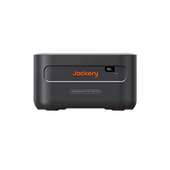
Jackery SolarVault 3 Series: A Forward-Looking Home Storage Solution

Jackery’s upcoming SolarVault 3 Series is designed to help UK households store solar energy and manage household electricity use more effectively. The forthcoming home energy-storage system aims to integrate with solar arrays to maximise self-consumption, reducing reliance on grid electricity during peak-rate evening hours.
As the UK transitions toward time-of-use tariffs and SEG export rates that reward self-consumption over export, a home battery system becomes the logical complement to a well-designed solar string. The SolarVault 3 Series is positioned to address this need when it launches. For homeowners exploring how to generate electricity at home, pairing solar with storage is the most effective path to energy independence.
Frequently Asked Questions (FAQ)
What happens if my string voltage is too low?
The inverter will fail to start or shut down during operation, as the voltage falls below its minimum MPPT operating threshold. Production stops entirely until voltage recovers.
Can I mix different solar panel wattages in one string?
No. Mismatched panels force the entire string to perform at the current of the lowest-rated panel, drastically reducing total output. All panels in a series string must be identical.
Does panel orientation affect string voltage calculations?
Yes. All panels in a series string must face the same direction and tilt angle. Mixing orientations creates voltage mismatch and significant power loss.
How often should I recalculate string voltage for my system?
Only when adding, removing, or replacing panels. The original design accounts for your location’s specific temperature extremes. Recalculation is unnecessary during normal operation.
What is the maximum number of parallel strings per MPPT input?
Divide the MPPT’s maximum input current rating by the panel’s short-circuit current (Isc), then round down to the nearest whole number. Never exceed this limit.


