














![[Over £1200 Tier Gift] Bluetooth Speaker with Phone Stand - shipped Separately](http://uk.jackery.com/cdn/shop/files/Portable_Bluetooth_Speaker_with_Phone_Stand_2.png?v=1781595581&width=170)















Nottingham Kayak Club, established in the 1960s, has evolved into the East Midlands' main paddlesport centre. With a solid basis in sprint, marathon, and wildwater racing, the club invites recreational and touring paddlers of all ability levels.
From knowing the proper licenses to exploring local waterways, the group promotes safe and fun kayaking for anyone. This guide covers everything from kayaking styles and introductory skills to safety tips and equipment. Whether you want to join a club, explore tranquil rivers, or tackle exciting rapids, Nottingham Kayak Club has the skills, facilities, and community to help you get started.
|
Key Takeaways: |
|
Nottingham Kayak Club
Founded in the 1960s, Nottingham Kayak Club is the East Midlands' biggest paddlesport club. They specialise in racing paddling, with successful training groups for marathon, sprint, and wildwater racing. However, they also offer a strong recreational and touring component for novices and those who prefer not to follow a racing kayak or canoe course.
About Nottingham Kayak Club
Alan Witham formed NKC in the 1960s with former members of the Peveril School Canoe Club. Some of the founding members are still paddling and helping to manage our programs today. Others still participate in canoeing as officials.
Early offices were located under a hotel on the banks of the Nottingham Canal in the city centre.
This gave way to an ancient wooden cabin in the present location.
The wooden cabin was replaced in the mid-1970s with the more robust structure that now houses the club. The club received post-Olympic funding from London 2012 for new changing facilities, and a clubroom renovation was recently completed.
Nottingham Kayak Club Opening Hours
Nottingham Kayak Club is open daily from 06:00 to 20:00.
Do You Need a License for Kayaking and Canoeing near Nottingham?
Before you start paddling alone or with a group, you'll need the proper licence for kayaking and canoeing on inland waterways. Fortunately, membership in British Canoeing will get you the appropriate permits for most inland rivers in England and Wales. If you wish to accompany a buddy on another boat, they must have a separate licence.

Where Can I Go Kayaking or Canoeing Near Nottingham?
Explore local activities to find a kayaking adventure near you. If you want to go kayaking in your own boat, be sure you have the necessary licence. Canals and inland rivers are ideal areas for kayaking and canoeing, as the waters are easier to navigate and control than tidal waterways.
However, many inland rivers in the UK require you to determine if you can canoe or kayak owing to both private and licensing limitations.
Restrictions also apply where land is privately owned (for example, beaches), where there are environmental protection schemes such as Nature reserves, where military bases or activities are taking place, or where there are safety restrictions, such as avoiding shipping lanes, waste disposal, or dangerous wrecks.
Some areas do not require a licence, such as paddling in the sea, estuaries, or most tidal waters (which may extend fairly far up many rivers). However, to go kayaking in these locations, you must have the necessary competence and expertise. Nonetheless, this style of kayaking may provide some of the most gratifying experiences, with seal sightings and a variety of other wildlife.
Different Types of Kayaking
If you're new to kayaking, it's essential to understand the various forms of kayaking and the skills required for each.
Recreational Kayaking: This is ideal for beginners. Recreational kayaks are stable and easy to operate, making them suitable for calm waterways such as lakes and rivers. They are perfect for a peaceful day on the water.
Touring kayaking: Ideal for people who want to do longer journeys. Touring kayaks are meant to be fast and efficient over long distances. They are ideal for exploring bigger bodies of water, such as lakes and open canals.
Whitewater Kayaking: This is for thrill seekers. It requires negotiating fast-moving rivers and challenging rapids. To successfully navigate turbulent waters, whitewater kayaking requires skill and specialised equipment.
Sea kayaking is a pastime that involves exploring the open ocean and coastal regions. Sea kayaks are designed to withstand waves, currents, and severe seas while being stable and efficient for long-distance navigation.
Each form of kayaking provides a distinct experience, so select the one that best suits your interests and ability level.
River Levels & Safety for Kayaking and Canoeing
The River Trent is sheltered mainly by water, which provides a safe and stable setting for kayaking and canoeing. However, rain, wind, and cold temperatures may create difficult circumstances. The club suggests that you always paddle in groups. Inexperienced paddlers must be accompanied by a coach or a highly experienced volunteer who is fully aware of any safety concerns.
Another reliable indication is the gauge at Clifton Bridge. A rapid rise in levels indicates swiftly moving water. Any level over 2m will produce fast-flowing water with occasional boils. Should be dealt with care.
Safety Requirements
Powered Craft: While unpowered craft have right of way with no limits on direction or speed, don't expect powered craft to follow this. Avoid powered boats, don't take chances, and remember that paddlers can stop or reverse course more easily than virtually any other vessel on the water (except K4). Rowers struggle with manoeuvring more than paddlers. NKC's current on-water arrangements with local rowing clubs are:
- In the dark, you must have a flashing red light looking ahead and a steady red light facing backwards. This light must be seen at a fair distance.
- When paddling downstream, especially near the Suspension Bridge, you must always remain to the right of any approaching rowers, which means to the right of the centre of the river.
- Take special caution when: Getting closer to the suspension bridge (downstream paddling). Toll Bridge to Wilford Church (paddling upstream). Lady Bay Bridge (Paddling upstream)

How to Find Local Paddling Clubs in the UK?
Paddling clubs can help you learn new canoeing, kayaking, or SUP abilities. They are an excellent opportunity to discover new areas to visit while also meeting other paddlers who share your interests.
How Do I Choose a Paddling Club?
Clubs come in all forms and sizes. Looking for clubs in your area is a wonderful place to start your search. Use some internet resources to look it up. Clubs offer a range of services, so consider what you want from paddling. Some are interested in general paddling, while others may be more competitive.
Each club's official page will display the services that the club provides. So, please enter your postcode and the distance you're willing to travel, and then visit their website for details on services and contact information.
How Can I Determine the Quality of a Club?
In England, certain clubs may have voluntarily participated in the Quality Club certification process. Watch out for the logo. It demonstrates the club's commitment to high standards in governance, safeguarding, equality, diversity, and inclusion.
English clubs may additionally have other badges. These highlight the club's focus on specific topics, such as supporting women's paddling, Clear Access Clear Waters, or developing prospective Olympic or Paralympic athletes.
How to Go Kayaking: Tips for Beginners
How do I get started with kayaking? Whether you've booked your first kayak trip or are thinking about purchasing one, here are some basic steps and recommendations for beginners.

Tip 1: Select the Right Kayak
First, choose a kayak that is appropriate for your ability level and the sort of water you will be paddling on. Beginners should start with recreational kayaks, which are stable and straightforward to operate. When making your decision, consider your size, weight, and comfort.
Try out many models to discover the ideal one for you.
Tip 2: Acquire the Essential Gear
Before you hit the water, ensure you know what to wear for kayaking and have all the necessary gear. To go kayaking, you will need a few items of gear:
Paddle: Choose a double-bladed paddle that fits your height.
Personal Flotation Devices (PFD): Always wear a well-fitted PFD for safety, regardless of where you paddle or how experienced you are.
Spray skirts: Use this on sit-in kayaks to keep water out of the cockpit.
Helmet: A helmet is required when kayaking on choppy waters or rapids.
Dry Bag: Keep valuables like your phone and keys in a waterproof bag.
Clothing: Wear quick-drying, moisture-wicking clothing, and consider a wetsuit for colder waters. We always recommend wearing layers so you can easily adjust your temperature as needed.
Other Items: Always attempt to carry sunscreen, a hat, a waterproof jacket, or even a portable power, like the Jackery Explorer 100 Plus and 300 Plus.
Tip 3: Learn Basic Paddling Techniques
Mastering the basics of kayaking is simply a matter of acquiring the right paddling skills.
A smooth kayaking experience requires proper paddling technique. Here's how you do it:
Grab the paddle: Hold it with both hands, keeping your elbows slightly bent.
Forward strokes: Reach forward and plunge the blade into the water, then bring it back to propel the kayak forward.
Reversed stroke: Use the opposite motion to slow down or travel backwards.
Sweep stroke: To spin the kayak, extend the paddle out in a broad arc.
Tip 4: Get Comfortable Getting in and out of a Kayak
Getting in and out of a kayak may be challenging, particularly for novices. To get in, approach the kayak in shallow water. Sit on the kayak's edge, slip your legs in, and then lower yourself into the seat. To depart, paddle to shallow water and then reverse the procedure.
Tip 5: Understand Kayak Safety
Before going kayaking, you should take safety precautions.
First, remain hydrated and pack lots of water.
Second, always check the weather prediction before you go. Be aware of changing circumstances and bring appropriate clothing. Before you start kayaking, advise someone of your planned itinerary and projected return time.
Finally, remember to proceed slowly. Paddle at a comfortable speed, particularly if you're a novice. This is safer and allows you to appreciate the vistas along the route.
Tip 6: Learn Some Basic Manoeuvres
As you acquire confidence with your kayak, consider practising these advanced techniques:
Edging: Tilt your kayak slightly to improve stability.
Bracing: Use your paddle as support to avoid capsizing.
Self-rescue: Learn how to re-enter your kayak after you capsized.
Learning these manoeuvres is helpful in emergencies when paddling.
Tip 7: Explore the Calm Waters
For beginners, kayaking is best suited for calm waters, such as lakes or slow-moving rivers. This helps you to hone your talents and gain confidence before entering demanding circumstances.

Jackery Portable Power Stations for Kayaking
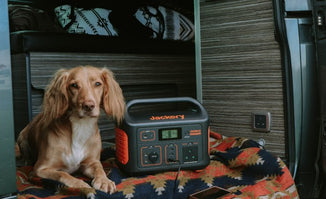
While a Jackery Portable Power Station (PPS) isn't a mandatory piece of gear for the act of paddling itself, kayakers often take them along for various reasons related to safety, comfort, and extended trips, especially in remote areas.
A PPS ensures you can charge essential electronics, such as your smartphone, waterproof GPS device, or satellite messenger, multiple times. This is vital for navigation, checking weather reports, and calling for help in an emergency. For sea kayaking or long-distance touring, a Jackery can reliably power a VHF marine radio, which is essential for communicating with maritime services and other boats.
Unlike most portable power banks that only offer USB ports, the Jackery provides 240V AC outlets (UK/EU models). This allows you to run or charge standard wall-powered devices, such as a laptop or a small electric pump for inflating gear.
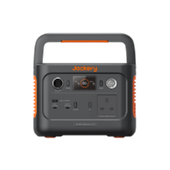
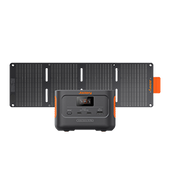
Jackery Explorer 100 Plus
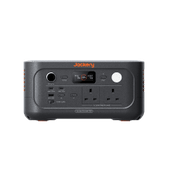
The Jackery Explorer 100 Plus is arguably the most suitable Jackery model for kayaking, especially for short trips in the UK, because it is designed to prioritise extreme portability, ruggedness, and essential charging capacity—the three most critical factors when on the water.

Ultra-Lightweight and Compact Form: Weight and size are paramount in kayaking, where space is limited and gear must be packed into a small hatch or dry bag. Weighing only 2.13 lbs, it adds negligible weight to your gear, maintaining the kayak's balance and handling. Its compact, cube-like shape, 4.96 x 3.41 x 3.43 in, makes it easy to slide into a waterproof bag, a dry box, or a PFD pocket without taking up valuable space.
High-Speed Charging for Essential Devices: The unit focuses on efficiently powering modern electronics, which are your primary tools for communication and navigation on the water. A 100W Dual USB-C Power Delivery (PD) is crucial for fast-charging power-hungry devices, such as modern laptops, high-end smartphones, or tablets, multiple times. This capability is rarely found in standard consumer power banks.
Sufficient 99.2Wh Capacity: The unit is designed to efficiently power modern electronics, which are your primary communication and navigation tools on the water. 99.2Wh is enough power to keep your critical devices running for a weekend trip.
LiFePO4 (LFP) Battery: The use of Lithium Iron Phosphate (LFP) chemistry means the battery is far more thermally stable and safer than traditional lithium-ion packs—a critical consideration when stowing the unit inside a sealed, dark, and potentially warm kayak hatch.
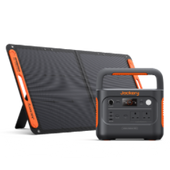
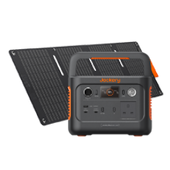
Jackery Explorer 300 Plus
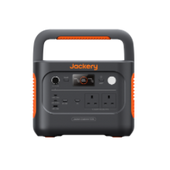
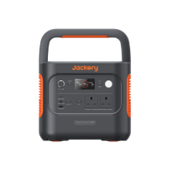
The Jackery Explorer 300 Plus is an excellent choice for kayakers, particularly those embarking on multi-day trips or kayak fishing, because it perfectly balances power capacity with the essential requirements of minimal space, weight, and durability.

Featherlight Weight: Weighing only around 8.27 Ibs (3.75 kg), it is light enough to be comfortably carried in a backpack or stowed in a kayak's dry storage hatch without significantly impacting the boat's balance or limiting essential gear. Its small, box-like dimensions (about the size of a lunchbox) mean it consumes very little of the valuable storage space inside the kayak.
Adequate Power for Essential Devices: The 288-watt-hour (Wh) capacity is ideally suited for extended charging of small electronics. It can fully recharge a typical smartphone numerous times, power a small action camera or drone batteries multiple times, and run navigation devices (like GPS or fish finders) for many hours or even days. It features a 100W USB-C PD port that can efficiently and quickly charge modern laptops and larger camera batteries, ensuring you can review or edit media quickly at your campsite.
Durability and Safety Features: The unit uses Lithium Iron Phosphate (LiFePO4) battery cells, which offer superior thermal stability, making them a safer choice for enclosed spaces in a kayak. The LFP chemistry provides a long cycle life of 3,000 cycles to 80%+ capacity, ensuring the investment lasts for many seasons of paddling. The rugged casing is designed with Class 9 impact resistance and is made from UL 94V-0 flame-retardant material, offering protection against accidental drops or bumps in a kayak cockpit.
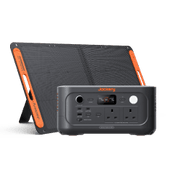
Versatile Recharging in the Field: The ability to recharge away from shore power is vital for multi-day trips. When purchased as a "Solar Generator 300 Plus" kit, it includes the small, foldable SolarSaga 40W Mini solar panel. This panel is compact enough to strap onto the kayak's deck or set up at a secluded campsite to replenish power daily.
Safety Advice for Canoeing and Kayaking
A licence is just one piece of the picture when it comes to determining where and when to paddle. Check out our list of things to consider before going canoeing or kayaking:
Weather, currents, tides, and visibility: The flow of the river should be monitored using the Environment Agency's website and other resources. Excessive rain from hundreds of miles distant may produce large currents in the river over the course of many days.
While it is frequently difficult to identify 'flow' just by glancing at the river, the National River Flow Archive can offer particular information on the flow, allowing you to evaluate whether it is worth the trip.
Paddling in calmer waters is often preferable to fighting a rushing river and risking your life around meanders, bridges, and other boats, so keep this in mind. Similarly, wind, tide, weather, and visibility should all be taken into account when planning a canoe or kayak excursion. When venturing out in your canoe or kayak, always err on the side of caution and ensure you're familiar with the water conditions within your range of capabilities.
Tell your friends: Let them know where you're going and when you expect to return. Ideally, travel with a group of people so that if someone falls in, there will be others to aid or raise the alarm.
Receive training: Book a canoeing or kayaking teacher training or experience days at Beyonk.
Practice falling in drills: In calmer waters and under the supervision of an instructor, practice how to drop in and what to do when you fall in, so you're prepared.
Consider using safety equipment, such as buoyancy aids, which can be lifesavers in many instances. Even if you're a skilled swimmer, the water temperature, flow, or sustaining a hit to the head can all pose threats that will render your swimming talents worthless.
Wear attire according to the circumstances of your paddle. If you're going to be out in the rain for an extended period, don't risk getting soaked and chilled.
Be mindful of river limitations, such as boating lanes and military activities, to prevent any hazards. If you're going for more than an hour's paddle, be sure to stock up on nourishment and water to sustain your energy levels.
In case of an emergency, carry a communication device, such as a cell phone or radio, and contact 999 if necessary.
FAQs
The following are the frequently asked questions about the kayak club Nottingham:
1. Do I need a licence to kayak on rivers in the UK?
If you want to canoe, kayak, or stand-up paddleboard on most rivers and canals in England and Wales, you'll need a waterways licence. Without one, you risk fines or being asked to leave the water.
2. How long does it take to learn kayaking?
There are several possibilities for learning to kayak. Whether it's a fast tasting session to see whether it's for you, a weekend course, or a 3-4 day technique-focused course, however, spending a week kayaking on both a lake and a river will provide you with the finest foundation for learning this fantastic activity!
3. Is a canoe harder than a kayak?
Canoes are often larger, more stable, and less prone to flipping. Kayaks, on the other hand, are simpler to manoeuvre and control since they have double-bladed paddles.
4. How much is a kayak licence in the UK?
There is no uniform "kayak licence" in the UK; instead, the fee varies by area and waterway, with Paddle UK's membership for English and Welsh canals costing roughly £60 per year for new individual members. In comparison, the Canal & River Trust provides its own permit for around £5 per day. The Right to Roam eliminates the requirement for a license in Scotland. Depending on your location, you may get a permit from Paddle UK, the Canal & River Trust, or the Broads Authority.
Final Thoughts
Kayaking provides freedom, adventure, and a connection with nature, and Nottingham Kayak Club is the ideal location to start or continue your paddling experience. The club offers activities for people of all ages and abilities, including leisure trips and competitive racing. Safety, adequate equipment, and understanding of river conditions are vital to a memorable experience. Beginners may acquire confidence with the help of experienced paddlers, access to local waterways, and community support, while skilled paddlers can improve their abilities.


