
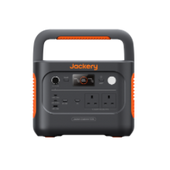

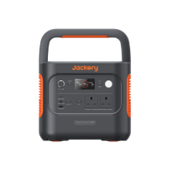

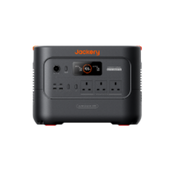

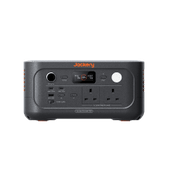


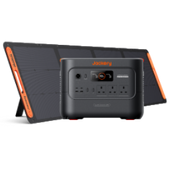
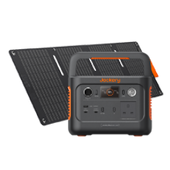


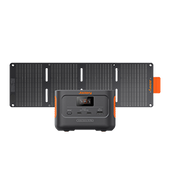
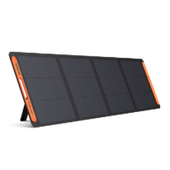
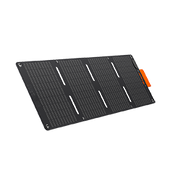
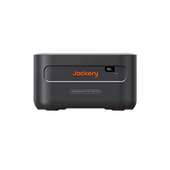
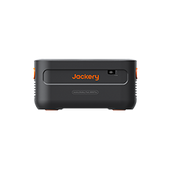

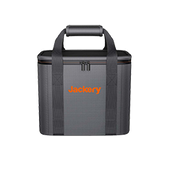
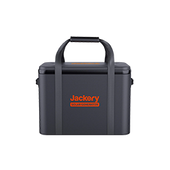
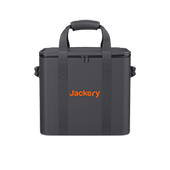
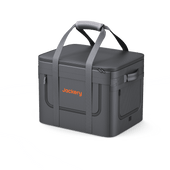


















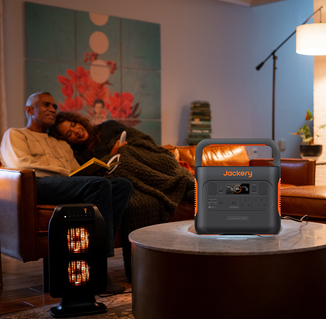




Choosing a portable power station means balancing appliance power, runtime and charging convenience. In the Jackery Explorer 2000 Plus v2 vs 2000 v2 comparison, the key question is whether you need expandable storage and additional functions, or whether the standard model already covers your needs.
Both offer portable energy for travel and selected home essentials, but their differences in output, expandability and portability suit different priorities. This comparison explains what those differences mean in everyday use, helping you decide whether the Explorer 2000 Plus v2’s additional capabilities are worth paying for or the Explorer 2000 v2 already meets your needs.
|
Key Takeaways: |
|
Jackery Explorer 2000 Plus v2 vs 2000 v2: What Are They?
Both models are rechargeable portable power stations that store electricity for appliances and electronic devices. They combine a battery, inverter and charging connections in one unit. The main distinction is flexibility: the Explorer 2000 Plus v2 supports additional battery capacity, while the Explorer 2000 v2 has a fixed storage capacity.
What Is Jackery Explorer 2000 Plus v2?
The Jackery Explorer 2000 Plus v2 is an expandable power station with a 2,048Wh lithium iron phosphate (LiFePO4) battery and 2,400W rated AC output. Capacity determines how much energy it stores; output determines the combined appliance demand it can support. Compatible additional batteries allow you to increase storage when your energy requirements grow.
Its features include a USB-C port delivering up to 140W for compatible devices and Priority Routing, which allows non-essential outputs to be switched off at a selected battery threshold. This helps reserve remaining energy for priority equipment, although it does not increase the battery’s capacity.
It suits people planning longer camping stays, working away from mains sockets or keeping selected appliances running during a power cut. Expansion is particularly useful when the base battery cannot cover the time between charging opportunities. However, extra batteries add cost, weight and equipment to transport.
What Is Jackery Explorer 2000 v2?
The Jackery Explorer 2000 v2 is a fixed-capacity portable power station with a 2,042Wh LiFePO4 battery and 2,200W rated output. Its includes two AC sockets, a USB-A port and two USB-C ports rated at 100W and 30W. It supports mains, compatible solar-panel and car charging, alongside app control.
This makes it a practical option for occasional backup, weekends away and powering equipment where sockets are unavailable. Its base capacity is almost identical to the Explorer 2000 Plus v2’s, so the newer model should not be chosen simply on the assumption that it stores substantially more energy.
The main limitation is that the Explorer 2000 v2 cannot accept expansion batteries. It therefore suits buyers whose expected energy use fits within its existing capacity and who have suitable opportunities to recharge.

Jackery Explorer 2000 Plus v2 vs 2000 v2: Key Differences at a Glance
The Jackery Explorer 2000 Plus v2 vs 2000 v2 comparison centres on expansion, output and everyday convenience. Both start with approximately 2kWh of storage, but their charging capabilities, connections and operating limits differ.
|
Comparison point |
Explorer 2000 Plus v2 |
Explorer 2000 v2 |
|
Base battery capacity |
2,048Wh |
2,042Wh |
|
Rated AC output |
2,400W |
2,200W |
|
Battery expansion |
Yes, 12kWh |
Not supported |
|
Highest individual USB-C output |
140W |
100W |
|
Battery cell chemistry |
LiFePO4 |
LiFePO4 |
|
Rated cycle life |
6,000 cycles to at least 70% capacity |
4,000 cycles to at least 70% capacity |
|
Base-unit weight |
Approximately 41.45 Ibs / 18.8 kg |
Approximately 38.6 lbs / 17.5 kg |
|
Dimension |
14.4 × 10.0 × 10.7 in / 36.6 × 25.5 × 27.2 cm |
13.2 × 10.4 × 11.5 in / 33.5 × 26.4 × 29.2 cm |
|
Charging temperature |
−10°C to 45°C |
0°C to 45°C |
|
Discharging temperature |
−10°C to 45°C |
−10°C to 45°C |
|
Maximum solar input |
800 W |
400 W |
|
AC charging time |
Approximately 1.5 hours |
Approximately 1.7 hours; 1.33 hours in emergency mode |
|
USB-C ports |
Two: 140W + 30W |
Two: 100W + 30W |
|
USB-A ports |
One: 18W |
One: 18W |
|
Main buying consideration |
Additional functionality and expansion |
Whether fixed capacity meets your needs |
The 6Wh capacity difference is negligible, while the Plus v2 provides 200W more rated output. Expansion and useful functions therefore deserve more attention than the names. Its higher solar-input ceiling also requires sufficient compatible panels and sunlight to deliver a benefit. Cycle-life ratings describe retained battery capacity under specified conditions; they are not a guarantee of service life in years.
Power Output: What Can Each Model Run?
The Jackery Explorer 2000 Plus v2 provides 2,400W of rated AC output, compared with 2,200W from the Explorer 2000 v2. Both can support various everyday appliances, provided their combined demand stays within the available output and any start-up requirements are met.
Where the Extra 200W Matters
Consider an illustrative combination: a 1,800W appliance plus 500W of other equipment draws 2,300W. That exceeds the standard model’s continuous rating but falls within the Plus v2’s rating, assuming no additional start-up demand.
This extra headroom can make running equipment together more convenient. However, the output limit applies across the AC sockets collectively. Plugging appliances into separate sockets does not give each one its own 2,400W or 2,200W allowance.
Kettles, Air Fryers and Appliances with Start-up Demand
The examples below use illustrative appliance label ratings, not universal figures. Check your own equipment before connecting it.
|
Appliance example |
Example electrical demand |
Explorer 2000 Plus v2 |
Explorer 2000 v2 |
|
Laptop and monitor |
150W combined |
Within rating |
Within rating |
|
Fridge |
150W running |
Check compressor start-up demand |
Check compressor start-up demand |
|
Air fryer |
1,800W |
Within rating |
Within rating |
|
Low-wattage travel kettle |
1,000W |
Within rating |
Within rating |
|
Full-power kettle |
3,000W |
Exceeds continuous rating |
Exceeds continuous rating |
“Within rating” assumes sufficient remaining output for other connected devices; it does not guarantee a particular runtime.
- Rated power is the sustained output available.
- Surge capability accommodates brief demand peaks, such as a motor starting, and cannot be treated as continuous power for a kettle.
Any appliance-specific operating mode has separate compatibility limits and should only be relied on where explicitly supported. Fridges and power tools require checks for both running and start-up demand. For microwaves, compare the electrical input wattage with the power station’s rating—the advertised cooking wattage is a different measurement.

Runtime Comparison: Does the Plus v2 Last Longer?
The Explorer 2000 Plus v2 has 2,400W rated output and 4,800W surge capability, compared with 2,200W and 4,400W for the Explorer 2000 v2. These describe sustained and momentary power delivery; neither tells you how long the battery will last. Runtime depends primarily on usable stored energy and average consumption.
Almost Identical Capacity Means Similar Starting Expectations
With 2,048Wh versus 2,042Wh, the standalone models have almost identical nominal capacity. At the same load, broadly similar runtime is therefore a reasonable starting expectation. The Plus v2’s higher output does not automatically mean longer operation.
For an initial estimate, use:
Estimated runtime (hours) = battery capacity (Wh) × assumed usable-energy factor ÷ average load (W)
Using an 85% usable-energy factor for both models gives the following illustrative results:
|
Constant load |
Explorer 2000 Plus v2: 2,048Wh |
Explorer 2000 v2: 2,042Wh |
|
100W |
About 17.4 hours |
About 17.4 hours |
|
500W |
About 3.5 hours |
About 3.5 hours |
|
1,000W |
About 1.7 hours |
About 1.7 hours |
|
2,000W |
About 52 minutes |
About 52 minutes |
For example, 2,048 × 0.85 ÷ 500 = 3.48 hours, rounded to 3.5 hours. The estimates assume a fully charged battery, no incoming charging power and a constant load.
Inverter efficiency, idle consumption, temperature and battery settings can change actual runtime. At low loads, the inverter’s own consumption can become a significant share of total demand, making this simplified calculation less reliable.
For a fridge, use measured daily energy consumption rather than assuming its compressor runs continuously. A plug-in energy monitor can provide a more useful starting point because the compressor cycles on and off.
Battery Expansion: When Does the Explorer 2000 Plus v2 Become More Worthwhile?
The Jackery Explorer 2000 Plus v2 supports compatible expansion batteries, while the Explorer 2000 v2 has a fixed 2,042Wh capacity. This difference matters most when your equipment needs more energy than the base unit can supply between charging opportunities.
Buying Enough Capacity Now, with Room to Add More
For longer camping trips without electric hook-up, additional storage can keep a camping fridge, lighting and charging equipment running for longer. At home, it can extend backup for selected essential appliances during a prolonged power cut.
The Explorer 2000 Plus v2 supports approximately 12 kWh of total storage using matching Battery Pack 2000 Plus v2 units. Starting with the base unit lets you assess actual consumption before committing to additional batteries. Expansion becomes worthwhile when you can identify a recurring energy shortfall.
Extra Capacity Brings Extra Cost and Equipment
Additional packs increase purchase cost, lifting weight and the space needed in a car boot or storage area. They also increase the energy required for a full recharge. With the same charging setup, replenishing a larger depleted battery system generally takes longer.
Adding storage does not automatically increase AC output. The Explorer 2000 Plus v2’s rated output remains the limit for the combined appliances it powers.
Someone who regularly empties a roughly 2 kWh battery between charging stops has a clearer reason to expand than someone returning with half the charge unused. For the latter, the standard Explorer 2000 v2 may already provide sufficient capacity.

Recharging Time Compared: Mains, Solar and Car Charging
Charging convenience depends on your available power source and how much energy needs replacing. The Explorer 2000 Plus v2’s higher solar-input limit offers potential advantages, but charging comparisons must use the same battery range, operating mode and panel setup.
|
Charging method |
Explorer 2000 Plus v2 |
Explorer 2000 v2 |
|
AC Charging |
Approximately 1.5 hours |
Approximately 1.7 hours |
|
Solar Charging |
Approximately 3.2 hours (800W solar input) |
Approximately 7.5 hours (400W solar input) |
|
DC-DC Alternator Charging |
Approximately 3.8 hours |
/ |
|
In-Car Charging |
/ |
24 hours |
Mains Charging—Compare the Same Charging Range
The Explorer 2000 v2 specifies approximately 103 minutes for a normal full charge and 52 minutes from 0–80% in emergency mode. Its also needs 1.33 hours for emergency charging without explicitly stating the range alongside that figure.
The Explorer 2000 Plus v2’ specifies 1,800W emergency charging. These figures do not establish a UK charging-speed winner. Actual times also depend on temperature, settings and connected loads.
Solar Charging—Compare Identical Panels First
With the same compatible 400W panel array, the Explorer 2000 Plus v2 does not automatically charge twice as quickly: both batteries have nearly identical capacity. Its 800W maximum solar input, versus 400W for the standard model, becomes useful when a larger compatible array supplies additional power.
British campsite conditions introduce further variables: season, shading, panel angle and available outdoor space. Appliances running during charging also reduce the energy available to refill the battery.
Car Charging and Expanded Batteries
Ordinary vehicle-socket charging provides a slower replenishment option. A separate alternator charger is a different setup; confirm compatibility, installation requirements and charging limits before including its performance.
Additional batteries increase the energy that needs replacing. Plan charging opportunities around the expanded system, rather than applying the base unit’s charging time to every configuration.
Functions Compared: Backup Switching, App Controls and Connections
Both models offer backup switching, app connectivity and several ways to power devices. The Explorer 2000 Plus v2 adds more control over how stored energy is allocated, while the Explorer 2000 v2 covers everyday monitoring and charging adjustments.
What Happens When Mains Power Fails?
The Explorer 2000 Plus v2’s supports switching to battery power within 10 ms, compared with within 20 ms of the Explorer 2000 v2. Neither provides zero-interruption switching, so compatibility with sensitive equipment should be tested.
Both support powering connected equipment while charging. During battery operation, the respective rated AC limits are 2,400W and 2,200W. Backup applies to directly connected equipment; neither unit automatically supplies every circuit in your home.
What Can You Actually Control Through the App?
Both support app-based monitoring and charging settings, including emergency charging. Output switching and energy-saving settings help manage consumption, but low-load automatic shutdown needs attention when powering equipment such as routers.
The Explorer 2000 Plus v2 adds Priority Routing across its independently controlled AC1 and AC2 outlet groups. You can prioritise one group and set a battery threshold for disconnecting the other—for example, switching off non-essential equipment at 30% charge. This controls the power station’s outlet groups, not household circuits.
Connections That Affect Daily Use
Both provide two USB-C ports, one 18W USB-A port, a 12V/10A vehicle-style outlet and an integrated light. USB-C ratings are 140W plus 30W on the Explorer 2000 Plus v2 and 100W plus 30W on the Explorer 2000 v2. Reaching the highest charging rate requires a compatible device and suitably rated cable.

Portability, Noise and Battery Longevity
Weight and dimensions affect everyday handling, while fan noise and battery ageing influence longer-term ownership. The Explorer 2000 v2 is lighter; the Plus v2 offers a higher stated cycle-life rating.
Which Is Easier to Move and Store?
|
Main-unit specification |
Explorer 2000 Plus v2 |
Explorer 2000 v2 |
|
Weight |
Approximately 18.8 kg |
Approximately 17.5 kg |
|
Dimensions |
36.6 × 25.5 × 27.2 cm |
33.5 × 26.4 × 29.2 cm |
|
Carrying arrangement |
Top carry handle |
Top carry handle |
The Explorer 2000 v2’s 1.3 kg weight advantage matters when carrying upstairs or lifting into a car boot. The Explorer 2000 Plus v2 is longer but lower, so measure campervan storage space and allow ventilation clearance. These weights exclude expansion batteries, solar panels and cables.
Quiet Operation and Long-Term Ownership
The quiet-mode figures are 30 dB at one metre for the Explorer 2000 Plus v2 and ≤30 dB during quiet charging for the Explorer 2000 v2. These are not equivalent test descriptions, so they do not establish a noise winner. Neither figure represents all rapid-charging or high-output conditions.
The 6,000 cycles for the Plus v2 and 4,000 cycles for the 2000 v2, both to at least 70% remaining capacity. Cycle life measures cycling endurance; calendar ageing continues over time, even during storage. Warranty coverage is separate and subject to its own terms. Occasional users may prioritise manageable weight and warranty support. Frequent users may give cycling endurance greater importance.
Which Jackery Model Suits Your Situation?
The right choice depends on what you power, how long you need it running and when you can recharge. Both models can meet overlapping needs, so focus on the capabilities that solve a specific problem in your routine.
Occasional Home Backup
For a router, a few lights, phone charging and a suitable fridge, the standard model may provide enough output and stored energy. Check the fridge’s start-up demand and estimate consumption across the interruption you want to cover. Neither base unit guarantees a full day of backup for every household.
Choose the Explorer 2000 v2 if your essential loads fit its limits, because additional expansion capability offers little immediate benefit when the existing capacity is sufficient. Consider the Explorer 2000 Plus v2 when a larger backup energy reserve is necessary.
Camping, Caravans and Motorhome Trips
Short breaks with regular charging access place less pressure on battery capacity. Longer stays without electric hook-up make expansion more useful, particularly when refrigeration and device charging continue daily. However, additional batteries occupy luggage space and create more equipment to move between the vehicle and pitch.
Solar panels also need suitable positioning, setup time and space, with output dependent on conditions. Choose the Explorer 2000 Plus v2 for longer stays if you need extra storage and can replenish it, because expansion can extend the time between charging opportunities.
Working from Home or Away from Sockets
Add together the requirements of your laptop, monitors and networking equipment, then consider the length of your working day and available charging breaks. A laptop’s battery may bridge a brief interruption, whereas a desktop computer or monitor depends on the connected supply.
The Explorer 2000 Plus v2’s higher USB-C capability benefits compatible laptops, while outlet prioritisation can reserve energy for essential equipment. Choose the Explorer 2000 v2 if its connections and capacity cover your working setup, because those additional controls may not improve your actual working time.
Tools and Higher-Demand Appliances
Extra output headroom can help when equipment operates close to the standard model’s limit. It does not remove the need to check motor start-up demand, combined loads or how quickly sustained use consumes stored energy. A 3,000W continuous load exceeds both models’ rated output.
Check the exact appliance label and relevant start-up requirements before buying. Choose the Explorer 2000 Plus v2 if a verified load exceeds 2,200W but stays within 2,400W and meets its start-up limits, because the additional headroom addresses that specific requirement.

Is the Explorer 2000 Plus v2 Worth Paying More For?
The Jackery Explorer 2000 Plus v2 has the advantage when you need higher output and room to expand. Its 2,400W continuous AC output provides more headroom than the Explorer 2000 v2 for compatible appliances or several devices running together. This can be useful for cooking, outdoor work and home backup, provided the combined load and appliance start-up demands stay within its limits.
Its biggest advantage is expandable storage. The Explorer 2000 Plus v2 starts with 2,048Wh and supports expansion to approximately 12kWh, while the Explorer 2000 v2 has fixed capacity. Additional batteries let you extend runtime as your needs grow, making the Plus v2 more flexible for longer trips or extended backup use. Expansion increases the energy available between charges, rather than the power available to run larger appliances.
The Plus v2 also offers features suited to regular use, including a ceramic-coated LFP battery rated for 6,000 cycles to 70% capacity, 800W solar input and a 10ms UPS switchover. App-based monitoring and independent AC circuit control provide more control over connected loads.
These strengths make the Plus v2 the more capable choice for users who will use its expansion and additional features.
What Does the Additional Spending Buy You?
Expansion, extra output headroom, higher solar-input capability and outlet prioritisation can justify additional spending when you will use them. Nearly identical base capacities make price-per-kWh an incomplete comparison: it overlooks functions that may matter more than the small capacity difference.
Should Existing 2000 v2 Owners Upgrade?
First-time buyers can compare complete packages. Existing owners should identify a recurring limitation first, such as insufficient energy between charges or a required control function. If your 2000 v2 already meets your needs, replacing it offers less practical value.
FAQs
The following are the frequently asked questions about the Jackery Explorer 2000 Plus v2 vs 2000 v2:
Is the Explorer 2000 Plus v2 the Same as the Older Explorer 2000 Plus?
No. They are different generations with different specifications and battery compatibility. The Plus v2 requires matching v2 expansion packs; the older Battery Pack 2000 Plus is incompatible. Check the complete model name when buying accessories.
Does the Explorer 2000 Plus v2 Run Appliances Longer Without an Extra Battery?
Not substantially on capacity alone. Its 2,048Wh battery is almost identical in capacity to the standard model’s 2,042Wh battery. At the same load, estimated runtimes are therefore similar, although actual results depend on efficiency, settings, temperature and battery condition.
Can the Explorer 2000 v2 Accept an Expansion Battery?
No. The Explorer 2000 v2 has fixed battery capacity and does not support expansion packs. If you regularly need more stored energy between charges, the expandable Plus v2 is worth considering.
Can I Reuse My Existing Jackery Solar Panels?
Yes, provided their voltage, current, connectors and connection arrangement meet the new power station’s requirements. Check the exact panel model and any required adapters, particularly when connecting multiple panels.
Can Either Model Run a 3,000 W UK Kettle?
A kettle drawing 3,000 W exceeds both models’ continuous AC ratings: 2,400 W for the Plus v2 and 2,200 W for the standard model. Surge ratings do not provide sustained kettle power. Choose a lower-wattage kettle and account for other connected loads.
Is Upgrading Worthwhile If I Already Own an Explorer 2000 v2?
Only if the upgrade addresses a clear limitation. Expansion, additional output headroom or outlet prioritisation may justify replacing it. If your current unit already powers your equipment for long enough, the Plus v2’s similar base capacity offers little reason to upgrade solely for runtime.
Final Thoughts
Choose the Jackery Explorer 2000 v2 when its fixed capacity and output cover your appliances, charging access is adequate and the UK package offers better value. The Explorer 2000 Plus v2 makes more sense when you need additional capabilities, particularly compatible battery expansion, within your budget.
Before choosing, list your appliances, estimate the energy needed between charges and compare the complete package required for your intended use.


