

































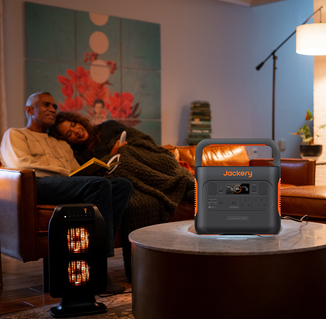






Your solar panels stop generating electricity exactly when you need them most. Every evening, as UK household electricity demand reaches its peak, rooftop solar arrays fall silent. Every grid outage—and the UK continues to see a rise in storm-related power cuts—leaves solar-equipped homes just as dark as everyone else.
A solar power storage battery changes that equation completely. It shifts your surplus midday generation into the evening peak, keeps your lights on when the grid goes down, and transforms a partial energy solution into a genuine declaration of energy independence.
While upfront cost, sizing complexity, and system integration can feel daunting, getting the numbers right allows you to build a highly resilient system. This guide breaks down what true energy independence means, how storage rewrites your solar economics, and how to size your system correctly.
Understanding the True Meaning of Energy Independence
True energy independence does not mean completely disconnecting from the grid. Instead, it means producing more electricity than you consume over a full year, combined with having the storage capacity to use that generation when you choose to, rather than only when the sun decides to shine.
Solar panels alone deliver generation, not autonomy. A standard 4 kWp array in Manchester generates roughly 3,400 kWh annually. Without storage, a typical household self-consumes only 25% to 30% of that power. The rest is exported to the grid at low Smart Export Guarantee (SEG) rates. In the evening, you buy back electricity at full retail rates, meaning you cannot access your own power when you need it most.
A domestic battery decouples generation time from consumption time. Your panels generate electricity at 1:00 PM; your battery discharges it at 7:00 PM. This provides round-the-clock autonomy from your own roof, protecting your household from wholesale gas price volatility and international supply disruptions.
While the UK's solar seasonality is distinct—with a typical system in northern regions like Manchester producing up to eight to ten times more electricity in July than in December—a properly sized battery storage system can drive your grid imports to near zero from March through October, delivering eight months of meaningful independence.
How a Solar Power Storage Battery Maximises Your Solar Investment
The financial case for storage is governed by simple arithmetic:
- Self-Consumption Uplift: Adding a battery causes self-consumption to jump from roughly 30% to between 70% and 80% (and up to 90% with strategic system sizing). Storing your solar surplus to offset expensive peak-rate imports (instead of exporting it for a low SEG rate) can save a typical household over £320 annually.
- Peak Shaving: Program your battery to discharge during the expensive 4:00 PM to 7:00 PM peak-rate window. This completely eliminates peak-rate grid imports when electricity is most expensive.
- Grid Outage Insurance: Extreme weather events often strain UK distribution networks. A battery with islanding capability disconnects your home from the grid and runs essential loads (refrigerator, lights, router, boiler) during a blackout.
- 0% VAT Savings: The government’s 0% VAT relief on residential battery installations (a temporary tax relief running until 31 March 2027 that covers both standalone retrofits and new installations) saves roughly £1,000 on a typical £5,000 project, shortening your payback period to 7–9 years.
To maximize your outage runtime, implement a strict load-shedding plan. Prioritize critical circuits like your refrigerator, LED lighting, and router, ensuring their combined draw stays below the battery's continuous power rating while leaving high-draw appliances like electric ovens off.

The 20% Buffer Rule – Why Oversizing Your Solar System Matters
Sizing your solar array to exactly match your annual consumption is a mistake. System losses, weather variations, and future usage spikes will inevitably leave you short of your energy goals.
To calculate your target annual solar generation, multiply your total annual electricity consumption by 1.2:
Target Solar Generation (kWh) = Annual Home Consumption (kWh) × 1.2
This 20% buffer accounts for inverter efficiency losses (typically 5% to 8%), minor panel degradation over time, winter weather shortfalls, and persistently cloudy skies. Without this buffer, your solar generation will fall below your consumption targets in year one.
Inverter oversizing follows the same logical pattern. UK installers commonly pair a 3.68 kW inverter with a 4.8 kWp solar array. This allows the inverter to operate at its optimal efficiency window for more hours during spring and autumn when direct sunlight is scarce but diffuse, overcast light is abundant, outperforming standard non-oversized configurations. Always design your system around your actual household load profile, factoring in any local roof space or planning constraints.
Backup Power and Grid Resilience in the UK
Islanding capability is non-negotiable for true backup power in the UK. Standard grid-tied inverters are designed to shut down during a blackout to prevent feeding electricity onto lines that utility engineers might be repairing. A battery with islanding capability safely isolates your home from the grid within milliseconds, restoring power to your critical circuits.
For most UK properties, essential load backup is far more cost-effective than attempting to back up your whole house. Sizing a system to power high-draw appliances like heat pumps or EV chargers pushes you into a much more expensive battery and inverter bracket. Instead, prioritize essential appliances (refrigerator, lighting, router) to ensure your battery can carry you safely through a winter outage.
Key Investment Considerations Before Buying
Before purchasing a battery, distinguish between these core specifications:
- Usable Capacity (kWh): Determines how long your battery can run your appliances.
- Continuous Power Rating (kW): Determines what appliances your battery can run simultaneously. A 10 kWh battery with a 3 kW continuous output can run small loads for hours, but cannot power a 7 kW EV charger.
Always choose Lithium Iron Phosphate (LiFePO4) chemistry. LFP cells deliver over 6,000 full charge cycles—representing an active 15+ year operational lifespan—and carry a much lower risk of thermal runaway compared to older NMC chemistries. Factor this extended durability into your long-term ROI calculations. Ensure your battery complies with G98/G99 DNO permissions and PAS 63100:2024 boundary location guidelines.
| Use Case | Recommended Capacity | Estimated Installed Cost | Payback Period |
|
Self-Consumption Only (No Backup) |
5 – 7 kWh |
£3,500 – £5,000 |
8 – 10 Years |
|
Self-Consumption + Essential Backup |
10 – 13 kWh |
£6,000 – £9,000 |
7 – 9 Years |
|
Whole-House Backup + EV Charging |
20+ kWh |
£12,000+ |
10+ Years |
If you are exploring simplified solar options, view our dedicated page on plug-in solar setups.
Jackery SolarVault 3 Series – Purpose-Built Energy Independence
Navigating the delicate balance between upfront investment, safety spacing, and long-term capacity requirements is exactly why household energy storage is shifting toward scalable, modular architectures. Rather than forcing you to over-invest in a fixed-capacity battery on day one, modern systems are evolving to make the journey to energy self-sufficiency incredibly straightforward.
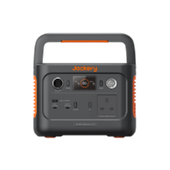
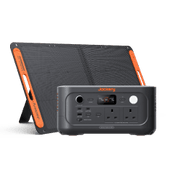
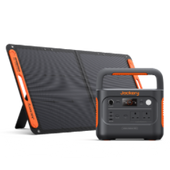
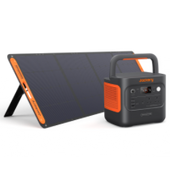
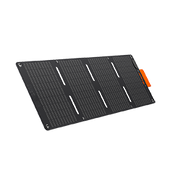
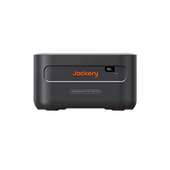
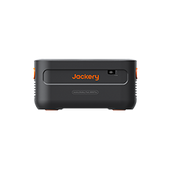
Drawing on Jackery's global pedigree in portable power and our industry-leading plug-in solar architectures, the highly anticipated Jackery SolarVault 3 Series (officially launching in July 2026) is set to redefine home energy resilience. Built as an all-in-one plug-in storage solution, the upcoming SolarVault 3 will integrate a high-efficiency inverter, durable cobalt-free LiFePO4 chemistry, and smart app-driven power cycling into a sleek, floor-standing unit.

The forward-looking SolarVault 3 offers exceptional flexibility, allowing you to start with a smaller battery capacity and expand later as your energy needs grow. This modular approach protects your upfront capital and allows your system to expand naturally over time. To see how these capacities align with your budget, explore our guides on the 10-kW Solar Battery Price UK market, the overall Solar Battery Price in the UK, and the 5kw Solar Battery Price UK to plan your path toward clean, reliable energy self-sufficiency.
Frequently Asked Questions
Can I install a battery without solar panels?
Yes. Grid-charged batteries can import cheap overnight electricity during off-peak windows (often 7p to 10p/kWh) and discharge during expensive daytime peak hours to deliver robust utility savings and emergency backup, even with zero solar panels. Explore our complete guide on home battery storage UK without solar panels.
How long do batteries last during a blackout?
To find your estimated runtime, divide your battery’s usable kWh capacity by the total wattage of your critical appliances, and then factor in standard system conversion losses. Because home batteries operate at roughly 85% to 90% round-trip efficiency, a 10 kWh battery has about 8.5 to 9 kWh of actual usable energy. Powering a continuous 400W essential load (refrigerator, lighting, router, boiler), it will keep your home running for approximately 21 to 22.5 hours.
Will a battery pay for itself without an EV?
Yes. Peak-shaving and self-consumption optimization generate robust bill savings regardless of EV ownership. A standard non-EV household with a 10 kWh battery can easily recover its initial investment within its standard warranty window through solar self-consumption and off-peak tariff dynamic imports.
Do I need to replace my inverter for a battery?
It depends on your system architecture. AC-coupled batteries run on their own dedicated inverter and connect directly to your consumer unit, leaving your original solar inverter untouched. DC-coupled systems require swapping your existing solar inverter for a hybrid inverter. Always consult your installer to select the best retrofit path.
What happens if my battery fills up on a sunny day?
Once your battery reaches 100% capacity and your home's immediate electrical loads are met, your hybrid inverter will automatically export 100% of your excess solar generation to the grid, earning you credit under your Smart Export Guarantee (SEG) export tariff.


