






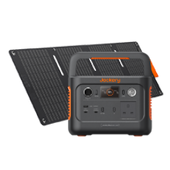


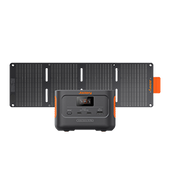

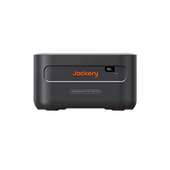
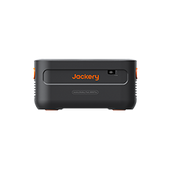



























You arrive at a pitch without electric hook-up, ready to settle in, but the fridge needs power, the sleeping area needs lighting and your phone battery is running low. Portable power stations for teardrop caravans can help keep these essentials running. With limited storage and payload, though, the size and weight of the unit matter alongside its battery capacity.
A portable power station can supply selected appliances directly or supplement your existing electrical setup. This guide explores how to calculate your needs, plan charging and choose a suitable unit, including the Jackery Explorer 2000 v2 and Explorer 3000 v2.
|
Key Takeaways: |
|
Why Choose a Portable Power Station for a Teardrop Caravan?
A portable power station gives you more flexibility over where you camp and how you use electricity. For a teardrop caravan, its main appeal is having a removable supply for everyday essentials without committing to a larger permanent electrical installation.
|
Quick answer: |
|
The right power station depends on your daily energy consumption, the highest combined appliance load, available payload and opportunities to recharge. Start with what you need to power and for how long, then compare models that fit your caravan. |
Power for Pitches Without Electric Hook-up
On a short UK break, your electrical needs might be limited to a compressor fridge, reading lights, a ventilation fan and phone charging. A suitably sized power station can keep compatible appliances running when your pitch has no mains connection.
That means keeping breakfast ingredients chilled and charging devices overnight, provided you have enough stored energy. Check each appliance’s connection requirements and power demand, particularly if several will run together.
A Removable Power Supply for the Rear Kitchen and Beyond
A portable unit can power compatible appliances beside the rear galley, then come indoors for charging before your next trip. Keep it dry and allow the ventilation clearance specified in its instructions.
For appliances plugged directly into its AC sockets, a station with a built-in inverter can avoid a separate permanent inverter installation. You can also use it away from the caravan, such as for garden projects or charging equipment.
When Your Existing Setup May Already Be Enough
If you usually book pitches with electric hook-up, or your leisure battery already covers lighting, refrigeration and charging, another battery may offer limited benefit.
|
Power option |
Convenience and installation |
Portability |
Main limitation |
|
Portable power station |
Direct appliance connections; integration requires checks |
Removable |
Finite capacity; adds weight |
|
Installed leisure-battery system |
Integrated supply; suitable wiring and charging equipment needed |
Usually stays fitted |
AC appliances may require a separate inverter |
|
Campsite hook-up |
Mains access through a suitable caravan connection |
Available at the pitch |
Supply limits and pitch availability |
Choose according to your touring habits and existing equipment.

What Will You Power? Build a Teardrop Caravan Energy Budget
Before choosing a battery, list what you actually take camping and how long each appliance runs. A daily energy budget helps you judge whether a power station will cover one night, a weekend or the gap between charging opportunities.
Everyday Essentials vs. Optional Comforts
Start with refrigeration, lights, phones and ventilation. Then add optional comforts such as laptop work, coffee making and electric cooking. Separating these makes it easier to identify what you could reduce if charge runs low.
- Watts (W) describe power demand at a particular moment;
- Watt-hours (Wh) describe energy consumed over time.
A light drawing 8W for four hours uses 32Wh. An 800W travel kettle running for five minutes uses approximately 67Wh: its power demand is high, but its operating time is short.
Why the Fridge Needs Special Attention
A compressor fridge cycles its compressor as cooling is needed, so its running wattage alone does not reveal daily consumption. Thermoelectric cool boxes use a different cooling process and may draw power for much longer periods. An absorption fridge uses heat to drive cooling; when operating electrically, that heat comes from an electrical element. These technologies should not share one generic consumption estimate.
Use your appliance’s measured Wh over 24 hours where possible, or its published energy consumption and test conditions. An energy label provides a starting point, but outdoor temperature, ventilation, thermostat settings and opening frequency affect actual use.
|
Appliance |
Information to Collect |
How to Estimate Energy |
|
Compressor fridge |
Measured Wh/day, or running watts and duty cycle |
Running W × fraction of time running × 24 hours |
|
LED lights |
Combined wattage and hours used |
W × hours |
|
Ventilation fan |
Average draw at selected speed and operating time |
Average W × hours |
|
Phones and tablets |
Energy drawn per charge |
Wh per charge × charges |
|
Laptop |
Average charging demand and duration |
Average W × hours |
|
Water pump |
Rated power and minutes used |
W × minutes ÷ 60 |
|
Travel kettle or hob |
Electrical input and operating time |
Average W × minutes ÷ 60 |
Example Daily Budget: Approximately 700Wh
Assume a compressor fridge draws 40W while running and operates for 40% of the day: 40 × 0.40 × 24 = 384Wh. Add lights at 32Wh, ventilation at 60Wh, phone charging at 40Wh, laptop use at 120Wh and kettle use at approximately 67Wh.
The total is 703Wh, rounded to 700Wh per day for later examples. These are illustrative assumptions, excluding battery conversion losses and a separate reserve.

How Much Battery Capacity Do You Need for a Teardrop Caravan?
Battery size should reflect the energy you need between charges. A small teardrop caravan with electric cooking may consume more than a larger caravan running only lights and a fridge, so start with your appliance budget rather than the caravan’s dimensions.
Calculate Energy Between Charging Opportunities
Multiply your daily appliance consumption by the number of days without recharging, then allow for energy that will not reach your appliances:
Required nominal capacity ≈ daily appliance energy × days ÷ assumed usable-energy factor
Using our rounded 700Wh daily budget, a two-day stay requires 1,400Wh at the appliances. With an illustrative usable-energy factor of 85%:
- 700Wh × 2 ÷ 0.85 ≈ 1,647Wh
This is the estimated nominal battery capacity needed before adding a reserve. The 85% factor is a planning assumption, not a measured efficiency for either Jackery model. Actual usable energy depends on the output connections, appliance load, temperature and power station’s own consumption.
For this calculation, assume no recharging during the stay. Only subtract expected charging energy when you have a realistic replenishment plan.
Allow for Uncertainty and a Useful Reserve
The loss allowance and reserve serve different purposes. The usable-energy factor allows for conversion losses and the station’s own energy use; a reserve covers additional demand or a longer stay.
For example, adding a 20% energy reserve to the planned 1,400Wh gives:
- 1,400Wh × 1.20 ÷ 0.85 ≈ 1,976Wh nominal capacity
That 20% is an example, not a universal requirement. Warmer weather can increase fridge consumption, while extra laptop charging can raise your daily total. Long periods with AC output enabled may also make standby consumption more significant than the simplified calculation assumes.
Check Output Power Separately
Enough watt-hours do not guarantee that an appliance will run. Check its continuous power demand, any start-up surge and the combined wattage of appliances used together.
A kettle and hob might each work individually but exceed the station’s output limit together. Likewise, a motor’s start-up demand may exceed its normal running power. Check battery capacity and output capability separately before choosing.
How to Choose Portable Power Stations for Teardrop Caravans?
Once you know your energy needs, consider how a power station will fit into your teardrop caravan trips. The right choice should support your appliances, fit the available space and be manageable to carry, charge and use beside your sleeping area.

Capacity and Output Matched to Your Appliances
Our example needs approximately 1,976Wh of nominal capacity for two days, including a 20% energy reserve and the illustrative 85% usable-energy factor. Use your own budget to establish a capacity requirement.
Then compare output ratings. Continuous output is the power the station can sustain; surge output covers brief start-up demands from certain appliances. A high surge figure does not mean you can run a kettle or hob above the continuous rating for several minutes. Check the combined demand of appliances you intend to use together.
Weight, Dimensions and Available Payload
Measure the intended storage position, including room for plugs, cable bends and access to controls. Consider the lift from your car boot or caravan doorway: a manageable weight at waist height may feel awkward when reaching into a low compartment.
Count solar panels, cables and carrying accessories in the total load, alongside the station itself. Check your caravan’s remaining payload and loading guidance before deciding where to transport it.
A unit fitting inside a locker does not automatically make that locker suitable for operation. Follow the manufacturer’s ventilation clearances and temperature limits, and choose a dry position.
Connections That Suit Your Equipment
Look for UK three-pin AC sockets for mains appliances and USB-C output with sufficient wattage for your laptop. Check the cable’s charging capability too.
For a DC fridge or fan, confirm voltage, connector type, polarity and current requirements. Do not assume every station has a suitable 12V outlet. Individual socket and port limits still apply even when the station’s overall output rating appears sufficient.
Charging, Overnight Usability and Ownership Costs
Match recharge speed to the time available between stops. For solar, check compatible panel configurations and input limits, as well as the space needed to carry and deploy panels.
At night, fan noise at your expected load and adjustable display brightness can matter. Check whether low-load shut-off could interrupt an intermittently running fridge.
Finally, compare battery chemistry, rated cycle life and the capacity-retention threshold behind that figure. Review warranty conditions, UK support and the complete package cost, including any cables or panels you need.
Recommended Jackery Portable Power Stations for a Teardrop Caravan
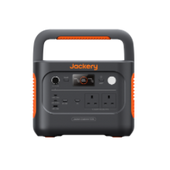
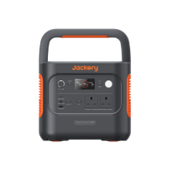
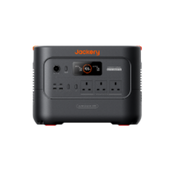
The Jackery Explorer 2000 v2 and Explorer 3000 v2 suit different balances of energy demand and carrying weight. Each stores electricity in a rechargeable battery, uses an inverter to supply AC appliances and provides USB outputs for compatible electronics. Connected solar panels can replenish the battery under suitable conditions, although the energy collected depends on the panels, weather and positioning.
For a teardrop caravan, the decision comes down to whether the smaller unit covers your planned consumption or the larger model’s extra capacity justifies its weight and space.
Jackery Explorer 2000 v2: For Owners Prioritising Lower Carrying Weight
The Jackery Explorer 2000 v2 combines a 2,042Wh LiFePO₄ battery with 2,200W continuous AC output and weighs approximately 17.5kg. That makes it the lighter of these two options for carrying between home, car and caravan. Its UK configuration includes two AC sockets and USB-C outputs rated at up to 100W and 30W.

Those connections suit a mixture of everyday tasks: powering a compatible fridge through its approved mains adaptor, charging phones and running a laptop. A suitable USB-C laptop can charge directly with a correctly rated cable, leaving the AC sockets available for other equipment. Check your fridge’s connection requirements before buying, particularly if it only accepts a dedicated DC supply.
For the rear kitchen, an 800W travel kettle or a cooking appliance operating within the output limit can be a useful addition. Duration matters: a hypothetical 1,500W appliance running continuously for 20 minutes consumes 500Wh, before conversion losses. That would add substantially to our existing 700Wh daily budget if it replaced none of the planned loads.
Using the guide’s illustrative 85% usable-energy factor, the battery provides approximately 1,736Wh for appliances:
- 2,042Wh × 0.85 ≈ 1,736Wh
This exceeds the earlier two-day requirement of 1,400Wh plus a 280Wh energy reserve, but only by about 56Wh. It therefore fits that particular plan on paper with little additional margin beyond the chosen reserve. Higher fridge consumption or extra cooking could change the result.
Its limits are straightforward. A 3,000W household kettle exceeds the continuous output rating, and electric space heating can use the available energy quickly. Choose it for a measured appliance budget rather than assume that a roughly 2kWh battery guarantees every weekend away.
Jackery Explorer 3000 v2: For Higher Energy Use Between Charges
The Jackery Explorer 3000 v2 offers 3,072Wh capacity and 3,600W continuous output, at approximately 27kg. Its additional capacity gives owners more room for energy-intensive trips, while its higher output accommodates more demanding compatible appliances.

This could suit a couple working on laptops during a trip, a setup with higher refrigeration consumption, or owners who want occasional electric cooking alongside their essentials. For example, an additional four hours of laptop use at an assumed average of 60W adds 240Wh to the day. Such additions are easier to accommodate when the original energy budget leaves more capacity available.
With the same illustrative assumption, estimated usable energy is approximately 2,611Wh:
- 3,072Wh × 0.85 ≈ 2,611Wh
That gives considerably more allowance above our two-day appliance budget. However, the higher output does not make cooking or heating consume less energy. A powerful appliance may run successfully while still exhausting the battery sooner than expected.
The handling difference deserves equal attention. At roughly 9.5kg heavier than the 2000 v2, the larger unit needs a suitable lifting route and transport position. Measure the available space, check ventilation clearance and include its weight in your payload calculation.
There is also more energy to replace after a deep discharge. A higher solar-input limit is useful only when your compatible panel arrangement and conditions can take advantage of it. Finally, the Explorer 3000 v2 does not support expansion batteries, so future trips requiring substantially more storage need a different plan.
Explorer 2000 v2 vs Explorer 3000 v2 at a Glance
|
Comparison point |
Explorer 2000 v2 |
Explorer 3000 v2 |
|
Nominal capacity |
2,042Wh |
3,072Wh |
|
Continuous AC output |
2,200W |
3,600W |
|
Approximate weight |
17.5kg |
27kg |
|
Maximum solar input |
400W |
1,000W |
|
Main reason to consider it |
Lower carrying weight |
More energy and output headroom |
|
Main teardrop consideration |
Check demanding appliances carefully |
Check lifting, storage and payload carefully |
Specifications are drawn from the official UK information. Solar-input figures are maximum limits, not guaranteed charging rates. The practical choice is whether you will regularly use the additional capacity enough to justify carrying the larger unit.
What Owners Report and What Their Reviews Can Establish
Steve Austin describes powering IT equipment during a motorhome journey and camping equipment after arrival. The review illustrates mixed travel and work use, although its text does not independently identify the exact model variant or provide measured loads.
Glen Cromar explicitly names the Explorer 3000 v2 and describes using kitchen appliances during motorhome stays without campsite mains. Another reviewer, Steve, identifies the 3000 v2 and highlights both its output capability and its weight.
- Choose the Explorer 2000 v2 when your calculated needs fit and easier handling matters most.
- Choose the Explorer 3000 v2 when additional energy or output has a clear purpose and your available space, payload and lifting arrangements accommodate it.
A Weekend with Jackery: How Much Charge Could Remain?
A shared weekend itinerary makes the difference between these two batteries easier to understand. This example applies our 1,400Wh weekend appliance budget, based on approximately 700Wh per day, to both models. It is a planning exercise rather than a guaranteed runtime.
Use the Same Itinerary for Both Models
Assume you arrive on Friday evening with a full battery and leave on Sunday without recharging. We allocate the weekend’s consumption across three intervals, allowing for refrigeration, lighting, ventilation, device charging and brief kettle use. These are illustrative allocations; your arrival time and appliance habits will change them.
Applying the same 85% usable-energy assumption gives approximately 1,736Wh for the Explorer 2000 v2 and 2,611Wh for the Explorer 3000 v2.
Illustrative Weekend Estimate Not a Hands-on Test
|
Trip checkpoint |
Appliances and activities since last checkpoint |
Energy used in interval |
2000 v2 estimated charge remaining |
3000 v2 estimated charge remaining |
|
Friday arrival |
Begin with a full charge |
— |
100% |
100% |
|
Saturday morning |
Refrigeration, evening lights, ventilation and phone charging |
350Wh |
≈80% |
≈87% |
|
Saturday evening |
Daytime refrigeration, laptop use and brief kettle use |
500Wh |
≈51% |
≈67% |
|
Sunday departure |
Second night’s essentials, device charging and breakfast kettle use |
550Wh |
≈19% |
≈46% |
The percentages use:
Estimated charge remaining ≈ [1 − cumulative appliance energy ÷ (nominal capacity × 0.85)] × 100
By departure, the model leaves approximately 336Wh of usable energy in the 2000 v2 and 1,211Wh in the 3000 v2. These figures represent estimated energy still available to appliances, not nominal battery capacity. The separate reserve remains unspent within those balances.
What Could Change the Result
Calculated percentages will not precisely match either station’s battery display. Fridge cycling, warmer conditions, thermostat settings and additional cooking can change consumption. Temperature, conversion efficiency and time spent with AC output enabled also affect the energy available.
A preliminary overnight trial with your actual equipment will make this budget more useful. Record consumption and remaining charge, then adjust the weekend plan before relying on it at a pitch without hook-up.

Recharging on UK Trips: Mains, Solar and Driving
A charging plan helps you decide how much stored energy to take and when you can replace what you use. Consider the journey, pitch facilities and weather together, rather than assume every stop offers a useful recharge.
Charge Before Departure and at Suitable Mains Connections
Leave home fully charged when your trip requires the full battery capacity. This gives you a known starting point for the weekend budget and reduces dependence on charging immediately after arrival.
The UK product pages list approximately 1.7 hours for the Explorer 2000 v2’s wall charging and 1.8 hours for the Explorer 3000 v2’s AC charging. These are manufacturer figures, not timings measured on a campsite. Check the stated charge range, charging mode and test conditions before treating them as a direct comparison. Actual times depend on starting charge, temperature and charging settings.
At a campsite, check the available hook-up supply and site rules. Charging the station while running a kettle, heater or other appliance adds to the total demand on that supply.
Choose Solar Panels around the Trip
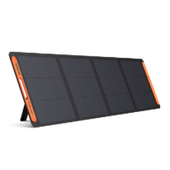
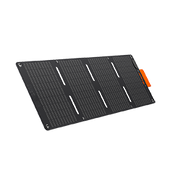
Portable solar panels need space both when packed and when deployed. Compare their folded dimensions and total weight with the room available in your teardrop caravan. At the pitch, consider whether you can position them in sunlight and move them as shadows change.
The maximum solar inputs are 400W for the Explorer 2000 v2 and 1,000W for the Explorer 3000 v2. These are input limits, not guaranteed generation: compatible panels, sunlight, shading and orientation determine actual charging power.
Treat a Car Socket as a Top-up Option
An ordinary vehicle socket provides limited charging power, so a short drive may replace only part of the previous day’s consumption. For illustration, 100W reaching the battery for two hours adds about 200Wh.
A separately installed alternator charger is different equipment; check compatibility, installation requirements and the station’s input limits before considering one.
For cloudy weekends, retain enough energy for essentials, reduce optional cooking loads and identify a suitable mains charging opportunity. Solar can extend your stay, but should not be your only fallback.
Using a Power Station with Your Teardrop Caravan’s Electrical Setup
How you connect a power station matters as much as its capacity. Decide whether it will supply individual appliances or work with the caravan’s installed electrics, then check the requirements for that arrangement.
Direct Appliance Use vs. Powering Installed Circuits
Plugging a compatible appliance into the station’s own socket uses it as a standalone supply. Feeding the teardrop caravan’s existing installation involves additional wiring, protective devices and potentially its leisure-battery charger.
A socket adaptor alone does not establish compatibility. Before supplying installed circuits, have a competent caravan electrical professional check the power station and caravan instructions, including earthing arrangements and whether the protective devices will operate correctly. Existing chargers and other connected equipment also need consideration.
Positioning, Ventilation and Transport
Choose a dry, stable position with the ventilation clearance specified by the manufacturer. Keep cooling vents clear of bedding, bags and other equipment, and avoid obstructing doorways or escape routes.
At the rear galley, account for rain blowing beneath the open hatch and splashes from washing up. For travel, secure the station against movement in accordance with the caravan’s loading guidance.
Check Settings Before the First Overnight Trip
Run a trial with your actual fridge and intended appliances before leaving home. Check whether low-load shutdown settings could interrupt a cycling appliance, and review charging controls and output settings.
Arrange cables so they cannot be trapped by doors, damaged by moving equipment or create trip hazards. Confirm reliable overnight operation before depending on the setup away from mains electricity.

Is a Portable Power Station Worth It for Your Touring Style?
A power station is worth considering when it solves a recurring problem: insufficient energy between charges, limited access to hook-up or a need to power equipment outside the caravan.
Compare the Complete Setup Cost
Budget for the station, solar panels, required cables, carrying accessories and any professional work needed to integrate it with installed circuits. Check package contents before adding accessories separately.
|
Package |
Explorer 2000 v2 |
Explorer 3000 v2 |
|
Power station only |
£765 |
£1,424 |
|
Station with one SolarSaga 200W panel |
£969 |
£1,679 |
These compare the same panel quantity and rating, although promotional accessories differ. Prices and offers can change; confirm the complete checkout cost before buying.
Match Value to How Often You Will Use It
For a few weekends each year on serviced pitches, another battery may spend more time stored than supplying useful power. Frequent trips without hook-up, laptop work while travelling and use around the home or garden create more opportunities to justify the purchase.
Convenience also has value: you may appreciate greater pitch choice or a removable supply for the rear kitchen even when campsite-fee savings are modest. A meaningful payback calculation would need your actual trip frequency, avoided hook-up charges and charging costs.
If your needs extend only to lighting and phone charging, a smaller station or your existing leisure battery may already be sufficient.
FAQs
The following are the frequently asked questions about the portable power stations for teardrop caravans:
Can a portable power station replace my teardrop caravan’s leisure battery?
It can supply individual appliances, but it is not automatically a direct replacement for an installed leisure battery. Built-in lighting, pumps and charging systems may require specific connections. Have a competent caravan electrical professional assess any proposed replacement, including protection and earthing arrangements.
Will the Explorer 2000 v2 run a normal UK kettle?
It depends on the kettle’s rated input. The Explorer 2000 v2 has a 2,200W continuous output, so a 3,000W kettle exceeds its limit. A suitable lower-wattage travel kettle can work, provided the combined demand from all connected appliances stays within the station’s ratings.
Can I run a caravan fridge overnight?
Yes, if its connections and start-up demand are compatible and sufficient energy remains. Use measured overnight consumption to estimate requirements. A cycling compressor fridge can have very different energy needs from a thermoelectric cool box or an absorption fridge running electrically.
Can I use a Jackery power station while it is charging?
The Explorer 2000 v2 and Explorer 3000 v2 support pass-through operation. Follow the model’s instructions and applicable output limits while charging. With solar charging, the battery can still lose charge if your appliances consume more power than the panels supply.
Is the Explorer 3000 v2 too heavy for a small teardrop caravan?
Not necessarily, but its approximately 27kg weight needs to fit your remaining payload and lifting ability. Include panels and accessories in the total, check a secure transport position and measure access. Caravan size alone does not determine suitability.
How should I store my power station between camping seasons?
Switch it off, disconnect appliances and store it somewhere dry with a stable temperature within the model’s specified storage range. Avoid leaving it depleted. Follow its manual’s storage-charge and maintenance schedule; check the charge periodically and inspect cables and ports before the next trip.
Final Thoughts
Choosing portable power stations for teardrop caravans starts with three things: enough energy between charges, suitable output for your appliances and a weight you can comfortably manage.
The Jackery Explorer 2000 v2 suits readers whose calculated energy needs fit its capacity and who prioritise lower carrying weight.
The Explorer 3000 v2 makes sense when extra stored energy or higher output serves a clear purpose, provided your caravan’s payload, available space and lifting arrangements accommodate it. Either choice needs a realistic charging plan for longer stays.


