




































The Energy Price Cap, which determines how much most households pay for energy, increased by 0.2% on average on January 1, 2026. On November 21, 2025, Ofgem announced that the energy price cap for the average household on a default tariff from January 1 to March 31, 2026, will be £1,758 per year. The next price cap is announced by February 25, 2026.
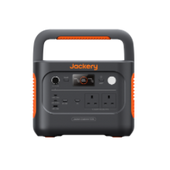
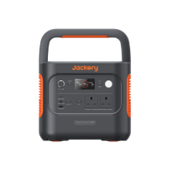
Prior to this, the following wave of energy price ceiling estimates included £1,638, £1,653, and £1,645. In addition to paying attention to energy price caps, regular people should look for ways to optimise energy use, such as installing solar power equipment like the Jackery Solar Generator 3000 v2 or 2000 v2.
|
Key Takeaways: |
|
What Is the Energy Price Cap?
The price cap was implemented by regulator Ofgem on January 1, 2019, with the goal of preventing millions of households on expensive variable tariffs from being taken advantage of. It establishes a maximum amount you will pay per unit of energy consumed, as well as a daily standing charge to cover the cost of delivering gas and electricity to your home. Every three months, they review the price cap.
The price cap level is set for customers in England, Wales and Scotland. Northern Ireland's retail energy costs are not capped. It is vital to note that the price cap does not represent a 'cap' on your overall bill. The more energy you consume, the more you'll pay.
How Does Ofgem Determine the Price Cap?
Ofgem determines the price cap by calculating how much it costs energy companies to serve you with gas and electricity. Here's a breakdown of the specific costs incurred by energy suppliers that are included in the price cap:
|
Wholesale Energy |
The price the supplier pays for electricity and gas is based on forward rates available on the market. |
|
Network Costs |
The cost of transporting energy from the national grid, local electricity distribution networks, and local gas distribution networks to individual household customers. |
|
Policy Costs |
The cost of the government’s social and environmental policies, including the emissions trading scheme and paying the Contracts for Difference levy. |
|
Operating Costs |
The cost of being an energy supplier, which includes providing energy meters, a customer service department, and creating energy bills. |
|
Payment Collection Costs |
The cost of collecting money from customers. The allowance varies slightly depending on whether you pay via direct debit, BACS, or prepayment. |
|
VAT |
An additional 5% consumer tax is applied to all household bills. |
What Is the Energy Price Cap of 2026?
The energy price cap restricts how much home energy suppliers can charge for electricity and gas on a variable tariff. It serves as a maximum price cap for energy suppliers. The January 2026 price cap, which is applicable until March 31, is set at £1,758 per year (for a typical household paying by Direct Debit).
This represents a £3 increase from the prior price cap. Remember, the rates are capped, so if you use more, you'll pay more. Most residents' usage is likely to remain greater than typical during these months, thus bills may rise more than suggested by this price ceiling hike.
What Are the Unit Rates and Standing Charges for the First Quarter 2026 Energy Price Cap?
The table below illustrates the average unit rates per kilowatt hour (kWh) and standing charges per day (variable by location) under the existing Price Cap from January 1 to March 31, 2026:
|
Payment Method |
Gas |
Electricity |
|
Direct Debit |
Unit rate: 5.93p per kWh Standing charge: 35.09p per day |
Unit rate: 27.69p per kWh Standing charge: 54.75p per day |
|
Prepayment |
Unit rate: 5.72p per kWh Standing charge: 35.09p per day |
Unit rate: 26.84p per kWh Standing charge: 54.75 per day |
|
On receipt of a bill |
Unit rate: 6.25p per kWh Standing charge: 42.91p per day |
Unit rate: 29.23p per kWh Standing charge: 62.97p per day |
(Source: Ofgem)
Who Is Protected by the Energy Price Cap in the First Quarter of 2026?
The energy price cap protects the following for the first quarter of 2026:
The energy price cap affects domestic standard variable (default) tariffs.
The energy price cap is applicable to all payment arrangements: Standard credit (you pay manually when you receive a bill); Direct Debit (payment is automatically collected); and Prepayment meter (you pay ahead of time).
The energy price cap covers variable rates for single-rate energy meters and dual-rate economy 7 meters.

What Is the Next Energy Price Cap Forecast?
The energy price cap specifies the maximum price that suppliers can charge for energy. Predictions are generated since Ofgem provides quarterly updates. They assist households in anticipating future energy expenses, allowing for better financial planning. Here are a few predictions for the upcoming energy price cap:
Energy Price Cap Forecast 1: £1,638
E.ON's latest energy price cap prediction for February 9, 2026, indicates that the price ceiling will fall to £1,638 in April 2026, a £120 decrease from the previous quarter.
Energy Price Cap Forecast 2: £1,653
While EDF's gas and electricity price projection for February 3, 2026, predicts the price cap in the UK will fall to £1,653 in April 2026, a £105 decrease from the previous quarter.
Energy Price Cap Forecast 3: £1,645
British Gas's energy price cap projection for February 9, 2026, is for it to decline to £1,645 in April 2026, a £113 decrease from the previous quarter.
Is the Forecast for the Next Energy Price Cap Correct?
Energy price cap projections are exactly that: predictions. Longer-term forecasts, in particular, are sometimes dubious due to the very volatile energy market. While based on Ofgem's system, they fluctuate with wholesale energy rates, therefore treat them as estimates rather than guarantees. Prior to the Budget release, the April Price Cap was predicted to climb by 3%; now it is expected to jump by 6% on average.
When Will the Next Energy Price Cap Be Announced?
Ofgem has pledged to revisiting the energy price cap four times every year, in February, May, August, and November. Ofgem announces its next energy price cap approximately 6 weeks before it goes into effect. The next review is scheduled for February 2026, with an effective date of April. According to Ofgem, the energy price cap for the period April 1, 2026–June 30, 2026, will is published on February 25, 2026.
UK Energy Price Cap (Apr–Jun 2026)
Typical annual bill (dual fuel, direct debit): £1,641 per year
Change vs. Jan.–Mar. 2026 (£1,758): ↓ about £117 (7% decrease)
Why Do Energy Prices Fluctuate Even with an Energy Price Cap?
Although the energy price cap is intended to keep prices under control, many users report considerable fluctuations in their energy bills over time. So, given the price cap, why are energy prices still fluctuating? The following analysis will address this issue.

The Energy Price Cap Is Dynamically Changed
The energy price cap is not a set power price, but rather a dynamically modified "maximum allowable charge." The price cap will climb as global natural gas prices, wholesale electricity market costs, and network maintenance costs rise. In contrast, when market costs fall, so may the cap.
Wholesale Energy Costs Fluctuate
International events, like as geopolitical conflicts, can create major and quick price fluctuations in global energy markets. Furthermore, on a windy or bright day, when renewables create a lot of power, wholesale electricity rates may fall. These costs are eventually passed on to consumers' bills via the energy price ceiling.
The Effect of Network and Operational Costs
Unfortunately, there are costs associated with establishing, maintaining, and updating the infrastructure that provides energy to your home. Suppliers also incur costs when running their operations, such as customer service and billing fees. These costs are reflected in power rates, which have an additional impact on the energy price cap.
Electricity Suppliers and Government Decisions
Even with the price cap, suppliers can still alter the power price structure within the cap range (for example, raising the unit price or lowering the fixed charge), affecting users' actual expenditures. Government policies on energy, climate change, and consumer protection also influence the costs that suppliers can pass on to customers.
Does the Energy Price Cap Mean I Don't Need to Switch Suppliers?
The answer is "no." While the cap protects consumers from default or prepayment fees, it does not guarantee the lowest feasible costs. Ofgem has the authority to raise or lower the cap based on wholesale market conditions, and the cap is currently expected to remain high.
If you're on a price-capped tariff, you should consider switching because you're almost probably paying more than you should for electricity. Consumers must actively compare and move between suppliers and tariff types in order to get the best deal possible, as many fixed-rate tariffs might offer lower prices than the default rates.
How Can I Compare and Switch to a Lower Electricity Rate?
If you want to acquire a good energy price, keep an eye on and evaluate different energy suppliers. Switch as needed by completing these steps:
Step 1: Use a Comparison Website to Discover the Best Deal
To compare energy deals, utilise an accredited price comparison site and consider unit prices, standing costs, contract length, exit fees (if applicable), and customer ratings.
Step 2: Select Your New Pricing and Decide When You Wish to Switch
You can apply for your new rate online or by phone. The new supplier will contact your previous supplier on your behalf to complete the move. This should take up to five business days. Record your meter reading and date around your switch date, since this will be required to calculate your final bill with your previous supplier.
How Can I Determine If My Electricity Price Is Subject to a Energy Price Cap?
The price cap applies to 'default' tariffs, which you do not actively choose to switch to, whether you pay by Direct Debit, cash or cheque, or prepayment. These tariffs are commonly referred to as standard variable tariffs (SVTs), and you will be assigned one if any of the following apply.

Scenario 1: You Have Never Switched Your Energy Tariff
If you've been using your provider's standard tariff plan since the beginning, when you opened your energy account, you'll be covered by the price cap.
Scenario 2: You Were on a Fixed Contract and Have Not Chosen to Switch Again
If you have previously chosen a fixed agreement, you will be automatically rolled over to a price-capped tariff if you do nothing.
Scenario 3: You Were with a Supplier that Went Bust
In most situations, if your supplier goes bankrupt, your current tariff with that supplier will expire, Ofgem will select a new supplier to take over, and you will be switched to that provider's normal tariff, which is covered by the Price Cap.
Scenario 4: You Are Moving Home
When you move house, your current tariff will usually expire when you notify your supplier (some allow you to transfer fixed offers, so check). You'll be assigned a 'default' tariff, which is determined by the Price Cap, as soon as you move in.
However, the simplest method is to call your electricity provider, who will inform you whether your electricity rate is subject to the energy price cap.
Other Ways to Optimise Energy Consumption and Costs
Aside from depending on the energy price cap, UK families have various proactive options for optimising energy consumption and lowering expenditures. Here are some easy yet efficient strategies to make a difference on your monthly bill:
Turn Off All Superfluous Devices
The Energy Saving Trust predicts that turning off standby devices could save you £45 in the UK and £55 in Northern Ireland per year. The average home in the United Kingdom could save over £7 per year and £9 in Northern Ireland simply by turning off the lights.
Just Boil What You Need
To save energy and money, merely boil enough water for a cup of tea. You can save approximately £10 per year in the United Kingdom and £12 in Northern Ireland.
Turn Down Your Thermostat
Turning it down by one degree might reduce your heating expenditures by up to 10%. If you don't have a room thermostat, installing one might save you up to £70 each year. Consider installing a smart thermostat, which allows you to control your heating from your smartphone or tablet.
Consider Renewable Energy
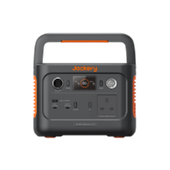
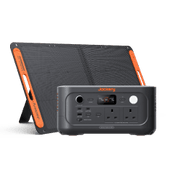
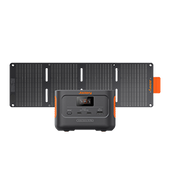
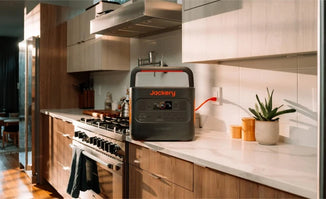
A solar energy system (for example, the Jackery Solar Generator 3000 v2 and 2000 v2) can store energy generated throughout the day via sunlight and power your home appliances later, cutting unit costs and mitigating the impact of the standing charge.
A Jackery Solar Generator is a flexible, portable, and cost-effective way to reduce electricity bills in the UK. By generating and storing your own solar energy, you can:
Cut reliance on expensive grid power.
Avoid installation costs.
Use clean, renewable energy anywhere.

Please Switch Your Energy Bill Payment Method to Direct Debit
Pay your energy bills via Direct Debit if possible. predetermined monthly Direct Debit payments, in which you pay a predetermined amount each month, could save you 5% to 10% compared to paying quarterly.
Jackery Solar Generators for Saving Household Electric Bills
In the UK, while the energy price cap provide basic protection for households, fluctuations in energy costs still profoundly impact daily life. Although there are many energy price cap forecasts available, facing uncertain predictions, more and more UK households are seeking more proactive and sustainable solutions.
Among the many options, Jackery Solar Generators, with their performance, reliable quality, and user-friendly design, have become a practical tool for optimising energy consumption and reducing costs. The Jackery Solar Generator 3000 v2 and Jackery Solar Generator 2000 v2 are particularly outstanding, serving as a powerful supplement to home energy management and achieving partial energy autonomy.
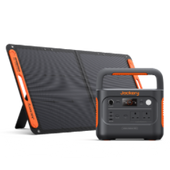
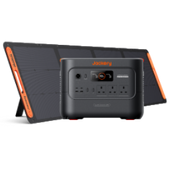
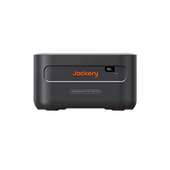
Jackery Solar Generator 3000 v2
As Jackery's flagship product, the Jackery Solar Generator 3000 v2 is designed for high-energy-consuming households and heavy outdoor use scenarios, making it an ideal choice for dealing with energy fluctuations. Its core advantages:

3072Wh Ultra-Large Capacity and 3600W Output Power: The Jackery Solar Generator 3000 v2 is equipped with a 3072Wh ultra-large battery capacity, providing 3600W output power (peak 7200W), easily supporting the continuous operation of various home appliances such as refrigerators, televisions, laptops, and rice cookers. Even during peak winter electricity consumption or sudden power outages, it can ensure the basic power needs of the household.
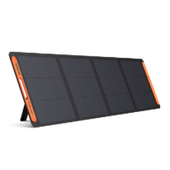
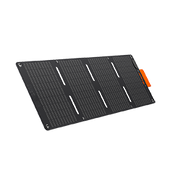
High-Efficiency Solar Charging for Green Energy Saving: The Jackery Solar Generator 3000 v2 supports up to 1000W of solar input. Paired with Jackery SolarSaga solar panels, it can be quickly charged in bright sunlight, fully charging in just 3.5 hours. It prioritises stored solar energy over grid power, reducing dependence on the grid and lowering electricity bills by 22%.
Long-Life Lithium Iron Phosphate Battery for Maximum Value: The Jackery Solar Generator 3000 v2 uses advanced lithium iron phosphate batteries, enjoying up to 4,000 charge cycles. Even with daily use, it can provide reliable power for 10 years of daily and emergency use. This means it can save you approximately 3kWh of electricity per day, or 1000kWh per year.
Smart App Remote Management: The Jackery Solar Generator 3000 v2 allows real-time monitoring of power, charging status, and energy consumption data via the Jackery App. It also enables remote control of the power supply, facilitating intelligent energy management and helping users plan their electricity usage more effectively.
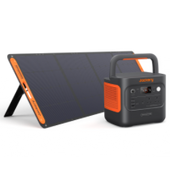
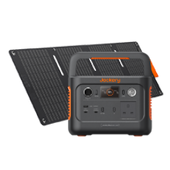
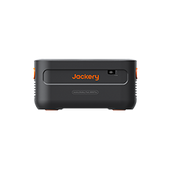
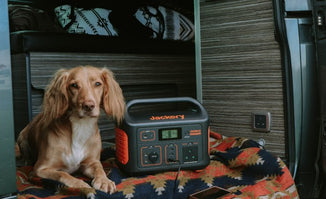
Jackery Solar Generator 2000 v2
For most UK households, the Jackery Solar Generator 2000 v2 is the perfect balance of performance, capacity, and price, offering portability and practicality. Its key advantages include:

Large Capacity, Lightweight Design: The Jackery Solar Generator 2000 v2 boasts a 2042Wh battery capacity and 2200W output power, sufficient for everyday emergencies and light household power needs. Its compact design (the Explorer 2000 v2 weighs only 38.6 lbs; dimensions are 13.2 × 10.4 × 11.5 in) allows for easy portability between rooms in the house or outdoors.
Multi-Mode Charging, Seamless Switching: The Jackery Solar Generator 2000 v2 supports three charging methods: solar power, household power, and vehicle power, ensuring rapid charging in any environment and greater flexibility. Paired with two SolarSaga 200W solar panels, it can be fully charged in approximately 5.5 hours, fully utilizing free solar energy to replace expensive grid power for zero-cost electricity.
Safe and Reliable, Long-Lasting Backup: The Jackery Solar Generator 2000 v2 employs the next-generation ChargeShield 2.0 technology, featuring 62 layers of all-around protection, including 12 protection algorithms and 4 layers of physical safety protection. It still uses lithium iron phosphate batteries, supporting up to 4000 charge cycles. It has passed the rigorous IEC60068-3-3 seismic test, proving its durability even in a magnitude 9 earthquake.
Quiet Operation and Precise Power Consumption: The Jackery Solar Generator 2000 v2 maintains a minimal noise level during operation—42dB AC and 30dB DC, ensuring unobtrusive use even at night. Furthermore, it utilises an innovative gallium nitride inverter, reducing energy consumption by 51.6%, exceeding industry standards. It consumes only 10uA of current when powered off, using only 5% of the battery capacity per year.
FAQs
The following are the frequently asked questions about the energy price cap forecast.
1. What will happen to the energy price cap in 2026?
In January 2026, the energy price cap will be increased to £1758. The next adjustment is likely to be revealed on February 25, 2026, with a drop forecast.
2. What is the next energy price cap expected to be?
According to E.ON's forecast, which was updated on February 9, 2026, the price cap for the second quarter of 2026 is £1638. This is £120 less than the price cap for the first quarter of 2026 (£1758). However, this is simply a forecast and should be used as a reference only.
3. Will energy prices go down in 2026 Martin Lewis?
While energy expert Martin Lewis says: "Now that we know the Price Cap until the end of March 2026, it's straightforward to compare to the cheapest fixed packages, which are roughly 15% less (around £265 per year on a typical bill) and have guaranteed rates, so you know they won't grow for at least a year.
However, it is highly likely that you will continue to save much after that. Analysts currently estimate that the Cap will fall in April (by about 6%).”
4. Am I on the energy price cap?
The Ofgem price ceiling applies to about 21 million consumers with variable energy tariffs, determining what two-thirds of houses in England and Wales will spend. You'll know you're affected if your tariff is labelled as standard, flexible, or variable rate rather than fixed.
Final Thoughts
If you live in one of the 65% of houses in England, Scotland, or Wales that are on a standard variable tariff, the Energy Price Cap governs your bill. The current price cap for the average UK home is £1,758 until March 31, 2026.
It is not a cap on a total bill; consumers who use more than £1,758 of energy will pay more, while those who use less pay less. As a result, users should actively research multiple suppliers and package options to find the best deals. Alternatively, to cut energy expenses by optimising energy use, utilise the Jackery Solar Generator 3000 v2 or 2000 v2 to transform free solar power into personal use.


