































Depending on how much power your electronics and appliances consume, the number of things that can be powered by an inverter with a capacity of 2000 watts is determined. Analyse your power requirements, assess your gadgets' power consumption, and rank the most critical appliances in order of importance.
Keep in mind that you should monitor your power usage, adhere to safety requirements, and seek the advice of a professional when necessary.
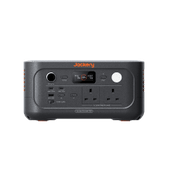
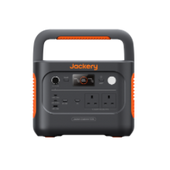
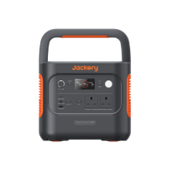
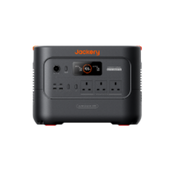
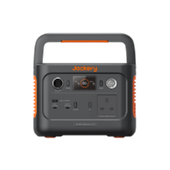
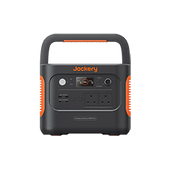
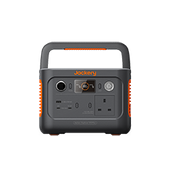
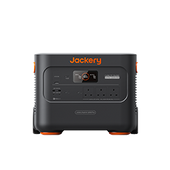
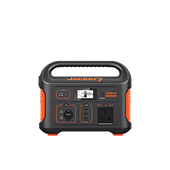
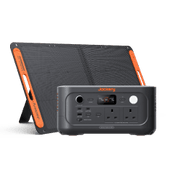
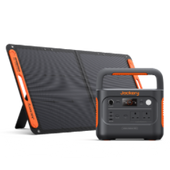
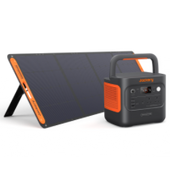
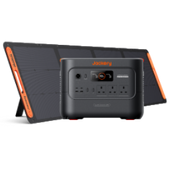
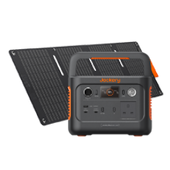
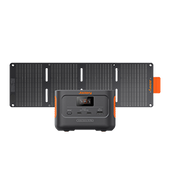
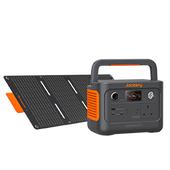
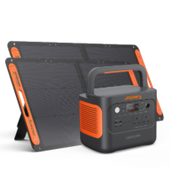
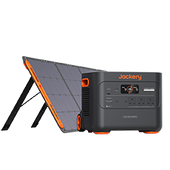
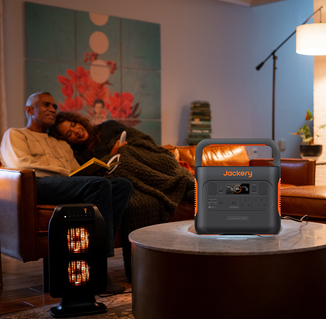
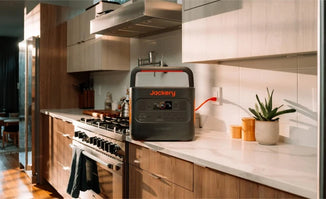
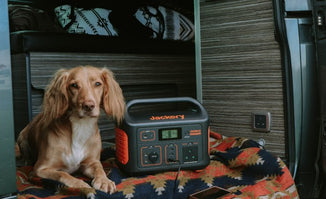
This guide will show you everything about the 2000W inverter and its usage. When it comes to 2000W inverters, given its portability and wide range of uses, the Jackery Explorer 2000 v2 and 3000 v2 portable power stations perform a respectable job of living up to the convenience category.
|
Key Takeaways: |
|
What Is a 2000W Inverter?
A power inverter is an essential electrical system component that provides power to your campervan. In its most basic form, this device converts the direct current (DC) produced by your campervan's batteries into alternating current (AC). This change is necessary because the majority of electronic devices and appliances in your home are powered by alternating current (AC).
In contrast, the electrical system in your vehicle is powered by direct current (DC).
Consider it to be a translator for the language of electricity. In the same way that a language interpreter makes it possible for people who speak various languages to communicate with one another, a power inverter makes it possible for your DC-powered car to "talk" to items that AC powers.
2000W means the inverter can usually supply up to 2000 watts of continuous power at one time. A 2000W inverter is enough for many everyday devices, but it may not be enough for high-power appliances such as large kettles, ovens, air conditioners, large heaters, or multiple heavy appliances running together.

Size of A 2000W Inverter
The physical dimensions of a 2000W inverter in the United Kingdom can differ from one manufacturer and model to another from time to time. In the United Kingdom, the dimensions of a 2000W inverter are roughly 360 millimetres in length, 225 millimetres in width, and 100 millimetres in height on average.
On the other hand, changes may occur due to variances in design, features, and the materials required for construction. It is recommended that you examine the precise measurements of the model you are interested in purchasing to ensure that it is suitable for the space in which you intend to place it.
Battery Requirements of A 2000W Inverter
Typically, two batteries with a capacity of 12V 200Ah are sufficient to power the inverter, and a 2000W inverter operating at maximum power can operate for 1.2 hours. There is a correlation between the wattage of the inverter and the number of batteries required; more batteries are required for greater wattages.
Inverters are utilised in residential and business settings to power electronic devices like televisions, refrigerators, air conditioners, and computer equipment.
A power source, an inverter controller, and an input power transformer that can handle either 288 VAC or 120 VAC are the components that make up an inverter. In normal circumstances, the inverter will use approximately 1.5 kW of power when functioning. Three factors determine the amount of power the inverter consumes: the size of the inverter, the load being supplied, and the temperature. It is common for the inverter to be able to provide roughly 85 percent of the input power.
What Type of 2000W Inverter Is Right for You?
If you are looking for a 2000W inverter, there are two primary types of inverters that you are likely to encounter. You need to be aware of the distinctions between these two inverters and select the one that is most suitable for your needs, even though both can provide you with AC power in the event of a power loss at your residence.
Modified Sine Wave Inverters: The stepped, approximated sine wave that these inverters create is a sine wave. These are more cost-effective and can power a wide variety of standard appliances. On the other hand, they might not be appropriate for use with sensitive technological gadgets or particular medical equipment.
Pure Sine Wave Inverters: The sine wave produced by these inverters is smooth and consistent, quite similar to the power that the electrical outlets in your home produce. Despite their higher cost, they offer cleaner power, making them an excellent choice for sensitive equipment and a wider variety of technologies. Jackery Portable Power Stations have pure sine wave inverters to ensure stable and consistent power supplies.
|
Comparison Point |
Pure Sine Wave Inverter |
Modified Sine Wave Inverter |
|
Output waveform |
Smooth, clean waveform similar to grid electricity |
Stepped, less smooth waveform |
|
Power quality |
Stable and high-quality AC power |
Less stable and less refined AC power |
|
Appliance compatibility |
Works with almost all household appliances |
Works mainly with simple, non-sensitive devices |
|
Sensitive electronics |
Safer for laptops, TVs, routers, medical devices, and smart appliances |
May cause noise, overheating, errors, or reduced performance |
|
Motor-based appliances |
Better for fridges, pumps, fans, compressors, and power tools |
May make motors run hotter, louder, or less efficiently |
|
Efficiency |
Usually more efficient for a wider range of devices |
Can be less efficient, especially with motors and sensitive electronics |
|
Noise |
Quieter operation for many appliances |
May cause buzzing or humming in some devices |
|
Heat generation |
Lower risk of extra heat in connected appliances |
Higher chance of extra heat in some appliances |
|
Cost |
More expensive |
Cheaper |
|
Best use cases |
Home backup, solar battery systems, RVs, camping, refrigerators, electronics |
Basic lights, simple chargers, basic tools, emergency low-budge |
12V 2000W Inverter: best for cars, small vans, and short-distance cable runs
A 12V 2000W inverter is common because many batteries and vehicles use 12V systems. It is easy to find and suitable for simpler mobile setups.
It is suitable for car-based power setup, small van or camping setup, occasional backup power, lower-cost DIY builds. The downside is that 2000W at 12V requires very high current. This means you need thick cables, proper fuses, and careful installation. For regular high-power use, 24V or 48V may be better.
24V 2000W Inverter: best for vans, cabins, and more efficient mid-size systems
A 24V inverter draws less current than a 12V inverter at the same power level. That makes the system more efficient and easier to wire safely.
It is suitable for camper vans or RVs, small cabins, solar battery systems, and regular 1000-2000W loads. A 24V 2000W inverter is a good choice if you are building a more serious off-grid or mobile power system.
48V 2000W Inverter: best for home storage and efficient solar systems
A 48V 2000W inverter is often used in home energy storage, off-grid solar, and larger battery systems. It reduces current further, improves efficiency, and is better for longer cable runs.
It is suitable for home battery systems, off-grid solar system, long-term daily use and future expansion. For a fixed home or solar storage setup, 48V is often the better long-term choice.
How Long Can a 2000W Inverter Run?
A 2000W inverter does not have a fixed runtime by itself. Runtime mainly depends on three things:
- Battery capacity
- Actual appliance power use
- Inverter efficiency
A 2000W inverter only tells you the maximum power output it can support. How long it runs depends on how much power your devices are actually using.
You can estimate runtime with this formula:
Runtime = Battery capacity × Inverter efficiency ÷ Load power
For example: 2000Wh battery × 90% efficiency ÷ 1000W load = about 1.8 hours
Runtime examples by battery size
|
Battery Capacity |
500W Load |
1000W Load |
1500W Load |
2000W Load |
|
1000Wh |
1.8 hours |
0.9 hours |
0.6 hours |
0.45 hours |
|
2000Wh |
3.6 hours |
1.8 hours |
1.2 hours |
0.9 hours |
|
3000Wh |
5.4 hours |
2.7 hours |
1.8 hours |
1.35 hours |
|
5000Wh |
9 hours |
4.5 hours |
3 hours |
2.25 hours |
A 2000W Inverter Does Not Always Use 2000W
If you plug in a 100W laptop charger, the inverter does not continuously use 2000W. It only supplies what the connected device needs, plus some conversion loss.
So a 2000W inverter can run for a long time with small devices, but much shorter with high-power appliances.
A 2000W inverter can run for less than 1 hour or more than 10 hours, depending on the battery and the load.
For example:
- With a 2000Wh battery and 2000W load, it runs for about 0.9 hours.
- With a 2000Wh battery and 500W load, it runs for about 3.6 hours.
- With a 5000Wh battery and 500W load, it runs for about 9 hours.
For best results, choose a battery capacity that matches your expected appliance load and backup time.

What Can You Power with a 2000W Inverter?
If you want to comprehend what a 2000W inverter can run, it is essential to understand some concepts. Watts that are used to start and run an appliance are two separate things that are present in every appliance.
These are the most critical parameters. A better understanding of each phrase helps determine whether the inverter you selected can power your equipment in the event of a power outage. You may have observed that any device you turn on to begin functioning requires a power spike. The "starting watts" are the name given to this power.
Additionally, the device is more or less stable and requires less energy to continue operating than similar devices. I am referring to the running watts. In most cases, additional starting watts are not required for specific appliances, such as light bulbs, microwaves, toasters, and other devices that produce heat or light. On the other hand, appliances powered by motors, such as hair dryers, would typically require additional power to get started.
Here are several appliances and gadgets that can be operated with a 2000W inverter, assuming you have one:
- 250 watts television
- 150 watts for a computer or laptop
- 140 watts ceiling fan
- 1200 watts portable electric heater
- 1200 watts toaster
- 1000 watts microwave
- 1000 watts coffee maker
- 600 watts freezer
- 500–750 watts cooling unit
Knowing how much power you need to power your appliances simultaneously is the first step in selecting the best inverter. To make sure you choose an inverter that satisfies all of your requirements, let's divide this process into digestible phases.
Make a thorough inventory of every electrical equipment you intend to use beforehand. The following is an example list of typical wattages:
|
Electric cooktop |
1000-1800W |
|
Hair dryer |
1000-1800W |
|
Electric kettle |
1000-1500W |
|
TV |
250W |
|
Coffee maker |
1000W |
|
Freezer |
600W |
|
Microwave |
1000W |
|
LED lights |
5-20W per bulb |
|
Smartphone charger |
5-10W (higher for fast charging) |
|
Laptop |
150W |
P.S. These are approximations. Verify the precise numbers on your particular gadgets, typically in the handbook or on a sticker.
Calculate your overall power consumption using various scenarios:
At the start of the day: If you're making coffee and watching TV while having a light on.
1000W+250W+20W=1270W
At the end of the day: If you're using the freezer, checking emails, and charging your phone while having a light on.
600W+150W+10W+20W=780W
How Many Solar Panels Do You Need for a 2000W Inverter?
A 2000W inverter does not always need exactly 2000W of solar panels. The right number depends on your panel wattage, sunlight hours, battery size, and whether you want to run loads directly or recharge a battery system.
In simple terms:
Number of solar panels = Target solar array size ÷ Wattage per panel
For example:
2000W solar array ÷ 400W panel = 5 panels
|
Solar Panel Wattage |
Panels for 1600W Array |
Panels for 2000W Array |
Panels for 2400W Array |
|
200W panel |
8 panels |
10 panels |
12 panels |
|
300W panel |
6 panels |
7 panels |
8 panels |
|
400W panel |
4 panels |
5 panels |
6 panels |
|
450W panel |
4 panels |
5 panels |
6 panels |
|
500W panel |
4 panels |
4 panels |
5 panels |
Is 2000W of Solar Panels Enough for a 2000W Inverter?
Usually, yes, but it depends on the load. A 2000W inverter means the inverter can output up to 2000W at one time. It does not mean your solar panels must constantly produce 2000W.
Why You May Need More Than 2000W of Panels?
Solar panels rarely produce their full rated power all day. Real output is affected by sunlight, panel angle, weather, shade, temperature, and system losses. So if you want reliable charging, it is often better to slightly oversize the solar array.
Solar panels generate the energy, but the battery stores it. If you use a 2000W inverter for high-power devices, a battery is usually needed because solar output changes throughout the day.

How Big of a Battery Do You Need for a 2000W Inverter?
A 2000W inverter needs a battery big enough to support both the power demand and the runtime you want. The inverter rating only tells you the maximum output. The battery decides how long the system can run.
For most users, a 2000Wh to 5000Wh battery is a good match for a 2000W inverter. Use this simple formula:
Runtime = Battery capacity × inverter efficiency ÷ load power
Assuming around 90% inverter efficiency:
|
Battery Capacity |
500W Load |
1000W Load |
1500W Load |
2000W Load |
|
1000Wh |
1.8 hours |
0.9 hours |
0.6 hours |
0.45 hours |
|
2000Wh |
3.6 hours |
1.8 hours |
1.2 hours |
0.9 hours |
|
3000Wh |
5.4 hours |
2.7 hours |
1.8 hours |
1.35 hours |
|
5000Wh |
9 hours |
4.5 hours |
3 hours |
2.25 hours |
|
10000Wh |
18 hours |
9 hours |
6 hours |
4.5 hours |
A 2000W inverter can work with different battery voltages, such as 12V, 24V, or 48V. The higher the battery voltage, the lower the current for the same power output.
Best 2000W Portable Power Stations with Inverters
A pure sine wave inverter is highly important when integrating a solar battery into a power system, particularly for residential or sensitive applications.
Electrical noise and interference, which can impair the functionality of delicate electronic devices, are reduced by pure sine wave inverters. This is crucial for ensuring the reliable operation of audio equipment, communication systems, and other devices susceptible to electrical noise. Jackery Explorer 2000 v2 adopt the pure sine wave 2000W inverter to ensure stable power supplies and quiet operations. Also, the Jackery Explorer 3000 v2 could be a more powerful choice.
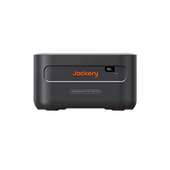
Jackery Explorer 2000 v2 Portable Power Station
The Jackery Explorer 2000 v2 Portable Power Station is a battery-powered station with a significant capacity of 2042Wh. It provides increased power in a compact form and can charge most household or outdoor devices.
The power station is recognised as a more compact, lightweight, and economical charging solution compared to comparable items on the market. It features a collapsable handle and an ergonomic design, facilitating more straightforward transport to outdoor settings.

Weighing just 17.5kg, the Jackery Explorer 2000 v2 weighs less than other large devices, making it easier to tote along on all outdoor expeditions. It is 41% lighter and 34% more compact than standard 2kWh LiFePo4 portable power stations. Utilising the latest CTB (Cell-to-Body) technology employed in electric vehicles, it maximises space and guarantees a more secure structure, providing a more compact, stable, and safer energy source.
Recharge the Explorer 2000 v2 from 0 to 80% in about 66 minutes using AC Fast Charging, or attain a complete charge in 102 minutes utilising the Emergency Super Charging option via our application. The Silent Charging mode delivers a full charge in 5 hours at 30dB, ideal for undisturbed sleep and productivity.
The Explorer 2000 v2 portable power station offers 20ms seamless switching, ensuring the continuous operation of your vital devices throughout hurricanes, storms, and power outages. UL1778 certification for Uninterruptible Power Systems ensures dependable backup power, providing comprehensive disaster preparedness with total assurance.
The intelligent app control functionality is among the most creative attributes of the Jackery Explorer 2000 v2 portable power station. It enables convenient monitoring and management of your power consumption over WiFi or Bluetooth. The intelligent application is designed to empower users, guaranteeing a seamless and convenient power experience for everyone.
The following are the running time of using Jackery Explorer 2000 v2:
|
Appliances |
Running Time |
|
TV (60W) |
27.2H |
|
Refrigerator (400W) |
4.1H |
|
Coffee Maker (550W) |
3H |
|
Oven (850W) |
1.9H |
|
Kettle (1600W) |
1.1H |
|
Power Tool (900W) |
1.9H |
(*The working hours are only for reference; the actual working hours depend on your usage.)
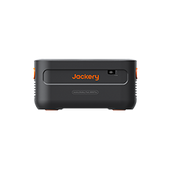
Jackery Explorer 3000 v2 Portable Power Station
With a pure sine wave inverter, the Jackery 3000 v2 is a versatile, high-capacity charging solution designed to charge various home or outdoor appliances whenever and wherever required. It is the ideal emergency home backup solution, offering high output to charge essential appliances such as lights and medical equipment like CPAP machines and refrigerators. Its robust and ergonomic design ensures your appliances stay powered up wherever you go.

Its 3600W pure sine wave AC output and 7200W surge power make it suitable for sensitive electronics and higher-demand appliances, including laptops, routers, TVs, fridges, kettles, tools, and camping equipment. Pure sine wave output is especially important because it delivers cleaner, more stable electricity for devices with motors, compressors, chips, or control boards.
Beyond the inverter itself, the Explorer 3000 v2 is practical because it combines 3072Wh capacity, 3*UK AC sockets, 2*100W USB-C ports, 2*USB-A ports, and a 12V car port, so you can power several devices at the same time without adding extra adapters. It also fits both home backup and outdoor use: during a power cut, it can keep essential appliances running; during camping, RV trips, garden work, or outdoor events, it gives you strong AC power without fuel, fumes, or generator noise.
It is also a good choice when you need strong power without making the system complicated. Instead of building a separate battery, inverter, charger, and wiring setup, the Explorer 3000 v2 puts everything into one portable unit.
The following are the running time of using Jackery Explorer 3000 v2:
|
Appliances |
Running Time |
|
E-Bike (625Wh Battery) |
3-4 Times |
|
Kettle (850W) |
16 Times |
|
Coffee Maker (550W) |
4H |
|
Water Pump (60W) |
30H |
|
Hair-Dryer (1200W) |
2.2H |
|
Electric Drill (150W-350W) |
9H |
(*The working hours are only for reference; the actual working hours depend on your usage.)
1000W Inverter vs 2000W Inverter vs 3000W Inverter
The capacity of a 1000W inverter can be doubled with a 2000W inverter. Choose a 1000W inverter for essential electronics and lighter loads. Choose a 2000W inverter if you need more appliance compatibility, more startup power, and more flexibility for home backup, camping, RV, or off-grid use.

1000W Inverter
A 1000W inverter converts DC power from a battery into AC power for everyday plug-in devices. It is suitable for light to medium loads, making it a practical choice for charging electronics, running small appliances, and supporting basic backup power needs.
Ideal for:
- Laptops, phones, tablets, routers, lights, and small TVs.
- Camping, road trips, small vans, and light outdoor use.
- Lower battery consumption compared with larger inverters.
- Usually smaller, lighter, and more affordable.
- Easier to pair with smaller battery systems.
- Good for users who only need essential power.
Limitations:
- Not suitable for many high-power appliances.
- May struggle with kettles, microwaves, heaters, large coffee machines, or power tools.
- Limited ability to run multiple devices at the same time.
- Surge capacity may not be enough for fridges, pumps, or motor-based appliances.
- Less future-proof if your power needs increase.
2000W Inverter
A 2000W inverter can provide up to 2000 watts of continuous AC power. Most will also have a "surge" rating (e.g., 4000W for a few seconds) to handle the initial power draw of motor-driven appliances.
Ideal for:
- Camping, RVs (smaller units): Powering essential comforts in a smaller setup.
- Emergency Home Backup (essentials only): Running a refrigerator, some lights, and charging devices during an outage.
- Small workshops/job sites: Powering one or two medium-draw tools at a time.
Limitations:
- You'll often need to manage power carefully to avoid overloading. You can't run multiple high-draw appliances simultaneously.
- May struggle with or trip on larger motor loads or those with very high starting surges.
- Not suitable for power-hungry appliances like full-sized electric ovens, large central AC units, or electric water heaters.
3000W Inverter
A 3000W inverter offers a substantial increase in continuous power output, allowing it to provide up to 3000 watts of AC power. Its surge rating will also be proportionally higher (e.g., 6000W or 7200W). As we introduced the Jackery Explorer 2000 v2, which are use 1000W inverters, whereas, the Jackery Explorer 3000 v2 with 3000W inverter can power 99% of appliances with 3600W continuous power and 7200W surge power.
Ideal for:
- Most household appliances: Can comfortably run refrigerators (300-800W running, up to 2200W surge), microwaves (600-1500W), washing machines (1200W running, up to 2300W surge), coffee makers, toasters, blenders.
- Larger entertainment systems: Multiple TVs, gaming setups, home theater systems.
- Mid-to-large power tools: Circular saws, air compressors, some welders (check specific requirements), larger drills.
- RV and Cabin Power: Can power a small RV air conditioner (900-1700W running, up to 2500W surge), small space heaters, and most RV appliances.
- Construction Sites: Running multiple tools simultaneously.
- Emergency Home Backup: Capable of powering essential circuits in a small to medium-sized home during an outage, including lights, a refrigerator, a freezer, a TV, and possibly a microwave.
Limitations:
- While significantly more capable, it still won't power very high-demand, 240V appliances like large central air conditioners, electric ranges, or electric clothes dryers.
- Higher cost and larger footprint than 2000W inverters.
How to Choose a 2000W Inverter?
Choosing a 2000W inverter is not only about the wattage. You also need to consider the waveform, battery voltage, surge power, battery size, safety protection, and how you plan to use it. A good 2000W inverter should match both your appliances and your power system.
Choose Pure Sine Wave for Better Compatibility
For most users, a 2000W pure sine wave inverter is the better choice. It produces clean and stable AC power similar to household electricity, making it safer for sensitive electronics and appliances with motors.
Choose pure sine wave if you want to run:
Fridges or freezers
TVs, laptops, routers, and smart devices
Coffee machines and microwaves
Medical devices
Power tools
Pumps, fans, or compressors
Match the Inverter Voltage to Your Battery System
A 2000W inverter can be designed for 12V, 24V, or 48V batteries. The right voltage depends on your setup.
|
Battery Voltage |
Best For |
|
12V |
Cars, small vans, occasional use |
|
24V |
RVs, cabins, mobile solar systems |
|
48V |
Home storage, larger solar systems, regular use |
For a 2000W inverter, 24V or 48V is usually better for regular use. A 12V system can work, but it draws very high current at full load, so wiring and safety protection become more important.
Check Continuous Power and Surge Power
The 2000W rating usually refers to continuous output. However, many appliances need extra power when starting. A good 2000W inverter should have enough surge capacity, often around 4000W or higher, depending on the product. This helps prevent overload shutdowns when appliances start.
Size the Battery Properly
The inverter controls power output, but the battery controls runtime. A small battery may technically power a 2000W inverter, but it will drain quickly. For practical use, a 2000Wh to 5000Wh battery is a better match for a 2000W inverter. For heavy loads or longer backup time, choose 5000Wh or more.
Think About What You Need to Power
Before buying, list your appliances and add up their running wattage. A 2000W inverter is powerful, but it is not for everything. Large ovens, big heaters, high-power air conditioners, and whole-home backup usually need a larger system.
Look for Built-In Safety Protection
Safety features are especially important because a 2000W inverter can draw high current from the battery. Look for protection against:
- Overload
- Short circuit
- Overheating
- Low battery voltage
- High battery voltage
- Reverse polarity
- Overcurrent
- Ground fault, where applicable
Also use the correct cable size, fuse, breaker, and ventilation. Poor wiring can cause heat, voltage drop, or system failure.
2000W Inverters FAQs
The following are the frequently asked questions about the 2000W inverters in the UK.
1. What can I run on a 2000W inverter?
Numerous electronic gadgets and home appliances can be powered by a 2000-watt inverter as long as their total power usage stays within the inverter's capabilities. Microwaves (about 1000W), coffee makers (1000W), toasters (1200W), refrigerators (750W), freezers (600W), televisions (250W), and PCs (150W) are typical items that work well with a 2000W inverter.
It's crucial to remember that appliances like freezers and refrigerators with electric motors or compressors may need a larger surge power at the beginning, occasionally up to 1200–1500W. In order to avoid overloading, make sure that the combined operating wattage of all connected devices—including starting surges—remains within the 2000W inverter's continuous output capacity.
2. How big of a battery do I need to run a 2000W inverter?
A 2000W power inverter needs at least 8-9 12V 100Ah batteries to run continuously for 4 hours. When using a 24V battery pack, the number of batteries is reduced; however, the system's total needs and load must still be considered when configuring.
3. How long will a 100Ah battery last with a 2000W inverter?
Analyse the viability of using a 100Ah lithium battery with a 2000W inverter. According to this theoretical computation, the battery can power the inverter for roughly 36 minutes or 0.6 hours.
4. How many solar panels for a 2000W inverter?
Although the amount of solar panels for a 2000-watt inverter depends on the wattage of each panel, a balanced system should include between 6 to 8 panels.
5. Can a 2000W inverter run a fridge?
Generally speaking, a refrigerator with a 2,000W inverter can function smoothly. Your inverter must handle both the steady wattage and the brief burst in power. Though the surge wattage can be roughly two to three times higher, most refrigerators need between 300 and 600 watts of power.
6. Can I run a 2000W inverter with a 100Ah battery?
Yes, you can run a 2000W inverter with a 100Ah battery, but it comes with major limitations. While the system will safely power small loads or short bursts of high power, drawing the full 2000W will drain your battery in minutes or trigger an instant battery shutdown.
7. How many hours can a 2000W inverter last?
1.2 hours. For instance, if you have a 200- amp 12 volt battery, the amount of time the inverter can last will be calculated as follows; 200-amp battery divided by 166.6 amp. The result is 1.2 hours. Therefore, your 2000 watt inverter will run for 1.2 hours.
8. How long will a 12V 200Ah battery last with a 2000W inverter?
As a result, a 12-volt, 200Ah battery will last at least 9.12 hours when running a 2000-watt load. This calculation helps you plan for the battery capacity needed to meet your energy storage needs during periods of no solar input, ensuring that the system will operate properly even under adverse conditions.
Final Thoughts
A 2000W inverter is a strong and flexible power solution for campervans, RVs, home backup, outdoor work, camping, and small off-grid systems. It can run many everyday appliances, including laptops, TVs, routers, fridges, coffee makers, microwaves, freezers, and selected tools, as long as the total load stays within the inverter’s rated capacity.
The best choice for most users is a 2000W pure sine wave inverter because it delivers cleaner power and works better with sensitive or motor-driven appliances. However, choosing the right inverter is not only about wattage. You also need to match the inverter with the right battery capacity, battery voltage, solar input, surge power, safety features, and real usage scenario.


