















































Many households in the UK worry about their electricity bills, especially with the rising cost of living. Your electricity usage will usually determine how much you pay, depending on the size of your home, how many people live in it, what appliances you use and when you use them.
Your total electricity bill in the UK includes the cost of electricity consumed, a standing charge, VAT and possibly some other charges.
The average electricity bill per month in the UK is around £70-75. In this blog, you can not only learn about the average monthly electricity bill but also get practical tips on how to reduce your electricity bill.
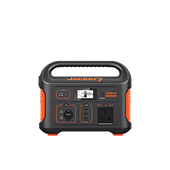
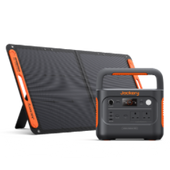
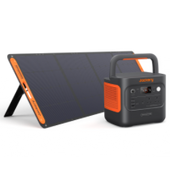
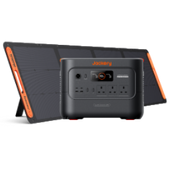
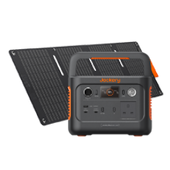
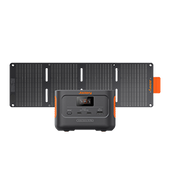
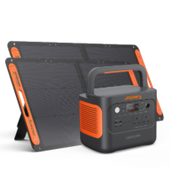
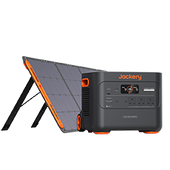
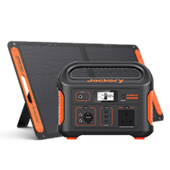
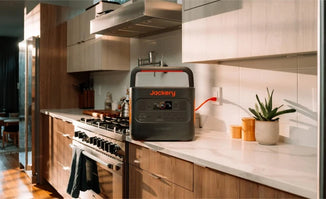
In addition to reducing your power consumption, including changing your usage habits and using energy-efficient appliances, we recommend the Jackery Portable Power Station for powering your household appliances with solar energy.
|
Key Takeaways: |
|
How Is the Electricity Bill Calculated?
Nowadays, it is convenient for most people to check and understand their electricity expenses through supplier accounts or paper bills. However, by understanding the composition and calculation of electricity charges, users can manage energy expenses more effectively or switch to a better package.
What Does an Electricity Bill Consist of?
An electricity bill is not just the cost of the electricity you use. It consists of many different charges.
- Electricity Consumption Charges: The electricity consumption charge is the central part of the bill. It refers to the charge for each kilowatt-hour (kWh) of electricity used. Therefore, the more electricity you consume, the higher the charge. The energy supplier sets the unit price, which is usually expressed in pence per kWh.
- Standing Charge: The standing charge is a fixed daily charge independent of the amount of electricity you use. You must pay this charge every day, even if you don't use electricity. It covers the costs of network maintenance, meter readings, and customer service.
- Value Added Tax (VAT): The UK government levies a 5% VAT on energy. The VAT is calculated based on the total cost (electricity consumption and standing charges).
- Other Potential Costs: The electricity bill may include additional potential costs. For example, suppose the electricity supplier participates in a series of government-supported energy-saving and emission-reduction projects. In that case, the costs of these projects will be passed on to users, and a certain proportion will be added to the energy bill.

How Is the Electricity Bill Calculated?
According to the above content, the total electricity bill includes electricity consumption costs, standing charge, VAT and other fees (if any). Therefore, you can calculate the electricity bill according to the following formula:
Total amount of electricity bill = (electricity consumption × unit price) + (standing charge × number of days) + VAT
Example: Assuming that a household in the UK consumes 400 kWh of electricity in a month (30 days), the unit price of electricity is 30p/kWh, and the standing charge is 25p/day; what is its electricity bill?
Total before tax = (400 kWh × 30p/kW) + (30day × 25p/day) = £127.50
VAT = £127.50 × 5% = £6.38
Total electricity bill = £127.50 + £6.38 = £133.88
The above is based on the electricity bill of this household, which only includes electricity consumption, standing charge, and VAT and does not include other potential costs. If there are additional costs, add them one by one.
Average Electricity Bill Per Month in the UK
The average monthly electricity bill does not accurately represent the electricity consumption of every UK household. However, it can also serve as a reference standard for most UK households to measure whether the electricity bill is overspending.
Average Electricity Bill Per Month in the UK
According to the above content on calculating electricity bills, it is necessary to know the electricity consumption and price before calculating the electricity bill. The following will analyse the critical data for calculating the average monthly electricity bill in the UK.
From 1 July to 30 September 2026, the average UK electricity price under the Ofgem price cap is 26.11p per kWh, with an average daily standing charge of 57.19p for Direct Debit customers in England, Scotland and Wales. The full dual-fuel price cap rises to £1,862 per year, but that figure includes both gas and electricity, not electricity alone.
For electricity only, a typical household using around 2,500 kWh per year would pay roughly:
|
Item |
Estimate |
|
Annual electricity use |
2,500 kWh |
|
Monthly electricity use |
208 kWh |
|
Electricity unit cost |
~£652.75/year |
|
Standing charge |
~£208.74/year |
|
Average electricity bill |
~£861/year |
|
Average electricity bill per month |
~£72/month |
So, the average electricity bill per month in the UK is around £70–£75 for a typical household on a standard variable tariff paying by Direct Debit. Homes with electric heating, EV charging, tumble dryers, hot tubs or larger occupancy can pay much more.
Average Monthly Electricity Consumption of an Average Household in the UK
In the UK, medium energy consumption levels usually refer to households with electricity usage at or slightly above the national average. Therefore, the annual electricity consumption of medium user groups can be used as a benchmark reference for the average electricity consumption of an average household in the UK.
A typical UK household uses around 2,500–2,700 kWh of electricity per year, depending on which benchmark is used. Ofgem’s updated Typical Domestic Consumption Values are being implemented from July 2026, while the previous common benchmark for a medium household was 2,700 kWh per year, or 225 kWh per month.
|
Household type |
Estimated annual use |
Estimated monthly use |
|
Low-use household / flat |
1,500–1,800 kWh |
125–150 kWh |
|
Average / medium household |
2,500–2,700 kWh |
208–225 kWh |
|
Larger household |
3,500–4,500 kWh |
292–375 kWh |
|
Electric-only home |
Often 5,000 kWh+ |
417 kWh+ |
Government statistics show that the mean domestic electricity consumption in Great Britain was 3,323 kWh per meter in 2025, while the median was 2,471 kWh. This difference matters because a small number of very high-use homes pull the average upward.
Average Price of Electricity in the UK
The current average electricity price under the Ofgem cap from 1 July to 30 September 2026 is:
|
Payment method |
Electricity unit rate |
Daily standing charge |
|
Direct Debit |
26.11p/kWh |
57.19p/day |
|
Prepayment |
23.52p/kWh |
57.19p/day |
|
Standard credit / on receipt of bill |
27.56p/kWh |
65.74p/day |
These are average cap rates, not fixed national prices. Your actual rate can vary by region, supplier, meter type and payment method.

Average Electricity Bill Per Month in Different Regions of the UK
While it is possible to calculate the average electricity bill for the UK based on the energy price cap and the electricity consumption of a medium-sized household, the energy price cap fixed charges and unit rates vary across the UK.
Electricity bills vary by region for two reasons: regional unit rates and standing charges differ, and households in different regions use different amounts of electricity. Standing charges vary because network costs, regional demand and infrastructure costs are not the same everywhere.
Below is a complete table for the 14 Great Britain electricity regions under the Ofgem price cap from 1 July to 30 September 2026, using Direct Debit, single-rate electricity prices.
Calculation used:
Average monthly electricity bill = (2,500 kWh × unit rate + 365 days × standing charge) ÷ 12
Ofgem’s July–September 2026 GB average is 26.11p/kWh and 57.19p/day, but actual rates vary by region and payment method. Ofgem also states that the price cap applies to England, Scotland and Wales, not Northern Ireland.
|
Region |
Unit Rate 2026 |
Standing Charge 2026 |
Average Electricity Bill / Month |
|
London |
26.35p/kWh |
44.78p/day |
£68.52 |
|
South East |
26.67p/kWh |
54.45p/day |
£72.12 |
|
Eastern |
26.38p/kWh |
53.94p/day |
£71.37 |
|
Southern |
26.42p/kWh |
49.70p/day |
£70.16 |
|
Southern Western |
26.39p/kWh |
57.89p/day |
£72.59 |
|
North Wales and Mersey |
27.66p/kWh |
70.76p/day |
£79.15 |
|
South Wales |
26.33p/kWh |
57.84p/day |
£72.45 |
|
Midlands |
25.33p/kWh |
59.71p/day |
£70.93 |
|
East Midlands |
25.10p/kWh |
53.60p/day |
£68.60 |
|
Yorkshire |
25.31p/kWh |
64.38p/day |
£72.31 |
|
North West |
26.13p/kWh |
47.61p/day |
£68.92 |
|
Northern |
25.22p/kWh |
64.29p/day |
£72.10 |
|
Southern Scotland |
25.85p/kWh |
64.17p/day |
£73.37 |
|
Northern Scotland |
26.42p/kWh |
57.55p/day |
£72.55 |
Northern Ireland Note*: Northern Ireland is not part of the Ofgem GB price cap. Electricity prices there vary by supplier and tariff. For example, Power NI lists a monthly Direct Debit online-billing rate of 28.84p/kWh and a 12.10p/day standing charge, which would equal about £63.76/month at 2,500 kWh/year.
Factors Affecting Average Electricity Bill Per Month
Various factors, including energy markets, policies, regional differences and individual electricity consumption behaviour, influence the average monthly electricity bill in the UK. In the following content, we will explore the main factors:

Electricity Price Structure
The rates of different energy suppliers vary greatly and can significantly affect the total cost. For example, fixed-rate contracts lock in prices for a specific period, while variable rates can fluctuate with the market. Some households use Time-of-Use Tariffs, which are more expensive during peak times (such as the evening) and cheaper during off-peak times (such as at night).
Household Size and Daily Electricity Use
The more people living in a home, the higher the electricity use usually becomes. A single-person flat may only use electricity for basic lighting, cooking, refrigeration and device charging. A family home may run several laptops, TVs, washing machines, dishwashers and kitchen appliances every day.
|
Household type |
Typical electricity use |
Impact on monthly bill |
|
One-person flat |
Low |
Lower monthly cost |
|
Couple in a small home |
Low to medium |
Moderate monthly cost |
|
Family of 3–4 |
Medium to high |
Higher monthly cost |
|
Large household |
High |
Much higher monthly cost |
Home Size and Property Type
Larger homes usually need more electricity for lighting, appliances, ventilation, home offices and entertainment systems. A detached house often has a higher bill than a small flat because there is more space to power and more appliances in use.
Property type also matters. Older homes may have less efficient wiring, older appliances or poorer insulation, which can increase electricity use, especially if electric heating is involved.
Seasonal Differences
Seasonal differences can also affect your electricity bill. Cold winters and hot summers both drive up electricity demand. In summer, the frequent use of cooling systems such as air conditioners leads to increased electricity consumption and higher electricity bills. However, in winter, electricity consumption is usually higher than in summer due to increased heating and lighting needs.
Region in the UK
Electricity prices vary by region because network costs, infrastructure, distribution charges and local supply conditions are different across the country. A household in London, Scotland, Wales or the South West may not pay exactly the same unit rate or standing charge.
Appliance Efficiency and Home Insulation
Old and high-energy appliances (such as old refrigerators, washing machines, and electric heaters) will increase electricity consumption and lead to higher electricity bills.
Poorly insulated homes (such as old houses) lose heat faster and require more heating, pushing electricity bills. In addition, poor attic insulation or significant gaps between doors and windows can cause heating and cooling systems to be overloaded, increasing electricity consumption and, thus, electricity bills.
Personal Electricity Behaviour
The larger the population, the greater the demand for lighting, cooking, cleaning, etc., so the electricity consumption is usually higher. For example, four people take more showers and heat more water than one person.
If more people are at home during the day, more electricity will be used, and the bill will be higher. In addition, some people like to leave lights on in empty rooms and leave appliances plugged in for long periods, which are also the main reasons for the surge in electricity bills.
Smart Meter and Energy Monitoring
A smart meter does not reduce the bill by itself, but it helps households understand when and where electricity is being used. This can make it easier to spot high-consumption habits, compare tariffs and shift usage to cheaper periods.
Top Tips to Reduce Average Electricity Bill Per Month
With fluctuating energy costs, Britons can use various practical tips to reduce their monthly electricity bills effectively. Here are some valuable tips for British residents to reduce their monthly electricity bills:
Adjust Your Electricity Habits
Optimising your home appliance usage habits in daily life is the most straightforward and helpful trick to reduce your monthly electricity bill. Here are some easy-to-use actions to reduce your electricity bill:
a. Turn off standby devices or use smart plugs to cut off the power on a timed basis.
b. Set your washing machine to wash in cold water and run at full load.
c. Use air conditioners and fans together in summer to enhance the cooling effect.
d. Only heat frequently used rooms during winter heating, and turn off the heating valves in unoccupied rooms.
Track Your Electricity Use with a Smart Meter or App
A smart meter makes it easier to see when your household uses the most electricity. Check which times of day cause the biggest spikes, then adjust your habits. For example, if evening cooking, laundry, and heating overlap, you can spread usage across the day or move some tasks to cheaper tariff periods.
Store or Use More Solar Energy at Home
For most British households, solar panels and batteries can be installed to offset some of their electricity needs. Although this requires a lot of upfront costs, the subsequent free solar energy will cost almost nothing to run. Suppose you don't have the money to support installing a solar system. In that case, you can buy a portable power station (such as the Jackery Explorer 2000 v2 or 3000 v2) and use solar panels to generate electricity.

Upgrade Energy-Saving Equipment
Low-cost energy-saving renovations are also a good way to save electricity bills in the long run. For example, prioritise replacing traditional light bulbs with more energy-efficient LED bulbs in high-frequency areas such as kitchens and living rooms. Then, replace old appliances with appliances with energy efficiency A+++. If the budget is high, consider installing a smart thermostat to automatically adjust the heating period and temperature to reduce excessive energy consumption.
Improve Your Home's Insulation
The basic steps to improve your home's insulation are to reduce heat loss, such as sealing gaps between doors and windows with draught strips. Alternatively, you can also add insulation to your loft and walls. You can get free or cheaper insulation by applying for support from the Great British Insulation Scheme.
Jackery Portable Power Stations to Lower Electric Bills
The power station captures free solar energy when connected to Jackery Portable Power Stations and Jackery Solar Panels. You can then use this stored energy to power your devices and appliances instead of drawing electricity from the grid, thus lowering your consumption and bill.
Also, you can charge the Jackery Portable Power Station during off-peak hours, when electricity rates are typically lower, and then use that stored power during peak hours, when rates are higher. This strategy helps you avoid paying higher electricity costs.
While not directly saving on your regular bill, having a Jackery as a backup prevents you from losing perishable food, interrupting work, or facing other inconveniences during power outages. This indirectly saves you money by avoiding potential losses. Here, we recommend Jackery Explorer 2000 v2 and 3000 v2 to power your appliances at home.
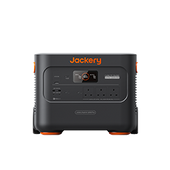
Jackery Explorer 2000 v2
The Explorer 2000 v2 can help lower electricity bills in practical daily-use scenarios, but it should not be described as a full replacement for a home battery system. Its 2042Wh capacity is enough for many small and medium loads, but it will not run a whole home for long periods.
For households that want a flexible product for solar storage, off-peak charging, home office power, garden use, camping and emergency backup, the Jackery Explorer 2000 v2 is a strong choice.
 2042Wh Capacity: Store About 2kWh of Usable Electricity
The Jackery Explorer 2000 v2 has a 2042Wh capacity, equal to about 2.04kWh of stored electricity. That means it can cover many small and medium daily loads, especially in the evening when UK households often use more electricity.
For bill saving, this means you can move part of your daily electricity use from the grid to stored power. It is especially useful for laptops, phones, Wi-Fi routers, lamps, TVs, monitors and small kitchen appliances.
2200W Output: Suitable for More Than Just Small Devices
With 2200W output, the Explorer 2000 v2 can run many household appliances that smaller power stations cannot handle. Such as a 1800W heater for around 1 hour, a 1600W electric oven for around 1.1 hours, a refrigerator for 3.2–72 hours, a 100W projector for around 15 hours, and a 5W lamp for around 155 hours.
Solar Charging: Use Free Daytime Solar Power Later
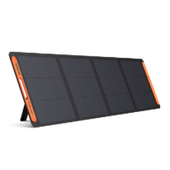
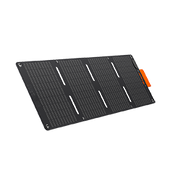
The Explorer 2000 v2 becomes more useful for electricity bill saving when paired with SolarSaga 200W or 100W solar panels. It can store solar power during the day and supply that power later for evening use. That matters because many UK homes use more electricity after work, when solar generation is lower. The Explorer 2000 v2 a 400W solar input, with a full solar charge taking around 5.5 hours in suitable conditions.
Fast AC Charging: Charge When Electricity Is Cheaper
The Explorer 2000 v2 supports fast AC charging. Jackery lists 0–80% charging in 52 minutes through Emergency Super Charge Mode, and a full AC charge in 103 minutes in regular AC charging mode.
This is helpful if your household uses a time-of-use tariff or EV-style off-peak tariff. You can charge the power station when electricity is cheaper, then use the stored energy later during expensive periods.
|
Jackery Explorer 2000 v2 Running Time |
|
|
Electric Kettle (800W) |
10 Times |
|
E-bike (625Wh Battery) |
2.3 Times |
|
Heater (1800W) |
1H |
|
Refrigerator (15-520W) |
3.2-72H |
|
Laptop (80W) |
19 Times |
(*The working hours are only for reference; the actual working hours depend on your usage.)
Jackery Explorer 3000 v2
The Jackery Explorer 3000 v2 can help you save on electricity bills primarily by leveraging solar power and off-peak charging.

Solar Charging and Prioritised Solar Use: The Jackery Explorer 3000 v2 is designed to integrate with Jackery SolarSaga panels. By charging the power station using solar energy during the day, you can store that free, clean energy and then use it to power your appliances at night or during peak electricity rate hours.
This reduces your reliance on grid electricity, directly lowering your electricity bills. Jackery claims you can save up to 25% on electricity bills annually by maximising savings with off-peak charging and prioritised solar use.
Backup Power During Outages: While not directly a bill-saving feature, the ability to act as an Uninterruptible Power Supply (UPS) with a less than 20ms switchover time means critical appliances (like refrigerators) will continue to run during power outages. This prevents potential financial losses from spoiled food or disruptions to work. Its 3027Wh capacity, 3600W continuous power, and 7200W surge power can power most household appliances.
Reduced Reliance on Grid for Specific Appliances: You can strategically use the Jackery Explorer 3000 v2 to power specific energy-hungry appliances, especially if you have ample solar input. For instance, you could run a portable fridge, a coffee maker, or your internet router directly from the power station, reducing their draw from the primary grid.
|
Jackery Explorer 3000 v2 Running Time |
|
|
Electric Kettle (600W) |
4H |
|
Coffee Maker (550W) |
4.4H |
|
Refrigerator (300W) |
8.1H |
|
Projector (100W) |
24.21H |
|
TV (60W) |
40.35H |
(*The working hours are only for reference; the actual working hours depend on your usage.)
What to Do If You Have Trouble Paying Your Electricity Bill?
Not being able to afford the electricity bills for your home can be stressful, so don't face these problems alone. If you're struggling to pay your electricity bills, there are a few ways to get help in the UK:
Method 1: Contact Your Energy Supplier
Energy suppliers are obliged to support customers in hardship. If you struggle to pay your electricity bills, contact your supplier to explain the situation. Most electricity suppliers can offer short-term payment deferrals, instalment plans or debt relief. If you use a pay-as-you-go meter, some suppliers provide a safety credit that allows you to keep using energy when your account runs low.
In addition, electricity suppliers must help vulnerable people on the priority service register.
Method 2: Government Assistance Schemes
If you're struggling to pay your electricity bills, you can check if you're eligible for additional government help. Here are some government assistance schemes you may be eligible for:
- Warm Home Discount: You could get £150 off your electricity or gas bill if eligible.
- Cold Weather Payments: If the temperature is below 0°C for seven consecutive days or more, you could be eligible for £25 per week.
- Winter Fuel Payment: If you are of state pension age and receive a pension or other qualifying benefit, you will also be eligible for a winter fuel payment between £100 and £300.
Method 3: Local Welfare Schemes
If you are not struggling to pay your electricity bills, local welfare schemes may be able to help. For example, some areas offer emergency cash assistance or energy vouchers.
People living in England can check with their local council to see if there is a welfare assistance scheme.
People living in Scotland can find out more information on the Scottish Welfare Fund page.
People living in Wales can find out more about the Discretionary Assistance Fund.
People living in Northern Ireland should consider seeking free, confidential, and independent debt advice.
If you struggle to pay your electricity bills in the UK, contact your energy supplier to negotiate to avoid arrears. Then, check eligibility for government subsidies or consider taking advantage of local welfare measures.
FAQs
The following are the frequently asked questions about the average monthly electricity bill in the UK.
1. What is the average monthly electric bill in the UK?
The average monthly electric bill in the UK is around £70–£75 for a typical household using about 2,500 kWh of electricity per year on a standard variable tariff. The exact amount depends on the electricity unit rate, daily standing charge, region, payment method, household size, appliance use and whether the home uses electricity for heating, EV charging or hot water.
2. What is the average bill per month for a two-bedroom flat in the UK?
For a two-bedroom flat in the UK, the average electricity bill is usually around £50–£75 per month, depending on the tariff, region, heating type, and how many people live there. A typical two-bedroom flat may use roughly 1,800–2,500 kWh of electricity per year, so homes with electric heating, frequent appliance use, or working-from-home habits can sit above this range, while energy-efficient flats with gas heating may pay less.
3. What is the average electricity bill for a three-bedroom house in the UK?
The average electricity bill for a three-bedroom house in the UK is usually around £80–£100 per month, depending on usage, tariff and region. A typical 3-bedroom home may use roughly 2,700–3,500 kWh of electricity per year, so the bill can be lower for efficient households and higher if the home has electric heating, a tumble dryer, home office equipment, an EV charger or several people using appliances daily.
4. What are some practical tips to help you reduce your electricity bill?
For most UK households, simple energy-saving measures such as taking shorter showers, unplugging, and washing clothes at lower temperatures can reduce electricity bills. In addition, replacing old appliances with high energy efficiency ratings can help save electricity bills in the long run. Solar energy can cover part of your electricity needs and compensate for the high bills by selling electricity through SEG.
5. What wastes the most electricity in a house?
In almost every home, heating and cooling (HVAC) systems waste the most electricity, accounting for nearly half of total energy consumption. The secondary drivers are water heaters, refrigerators, and heavy "wet appliances" (like washers and dryers).
6. How much electricity should a 2 person household use?
A typical two-person household uses between 1,800 kWh and 3,500 kWh of electricity annually, averaging 150 to 300 kWh per month. This translates to a daily consumption of roughly 5 to 10 kWh, though these figures fluctuate widely based on your geographic location and whether your home uses electricity for heating and cooling.
Final Thoughts
The average monthly electricity bill in the UK will vary depending on the size of the house, the number of people living in it, the energy efficiency, the season, and the location. However, knowing the average monthly electricity bill in the UK will allow you to gauge your household electricity consumption and adopt some strategies to reduce costs if necessary. If you are facing difficulties paying your electricity bill, contact your energy supplier first to negotiate.


