



























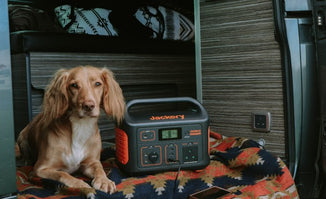









You can continue working without being constrained by plugs, cords, or mains electricity when you can access batteries. While battery range might occasionally be confusing, choosing the correct battery will keep you operating productively and successfully.
This guide will show the battery sizes in the UK, examine the various battery types available, and offer advice on battery longevity, storage, and disposal. Also, when choosing the proper batteries for your home or outdoor uses, we highly recommend Jackery Portable Power Stations, which adopt high-quality lithium batteries to ensure a consistent and smooth power supply for your appliances.
|
Key Takeaways: |
|
Batteries Facts in The UK
A battery is powered by converting chemical energy into electrical energy. A chemical reaction inside the device causes one end of the battery, or cell, to become positively charged and the other negatively charged. The potential difference, the charge difference, drives electrons to move along the circuit to which the battery is attached.
How Long Does A Battery Last?
The rating and power of the device a battery is used in determine how long it will last. Milliampere-hours (mAh) are used to rate batteries. An hour's worth of continuous current can be provided by a battery rated at 2000 mAh, two hours' worth at 1000 mA, and so on. The equipment being utilised will determine the current production.
Most AA and AAA batteries have a 2000–3000 mAh capacity. This might endure for approximately ten hours for low-power gadgets like LED torches. The battery will drain considerably faster in devices with higher power consumption.
If stored properly, batteries can be kept for ten years without experiencing any degradation in performance.
Batteries Types in The UK
Three types of batteries are frequently utilised: Lithium Ion, Nickel Metal Hydride (NiMH), and Alkaline. These batteries have unique qualities due to using various metals and electrolytes, making them appropriate for multiple situations.

Alkaline Batteries: They are the most often used kind. These non-rechargeable batteries are the least expensive type and provide dependable performance throughout their lifetime due to their constant discharge. Although alkaline batteries are convenient, they are not a green choice due to their disposable nature.
NiMH Batteries: The first rechargeable batteries to be created were NiMH batteries. This skill is beneficial in terms of effectiveness and financial effect. NiMH batteries can be challenging to charge quickly, and their power output decreases with repeated recharges.
Lithium Batteries: A more recent advancement in rechargeable batteries, lithium-ion batteries, is now frequently used in phones and computers. Although initially more expensive than NiMH, they will save money because of the feasible recharges. Lithium batteries are more popular because of their faster charging times and more constant power production throughout their lifetime.
It is clear that lithium batteries are better than others, regardless of battery capacity, resistance, energy density, or self-discharge rate. Jackery Portable Power Stations use lithium batteries (lithium-ion and LiFePO4 batteries) to ensure a stable and consistent power supply with higher capacities.
What Does Battery Size Actually Mean?
Battery size refers to how much energy a battery can store for later use. Measured in kilowatt hours (kWh), it gives a broad indication of how long your home can run on stored power before drawing from the grid again.
That said, not all of that stored energy is actually available to use.
This is where depth of discharge (DoD) comes in. DoD describes how much of a battery's stored energy can be safely drawn down. Most modern lithium batteries offer a DoD of around 90–95%, meaning a 10 kWh battery delivers roughly 9–9.5 kWh of usable power. Older battery technologies were far more restrictive, which is why headline capacity figures have never told the complete story.
Usable capacity, then, is the figure that really matters — and a smaller battery with a higher DoD can easily outperform a larger one on paper. When comparing options, the most useful calculation is simple: multiply the nominal capacity by the DoD percentage to find the true usable kWh. A 10 kWh battery rated at 95% DoD, for instance, delivers more real-world energy than a 12 kWh battery with a 70% DoD — a difference that can have a meaningful impact on how your home performs day to day.
Different Battery Sizes in The UK
Different battery sizes affect your equipment's overall efficiency, but it's essential to understand why. A battery's ability to hold energy generally rises with its size. Therefore, even if the 1.5V rating of both the big and small batteries is the same, the large battery has a higher capacity and a longer lifespan.
The most common battery sizes in the UK are probably the ones you already use. Alkaline batteries come in 5 standard sizes: AAA, AA, C, D, and 9V. Batteries are commonly found in various household devices, including TV remotes, clocks, and digital cameras. Alkaline batteries account for 80% of battery sales in the UK. Standard alkaline batteries can sometimes be confused due to the different numbering systems used.
Size AA is referred to as LR6, MN1500, or MX1500. Size AAA corresponds to LR03, MN2400, or MX2400. Size C batteries may also be marked as LR14, MN1400, or MX1400. D batteries are labelled as LR20, MN1300, or MX1300. 9V batteries are referred to as 6LR61, PP3, MN1604, or MX1604. Understanding the various labels helps you locate the batteries you require!

AA Batteries are the most popular, sometimes called "double A" batteries. These batteries are readily accessible and have a wide range of uses.
Most people think of regular replaceable batteries and usually imagine double-A batteries. These batteries are widely used in various devices, including cordless phones, staffed pagers, and thermometers.
AA batteries, which have a 1.5V measurement, are suitable for gadgets that need a moderately high current consumption but are not used continuously. They can also be utilised for low-energy, always-on devices like clocks.
AAA Batteries: AAA batteries are the second most common type, sometimes called "triple A" batteries. They are utilised for thermometers, calculators, and little toys. Small electrical appliances like kitchen timers, graphing calculators, TV remote controls, and bathroom scales frequently use AAA batteries.
AAA batteries have a 1.5V measurement but provide less energy because of their smaller size. Kitchen timers and other tiny appliances with low energy requirements are the main uses for these batteries. The batteries will still serve their duty for a very long period. These little batteries also power thermometers and portion control scales.
AAAA Batteries: Although less common than their AA and AAA counterparts, "quadruple A," or AAAA, batteries are potent. LED penlights and laser pointers frequently use these compact yet potent batteries. Additionally, they are found in tiny gadgets like computer styluses with power, hearing aid remote controls, and diabetes meters.
C Batteries: Toys, flashlights, and portable radios are the primary uses for these heavy-duty batteries. These 1.5V batteries are needed for a lot of automatic hand sanitiser dispensers. Ideal for demanding applications requiring regular battery changes, you can be sure your gadget runs on dependable, secure power. These batteries are also commonly used in restrooms, including flush sensors that run on batteries.
D Batteries: These batteries are best suited for stereos, large flashlights, and hands-free soap or paper towel dispensers - devices that need prolonged power.
D batteries are necessary to power the majority of automatic paper towel dispensers. Numerous commercial heavy-use gadgets, such as hands-free sensor faucets, air freshener systems, and soap dispensers, can be powered for hours by these big batteries.
9V Batteries: The 9-Volt battery, recognisable by its rectangular form, is utilised in gadgets that require high voltage and substantial power. Electronic portion scales, battery-operated temperature alarms, and infrared thermometers are just a few examples of gadgets that benefit significantly from 9V batteries.
These products could come into contact with scorching food, walk-in coolers, or other kitchen appliances. 9V batteries function well in temperatures ranging from 0 to 130 degrees Fahrenheit and are incredibly resilient.
CR123A Batteries: They are widely used for home automation, wireless security, and tactical equipment because of their high capacity.
The CR123A battery has twice the voltage of an AA battery but is much shorter than an AA battery. It produces 3 volts. These batteries are pretty small in size, yet they provide a tremendous amount of power. They guarantee optimal performance, making them perfect for high-power gadgets like LED torches. Because of its high power-to-size ratio, this battery will survive longer than others.
Lithium Batteries: There are, of course, a lot more kinds of batteries than just alkaline ones. Lithium coin cells are being used in more and more things, like car keys, 3D glasses, watches, and cooking scales. This battery is also used in exercise watches that look like Fitbits.
About 7% of all batteries sold in the UK are lithium coin cell batteries. It's easier to keep track of lithium coin cells' numbers. Most of them begin with CR and then four numbers. A CR2032 cell, for instance, is 20 mm across and 3.2 mm thick. If you don't know what kind of coin cell you need, this can help.
Different Home Battery Sizes in the UK
The right home battery size in the UK depends on three things: home size, household size, and daily electricity consumption. As a rough guide, the average UK home uses around 8–10kWh of electricity per day, while new lithium-ion solar batteries commonly range from about 5kWh to 15kWh.
|
Home type |
Typical household size |
Estimated daily electricity use |
Suggested home battery size |
|
Small flat / apartment |
1 person |
3–5kWh/day |
2–5kWh |
|
1–2 bedroom flat |
1–2 people |
4–7kWh/day |
5kWh |
|
2 bedroom house |
2 people |
6–8kWh/day |
5–8kWh |
|
3 bedroom house |
2–4 people |
8–10kWh/day |
8–10kWh |
|
4 bedroom house |
4–5 people |
10–14kWh/day |
10–15kWh |
|
5+ bedroom house |
5+ people |
14–20kWh+/day |
15–20kWh+ |
|
Electric-only home |
2–5 people |
15–30kWh+/day |
15–30kWh+ |
|
Home with EV charging |
Any size |
Adds 7–20kWh+ per charge |
10–30kWh+ |
Small Homes and Flats: 2–5kWh Battery
A 2–5kWh home battery is usually enough for a small flat, apartment or low-use household. It can cover light evening loads such as lighting, Wi-Fi, phone charging, laptops and some TV use. This size is best for people who want to reduce small daily grid consumption rather than power large appliances.
Medium Homes: 5–10kWh Battery
A 5–10kWh battery is often suitable for a 2–3 bedroom UK home. This size can store enough solar electricity to cover much of the evening demand, including lights, cooking support, entertainment devices, routers, laptops and some appliance use. For many average homes, a battery of around 9–10kWh is often seen as a practical match to daily electricity use.
Larger Family Homes: 10–15kWh Battery
A 10–15kWh battery is better for a 4 bedroom home or a family with higher electricity demand. It gives more flexibility for evening appliance use, home working, washing machines, dishwashers and higher standby loads. This range is also useful if the home has a larger solar panel system and regularly produces surplus electricity during the day.
High-Consumption Homes: 15–30kWh+ Battery
Homes with electric heating, heat pumps, EV charging, hot tubs, large home offices or high appliance use may need 15–30kWh or more. These homes consume far more electricity than a typical gas-heated property, especially in winter. A larger or modular battery system is usually more suitable because electricity demand can change significantly by season.

Important Note*: A practical rule is to match the battery size to your average evening and night-time electricity use, not necessarily your full daily use. For example, if your home uses 10kWh per day, but only 5-6kWh after sunset, a 5-8kWh battery may be enough. If you want longer backup, more off-peak storage or higher solar self-consumption, choose a larger or modular battery.
How Battery Size Affect Battery Performance & Capacity?
A battery's performance and energy storage capacity can be significantly impacted by its size. Even though the measurements may differ based on the particular kind of battery (lead-acid, lithium-ion, alkaline, etc.), the following are important considerations:
Energy Storage Capacity
The size and storage capacity of batteries are often closely connected. A larger battery can retain more energy than a smaller battery of the same type. Watt-hours (Wh) and ampere-hours (Ah) are standard battery ratings. A bigger battery will usually hold more energy.
Performance
The battery's performance may also be impacted by its size. Larger batteries can provide current faster due to their increased capacity. This is crucial for high-power consumption applications like high-end electrical products or electric cars.
Furthermore, a larger battery could last longer and go through more charge-discharge cycles before losing performance.
Physical Size & Portability
It's crucial to understand that a battery's energy density - or the quantity of energy held relative to its weight or volume - has nothing to do with its size. Certain battery technologies, like lithium-ion batteries, can provide high capacity in a small package and have a high energy density. This is particularly important for portable electronics like laptops and cell phones, where balancing battery size and storage capacity is essential.
When choosing a battery for a particular use, it is crucial to consider the power requirements and strike the right balance between its physical dimensions, capacity, and intended performance.
How to Determine The Battery Size?
Selecting the proper battery sizes guarantees that your power system effectively meets your energy needs. An increasing number of British houses and companies are converting to solar energy solutions with lithium-ion batteries for improved self-consumption and power backup due to the increased popularity of rooftop solar and rising electricity rates.
When choosing a battery, you must weigh various considerations, including backup time, number of charging cycles, space restrictions, upfront expenses, safety, etc. This blog explains how to calculate the best lithium-ion battery capacity for your application using an easy, step-by-step process.
Step 1: Estimate Your Load Requirements
The first step is finding out how much energy you use daily. List all the electronics and appliances you want to be powered by solar energy. Please note their wattages and daily expected runtime. This will provide you with the average daily load (measured in Watt-hours) that your battery-operated solar energy system must be able to support.
For instance, a 60-watt fan operating for six hours a day will use 60*6 = 360 Wh of energy. For trouble-free operation, size your solar system to accommodate 120-150% of your average daily load, considering potential load growth and seasonal variations.
Step 2: Determine Backup Time Needed
The crucial backup time you require during power outages determines the battery capacity. When grid supply is disrupted, most homeowners and small and medium-sized enterprises (SMEs) aim for a 3-5 hour solid backup to run lights, fans, mobile charging, etc.
Nonetheless, larger battery banks are built to give a more extended backup of at least 10-15 hours for applications like telecom towers and off-grid houses. Determine your load requirements during a power outage and choose the ideal backup time appropriately.
Step 3: Calculate Total Battery Capacity
Watt-hours (Wh) are used to express battery capacity. Once your intended backup time and average daily load are known, you can use the following calculation to determine the total amount of lithium-ion battery capacity required:
Average Load (W) x Backup Time Needed (hrs) = Battery Capacity (Wh).
To supply a 1 kW load for 4 hours during a grid outage, for instance, the lithium-ion battery capacity needs to be at least 1 kW x 4 hours = 4,000 Wh, or 4 kWh.
As a general guideline, consider that only 70-80% of the reported battery capacity is useable to account for optimal battery usage and prevent over-discharging.
Step 4: Select Suitable Battery Voltage
For the system to work correctly, the battery bank voltage (rated at 48V, 51.2V, etc.) must match the requirements of the charge controller and inverter. Higher voltage battery banks increase system efficiency and minimise the need for larger cables, but they may also call for extra safety precautions. The highest value for residential settings can be found in 48V lithium-ion battery banks.
Step 5: Determine Your Batteries Sizes
The market's available battery capacity ratings range from 50 to 10,000 Ah. To determine the battery sizes that need to be wired in series or parallel, divide your total calculated battery capacity by the capacity of the battery model that you have chosen.
Using 150 Ah 48V lithium batteries, the battery back calculation for the 1kW x 4hr = 4 kWh calculation above would require 4000 Wh ÷ (150 Ah x 48V) = 5.5 = 6 batteries. Incorporate a reserve of 20-30% for potential future capacity growth.

Optimal Solar Battery Selection by Application
In addition to battery size, choosing the right lithium-ion battery chemistry and characteristics for your operating environment is crucial for optimal solar performance. Let's examine a few essential selection criteria for diverse applications:
Residential Homes: Prioritise safety, affordability, and lifespan when selecting a home solar battery. The LFP (lithium iron phosphate) chemistry offers the highest chemical and thermal stability. Select reputable companies that provide integrated battery management systems (BMS) for cell safety and monitoring. Take a hard look at the warranty's coverage and assurances.
Consider intelligent hybrid inverters that facilitate smooth transitions between grid power, solar energy, and batteries to reduce disturbance. This allows peak power consumption to be reduced by using time of day. With fewer space constraints, pooled community battery banks offer superior economics for multi-level apartments and housing societies considering solar electricity.
Commercial Buildings: Businesses such as hospitals, malls, and offices need to continue operating during blackouts. Examine the containerised plug-and-play lead-acid and lithium-ion battery systems that offer scalability and simplicity of installation.
Should You Get an Oversized Battery?
Opting for a battery larger than your current needs only makes sense if you expect your household's energy consumption to grow in the near future. If you're planning to install a heat pump, or anticipate more people joining your household, it's worth factoring that into your decision and sizing up accordingly.
Outside of those circumstances, paying thousands of pounds more for an oversized battery is rarely justified. Even if you make full use of a time-of-use tariff to maximise savings, the additional upfront cost is unlikely to pay for itself over time.
Can You Add More Battery Storage Later on?
Most batteries are built as stackable modules, meaning additional storage can technically be added by an installer at a later date — but in practice, it rarely makes financial sense to do so.
Wait too long — say, a decade — and you'd be expanding a system that's already approaching the end of its lifespan. At that point, investing in a brand new, larger battery would be the more logical choice.
Move sooner, and you face a different problem. If your original battery still has plenty of life left in it, replacing it early would be wasteful — but you'd likely regret not having opted for more storage from the outset. Adding modules down the line also means paying for labour a second time, whereas bolting on a few extra modules during your original installation would have added little to nothing to the overall cost.
Jackery Portable Power Stations with Lithium Batteries
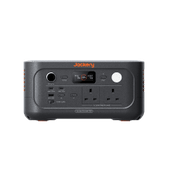
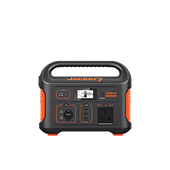
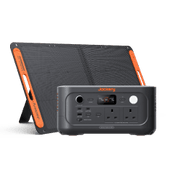
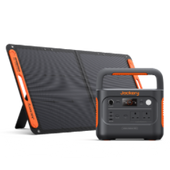
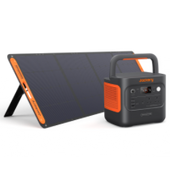
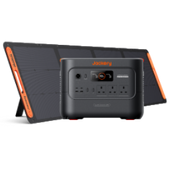
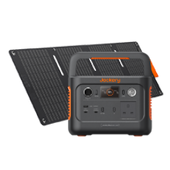
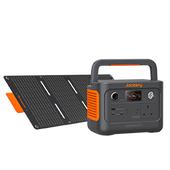
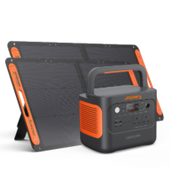
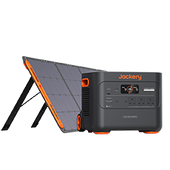
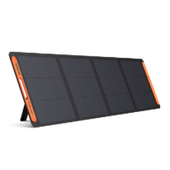
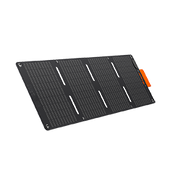
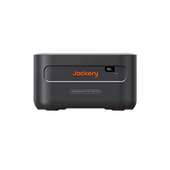
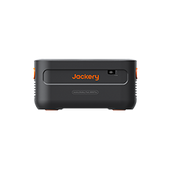
Except for rechargeable batteries for daily appliances, there are batteries adopted for generators or solar products. Lithium batteries are commonly used for power stations because of their higher capacities, higher power densities, and more advantages. Jackery Portable Power Stations have lithium-ion and LiFePO4 batteries to ensure sufficient power supply in the UK for indoor and outdoor uses.
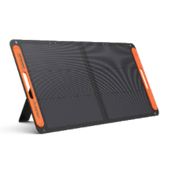
Jackery Portable Power Stations range from 99Wh to 12 kWh, enabling enough electricity for camping, off-grid living, power outages, or emergencies. It can recharge in multiple ways, including Jackery Solar Panels, wall outlets, and carports.
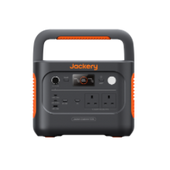
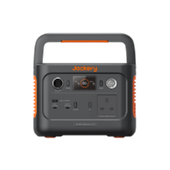
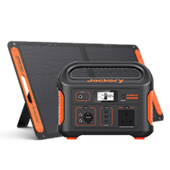
Jackery Explorer 500 v2
Choose the Jackery Explorer 500 v2 if you need a compact portable power station with 512Wh capacity, 500W output, 1000W peak power, LiFePO4 battery chemistry, 6000 life cycles and a lightweight 12.57 lbs body. It is best for phones, laptops, routers, lights, cameras, mini fridges, camping, caravans, garden use and short home backup. It is not designed to power a whole house, but for everyday essential power, it offers a strong balance of capacity, portability and long-term usability.

512Wh Capacity: Enough for Daily Essentials
The Jackery Explorer 500 v2 has a 512Wh battery capacity, equal to about 0.51kWh of stored electricity. This makes it suitable for essential daily devices rather than whole-home backup. It is a practical choice for users who want to power phones, laptops, lights, routers, cameras, small fans, mini fridges and other low-to-medium power devices.
500W Output: Best for Small Appliances and Electronics
With 500W continuous output, the Explorer 500 v2 is designed for essential appliances and everyday electronics. It is not made for high-power appliances such as kettles, ovens, electric heaters or large power tools, but it is very suitable for devices below 500W.
Practical for Short Backup, Not Whole-House Power
The Explorer 500 v2 is a good choice when you need portable backup power for essential devices. Its 512Wh capacity is enough for short-term use, but it should not be described as a home battery replacement. For example, it can support a router, laptop, lights or small fridge during a short outage, but it will not run a full home, washing machine, electric shower or heating system.
LiFePO4 Battery with 6000 Cycles: Better for Long-Term Use
The Explorer 500 v2 uses a LiFePO4 battery with 6000 life cycles. That is important because many users do not only need a power station for one trip; they may use it regularly for camping, garden work, emergency backup, solar charging or outdoor activities.
Multiple Ports: Power Several Devices at the Same Time
The Explorer 500 v2 includes 2 AC outlets, 2 USB-C ports, 1 USB-A port and a 12V car socket, so it can power or charge several devices at once. This is useful for families, campers, remote workers or anyone who needs one compact power source for different devices.
|
Review from Our User* |
|
For everyday use, it easily handles my phone, laptop, camera batteries, LED lights, router, and small fan. During a short outage, I used it to keep the Wi-Fi router running, charge two phones, and power a lamp in the evening. For camping, it is enough for a weekend if you mainly use it for charging devices, lighting, and low-power appliances. |
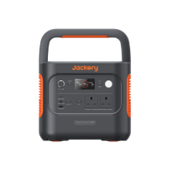
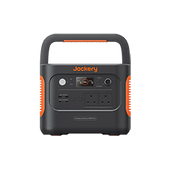
Jackery Explorer 1000 v2
The Explorer 1000 v2 Portable Power Station has an impressive 1500W output, 50% greater than earlier models, efficiently supplying power to high-demand appliances in an emergency, such as refrigerators, computers, CPAP machines, and more.

1070Wh Battery Capacity for Daily and Outdoor Essentials
The Jackery Explorer 1000 v2 has a 1070Wh battery capacity, making it suitable for users who need more than a small power bank but do not want a heavy home battery system. This capacity is practical for camping, road trips, garden parties, emergency backup, outdoor work, and short off-grid stays. It can support everyday devices such as phones, laptops, cameras, lights, Wi-Fi routers, mini fridges, CPAP machines, and small cooking appliances.
1500W Output for More Than Just Small Devices
With a 1500W rated AC output and 3000W surge power, the Explorer 1000 v2 can handle many appliances that smaller portable power stations cannot. It is not only for charging phones or laptops; it can also power higher-demand devices such as a coffee maker, electric kettle, portable heater, projector, small fridge, or outdoor cooking equipment, as long as the device stays within the power limit.
Emergency Charge Mode
The Emergency Charge Mode, activated via the app, enables the Explorer 1000 v2 Portable Power Station to achieve a full charge in under one hour, providing essential power backup when the battery is depleted. Moreover, charging from 0% to 100% within two hours via an AC wall outlet prolongs battery longevity.
Whisper-Quiet Operation
Experience serenity with its nearly silent operation, maintaining noise levels below 22dB while energising your devices. This power station guarantees an uninterrupted power supply for a caravan, camper, off-grid tiny house, or home.
Although it offers over 1kWh of capacity, the Explorer 1000 v2 remains portable enough for outdoor and home use. It is easier to move than large home storage systems, making it suitable for users who need power in different places: garden, campsite, car boot, balcony, shed, or home office.
|
Review from Our User* |
|
I bought the Jackery Explorer 1000 v2 because I wanted something stronger than a small portable battery, but not as large or expensive as a heavy home backup system. After using it for camping, garden work, and short power-cut backup, the 1070Wh capacity feels like a very practical size. It gives enough power for real daily devices, not just phones and tablets. |
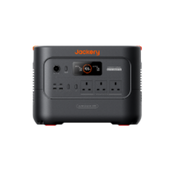
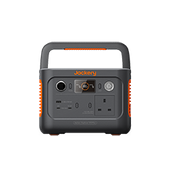
Jackery Explorer 2000 v2
Choose the Jackery Explorer 2000 v2 if you want more than basic charging but do not want a very large, heavy power station. Its 2042Wh capacity, 2200W output, 4400W surge power, 4000-cycle LiFePO4 battery and 38.6 lbs portable design make it suitable for home essentials, outdoor living, home backup, caravan use and solar-powered daily devices.
It is not designed to replace a full home battery or power an entire house for long periods. But for targeted use, such as running a fridge, router, laptop, lighting, projector, small appliances or camping equipment.

2042Wh Capacity: A Practical 2kWh Power Station for Daily Use
The Jackery Explorer 2000 v2 has a 2042Wh capacity, equal to about 2.04kWh of stored electricity. This gives it much more practical use than a small power bank or 500Wh power station, because it can support both everyday electronics and some larger household appliances for short periods.
2200W Output: Suitable for Most Common Appliances
With 2200W rated output and 4400W surge power, the Explorer 2000 v2 can handle many appliances that smaller power stations cannot. It is suitable for devices such as laptops, routers, lights, fridges, projectors, coffee makers, electric blankets, small kitchen appliances and some higher-wattage devices within its output limit.
Better for Home Backup Than Smaller Models
A 512Wh or 1000Wh power station may be enough for phones, lights and laptops, but the Explorer 2000 v2 gives much more room for real backup use. Its 2042Wh capacity can support several essential devices together, such as a router, laptop, lights and fridge, during a short power cut.
Solar Charging: Store Daytime Power for Later Use
The Explorer 2000 v2 supports multiple charging methods, including AC charging, solar charging, car charging, AC + solar and AC + car charging. Fast full charging in 1.33 hours with Emergency Super Charge, while its solar generator bundle page lists the unit as a solar-ready 2kWh power solution.
|
Review from Our User* |
|
The best part is how practical it is in different situations. At home, I use it as backup power during outages and sometimes to run smaller devices instead of drawing from the grid. Outdoors, it works well for camping lights, a mini fridge, a projector and charging everyone’s phones. |
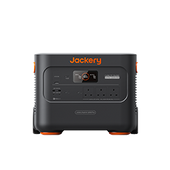
Jackery Explorer 3000 v2
The Jackery Explorer 3000 v2 is best for people who need more than basic portable charging. It is especially suitable for home emergency backup, long camping trips, RV travel, outdoor work, garden cinemas, power tools, family outdoor events, and off-grid living.

3072Wh Capacity for Longer Runtime
The Jackery Explorer 3000 v2 comes with a large 3072Wh battery capacity, making it much more suitable for long outdoor use, emergency backup, and high-demand appliances than smaller portable power stations. This capacity can support essential home devices during a power cut, run camping equipment for longer trips, or power tools and appliances at outdoor sites.
3600W Output for High-Power Appliances
With 3600W pure sine wave AC output and 7200W surge power, the Explorer 3000 v2 can run many devices that smaller models cannot. It is suitable for appliances such as kettles, microwaves, air conditioners, water pumps, power tools, projectors, fridges, and outdoor cooking equipment, as long as the device stays within the output limit.
Strong Choice for Home Emergency Backup
For home backup, the Explorer 3000 v2 is useful because it can power key household essentials instead of only small electronics. During an outage, it can help keep a fridge, router, lights, laptop, phone chargers, medical devices, or small cooking appliances running. It can power home essentials such as fridges for 30+ hours, depending on the appliance and usage conditions.
Multiple Output Ports for Several Devices
The Explorer 3000 v2 includes 3 × 230V UK AC sockets, 2 × 100W USB-C ports, 2 × 18W USB-A ports, and 1 × 12V car port. This means users can charge or power several devices at once without relying on extra adapters. The USB-C ports are especially useful for laptops, tablets, cameras, and modern phones.
|
Review from Our User* |
|
The biggest advantage is the 3600W AC output and 7200W surge power. This makes it much more flexible than smaller power stations. I can use it for a fridge, microwave, kettle, coffee machine, projector, router, lights, and even some power tools. It gives me confidence because I do not need to check every small device carefully before plugging it in. |
UK Policy and Financial Factors That Affect Battery Sizing
Battery sizing decisions don't happen in isolation — the broader financial and regulatory landscape plays a significant role in shaping your return on investment.
- Smart Export Guarantee (SEG) rates have a direct bearing on whether prioritising storage or export makes more sense for your household. With SEG rates currently paying around 3–15p per kWh and grid imports costing 25–35p, every unit of energy you store and use yourself saves considerably more than exporting it and buying it back later. Under the current rate structure, self-consumption through battery storage is almost always the financially stronger choice.
- Zero Percent VAT relief has also shifted the economics meaningfully. The zero percent VAT rate now applied to residential battery installations reduces upfront costs by around 20%, shortening payback periods and accelerating the case for investment. This change has already had a notable impact on the pace of battery adoption across the UK.
- Time-of-use tariffs add another layer of value. Tariffs that charge as little as 7–10p per kWh overnight but 35–45p during peak hours create a compelling opportunity — storing cheap overnight electricity or surplus daytime solar for use when grid prices are at their highest can meaningfully improve the overall returns on your system.
- Grid connection and safety standards round out the picture. Installations must comply with PAS standards, ensuring your battery integrates safely with both your solar setup and the wider grid. Using a certified installer not only guarantees compliance but also protects your warranties and gives you confidence the system has been set up correctly from day one.
The UK government's battery storage targets of 23–27 GW by 2030 point clearly toward a future grid that increasingly relies on distributed storage. As the country moves further toward weather-dependent renewable generation, home batteries stand to play a dual role — delivering tangible financial benefits to individual households while contributing to the broader balancing of a grid that will depend on flexible, localised storage more than ever before.
Batteries Sizes in The UK FAQs
The following are the frequently asked questions about the batteries sizes in the UK:
1. Are batteries different in the UK?
Even though the batteries go by different names, regular consumer batteries are the same everywhere worldwide. For instance, AA batteries are sometimes called LR6, although they should be readily available and interchangeable everywhere. Indeed, in the same way.
2. Are batteries the same in the UK and the US?
Indeed, standard consumer batteries are universally consistent, albeit their nomenclature differs globally. AA batteries are designated LR6 in many countries, yet they are universally available and function identically.
3. What is the British standard for batteries?
The British Standard (BS) is a generic term for high-integrity batteries that satisfy rigorous safety, performance, and durability standards. The industry did not establish specific safety standards for several years after the introduction of Valve Regulated Lead-Acid (VRLA) batteries in the early 1980s.
4. What size are battery terminals in the UK?
The typical UK types are readily identifiable due to their prevalence. The measurements at the base of the tapered terminal are 17.5mm for the negative post and 19.5mm for the positive terminal.
5. What is the most common battery size for UK homes?
UK homes typically install batteries between 10 and 13 kWh. This works well with a 4 to 5 kW solar system and supports evening use for households of three to four people.
6. Can I add more battery capacity later if I need it?
Yes, many systems allow expansion. It usually costs more later though, as extra labour and upgrades are often needed, so getting the size right early makes sense.
Final Thoughts
Choosing the right battery size in the UK depends on what you want the battery to do. For small household devices, standard batteries such as AA, AAA, C, D and 9V remain common and practical. For home energy storage, however, the key measurement is usable kWh capacity, because this determines how much electricity you can actually store and use.
For most UK homes, a 5–10kWh battery is suitable for everyday solar self-consumption and evening electricity use, while larger households may need 10–15kWh. Homes with electric heating, heat pumps, EV charging or high backup needs may require 15–30kWh or more. The best battery is not always the biggest one; it should match your daily demand, available space, budget, tariff structure and future energy plans.


