













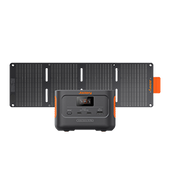
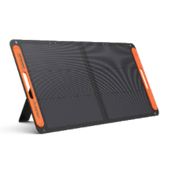
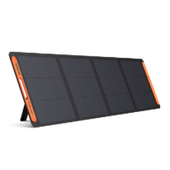


































Two neighbouring homes can need completely different solar panels. One may have a small south-facing roof interrupted by a chimney, while the other has a large flat garage roof with space for a raised array. In the first case, high-efficiency monocrystalline panels may be worth the premium. In the second, standard modules could deliver better value, while bifacial panels may benefit from reflected light.
This guide explains the main types of solar panels, how they differ in efficiency, cost and construction, and which roofs they suit best. It also covers shading, warranties, panel count, battery compatibility and the trade-offs between on-roof panels, integrated systems and solar tiles.
|
Key Takeaways: |
|
Quick Answer: Which Type of Solar Panel Is Best for a UK Home?
For most UK homes, monocrystalline silicon panels are the practical default. Their higher efficiency helps when roof space is limited, which is common on terraced, semi-detached and urban properties.
That does not mean they suit every project. Polycrystalline panels may still be found on older systems or in discounted stock, but they are rarely the first choice for a new installation because they usually deliver less power from the same roof area. Thin-film panels are better suited to specialist uses where low weight, flexibility or coverage across a large surface matters more than peak output per square metre.
Bifacial panels can generate from both sides, although the rear surface only adds value when reflected light can reach it. They are therefore more effective on flat roofs, ground-mounted frames or open structures than when installed close to dark roof tiles.
In-roof panels and solar tiles are usually selected for appearance and integration. They can create a cleaner roofline, but the extra roofing work and specialist installation often make them more expensive per unit of electricity generated.
The best choice should be made as part of the complete roof, inverter and battery design rather than by comparing panel efficiency alone.
|
Panel Category |
Typical UK Use |
Main Strength |
Main Limitation |
|
Monocrystalline |
Most home rooftops |
High output per m² |
Product quality and prices vary |
|
Polycrystalline |
Older systems |
Proven silicon technology |
Lower efficiency and limited new availability |
|
Thin film |
Commercial, portable or lightweight applications |
Low weight and flexibility |
More area normally needed |
|
Bifacial |
Flat roofs, ground mounts and open structures |
Rear-side generation |
Weak benefit when rear is blocked |
|
In-roof panels |
New roofs and reroofing projects |
Cleaner roof appearance |
More complex roof integration |
|
Solar tiles |
Design-sensitive properties |
Discreet finish |
Higher cost and specialist installation |
Why Are There Different Types of Solar Panels?
The phrase types of solar panels can refer to several different things at once: the material used in the cells, the electrical design, the module construction or the way the system is installed. Separating these categories makes comparisons far clearer.

Solar-Cell Material
The main materials include:
- Monocrystalline silicon
- Polycrystalline silicon
- Amorphous silicon
- Cadmium telluride
- CIGS
- Perovskite and tandem cells
Silicon dominates residential solar, while thin-film materials such as cadmium telluride and CIGS are more common in specialist or large-area applications. Perovskite and tandem designs are emerging technologies aimed at improving conversion efficiency.
Cell Technology
Terms such as PERC, TOPCon, heterojunction, back-contact, half-cut and multi-busbar describe refinements within a broader panel category.
A module can therefore be both monocrystalline and TOPCon, or monocrystalline with half-cut cells and multiple busbars. These features affect efficiency, electrical losses, shading behaviour and manufacturing cost.
Panel Construction
Construction describes how the cells are packaged:
- Single-glass modules
- Glass-glass modules
- Bifacial modules
- All-black modules
- Flexible modules
An all-black panel is mainly an aesthetic choice, while glass-glass construction may improve durability. Bifacial modules can collect light from both sides when the rear surface is exposed.
Installation Format
The same cell technology can appear in several installation formats:
- On-roof
- In-roof
- Flat-roof
- Ground-mounted
- Solar tiles
- Balcony or portable panels
This is why roof suitability cannot be judged from cell efficiency alone.
Solar PV VS. Solar Thermal
Solar photovoltaic panels produce electricity. Solar thermal collectors use sunlight to heat water.
Their efficiency figures should not be compared directly because they produce different forms of energy. A solar thermal collector may convert a larger share of sunlight into heat, while a PV panel converts sunlight into usable electricity.
Main Types of Solar Panels in the UK
The different types of solar panels vary in cell material, construction and installation method. The figures below are indicative UK product-level ranges rather than complete installed-system prices. Scaffolding, mounting, inverter equipment, labour and roof repairs can cost more than the modules themselves.
|
Type |
Indicative cost/m² |
Typical module efficiency |
Typical service life |
Roof suitability |
|
Monocrystalline |
£70–£160 |
20–23% |
25–35 years |
Most pitched and flat domestic roofs |
|
Polycrystalline |
£50–£100, mainly older or clearance stock |
15–18% |
25–30 years |
Large roofs and matching older arrays |
|
Thin-film |
£60–£180 |
10–19% |
15–30 years |
Lightweight, curved or large-area surfaces |
|
Bifacial |
£90–£180 |
20–23% front-side efficiency |
25–35 years |
Raised flat roofs, ground mounts and canopies |
|
Solar tiles and building-integrated PV |
£250–£500+ |
10–20% |
20–30 years |
New roofs and design-sensitive properties |
|
Emerging tandem or perovskite panels |
No stable mainstream UK price |
About 25–27% for leading commercial-scale modules |
Long-term field life still being established |
Future space-constrained applications |
Modern industrial monocrystalline modules commonly reach about 20–22% efficiency, while the broader operational life of PV panels is generally estimated at 25–35 years. Tandem products have exceeded conventional module efficiency, but availability and long-duration evidence remain more limited.
1. Monocrystalline Solar Panels: The Main UK Residential Choice
Typical specifications include:
- Module efficiency: commonly 20–23%.
- Premium domestic modules: approximately 22–24%, depending on model and size.
- Typical service life: about 25–35 years.
- Product warranty: commonly 15–25 years.
- Performance warranty: frequently 25–30 years.
- Typical modern output: around 400–500W from a residential-size module.
Monocrystalline silicon now represents the overwhelming majority of global crystalline-PV shipments, and industrially produced modules generally achieve around 20–22% efficiency.
How Monocrystalline Panels Are Made
Monocrystalline cells are cut from silicon ingots grown as one continuous crystal structure. With fewer crystal boundaries obstructing electron movement, the cells can convert sunlight more efficiently than traditional polycrystalline alternatives.
Modern modules are usually black or very dark blue. Many mainstream products combine monocrystalline wafers with TOPCon, PERC, heterojunction or back-contact technology. Half-cut cells and multi-busbar layouts are also widely used to reduce electrical resistance and improve current collection.
Why They Suit UK Roofs
Their high power density allows more generating capacity to fit into a restricted area. That is particularly useful for terraced and semi-detached houses, where chimneys, dormers, valleys and roof windows can leave only a few clear module positions.
Monocrystalline panels also generate under diffuse daylight. They do not require uninterrupted direct sunshine, although output still falls substantially in heavy cloud or shade. Their wide availability gives UK installers a large choice of power ratings, dimensions and warranty terms.
Advantages of Monocrystalline Solar Panels
High output per square metre.
Strong choice for small or irregular roofs.
Wide range of module sizes and power ratings.
Established supply chains and installer familiarity.
Long product and performance warranties.
All-black versions for visually consistent arrays.
Compatible with string inverters, microinverters and power optimisers.
Available with PERC, TOPCon, heterojunction and back-contact cells.
Limitations of Monocrystalline Solar Panels
The highest-efficiency models may command a significant premium.
Extra efficiency does not automatically produce the lowest cost per kilowatt-hour.
Large-format modules may not fit around dormers or narrow roof sections.
All-black panels can absorb more heat than modules with reflective backing and visible cell gaps.
Output still declines when cells become hot.
Shade can affect an entire string unless the system design manages it appropriately.
Replacing one module years later may be difficult if its dimensions or electrical characteristics are no longer available.
Best Suited To
- Standard pitched UK roofs.
- Small roofs where maximum installed capacity matters.
- Properties with interrupted roof space.
- Households planning an EV, heat pump or battery.
- Homeowners who prefer an all-black appearance.
- New arrays where the installer can design the whole string around one module type.
2. Polycrystalline Solar Panels: Still Relevant or Already Outdated?
Typical specifications include:
- Module efficiency: generally 15–18%.
- Older products: sometimes below 15%.
- Typical service life: around 25–30 years.
- Common appearance: blue with a mottled or crystalline pattern.
- Current availability: limited in new UK residential ranges.
How They Differ
Polycrystalline cells are produced from silicon that solidifies into many crystal fragments rather than one uniform crystal. Boundaries between those crystals impede electron movement, leading to lower conversion efficiency than comparable monocrystalline cells.
Their simpler manufacturing process once made them the economical choice. The distinctive blue surface was common across UK residential systems installed during the 2000s and 2010s.
Why They Are Less Common Now
Monocrystalline manufacturing has become cheaper and more efficient. Its improved power density is valuable on domestic roofs, where installation labour, scaffolding and mounting costs do not fall simply because a lower-output panel is used.
Global production has consequently shifted heavily towards monocrystalline technology. It accounted for approximately 96% of worldwide module shipments in 2022, leaving a shrinking share for polycrystalline and thin-film products.
Most UK installer ranges now centre on monocrystalline TOPCon, PERC or heterojunction modules. A cheaper polycrystalline panel may save money on the module itself but require more roof area and mounting hardware for the same installed capacity.
When They May Still Appear
Existing residential installations.
Searches for a replacement for a damaged older module.
Clearance and discontinued stock.
Second-hand equipment.
Large roofs where space is not restricted.
Agricultural or off-grid projects using surplus modules.
Small standalone systems where matching existing equipment matters more than maximum efficiency.
Should You Mix Polycrystalline and Monocrystalline Panels?
Mixing technologies is possible only when their electrical characteristics and system layout are properly assessed. Modules in the same string interact with one another, so a panel with a different current rating can restrict string performance.
The installer should check:
- Open-circuit voltage.
- Maximum-power voltage.
- Operating current.
- Short-circuit current.
- Temperature coefficients.
- Inverter voltage and current limits.
- Existing string configuration.
A replacement should not be chosen by wattage alone. Where an exact match is unavailable, the installer may recommend a separate MPPT input, microinverter or optimiser. In some cases, replacing several panels or creating a separate array is more reliable than inserting one mismatched module.
3. Thin-Film Solar Panels: Lightweight but More Specialist
Typical specifications include:
- Commercial module efficiency: approximately 10–19%.
- Amorphous-silicon modules: often around 6–12%.
- Modern CdTe or CIGS modules: commonly around 14–19%.
- Rigid module life: potentially 20–30 years.
- Flexible product life: frequently 10–20 years, depending on construction and exposure.
Thin-film efficiency varies substantially by material and product. Laboratory cells can outperform many commercial modules, so buyers should compare the actual module datasheet rather than a research record. The principal commercial thin-film materials include amorphous silicon, CdTe and CIGS.
Main Thin-Film Technologies
Amorphous Silicon: Uses non-crystalline silicon deposited in thin layers. It is found in small devices, flexible products and some building-integrated applications.
Cadmium Telluride: A widely commercialised thin-film technology, particularly for utility-scale solar farms. The absorber is deposited onto a substrate, often glass.
Copper Indium Gallium Selenide: CIGS can be deposited onto glass, metal foil or flexible backing. It can offer a uniform dark appearance and relatively high efficiency for thin-film technology.
Flexible Thin-Film Laminates: Very thin photovoltaic layers are bonded to flexible sheets rather than framed behind conventional glass. They can follow slightly curved surfaces and reduce module weight.
Advantages of Thin-Film Solar Panels
Lower weight in certain module formats.
Flexible or semi-flexible construction is possible.
Suitable for curved and weight-sensitive surfaces.
Uniform appearance without visible crystalline cells.
Large sheets can cover expansive commercial roofs.
Some technologies retain output comparatively well at higher temperatures.
Useful for portable and building-integrated products.
Less semiconductor material is required than for wafer-based silicon.
Limitations of Thin-Film Solar Panels for UK Houses
Lower output per square metre in many available products.
More roof area may be required for an equivalent system capacity.
Limited availability through mainstream domestic installers.
Replacement modules can be difficult to source.
Servicing may require specialist knowledge.
Some materials need controlled recycling and end-of-life treatment.
Flexible panels can suffer from repeated movement, surface damage or moisture ingress.
Product warranties may be shorter than those for rigid silicon modules.
Adhesive installation can complicate removal and roof maintenance.
Best Suited To
- Metal commercial roofs.
- Large warehouses.
- Lightweight structures.
- Boats and caravans.
- Temporary and portable systems.
- Curved surfaces.
- Building-integrated façades.
- Roofs that cannot accept the weight of conventional glass modules, subject to structural assessment.

4. Bifacial Solar Panels: When Does the Rear Side Actually Help?
Typical specifications include:
- Front-side efficiency: commonly 20–23%.
- Rear-side response: often 65–90% of the front-side response, depending on bifaciality.
- Potential extra energy: highly site-specific; often several per cent to over 20% in favourable layouts.
- Typical service life: around 25–35 years.
- Construction: commonly glass-glass and heavier than a single-glass module.
Bifacial cells collect light on both their front and rear surfaces. Extra generation depends on how much reflected and diffuse light reaches the back. Ground reflectivity, panel height, row spacing and mounting obstructions all affect the result, so rear-side gain should be modelled for the site rather than assumed.
Where Bifacial Panels Work Well
Ground-mounted arrays with clearance beneath the modules.
Flat roofs using elevated frames.
White or light-coloured roof membranes.
Pergolas and open solar canopies.
Carports.
Vertical east–west systems.
Arrays installed over pale gravel or reflective surfaces.
Structures where sunlight can reach the panel from behind.
Where the Benefit May Be Small
Panels mounted close to dark concrete or clay tiles.
In-roof installations.
Rear surfaces shaded by the roof.
Low-profile arrays with little clearance.
Mounting systems with wide rails or trays covering the rear.
Installations surrounded by tall walls or dense vegetation.
A bifacial module can still operate as a conventional front-facing panel in these positions, but paying extra for its rear-side capability may deliver little return.
5. On-Roof, In-Roof and Solar Tiles: Installation Type Matters Too
Typical figures include:
- Standard on-roof module efficiency: approximately 20–23%.
- In-roof module efficiency: normally similar at module level, although operating temperature may affect system yield.
- Solar-tile efficiency: commonly about 10–20%.
- On-roof module lifespan: around 25–35 years.
- In-roof panel lifespan: commonly 25–30 years.
- Solar-tile life: roughly 20–30 years, with product availability varying.
On-Roof Panels
On-roof systems are installed above the existing tiles or slates using hooks, rails and clamps. They are the most common retrofit option because the roof covering remains beneath the array.
The air gap behind the modules aids ventilation and allows rainwater to continue flowing down the roof. Individual modules are usually easier to inspect, remove or replace than integrated products.
The mounting design must match the roof covering, rafter positions and calculated wind loads. Incorrect hooks or fixings can damage tiles or compromise weather resistance.
In-Roof Panels
In-roof modules replace part of the normal roof covering. A tray or flashing system directs water around and beneath the array, producing a flatter, more integrated appearance.
They can be cost-effective when a roof is already being constructed or replaced because fewer tiles are required beneath the panels. Retrofitting them onto an otherwise sound roof usually involves more labour.
Drainage, flashing, ventilation and fire performance need careful design. Future module replacement can also be harder if the original tray dimensions or panel model become unavailable.
Solar Tiles
Solar tiles or shingles generate electricity while forming part of the visible roof covering. They can suit conservation-sensitive or design-led projects where conventional framed panels would be unacceptable.
Their smaller format creates a discreet finish but introduces more electrical connections. Installation is specialist, and access for fault-finding can be more complicated.
Long-term product support deserves particular attention. A damaged tile may be difficult to replace if the original manufacturer changes its design or leaves the market.
Which Option Offers Better Value?
|
Installation Type |
Best Context |
Main Advantage |
Main Trade-Off |
|
On-roof |
Existing sound roof |
Usually simplest and most economical |
Visible above the roof covering |
|
In-roof |
New build or reroofing |
Integrated appearance |
More drainage and roof-design complexity |
|
Solar tiles |
Design-sensitive project |
Most discreet |
High cost and specialist support |
On-roof panels normally offer the strongest financial value because they use standard modules and mounting systems. In-roof designs become more competitive during reroofing, while solar tiles are chiefly an architectural choice.
6. Emerging Solar Panel Types: Tandem and Perovskite Panels
Current reference points include:
- Leading commercial-scale tandem module efficiency: around 25–27%.
- Recent demonstration modules: approaching or exceeding 29%.
- Conventional premium silicon modules: generally around 21–24%.
- Expected field life: still being validated against mature silicon products.
- Mainstream UK residential availability: limited.
- Stable installed cost: not yet established.
Oxford PV reports approximately 25% efficiency for current tandem modules, while a residential-size development module has reached 26.9%. These results exceed typical conventional commercial-module efficiency, but tandem products are not yet the default choice offered by most UK residential installers.
How Do Tandem or Perovskite Panels Work?
A conventional silicon cell absorbs only part of the solar spectrum efficiently. Higher-energy and lower-energy photons cannot all be converted at the same efficiency by one absorber.
A perovskite-silicon tandem places two photovoltaic layers together:
1. The perovskite upper cell absorbs higher-energy wavelengths.
2. Lower-energy light passes through to the silicon cell beneath.
3. Each layer converts a different part of the spectrum.
4. Their electrical outputs are combined in a two-terminal or four-terminal architecture.
Perovskites are a family of materials defined by their crystal structure rather than one fixed chemical composition. Their optical properties can be adjusted by changing the material formulation, which makes them suitable for pairing with silicon.
Advantages of Tandem or Perovskite Panels
Higher theoretical efficiency than single-junction silicon.
More power from a restricted module area.
Potential value on small urban roofs.
Adjustable absorption characteristics.
Very thin active perovskite layers.
Potential compatibility with existing silicon module production.
Possible use on lightweight or flexible substrates.
Lower material consumption for the upper absorber layer.
Greater installed capacity without increasing roof coverage.
Limitations of Tandem or Perovskite Panels
Long-term outdoor durability is less established than for silicon.
Moisture, heat and ultraviolet exposure can degrade some perovskite formulations.
Manufacturing consistency must be proven at large scale.
Encapsulation requirements can add complexity.
Some formulations contain lead, requiring careful containment and recycling.
Current production volumes remain limited.
UK installer and replacement networks are not yet mature.
Prices may be higher during early commercial adoption.
Independent long-term performance data remain scarce.
Matching the upper and lower cells adds manufacturing challenges.
Tandem and perovskite panels have genuine potential where roof space is valuable, but they should remain a future-looking comparison rather than the basis of most UK buying decisions today. A mature monocrystalline product with strong warranties, documented fire performance and an established installer network will usually be the lower-risk residential choice in 2026.

Which Type of Solar Panel Is Most Efficient?
Monocrystalline panels are generally the most efficient mainstream option for UK homes. Many current residential modules achieve around 20–23% efficiency, while premium models can exceed 23%. Their higher power density is especially valuable where chimneys, dormers or roof windows restrict the available area. Commercial silicon modules more broadly tend to sit around 18–22%, although product performance continues to improve.
|
Panel type |
Typical module efficiency |
Indicative module cost profile |
UK residential relevance |
|
Monocrystalline |
20–23%; premium models around 23–24% |
About £70–£160/m² |
Very common |
|
Polycrystalline |
15–18% |
About £50–£100/m², mainly older stock |
Less common for new systems |
|
Thin-film |
10–19% |
About £60–£180/m² |
Specialist applications |
|
Bifacial |
20–23% front-side, with site-dependent rear gain |
About £90–£180/m² |
Niche residential use |
|
Solar tiles |
Around 10–20% |
About £250–£500+/m² |
Premium aesthetic projects |
|
Tandem/perovskite |
Around 25–27% in leading early commercial modules |
No stable mainstream UK price |
Emerging, not yet standard |
How to calculate or estimate the solar panel efficiency:
Panel efficiency = electrical output ÷ sunlight energy falling on the panel
A 23% efficient panel does not produce electricity for 23% of the day. It converts approximately 23% of the incident solar energy under specified test conditions into electricity. Higher efficiency means more watts can be produced from a given surface area.
Panel wattage also depends on physical size. A large 22% efficient module may have a higher power rating than a smaller 23% panel. Annual output is then shaped by orientation, pitch, shading, temperature, inverter design and installation quality. The MCS calculation method assesses location, orientation and shading rather than relying on module efficiency alone.
Premium efficiency can maximise a restricted roof, but it does not always produce the shortest payback. A slightly less efficient module may offer better value if its lower price allows more panels to fit within the budget.
When Efficiency Matters Most
The usable roof area is small.
Chimneys or dormers leave only limited clear sections.
Future electricity demand may rise because of an EV, heat pump or battery.
Scaffolding and labour costs are high, making each installed panel position valuable.
The household wants the greatest possible capacity without extending the array.
When It Matters Less
A large, unshaded roof is available.
Panels will be installed on the ground or a spacious outbuilding.
Lower-cost modules allow a larger total array within the budget.
The grid connection or inverter already limits usable output.
The extra cost of premium panels outweighs the value of their additional generation.
Tandem modules may eventually provide substantially more output from constrained roofs, but field reliability and large-scale production remain active development areas.

Which Solar Panel Type Is Cheapest?
Polycrystalline panels were once the budget choice, but monocrystalline modules now dominate new UK installations. Improved manufacturing has narrowed the price difference, while their higher output per square metre often reduces the number of panels, rails and roof positions needed.
Thin-film products can be inexpensive for large commercial or lightweight applications, yet their lower power density may require more surface area. For most UK homes, mainstream monocrystalline panels now offer the strongest balance of price, availability, efficiency and installer support.
The module price is only one part of the bill. The Energy Saving Trust gives about £6,100 as a guide for a typical 3.5kWp domestic system, while recent government data track installed costs by system capacity rather than panel technology alone.
What Determines Module Cost?
Panel pricing is influenced by:
- Module efficiency and wattage.
- PERC, TOPCon, heterojunction or back-contact cells.
- Brand and UK distribution.
- Product and performance warranties.
- Single-glass or glass-glass construction.
- Bifacial capability.
- All-black frames and backing.
- Physical module dimensions.
- Stock availability and order volume.
A standard 430W panel may cost far less than its share of a completed roof installation because labour, access and electrical equipment remain necessary regardless of module price.
What Determines Installed-System Cost?
The quotation may include:
- Number and layout of panels.
- Scaffolding and difficult roof access.
- Slate, tile, metal or flat-roof mounting.
- String inverter, hybrid inverter or microinverters.
- Power optimisers.
- Consumer-unit or earthing upgrades.
- Bird protection.
- Monitoring hardware.
- MCS design, certification and handover.
- Battery equipment and installation.
- Cable routes and structural work.
A conventional 4kW UK installation is commonly quoted at roughly £5,500–£8,500, although regional prices and roof complexity can move it outside that range.
Suggested Cost Comparison Method
Compare quotations using:
- Installed cost per kWp = total installed solar cost ÷ array capacity
Also calculate:
- Estimated annual output per £1,000 invested = predicted yearly generation ÷ total cost × £1,000
|
Panel choice |
Indicative installed cost |
Typical cost per kWp |
Where the premium may be justified |
|
Mainstream monocrystalline |
£5,500–£8,000 for about 4kWp |
£1,375–£2,000 |
Most UK homes |
|
High-efficiency monocrystalline |
£6,500–£10,000 for about 4kWp |
£1,625–£2,500 |
Small or obstructed roofs |
|
Glass-glass bifacial |
£6,500–£9,500 for about 4kWp |
£1,625–£2,375 |
Raised, reflective installations |
|
Thin-film |
£1.50–£3.00/W for specialist projects |
£1,500–£3,000/kWp |
Lightweight or large commercial roofs |
|
In-roof system |
£7,000–£11,000 for about 4kWp |
£1,750–£2,750 |
New roofs or reroofing |
|
Solar tiles |
Commonly £12,000–£25,000+ |
Often £3,000–£6,000+/kWp |
Strong architectural priority |
These ranges are budgeting guides rather than fixed market prices. The cheapest panel can produce the more expensive system if it requires extra roof area, bespoke mounting or a less efficient layout.
Which Solar Panels Are Best for UK Weather?
Solar panels generate electricity from daylight, not only from strong direct sunshine. Cloud reduces the amount of solar radiation reaching the cells, so output falls, but generation does not stop completely. UK households should therefore compare estimated annual yield rather than judging a system by its best summer peak.
Temperature also matters. Solar cells generally become less efficient as they heat up, which is why datasheets include a temperature coefficient. A panel with a lower negative coefficient loses slightly less output on hot, bright days. Cooler UK conditions can be favourable for cell efficiency, although winter’s shorter days still reduce total generation.
Shade is often more important than small differences between panel technologies. Common causes include:
- Chimneys and dormers.
- Trees and neighbouring buildings.
- Television aerials and roof structures.
- Bird fouling.
- Leaves, moss and other debris.
- Temporary shadows moving across the roof during the day.
How a Shaded Panel Affects the String
In a traditional series string, current flows through several connected modules. If one panel is heavily restricted, it can reduce the output of the wider string.
Bypass diodes allow current to avoid shaded sections of a module and can limit some losses, but they do not make shade harmless. The effect depends on the position, duration and shape of the obstruction, as well as the number of panels connected to each inverter input.
MCS guidance uses a shade factor to adjust predicted annual generation and recommends modelling the impact of nearby and distant objects.
Possible Solutions
An installer may:
- Change the panel layout.
- Place shaded and unshaded roof sections on separate MPPT inputs.
- Use power optimisers.
- Fit microinverters.
- Remove avoidable obstructions where lawful and sensible.
- Install fewer panels only on the strongest roof area.
- Use both east- and west-facing roofs to extend generation across the day.
The most expensive technology is not always the best answer. Avoiding a badly shaded panel position can deliver more value than paying for a marginally higher module efficiency.
Do Certain Panels “Work in Shade”?
No solar panel produces full output without sufficient light. Some modules offer slightly stronger low-light characteristics, but terms such as “shade-resistant” should be treated cautiously.
System layout, inverter design and the pattern of shading normally matter more than a broad marketing label. Ask the installer for a documented annual-generation estimate that includes shade losses, rather than accepting an unqualified yield figure.

Roof Suitability: Which Panel Type Fits Your Home?
The best panel is not determined by efficiency alone. Roof area, structure, shade, orientation, appearance and mounting method can all change which option delivers the strongest result.
|
Roof situation |
Better panel choice |
Why |
|
Small pitched roof |
High-efficiency monocrystalline |
More output per square metre |
|
Large unshaded roof |
Mainstream monocrystalline |
Space allows lower-cost modules |
|
Flat roof |
Monocrystalline or bifacial |
Tilt, orientation and rear exposure can be designed |
|
Shaded roof |
Monocrystalline with optimised system design |
Panel type alone cannot remove shade losses |
|
Lightweight structure |
Thin-film or specialist lightweight modules |
Lower module weight may reduce structural demand |
|
Conservation area or prominent roof |
All-black, in-roof panels or solar tiles |
Better visual integration |
|
Garden office or shed |
Smaller rigid or lightweight panels |
Depends on roof strength, waterproofing and wind loading |
Best Solar Panel Type for Small UK Roofs
High-efficiency monocrystalline panels are usually the strongest choice because each panel position carries more wattage. A 450W module may deliver more useful capacity than a similarly sized 400W alternative when only six or eight panels fit.
All-black panels can improve appearance, although their price may be higher. Shade management is equally important: a premium module placed beside a chimney may generate less than a lower-rated panel in a clear section of roof.
Best Solar Panel Type for Large Roofs
A large, unshaded roof gives the designer more flexibility. Standard monocrystalline panels can offer better value than premium high-efficiency models because the array is not constrained by area.
Polycrystalline modules may still appear in older or clearance-stock systems, but modern monocrystalline panels dominate current residential installations. A larger array may also create more midday surplus, which can make export arrangements or battery storage more relevant.
Best Solar Panel Type for Flat Roofs
Flat roofs normally use framed panels on tilted mounting systems. The design must allow adequate spacing between rows to reduce self-shading, while ballast and wind-loading calculations determine how the frames are secured.
Bifacial panels may add value where they are elevated above a pale membrane or reflective surface. Their rear-side benefit will be limited if the panels sit close to a dark roof.
Structural checks and planning conditions should be reviewed before installation. Solar equipment often falls under permitted development, but additional requirements can apply to flat roofs and designated locations.
Best Solar Panel Type for Shaded Roofs
No panel type can compensate fully for poor light. A stronger design may use:
- Separate MPPT inputs.
- Power optimisers.
- Microinverters.
- Fewer panels in the clearest roof sections.
- East- and west-facing slopes to spread generation.
Tree trimming should only be considered where lawful, safe and appropriate. In some cases, leaving a heavily shaded roof section unused produces a better return than maximising panel count.
Best Solar Panel Type for Lightweight Roofs, Sheds and Outbuildings
Thin-film, flexible modules or smaller rigid panels may suit structures with limited load capacity. However, low module weight does not remove the need to assess the roof, fixings and wind uplift.
Waterproofing deserves particular attention on felt, corrugated or lightweight metal roofs. Energy Saving Trust guidance recommends checking that the roof is structurally suitable before installation.
Best Solar Panel Type for Appearance-Sensitive Homes
The main choices are:
- All-black monocrystalline panels.
- In-roof modules.
- Solar tiles or building-integrated PV.
Solar tiles can create the most discreet finish, but they generally produce less electricity from the same area and cost more than standard panels. Energy Saving Trust estimates that solar tiles may generate about 80% of the electricity produced by conventional panels over an equivalent area.
Conservation-area restrictions depend on the property and panel position. Many installations remain permitted development, but homeowners should confirm the conditions with the local planning authority.

How Many Panels Do UK Homes Usually Need?
The number of panels depends on annual electricity use, module wattage, available roof area and expected generation at the property. UK domestic systems commonly fall around 3–5kWp, although smaller and larger arrays are also common. Energy Saving Trust describes an average system of roughly 3.5kWp, typically using six to 12 panels and covering about 10–20m² of roof.
A simple starting calculation is:
- Number of panels = target system capacity ÷ panel wattage
|
Target array size |
400W panels |
450W panels |
500W panels |
Illustrative household context |
|
3.0kWp |
8 panels |
7 panels |
6 panels |
Lower annual use or limited roof |
|
3.5kWp |
9 panels |
8 panels |
7 panels |
Typical domestic-scale system |
|
4.0kWp |
10 panels |
9 panels |
8 panels |
Medium electricity demand |
|
5.0kWp |
13 panels |
12 panels |
10 panels |
Higher use, EV or heat-pump plans |
|
6.0kWp |
15 panels |
14 panels |
12 panels |
Large roof and substantial future demand |
These figures should be rounded up to whole panels and checked against inverter, DNO and roof-layout limits.
Higher-efficiency monocrystalline modules can reduce panel count because they produce more watts from a similar area. This helps where chimneys, dormers or roof windows restrict usable space. A large east- or west-facing roof may instead accommodate more standard panels at a lower cost per kWp.
The installer should compare annual consumption with predicted generation rather than attempting to match them exactly. Orientation, shade and location affect output, while solar generation is concentrated in daylight and summer. A 5kWp system will not necessarily eliminate annual grid imports, even if it generates as many kilowatt-hours as the household consumes.
Solar Panels and Battery Storage: Does Panel Type Affect Storage?
is mainly concerned with surplus electricity and when it is used. Panel appearance, colour and construction matter far less than the array’s total generation profile.
A higher-output system may create more midday surplus, especially when household demand is low. The battery can store part of that electricity for use later in the evening. Panel type influences how much energy is generated from the available area, while the battery changes the timing of consumption.
For example, high-efficiency monocrystalline panels may produce more power from a restricted roof. Bifacial panels could add extra generation on a suitable raised structure. In both cases, battery value depends on whether that output would otherwise be exported or unused.
Jackery SolarVault 3 Pro Max: Plug-and-Play Solar Battery Storage with Solar Panels
The Jackery SolarVault 3 Pro Max is not another type of solar panel. It is a modular household storage system that can influence how the array is designed and how surplus generation is used after installation.
The system uses LFP battery modules and starts at 2.52kWh. Capacity can be expanded within the supported design as household requirements change. Four MPPT channels allow compatible solar inputs to be connected separately, which can be useful where panels face different directions or are divided across several roof sections.
For homes with existing rooftop solar, AC coupling provides another integration route. A compatible energy meter measures household import and export so the battery can charge from surplus generation and discharge when demand rises. Time-based charging can also support suitable off-peak tariffs.
App monitoring allows users to view solar input, battery status and power flow. A supported backup output can supply selected loads during an outage, subject to the approved connection and output limits.
|
Solar-array situation |
Relevant SolarVault feature |
|
Panels on several orientations |
Multiple MPPT channels |
|
Existing rooftop solar |
AC-coupling option |
|
High midday surplus |
Modular battery capacity |
|
Evening household demand |
Stored solar for later use |
|
Time-of-use tariff |
Scheduled AC charging |
|
Selected outage loads |
Supported backup output |
Panel technology should still be chosen around the roof, budget and expected yield. The battery should then be sized around measurable surplus and evening demand. Fixed household integration, AC coupling and backup wiring require professional assessment rather than product setup alone.

Panel Quality: What Specifications Matter Beyond Efficiency?
Efficiency is useful, but it does not tell you how well a panel will withstand decades of heat, wind, moisture and electrical loading. A strong comparison should include the full datasheet, warranty terms and the support available in the UK.
Product Warranty
The product warranty covers manufacturing defects and faults in the module itself.
Check:
The warranty length, commonly 15–25 years for modern residential panels.
Which company administers claims in the UK.
Whether labour, scaffolding and removal costs are included.
Whether replacement shipping is covered.
What happens if the exact panel model or size has been discontinued.
Whether the warranty transfers to a future homeowner.
A long warranty has limited value when the claimant must pay most of the access and replacement costs.
Performance Warranty
A performance warranty limits how quickly the panel’s rated output may decline.
Compare:
- First-year degradation.
- Permitted annual decline after year one.
- Guaranteed output after 25 or 30 years.
- Whether the warranty is linear or divided into stages.
For example, one panel may guarantee 99% after the first year and an annual decline of no more than 0.4%, while another permits a larger initial reduction. This does not guarantee the home’s annual generation because weather, shade and inverter performance remain separate factors.
Temperature Coefficient
The power temperature coefficient shows how much output falls for every degree the cell temperature rises above 25°C.
A figure of −0.29%/°C is better than −0.35%/°C, all else being equal. The difference matters most on dark, poorly ventilated roofs during hot weather.
Mechanical Load Rating
Review the stated resistance to:
- Positive snow pressure.
- Negative wind uplift.
- Approved clamp positions.
- Coastal wind exposure.
- Loads on large-format modules.
The mounting design must match the panel’s tested clamping zones. A strong module can still fail if installed outside them.
Fire Classification
Fire performance depends on both the module and the complete roof system. Roof covering, mounting method, cavity size, cable routing and clearances can all affect risk.
Do not assume that a panel’s standalone fire classification automatically applies to every roof build-up.
Salt, Ammonia and Harsh-Environment Testing
Additional environmental testing is particularly relevant for:
Coastal homes exposed to salt mist.
Farms with ammonia-rich air.
Industrial locations.
High-humidity properties.
Sites with corrosive airborne contaminants.
Manufacturer and Installer Support
Look for:
A UK warranty contact.
Replacement-panel availability.
Installer experience with the brand.
Monitoring and fault-support arrangements.
Clear serial-number and registration records.
A documented process for handling inverter or panel faults.
Manufacturer size and financial strength may improve confidence, but neither guarantees that a company or product line will remain available for the full warranty period.
FAQs
The following are the frequently asked questions about the types of solar panels:
1. Which is better, N-type or P-type solar panels?
N-type panels are generally the stronger choice for a new installation when the price difference is reasonable. They commonly offer higher efficiency, lower long-term degradation and better resistance to some light-induced losses.
P-type panels remain proven and may still offer good value, especially in older PERC product ranges. The complete module warranty, output and installed cost matter more than the cell type alone. N-type and P-type refer to how silicon is doped to create different electrical characteristics.
2. How can I check whether a solar panel is N-type or P-type?
Read the manufacturer’s datasheet or product label. Look for terms such as N-type TOPCon, heterojunction, IBC or P-type PERC. Colour and appearance are not reliable indicators. When the datasheet does not state the wafer type clearly, ask the installer or manufacturer for written confirmation.
3. Solar PV or solar thermal: which should I choose?
Choose solar PV when the main goal is to generate electricity for appliances, battery charging or export. Solar thermal is designed to heat water stored in a cylinder or thermal store. PV is generally more versatile, while solar thermal may suit homes with substantial hot-water demand and suitable plumbing. The two technologies should not be compared using one efficiency figure because they produce different forms of energy.
4. What is the most efficient type of solar panel?
For mainstream UK residential installations, high-efficiency monocrystalline panels—particularly N-type TOPCon, heterojunction or back-contact models—are normally the most efficient practical choice. Many achieve approximately 21–24% module efficiency.
Early perovskite-silicon tandem products can exceed this range, but they are not yet the standard option offered by most domestic installers. Efficiency means the percentage of incoming solar energy converted into electricity.
5. Do black solar panels get hotter?
They can. Dark cells, frames and backing absorb more solar energy, and all-black modules may run slightly warmer than designs with reflective gaps or a white backsheet. Higher cell temperature normally reduces voltage and power output. The actual difference depends on ventilation, mounting clearance, weather and the module’s temperature coefficient.
6. Which solar panels perform best in cloudy weather?
No panel produces full output under heavy cloud. High-quality monocrystalline modules with strong low-light response may perform slightly better, but panel layout, shade, inverter design and total array size usually have a greater effect than a broad “cloudy-weather” claim. PV panels use both direct and scattered sunlight, so they continue generating when the sky is overcast, at a reduced level.
7. Are in-roof solar panels less efficient?
The cells may have the same rated efficiency as equivalent on-roof modules. However, in-roof panels can operate at higher temperatures because less air circulates behind them, which may reduce annual output slightly. The result depends on the ventilation design, panel temperature coefficient and roof construction. Their main advantage is visual integration rather than higher energy yield.
8. Do solar panels need direct sunlight?
No. Solar panels need light, but it does not have to arrive as uninterrupted direct sunshine. They can use diffuse and scattered sunlight on cloudy days. Output falls when less solar energy reaches the cells, so an overcast panel generates less electricity than the same panel in strong sun.
Final Thoughts
There is no single best option among the different types of solar panels. For most UK homes, mainstream monocrystalline modules provide the strongest balance of efficiency, cost, availability and installer support. Premium models make more sense on small or obstructed roofs, while flat roofs, lightweight structures and design-sensitive properties may justify bifacial, thin-film or integrated products.
The panel should be chosen as part of the complete system rather than in isolation. Roof condition, shading, inverter layout, future electricity demand and battery plans all affect long-term value. A slightly less efficient panel on a well-designed roof can outperform a premium module installed in a poor position, so compare predicted annual yield and installed cost per kWp before buying.


